
Early Bronze Age III
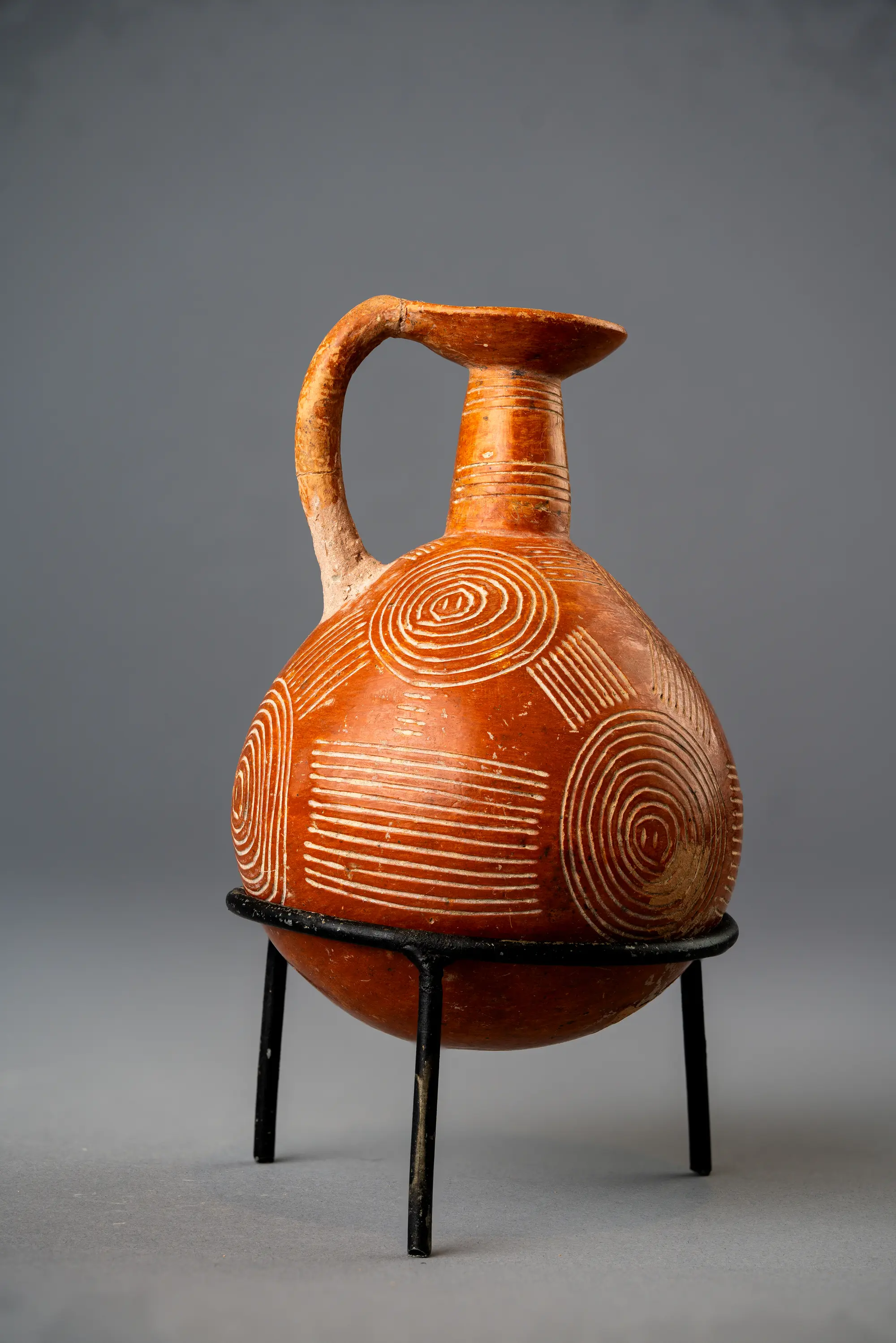
Red Polished Jug with Concentric Circles and Line Panels
Handmade Red Polished jug with a pear-shaped body, flaring mouth and incised concentric circles alternating with blocks of parallel lines; c. 2100–1850 BCE.
Date
2100 - 1850 BC
Accession No.
JUG-BA-003
Collection
Alexis Drakopoulos
Provenance
- c. 1965–2025, The Goodman Collection (acquired 1965–1969)
- 2025–present, Alexis Drakopoulos, London
Early Cypriot III to Middle Cypriot I, c. 2100–1850 BCE · Red Polished ware · Handmade, incised and white-filled
A handmade jug with a round base and a pear-shaped body that swells low and narrows to a tapering neck, which opens into a broad, flaring round mouth. The strap handle rises from the rim and meets the shoulder in a thickened base. The burnished slip is a warm orange-red and survives unusually well, with a soft gloss across most of the body.
The decoration is spare and ordered. Groups of horizontal lines ring the neck. On the body, large concentric circles alternate with rectangular blocks of close parallel lines, some set horizontally and some on the diagonal, so that the pattern turns as the jug is rotated. Some of the circles appear to be drawn as spirals. The lower body is left plain. The white fill is crisp, and the rim and handle show small chips.
Commentary
This is a Red Polished jug of the Early Cypriot III to Middle Cypriot I horizon. The polished red slip, the lime-filled incision and the round base, with no flattened standing surface, place it in the Red Polished III group [4]. Its shape, a low-bellied body with a narrow neck and wide flaring mouth, is close to that of an excavated juglet the British Museum classes as Stewart's Type IB³c1 var. a [1].
Its decorative scheme has a close excavated match. A Red Polished III juglet from Ayia Paraskevi, near Nicosia, now in the British Museum, is described as having "concentric circles with bands of parallel lines in between on the body and shoulder" and rings of lines on the neck [1]. That is the formula used here: a small number of motifs, repeated with care and arranged so that circles and line blocks take turns around the body. The Ayia Paraskevi juglet is dated Early Cypriot III to Middle Cypriot II, c. 2100–1750 BCE, which is consistent with a date of about 2100–1850 BCE for this piece. A Cesnola juglet in the Metropolitan Museum [2] and a Red Polished III juglet in Leiden [3] use the same circle-and-panel grammar on similar bodies.
Concentric circles were common across the island in this period, and they were used with particular emphasis in the north-west, at Deneia and Lapithos [5]. The restrained layout here, with open plain ground between motifs, is closer to central Cypriot work such as the Ayia Paraskevi juglet than to the crowded and heavily modelled style of Deneia. That comparison is stylistic only, and the jug has no recorded find-spot.
Jugs like this were household liquid containers that also went into the grave. The slip is bright and even over large areas. Some Red Polished pieces on the market in the twentieth century were cleaned, or had their incisions refilled with fresh white paste, and the surface of this jug has yet to be examined under magnification for such treatment. The photographs give no reason to doubt that the vessel itself is ancient.
References
- 1.British Museum, London, 1888,0927.21. Red Polished III juglet from Ayia Paraskevi, concentric circles with bands of parallel lines, Stewart Type IB³c1 var. a, Early Cypriot III–Middle Cypriot II, H. 15.5 cm.
- 2.Metropolitan Museum of Art, New York, 74.51.1199 (Cesnola Collection). Incised Red Polished juglet with concentric circles, H. 16.2 cm.
- 3.Rijksmuseum van Oudheden, Leiden, SvL 300. Red Polished III juglet, Early Cypriot III–Middle Cypriot I, H. 14 cm.
- 4.Brown, A.C. & Catling, H.W. (1980) Ancient Cyprus. Oxford: Ashmolean Museum, p. 27.
- 5.Webb, J.M. (2010) 'The ceramic industry of Deneia: crafting community and place in Middle Bronze Age Cyprus', in D. Bolger & L.C. Maguire (eds), The Development of Pre-State Communities in the Ancient Near East: Studies in Honour of Edgar Peltenburg. BANEA Publication Series 2. Oxford: Oxbow, pp. 174–184.
More from the Catalogue
Browse related objects
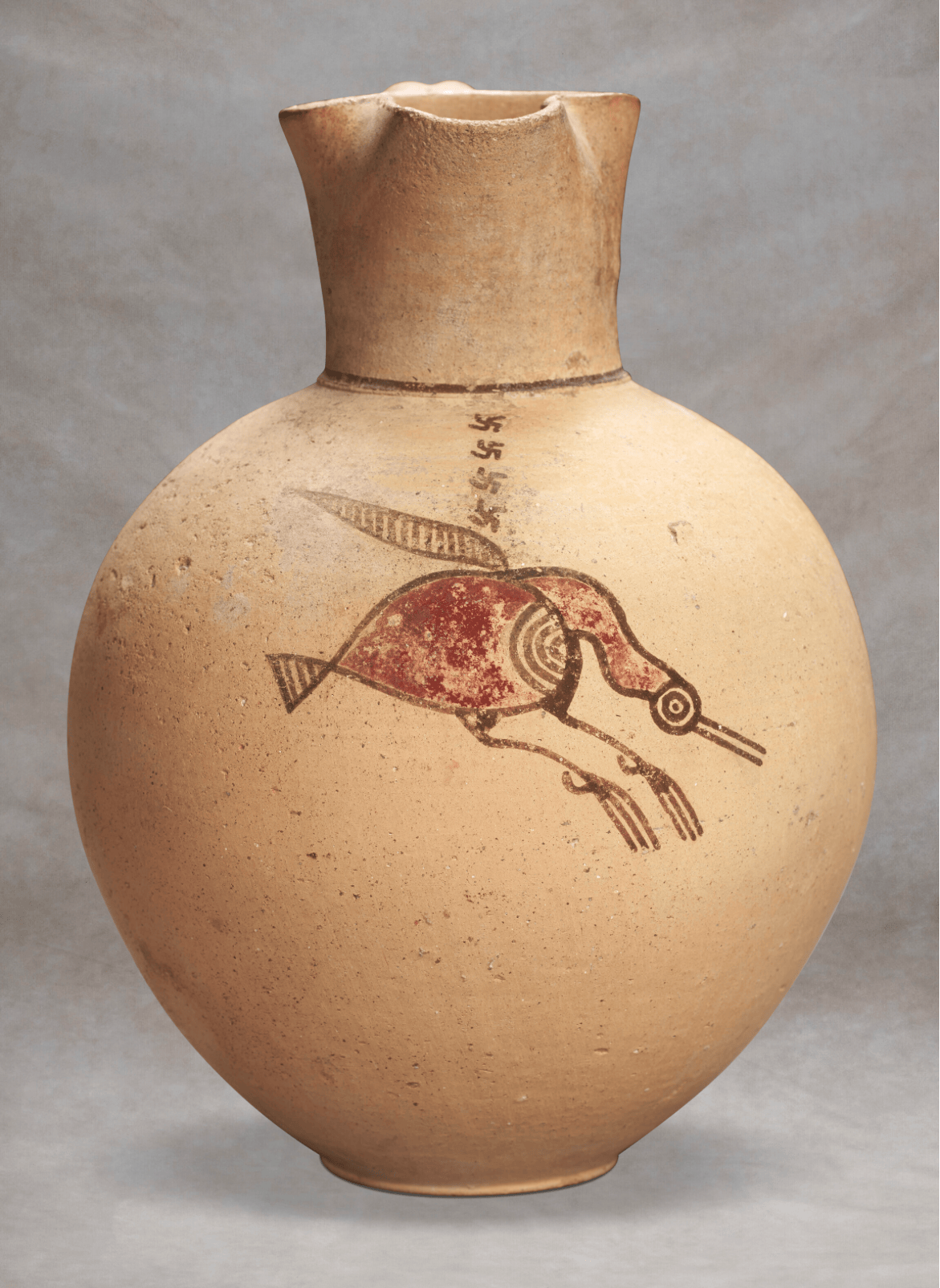
Bichrome Oinochoe
Archaic I
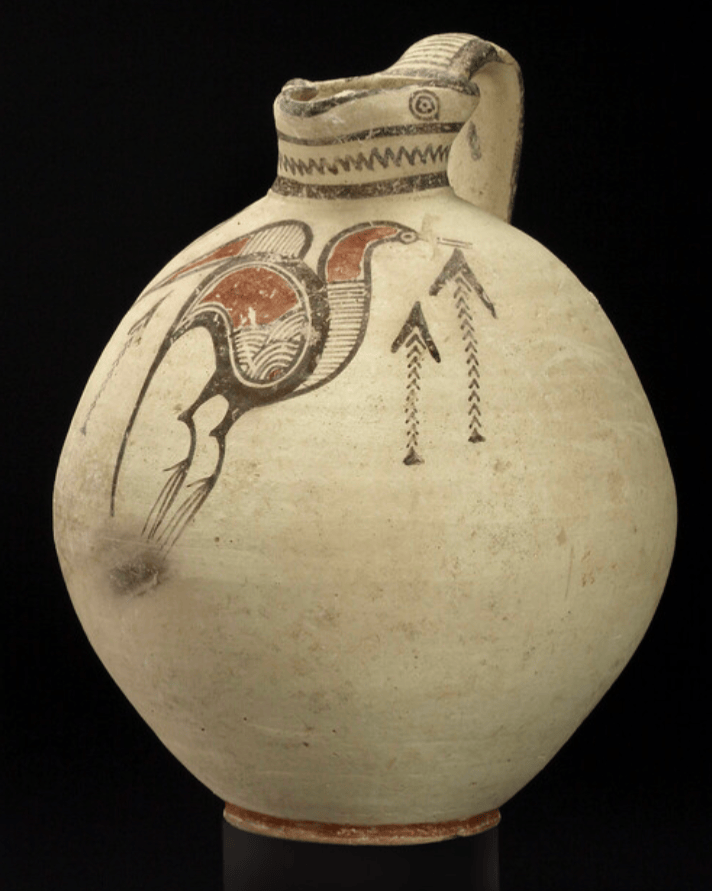
Free-field bichrome jug with image of an Ibis bird and reeds
Archaic
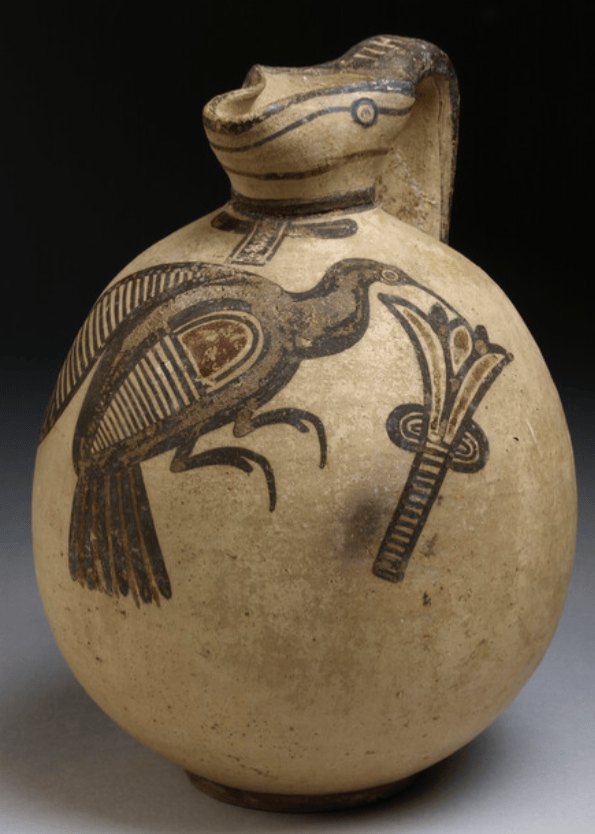
Squat bichrome jug in free-field style with image of bird picking a lotus flower
Archaic
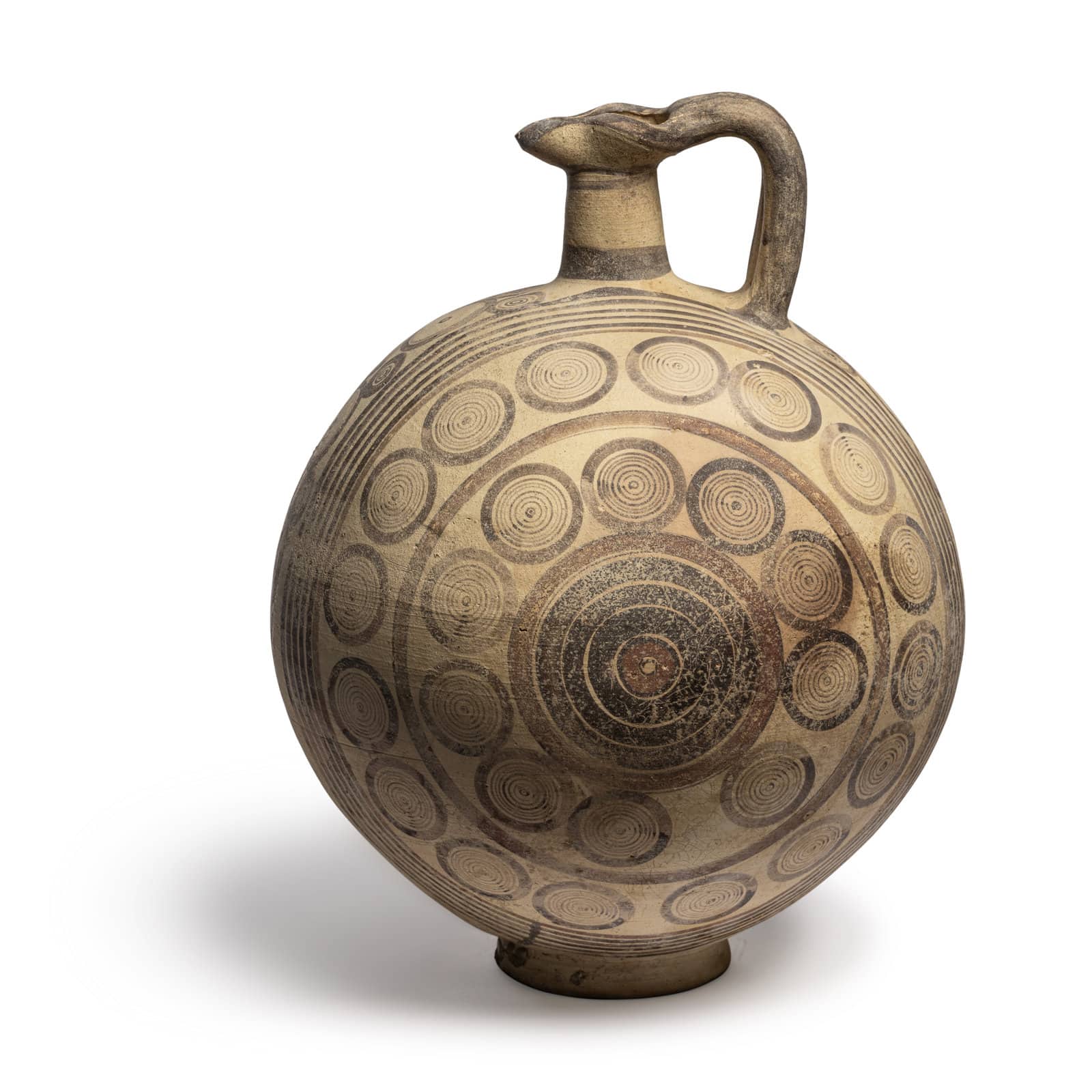
A Cypriot Bichrome-Ware Oinochoe Jug
Archaic I
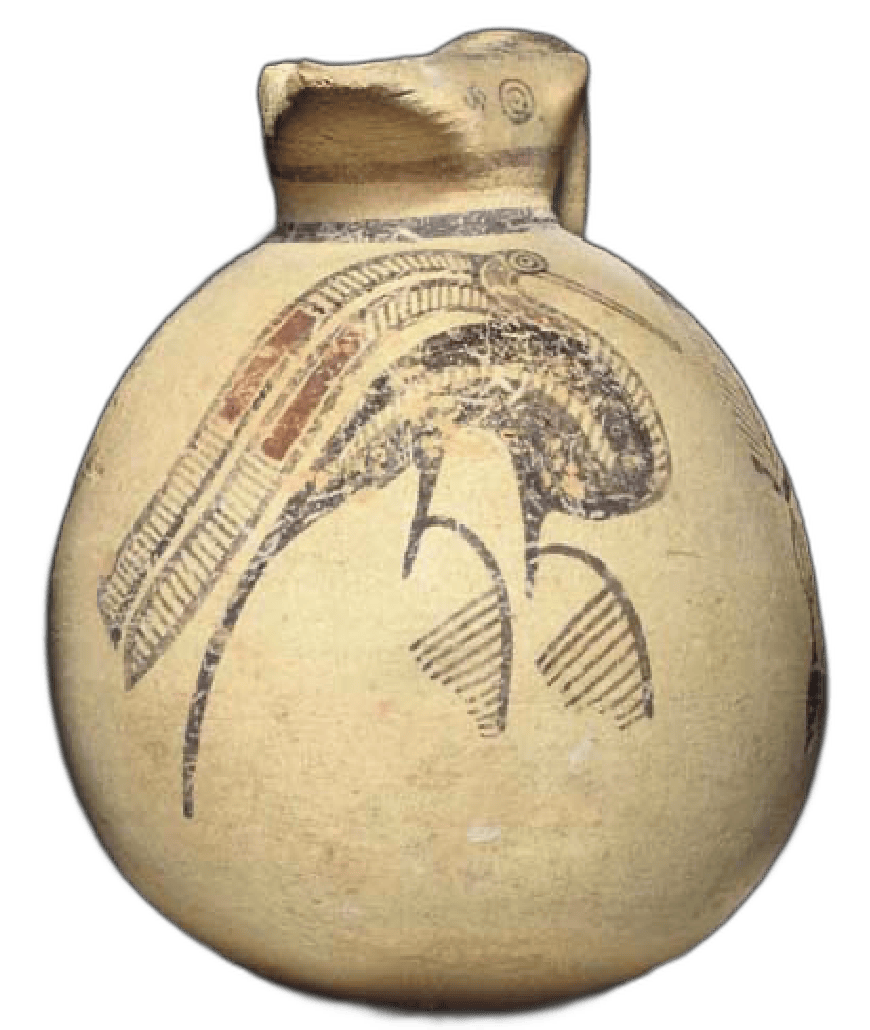
Oinochoe with Free Field Bird
Archaic I
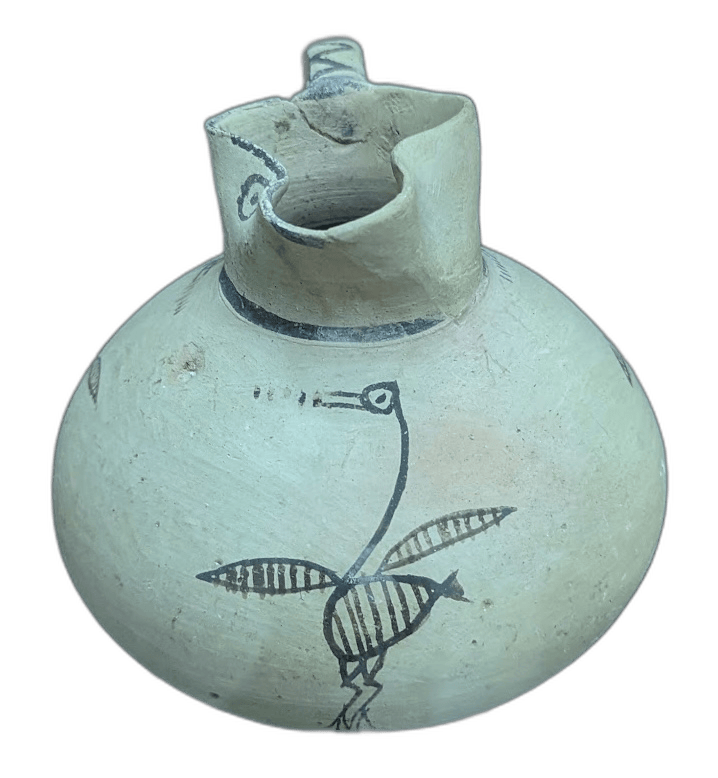
Small Oinochoe with Free Field Bird
Archaic I
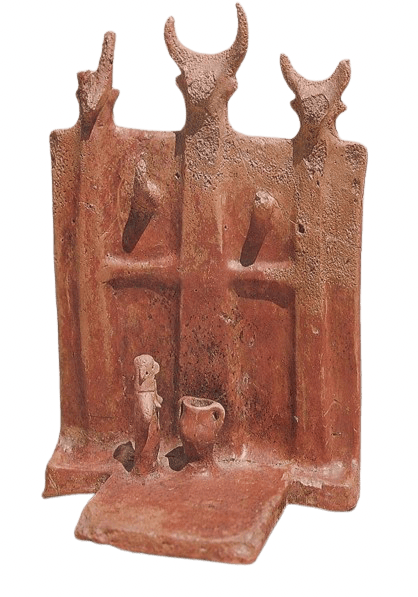
Red Polished Shrine
Middle Bronze Age I
Black-On-Red Geometric Jug Sherd
Geometric II
Bichrome Jug
Geometric
Bichrome Juglet
Geometric
Bichrome Oinochoe
Geometric
Juglet
Archaic II
Oinochoe
Geometric III
Jug
Archaic I
Juglet
Archaic I
Jug
Geometric I
Terracotta jug
Early Bronze Age I
Juglet
Geometric I