
Conference paper·Archaeological Research Unit - University of Cyprus·2022
1st Graduate Forum for Mediterranean Archaeology: Ceramic Technology and Provenance in Cyprus and the Eastern Mediterranean
Sarah, Chase Minos, Timothée Ogier, Christiana Kelepeshi and Theodoros Lambropoulos
Chapters
About the video
This session of the 1st Graduate Forum for Mediterranean Archaeology presents five doctoral projects on ceramic technology, provenance and petrography across the eastern Mediterranean, two of which examine material from Cyprus.
The first speaker, Sarah from University College London, presents an archaeometric study of Early Bronze Age III/IV and Early Iron Age ceramics from copper-producing sites in the Faynan district of southern Jordan, sampled at the University of California San Diego. Combining macroscopic examination, thin-section petrography and portable XRF on powdered samples from Khirbat Hamra Ifdan and Khirbat al-Jariya, she identifies quartz-tempered, shale-tempered and carbonate-rich fabrics and compares their geochemical groupings across the two periods.
Chase Minos of the Cyprus Institute examines ceramic technology in Cyprus in the Late Bronze Age, from Late Cypriot IA to IIB (c. 1675 to 1340 BCE), focusing on how the introduction of the potter's wheel affected raw material selection and paste preparation at Enkomi and the inland cluster of Ayios Sozomenos in the Yialias valley. Reviewing past excavations by Porphyrios Dikaios and Claude Schaeffer at Enkomi and by Despo Pilides at Ayios Sozomenos, as well as fabric classifications by Lindy Crewe, he outlines a study of Plain White and Red and Black Slip handmade and wheelmade wares combining macroscopic traces, petrography, XRF, scanning electron microscopy, clay sampling along the Pedieos and Yialias rivers, and experimental firing.
Timothée Ogier presents a study of Middle Bronze Age to Early Iron Age cooking wares from the tell of Toumba Thessalonikis in central Macedonia. Drawing on samples from three Late Bronze Age buildings, he uses the chaîne opératoire approach, petrography and use-wear traces such as soot patterns to reconstruct coiling techniques, local igneous and quartzitic fabrics, and cooking methods.
Christiana Kelepeshi presents petrographic and ICP-OES/ICP-MS geochemical results on around 100 tableware samples from Sagalassos in southwest Asia Minor, spanning the Hellenistic to early medieval periods. Using hierarchical cluster analysis and principal component analysis, she identifies eight clusters across Hellenistic grey and colour-coated wares, Sagalassos Red Slip Ware, imported Eastern Sigillata A and early Byzantine wares, showing continuous exploitation of local clays alongside changes in levigation and firing.
Theodoros Lambropoulos of the University of Cyprus presents a petrographic study of 75 seventh-century cooking-pot samples from four church complexes in southern Cyprus: Katalymata ton Plakoton at Akrotiri, Ayioi Pente at Yeroskipou, Kalavasos-Kopetra and Panagia Kofinou. He distinguishes handmade and slow-wheel casseroles made from local Troodos ophiolitic and red mudstone clays from wheel-thrown globular Diorios-type cooking pots, arguing that a prevalent quartz-rich sand-tempered fabric in the latter points to imports from the Levantine coast alongside local Cypriot production. A joint question-and-answer session follows.
From our collection
Pieces in the Drakopoulos collection of the kinds and periods this talk covers: Black Slip ware (Bronze Age), Black Slip ware (Iron Age), Late Cypriot (Late Bronze Age).
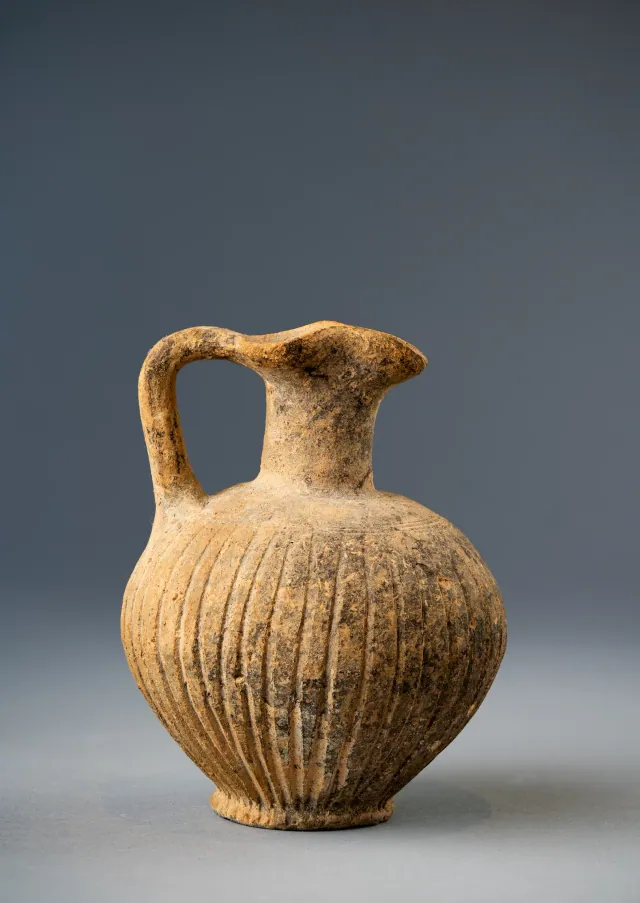
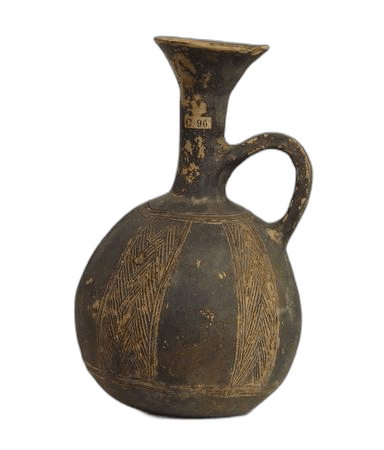
Black Slip Bucchero Jug with Trefoil Mouth and Fluted Body
Black Slip ware (Iron Age)
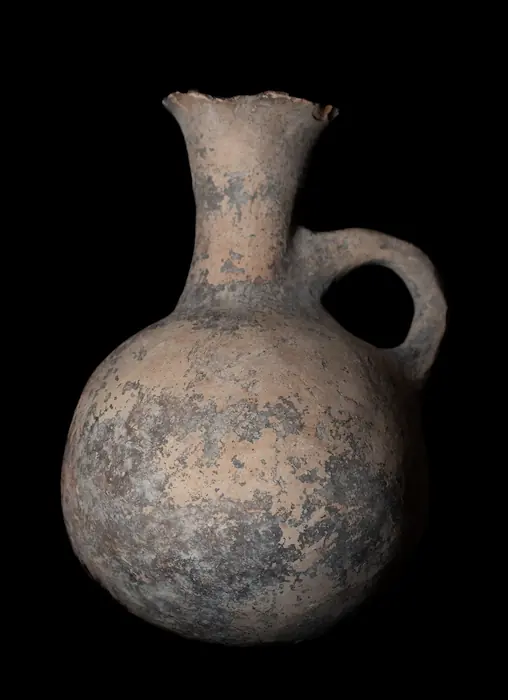
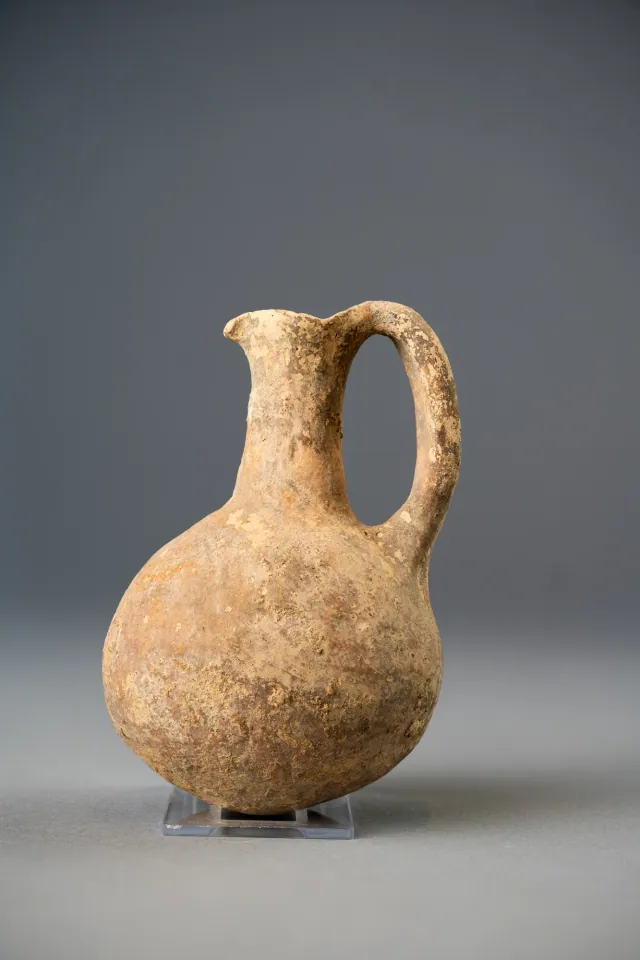
Jug with Flaring Neck, probably Black Slip Ware
Black Slip ware (Bronze Age)
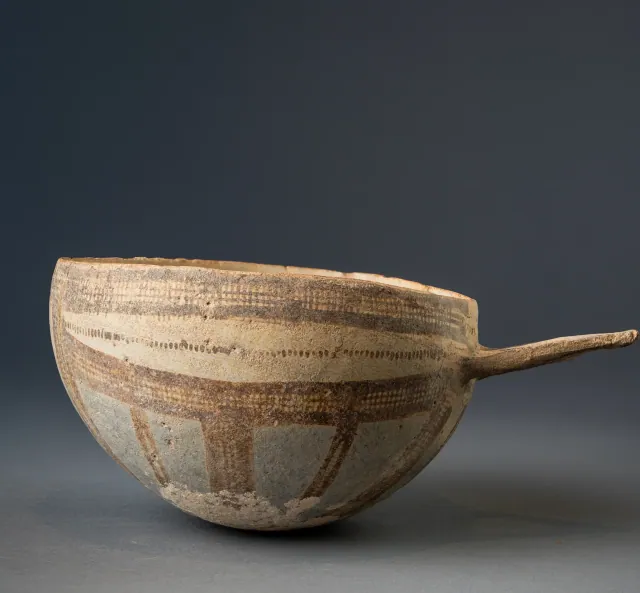
White Slip II Hemispherical Bowl with Wishbone Handle
Late Cypriot (Late Bronze Age)
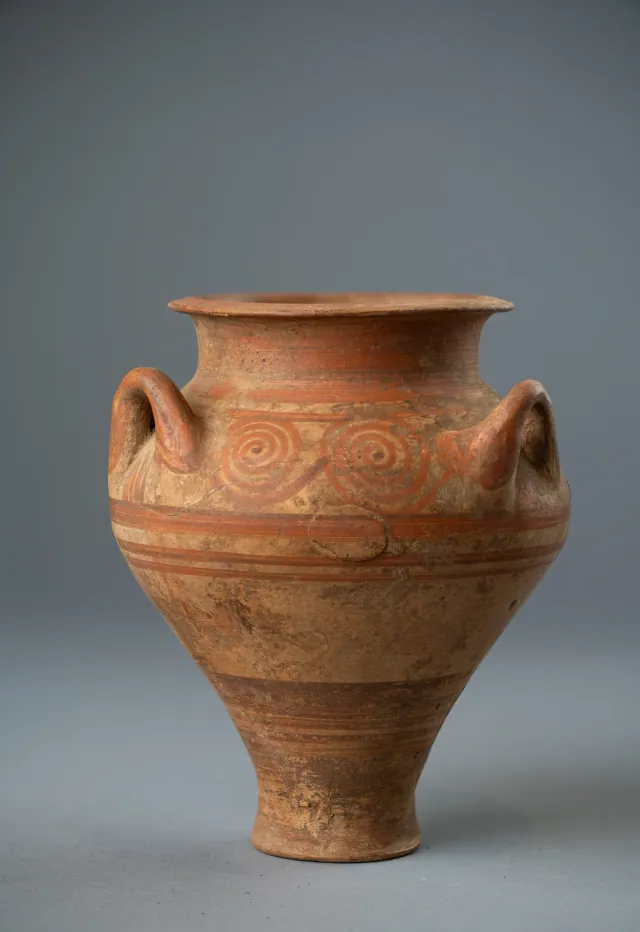
Cypriot Three-Handled Jar in the Mycenaean Style with Running Spirals
Late Cypriot (Late Bronze Age)
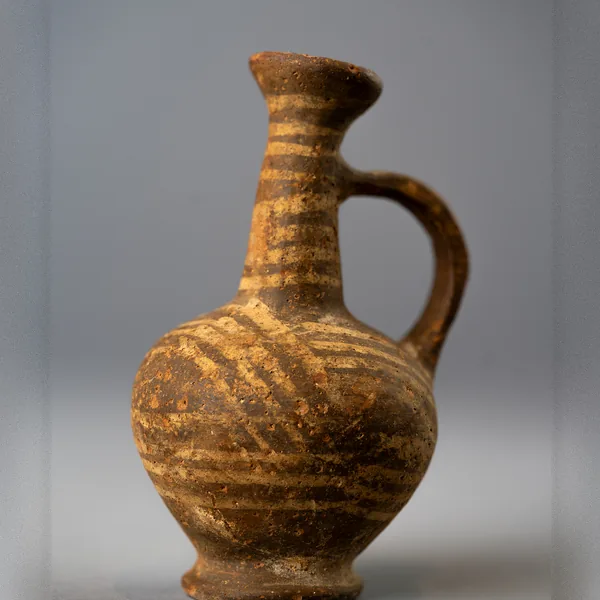
Base Ring II Bilbil Juglet with White-Painted Bands
Late Cypriot (Late Bronze Age)
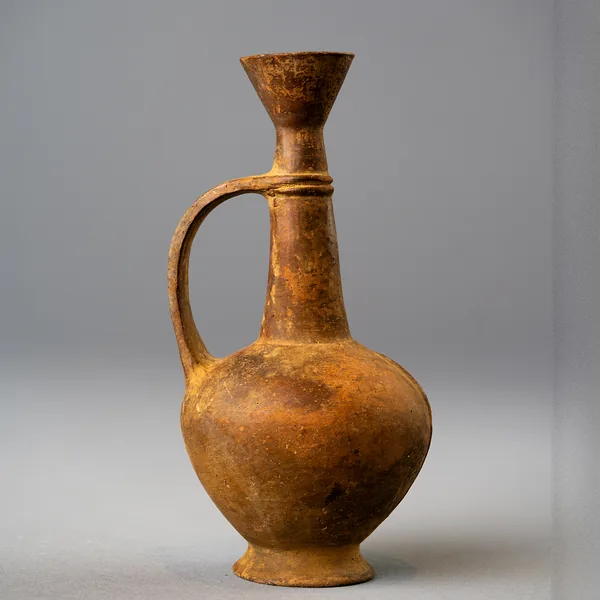
Base Ring Bilbil Juglet with Funnel Mouth and Neck Ridge
Late Cypriot (Late Bronze Age)
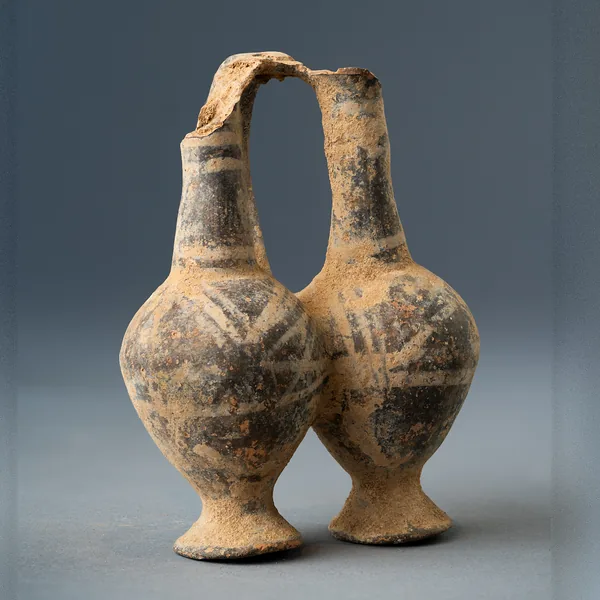
Base Ring II Double Juglet with White-Painted Decoration
Late Cypriot (Late Bronze Age)
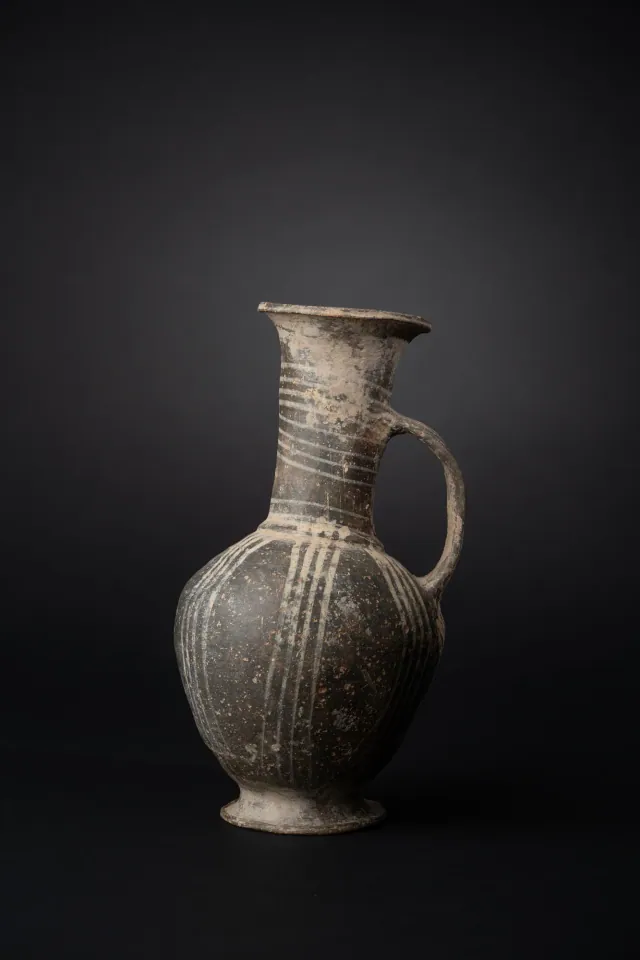
Base Ring II Jug with White-Painted Lattice Bands
Late Cypriot (Late Bronze Age)
Found at the places discussed
Objects in our catalogue, in museum collections, recorded as found at these sites.



Background
Where to read more on this site before or after watching.
The site
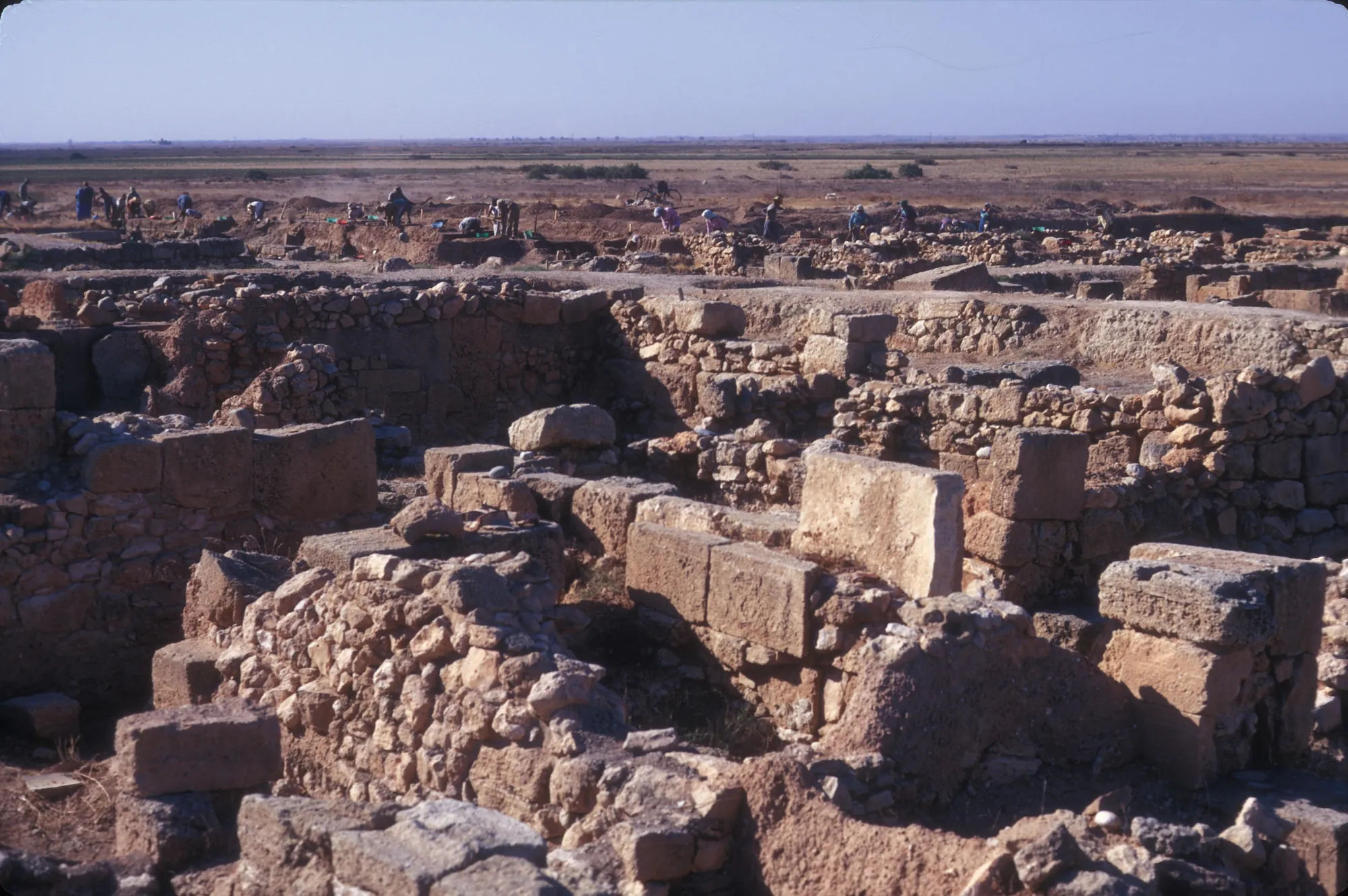
Enkomi
Enkomi is a walled Late Bronze Age town near the mouth of the Pedieos river on the bay of Famagusta, lived in from about 1650 BC until it was gradually abandoned for nearby Salamis. It was a port for Cypriot copper, and its excavations produced metal workshops, sanctuaries with bronze cult statues, rich tombs and the largest group of Cypro-Minoan inscriptions on the island.

In the compendium
Plain White Ware
The undecorated, pale-surfaced pottery of Middle and Late Bronze Age Cyprus, made by hand and later wheel-shaped, the first Cypriot ware formed with the wheel.
In the compendium
Red Slip Ware
Red Slip is the name of three separate Cypriot wares with an all-over red slip, one Middle Cypriot, one Late Cypriot wheelmade and one Iron Age.
In the compendium
Black Slip Ware
Black Slip is the name of two unrelated Cypriot wares, a handmade Middle and early Late Cypriot class and Gjerstad's wheelmade Iron Age class.
Map of Cyprus
Places discussed in the talk
- Has a page on this site
- Other places
- Ground above 200, 500, 1,000 m
Places
- 1Enkomi
- 2Ayios Sozomenos
- 3Yeroskipou (approx.)
- 4Kofinou (approx.)
- 5Diorios (approx.)