
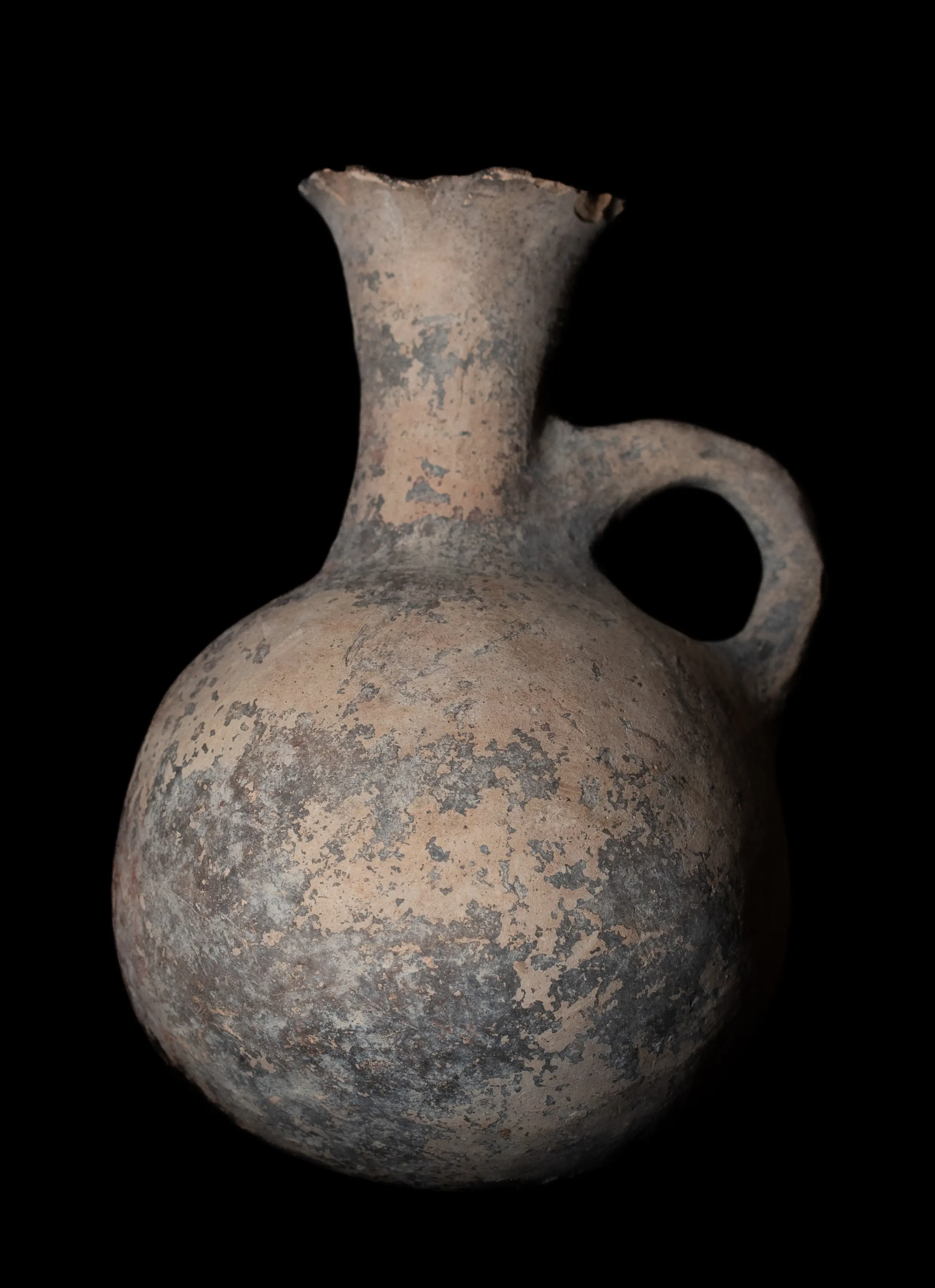
Middle Bronze Age II
Jug with Flaring Neck, probably Black Slip Ware
Handmade Cypriot jug with a globular body, flaring neck and patchy grey-black slip, probably Black Slip ware of the Middle Bronze Age; identification provisional.
Date
1850 - 1600 BC
Accession No.
JUG-BA-020
Collection
Alexis Drakopoulos
Probably Middle Cypriot, c. 1850–1600 BCE (date uncertain) · Probably Black Slip ware · Handmade
A jug with a full globular body and a tall neck that widens steadily into a broad, flaring mouth. The rim is irregular and chipped all round, with a small pinched or broken projection on the handle side. A thick loop handle springs from about the middle of the neck, arches outward and joins the shoulder. The clay shows pinkish buff where the surface has worn away, but much of the neck and body is still covered by a patchy grey-black coat, flaking in small islands. No painted or incised decoration is visible. The base is not shown in the available photograph.
Commentary
This jug was previously published on the site as a White Painted juglet of the Geometric period. Neither description holds. There is no trace of painted decoration anywhere on the visible surface, and the dark coating and the form point to a dark-slipped ware, most probably of the Middle Bronze Age.
The most likely identification is Black Slip ware, the dark-surfaced handmade ware that grew out of late Red Polished and runs through the Middle Cypriot period [1]. The grey-black film, worn away in patches to reveal a lighter body, is consistent with a thin dark slip surviving on a tomb vessel. Two Black Slip II jugs excavated by the Swedish Cyprus Expedition give the closest matches for the body, neck and handle: one from Lapithos Tomb 702, dated Middle Cypriot II–III, with a worn surface (Medelhavsmuseet L. 702:059) [2], and one from Ayios Iakovos Tomb 6, dated Middle Cypriot III (Medelhavsmuseet A.J. 006:011) [3].
The identification cannot be closed from a single photograph. Dark-slipped jugs of broadly similar outline were also made in the Early Iron Age: a Black Slip jug from Lapithos Tomb 701 in Stockholm is dated Cypro-Geometric II (Medelhavsmuseet L. 701:016) [4]. The deciding evidence is the base and the method of manufacture. A rounded base and a handmade, slightly asymmetrical body would confirm the Middle Bronze Age date; a flat or ring base or signs of the wheel would favour the Iron Age. The grey film should also be checked to establish whether it is a slip or a surface deposit. Until then the jug is catalogued as probably Middle Cypriot, c. 1850–1600 BCE, with the ware given as probably Black Slip.
Jugs of this size were pouring vessels, and nearly all surviving examples come from tombs. The find-spot of this one is unrecorded.
References
- 1.Åström, P. (1972) The Swedish Cyprus Expedition IV:1B. The Middle Cypriote Bronze Age. Lund: The Swedish Cyprus Expedition.
- 2.Medelhavsmuseet, Stockholm, L. 702:059. Jug, Black Slip II, Lapithos Tomb 702, Middle Cypriot II–III, H. 19.7 cm. Swedish Cyprus Expedition. Collection online record.
- 3.Medelhavsmuseet, Stockholm, A.J. 006:011. Jug, Black Slip II, Ayios Iakovos Tomb 6, Middle Cypriot III, H. 23.4 cm. Swedish Cyprus Expedition 1929. Collection online record.
- 4.Medelhavsmuseet, Stockholm, L. 701:016. Jug, Black Slip II, Lapithos Tomb 701, Cypro-Geometric II, H. 17.8 cm. Swedish Cyprus Expedition. Collection online record.
More from the Catalogue
Browse related objects
Bichrome Oinochoe
Archaic I
Free-field bichrome jug with image of an Ibis bird and reeds
Archaic
Squat bichrome jug in free-field style with image of bird picking a lotus flower
Archaic
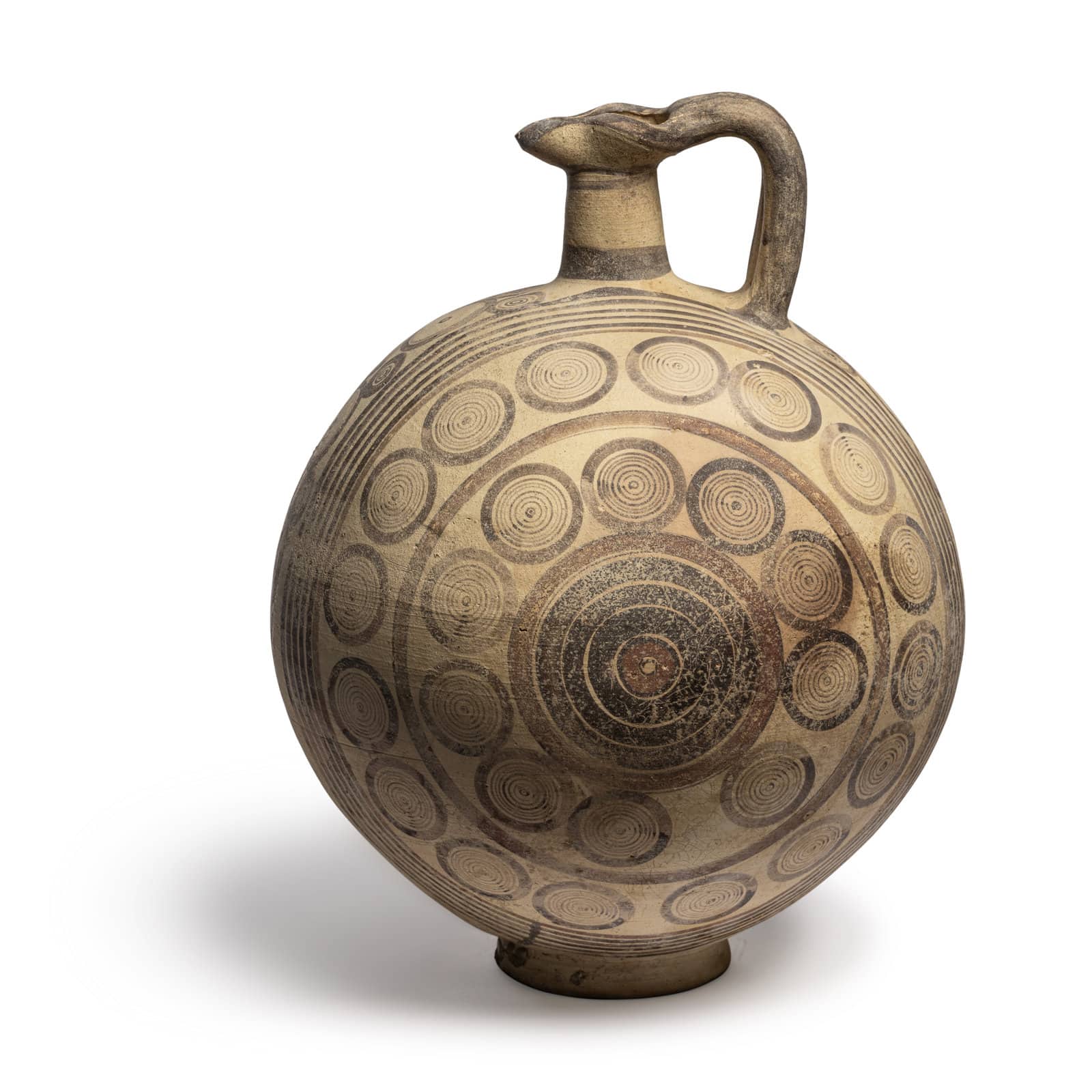
A Cypriot Bichrome-Ware Oinochoe Jug
Archaic I
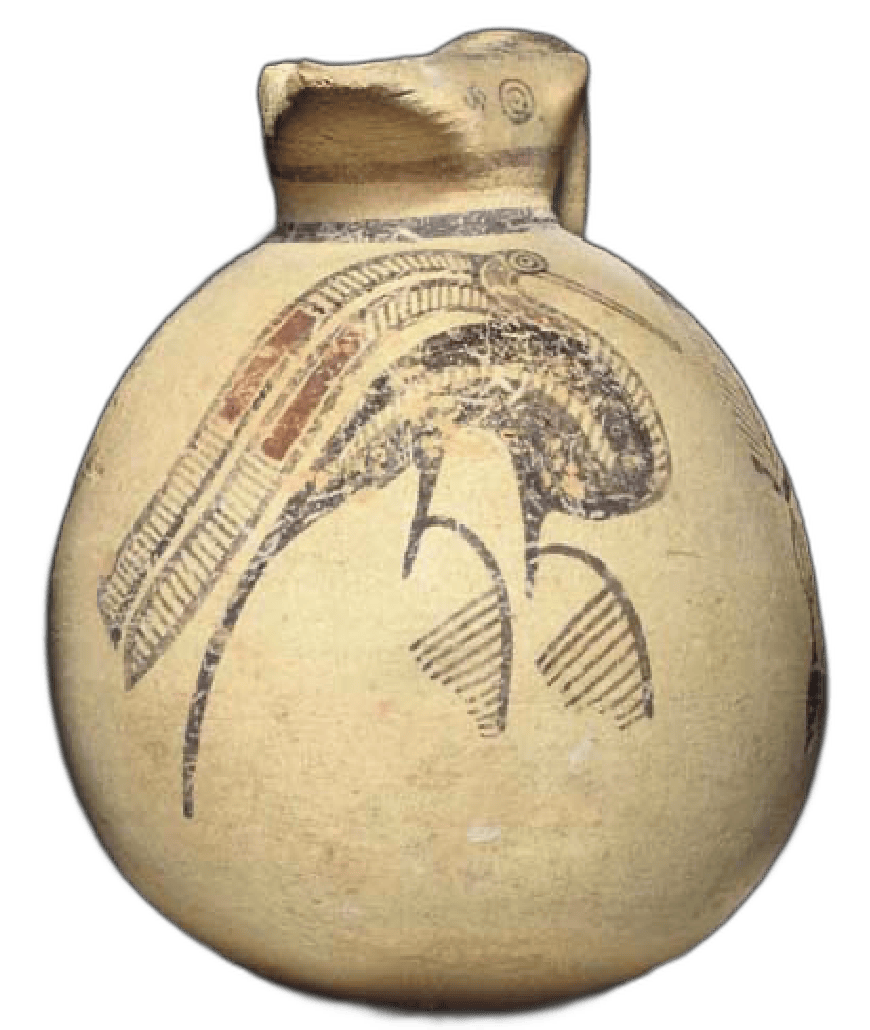
Oinochoe with Free Field Bird
Archaic I
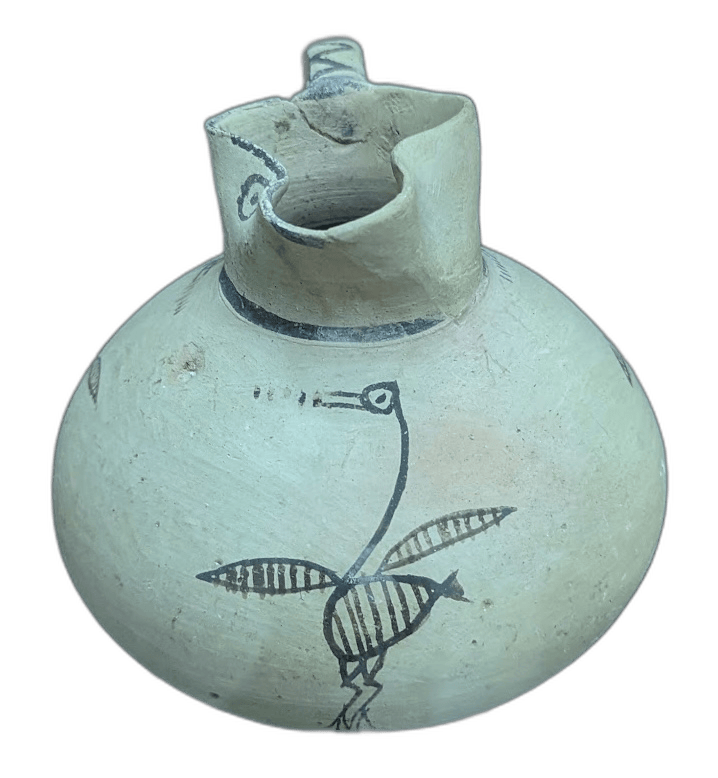
Small Oinochoe with Free Field Bird
Archaic I
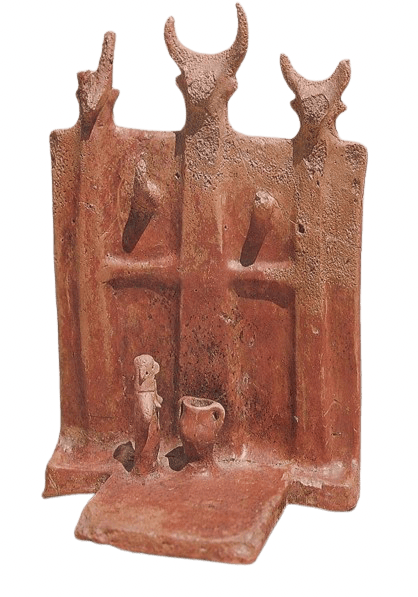
Red Polished Shrine
Middle Bronze Age I
Black-On-Red Geometric Jug Sherd
Geometric II
Bichrome Jug
Geometric
Bichrome Juglet
Geometric
Bichrome Oinochoe
Geometric
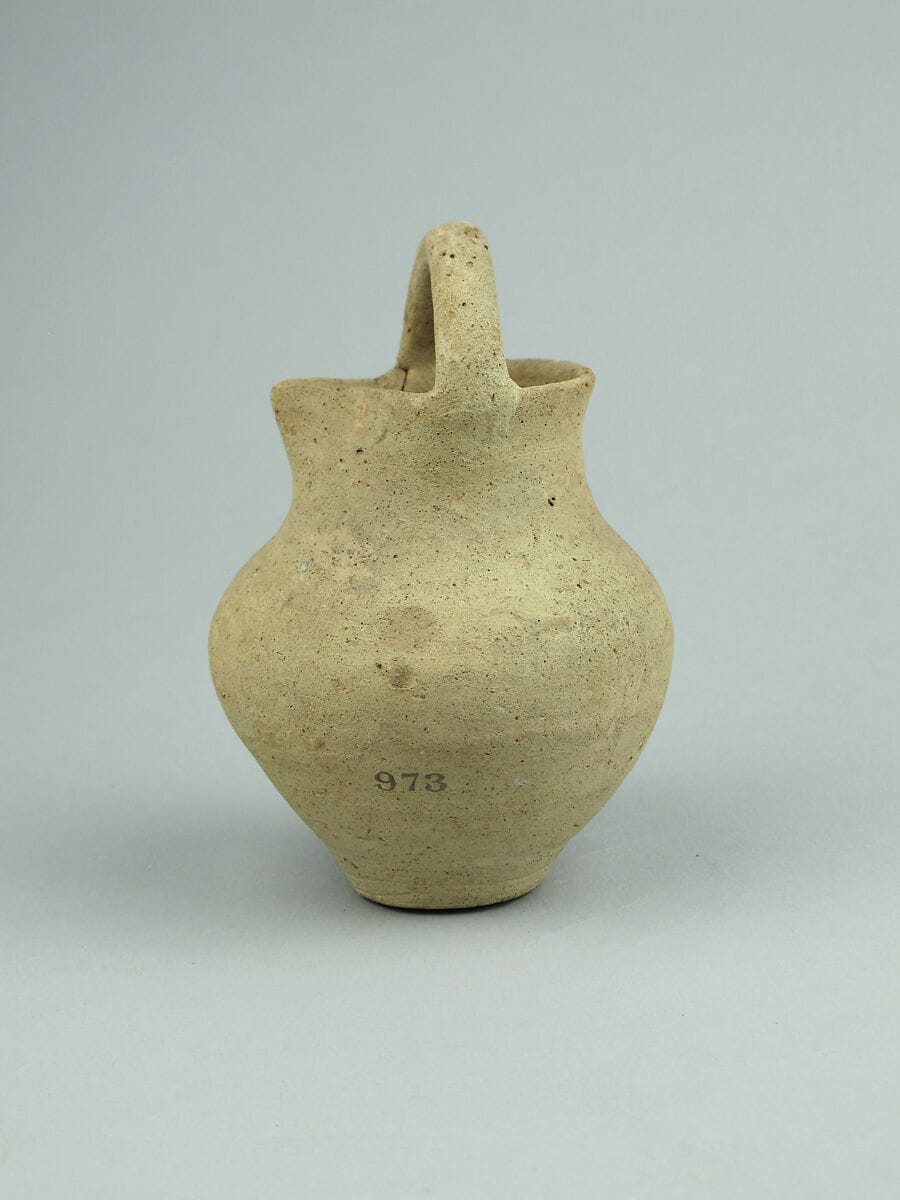
Juglet
Archaic II
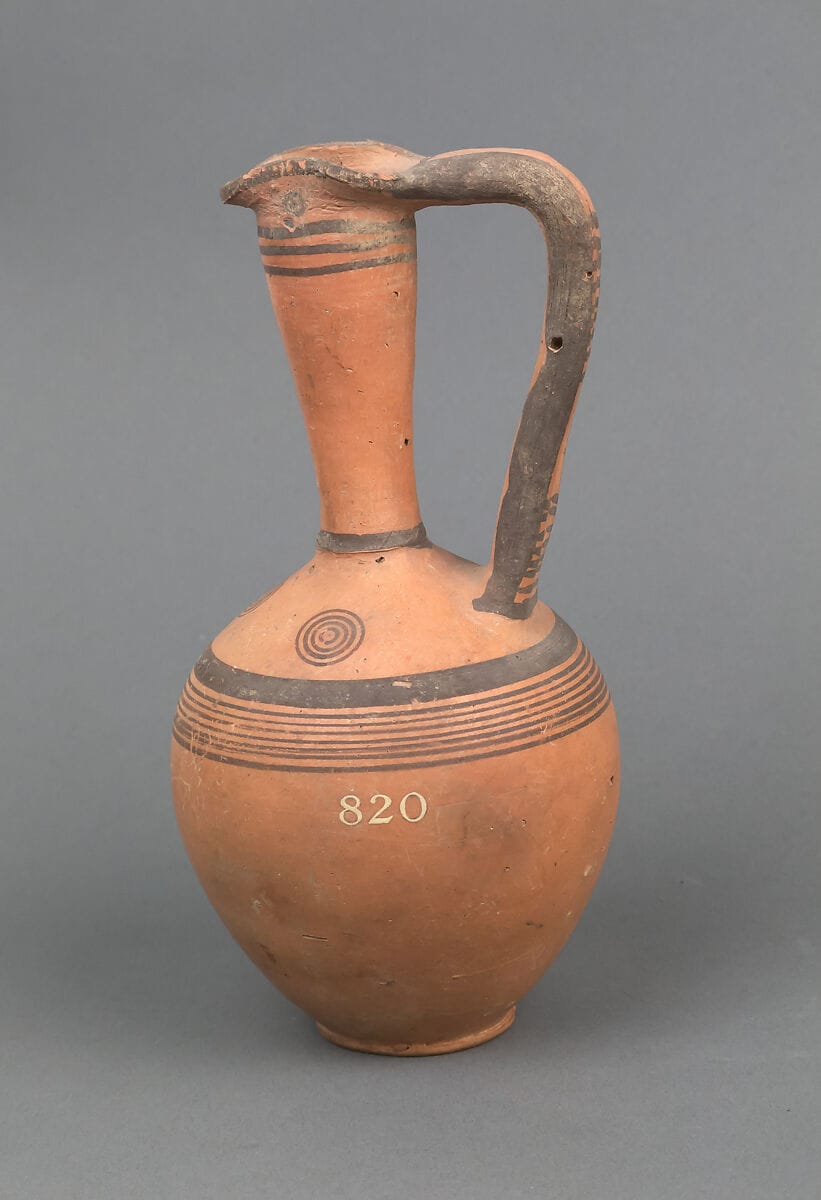
Oinochoe
Geometric III
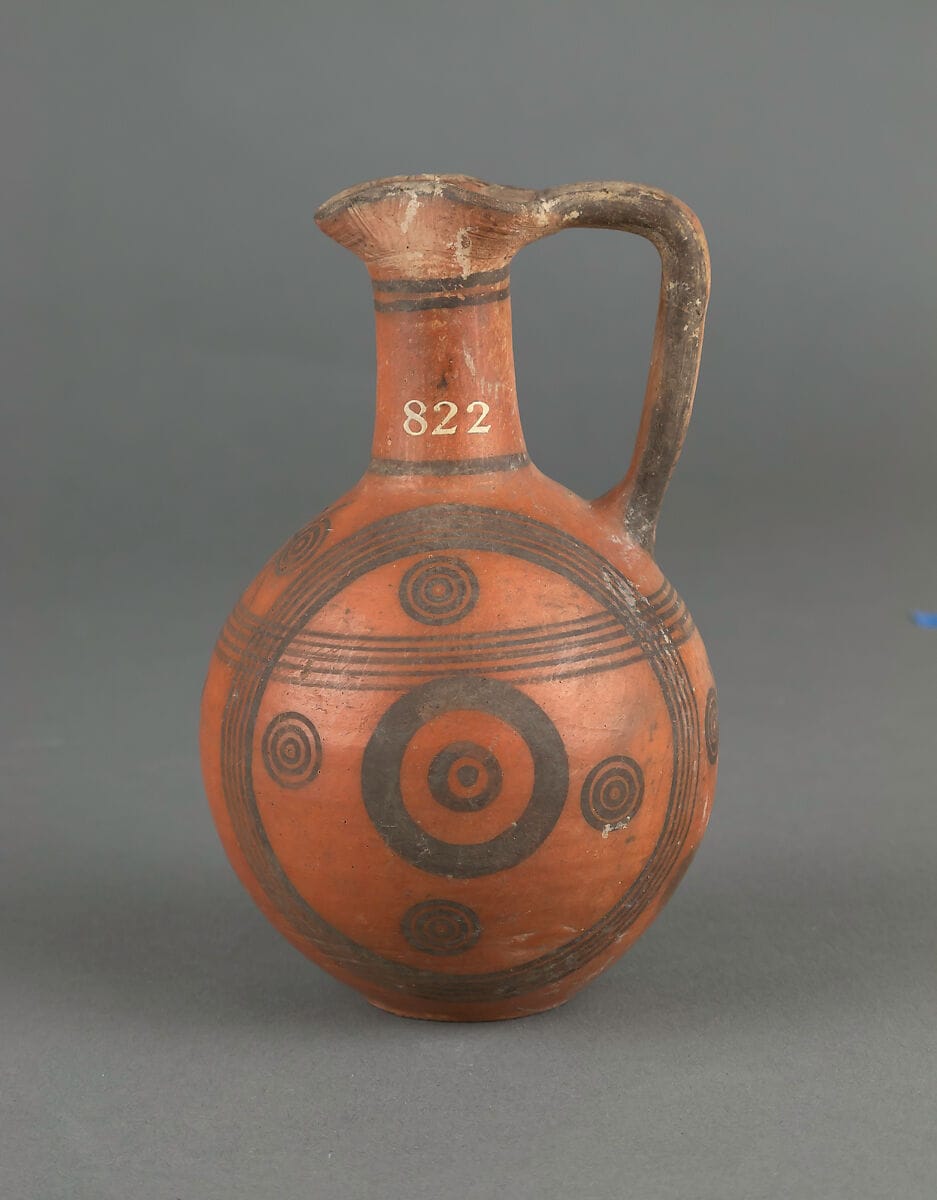
Jug
Archaic I
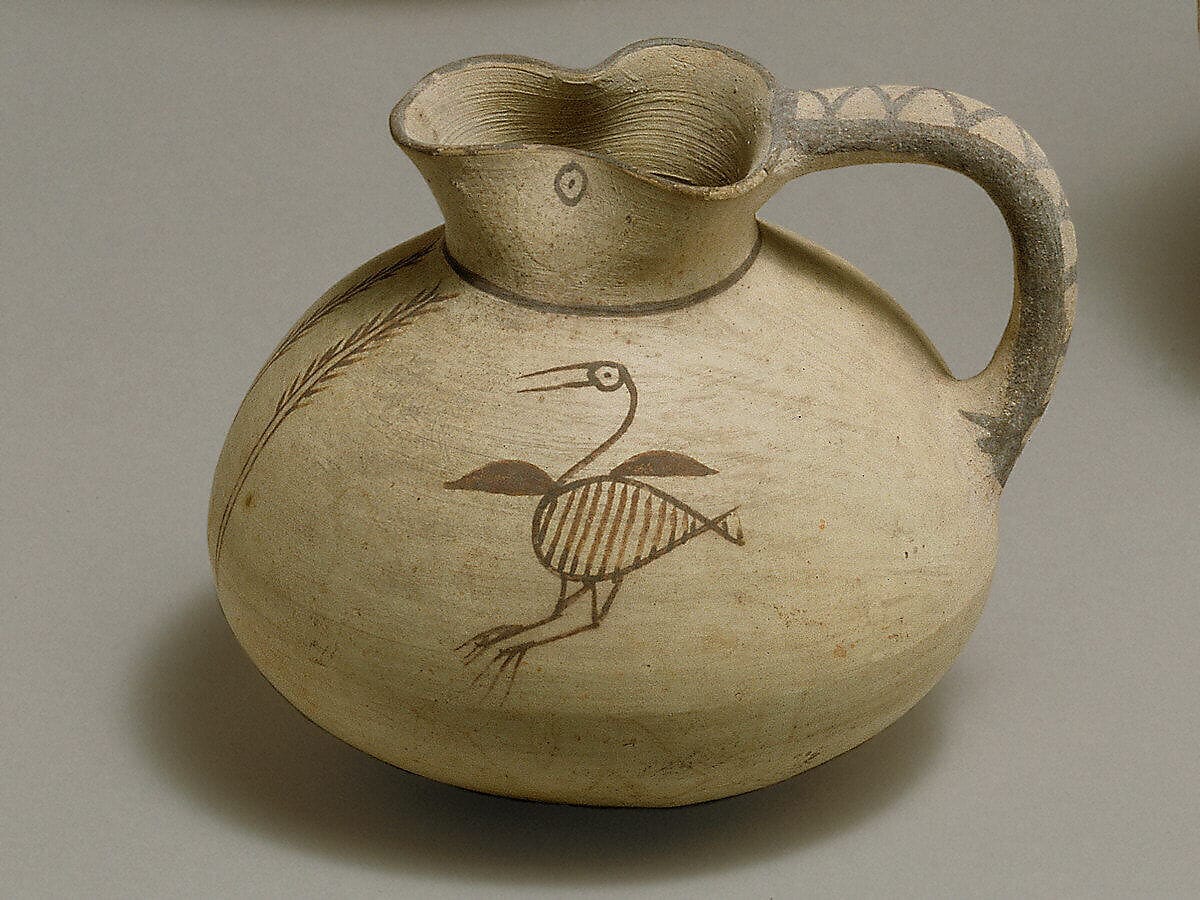
Juglet
Archaic I
Jug
Geometric I
Terracotta jug
Early Bronze Age I
Juglet
Geometric I