
Workshop·CAARI Cyprus·2026
Ceramic Production and the Introduction of the Potter's Wheel in Bronze Age Cyprus
Michalis Pappas and Maria Alonetou
Chapters
About the video
Delivered as part of the CraftCY Workshop at CAARI, this session combines an archaeological lecture on Cypriot ceramics with an outdoor practical demonstration alongside potters Michalis Pappas and Maria Alonetou. The speaker, a postdoctoral fellow at CAARI and a practising potter, begins with the chaîne opératoire of pottery production, from clay extraction and processing to forming, surface treatment and firing.
To illustrate these steps, the talk compares the two main traditional potting centres of Cyprus: Kornos in the Troodos foothills and Lapithos on the northern slopes of the Pentadaktylos range. Kornos potters combined red earth and sandy clay, switching after the mid-twentieth century to clay from Stavrovouni, and built vessels by coiling on a turntable before firing them in updraft kilns at around 800 degrees Celsius. At Lapithos, potters levigated naturally fine clays, threw vessels on the kick wheel and fired them twice at higher temperatures for glazing; after the displacement of 1974, Lapithos potters such as Panayiotis Pappas sourced new clays around Aglantzia in Nicosia.
The second half traces technological change from the Chalcolithic through the Bronze Age, following the tripartite chronology of Einar Gjerstad. After the appearance of the Philia phase and Red Polished ware in the Early Bronze Age, potters in the Middle Bronze Age adopted clay levigation, thicker slips (as seen at Maroni and Alambra) and higher firing temperatures, while still working without rotational devices. In the Late Bronze Age, new handmade wares emerged alongside the potter's wheel: Base Ring ware, which used a turntable for secondary thinning and smoothing, and White Slip ware, fired above 1,000 degrees Celsius from specialised white clays. Unlike on Crete, the wheel in Cyprus was applied immediately to utilitarian wares such as Plain White ware and Red and Black Slip as well as fine wares, often through combination techniques like wheel-coiling.
The speaker concludes with doctoral and postdoctoral research on everyday wares from Enkomi and Ayios Sozomenos, combining ceramic petrography, local clay sampling and experimental reproduction on turntables and kick wheels. At Enkomi, multiple workshops shared a clay recipe tempered with igneous sand and microfossils while favouring wheel-coiling. At Ayios Sozomenos, where a Late Bronze Age kiln was found, potters used coarse Troodos-derived clays, imported some vessels from the east, and relied far more on hand-building with rotational finishing. The video closes with footage of the outdoor wheel and turntable demonstrations.
From our collection
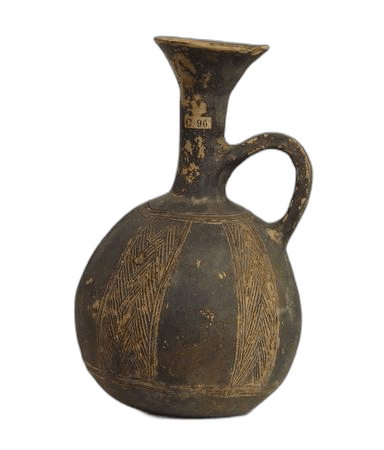
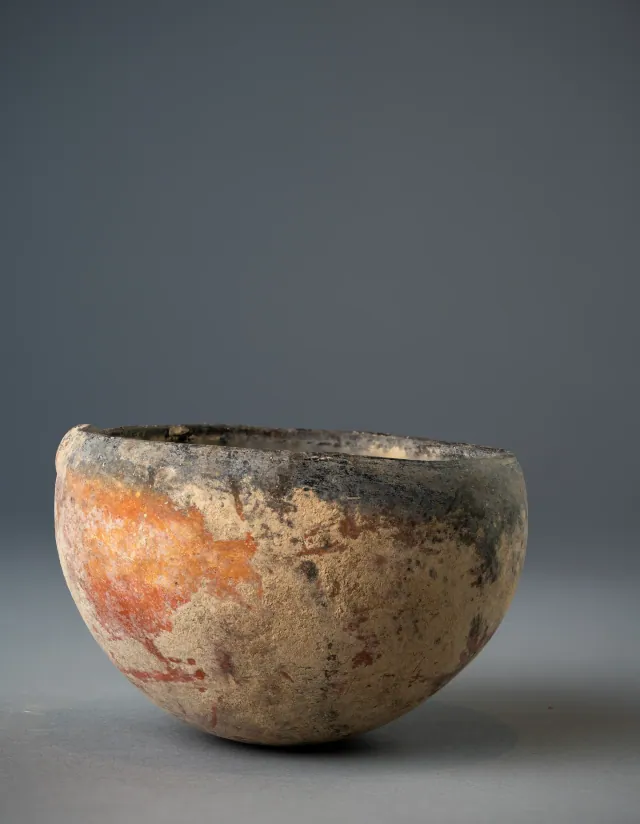
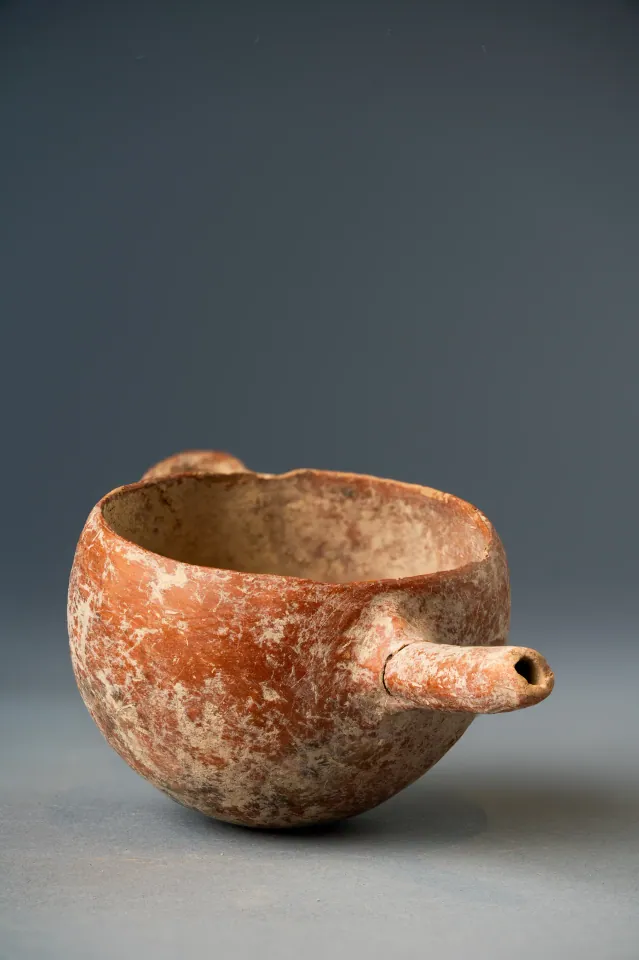
Pieces in the Drakopoulos collection of the kinds and periods this talk covers: Red Polished ware, Base Ring ware.
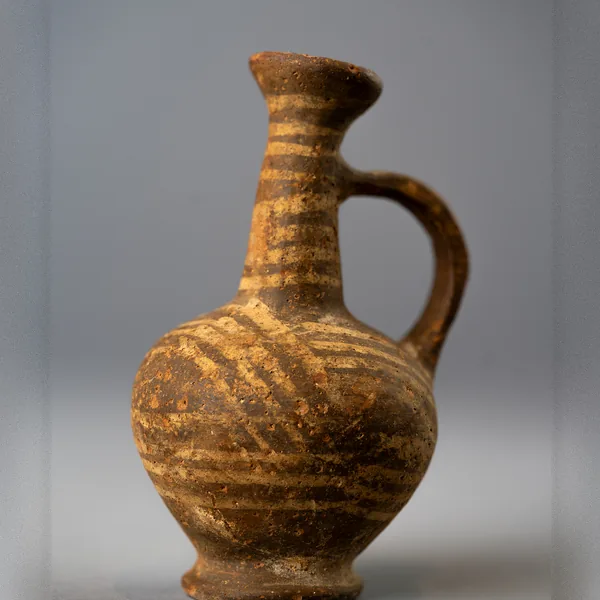
Base Ring II Bilbil Juglet with White-Painted Bands
Base Ring ware
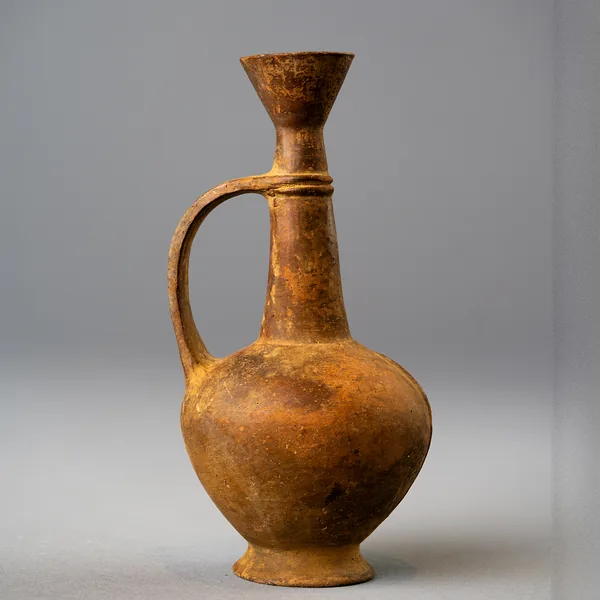
Base Ring Bilbil Juglet with Funnel Mouth and Neck Ridge
Base Ring ware
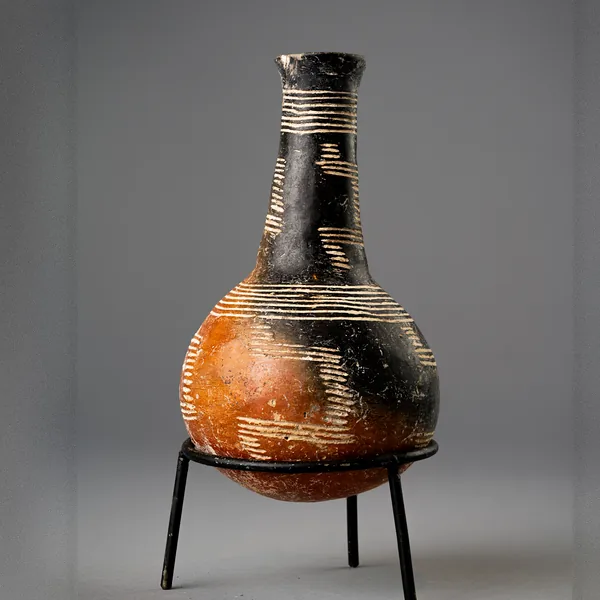
Red Polished Black-Topped Bottle with Stepped Incised Bands
Red Polished ware
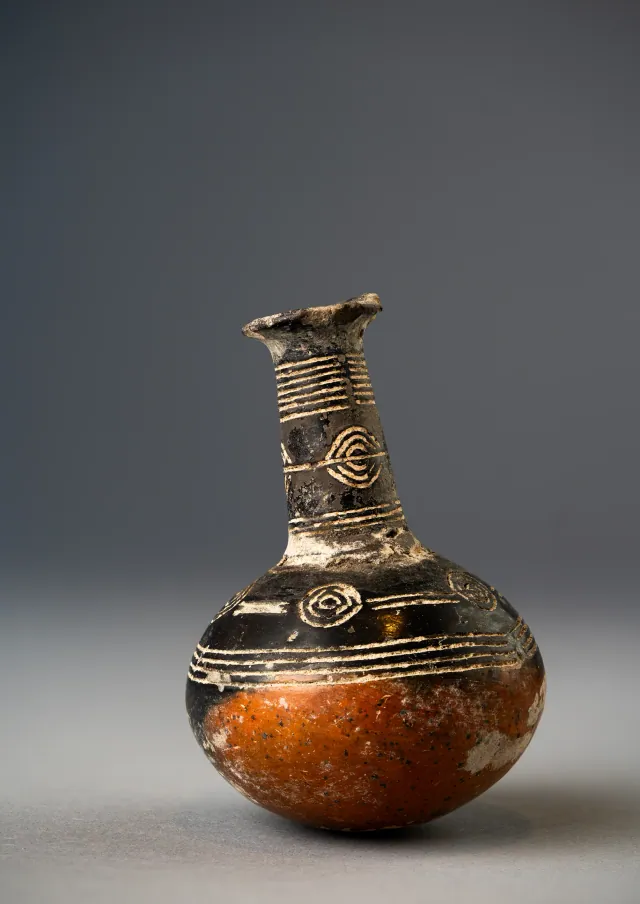
Red Polished Black-Topped Bottle with Incised Concentric Circles
Red Polished ware
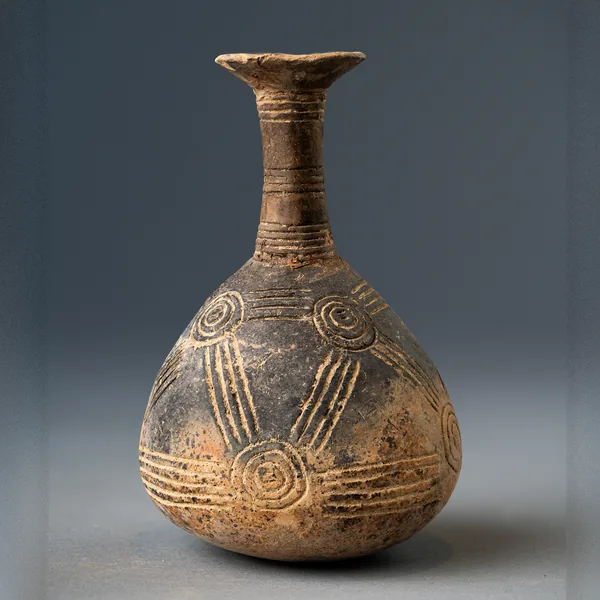
Red Polished Bottle with Linked Concentric Circles
Red Polished ware
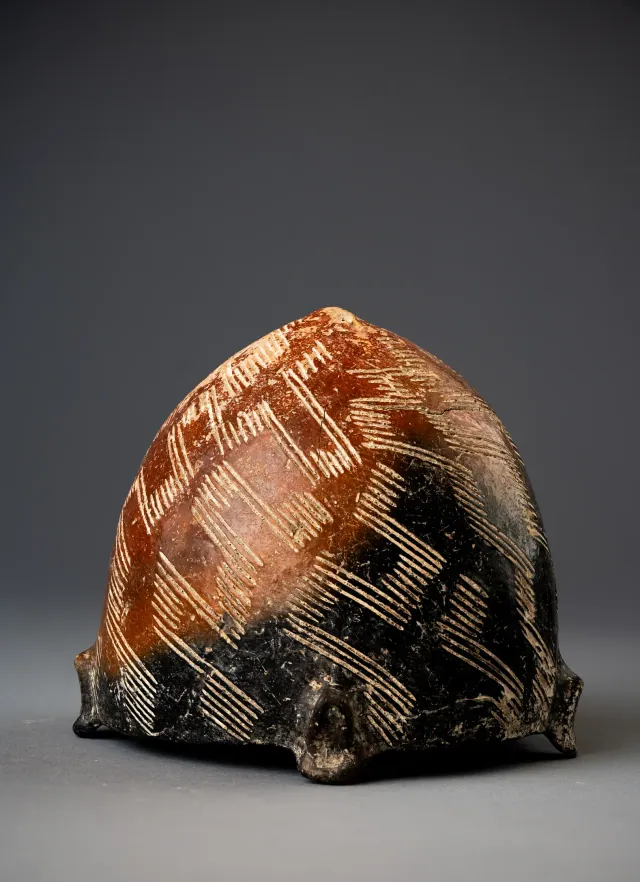
Black-topped Red Polished Tulip Bowl with Incised Hatched Lattice
Red Polished ware
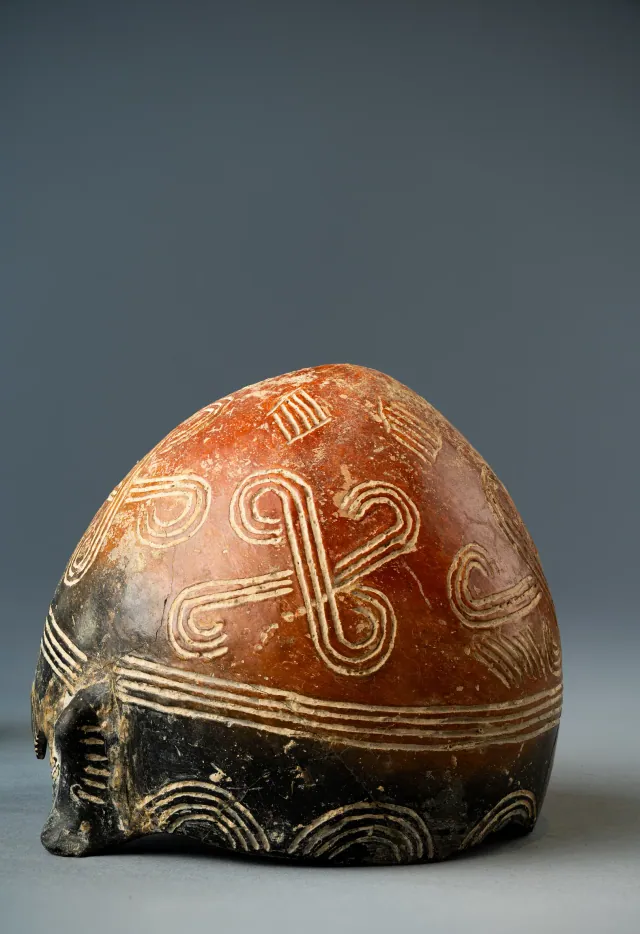
Black-topped Red Polished Tulip Bowl with Incised Spiral-armed Cross, Circles and Arcades
Red Polished ware
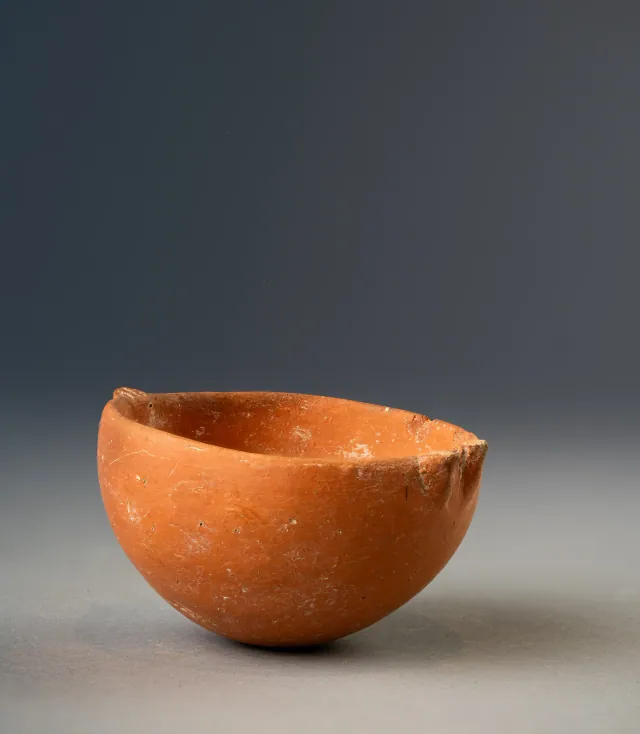
Red Polished Hemispherical Bowl with Two Rim Lugs
Red Polished ware
Found at the places discussed
Objects in our catalogue, in museum collections, recorded as found at these sites.



Background
Where to read more on this site before or after watching.
The site
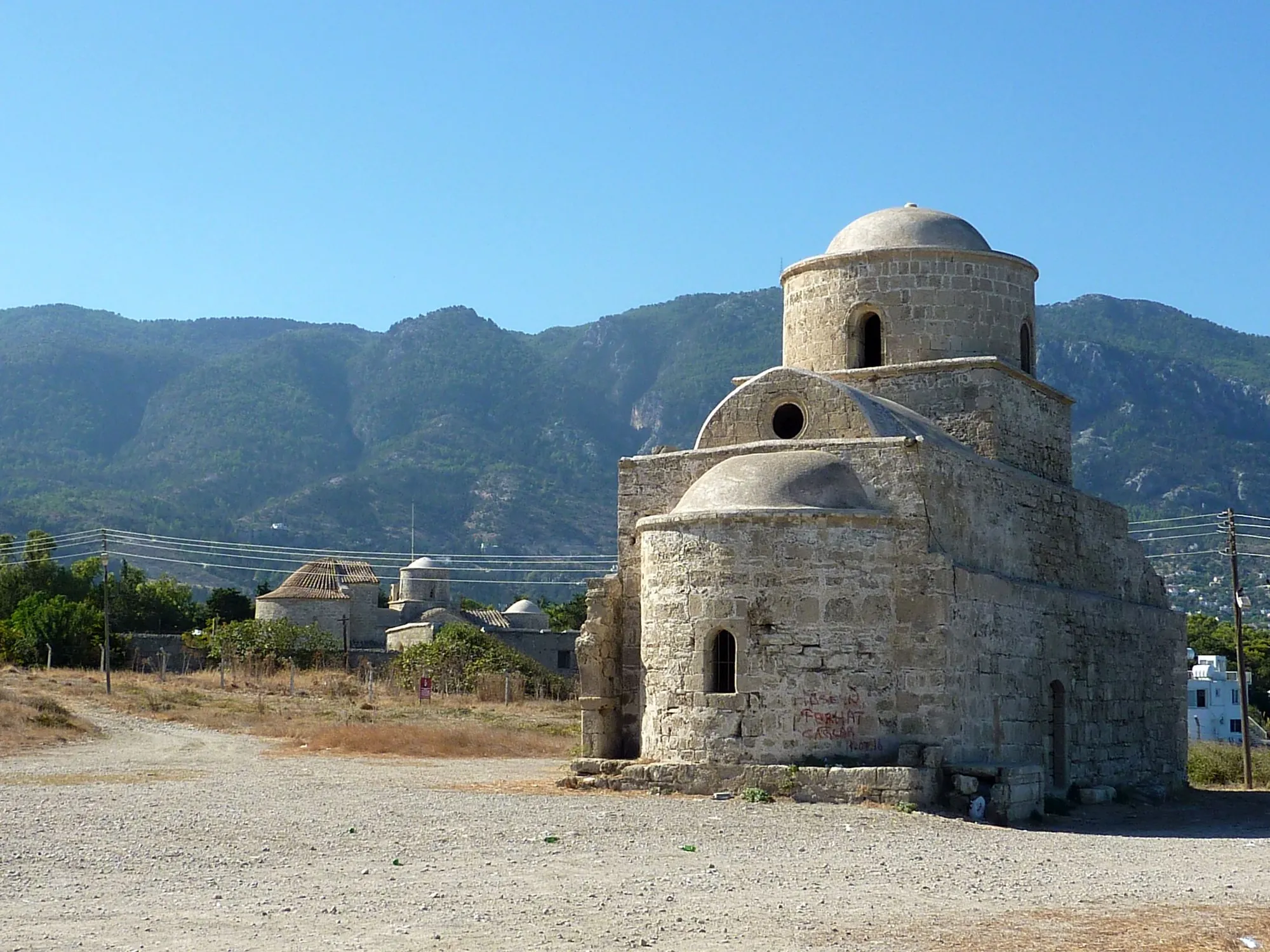
Lapithos
A group of cemeteries and settlement sites around the village of Lapithos on the north coast, below the Kyrenia range. Its Early and Middle Bronze Age cemetery at Vrysi tou Barba has produced about five times as much metal as Vounous, its Cypro-Geometric tombs gave the pottery sequence for that period, and ancient Lapethos was a city-kingdom until 312 BC.
In the compendium
Pottery Kilns and Firing in Ancient Cyprus
How Cypriot potters fired their wares, mostly in open fires and pits until the Late Bronze Age, when the first kilns and the potter's wheel appear.
In the compendium
Red Polished Philia Ware
The hand-made, red-slipped and polished pottery of the Philia facies, strikingly uniform across Cyprus at the opening of the Bronze Age.
In the compendium
Red Polished Ware
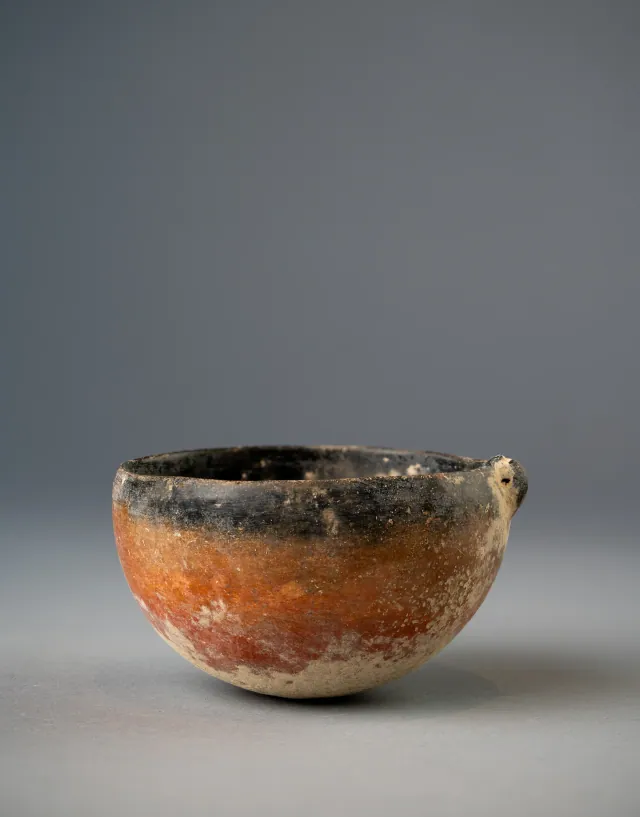
Red Polished is the hand-made, red-slipped and burnished pottery that dominated Cyprus in the Early and Middle Bronze Age.
Map of Cyprus
Places discussed in the talk
- Has a page on this site
- Other places
- Ground above 200, 500, 1,000 m
Places
- 1Kornos (approx.)
- 2Lapithos
- 3Enkomi
- 4Ayios Sozomenos