
Conference paper·Archaeological Research Unit - University of Cyprus·2018
The Cypriot Glazed Wares during the 13th to 16th Centuries: An Art of Imitation or Innovation?
Carmen Ting
Chapters
About the video
Carmen Ting, a Marie Curie postdoctoral fellow at the Archaeological Research Unit of the University of Cyprus working in a programme coordinated by Vasiliki Kassianidou, outlines her research project on the glaze technology of medieval Cypriot tableware produced between the 13th and 16th centuries.
Ting begins by placing Cypriot production within the wider history of medieval Mediterranean glazing, where innovations such as tin-oxide opacification, stonepaste bodies, and lustre painting spread across the region. Because scholarship has concentrated on these broad regional trends, local traditions have often been treated as static. Her project asks how local Cypriot traditions interacted with broader technological developments during the Lusignan, Venetian, and early Ottoman periods.
Although carved sgraffito and slip-painted ceramics are found across Cyprus and neighbouring regions, and direct evidence of production such as tripod stilts, wasters, and raw clay is known from Paphos, Famagusta, and Lapithos, previous studies have largely focused on iconography or clay paste composition, with the exception of glaze analyses by Andreas Charalambous. Ting sets out her research questions: whether Cypriot glazes used the high-lead recipes common in the Aegean or the alkaline recipes of the Islamic Near East, whether ceramic bodies were calcareous or non-calcareous, what colorants and opacifiers were employed, and how production was organized. To answer these, she combines scanning electron microscopy, thin-section petrography, X-ray diffraction, and lead isotope analysis with historical context and anthropological theories of cultural transmission.
In the final part of the talk, Ting reviews the assemblages sampled during her first four months on the island. These include a sealed 13th-century deposit from the Paphos theatre containing slip-painted and sgraffito wares alongside biscuit-fired vessels, tripod stands, raw clay, and waste glaze; rural survey material from Kofinou directed by Athanasios Vionis, which includes both local products and imports; and later material from Potamia-Agios Sozomenos thought to originate in the Lapithos area. She also notes recent work on material at Yeroskipou and further sampling planned at Akrotiri, Kandou, and Polis.
Background
Where to read more on this site before or after watching.
The site
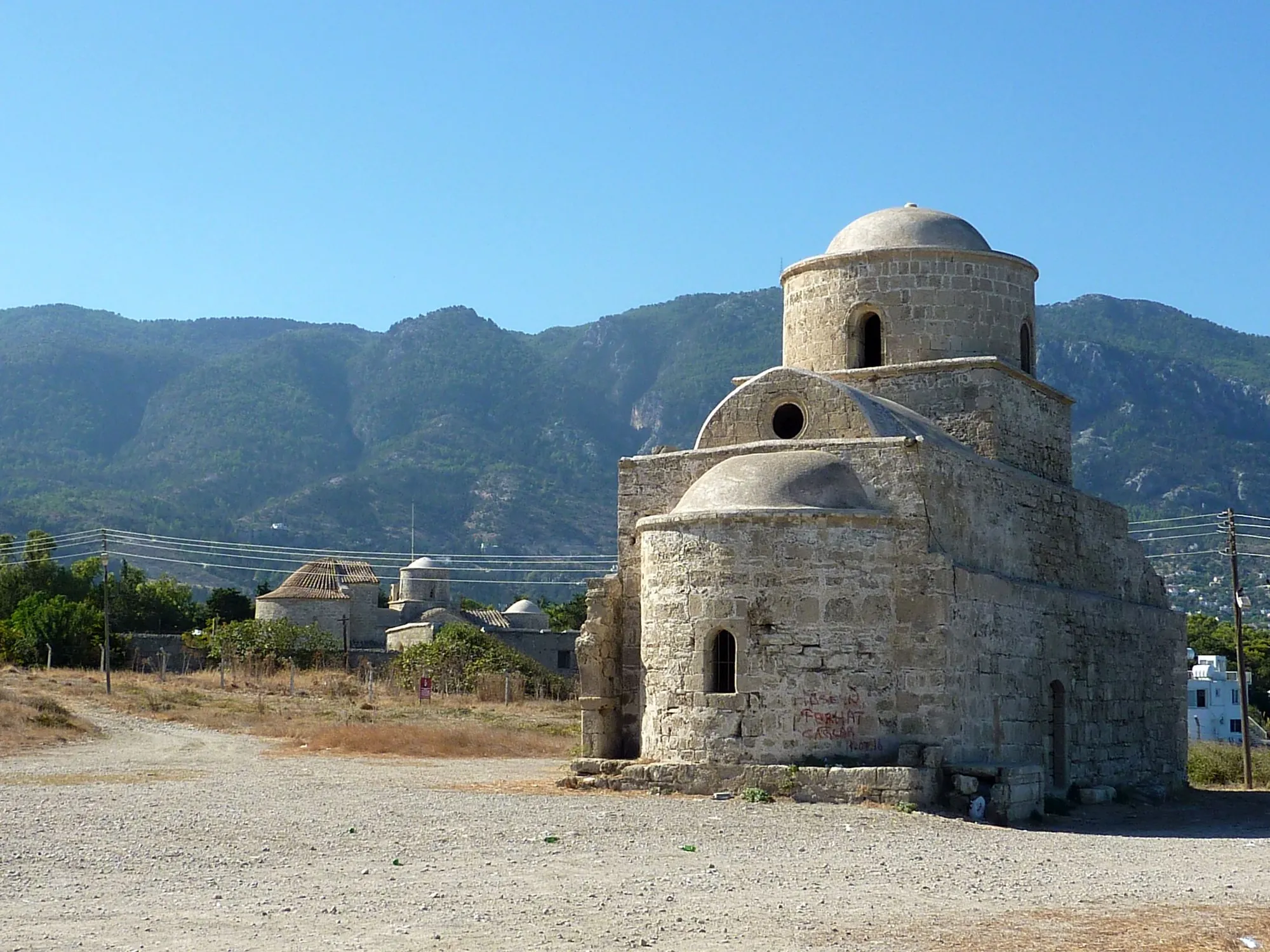
Lapithos
A group of cemeteries and settlement sites around the village of Lapithos on the north coast, below the Kyrenia range. Its Early and Middle Bronze Age cemetery at Vrysi tou Barba has produced about five times as much metal as Vounous, its Cypro-Geometric tombs gave the pottery sequence for that period, and ancient Lapethos was a city-kingdom until 312 BC.
In the compendium
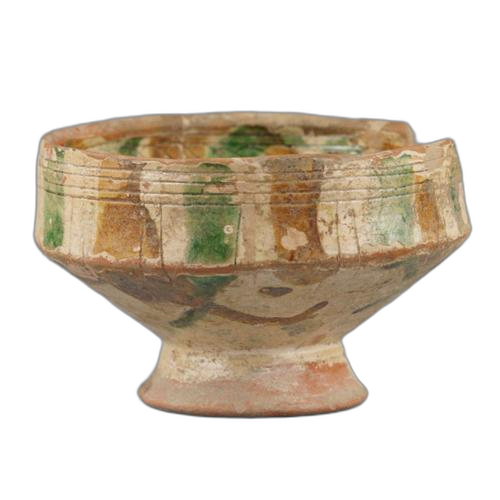
Medieval Glazed Sgraffito Ware
Wheel-made red-clay tableware coated in white slip, incised through the slip and lead-glazed, made in Cypriot workshops from the 13th to the 16th century AD.
In the compendium
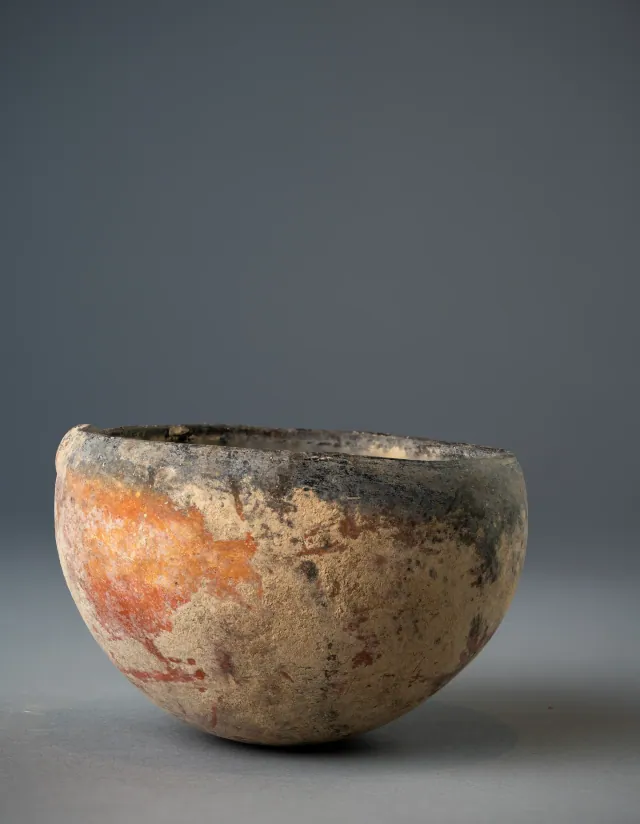
Pottery Kilns and Firing in Ancient Cyprus
How Cypriot potters fired their wares, mostly in open fires and pits until the Late Bronze Age, when the first kilns and the potter's wheel appear.
Map of Cyprus
Places discussed in the talk
- Has a page on this site
- Other places
- Ground above 200, 500, 1,000 m
Places
- 1Lapithos
- 2Kofinou (approx.)
- 3Potamia (approx.)
- 4Agios Sozomenos
- 5Yeroskipou (approx.)