
Lecture·Archaeological Research Unit - University of Cyprus·2022
Transformations at the twilight of the Late Bronze Age Aegean at Tiryns
Joseph Maran
Chapters
About the lecture
Speaking for the bicentenary of Heinrich Schliemann, Joseph Maran of the University of Heidelberg examines final palatial and post-palatial Tiryns during the Late Bronze Age. Schliemann and Wilhelm Dörpfeld uncovered the upper citadel palace in 1884 without recording find-spots and assumed the Geometric period followed its destruction directly, overlooking the Late Helladic IIIC period of the 12th and 11th centuries BCE.
Maran outlines the building programme of c. 1250 to 1200 BCE, including cyclopean walls, corbelled galleries, a stream-diverting dam, and the Great Megaron's ritual axis. Radiocarbon dates and pottery study show that Building T, which Dörpfeld took for a 7th- or 8th-century temple, was built in the early 12th century BCE around the former throne as an assembly hall.
In the northern lower citadel, where Schliemann's trench narrowed above Mycenaean levels, excavations from 2001 to 2003 completed a final-palatial workshop partly dug by Klaus Kilian. It yielded gold foil, Tiryns-type wall brackets of Cypro-Levantine affinity, an ivory rod with a cuneiform inscription, all three multi-sign Cypro-Minoan inscriptions from the Mycenaean world, Canaanite jars imported mainly from the Lebanese and Israeli coasts rather than Ugarit, and gilded head-shaped faience rhyta compared to Cypriot faience cups and 12th-century masks.
In the northwestern lower town, final-palatial levelling layers above gradual flood deposits held probable Cypriot pithoi and an elephant-ivory workshop. After 1200 BCE a planned modular settlement rose immediately, yielding the pictorial "handshake krater", Italian-related vessels, a krater fragment depicting what Maran identifies as Cypriot bronze tripod stands, feasting ovens, and ritual pits, with an urban layout he compares to 12th-century Enkomi, Kition, and Hala Sultan Tekke.
From our collection
Pieces in the Drakopoulos collection of the kinds and periods this talk covers: Jar, Late Cypriot (Late Bronze Age).
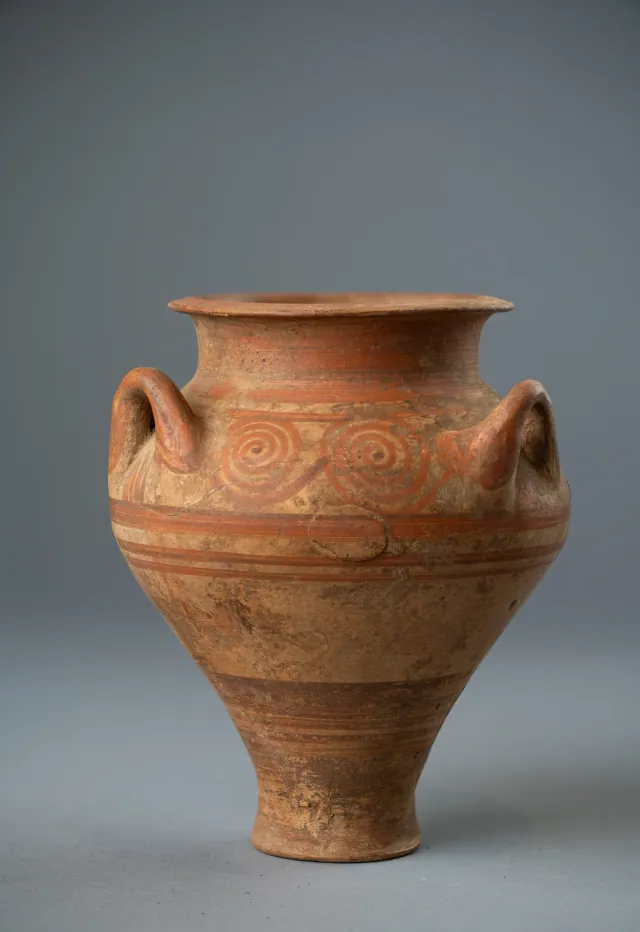
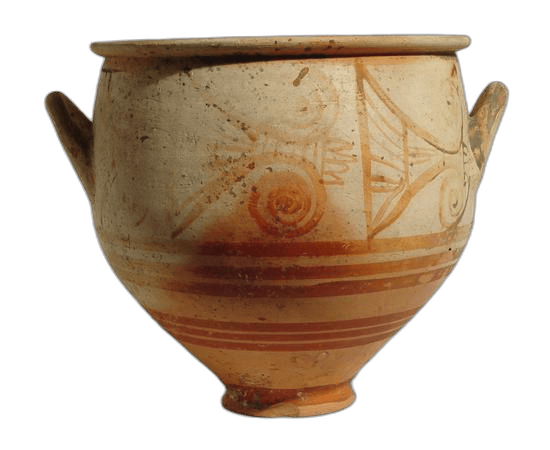
Cypriot Three-Handled Jar in the Mycenaean Style with Running Spirals
Jar
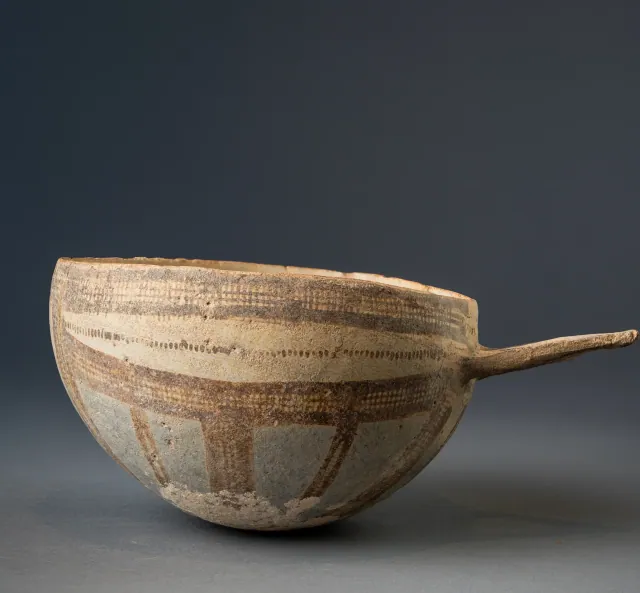
White Slip II Hemispherical Bowl with Wishbone Handle
Late Cypriot (Late Bronze Age)
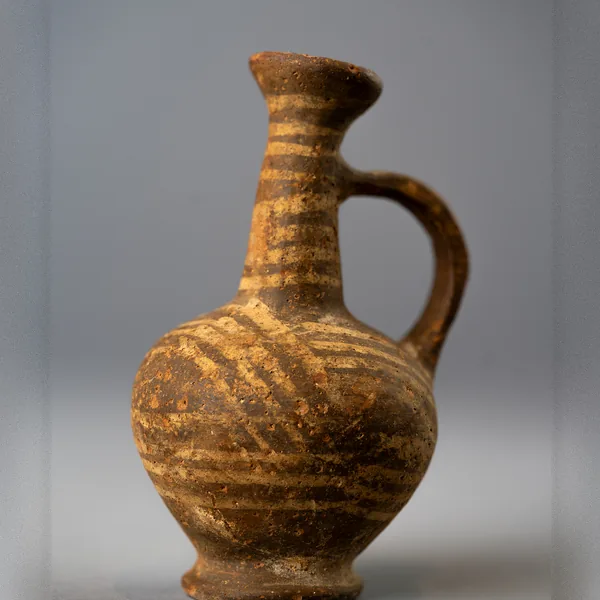
Base Ring II Bilbil Juglet with White-Painted Bands
Late Cypriot (Late Bronze Age)
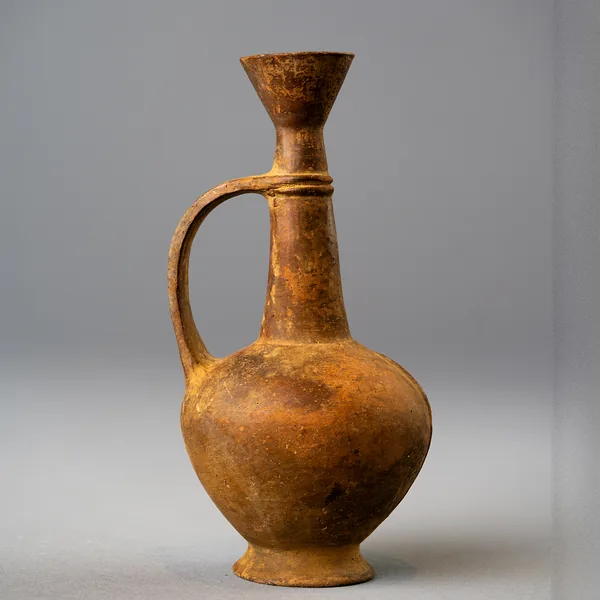
Base Ring Bilbil Juglet with Funnel Mouth and Neck Ridge
Late Cypriot (Late Bronze Age)
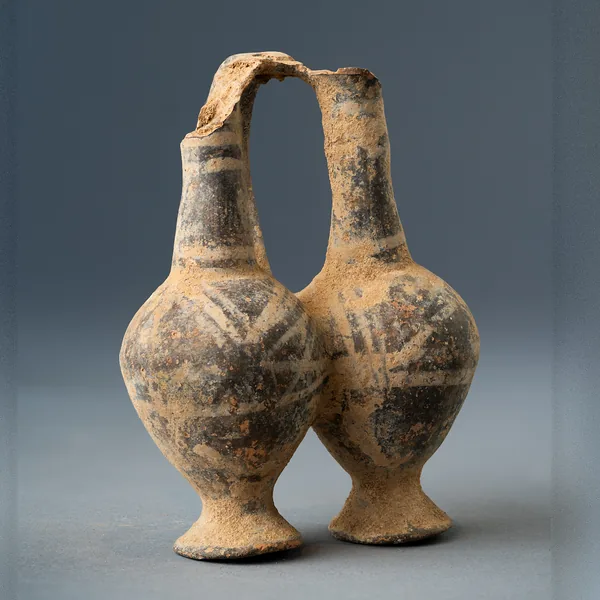
Base Ring II Double Juglet with White-Painted Decoration
Late Cypriot (Late Bronze Age)
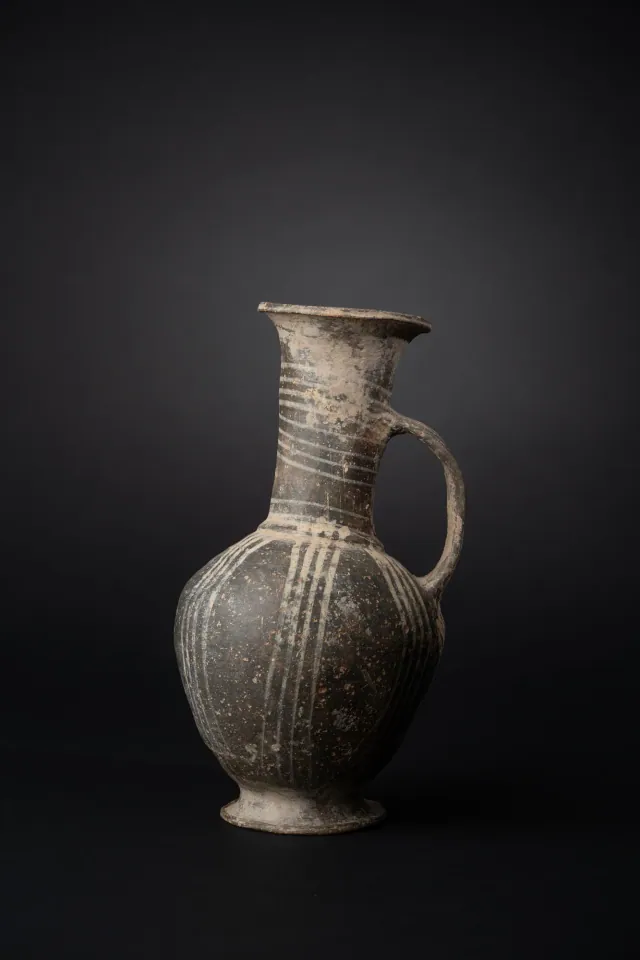
Base Ring II Jug with White-Painted Lattice Bands
Late Cypriot (Late Bronze Age)
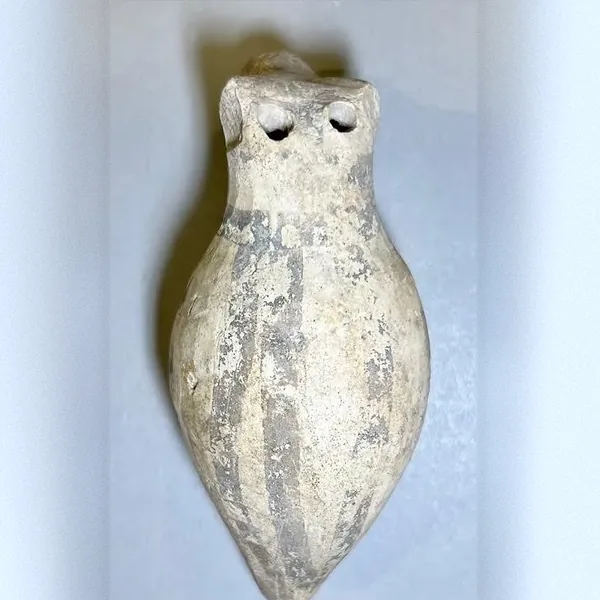
White Painted VI Owl-Headed Rattle
Late Cypriot (Late Bronze Age)
Found at the places discussed
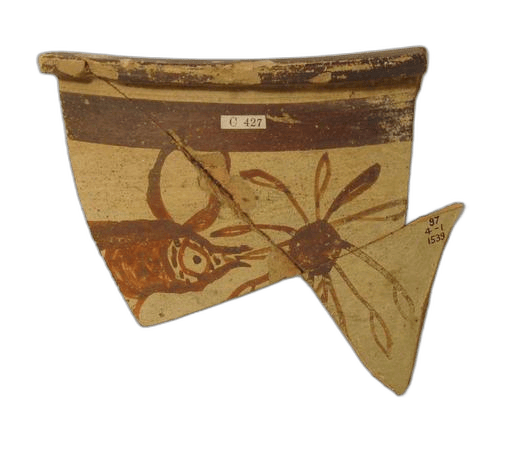
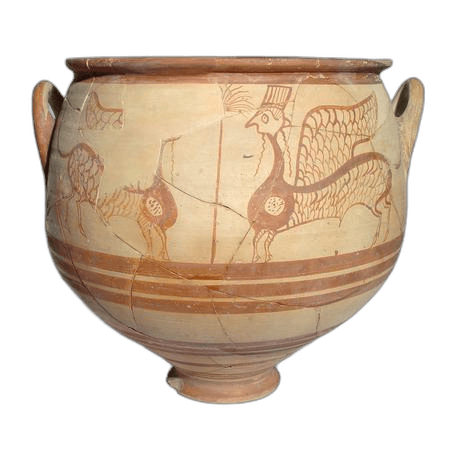
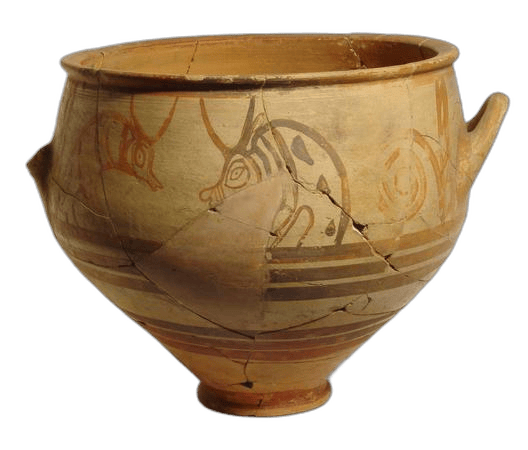
Objects in our catalogue, in museum collections, recorded as found at these sites.
Background
Where to read more on this site before or after watching.
The site
Enkomi
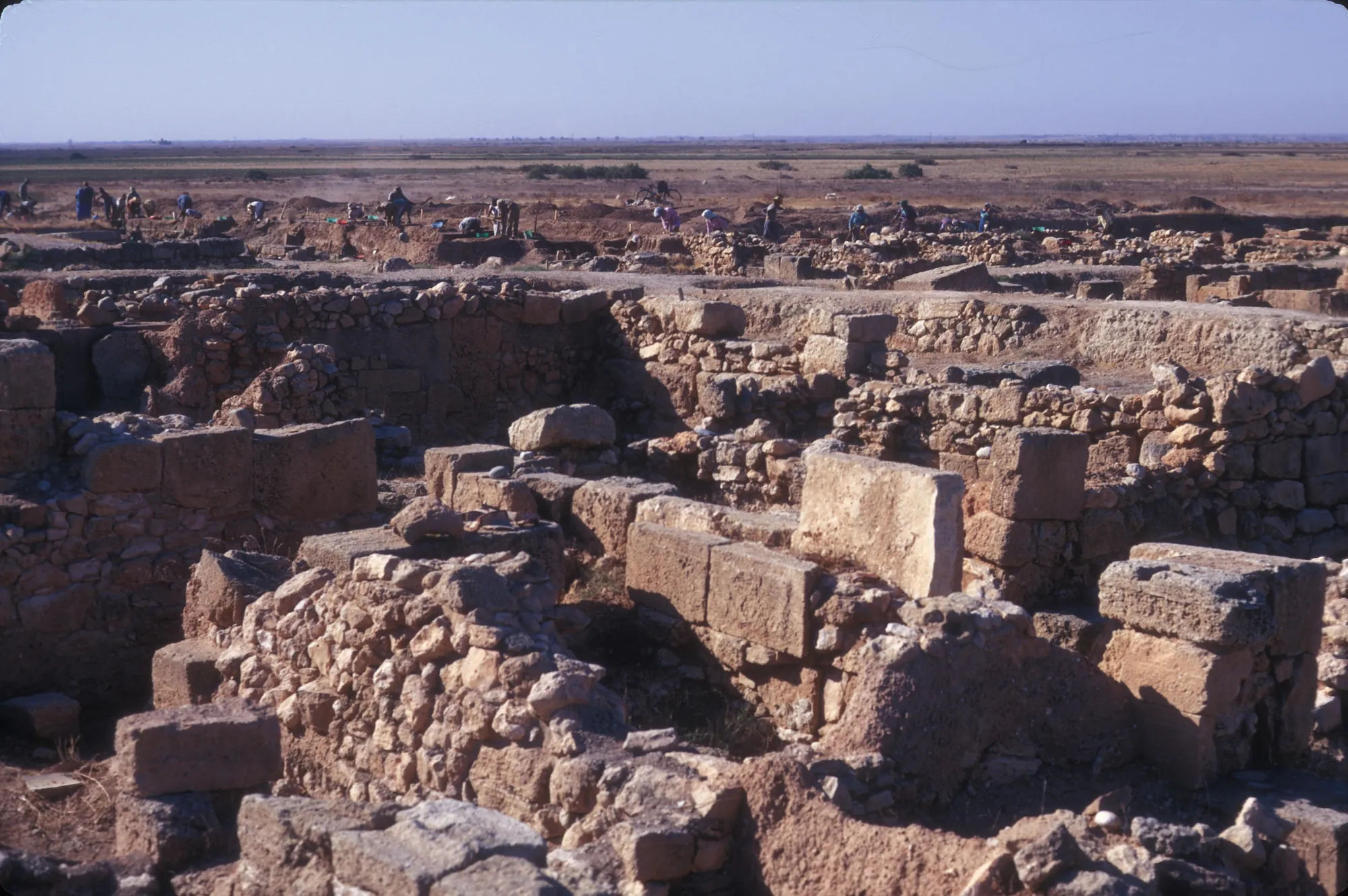
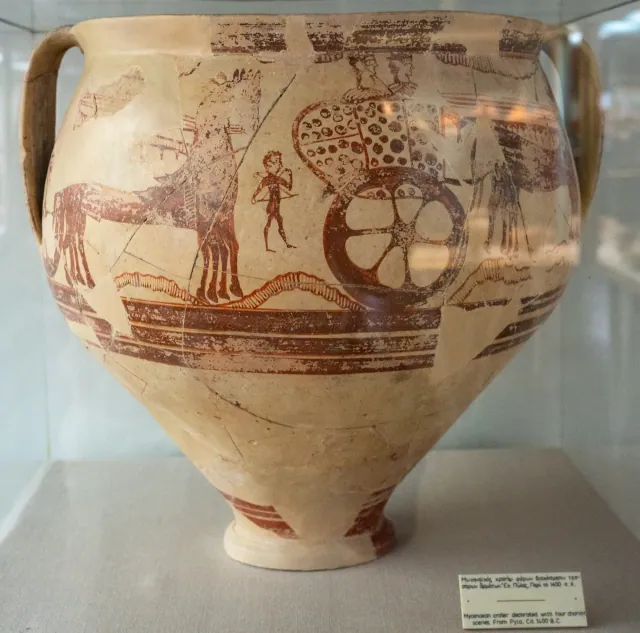
Enkomi is a walled Late Bronze Age town near the mouth of the Pedieos river on the bay of Famagusta, lived in from about 1650 BC until it was gradually abandoned for nearby Salamis. It was a port for Cypriot copper, and its excavations produced metal workshops, sanctuaries with bronze cult statues, rich tombs and the largest group of Cypro-Minoan inscriptions on the island.
In the compendium
The Mycenaeans and Cyprus
The palatial Late Bronze Age societies of mainland Greece, whose pottery flooded Cypriot coastal towns in the 14th and 13th centuries BCE.

In the compendium
Ugarit and the Levant
The Syrian port kingdom of Ugarit and the wider Levantine coast, Cyprus's closest Bronze Age trading partners across the water.
In the compendium
Writing and Literacy in Ancient Cyprus
The scripts of ancient Cyprus, from undeciphered Cypro-Minoan to the Cypriot Syllabary, Eteocypriot, Phoenician and the Greek alphabet, and who used them.
Map of Cyprus
Places discussed in the talk
- Has a page on this site
- Other places
- Ground above 200, 500, 1,000 m