
Lecture·The Institute for the Study of Ancient Cultures·2019
The Rise of Ancient Israel and Other Problematic Entities: An Archaeological Perspective
This video covers more than Cyprus. The description below concentrates on its Cypriot parts, the first of which begins at 17:20.
Chapters
About the lecture
Speaking at the Oriental Institute in Chicago, Ayelet Gilboa examines how Israelite, Philistine and Phoenician identities formed in the southern Levant between the collapse of c. 1200 BC and the rise of 9th-century kingdoms. After outlining Late Bronze Age Canaan under Egyptian rule and the material evidence for the kingdoms of Israel and Judah, she compares three regions during the intervening centuries: the central hill country and Galilee, the southern coast of Philistia, and the Carmel coast around Tel Dor.
Cyprus enters the talk first as the main supplier of copper in the Late Bronze Age Mediterranean network, and later as a parallel where city-kingdoms formed alongside the Levantine states. Its main role comes in the sections on Philistia and Tel Dor. At Philistine sites such as Ekron, Ashkelon, Ashdod and Gath, foreign material traditions are chiefly Mycenaean and Cypriot: decorated pottery, a type of dagger found by the hundreds in Cyprus, the Ashdoda seated figurine and domestic basins with Aegean and Cypriot counterparts. Spool-shaped loom weights and Aegean or Cypriot cooking pots appear alongside Canaanite forms in the same households, pointing to a gradual arrival of people from Cyprus and the Aegean who mingled with locals.
At Tel Dor, which Gilboa presents alongside the purple-dye site of Shikmona as early Phoenician, overseas trade continued with Egypt and Cyprus; compositional analysis shows that Phoenician vessels found in Cyprus were made at Dor. Dor also has a Cypriot substratum, seen in large wavy-band pithoi made in the Cypriot tradition, which she compares with jars displayed at Larnaca Airport, showing that Cypriot newcomers also helped shape early Phoenician identity.
From our collection
Pieces in the Drakopoulos collection of the kinds and periods this talk covers: Jar, Late Cypriot (Late Bronze Age), Cypro-Geometric.
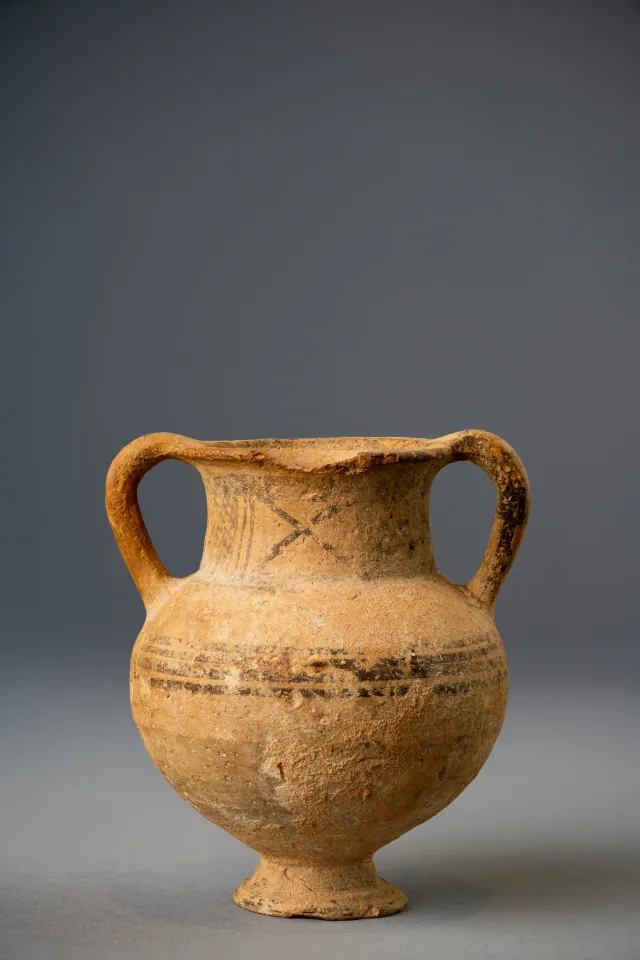
White Painted Amphoriskos on a Conical Foot
Jar
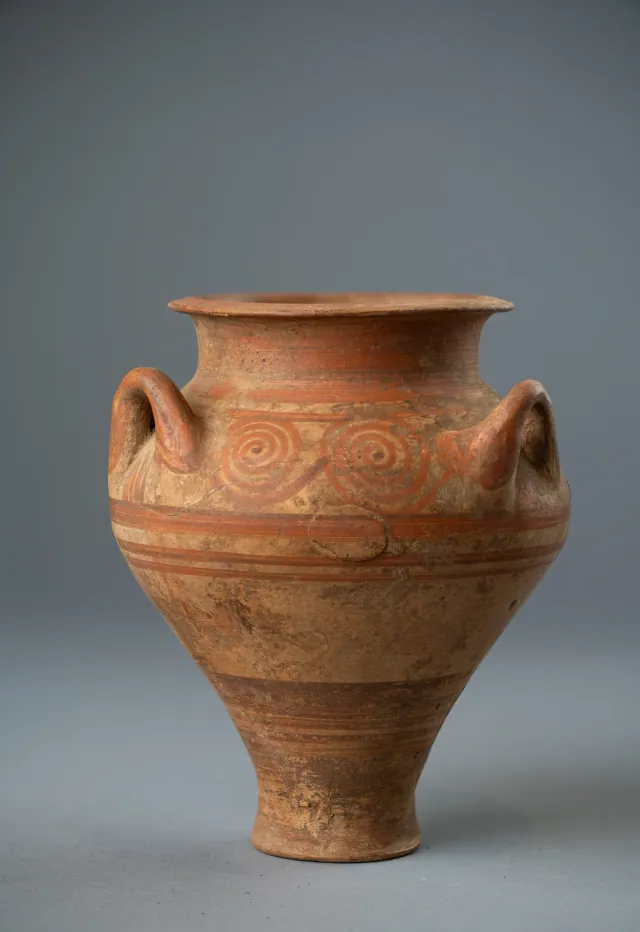
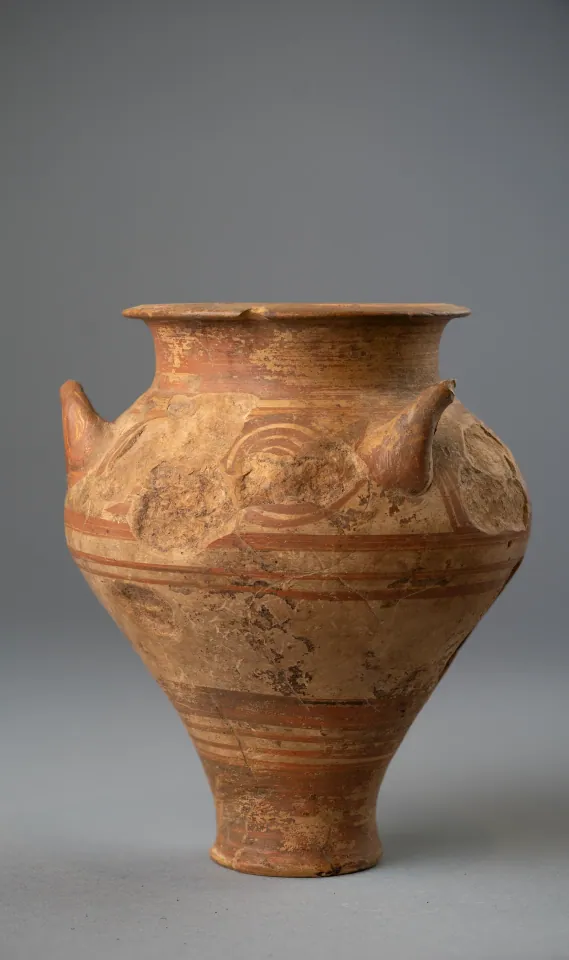
Cypriot Three-Handled Jar in the Mycenaean Style with Running Spirals
Jar
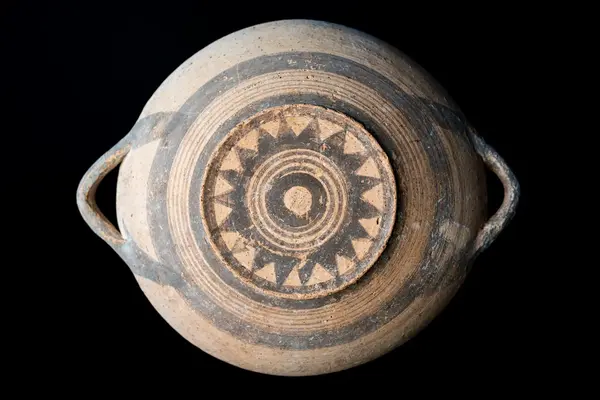
White Painted Plate with a Sawtooth Star on the Underside
Cypro-Geometric
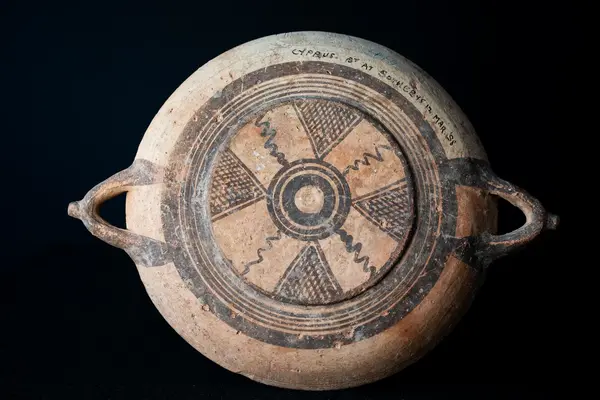
White Painted Plate with Latticed Triangles and Wavy Lines on the Underside
Cypro-Geometric
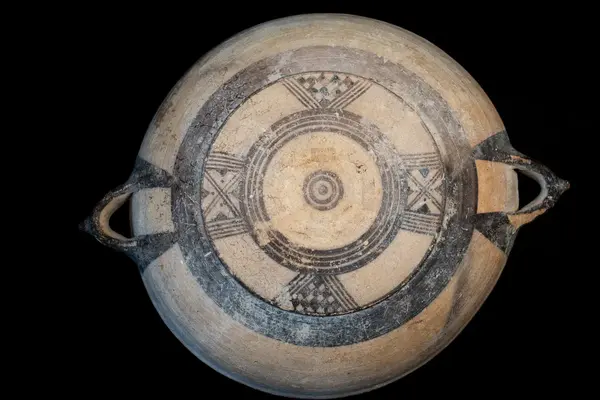
Large White Painted Plate with Knobbed Handles and a Four-Armed Cross on the Underside
Cypro-Geometric
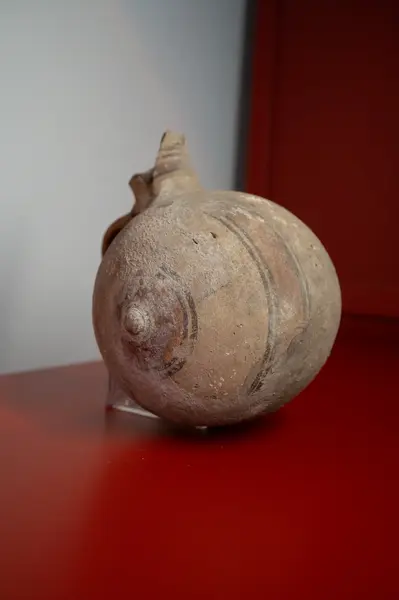
Bichrome Barrel Jug with Circled End-Knobs
Cypro-Geometric
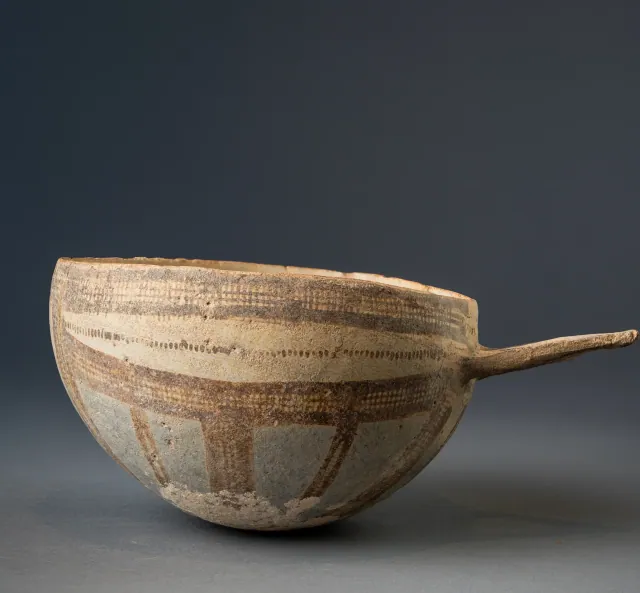
White Slip II Hemispherical Bowl with Wishbone Handle
Late Cypriot (Late Bronze Age)
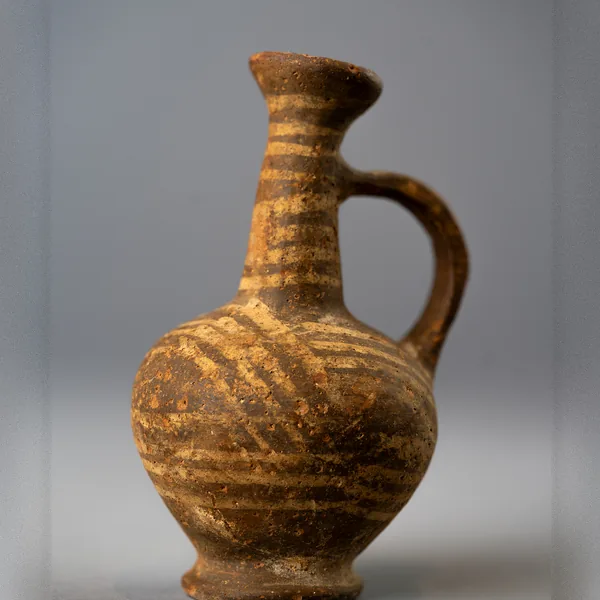
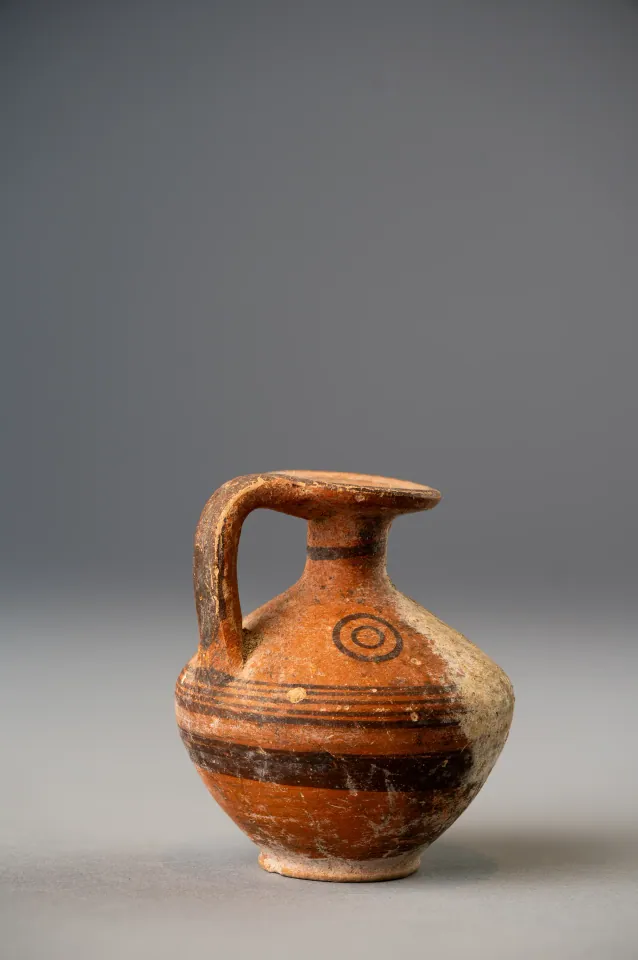
Base Ring II Bilbil Juglet with White-Painted Bands
Late Cypriot (Late Bronze Age)
Background
Where to read more on this site before or after watching.
In the compendium
The Philistines
The 12th-century BCE newcomers to the southern Levantine coast, whose Aegean-style pottery, hearths and houses derive most directly from Cyprus.
In the compendium
The Phoenicians
The Iron Age city-states of the Levantine coast, whose traders and settlers made Kition a Phoenician kingdom and shared a hybrid culture with Cyprus.
In the compendium
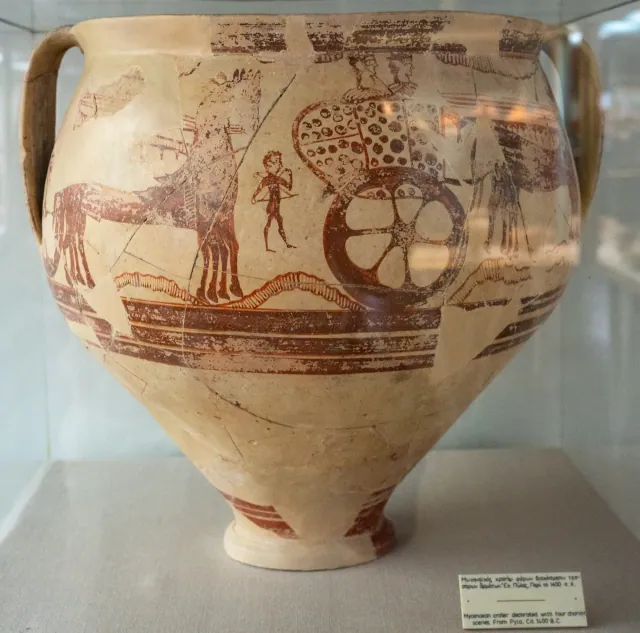
The Mycenaeans and Cyprus
The palatial Late Bronze Age societies of mainland Greece, whose pottery flooded Cypriot coastal towns in the 14th and 13th centuries BCE.

The period
Late Bronze Age
The Late Cypriot period, c. 1650–1050 BCE, when copper exports made Cyprus an urban, literate trading power before the crisis around 1200 BCE.