
Conference paper·Archaeological Research Unit - University of Cyprus·2019
A Conference in Honour of A. Bernard Knapp: Late Cypriot Copper Production and Memory Landscapes at Petras, Crete
Chapters
About the video
This recording from the conference held in honour of A. Bernard Knapp at the University of Cyprus, chaired by Sturt Manning, contains two papers.
In the first paper, "Copper Production in the Late Cypriot through a Glass Darkly", Vasiliki (Lena) Kassianidou examines the organisation of copper metallurgy in the Late Bronze Age. After recalling her work with Knapp on the Sydney Cyprus Survey Project, the Troodos Archaeological and Environmental Survey Project, and the excavation of Politiko-Phorades, she traces the history of research from the 1896 British Museum excavations at Enkomi and Joan du Plat Taylor's 1938 rescue excavations at Apliki to the 1982 Early Metallurgy in Cyprus conference. She notes that excavations at Enkomi ended with the Turkish invasion of 1974 and that modern open-cast mining at Skouriotissa destroyed much of the ancient mining landscape. Kassianidou reviews Knapp's argument that elites controlled copper through legitimising symbols rather than temples, adding her own view that coastal elites gained power by controlling imported tin, gold and silver. She then compares the Late Cypriot I primary smelting workshop at Politiko-Phorades, which yielded three tons of fayalitic slag, furnace fragments and straight slagged tuyeres, with contemporary levels from Porphyrios Dikaios's excavations at Enkomi, which had little slag, bent tuyeres and open crucibles for refining and casting. For Late Cypriot II, she discusses expanded workshops at Enkomi and Hala Sultan Tekke, the scarcity of metallurgical finds near administrative buildings at Kalavasos-Ayios Dhimitrios, Alassa and Maroni, and lead isotope analyses linking both oxhide ingots after 1450 BC and slag from Kalavasos-Ayios Dhimitrios to Apliki. She suggests this points to an island-wide enterprise rather than independent port cities, a point Knapp welcomes in the brief discussion.
In the second paper, co-authored with Metaxia Tsipopoulou, David Rupp presents "Remembering a Complex Memory Landscape: The Late Minoan III Interventions at the Pre- and Protopalatial Cemetery of Petras Kephala at Sitia in Crete". Rupp describes the Late Minoan IIIA2 to IIIC complex built on the Kephala plateau over an Early and Middle Minoan elite cemetery of house tombs opposite the ruined palace of Petras. Walking through the plateau's entrance corridor, altar with an empty larnax, rectangular building, feasting pit, sunken area with an oven, low rectangular platform and kitchen, he argues that post-palatial elites reused ironstone ashlar blocks from the destroyed palace and built a Cyclopean-style wall to claim authority through ancestor rituals and communal feasting.
From our collection
Pieces in the Drakopoulos collection of the kinds and periods this talk covers: Late Cypriot (Late Bronze Age).
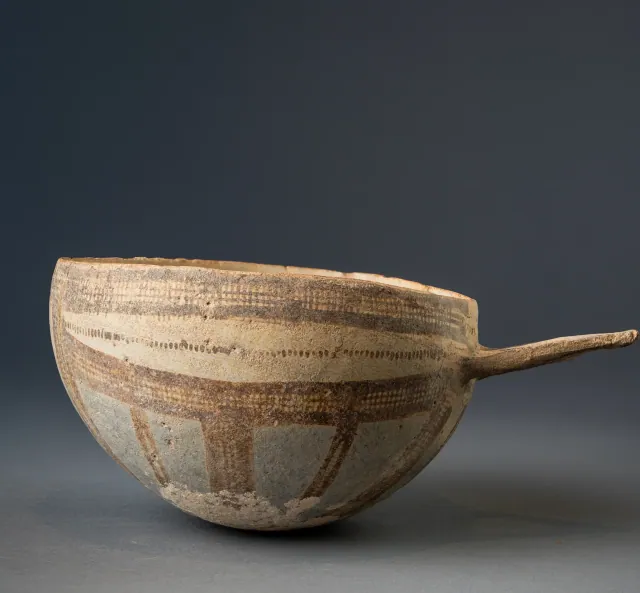
White Slip II Hemispherical Bowl with Wishbone Handle
Late Cypriot (Late Bronze Age)
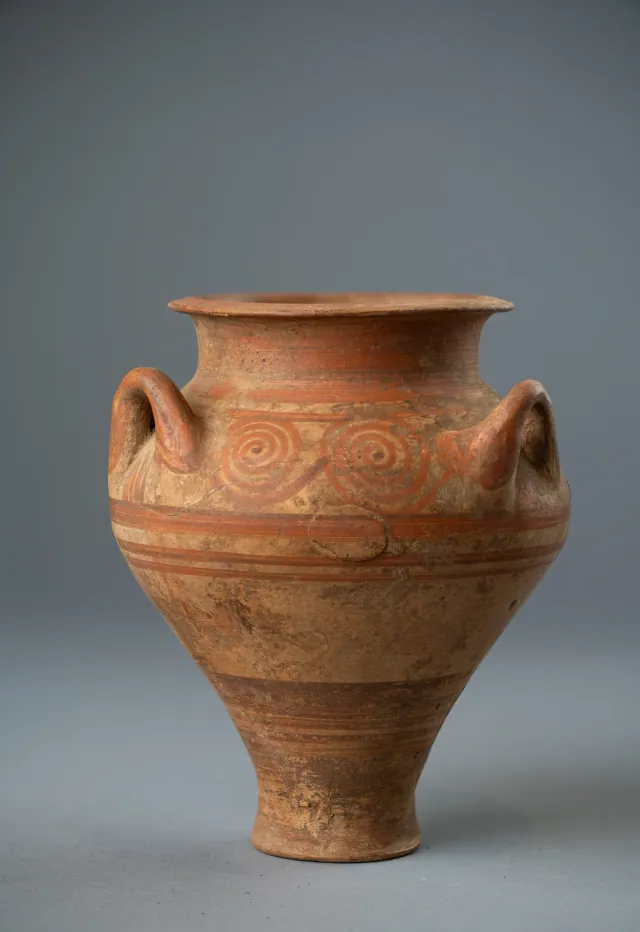
Cypriot Three-Handled Jar in the Mycenaean Style with Running Spirals
Late Cypriot (Late Bronze Age)
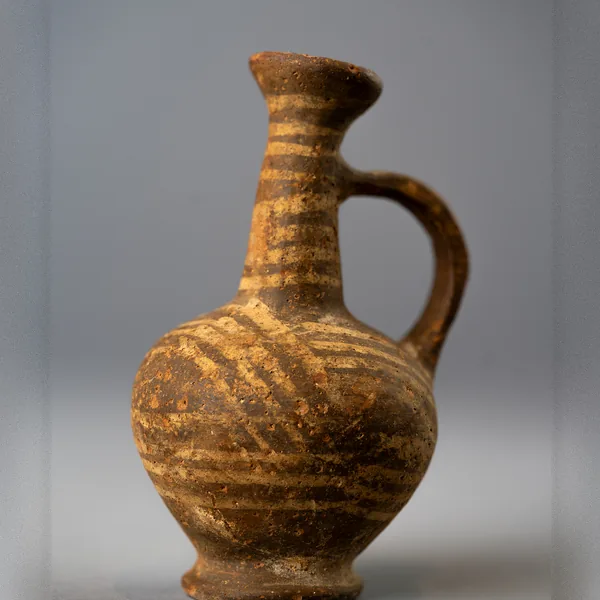
Base Ring II Bilbil Juglet with White-Painted Bands
Late Cypriot (Late Bronze Age)
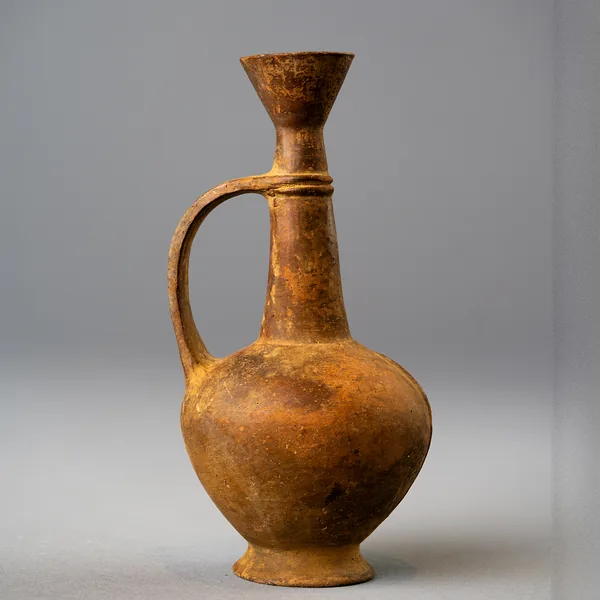
Base Ring Bilbil Juglet with Funnel Mouth and Neck Ridge
Late Cypriot (Late Bronze Age)
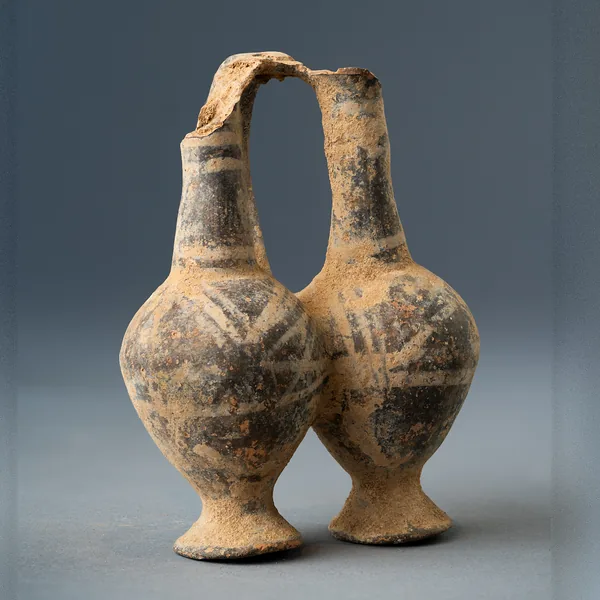
Base Ring II Double Juglet with White-Painted Decoration
Late Cypriot (Late Bronze Age)
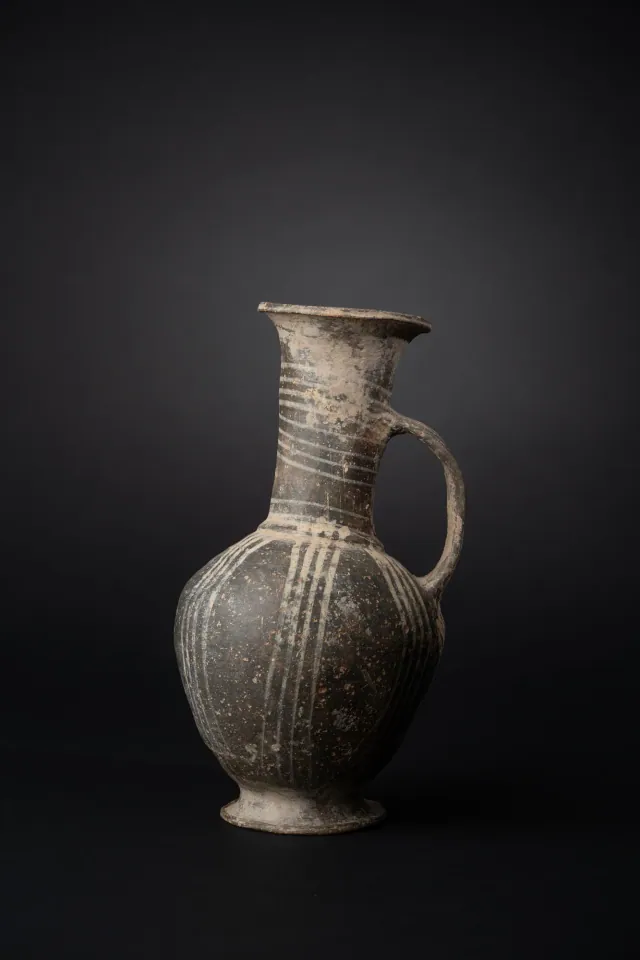
Base Ring II Jug with White-Painted Lattice Bands
Late Cypriot (Late Bronze Age)
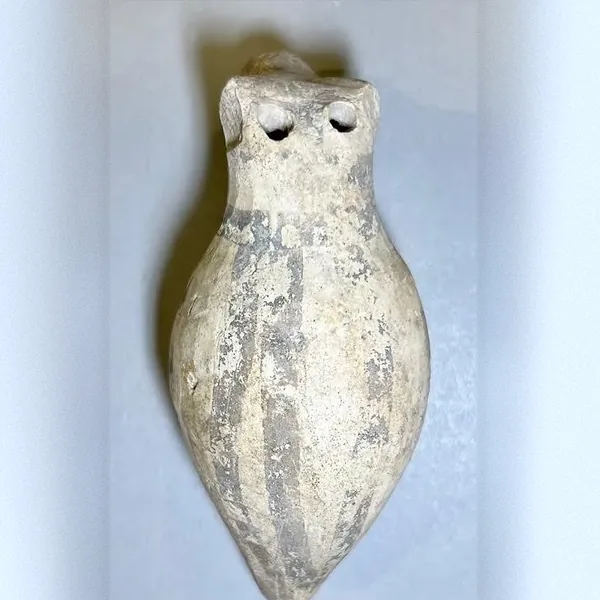
White Painted VI Owl-Headed Rattle
Late Cypriot (Late Bronze Age)
Found at the places discussed
Objects in our catalogue, in museum collections, recorded as found at these sites.
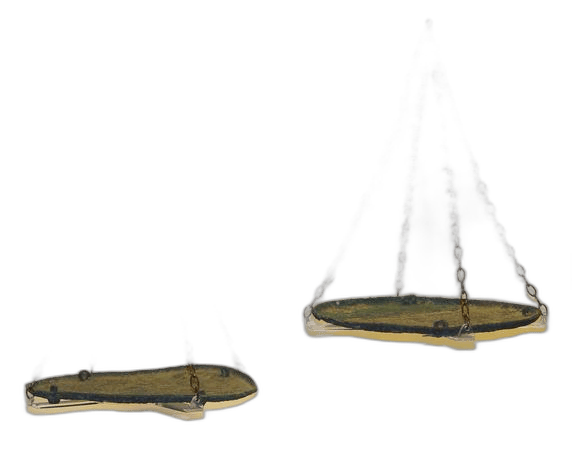


Background
Where to read more on this site before or after watching.
The site
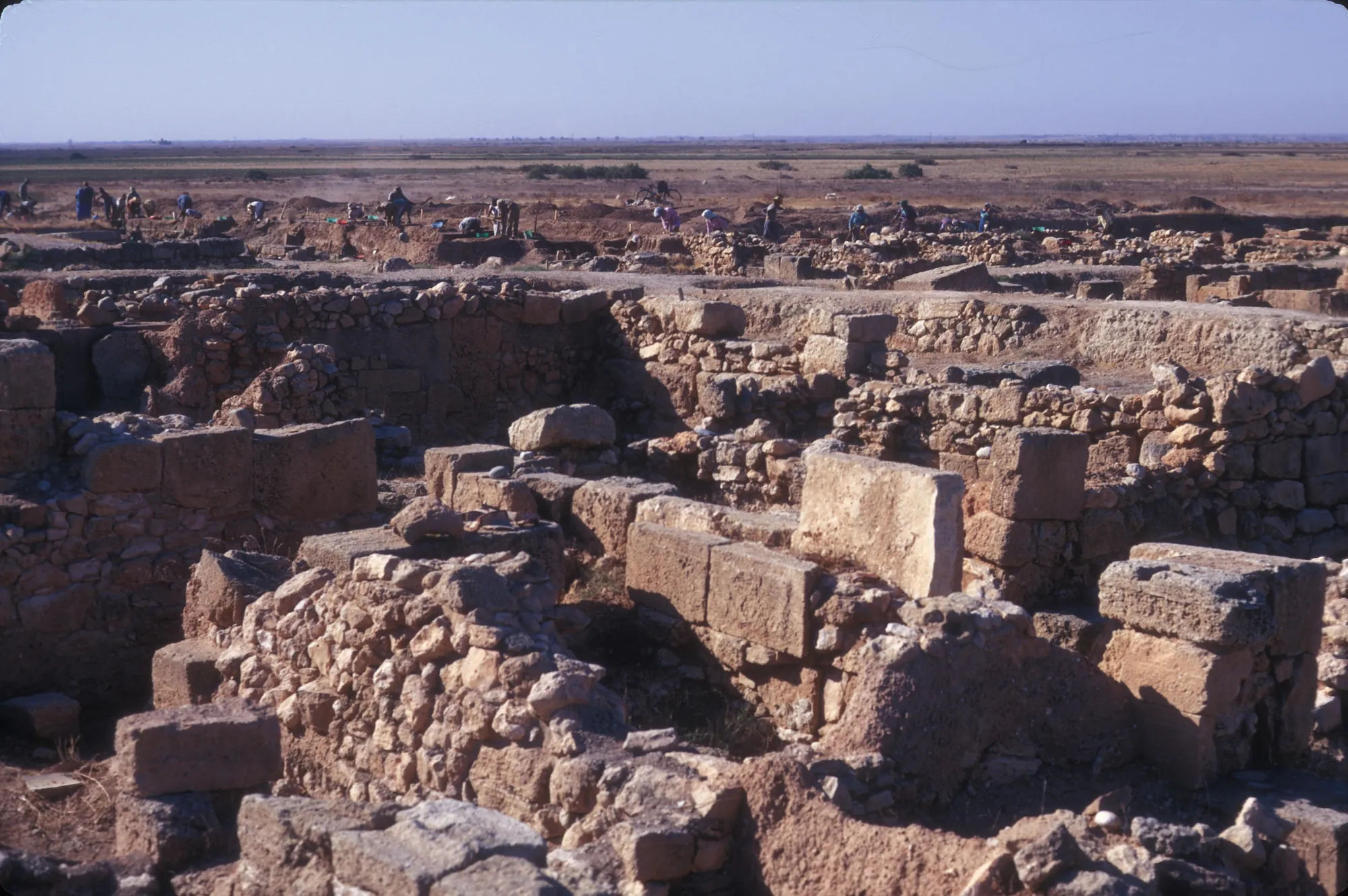
Enkomi
Enkomi is a walled Late Bronze Age town near the mouth of the Pedieos river on the bay of Famagusta, lived in from about 1650 BC until it was gradually abandoned for nearby Salamis. It was a port for Cypriot copper, and its excavations produced metal workshops, sanctuaries with bronze cult statues, rich tombs and the largest group of Cypro-Minoan inscriptions on the island.
In the compendium
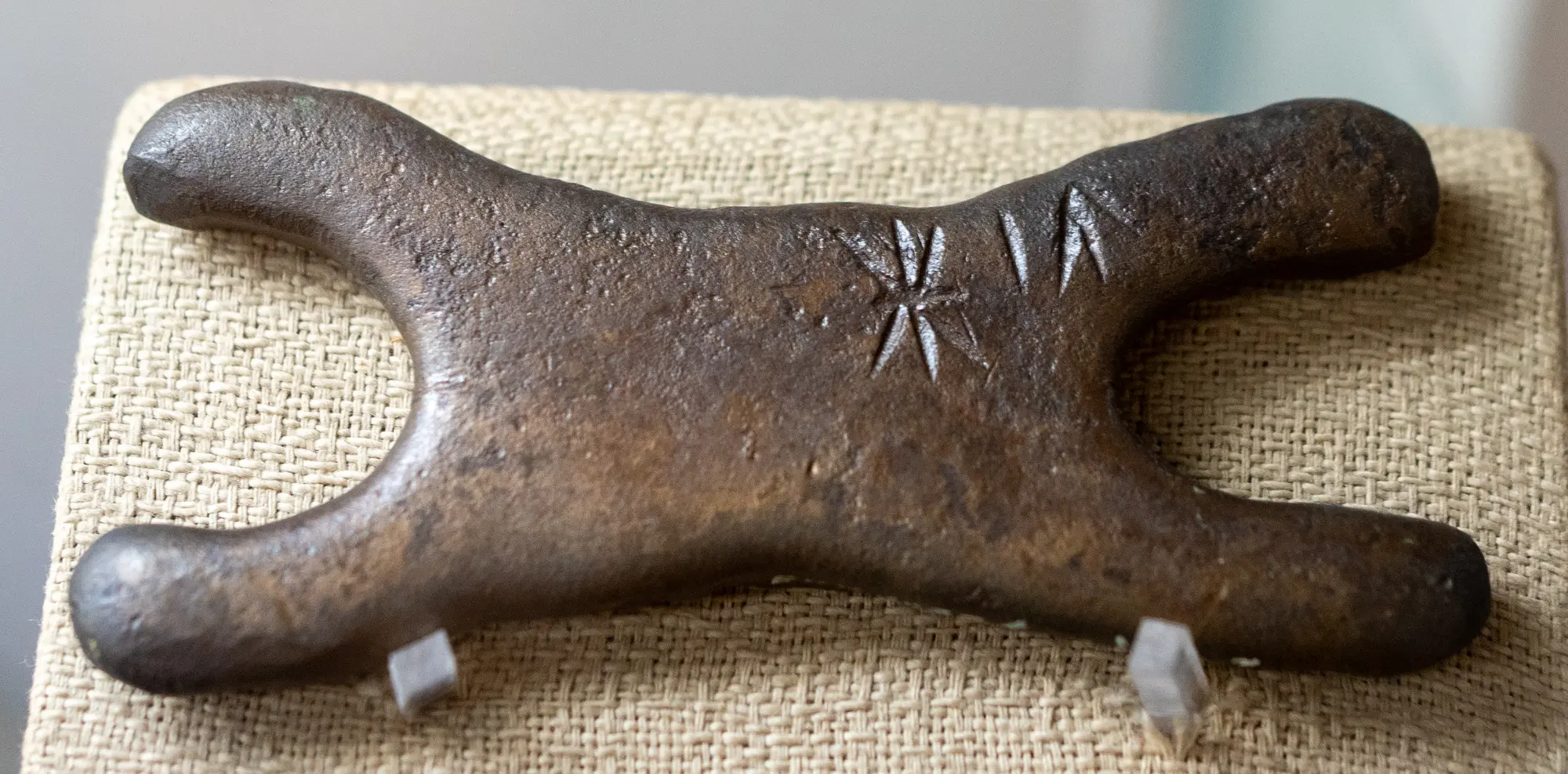
Copper Metallurgy in Ancient Cyprus
The mining, smelting and casting of the Troodos sulphide ores, from hammered Chalcolithic native copper to Late Bronze Age oxhide ingots and Archaic slag heaps.
In the compendium
Gold, Silver, Tin, Arsenic and Iron in Ancient Cyprus
The metals other than copper used by Cypriot smiths from the Philia facies to the Hellenistic period, including arsenic, tin, gold, electrum, silver, lead and iron.
In the compendium
Weights and Ingots
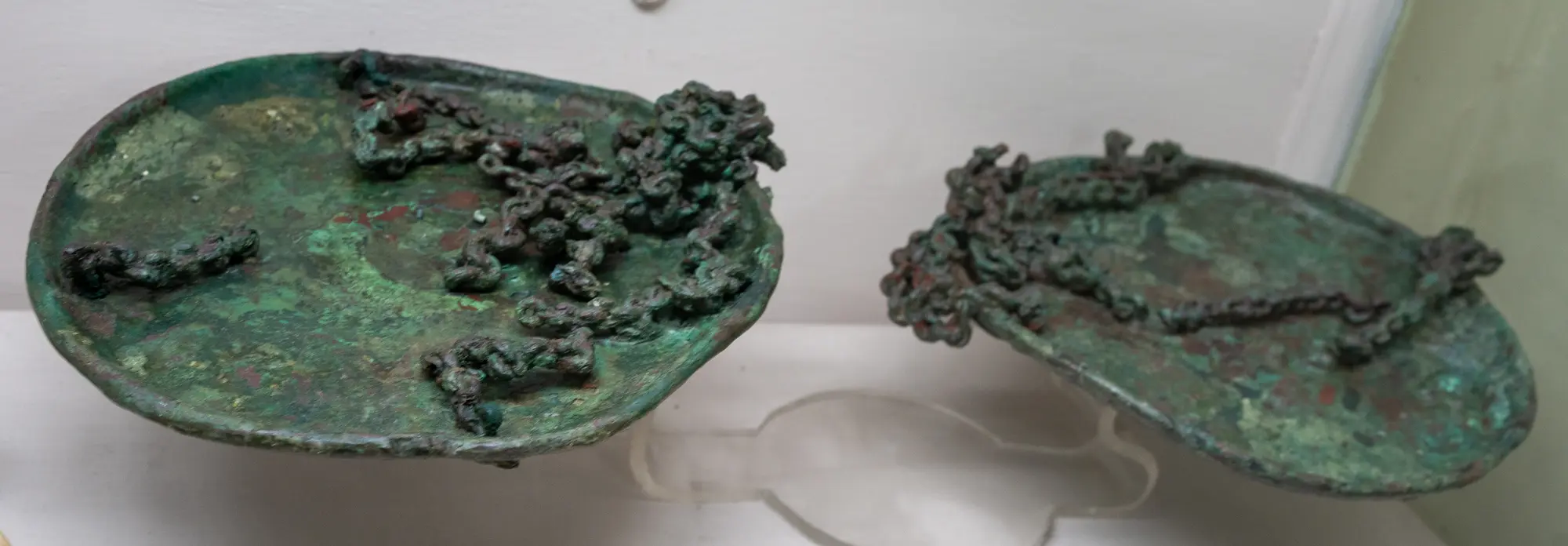
Copper ingots, miniature votive ingots, balance weights and scale pans in Cyprus, from the Late Bronze Age into the Cypro-Geometric and Cypro-Archaic periods.
Map of Cyprus
Places discussed in the talk
- Has a page on this site
- Other places
- Ground above 200, 500, 1,000 m