
Conference paper·Archaeological Research Unit - University of Cyprus·2019·In Greek
Bringing Old Museum Collections to Life: An Interdisciplinary Study of Iron Age Pottery from the Cypriot Polities of Salamis, Soloi, Lapithos and Chytroi
Δίνοντας ζωή σε παλαιές μουσειακές συλλογές: Διεπιστημονική μελέτη κεραμικής από τις κυπριακές πολιτείες της Σαλαμίνας, των Σόλων, της Λαπήθου και των Χυτρών στην εποχή του σιδήρου
Chapters
About the video
In this short paper, given in Greek at the annual review of the archaeological work of the University of Cyprus for 2018, postdoctoral researcher Anna Georgiadou introduces MuseCo, a three-year project funded by the Cyprus Research Promotion Foundation and conducted jointly by the Archaeological Research Unit and the Cyprus Museum. The project studies unpublished Iron Age pottery assemblages, dating from the 11th to the 4th century BC, that were recovered from excavations and surveys by the Department of Antiquities between 1934 and 1974 in the areas of the Karpas peninsula, the Famagusta district, Kyrenia and Morphou, now in the occupied north and inaccessible to official fieldwork.
Georgiadou outlines the project team, coordinated by George Papasavvas, which brings together Maria Dikomitou-Eliadou and Vasiliki Kassianidou for archaeometry, Despina Pilides of the Department of Antiquities, Zomenia Zomeni of the Geological Survey Department, Ayelet Gilboa and Paula Waiman-Barak of the University of Haifa, and Noémi Müller of the Fitch Laboratory at the British School at Athens. Building on Georgiadou's earlier work on Cypro-Geometric regional workshops, MuseCo extends the analysis across the Cypro-Archaic and Cypro-Classical periods to define the local ceramic styles and production of the polities of Salamis, Soloi, Lapithos and Chytroi (Kythrea), and to map their distribution in relation to the territorial organisation of the Cypriot city-kingdoms. As a methodological example, she shows how Cypro-Geometric Salaminian pottery is distributed from nearby Enkomi and Stylloi to Lysi, Achna, Alaas and Rizokarpaso, and appears as imports influencing local wares at Lapithos and Kythrea.
The project combines macroscopic and stylistic study with petrography of around 200 sherds and wavelength-dispersive X-ray fluorescence (WD-XRF) chemical analysis of about 60 sherds. The results for Lapithos will be compared with Maria Dikomitou-Eliadou's ReCyPot project for a diachronic view of the area's ceramic technology, while the Salaminian data will be compared with analysed Cypriot pottery from Tel Dor in Israel to track Iron Age trade with the Syro-Palestinian coast. Preliminary archival research in the Cyprus Museum has identified around 100 tombs for study, with dense concentrations along the Karpas peninsula and in the Mesaoria plain, substantial assemblages from Soloi and the Morphou area, whose pottery remains little known, and newly plotted burial sites at Lapithos and Kythrea.
From our collection
Pieces in the Drakopoulos collection of the kinds and periods this talk covers: Vessel.
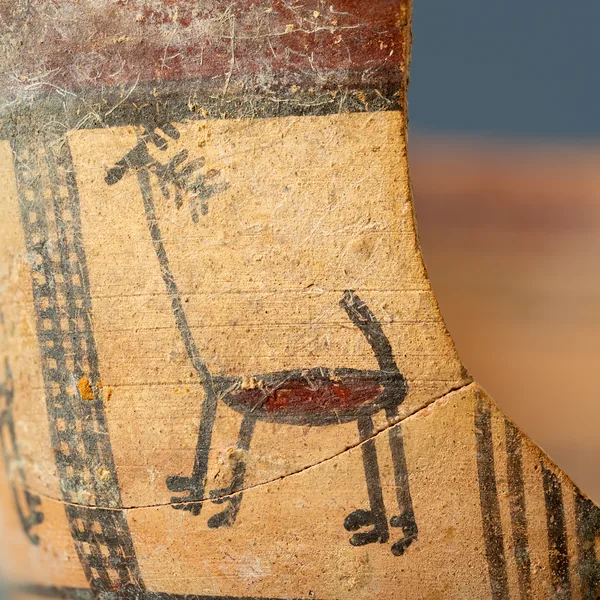
Bichrome Skyphos with Stags in Metopes
Vessel
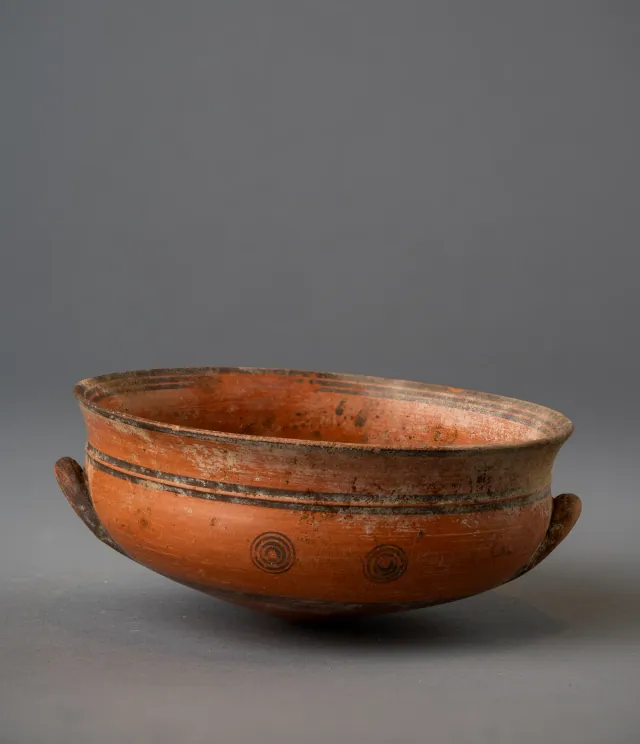
Black-on-Red Two-Handled Bowl with Raised Flaring Rim
Vessel
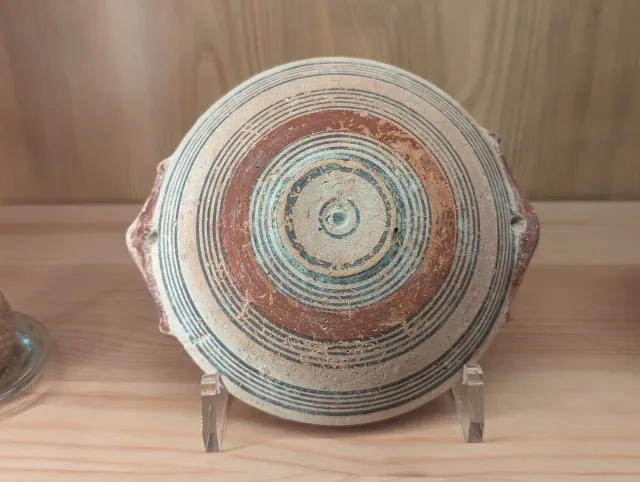
Bichrome IV Bowl with Red-Painted Pierced Lug Handles
Vessel
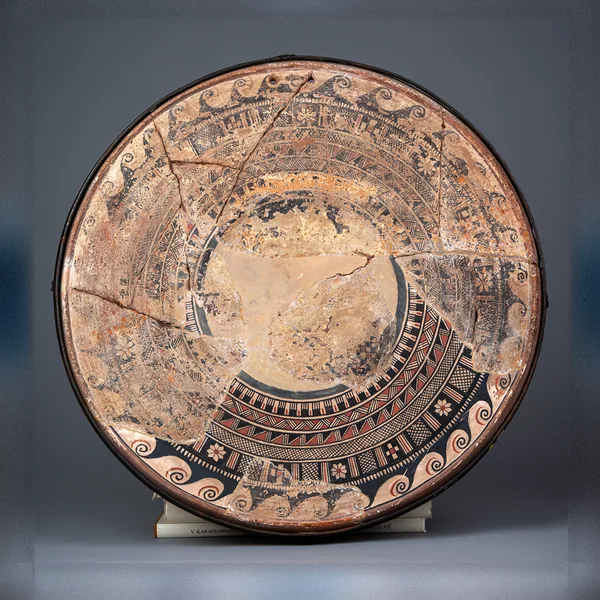
Large Bichrome Plate from Salamis with a Wave Band and Rosette Metopes
Vessel
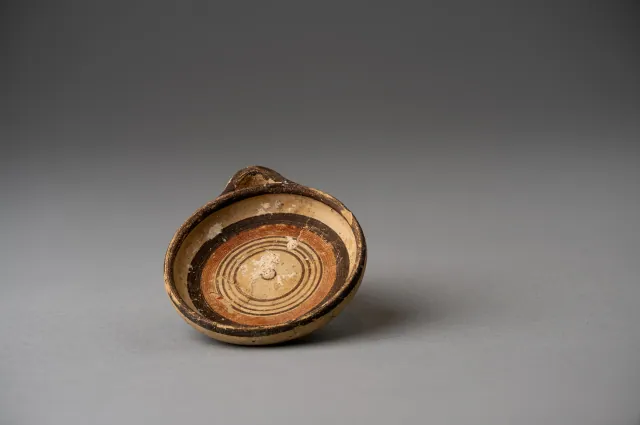
Miniature Bichrome Plate with Concentric Circles
Vessel
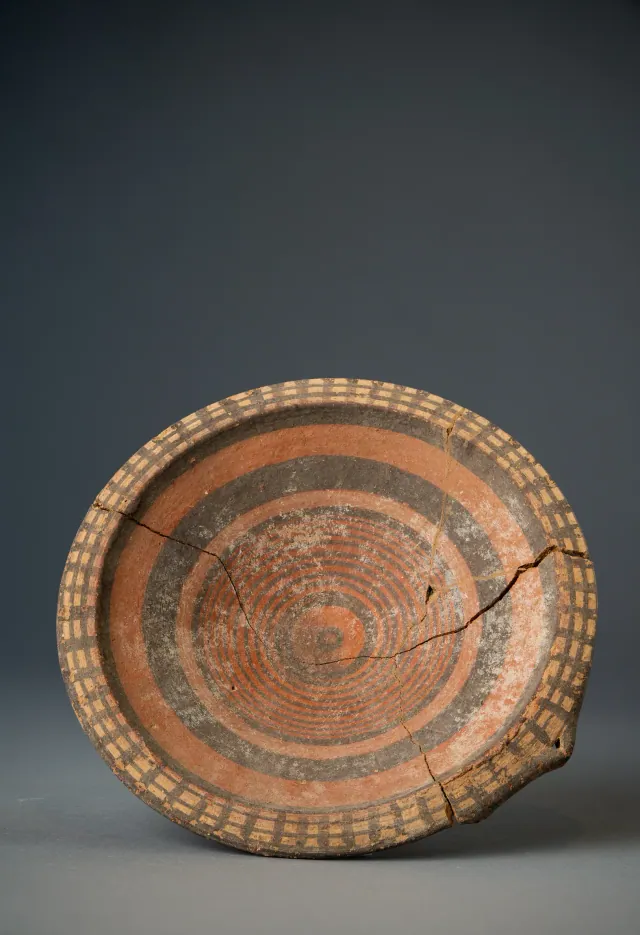
Black-on-Red Plate with Barred Rim and Concentric Circles
Vessel
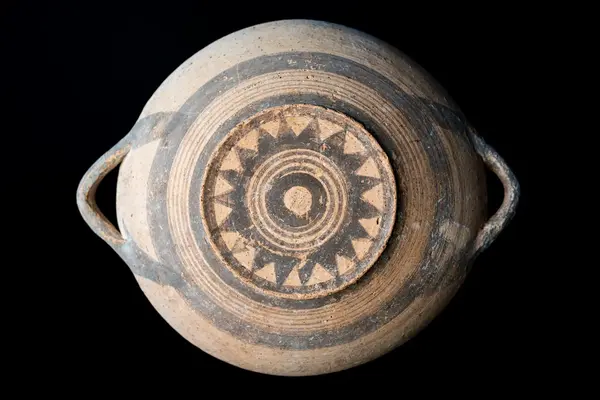
White Painted Plate with a Sawtooth Star on the Underside
Vessel
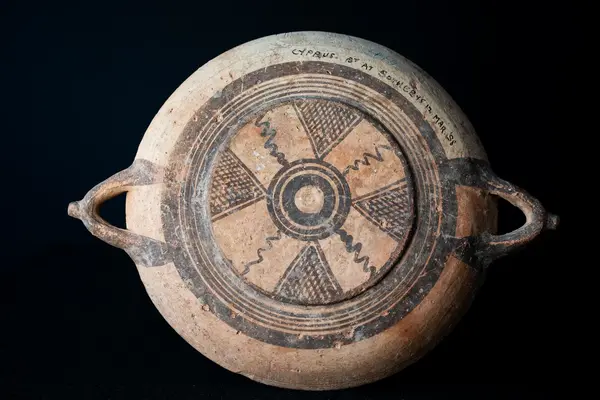
White Painted Plate with Latticed Triangles and Wavy Lines on the Underside
Vessel
Found at the places discussed
Objects in our catalogue, in museum collections, recorded as found at these sites.



Background
Where to read more on this site before or after watching.
The site
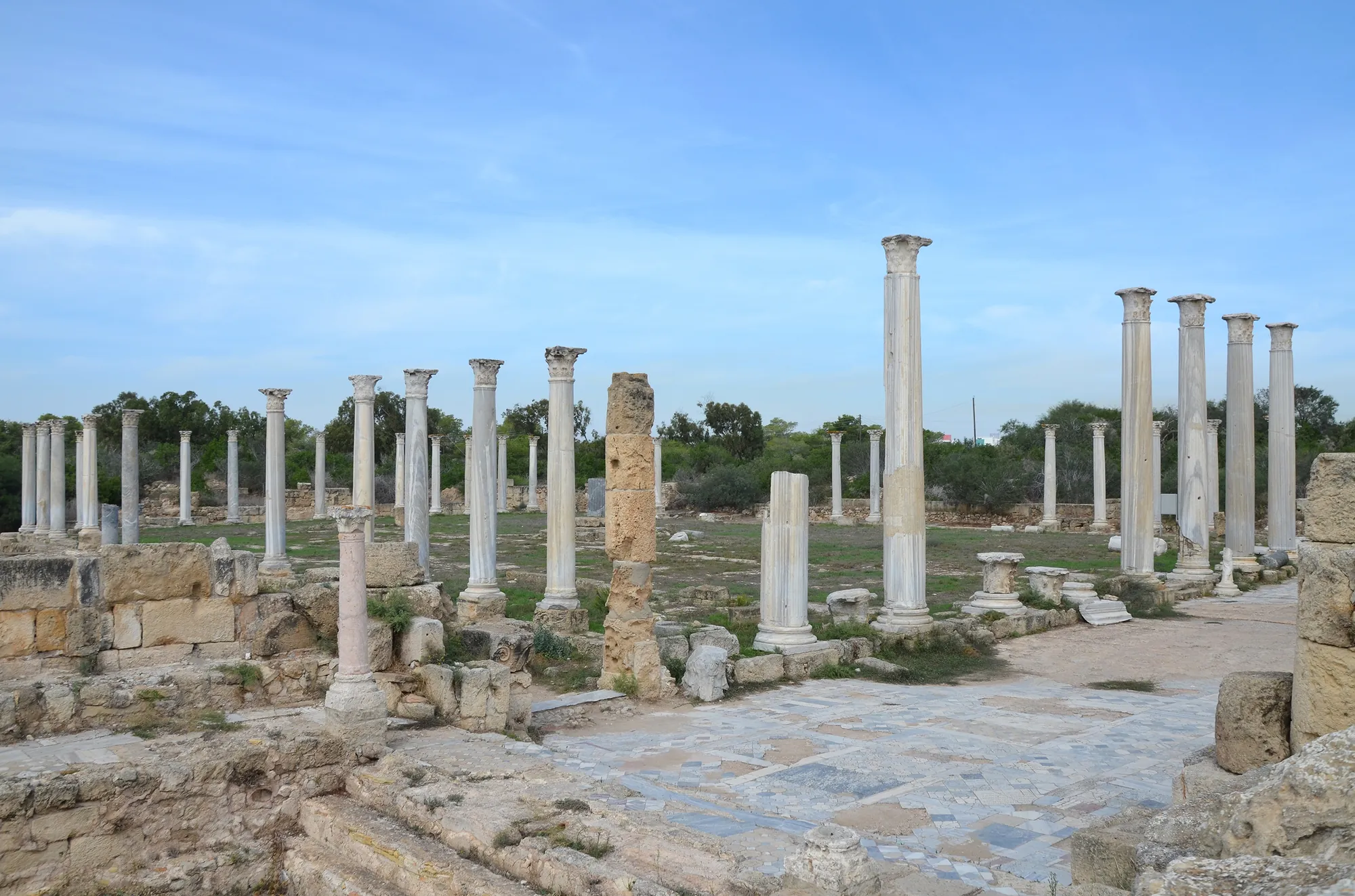
Salamis
A city on the east coast of Cyprus at the mouth of the Pedieos river, founded in the 11th century BC and one of the leading city-kingdoms of the island until 311/310 BC. It is known for the Royal Tombs with their sacrificed horses and chariots, for its Roman gymnasium, baths and theatre, and as Constantia, seat of the bishops of Cyprus from the 4th century AD. The site lies in the north of the island; the Cypriot and French excavations stopped in 1974.
In the compendium
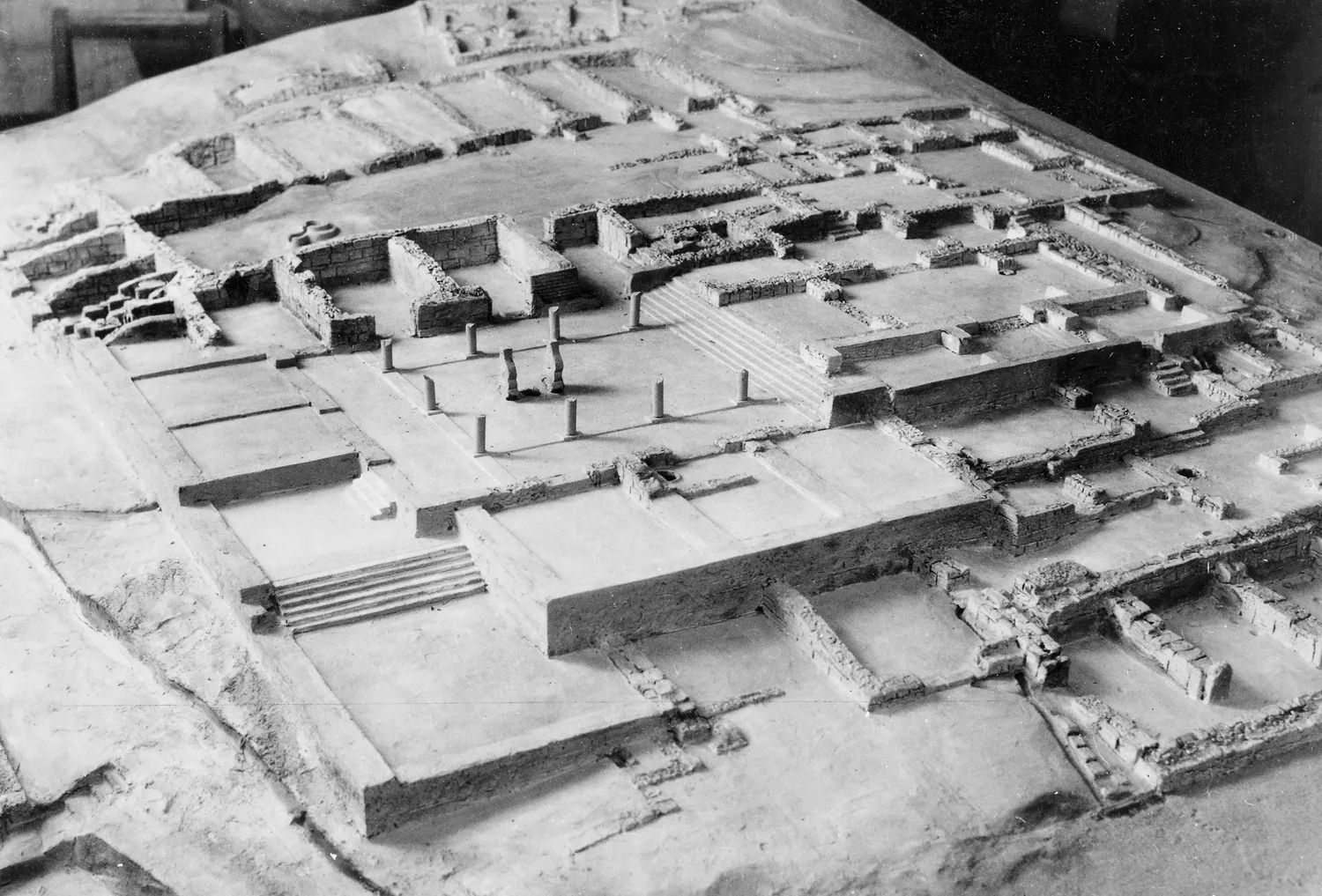
Iron Age Cities and Palaces
The capitals of the Iron Age kingdoms of Cyprus, their palaces at Vouni, Amathus, Idalion and Palaepaphos, their houses, and the volute and Hathor capitals of the period.

In the compendium
Ugarit and the Levant
The Syrian port kingdom of Ugarit and the wider Levantine coast, Cyprus's closest Bronze Age trading partners across the water.
The period
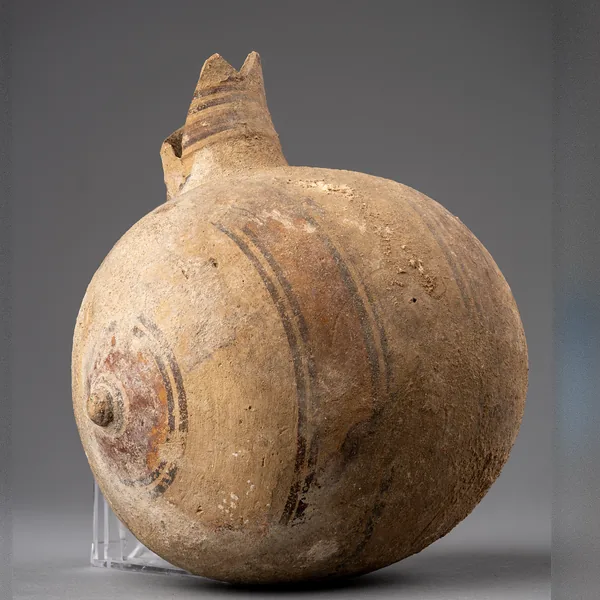
Cypro-Geometric
The Early Iron Age of Cyprus, c. 1050–750 BCE, of new dromos tombs, early ironworking, the Cypriot Syllabary and the debated origins of the city-kingdoms.
Map of Cyprus
Places discussed in the talk
- Has a page on this site
- Other places
- Ground above 200, 500, 1,000 m