
Lecture·CAARI Cyprus·2022
Venice, Cyprus and the southern Levant in the 14th–16th centuries: ceramics as a reflection of contacts
Edna Stern
Chapters
About the lecture
Edna Stern of the Israel Antiquities Authority and the University of Haifa presents ceramic evidence for maritime trade connecting Venice, Lusignan and Venetian Cyprus, and the Mamluk and early Ottoman southern Levant from the 14th to the 16th century. After the Mamluk conquest of Acre in 1291 and the papal embargo on European trade, Cyprus acted as a transit point, while Venetian merchants gained permission in 1304 to moor at Acre, buy cotton, and bring Christian pilgrims through Jaffa.
Stern shows that imported Italian and Cypriot glazed wares have often been misidentified in the southern Levant as local vessels. Alongside finds from Jerusalem, Ramla, Safed, Acre, and Jaffa, she has identified Italian sherds in at least a third of contemporary Mamluk rural sites in northern Israel; at Tell er-Ras near Acre, imports form a fifth of the glazed bowls.
Turning to Cyprus, Stern examines 14th- to 16th-century sherds from Jaffa, Ramla, Safed, and Jerusalem. Through petrographic analysis with Anastasia Shapiro and consultation with Demetra Papanikola-Bakirtzi, she attributes a green-painted sherd from Jaffa to Lapithos, two further Jaffa sherds tentatively to Soli near Morphou, a finely incised sherd from Safed to Cypriot wedding bowls, and red-slip sgraffito fragments with yellow and green glaze (one bearing part of a coat of arms) probably to Enkomi. She also suggests that Mamluk yellow and green gouged ware from Safed Castle adapted zigzag schemes and collared bird friezes from contemporary Cypriot sgraffito bowls into larger communal dishes.
In the discussion, Konstantinos Politis, Hugo Blake, Jelena, and Nicholas Coureas comment on Gaza, market mediation, late Ottoman Lapithos wares, the papal embargo, and Cypriots in Mamluk Beirut.
From our collection
Pieces in the Drakopoulos collection of the kinds and periods this talk covers: Bowl, Zigzags and chevrons, Bird.
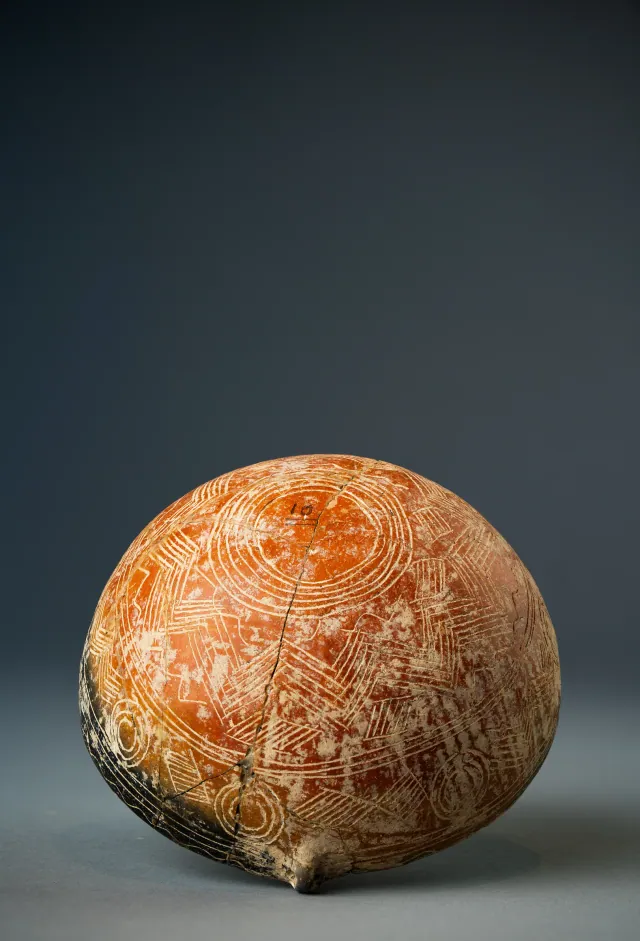
Red Polished Knob-lug Bowl with Incised Concentric Circles and Hatched Chevrons
Bowl
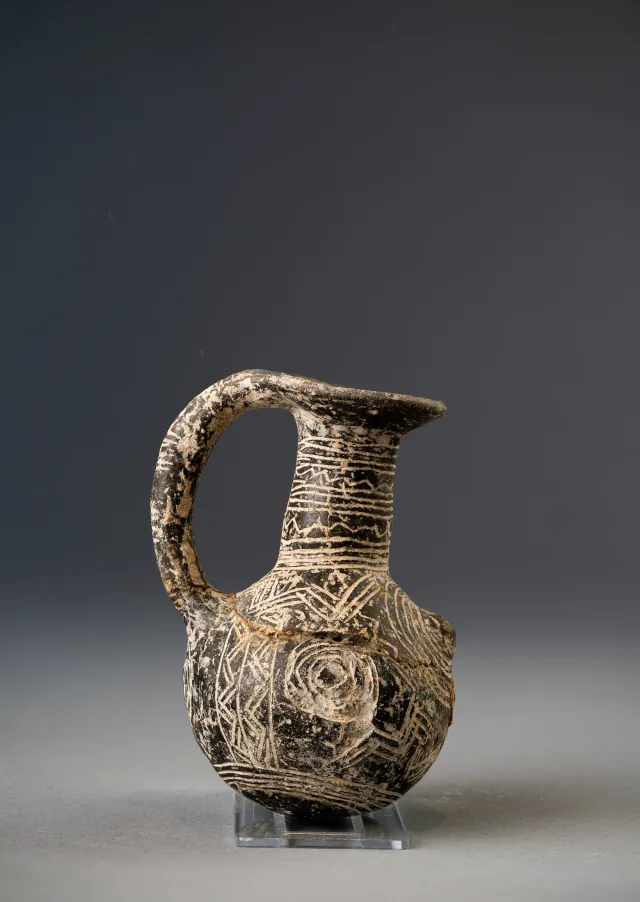
Black Polished Juglet with Incised Decoration and Circled Bosses
Zigzags and chevrons
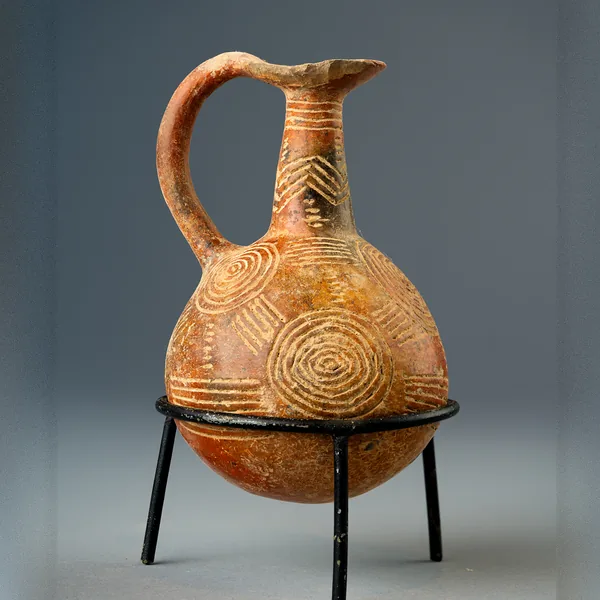
Red Polished Beak-Mouthed Jug with Concentric Circles and Chevrons
Zigzags and chevrons
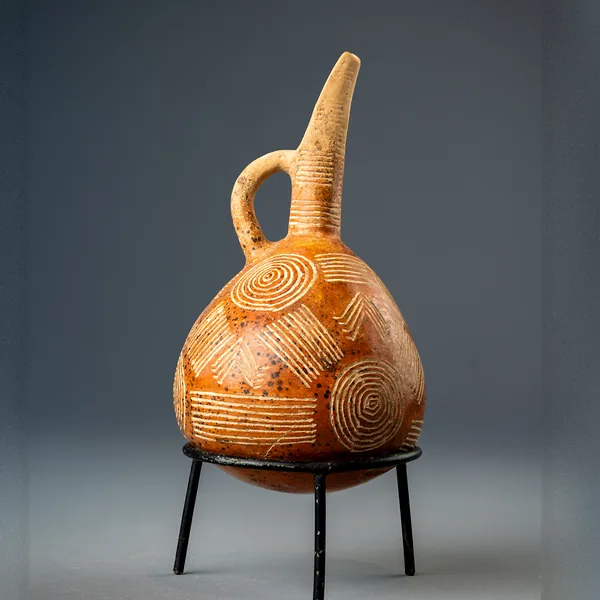
Red Polished Beak-Spouted Juglet with Incised Circles
Zigzags and chevrons
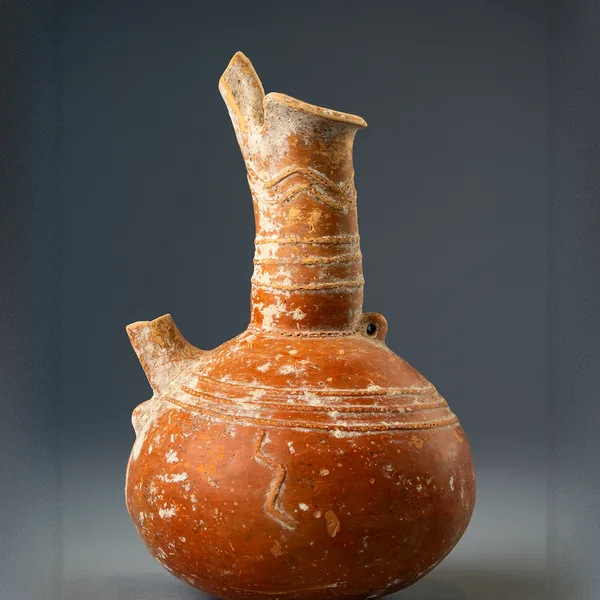
Red Polished Spouted Jug with Relief Bands and a Snake
Zigzags and chevrons
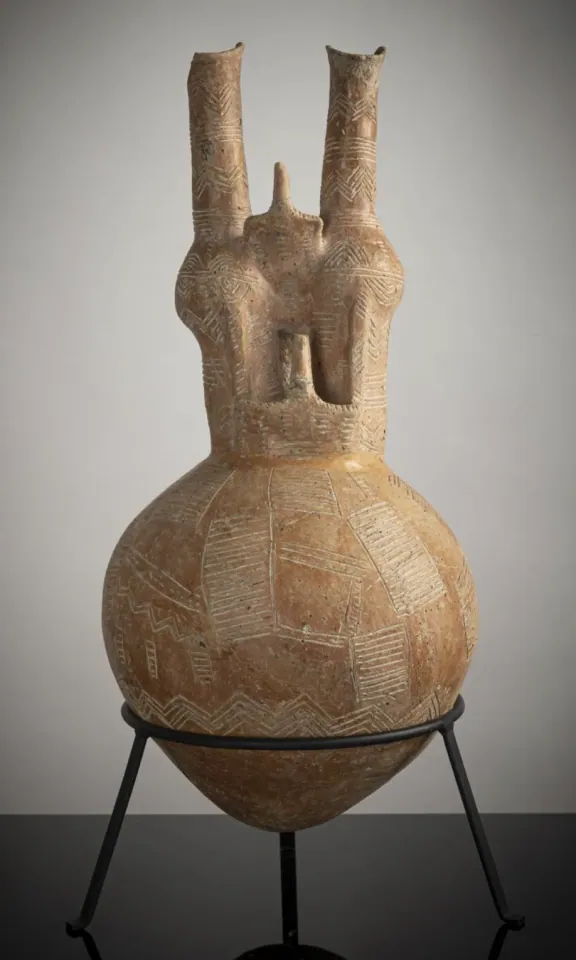
Red Polished Double-Necked Jug with Two Modelled Birds
Bird
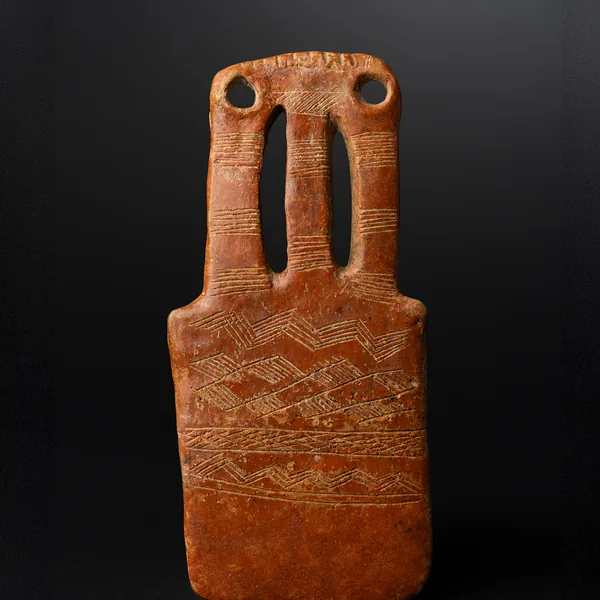
Red Polished Three-Necked Plank Figure
Zigzags and chevrons
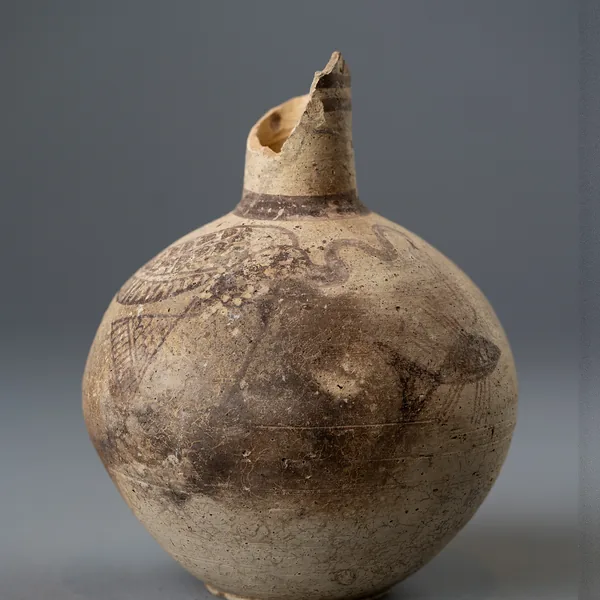
Bichrome IV Jug with a Waterfowl Catching a Fish
Bird
Found at the places discussed
Objects in our catalogue, in museum collections, recorded as found at these sites.


Background
Where to read more on this site before or after watching.
The site
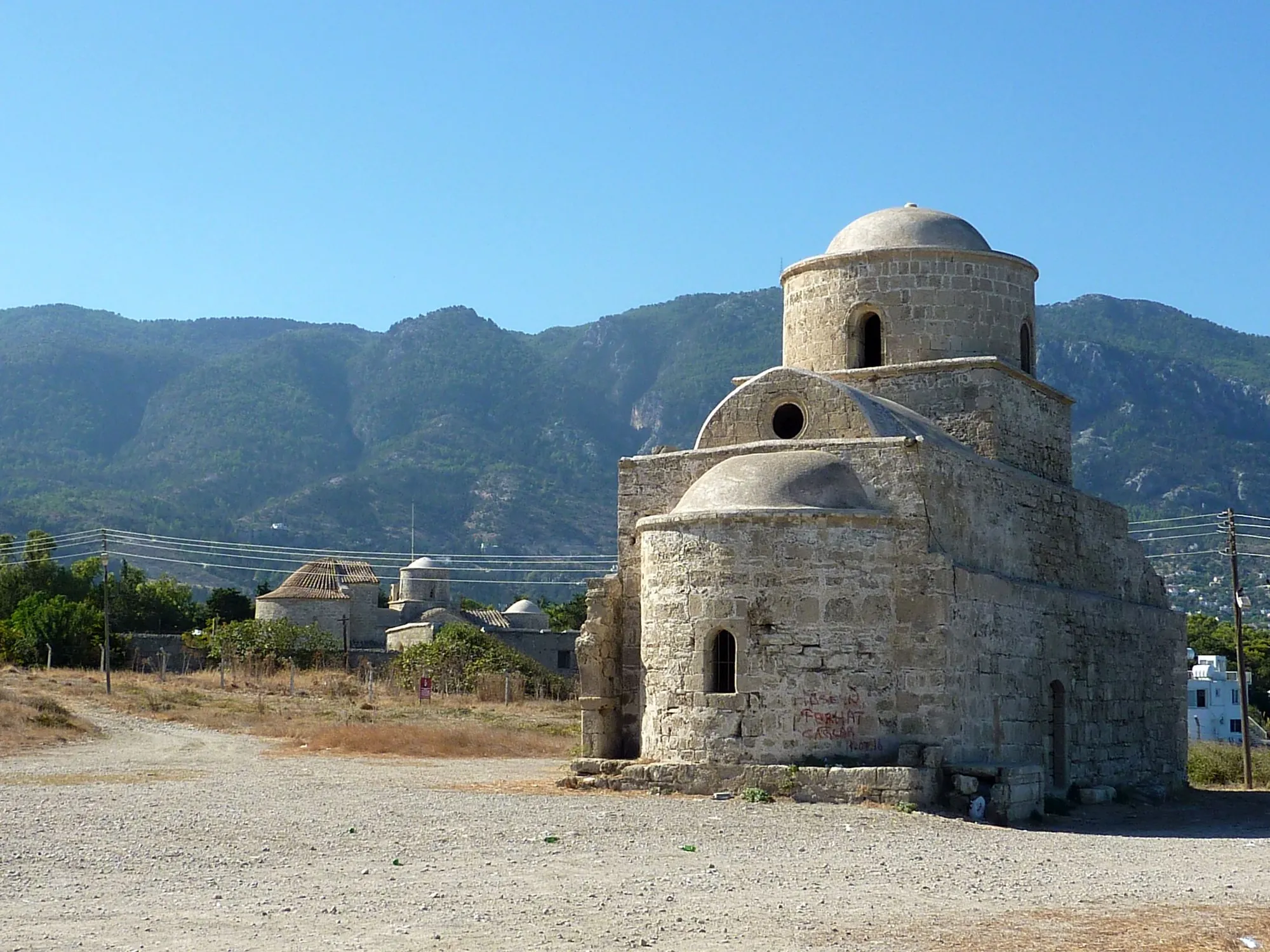
Lapithos
A group of cemeteries and settlement sites around the village of Lapithos on the north coast, below the Kyrenia range. Its Early and Middle Bronze Age cemetery at Vrysi tou Barba has produced about five times as much metal as Vounous, its Cypro-Geometric tombs gave the pottery sequence for that period, and ancient Lapethos was a city-kingdom until 312 BC.
In the compendium
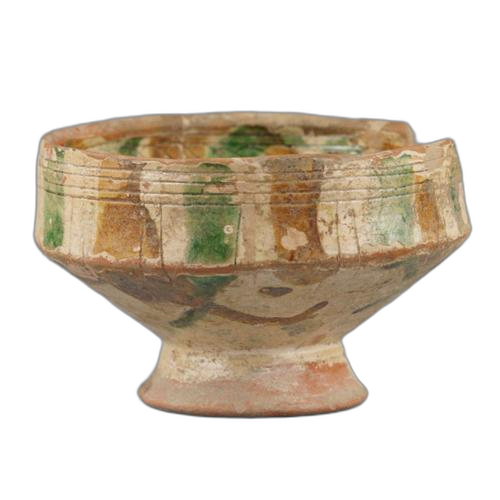
Medieval Glazed Sgraffito Ware
Wheel-made red-clay tableware coated in white slip, incised through the slip and lead-glazed, made in Cypriot workshops from the 13th to the 16th century AD.
In the compendium
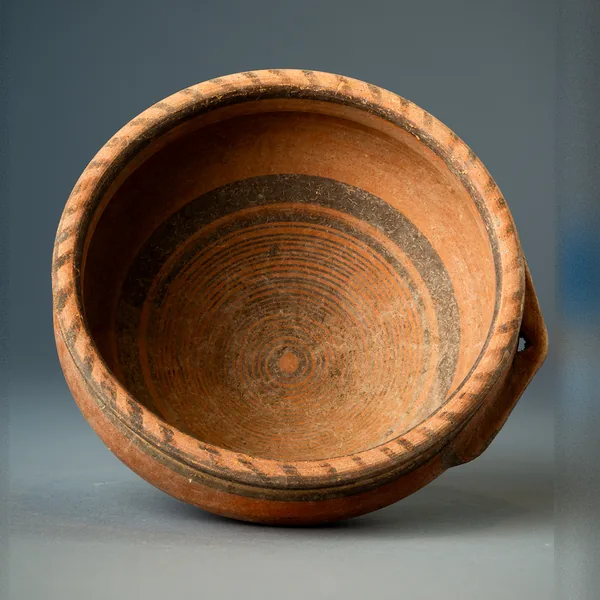
Bowls
The open vessel deeper than a plate and without a pouring neck, the one Cypriot pottery shape made without a break from the Neolithic to the Iron Age.
In the compendium
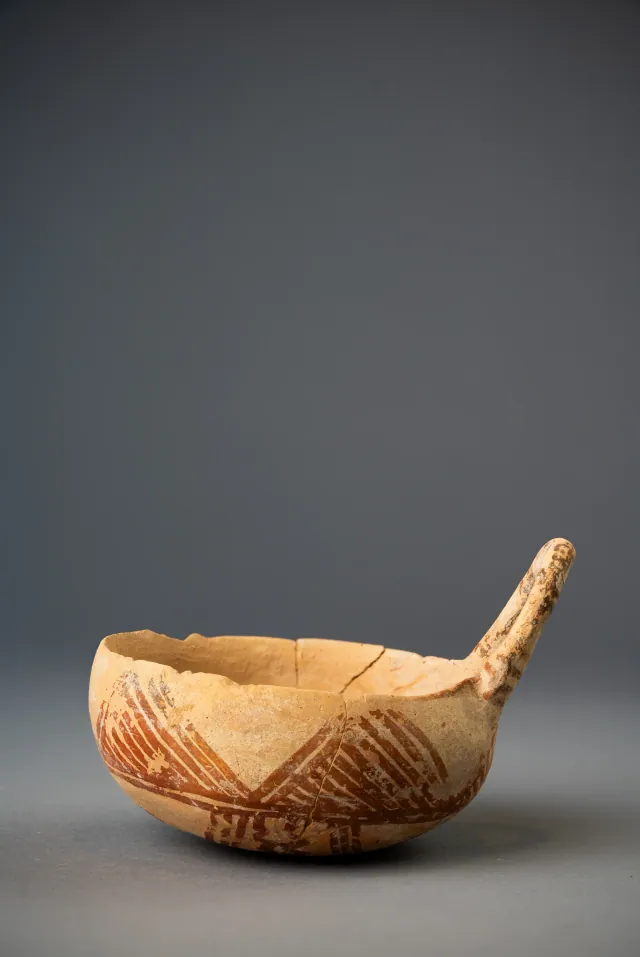
Zig-Zags
A continuous line changing direction at sharp angles, incised or painted on Cypriot pottery from Early Bronze Age Red Polished to Cypro-Archaic handles.
Map of Cyprus
Places discussed in the talk
- Has a page on this site
- Other places
- Ground above 200, 500, 1,000 m