
Geometric III
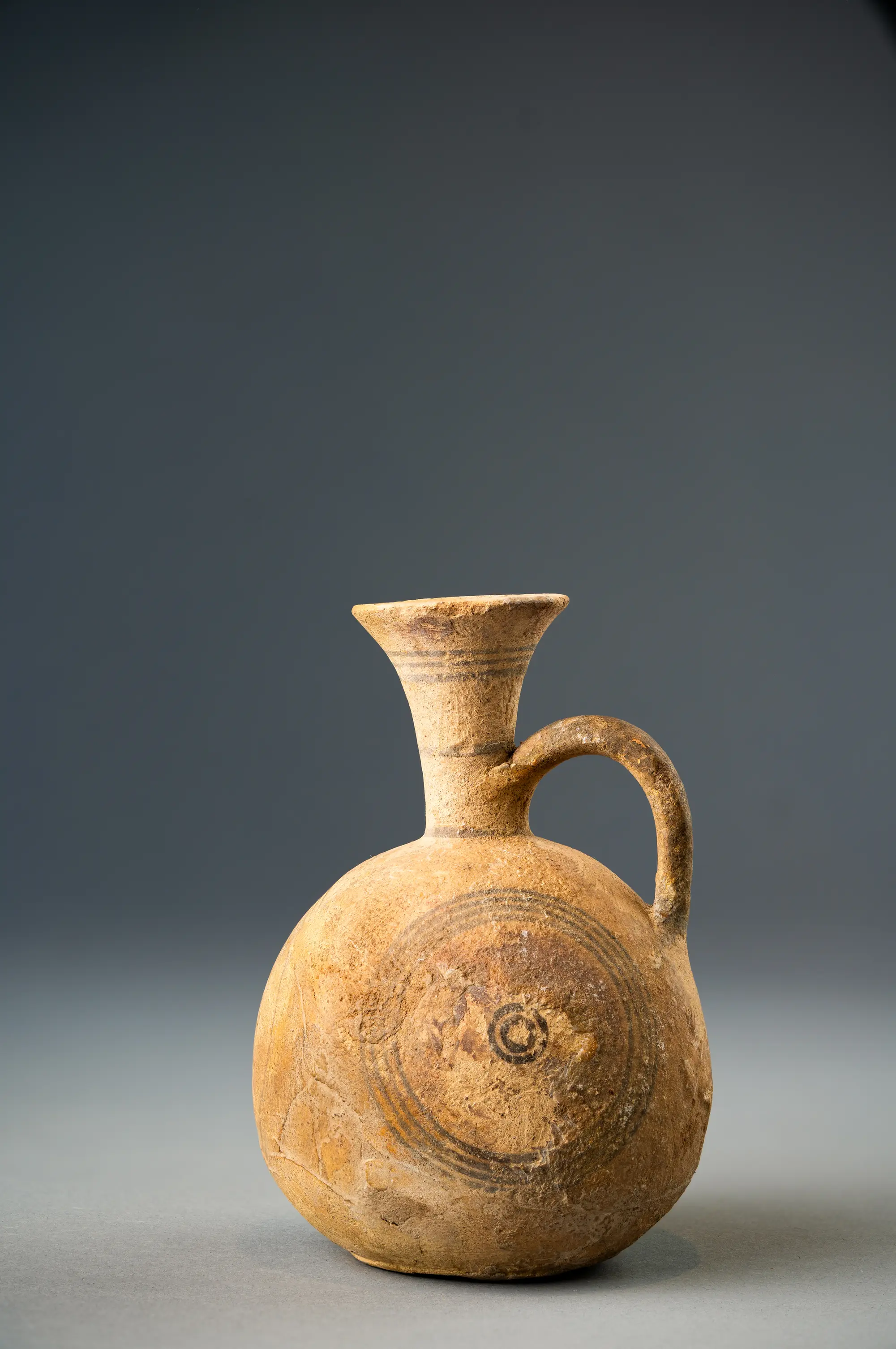
White Painted Juglet with Funnel Mouth and Side Circles
Small globular Cypriot juglet with a tall funnel mouth and a single large concentric-circle system on its side, late Cypro-Geometric to Cypro-Archaic I.
Date
850 - 600 BC
Accession No.
JUG-GE-005
Collection
Alexis Drakopoulos
Provenance
- 1995–2010, private collection, London (assembled in these years)
- 2025–present, Alexis Drakopoulos, London
Late Cypro-Geometric to Cypro-Archaic I, c. 850–600 BCE · White Painted ware (possibly Bichrome with the red lost) · Wheel-made
A small globular juglet on a slightly flattened base, its body almost a perfect sphere. From it rises a tall, narrow neck that opens into a wide funnel mouth with a thin, flat lip. A plain round-sectioned handle runs from the middle of the neck, where a painted line marks the join, down to the shoulder. The decoration is spare: groups of fine dark lines just below the rim and at the base of the neck, and on the side a single large system of concentric circles with a small ringed dot at its centre. Inside the circle the clay has a warmer, reddish tone. The surface is worn and stained, and fracture lines across the lower body show that the juglet was broken and put back together with an old, rather rough repair.
Commentary
The juglet belongs to the long Cypriot series of small globular pouring vessels with a narrow neck and funnel mouth. Gjerstad follows globular and oval juglets through the successive White Painted types, and the funnel-shaped mouth with a handle from neck to shoulder is a standard feature of Cypro-Geometric jugs that carries on into Type IV [1, pp. 46–47, 51]. The single large circle system set on the side of the body, with the handle at the edge of the circle, borrows the layout of the barrel jug, where the concentric rings are centred on the end of a horizontal body. On globular jugs of the Cypro-Archaic period the same scheme appears in its fuller form, with two or three circle systems and rows of smaller circles between them, as on the Bichrome IV jugs in Turin and those from a tomb at Stylli [2; 3]. Here the painter has reduced it to one circle on the side, with fine groups of lines on the neck.
Only dark paint is certain. The warmer patch inside the circle may be red paint that has faded or worn away, which would make the juglet Bichrome, or it may be staining from burial; the earlier description of the piece as Bichrome rests on this. Until the surface is examined under good light, White Painted is the safer name. Gjerstad's Western "circle style", which he placed in the western and northern parts of the island, is the closest stylistic home for the scheme [1, p. 52], though without a findspot no regional attribution can be made. The Vassar College juglet CC48.264, a small globular Cypriot vessel with circle ornament, and the larger White Painted jug in Cleveland (1916.2005) with circles on its sides show the same way of placing ornament on a round body.
The shape and ornament support a date from late Cypro-Geometric III into Cypro-Archaic I, roughly 850–600 BCE. A narrower date would need the exact profile and a secure reading of the ware. Juglets of this size held small quantities of oil or perfumed oil and, like almost all complete Cypriot vessels of the period, probably survived because they were placed in a tomb.
References
- 1.Gjerstad, E. (1948) The Swedish Cyprus Expedition IV.2: The Cypro-Geometric, Cypro-Archaic and Cypro-Classical Periods. Stockholm: Swedish Cyprus Expedition, pp. 46–47, 51–52.
- 2.Bombardieri, L. & Panero, E. (eds) (2021) Cyprus. Crossroads of Civilizations. Exhibition catalogue. Turin: Musei Reali, cat. 092, pp. 287–288.
- 3.Gjerstad, E., Lindros, J., Sjöqvist, E. & Westholm, A. (1935) The Swedish Cyprus Expedition II: Finds and Results of the Excavations in Cyprus 1927–1931. Stockholm: Swedish Cyprus Expedition, p. 201.
More from the Catalogue
Browse related objects
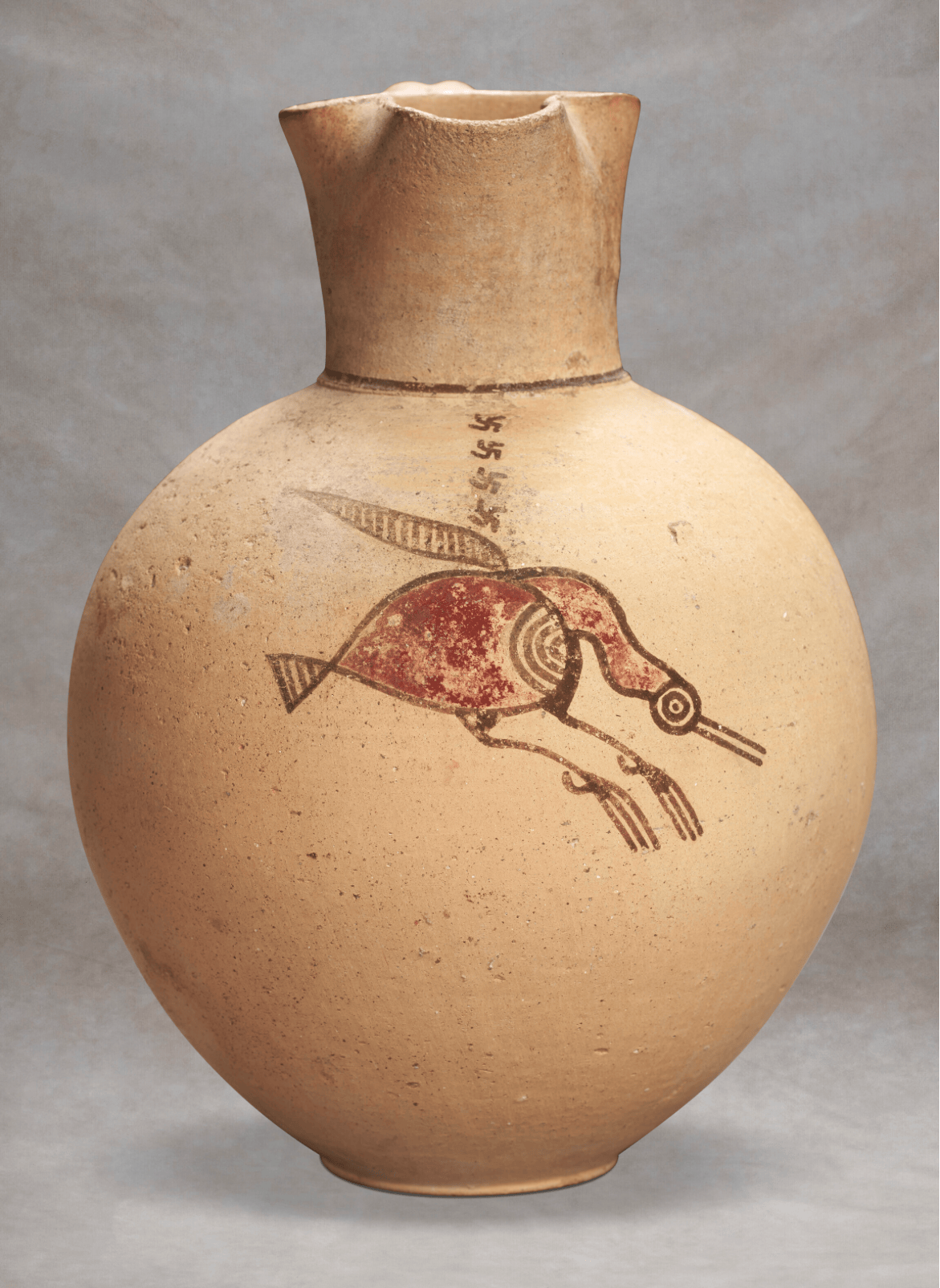
Bichrome Oinochoe
Archaic I
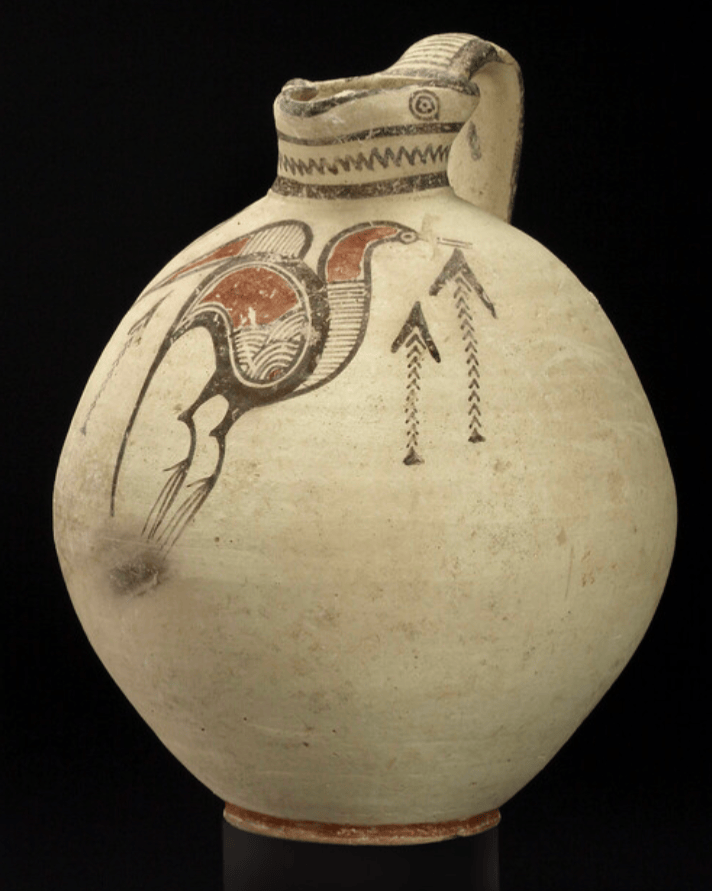
Free-field bichrome jug with image of an Ibis bird and reeds
Archaic
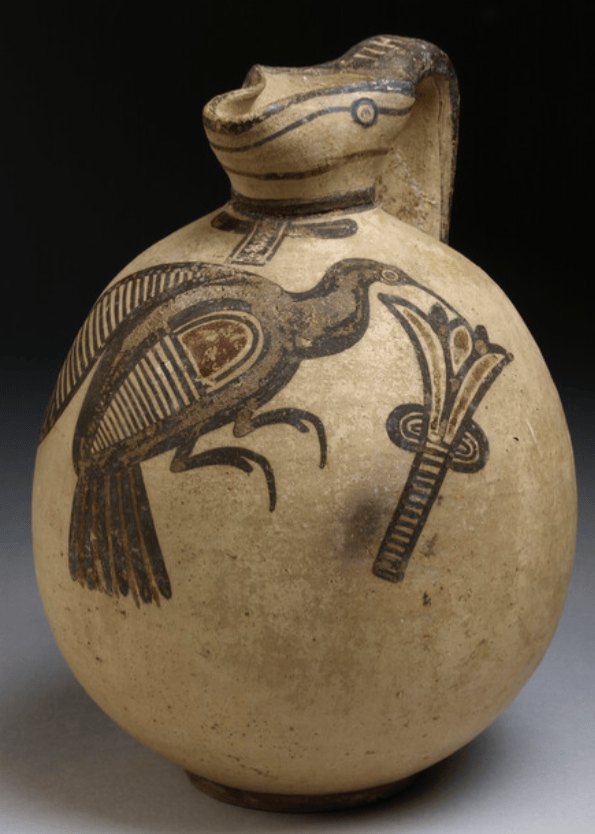
Squat bichrome jug in free-field style with image of bird picking a lotus flower
Archaic
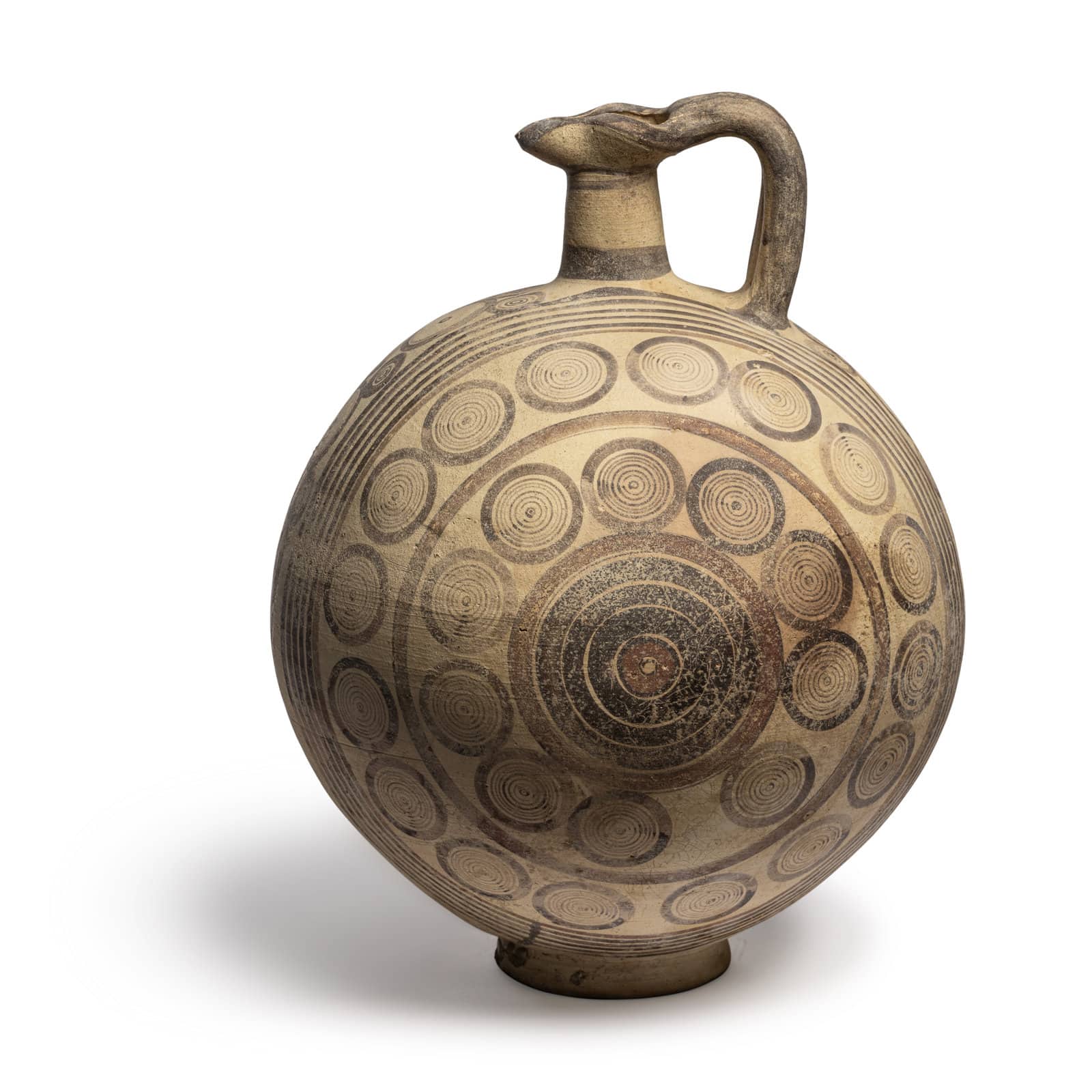
A Cypriot Bichrome-Ware Oinochoe Jug
Archaic I
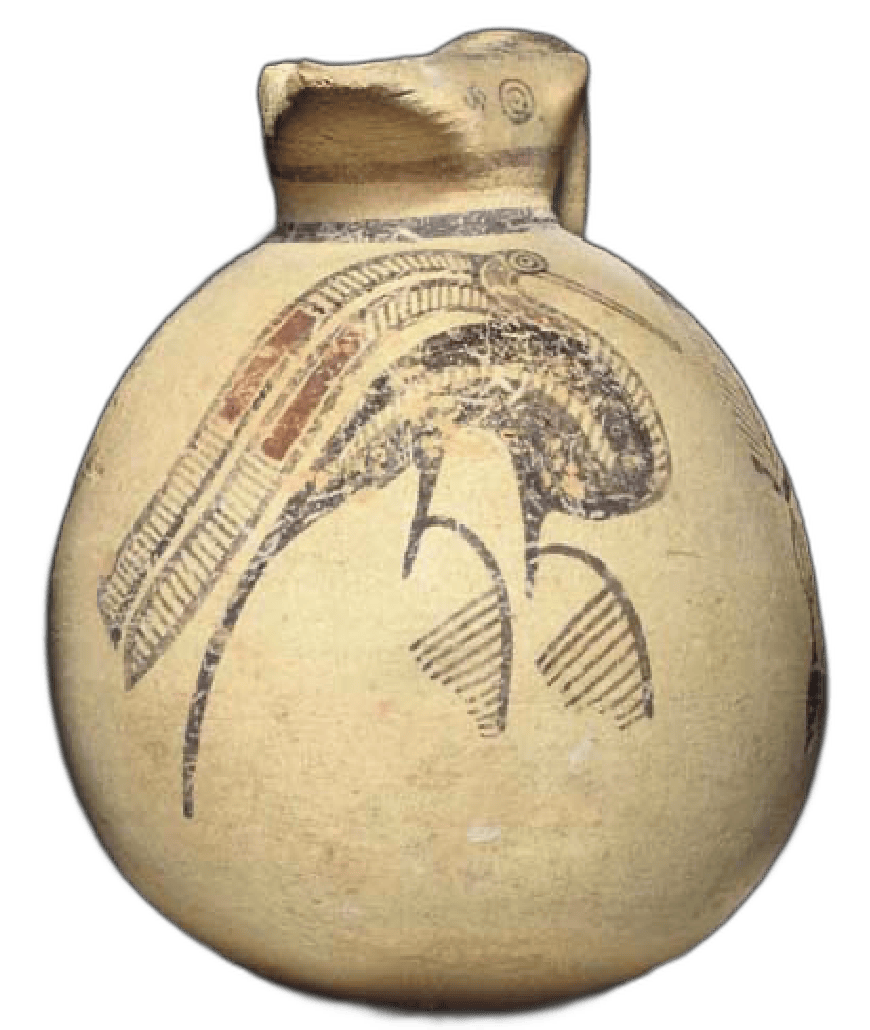
Oinochoe with Free Field Bird
Archaic I
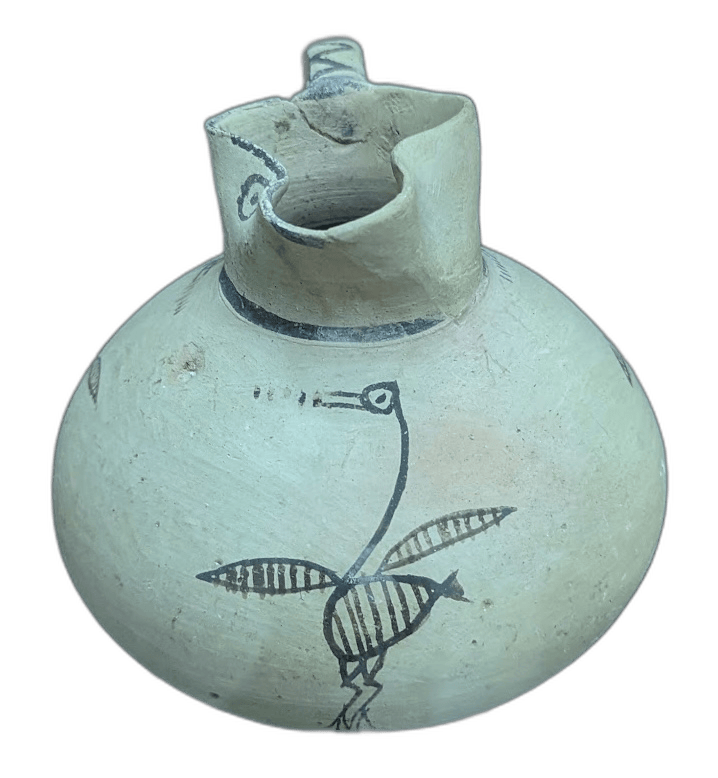
Small Oinochoe with Free Field Bird
Archaic I
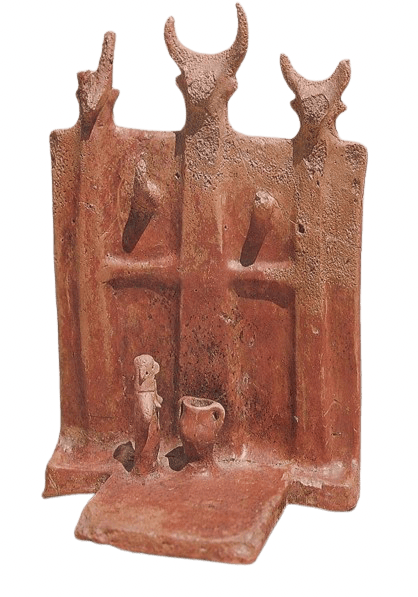
Red Polished Shrine
Middle Bronze Age I
Black-On-Red Geometric Jug Sherd
Geometric II
Bichrome Jug
Geometric
Bichrome Juglet
Geometric
Bichrome Oinochoe
Geometric
Juglet
Archaic II
Oinochoe
Geometric III
Jug
Archaic I
Juglet
Archaic I
Jug
Geometric I
Terracotta jug
Early Bronze Age I
Juglet
Geometric I