

Archaic I
Bichrome IV Jug with Wreathed Circle Systems
Cypro-Archaic I Bichrome IV trefoil jug: each side has a red-filled disc in a black ring, wreathed by about sixteen small concentric-circle groups.
Classification
- Object type
- Pottery vessel
- Decoration techniques
- Painted, PaintedPainted in two colours
- Motif
- Concentric circles
- Material
- Clay
- Date
- 750 - 600 BC
- Place of production
- Cyprus
Collection
Alexis Drakopoulos
Provenance
- 1965–2025, The Goodman Collection (formed in Cyprus, 1965–1969)
- 2025–present, Alexis Drakopoulos, London
Identifiers
- Inventory no.
- JUG-GE-002
Cypro-Archaic I, c. 750–600 BCE · Bichrome IV ware · Wheel-made
A globular jug on a ring base, with a short neck, a pinched trefoil mouth and a plain strap handle from rim to shoulder. The buff clay has weathered to a warm orange-brown, and lime encrustation clings to the lower body and base.
Each side carries a large circle system in which a heavy black ring encloses a disc washed solid red, with a small black target of fine rings at its centre. On the better-preserved side a band of red and black concentric lines runs around this, holding a wreath of seventeen small black concentric-circle groups spaced evenly like beads. Thin black lines drop from the neck between the systems, and beneath one disc sits a cluster of four small circle groups, three in a row and one below. The black is worn in places; the red has held best inside the central discs.
Commentary
This is a Bichrome IV jug of Gjerstad's Western or circle style, the Cypro-Archaic I decoration in which, in his words, the circles are "often connected in vertical or horizontal rows" and the outer line of a system is sometimes thicker than the others [1]. The globular body, narrow neck and pinched mouth are the standard Type IV jug shape [1]. The collection's larger jug JUG-GE-001 is decorated on the same principle, but the small circles are organised differently. There they form columns in the interspaces; here they are wound into a closed ring around the side system, so that the face reads as a single rosette.
That ring arrangement is matched in the Musei Reali, Turin, where one of the Bichrome IV jugs catalogued in 2021 has, between black and reddish lines, "11 groups of small concentric circles (their centres are linked by a single line)" [2]. The excavated Stylli jugs of the Swedish Cyprus Expedition, nos. 6 and 12, carry the same vertical red and black circles with small circles in the interspaces and belong to the later of their tomb's two burial periods [3]. Comparable museum pieces include the Bichrome oinochoe Manchester II.C.156 [4] and the Walters Art Museum jug 48.2347 [5].
The feature that sets this jug apart is the solid red disc at the centre of each system. Most circle-style jugs use red only as rings between black ones; filling the whole centre with red turns each side into a red boss framed in black and makes the two colours read as separate masses. The date follows the ware and style: Cypro-Archaic I, c. 750–600 BCE. The jug has no recorded find-spot. Like others of its kind it is likely to have come from a tomb, where trefoil jugs were placed as pouring vessels for the dead.
References
- 1.Gjerstad, E. (1948) The Swedish Cyprus Expedition IV.2: The Cypro-Geometric, Cypro-Archaic and Cypro-Classical Periods. Stockholm: The Swedish Cyprus Expedition, Bichrome IV ware section.
- 2.Bombardieri, L. and Panero, E. (eds) (2021) Cyprus. Crossroads of Civilizations. Exhibition catalogue, Musei Reali, Turin, pp. 287–288, cat. 092.
- 3.Gjerstad, E., Lindros, J., Sjöqvist, E. and Westholm, A. (1935) The Swedish Cyprus Expedition II: Finds and Results of the Excavations in Cyprus 1927–1931. Stockholm: The Swedish Cyprus Expedition, p. 201, nos. 6 and 12.
- 4.Manchester Museum, II.C.156. Bichrome oinochoe with concentric and vertical circles. Online collection record.
- 5.Walters Art Museum, Baltimore, 48.2347. Bichrome jug with pinched spout, Cypro-Archaic I. Online collection record.
Corrections and additions
Do you know this object?
We are always looking for more of an object's history: who owned it, where it was sold or shown, and where it was published.
We would like to hear about
- Earlier owners, sales or exhibitions
- Publications that illustrate or mention it
- Where it is now, if it has moved
- Better photographs, or a close parallel
- A mistake in what we say about it
Messages are read by us alone and kept confidential, unless the law requires otherwise. Tell us if you would like to be thanked by name on the page.
Similar pieces
 JugMedelhavsmuseet (Museum of Mediterranean and Near Eastern Antiquities)
 Bichrome IV Trefoil Jug with Intersecting Circles and Cyprus Museum Lead SealDrakopoulos Collection
 Bichrome IV jugSwedish Cyprus Expedition
 Black-on-Red Globular Trefoil Jug with Concentric CirclesDrakopoulos Collection
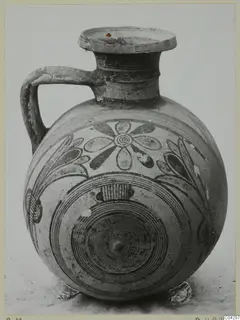 Bichrome IV jugSwedish Cyprus Expedition
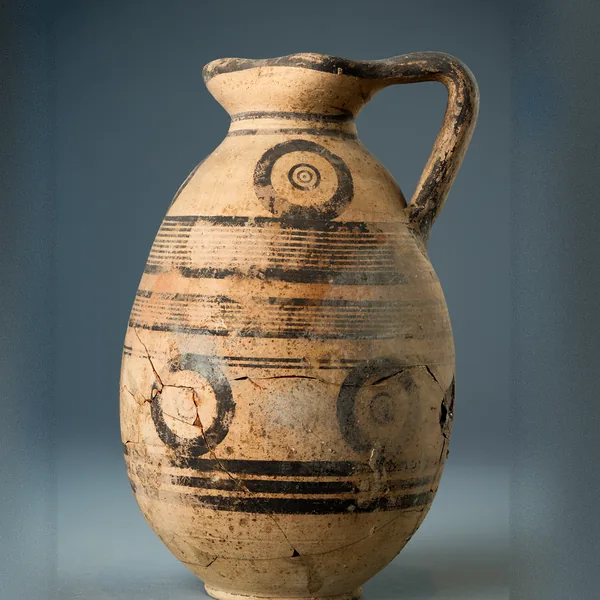 White Painted IV Ovoid Trefoil Jug with Concentric CirclesDrakopoulos Collection
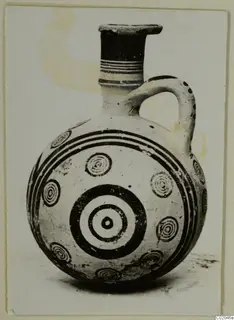 Bichrome IV spherical jugMuseum Gustavianum
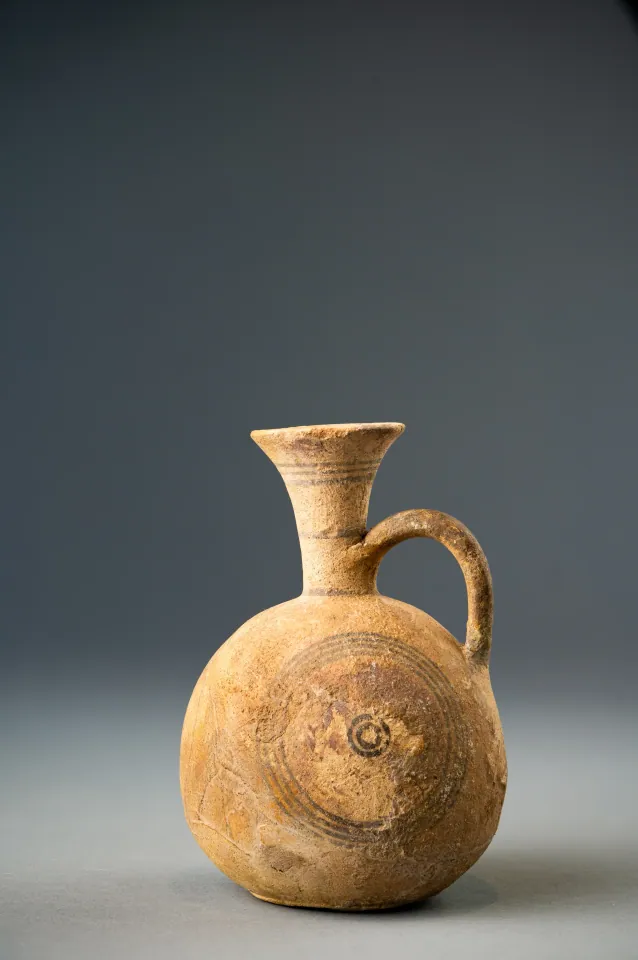 White Painted Juglet with Funnel Mouth and Side CirclesDrakopoulos Collection
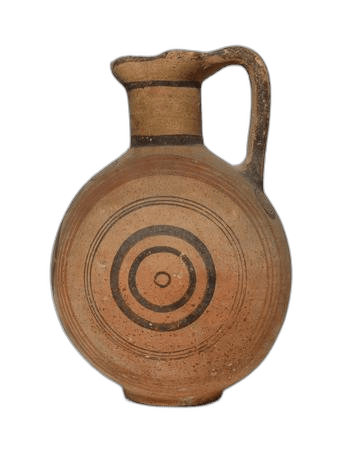 Bichrome Ware OinochoeBritish Museum
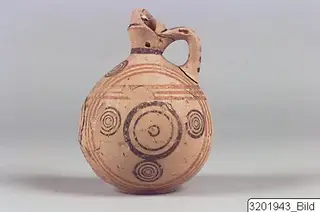 Bichrome IV jug with flat baseMedelhavsmuseet (Museum of Mediterranean and Near Eastern Antiquities)
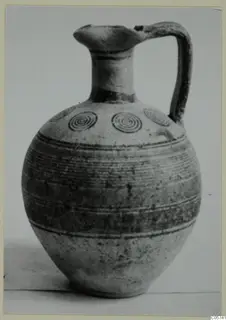 Bichrome IV jugStylli, SCE Tomb 13
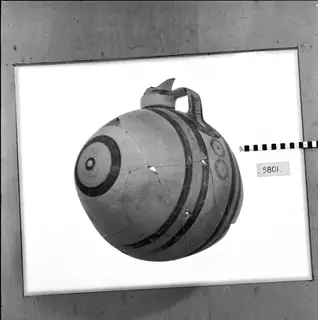 Bichrome IV jugSalamis
 Bichrome IV globular jug with base-ringMedelhavsmuseet (Museum of Mediterranean and Near Eastern Antiquities)
 Bichrome IV jug with raised baseMedelhavsmuseet (Museum of Mediterranean and Near Eastern Antiquities)
 Bichrome IV jugIdalion
 Bichrome Red JugBritish Museum
 JugMetropolitan Museum of Art
 Bichrome Ware JugBritish Museum
 Bichrome OinochoeCyprus Museum, Nicosia
 JugMetropolitan Museum of Art