III · Research · Provenance research
Where has an object been since it left the ground?
Live
Provenance research asks where an object has been since it left the ground: who owned it, who sold it, when it left Cyprus and on what authority. We follow an object back through sale catalogues, export records, museum registers and family papers, link by link, and say plainly which links are proved, which are probable and which are still missing.
Our first full case is the Lotus Amphora, a Cypriot Bichrome amphora sold at Sotheby’s on 11 November 1926 and now in the Drakopoulos Collection. The same work runs through the registers, where every sale, gift and export on a person’s or a museum’s page is cited, through the compendium’s section on the antiquities trade, and through our guides for owners.
- links in the amphora's chain
- 11
- links in the amphora's chain
- proved · probable · missing
- 6 · 2 · 3
- proved · probable · missing
- lots of 1926 found in earlier sales
- 133 of 147
- lots of 1926 found in earlier sales
- cited dealings in the people register
- 2,856
- cited dealings in the people register
- museums with cited acquisitions
- 143
- museums with cited acquisitions
- compendium pages on the trade
- 74
- compendium pages on the trade
1926
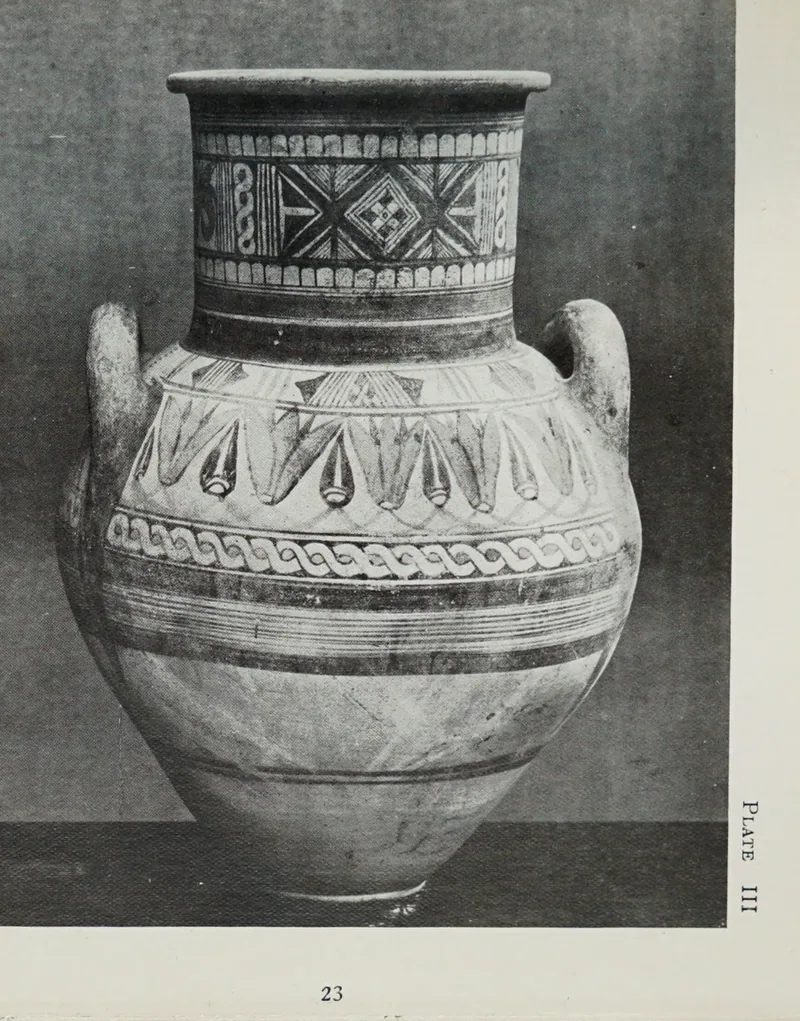
Plate III, 11 November 1926: lot 23.
2025
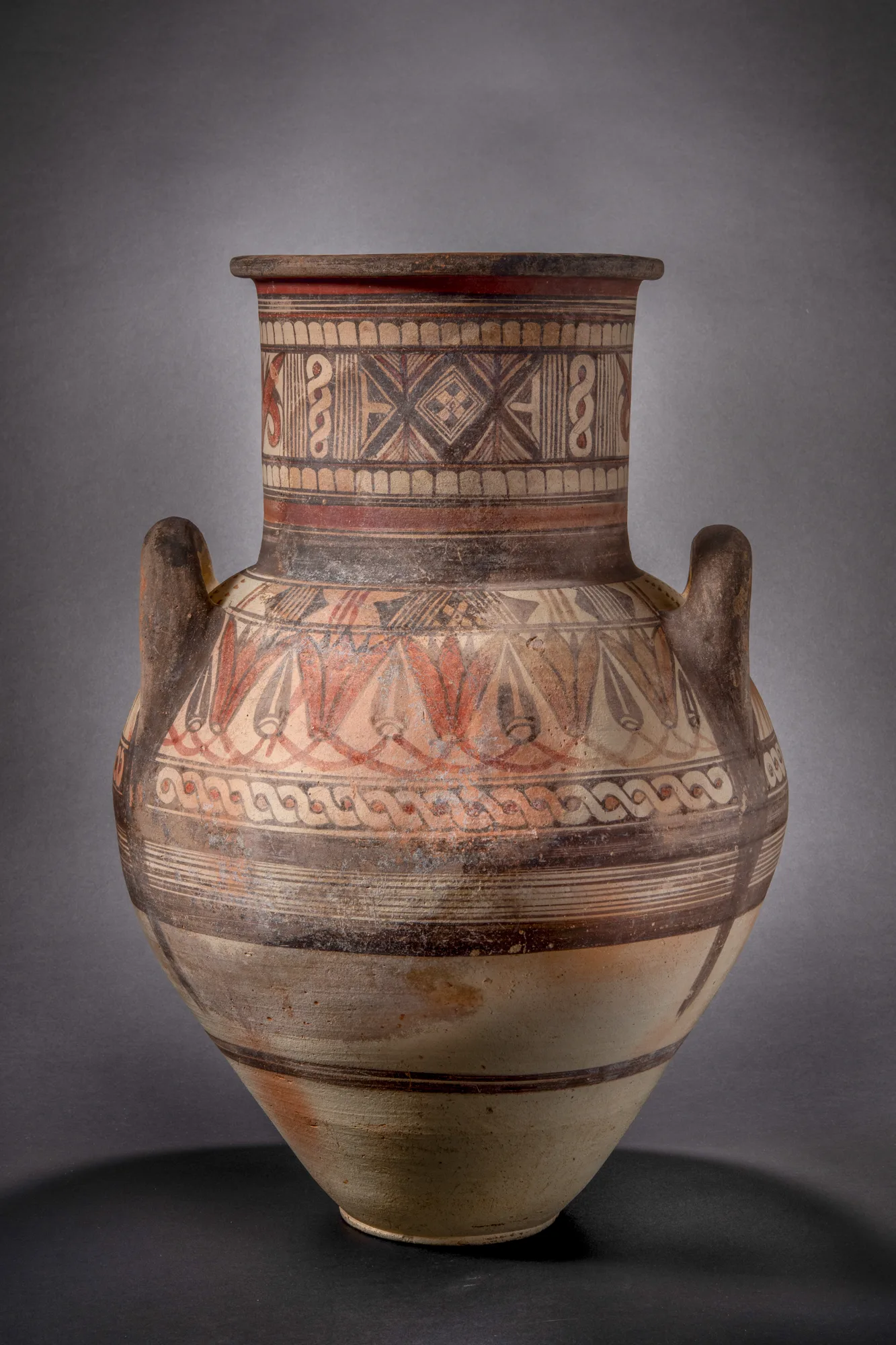
The same amphora today.
The Lotus Amphora
The chain of owners, link by link
11 links join a tomb in Cyprus to the amphora’s place in the Drakopoulos Collection. Choose one to see the document behind it, what the document says, and why we mark the link as we do. Where a link is probable or missing, the panel says what would settle it.
The trail runs through five Sotheby’s catalogues of 1926 and 1932, read in library copies with the buyers’ names in the margins or on a printed list bound in at the back. The whole investigation is told in Tracing the Lotus Amphora.
From the ground to today
- c. 700 BC
- 1925–26
- 1926
- 11 Nov 1926
Link 4 of 11 · 11 Nov 1926
Sotheby's, to Zachariadeslot 23
Proved· a document records it
Lot 23, 11 November 1926: the diota with "a broad band of lotus flowers", 27 in. high, "Kition fabric" [Pl. III].Scan: The Metropolitan Museum of Art, Thomas J. Watson Library - The document
- Sotheby & Co., Catalogue of Egyptian, Greek, Roman and Cypriot Antiquities, London, 11–12 November 1926, lot 23 and Plate III; the printed list of prices and buyers bound into the copy in the Metropolitan Museum of Art, Thomas J. Watson Library.
- What it says
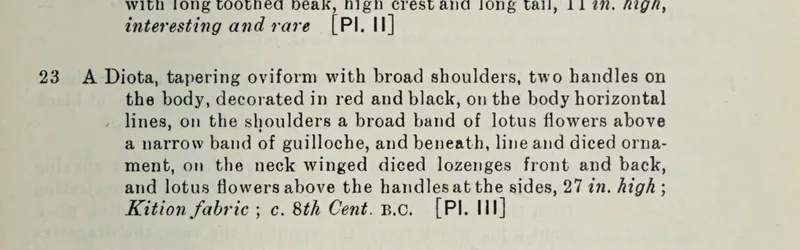
“A Diota, tapering oviform with broad shoulders, two handles on the body, decorated in red and black, on the body horizontal lines, on the shoulders a broad band of lotus flowers above a narrow band of guilloche, and beneath, line and diced ornament, on the neck winged diced lozenges front and back, and lotus flowers above the handles at the sides, 27 in. high; Kition fabric; c. 8th Cent. B.C. [Pl. III]”
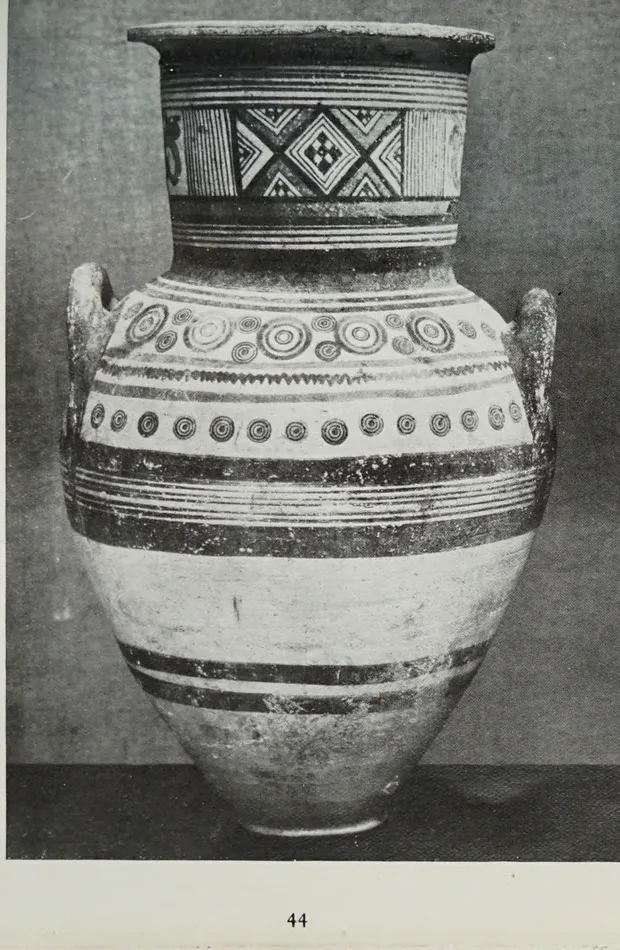
The printed list: lot 23, Zachariades, £3 5s. He also took lot 44, the amphora photographed beside it on Plate III.
- Why it is marked proved
- Three documents of the day agree: the entry, the photograph on Plate III, which matches the amphora feature for feature, and the printed list, which gives the price and the buyer.
- 1926–32
- 21 Mar 1932
- 1932–1974
- by 1974
- 4 Jul 2024
- 2024–25
- 2025
Link 4 of 11 · 11 Nov 1926
Sotheby's, to Zachariadeslot 23
Proved· a document records it
- The document
- Sotheby & Co., Catalogue of Egyptian, Greek, Roman and Cypriot Antiquities, London, 11–12 November 1926, lot 23 and Plate III; the printed list of prices and buyers bound into the copy in the Metropolitan Museum of Art, Thomas J. Watson Library.
- What it says
“A Diota, tapering oviform with broad shoulders, two handles on the body, decorated in red and black, on the body horizontal lines, on the shoulders a broad band of lotus flowers above a narrow band of guilloche, and beneath, line and diced ornament, on the neck winged diced lozenges front and back, and lotus flowers above the handles at the sides, 27 in. high; Kition fabric; c. 8th Cent. B.C. [Pl. III]”
The printed list: lot 23, Zachariades, £3 5s. He also took lot 44, the amphora photographed beside it on Plate III.
- Why it is marked proved
- Three documents of the day agree: the entry, the photograph on Plate III, which matches the amphora feature for feature, and the printed list, which gives the price and the buyer.
Read · fourteen chaptersTracing the Lotus AmphoraThe sale of 1926, a collection sold twice in one year, the names in the margins, the Cypriot dealers behind them, and the gaps still open. PlayThe Paper TrailTurn the pages of the November 1926 catalogue, find the amphora on its plate, check the entry and find the buyer yourself.
Standards of proof
Proved, probable and missing
Every link in a chain is marked by the evidence behind it, with one of three marks. A probable link is never written up as proved, and a gap is shown as a gap, with the years it covers.
Proved
A document records the passage: a sale catalogue with its printed list of buyers, a museum register, an export licence. Where the document is later than the event, as a saleroom's statement of a family's ownership is, we say so.
6 links in the amphora’s chain. From the sale of 1926 to the Drakopoulos Collection.
Probable
Several independent pieces of evidence point the same way, but no document states it. We give the reading, the evidence for and against, and the document that would prove it.
2 links in the amphora’s chain. The vendor of 1926, most probably M. M. Petrakides, and the Gentleman of 1932, most probably the buyer of 1926 or the collector he bought for.
Missing
No record has been found. The gap stays open, with the archives that might close it, and nothing is filled in by guesswork.
3 links in the amphora’s chain. The find-spot, the export from Cyprus, and the forty-two years from 1932 to 1974.
The same marks in the registers
On the pages of people and museums, each record of a sale, gift, loan or export says what its document says. Where the document gives a dealing only as probable or possible, the record is labelled so.
- As the document states it2,597
- Probable111
- Possible148
Where the record stops
A gap in a history can be checked, and sometimes filled, by the Department of Antiquities, a museum or a buyer; a story that cannot be checked invites only doubt. So a history gives the earliest date that can be proved, and marks everything else as belief.
Worked example
How the central link is proved: Plate III and the amphora
The link that ties the amphora to the sale of 1926 rests on a photograph. Plate III of the catalogue shows lot 23; set beside the amphora today, the plate and the catalogue’s description can be checked feature by feature. Choose a phrase of the 1926 entry to see the same feature marked on both pictures.
Shape and painted scheme alone are not enough, because a workshop made the same pot many times. What settles a match is what belongs to one object only: the exact spacing of its painted bands, a chip, an old repair, a feature the cataloguer left out but the camera caught.
Kinds of evidence
The evidence, strongest first
Not all evidence weighs the same. Documents issued by the state at the moment of export rank highest, because they can be checked against the state’s own copies; family memory ranks lowest, because it cannot be checked in the same way. Several weaker kinds that agree with one another are stronger than any one alone. Each kind below has an example from this site.
- 1
An export licence or permit, with its number
Issued by the state at the moment of export; the Department of Antiquities kept the counterfoils and can check a number.
Checked · Department of Antiquities archive, Nicosia
On this site
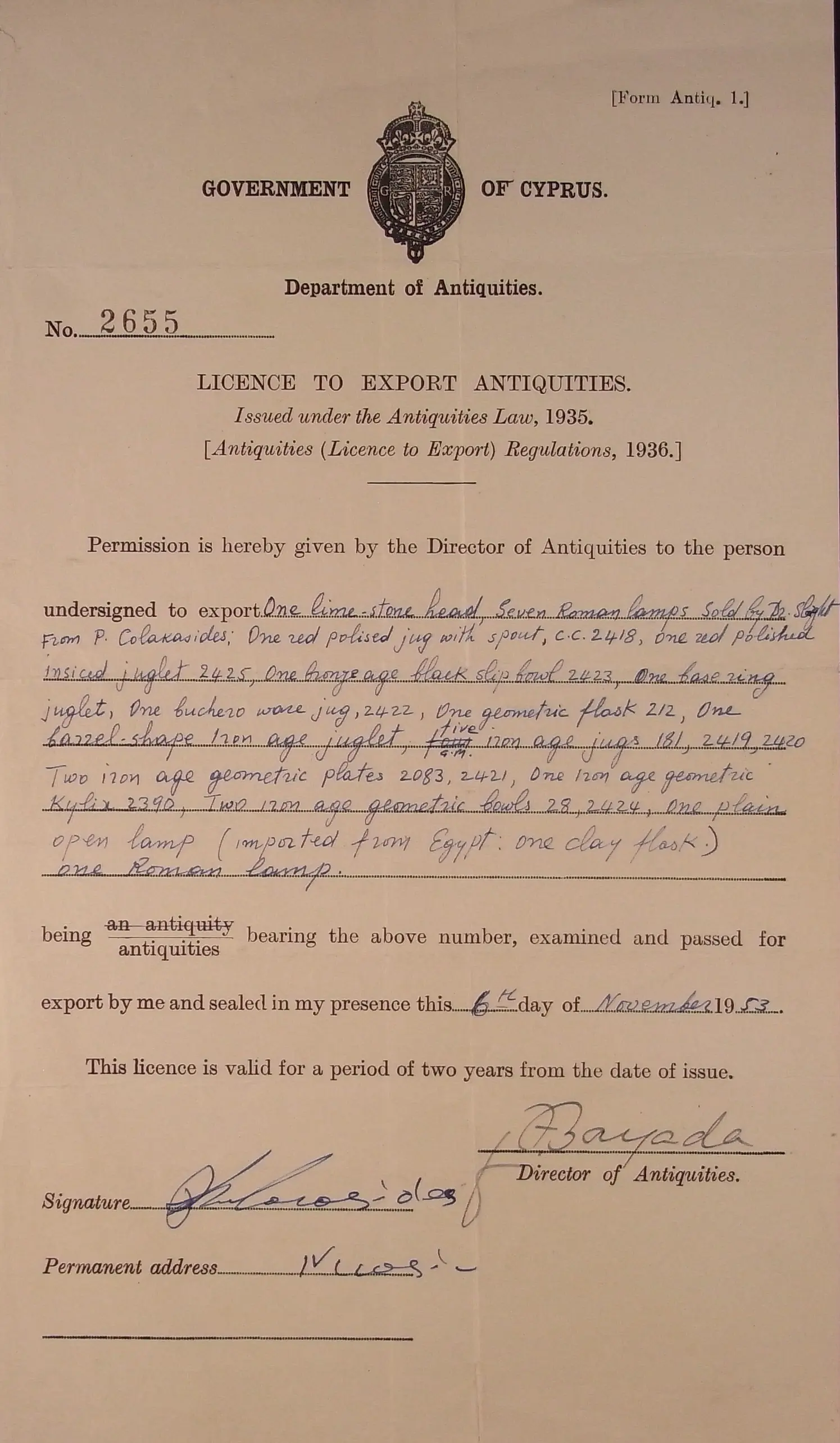
Licence to export antiquities No. 2655, issued on 6 November 1953: a printed form, the objects written in by hand. The guide to reading the marks shows what licences of each period look like.
- 2
A Cyprus Museum sale label, receipt or number
Records a sale by the state itself: the Cyprus Museum sold “duplicate” antiquities from the 1920s until 1991.
Checked · Department records; the form of the number and its year
On this site
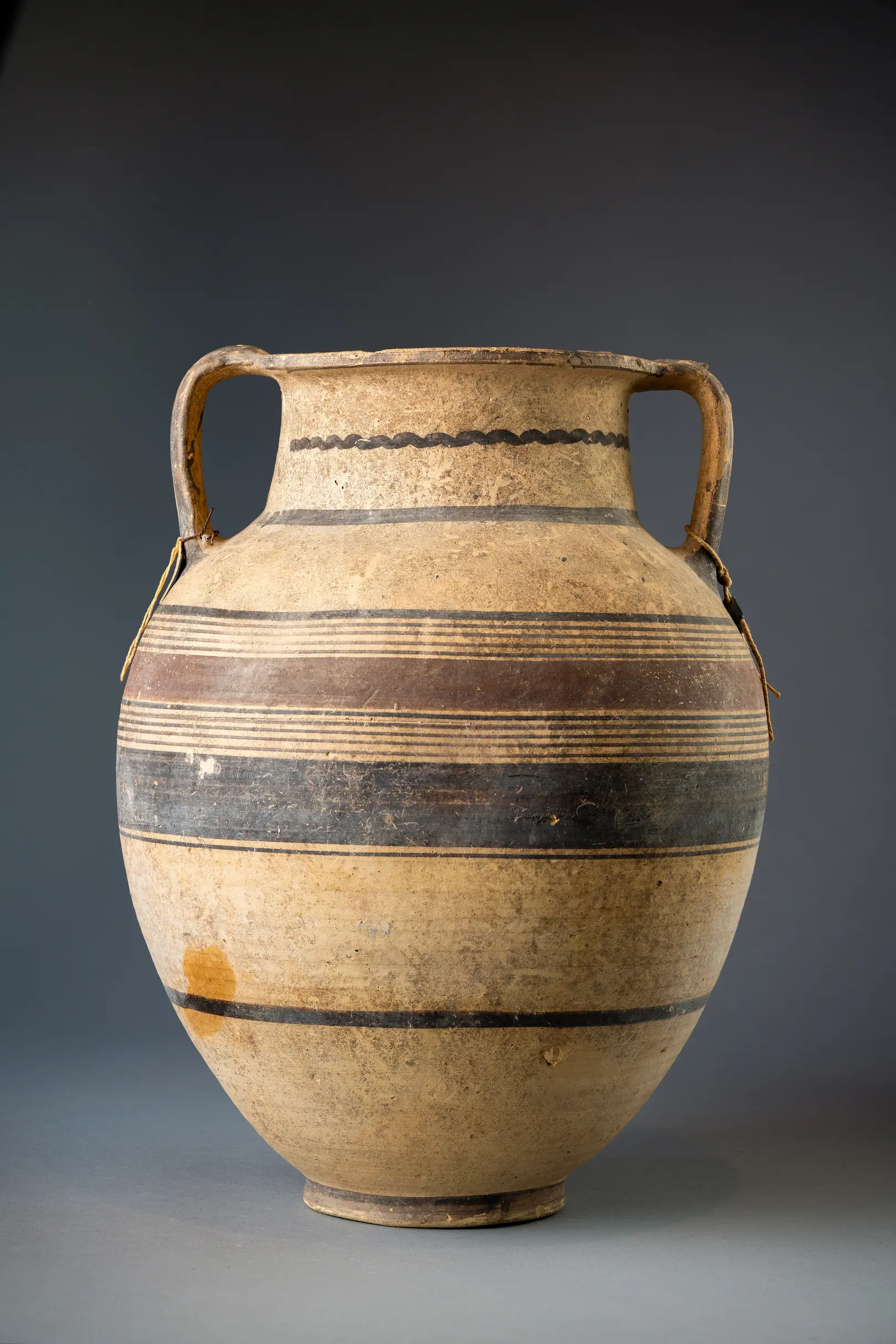
A Bichrome amphora in the Drakopoulos Collection carries the number S.R. 3477/65, inked on the shoulder beside a handle: the Museum’s own record of its sale. A lead seal hangs from its handles.
- 3
A lead export seal, or a licence number on the object
The physical mark of the export inspection; strongest when it can be matched to a licence.
Checked · Matched to a licence; photographs to the Department
On this site
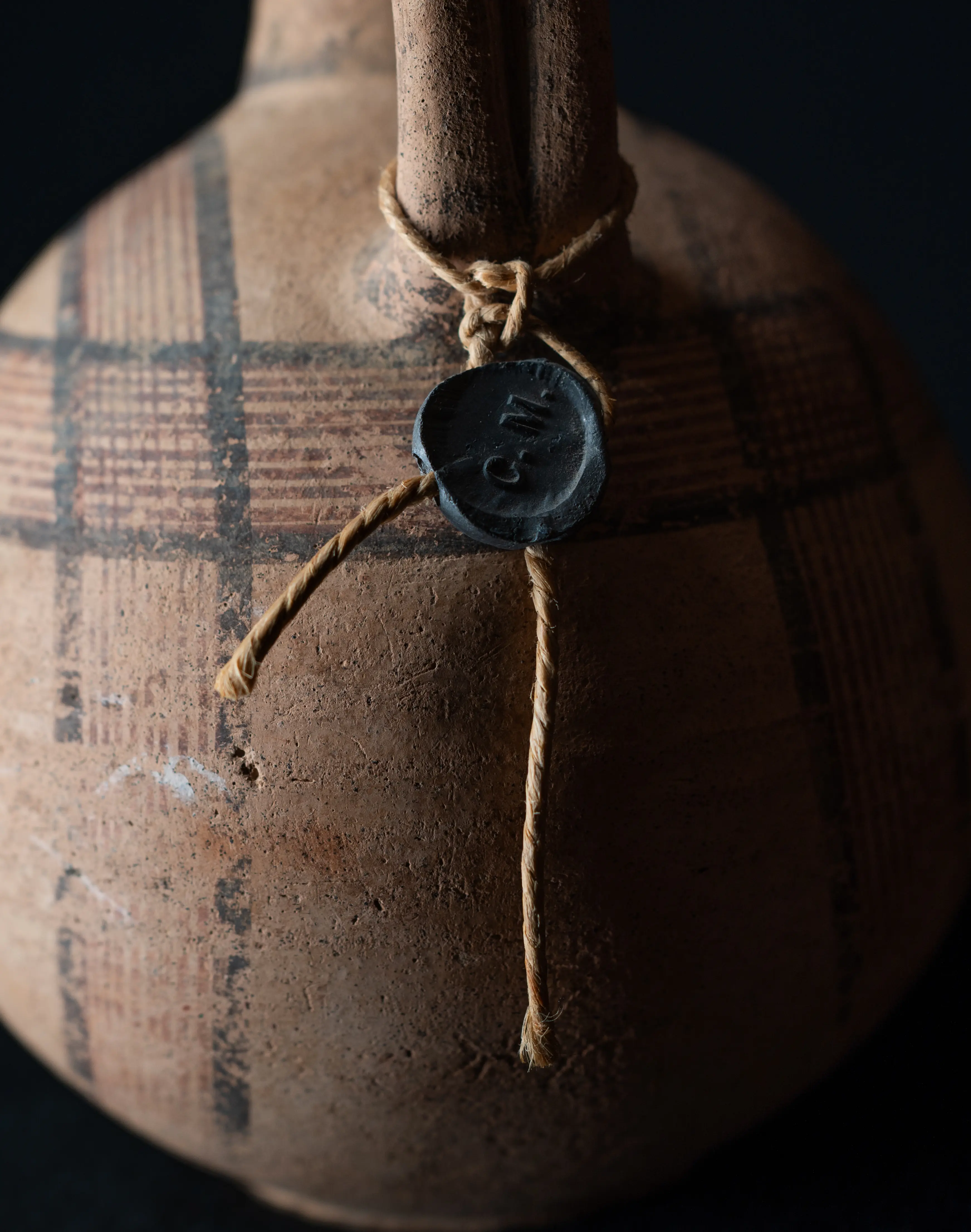
A round lead seal stamped C.M., for Cyprus Museum, on a twisted cord tied round the neck of a Bichrome jug.
- 4
An excavator's record of a lawful division of finds
Ties the object to a recorded excavation and to the share its excavators were allowed to take.
Checked · Expedition volumes, museum registers and online catalogues
On this site
Excavation records give each find a tomb and a number: Tomb 9 at Vounous, each offering drawn and numbered where it lay. The tomb register records each tomb’s finds and, where it is known, where they are today.

- 5
A dated sale catalogue entry
Fixes the object in public at a date; a library copy with a printed list or a marked margin adds the price and the buyer.
Checked · Printed catalogues in libraries and online
On this site
Lot 23 of Sotheby’s sale of 11 November 1926: the Lotus Amphora, described phrase by phrase and photographed on Plate III.
- 6
A museum number or deaccession record
An institution's register vouches for the date; a museum's registrar will usually confirm whether a number is theirs.
Checked · The museum's registrar and online collection
On this site
The Ashmolean’s terracotta trumpet AN1937.158, given by Sir John Beazley in 1937. The museum’s online record says nothing of where it came from; the 1967 catalogue of the Beazleys’ gifts says “Once, Petrakides Collection”, the name of the amphora’s probable vendor.
- 7
Dated photographs, letters, loan files, insurance schedules, wills and inventories
Private but dated documents, matched to the object by description and photograph. The commonest survivors, and the most often thrown away.
Checked · Matched to the object by description and photograph
On this site
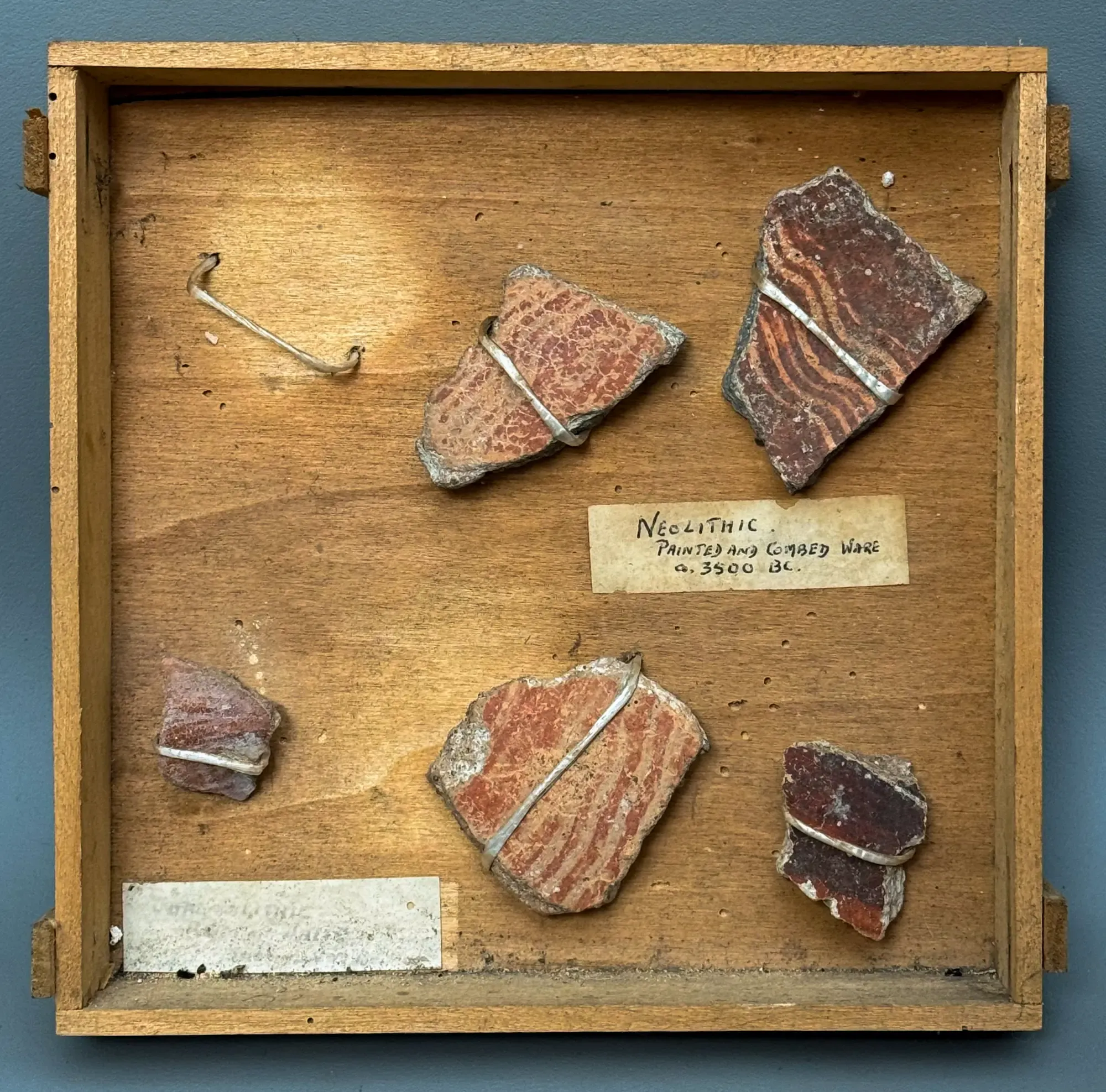
A wooden chocolate box holding five sherds, each wired to its mount, with a handwritten label: “Neolithic. Painted and combed ware. c. 3500 BC.” The label and the box were part of how the group was traced to the colonial judge who collected it.
- 8
Family testimony
Often true, rarely checkable alone. Written down with names, places and dates, and tested against the type of object, it still counts.
Checked · Tested against dates of residence and the type of object
On this site
Our first-steps guide for heirs explains what to write down, and how to say how each part of a family story is known: “my mother told me”, “the letter says”, “the photograph shows”.
The ranking concerns export and ownership, not find-spot. A licence proves that a consignment left Cyprus lawfully; it does not prove that the pots in it were dug lawfully. The difference between provenance and provenience runs through every row. The full ranking, and where each kind of evidence is kept, is in documenting a lawful history.
In the registers
Every sale, gift and export, cited
The registers of people and institutions record what the documents say people did with antiquities: who sold to whom, who gave what to which museum, who exported, lent or bequeathed. Every record carries its citation, to the page, so each step of an object’s history can be checked where it was found.
2,856 such records are cited on the pages of 884 people, and 565 of them are gifts, purchases, bequests and loans to 143 museums and institutions, shown on those institutions’ own pages.
- Sales and purchases777
- Gifts and bequests562
- Transfers and acquisitions520
- Collections formed or owned315
- Agents and funders175
- Exports54
- Loans and consignments45
- Other dealings408
Most in the 1870s (185). 71 more are dated before 1830.
The twelve museums with the most cited acquisitions. Records about living people are shown only on their own pages.
The trade and the law
The trade and the law, in brief
Most Cypriot antiquities abroad left the island lawfully: through the division of excavated finds, licensed export and the Cyprus Museum’s own sales. Illicit digging went on beside the lawful trade, and after the Turkish invasion of 1974 the churches, museums and archaeological sites of the occupied north were looted and many objects taken abroad.
A provenance today is read against a handful of dates. Each opens the compendium’s page on it.
- 1905The first Antiquities LawDigging needed a permit, and nothing could be exported without written permission, after the objects had been shown to the Cyprus Museum.
- 1935The second Antiquities LawExport licences from the Department of Antiquities, licensed dealers and registered private collections.
- 1970The UNESCO ConventionNot retroactive, but museums and the trade ask for a history out of the country before 17 November 1970, or a lawful export after it.
- 1974The Turkish invasionThe looting of the occupied north began that year. An undocumented Cypriot piece is now presumed to have left after it.
- 1996No more licences for private collectionsAn amendment of the law ended export licences for private collections.
- 2002American import rulesDesignated Cypriot material enters the United States only with an export certificate, or evidence that it left Cyprus before it was designated.
- 2025The EU import regulationApplies in full from 28 June 2025, to goods created or found outside the Union; finds from Cyprus, a member state, fall outside it.
The compendium’s section on the trade
74 pages
- 7 pagesReading the Evidence on Looting and the Lawful TradeThe numbers, documents, prices and dates behind every claim about looted and lawfully exported Cypriot antiquities.
- 8 pagesDigging and the Lawful Trade in Cyprus before 1974Illicit digging across the island before 1974, set beside the firmans, laws, saleroom, licensed dealers and registered collections through which most Cypriot antiquities lawfully changed hands.
- 18 pagesAntiquities and Church Art in the Occupied North after 1974The looting of antiquities and church art in the occupied north after 1974, set beside the northern objects that left Cyprus lawfully before it.
- 5 pagesIllicit Digging and the Lawful Trade in the Republic of Cyprus after 1974Illicit digging, organised cases and policing in the Republic-controlled south after 1974, set beside licensed export to 1996 and the collections that became museums.
- 7 pagesThe Trade in Cypriot Antiquities since 1996The modern market in Cypriot antiquities, which lives on objects exported long ago, set beside the illicit pieces, coins and fakes that reach its lower end.
- 2 pagesThe State and Foundations as Buyers of Cypriot AntiquitiesA register of every published purchase of antiquities by the Cyprus Museum, the Department of Antiquities, the Leventis Foundation and the Church, with the story of why they bought.
- 6 pagesLaw and Provenance for Cypriot AntiquitiesThe conventions, import rules and recovery policies that apply to Cypriot antiquities today, and how an owner documents a lawful history.
- 9 pagesPeople and Networks in the Trade in Cypriot AntiquitiesThe dealers, intermediaries and court cases of the illicit trade after 1974, set beside the excavators and licensed dealers of the lawful trade.
Own a Cypriot antiquity?
If you own a Cypriot antiquity
Most inherited antiquities arrive as a box, a cabinet shelf or a few pots wrapped in newspaper, with a family story that is half remembered. The paper and the marks that came with them are their provenance, and that history decides what can be done with them later. Simply owning an antiquity you inherited is generally lawful; the legal questions arise when it is sold, exported or imported.
First steps
- 1Do not clean, glue or restore anything.Burial deposits, old repairs and faded paint are evidence.
- 2Do not split groups or separate objects from their mounts, boxes or stands.A group bought together carries more information as a set.
- 3Photograph every object where it sits, then individually.Front, back, base and any marks, with a ruler in the frame and plain light.
- 4Keep every scrap of paper.Labels, numbers, lead seals, licences, receipts, catalogues, letters and photographs are the object's provenance.
Tell us what you have
We help owners, heirs, executors and collectors identify their pieces, read their labels and paperwork and trace their history, and we read every message. The advice is free. It is confidential, unless the law requires us to share it.
Our guides for owners
- Inherited Cypriot Antiquities? What You Have and Your OptionsMost Cypriot antiquities in family homes left the island legally, often under numbered licences. How to identify a piece, read its marks and weigh your options.
- How to Identify Ancient Cypriot Pottery: A Visual GuideA ware-by-ware key to Cypriot pottery (Red Polished, White Painted, Base Ring, White Slip, Bichrome, Black-on-Red) with dates and safe checks to make at home.
- Cyprus Export Licences, Lead Seals and Labels: Reading the MarksHow to read a Cyprus export licence, a lead seal stamped C.M., a Cyprus Museum S.R. number or a dealer's stock number, and where each one can still be checked.
- What Is My Cypriot Antiquity Worth? Real Auction PricesA Cypriot pot can sell for 70 pounds and a limestone head for 150,000 dollars. Real auction lots show how ware, condition and provenance set the price.
- Cypriot Pottery Replicas and Fakes: Is My Piece Real?Most doubtful Cypriot pots are honest souvenirs or restored originals. How to tell replicas, repairs, forgeries and ancient copies apart, and what TL can prove.
- Brought Back from Cyprus: A Guide to Family AntiquitiesSoldiers, officials, teachers and tourists bought Cypriot antiquities legally for decades. What was allowed when, which papers to find, and what it means now.
- Selling Cypriot Antiquities Legally: A Step-by-Step GuideHow to sell an inherited Cypriot collection: inventory, identification, the provenance file buyers want, checks with Cyprus, UK, US and EU law, and sale routes.
- Selling Cypriot Antiquities in the UK: Law, Auctions and ExportSelling a Cypriot antiquity in Britain is legal. What decides a sale: the 2003 Act, auction checks, Cyprus withdrawal requests, and export and EU import rules.
- Selling Cypriot Antiquities in the US: What the Law AllowsThe 2002 US-Cyprus agreement controls what enters America. What it means for a piece already here, when stolen-property law applies and how sales are checked.
- Returning or Donating Cypriot Antiquities: How It WorksHow heirs hand Cypriot antiquities back to Cyprus through the Department of Antiquities or an embassy, and what museums ask for before they accept a gift.
- Antiquities in an Estate: A Practical Guide for ExecutorsHow executors should secure, inventory, value and sell or donate antiquities in an estate: UK probate and US appraisal rules, museum routes and Cypriot checks.
- I Inherited Antiquities: What to Do First, Step by StepFirst steps with inherited ancient pots or figurines: keep groups and labels together, photograph everything, find the paperwork, then see if they are Cypriot.
- How to Sell Antiquities Legally: Laws, Provenance and StepsSelling an inherited antiquity in the UK, US or EU: what UNESCO 1970, ownership laws, the UK 2003 Act and US import rules require, and the papers buyers want.
- Buying Cypriot Antiquities: A Legal Buyer's GuideWhat the law in the UK, US, EU and Cyprus asks of a buyer, which papers show a Cypriot piece left the island legally, and the checks to make before paying.
What comes next
The archives still to answer, and more objects
The amphora's chain is not finished. The documents that could close its gaps are known, and so is where they are kept.
- Sotheby's sale books for 1926 and 1932They record every consignor and every buyer with an address: the vendor of 1926, the Gentleman and Hadbrook.
- The British Library's set of Sotheby's own marked cataloguesThey may carry the vendors' names.
- The Cyprus State Archives, NicosiaThe curator's export permits for 1924–26 and his register of the private collections of Larnaca may name the stock and its owner.
- The Ashmolean Museum's accession registerIt may say where Sir John Beazley found the trumpet of 1926 in the 1930s.
Those are the questions we are now putting to the archives, and their answers will be added to the investigation. More objects will be traced the same way and published with their chains, every gap marked as a gap.
Citing this work
Drakopoulos, A. (2026). Tracing the Lotus Amphora: A Provenance Investigation, 1926 to 2025. Ancient Cyprus. https://www.ancientcyprus.com/drakopoulos-collection/masterpieces/lotus-amphora/provenance
Scans of the Sotheby’s catalogues: The Metropolitan Museum of Art, Thomas J. Watson Library. The Cyprus Blue Book: Cyprus Library (Cyprus Digital Library).
Have you seen it?
The other amphora on Plate III