A provenance investigation · Lot 23, 1926–2026

Tracing the Lotus Amphora

On 11 November 1926 this amphora was sold at Sotheby's in London as lot 23, for £3 5s. Its paper trail runs through four auction catalogues, a dealer in Marseilles, a tobacco importer in the City of London and a trumpet in Oxford, and it stops at a buyer whose name appears nowhere else.

By Alexis Drakopoulos | About 25 minutes to read

Published on 11 November 2026, a hundred years to the day after the sale.

Open the file
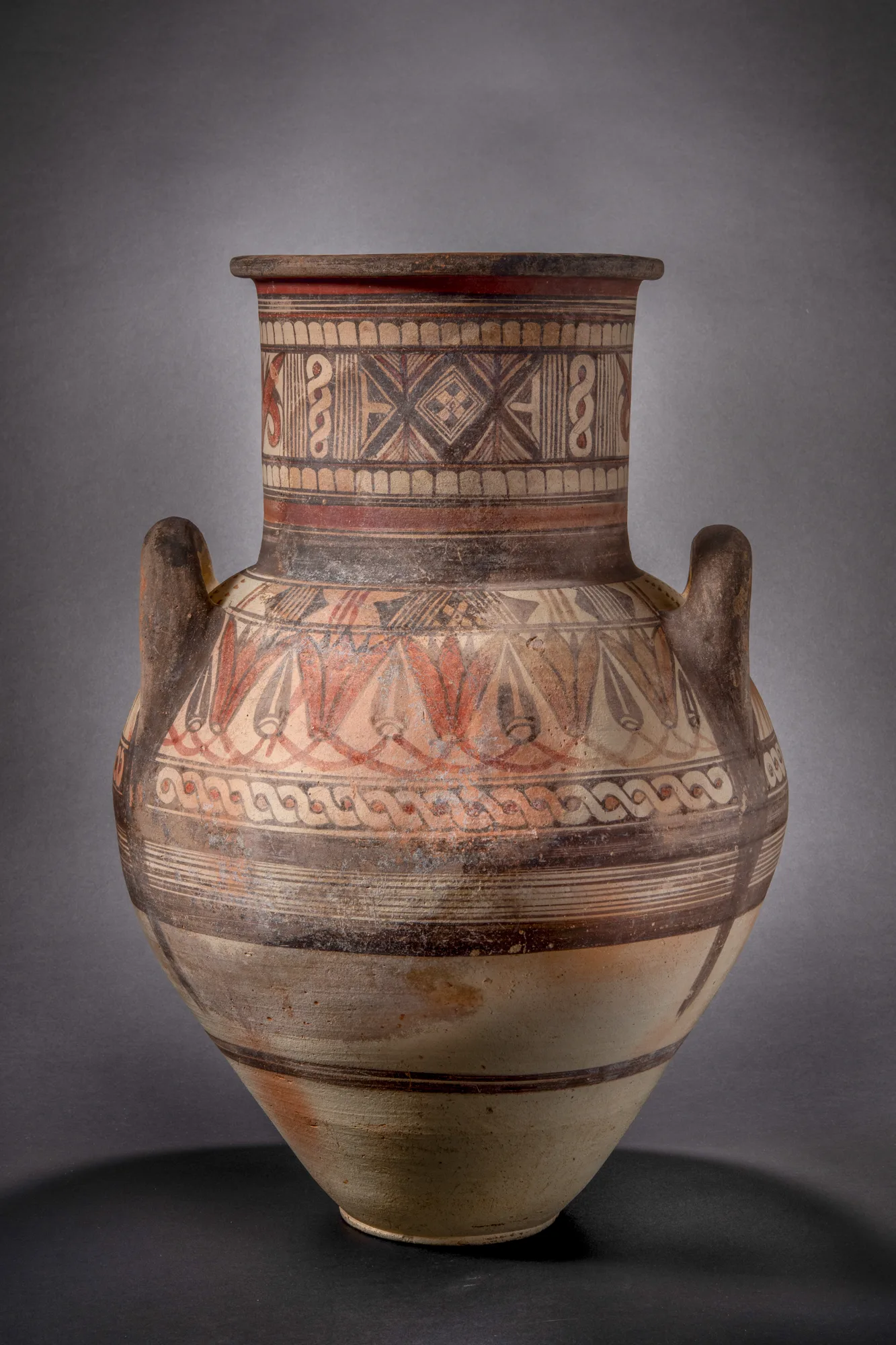
The Lotus Amphora, a large Cypriot Bichrome amphora with a chain of lotus flowers round its shoulder, photographed against a plain ground.

Accession

JAR-AR-002

Lot 23 · 1926

IThursday, 11 November 1926

Lot 23

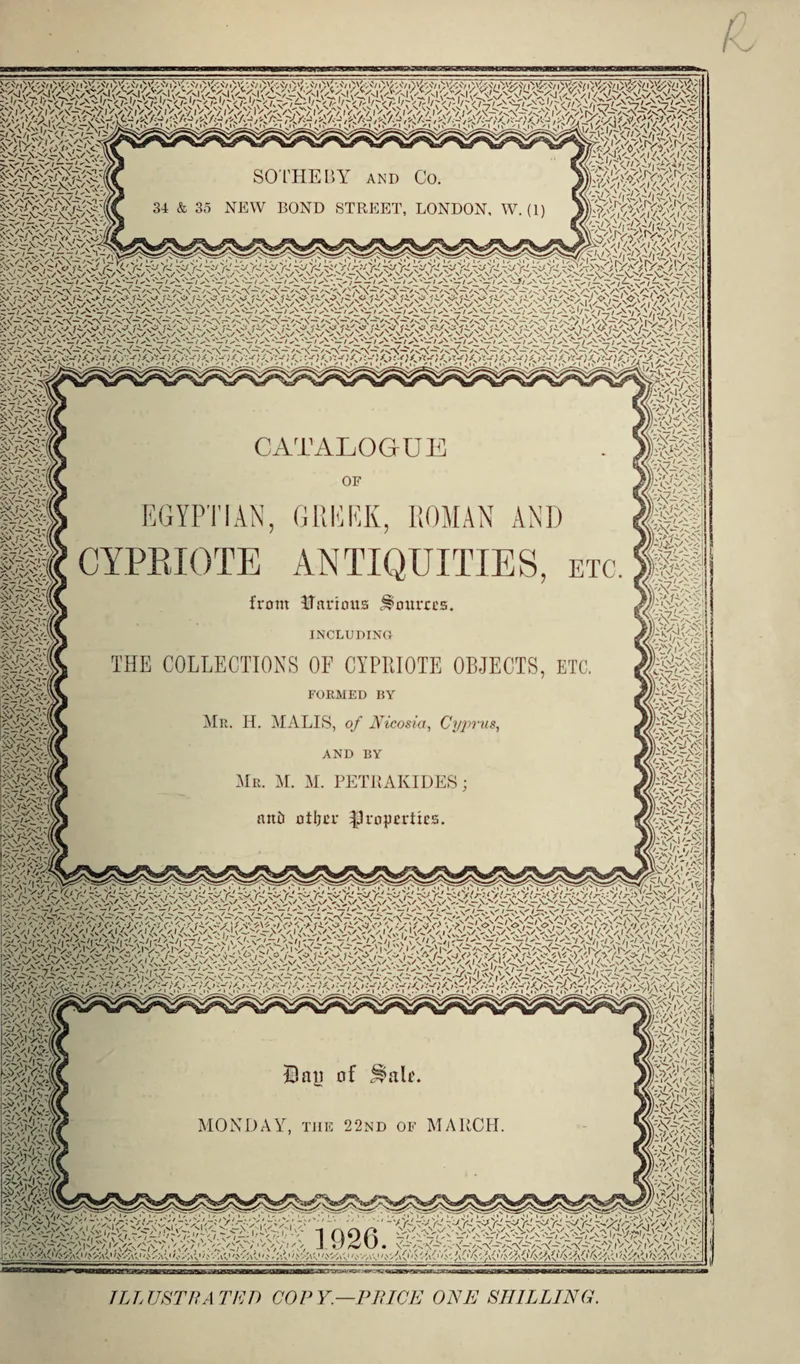
On Thursday, 11 November 1926, Sotheby & Co. opened a two-day sale of “Egyptian, Greek, Roman and Cypriot Antiquities” in its galleries at 34 & 35 New Bond Street. The cover of the catalogue names the property of the late Sir Philip Burne-Jones, sold by order of his executors, and of four other owners, and ends with “and other properties”. The first 147 lots of the first day came from the other properties. They were headed “A Collection of Cypriot Antiquities”, and no owner is named, on the cover or anywhere else in the book.

Lot 23 was one of the collection's four big two-handled amphorae, which the cataloguer called “diotas”:

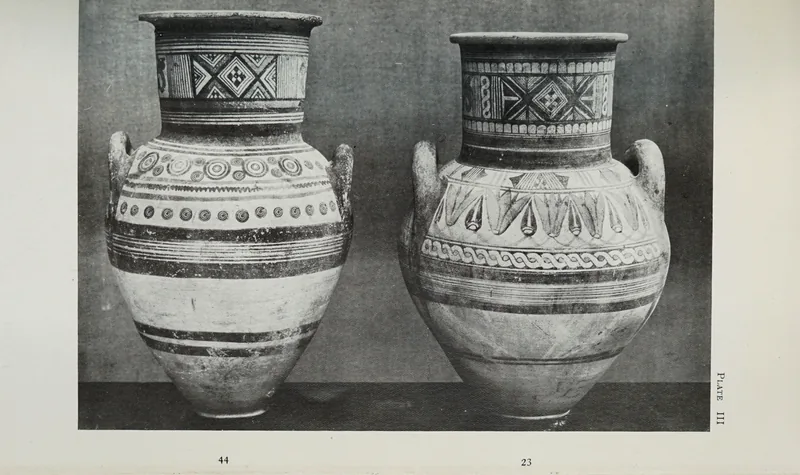
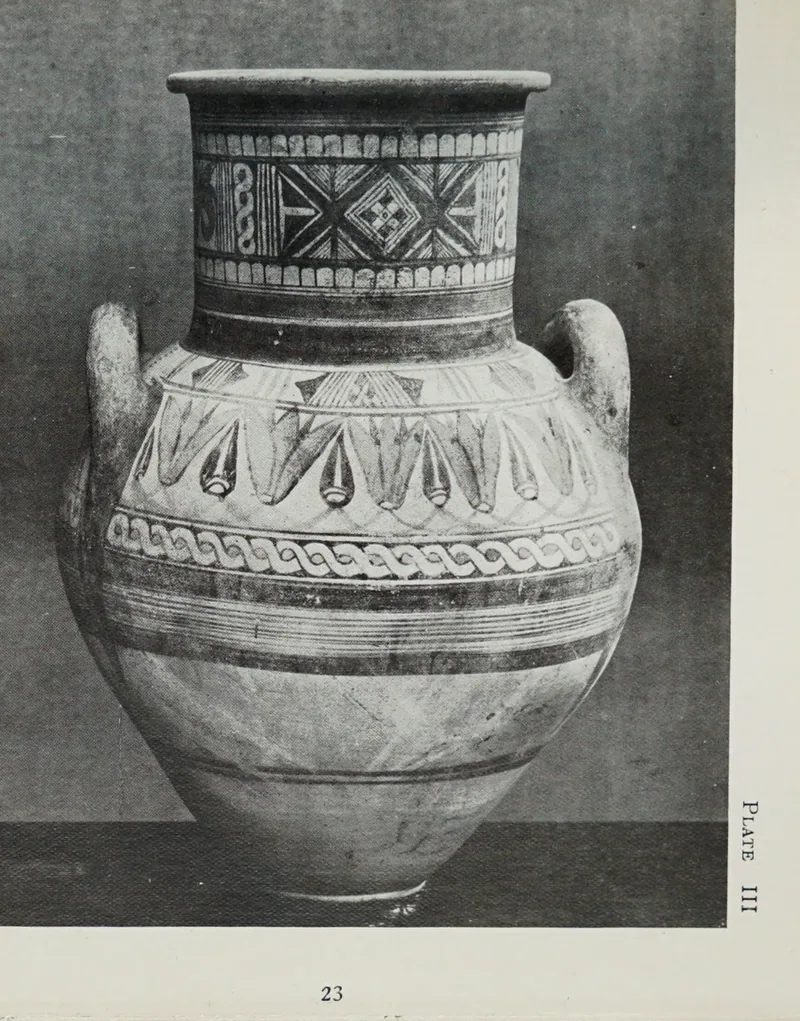
A Diota, tapering oviform with broad shoulders, two handles on the body, decorated in red and black, on the body horizontal lines, on the shoulders a broad band of lotus flowers above a narrow band of guilloche, and beneath, line and diced ornament, on the neck winged diced lozenges front and back, and lotus flowers above the handles at the sides, 27 in. high; Kition fabric; c. 8th Cent. B.C. [Pl. III]
Sotheby & Co., 11 November 1926, lot 23

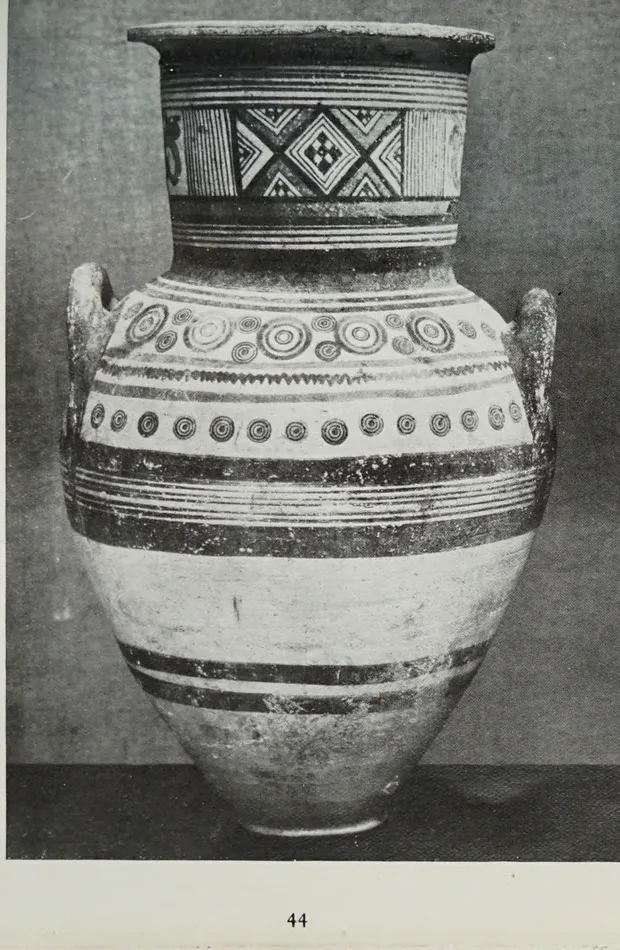
Plate III shows it on the right, beside lot 44, a second amphora of the same height.

Plate III of Sotheby's catalogue of 11 November 1926, turned upright: two large painted amphorae photographed side by side, numbered 44 and 23.
Plate III of the November 1926 catalogue, printed sideways in the book and turned upright here: lot 44 on the left, lot 23 on the right.Scan: The Metropolitan Museum of Art, Thomas J. Watson Library

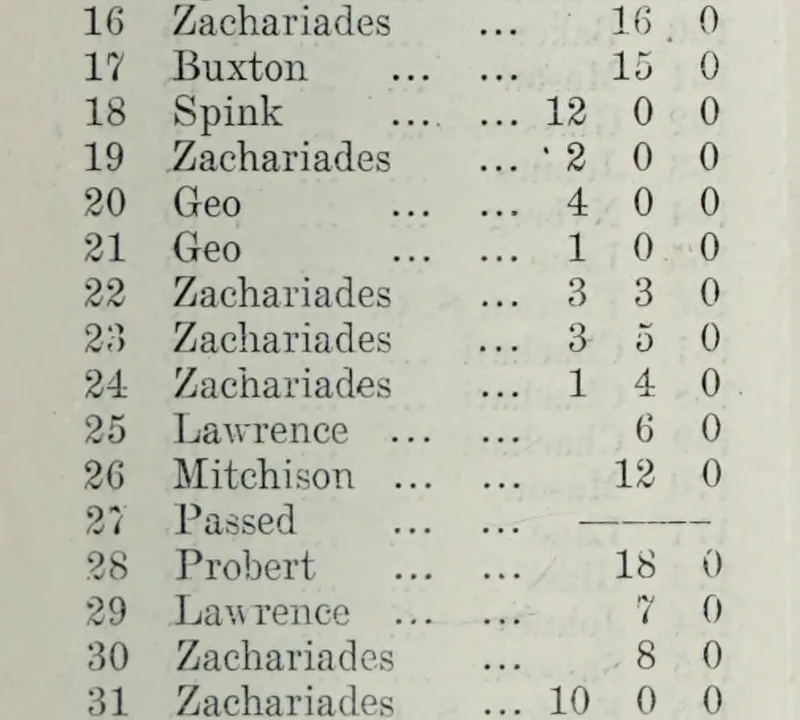
The copy of the catalogue in the library of the Metropolitan Museum of Art is a rare one. Bound in at the back is the printed list of prices and buyers' names that Sotheby's issued after the sale, and it shows the hammer coming down on lot 23 at £3 5s, the price of thirteen illustrated copies of the catalogue at five shillings each. The buyer was Zachariades. He also took lot 44 and the other two big diotas, fifty-one lots of the Cypriot collection in all, for £76 3s.

Printed list of prices and buyers' names for Sotheby's sale of 11–12 November 1926, rows for lots 16 to 31; lot 23 reads Zachariades, £3 5s.
The printed list of prices and buyers' names, November 1926: lot 23, Zachariades, £3 5s.Scan: The Metropolitan Museum of Art, Thomas J. Watson Library

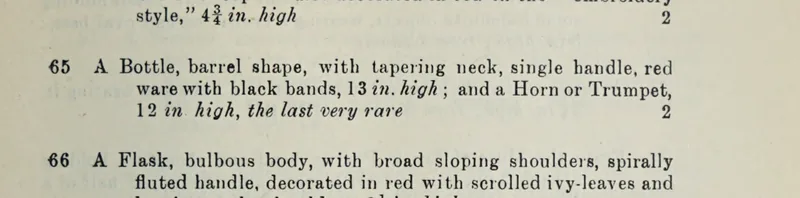
The rest of the list reads like any other sale. Lot 65, a barrel-shaped bottle sold with “a Horn or Trumpet, 12 in. high, the last very rare”, made 12s. Lot 102, a marble slab with two raised hands carved above a Greek prayer to the Sun, made £2. Zachariades bought both. On the second day a buyer called Petrakides took a block of thirteen lots, 305 to 317, and every one of them went either to him or to nobody.

II2024–2025

Matching Plate III

Ninety-eight years later the amphora was back in a New Bond Street saleroom. On 4 July 2024 Bonhams sold it as lot 139, “a large Cypriot Bichrome Ware amphora decorated with lotus flowers”, 65 centimetres high and dated to Cypro-Archaic I, about 750–600 BC. Its history took one line, “Edward Varley Kayley (d.1974) collection; and thence by descent to the present owner”, and went no further back.

The London gallery ArtAncient bought it and recognised it on Plate III of the 1926 catalogue, and in January 2025 we acquired it from the gallery. Set beside a photograph of the amphora today, the plate agrees feature for feature, and the catalogue's description can be read against it phrase by phrase.

Detail of Plate III of Sotheby's catalogue of 11 November 1926, turned upright: the painted diota of lot 23 with lotus flowers on the shoulder, and the printed number 23 beneath it.

Plate III · November 1926

The amphora photographed in 2025, from the same side as the 1926 plate.

The same amphora · 2025

On the amphora

The neck panel: a St Andrew's cross over concentric lozenges, with a small latticed lozenge at its heart.

Scan: The Metropolitan Museum of Art, Thomas J. Watson Library

Plate III of the Sotheby's catalogue of 11 November 1926 beside a photograph of the amphora today. The neck panel, the lotus frieze, the cable band, the handles and the banded body match feature for feature.

Most of the description is easy to follow with the amphora in view: the “lotus flowers above the handles”, for instance, are the red volute flowers painted over each handle. “Kition fabric” is a much rarer phrase, and we will come back to it.

The November catalogue can be leafed through, with a reading glass, in The Paper Trail.

The catalogue gave lot 23 a date, a price and a buyer. The collection it was sold in had no owner's name and, as far as the catalogue was concerned, no history.

But where did the November collection come from, and who consigned it?

IIIMarch to November 1926

The same words in four catalogues

We began with the other Sotheby's antiquities catalogues of the years either side of 1926, in case the collection, or its owner, had passed through the saleroom before. The first match was lot 102, the slab with the prayer to the Sun, which asks the Sun to find and punish whoever killed a woman called Kalliope. On 22 March 1926, eight months before the November sale, the same slab, measurements and all, had been sold in the same rooms as lot 147 of “The Property of Mr. M. M. Petrakides”, and knocked down for £13 to a buyer called Thomas.

In March the cataloguer had called the inscription “difficult to decipher” and printed a halting version of it. By November the entry carried a clean translation. Everything else was copied across, down to the three pieces the slab had been broken into.

22 March 1926, lot 147

The Property of Mr. M. M. Petrakides

A marble Slab, 18 in. by 9¼ in., and ¾ in. thick, with two arms and hands roughly carved in relief, showing the fingers and thumbs extended and the palms slightly hollowed; an inscription in Greek which covers nearly half of the lower portion of the marble is difficult to decipher, but is evidently a prayer to the Sun: “Lord of the Sun as thou risest regularly may (?) Epiboklos not escape your notice … the soul of Kalliope but send him … the groanings of the Immortals. Good Kalliope …” the slab has been broken into three portions but now restored; found at Enkomi in 1923, and from the character of the lettering probably about 300 A.D.

11 November 1926, lot 102

A Collection of Cypriot Antiquities (no owner named)

A marble Slab, 18 in. by 9½ in., and ¾ in. thick, with two arms and hands roughly carved in relief, showing the fingers and thumbs extended and the palms slightly hollowed; a prayer to the Sun inscribed in Greek covering nearly half of the lower portion of the marble may be translated as follows: “Lord Helios, as thou risest in Justice, forget not the treacherous wight who aimed at the life of Calliope, but visit him with the groans of them that die by violence. Calliope the kindly, the forgiving …” the slab has been broken into three portions but is now restored; found at Enkomi in 1923, and from the character of the lettering probably about 300 A.D.

Words in both entries: 81 (71% of the first, 68% of the second) In one entry only

The slab was the first of many. A 24-inch diota of the June sale reappears in November with the same “diamonds winged in between”; a large jug of the July sale is November's lot 12, word for word; and lot after lot of the November collection turned out to have been through a Sotheby's saleroom already that year, in one of three sales.

Front cover of Sotheby & Co.'s catalogue of Egyptian, Greek, Roman and Cypriote antiquities sold on 22 March 1926, including the collections formed by Mr. H. Malis of Nicosia and Mr. M. M. Petrakides.
22 March 1926. Its Cypriot owners are named: Mr. H. Malis, of Nicosia, and Mr. M. M. Petrakides.Scan: The Metropolitan Museum of Art, Thomas J. Watson Library
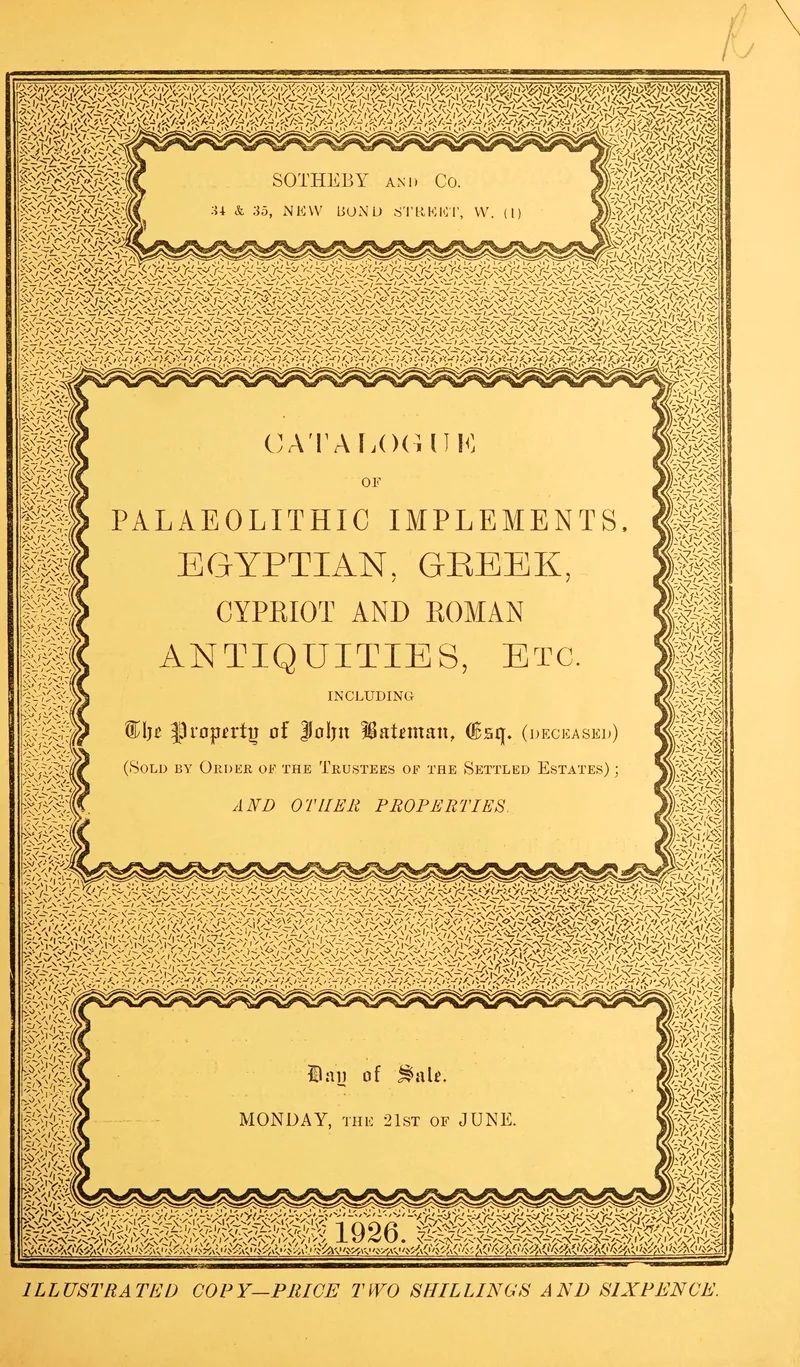
Front cover of Sotheby & Co.'s catalogue of palaeolithic implements, Egyptian, Greek, Cypriot and Roman antiquities sold on 21 June 1926.
21 June 1926. An unnamed “Collection of Cypriot Pottery” among “Properties from various sources”.Scan: The Metropolitan Museum of Art, Thomas J. Watson Library
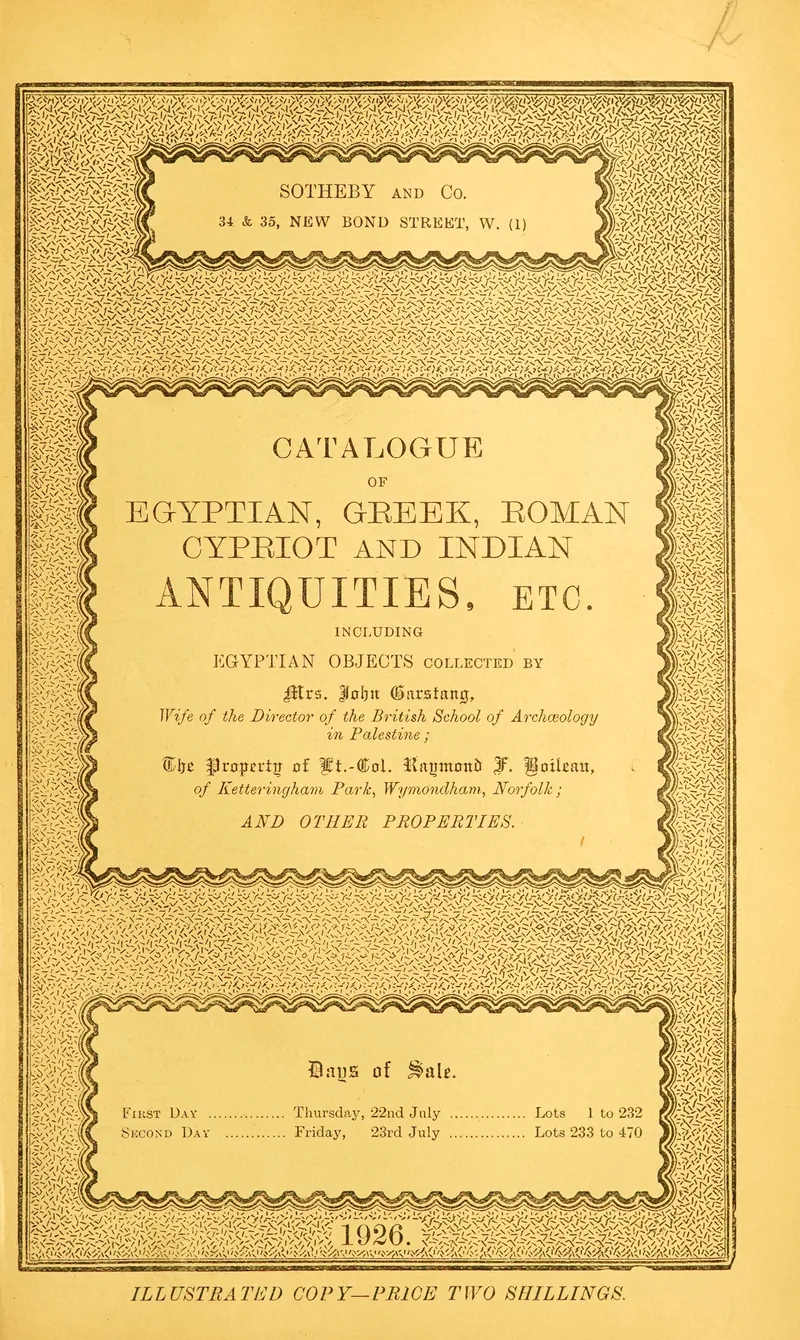
Front cover of Sotheby & Co.'s catalogue of Egyptian, Greek, Roman, Cypriot and Indian antiquities sold on 22 and 23 July 1926.
22–23 July 1926. “A Fine Collection of Cypriot Antiquities”, lots 265–462, again unnamed.Scan: The Metropolitan Museum of Art, Thomas J. Watson Library

The March sale names its Cypriot owners on the title page: “Mr. H. Malis, of Nicosia, Cyprus” (lots 1–37) and “Mr. M. M. Petrakides” (lots 38–192). The June sale was led by Greek vases, “The Property of John Bateman, Esq. (deceased)”, with an unnamed collection of Cypriot pottery among the “Properties from various sources”. The July sale was headed by the property of Mrs John Garstang, wife of the Director of the British School of Archaeology in Palestine, and included “A Fine Collection of Cypriot Antiquities”, lots 265–462, again with no owner named. An auction house selling the same object twice in a year is unusual enough. Here a whole collection was being sold a second time, its descriptions copied out of the earlier catalogues.

Finding repeats one at a time could not show how much of the collection had been sold before, or which lots had not, so we set out to match the whole November collection against all three earlier sales, lot by lot.

IV147 lots, three sales

Mapping all 147 lots

The November collection has 147 lots, and the three earlier sales 443 Cypriot lots between them; the lots that matched nothing would matter as much as the ones that did. The matching is slower than it sounds. Cataloguers abridged and rearranged; three small vases of July could become part of a bigger lot in November; heights were rounded; and two different lots can share a sentence, as July's 368 and 369 do. Every candidate pair was compared for the kind of object, the decoration, the measurements and the find-spot, and a pair still in doubt was counted only when nothing else fitted.

The result: 133 of the 147 November lots had been offered earlier in 1926. Fourteen had not, and lot 23 is one of the fourteen.

Of the 147 lots of the November 1926 sale, 133 had been offered earlier in 1926. 60 of the 194 Cypriot lots of 22 March 1926 came back (bought there by Thomas 58, Cash 2); none of the 39 lots of the Property of Mr. H. Malis came back. 16 of the 51 Cypriot lots of 21 June 1926 came back (bought there by Thomas 16). 57 of the 198 Cypriot lots of 22–23 July 1926 came back (bought there by Vagliano 51, Thomas 5, Pease (?) 1). The other 14 lots, 13, 23, 33, 44, 45, 63, 78, 93, 95, 120, 143, 144, 146 and 147, had not been offered before; lot 23, the lotus amphora, is one of them.

Show

133 traced · 14 never offered before

11 November 1926 · lots 1–147

November 1926, lot 23The lotus amphora

No earlier appearance in the 1926 sales

A Diota, tapering oviform with broad shoulders, two handles on the body, decorated in red and black, on the body horizontal lines, on the shoulders a broad band of lotus flowers above a narrow band of guilloche, and beneath, line and diced ornament, on the neck winged diced lozenges front and back, and lotus flowers above the handles at the sides, 27 in. high; Kition fabric; c. 8th Cent. B.C.

Lot
23
Plate
III
Buyer
Zachariades, £3 5s

Not in the March, June or July catalogues of 1926: this lot appears for the first time in November.

Earlier lot offered again in November Earlier lot not in the November sale November lot traced to an earlier 1926 sale November lot never offered before Lot 23, the lotus amphora the sale a lot came from

The fourteen are the best things in the sale. Six of them are illustrated on the plates, both amphorae on Plate III among them, and lot 63 fetched the highest price of the collection. The photographs agree: the July catalogue shows its objects cut out against a blank ground, while the November plates are a new set, the pots standing on a board in front of a backdrop, and the newcomers were photographed with everything else.

Nothing in the catalogue says where the newcomers came from, but their wording does. Lot 23 is written exactly like the big diotas of the July sale, down to “Kition fabric; c. 8th Cent. B.C.”, and three of the newcomers carry July's find-spot labels, “from Salamis” and “from Athieno”. The phrase “Kition fabric” settles it. It first appears in June 1926, and November is the last time it is used in a newly written entry. Whoever wrote lot 23 had written the summer's catalogues, and the newcomers read like more of the summer's stock.

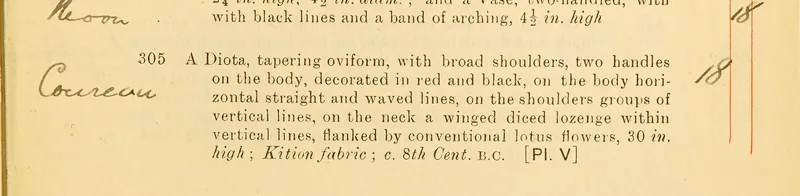
Entry for lot 305 in Sotheby's catalogue of 23 July 1926: a diota with lotus flowers, 30 in. high, Kition fabric, c. 8th century B.C., with the buyer's name written in the margin.
A big diota of the July sale, lot 305: the same formula, “Kition fabric; c. 8th Cent. B.C.”, that November uses for lot 23.Scan: The Metropolitan Museum of Art, Thomas J. Watson Library

VAnnotated copies

Names in the margin

For March, June and July no printed list of buyers survives. The buyers have to come from annotated copies, catalogues in which someone in the saleroom wrote each price and buyer beside the lots as they were knocked down, and the library of the Metropolitan Museum of Art has all three.

They are hard reading. The hand is quick and abbreviating. Prices sit in ruled pound and shilling columns, so “1 | 6” is £1 6s and not sixteen of anything; a run of lots to one buyer is marked “do”, for ditto, so a name can only be read once the start of its run is found; and some names are spelt as they were heard.

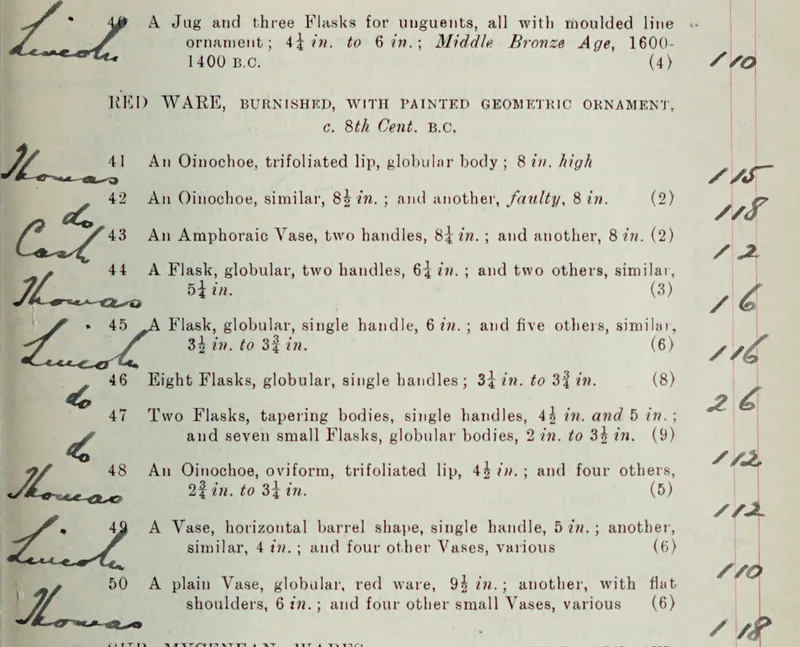
The Petrakides property, lots 40 to 50. Names on the left, prices on the right. Lincoln, a regular London buyer, takes some lots; Thomas takes most of the rest.

Page of Sotheby's catalogue of 22 March 1926 with Petrakides lots 41 to 50; buyers' names written in the left margin include Thomas several times, and prices in the right margin.

What it tells us

Lot 41, an oinochoe. The “do” written under the name gives lot 42 to Thomas as well. Both came back in November.

Scan: The Metropolitan Museum of Art, Thomas J. Watson Library

Two names run through all three copies. In March, Thomas, who had paid £13 for the slab, bought lot after lot of the Petrakides property and not one of Malis's; in June he bought only inside the unnamed collection of Cypriot pottery. In July a second name appears, “Vagliano”, buying across the Fine Collection of Cypriot Antiquities, and on one page of the second day, 23 July, the two alternate: Vagliano at lots 330 and 333, Thomas at 334 and 343.

Laid over the map of the November sale, the margins fit it lot for lot. Every lot Thomas bought in March, June and July came back in November, and so did Vagliano's, apart from seven small pieces. The November “Collection of Cypriot Antiquities” was, almost entirely, the summer's purchases of two buyers, sold again with fourteen new pieces added.

Of the 443 Cypriot lots of the March, June and July 1926 sales, 137 were bought by Thomas or Vagliano and 133 were offered again in November. The two groups are the same lots except for 10: 7 July lots bought by Vagliano that did not come back, and 3 lots that neither of them bought but that did.

Point at a square, or tap it, to read the lot.

Yes No The ten lots where the two maps differOne square for each lot, in catalogue order, drawn the same way on both sides. The two maps differ in ten lots: seven small July lots of gold and bronze that Vagliano bought and that were never offered again (lots 443, 447, 448, 449, 451, 452, 457), and three lots that neither of them bought but that came back all the same: two March lots paid for in cash (43 and 184) and July lot 436, whose buyer reads, uncertainly, as Pease.

VIPrices

Bought in summer, sold in November

The slab that Thomas bought for £13 in March made £2 in November. Most lots fell less far, but only five of the 130 rose. Each line below runs from what Thomas or Vagliano paid in the summer to what the same lot made in November.

Thomas · 79 lots

£260 8s → £108 3s

In November the same objects made 42% of the price paid; 2 lots passed unsold.

Vagliano · 51 lots

£141 6s → £51 10s

In November the same objects made 36% of the price paid; 6 lots passed unsold.

Thomas

Bought, Mar–Jul 1926Resold, Nov 1926

Vagliano

Bought, Mar–Jul 1926Resold, Nov 1926
  • One lot, price paid to November price
  • Rose in November (5 lots)
  • Fainter: a price still provisional (61 lots)
  • Logarithmic scale; lots that did not sell end at Passed

Selected lot · tap or hover a line

Thomas · March 1926, lot 147

£13

A marble Slab, 18 in. by 9¼ in., and ¾ in. thick, with two arms and hands roughly carved…

November 1926, lot 102 · Zachariades

£2

A marble Slab, 18 in. by 9½ in., and ¾ in. thick, with two arms and hands roughly carved in…

Made 15% of the March price. One or both prices are provisional readings of the annotated copies.

The lots Thomas and Vagliano bought at Sotheby's in March, June and July 1926 that came back in the November sale, priced from the annotated copies of the four catalogues. Hammer prices.

Thomas bought 79 lots for £260 8s; in November they realised £108 3s. Vagliano's 51 lots had cost £141 6s and realised £51 10s. Only 5 lots made more in November: March 96, 18s to £1; June 80, £9 10s to £12; July 417, 16s to £1; July 430, 18s to £1; July 433, 16s to £3 10s. The marble slab, March lot 147, went from £13 to £2 as November lot 102.

All 130 lots as a table
Buyer1926 lotPaidNov lotNovember
ThomasMarch 38£1 10s916s
ThomasMarch 41£1 15s39£1 8s
ThomasMarch 42£1 18s4014s
ThomasMarch 44£1 6s41£1
ThomasMarch 48£1 12s42£1 2s
ThomasMarch 50£1 18s4310s
ThomasMarch 52£1 4s2818s
ThomasMarch 53£1 4s297s
ThomasMarch 55£1 2s308s
ThomasMarch 57£1931£10
ThomasMarch 61£332£1 5s
ThomasMarch 75£6 10s46£4 5s
ThomasMarch 88£2 15s4710s
ThomasMarch 92£3 10s48£1
ThomasMarch 95£14912s
ThomasMarch 9618s50£1
ThomasMarch 100£3 15s6512s
ThomasMarch 105£2 10s668s
ThomasMarch 107£26711s
ThomasMarch 108£1 12s685s
ThomasMarch 113£1 6s695s
ThomasMarch 114£1 6s7012s
ThomasMarch 115£1 12s7116s
ThomasMarch 119£48514s *
ThomasMarch 120£7 10s8312s *
ThomasMarch 121£3 10s8414s *
ThomasMarch 123£875£4 15s
ThomasMarch 124£576£1 8s
ThomasMarch 126£2 15s86Passed *
ThomasMarch 128£2875s *
ThomasMarch 131£1905s *
ThomasMarch 137£12104£1 10s *
ThomasMarch 139£10105£6 10s *
ThomasMarch 145£2 15s114£1 5s *
ThomasMarch 147£13102£2 *
ThomasMarch 150£2 10s119£1 10s *
ThomasMarch 156£1 2s12110s *
ThomasMarch 157£1 12s122£1 6s *
ThomasMarch 158£1 5s12318s *
ThomasMarch 159£1 6s124£1 *
ThomasMarch 163£1 10s12514s *
ThomasMarch 164£2 10s12612s *
ThomasMarch 165£2 2s127£1 5s *
ThomasMarch 167£1 10s12816s *
ThomasMarch 170£2 15s129£1 *
ThomasMarch 172£2 15s130£1 *
ThomasMarch 173£1 12s1316s *
ThomasMarch 174£3 18s132£1 8s *
ThomasMarch 175£213318s *
ThomasMarch 176£5 3s134£4 5s *
ThomasMarch 178£2 18s13514s *
ThomasMarch 179£3 5s136£1 6s *
ThomasMarch 180£3 15s137£1 12s *
ThomasMarch 185£1 2s13816s *
ThomasMarch 188£1 15s140Passed *
ThomasMarch 189£2 15s141£1 12s *
ThomasMarch 190£10 10s142£1 5s *
ThomasMarch 192£2 10s145£1 2s *
ThomasJune 49£1 2s512s
ThomasJune 50£1 4s612s
ThomasJune 51£1 10s711s
ThomasJune 55£1 18s8£1 2s
ThomasJune 63£1 8s1012s
ThomasJune 67£1 6s1112s
ThomasJune 70£1 10s1416s
ThomasJune 71£11514s *
ThomasJune 72£1 12s1616s
ThomasJune 74£1 10s1715s
ThomasJune 77£3 5s19£2
ThomasJune 80£9 10s18£12
ThomasJune 82£1020£4
ThomasJune 83£3 10s21£1
ThomasJune 85£9 10s22£3 3s
ThomasJune 88£324£1 4s
ThomasJuly 33418s525s
ThomasJuly 343£257£1 2s
ThomasJuly 35812s5510s
ThomasJuly 399£37312s
ThomasJuly 458£3 10s1178s *
VaglianoJuly 265£1 6s19s
VaglianoJuly 26610s26s
VaglianoJuly 27014s35s
VaglianoJuly 27114s47s
VaglianoJuly 278£6 10s12£3 15s
VaglianoJuly 28512s256s *
VaglianoJuly 288£1 15s2612s
VaglianoJuly 300£1 2s27Passed
VaglianoJuly 307£1 8s3812s
VaglianoJuly 310£1 15s3518s
VaglianoJuly 316£1434£7
VaglianoJuly 318£3 10s36£1 2s
VaglianoJuly 319£1 2s3710s
VaglianoJuly 330£2 18s51£1
VaglianoJuly 333£1 2s535s
VaglianoJuly 34618s5412s
VaglianoJuly 350£1 5s5612s
VaglianoJuly 35418s588s
VaglianoJuly 357£1 10s5914s
VaglianoJuly 36116s60Passed
VaglianoJuly 369£1 4s6112s
VaglianoJuly 379£1 8s625s
VaglianoJuly 38212s645s *
VaglianoJuly 386£1 12s7410s
VaglianoJuly 387£4 15s72£1 16s
VaglianoJuly 402£377£1 8s
VaglianoJuly 406£18812s *
VaglianoJuly 407£28918s *
VaglianoJuly 408£17912s *
VaglianoJuly 409£1 15s805s
VaglianoJuly 41112s81Passed *
VaglianoJuly 412£1 6s82Passed *
VaglianoJuly 413£1491£2 *
VaglianoJuly 414£1492£1 5s *
VaglianoJuly 41716s100£1 *
VaglianoJuly 419£11016s *
VaglianoJuly 420£2 15s94£1 *
VaglianoJuly 421£197Passed *
VaglianoJuly 42210s98Passed *
VaglianoJuly 42312s995s *
VaglianoJuly 424£1 15s9610s *
VaglianoJuly 42610s10810s *
VaglianoJuly 427£14103£2 5s *
VaglianoJuly 428£2 5s10618s *
VaglianoJuly 43018s107£1 *
VaglianoJuly 43316s112 + 113£3 10s *
VaglianoJuly 434£4 10s10914s *
VaglianoJuly 43810s11010s *
VaglianoJuly 440£21116s *
VaglianoJuly 450£5 15s116£3 5s *
VaglianoJuly 456£9 5s118£5 10s *

* A price still provisional.

Thomas paid £260 8s for 79 lots, and in November the same objects fetched £108 3s. Vagliano's lots that came back had cost £141 6s and fetched £51 10s. Taken together, November paid about two-fifths of the summer's prices, four to eight months later, and Sotheby's took its commission a second time.

VIIWho was who

The people in the room

The margins and the printed list give the buyers as bare surnames. With context and careful research, some of them could be identified, and others led to probable matches with people we know were involved with Cypriot antiquities.

Buyers

March, June and July 1926

“Thomas”

Not identified

Unknown

He bid only on the Petrakides lots and the two unnamed Cypriot collections, and the name occurs in no other Sotheby's antiquities sale from 1921 to 1932 whose buyers are recorded. Outside the sale catalogues nothing has been found on him.

The London dealers called Thomas who can be found in the 1920s sold furniture and antiques. In Cyprus in 1926 the Nicosia weekly names two men called Thomas, a professor of music in a piano advertisement and a judge, A. M. Thomas, President of the District Court of Kyrenia. Nothing links either of them to antiquities.

Still missingA forename, an initial, an address.

Where we looked

  1. Found something:Annotated copies, March, June and July 192679 lots for £260 8s, none of them Malis's.
  2. Found something:Sotheby's, 11 November 1926All 79 offered again.
  3. Nothing:Sotheby's antiquities sales of 1921–1932 with buyers' namesNo other Thomas.
  4. Nothing:London antique dealers of the 1920sFirms called Thomas, in furniture and antiques.
  5. Nothing:Kypriakos Fylax and Cyprus Government Gazette, 1926A professor of music and a judge.

22–23 July 1926

“Vagliano”

Possibly V. Vagliano, art dealer of Marseilles

Probable

Of the two summer buyers, Vagliano is the one with a lead. In December 1925 a dealer in Marseilles, V. Vagliano, sold the Rijksmuseum van Oudheden in Leiden 21 limestone sculptures and 27 terracottas from Cyprus, seven months before the July sale.

From him the museum also bought Roman pottery moulds and brooches from France. In London the name appears only in July, against 58 lots of the Fine Collection; the 51 that came back in November had cost £141 6s, and the other seven, small pieces of gold and bronze, never reappeared. The name was not rare, though. An Athanase Vagliano ran a baccarat bank at Cannes, Deauville and Monte Carlo, London had Vaglianos of its own, and the July margin gives a surname only.

Still missingWhich Vagliano was bidding in London, his forename, and any link with Thomas.

Where we looked

  1. Found something:Annotated copy, 22–23 July 192658 lots; 51 came back in November.
  2. Found something:Rijksmuseum van Oudheden, Leiden, inventory I 1925/12Cypriot sculptures and terracottas bought from V. Vagliano of Marseilles, 1925.
  3. Found something:Het Vaderland, 10 August 1926The museum's annual report for 1925.
  4. Nothing:The New Yorker, 2 April 1927; C. Graves, None but the Rich, 1963Athanase Vagliano and the baccarat bank. No antiquities.
  5. Nothing:D. Sutton, Christie's since the War, 1959A London collection of French art, sold in 1955. No antiquities.
  6. Nothing:French newspapers, 1922–1930Nothing for V. Vagliano.

Lot 23 · 11 November 1926

“Zachariades”

Probably Zenon John Zachariades (c. 1876–1961)

Probable

The amphora's buyer bid at no other Sotheby's antiquities sale from 1924 to 1928. The best candidate is a Cypriot living in London, who by 1931 was a tobacco importer in the City.

A Handbook of Cyprus of 1907 lists Zenon John Zachariades as an advocate in Nicosia, and in 1908 he was elected to the Greek schools' board. In 1931 the Gazette reprinted a note from the trade journal Tobacco World about “Mr. Z. Zachariades, 7, Union Court, E.C.2, an importer of Cyprus leaf”, who was helping the colony's Trade Commissioner at the British Industries Fair. He died in London in 1961, aged 85.

Still missingProof that the buyer of 1926 was Zenon John.

Where we looked

  1. Found something:Printed list of buyers, 11 November 192651 lots for £76 3s, lot 23 among them.
  2. Nothing:Sotheby's antiquities sales, 1924–1928No other Zachariades.
  3. Found something:A Handbook of Cyprus, 1907Zenon John Zachariades, advocate, Nicosia.
  4. Found something:Cyprus Government Gazette, 1908, p. 41Elected to the Greek schools' board.
  5. Found something:Cyprus Government Gazette, 1931, p. 206An importer of Cyprus leaf in the City of London.
  6. Found something:Probate calendar, England and Wales, 1961Died in London, aged 85.
  7. Nothing:London GazetteNothing.

The rest of the room

Speyer, Lawrence, Coureau, Elucave and Geo

Of the five, only Speyer can be identified: in April 1926 he gave the museum at Leiden twenty Cypriot objects, and six of the gift's entries match his March lots.

22 March 1926

“Speyer”

W. Speijer of Amsterdam

Identified

Speijer had acted for the Leiden museum in 1925. He bought ten March lots, twenty objects in all, and is the one buyer of 1926 whose purchases can be followed straight into a museum.

Rijksmuseum van Oudheden, Leiden, inventory I 1926/4

1924–1928

“Lawrence”

Probably a London dealer

Unknown

The most frequent buyer in Sotheby's antiquities sales from 1924 to 1928. In November 1926 he took 35 of the Cypriot lots for £24 4s.

Sotheby's printed lists and annotated copies, 1924–1928

July 1926

“Coureau”

Not identified

Unknown

Bought Attic red-figure vases at Sotheby's in May 1921, and in July 1926 three of the big diotas and a jug with a spout in the shape of a bull's head.

Annotated copies, 23 May 1921 and 22–23 July 1926

July 1926

“Elucave”

Not identified

Unknown

One of the largest buyers of the July sale, Egyptian and Babylonian as well as Cypriot. On one page the annotator writes the name and an Ellison as two different buyers.

Annotated copy, 22–23 July 1926

November 1926

“Geo”

Not identified

Unknown

Bought 18 of the November lots for £21 17s, among them a limestone figure 36 inches high, for £1 10s. The name may be a clerk's short form of George.

Printed list of buyers, 11 November 1926

Vendors

22 March 1926 · lots 1–37

“Mr. H. Malis, of Nicosia, Cyprus”

Harilaos Z. Malis, merchant of Nicosia

Identified

His father, Zenon C. Malis, had sold antiquities from Larnaca to the British Museum, the Louvre and others in the 1890s. The son's lots of March 1926 went to the ordinary trade, and Thomas bid on none of them.

The Cyprus Government Gazette has a Harilaos Malis passing the government clerical examination in 1915 and starting that November as a student clerk. From December 1927 Harilaos Z. Malis was the managing partner of the family firm, Zenon C. Malis & Co., “import and representation”, and by 1935 he also kept a novelties shop in Nicosia.

Still missingWhere his 1926 lots came from, and whether they were old stock from his father's business.

Where we looked

  1. Found something:Sotheby's, 22 March 1926, title page“Mr. H. Malis, of Nicosia, Cyprus”, lots 1–37.
  2. Found something:Cyprus Government Gazette, 1915, pp. 386 and 429The clerical examination, and a post as student clerk.
  3. Found something:Cyprus Government Gazette, 1929, p. 541, and 1935, p. 641The family firm, and the shop.
  4. Found something:British Museum letters of 1896–97 (Tatton-Brown, ed., 2001, p. 199); Louvre AM 813 and 817Zenon C. Malis selling antiquities from Larnaca.
  5. Found something:Annotated copy, 22 March 1926His lots to the ordinary trade, one “Passed”, none to Thomas.

22 March 1926 · lots 38–192

“Mr. M. M. Petrakides”

A member of the Petrakides family of Larnaca

Probable

The catalogue prints his name with no town, and no M. M. Petrakides appears in the colony's records. The family is easy to find: the Petrakides of Larnaca, among them George Michael Petrakides, who collected and dealt in antiquities.

Spyros M. Petrakides was Larnaca's town accountant and later its town clerk. His brother George recovered from dealers, for the Cyprus Museum, coins of a hoard found at Larnaca in 1933, and later sat on the district's antiquities committee.

Still missingThe man himself, and how he came by his stock.

Where we looked

  1. Found something:Sotheby's, 22 March 1926“The Property of Mr. M. M. Petrakides”, lots 38–192, with no town.
  2. Found something:Annotated copy, 21 June 1926“Petrakedis” and “Petrakedes”, buying gold and seals.
  3. Found something:Printed list of buyers, 12 November 1926Eight lots, among them a block that otherwise went unsold.
  4. Found something:Cyprus Government Gazette, 1902–1953Spyros M. and George Michael Petrakides, of Larnaca.
  5. Found something:P. Dikaios, Numismatic Chronicle, 1935, p. 165George Petrakides collecting a hoard's coins for the museum.
  6. Nothing:Gazettes 1890–1960 and Blue BooksNo M. M. Petrakides.
  7. Nothing:Kypriakos Fylax, 1923–1927Nothing on him or on the London sales.

VIIIA reading of the evidence

A vendor bidding against himself

Two buyers who pay full price in the summer and accept two-fifths in November are behaving very strangely, unless they were never really buyers. An auctioneer of the time had two ways of recording a lot that failed to reach its reserve. It could be marked “Passed”, or it could be knocked down to a name, sometimes the owner's, sometimes a name kept for the purpose, which the clerk wrote in the book like any other. The second way kept the room from seeing what had not sold.

Three things in the margins point that way. The first is where Thomas bid. In March he took 58 of the 155 Petrakides lots and not one of Malis's 37, which went to the ordinary trade at much the same prices. A dealer looking for cheap Cypriot pots would have bought from both. Had Thomas bid without regard to whose lots they were, a split as lopsided as this would come about by chance about four times in ten million.

The second is the word “Passed”. Not one lot of the Petrakides property or of the two unnamed collections is marked with it, while Malis's 26-inch diota, which nobody would buy, is marked “Passed” in the same March catalogue. The third is the prices. Thomas and Vagliano paid a round sum, whole pounds or pounds and ten shillings, for 46 per cent of their lots, and the other buyers in the same sections for 26 per cent; a reserve is usually set at a round figure.

Each of these might have an innocent explanation on its own. With the lots that came back, the losses and the fourteen newcomers, they make eleven exhibits, set out below against four ways of explaining them. Choose an explanation to see which exhibits it accounts for and which tell against it.

Four explanations, from most to least likely

These are judgements, not measurements. Sotheby's vendors' ledgers for 1926 would replace them with a fact.

The exhibits

  1. Fits

    Exhibit A

    Thomas bought only Petrakides lots

    58 of Petrakides's 155 lots in March, and none of Malis's. By chance alone, about four in ten million.

  2. Fits

    Exhibit B

    Nothing marked “Passed”

    No lot in the Petrakides, June or July Cypriot sections went unsold on paper. Malis's unsold diota, in the same catalogue, is marked “Passed”.

  3. Fits

    Exhibit C

    Round sums

    Thomas and Vagliano paid whole pounds or ten shillings for 46% of their lots; other buyers in the same sections, 26%. A reserve is a round sum.

  4. Fits

    Exhibit D

    The showpieces

    They took most of the illustrated pieces, the ones an owner would protect.

  5. Fits

    Exhibit E

    Everything came back

    Every Thomas lot and 51 of Vagliano's 58 were offered again in November. Only three lots bought any other way came back: two marked “Cash”, and one whose buyer reads, uncertainly, as Pease.

  6. Fits

    Exhibit F

    Sold at two-fifths

    In November the same objects fetched about two-fifths of what Thomas and Vagliano had paid, four to eight months earlier.

  7. Fits

    Exhibit G

    Two “Cash” lots

    Two March lots were paid for in cash on the day, yet they were resold in November with the rest.

  8. Fits

    Exhibit H

    Fourteen newcomers

    Pieces never offered before, the amphora among them, were mixed into the November collection.

  9. Fits

    Exhibit I

    Petrakides in the room

    He bought gold and seals in June and, on 12 November, a block of lots that otherwise went unsold.

  10. Neither

    Exhibit J

    Seven lots kept

    Seven small July lots of gold and bronze bought by Vagliano never reappeared.

  11. Fits

    Exhibit K

    Eight months' wait

    The March lots were not resold in June or July, although Sotheby's held antiquities sales in both months.

FitsTells againstNeither

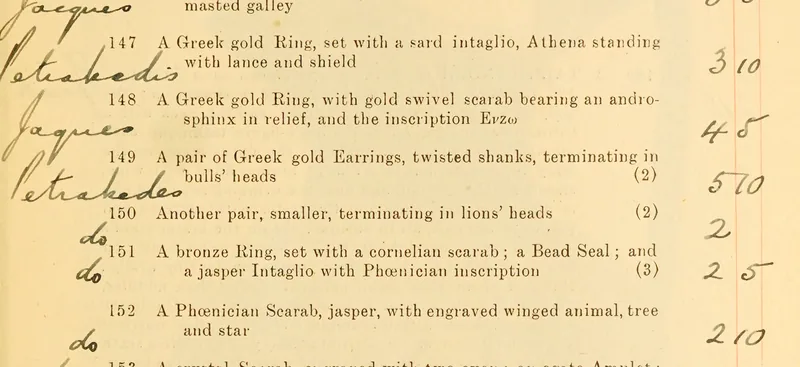
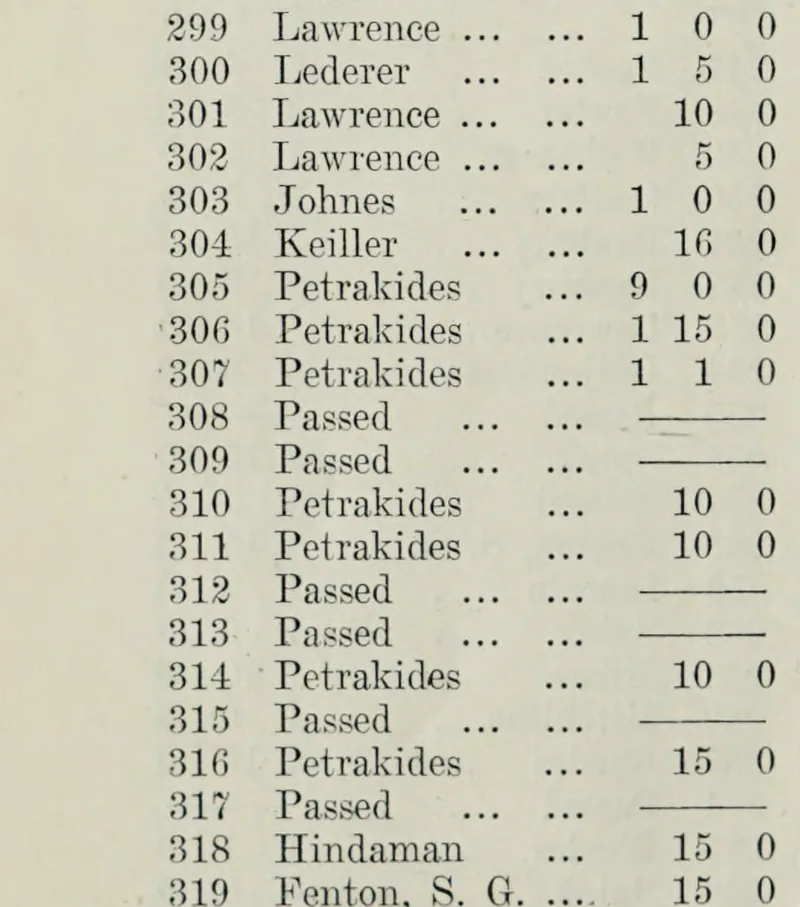
Petrakides also appears among the buyers. In June the annotator wrote “Petrakedis” and “Petrakedes” against five lots of gold and seals from another property. On 12 November, the day after the amphora was sold, he took some of the block of lots 305 to 317 at prices from 10s to £9 and let the rest pass, as an owner protecting his own goods would.

Entries for lots 147 to 152 in Sotheby's catalogue of 21 June 1926, gold rings, earrings and seals; the margin names read Petrakedis, Jacques, Petrakedes and then 'do' (ditto).
Lots 147–152, 21 June 1926: "Petrakedis", "Petrakedes" and three "do".Scan: The Metropolitan Museum of Art, Thomas J. Watson Library
Printed list of prices and buyers' names for Sotheby's sale of November 1926, rows for lots 299 to 319: lots 305 to 317 read either Petrakides or Passed.
The printed list, second day (12 November 1926), lots 299–319: Petrakides or "Passed" for every lot from 305 to 317.Scan: The Metropolitan Museum of Art, Thomas J. Watson Library

If this reading is right, the amphora was consigned in November 1926 by the same owner as the rest, almost certainly a Cypriot vendor with stock fresh from the island, who had held it back from the summer sales or received it later. Only Sotheby's own day books and vendors' ledgers for 1926, which record who consigned each lot and on whose account it was “sold”, can prove it.

IX1923–1926

Out of Cyprus

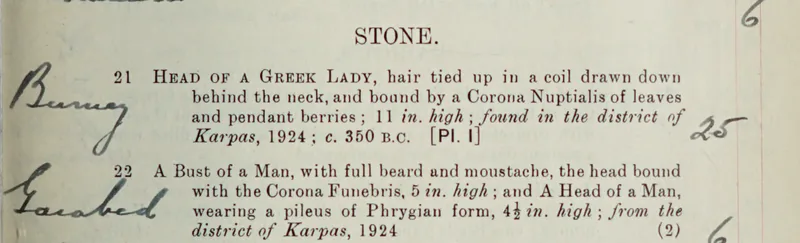
Some of these objects had been in the ground very recently. The March catalogue says that two of Malis's lots were “found in the Karpas in 1924”, that a hand-made chariot group came from Phlamoudhi the same year, and that the Petrakides slab was “found at Enkomi in 1923”. The amphora has no find-spot at all, but it reached London with this stock. How did a few hundred Cypriot antiquities leave the island in 1925 and 1926?

Entries for lots 21 and 22 in Sotheby's catalogue of 22 March 1926: a head of a Greek lady found in the district of Karpas, 1924, and two heads from the district of Karpas, 1924, with buyers' names and prices written in the margins.
Malis lots 21 and 22, 22 March 1926: "found in the district of Karpas, 1924".Scan: The Metropolitan Museum of Art, Thomas J. Watson Library

Under the Antiquities Law of 1905 a share of every chance find went to the government, excavation needed a permit, and nothing could be exported without the written permission of the High Commissioner (from 1925 the Governor) after the objects had been shown to the Cyprus Museum. In practice the museum's curator, Menelaos Markides, inspected exports himself and allowed fewer than twenty a year. A piece “found at Enkomi in 1923” could leave legally only if it had been declared as a chance find and then licensed.

Antiquities declared for export, 1920–1930

Value in £ as entered in the Blue Books. to the United Kingdom elsewhere division not legible

’20120
’2110
’22?
’2374
’2461
’2571
’26202
’27473
’28136
’29126
’30326

UK

Declared exports, 1926

£711

  • United Kingdom£202
  • Canada£1
  • France£501
  • United States£7

Declared to the UK, and sold in London

Hammer totals of the Cypriot sections at Sotheby's. Where two figures are given, the solid part reads the doubtful prices in the annotated copies at their lowest, the paler part as written.

  • Declared to the UK, 1925£71
  • Declared to the UK, 1926£202
  • Sotheby's, March 1926£695–£1,299

    Malis £187–£285; Petrakides £508–£1,013

  • Sotheby's, June 1926£159

    Cypriot pottery

  • Sotheby's, July 1926£514–£599

    The Fine Collection

A declared value is the figure the shipper entered on his export list, and antiquities paid no duty. The two columns measure different things, so a low declared figure does not by itself show that objects left the island undeclared.

Declared exports of “Articles of Antiquity” from Cyprus by year, with the part declared for the United Kingdom; beside them, the 1926 Sotheby's totals for the Cypriot lots. Tap a year to see its destinations.Cyprus Blue Books 1920–1930, statements of exports; Sotheby's annotated sale catalogues, 1926.

Declared value of antiquities exported from Cyprus, with the United Kingdom's share: 1920, £532 (United Kingdom £120); 1921, £35 (United Kingdom £10); 1922, £67 (United Kingdom and Egypt, split illegible); 1923, £138 (United Kingdom £74); 1924, £103 (United Kingdom £61); 1925, £1,438 (United Kingdom £71); 1926, £711 (United Kingdom £202); 1927, £544 (United Kingdom £473); 1928, £580 (United Kingdom £136); 1929, £344 (United Kingdom £126); 1930, about £1,300 (United Kingdom £326).

Sotheby's 1926 hammer totals of the Cypriot sections: March £695 to £1,299, June £159, July £514 to £599. Declared to the United Kingdom: £71 in 1925 and £202 in 1926.

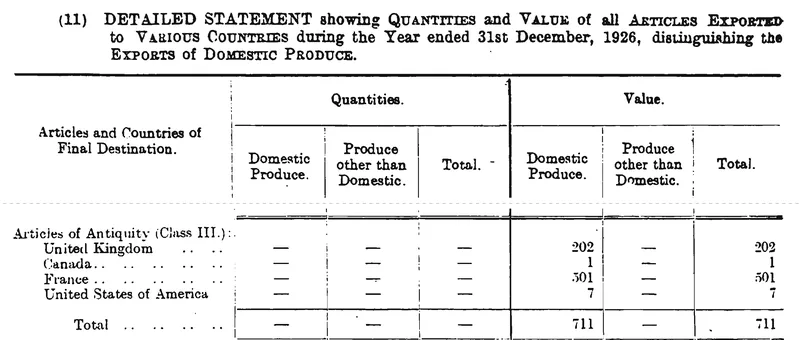
Table from The Cyprus Blue Book 1926, detailed statement of exports for the year ended 31 December 1926: the rows for Articles of Antiquity (Class III), United Kingdom £202, Canada £1, France £501, United States of America £7, total £711.
Declared exports of "Articles of Antiquity" in 1926: £711 in all, £202 of it to the United Kingdom.The Cyprus Blue Book 1926. Scan: Cyprus Library (Cyprus Digital Library)

The colony's Blue Books record the declared value of the antiquities exported each year. To the United Kingdom: £61 in 1924, £71 in 1925, £202 in 1926. The Cypriot lots of the March sale alone fetched several hundred pounds at auction. Declared values were whatever the shipper wrote on his export list, and antiquities paid no duty, so a low figure proves nothing by itself; the June and July collections could fit inside the £202 of 1926 at a few shillings a piece. The March consignment of 192 lots fits the figure for 1925 very badly.

The one Nicosia newspaper that survives for these years, the weekly Kypriakos Fylax, has nothing on these sales in any issue from 1923 to 1927. Other sources describe the climate. A correspondent in Nicosia wrote in December 1925 that “at Lampousa the field has been laid open for illicit digging, but so too have all other ancient sites.” Enkomi was being robbed in these years, and a Famagusta collector, G. B. Palma, is recorded as buying from the looters there. In December 1927 Rupert Gunnis, the Governor's private secretary and a member of the Cyprus Museum Committee, had two Famagusta buyers raided and their antiquities confiscated, and in 1928 the government opened a file on measures to stop antiquities being smuggled out through the ports.

None of this shows how the amphora travelled. The curator's export permits for 1924–26 and his register of the private collections of Larnaca, both in the Cyprus State Archives in Nicosia, may yet name the stock and its owner.

WhereAntiquities Law 1905, Cyprus Gazette 1905, pp. 154–162; Cyprus Blue Books 1924–1926, statements of exports; The Near East and India, 14 January 1926 (letter from Nicosia, 15 December 1925); R. S. Merrillees, Cahiers du Centre d'Études Chypriotes 44 (2014); N. Stanley-Price, Cahiers du Centre d'Études Chypriotes 55 (2025); The National Archives, FCO 141/2415.

X21 March 1932

The Gentleman's sale

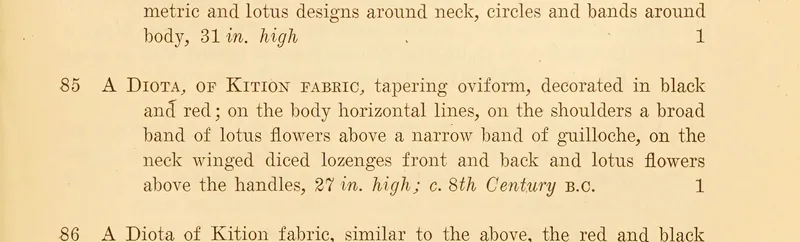
After November 1926 the trail goes blank, and the only way to pick it up was to read the later Sotheby's catalogues for a Cypriot amphora of 27 inches. It turns up on 21 March 1932, in “The Property of a Gentleman. Collection of Cypriot Vases”, lots 79 to 96. Lot 85 is the 1926 entry, shortened, with the same height and with “Kition fabric” moved to the front.

Entry for lot 85 in Sotheby's catalogue of 21 March 1932: a diota of Kition fabric, tapering oviform, decorated in black and red with lotus flowers above the handles, 27 in. high, c. 8th century B.C.
Lot 85, 21 March 1932: the November 1926 lot 23 text, abridged.Scan: The Metropolitan Museum of Art, Thomas J. Watson Library

11 November 1926, lot 23

A Collection of Cypriot Antiquities

A Diota, tapering oviform with broad shoulders, two handles on the body, decorated in red and black, on the body horizontal lines, on the shoulders a broad band of lotus flowers above a narrow band of guilloche, and beneath, line and diced ornament, on the neck winged diced lozenges front and back, and lotus flowers above the handles at the sides, 27 in. high; Kition fabric; c. 8th Cent. B.C.

21 March 1932, lot 85

The Property of a Gentleman. Collection of Cypriot Vases

A Diota, of Kition fabric, tapering oviform, decorated in black and red; on the body horizontal lines, on the shoulders a broad band of lotus flowers above a narrow band of guilloche, on the neck winged diced lozenges front and back and lotus flowers above the handles, 27 in. high; c. 8th Century B.C.

Words in both entries: 48 (69% of the first, 89% of the second) In one entry only

The Gentleman's collection is full of Zachariades's November purchases. Lot 79 is November's lot 44, the other amphora on Plate III; lots 81 and 88 are November's 46 and 22; and lot 94 holds two more of his November lots, 7 and 65, a duck-shaped vase and the pottery trumpet. The simplest reading is that the Gentleman was Zachariades, or the collector he had bought for, selling up six years later.

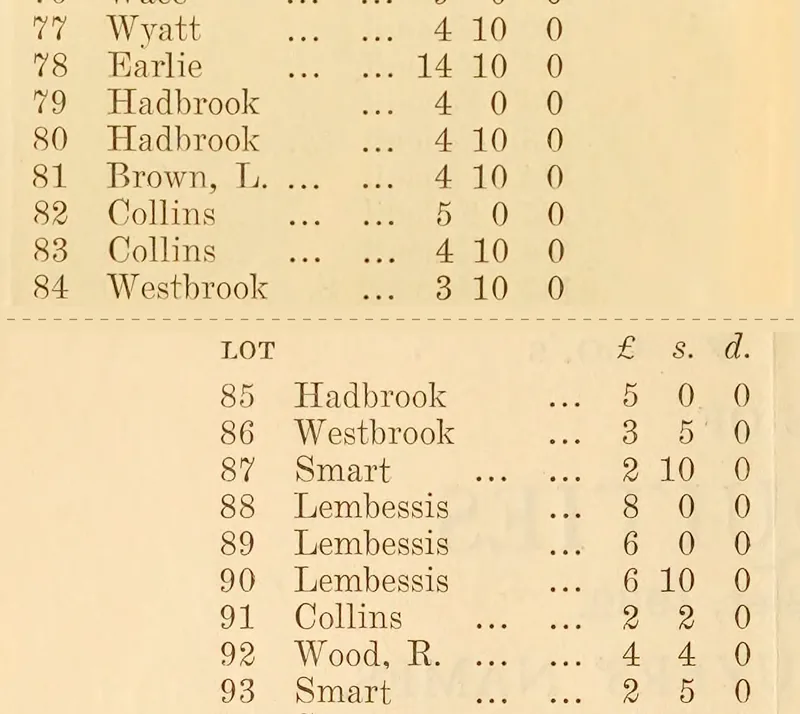
At first the sale looked like another dead end, because no copy could be found with a single pencil mark in it. Then, at the very end of the Met's copy, after the plates, came the printed list of buyers, bound in as in 1926. Lot 85: “Hadbrook”, £5. Hadbrook also bought lots 79 and 80. The two amphorae photographed side by side on Plate III had been bought together by Zachariades in 1926, and six years later they were bought together again.

Printed list of prices and buyers' names for Sotheby's sale of 21 March 1932, lots 77 to 93, joined from two facing pages; lots 79, 80 and 85 read Hadbrook.
The printed list of buyers for 21 March 1932, bound in at the back of the catalogue: lots 79, 80 and 85 to Hadbrook.Scan: The Metropolitan Museum of Art, Thomas J. Watson Library

The Property of a Gentleman, lots 79–96

The eighteen lots of the Gentleman's collection sold on 21 March 1932, with their buyers and prices, and the November 1926 lots they had been where known.
Lot1932BuyerPriceIn November 1926
79A Diota, tapering oviform, two handles on the body decorated in red …Hadbrook£4lot 44, Pl. III · Zachariades (probable)
80An Amphoraic Vase, two handles, with geometric designs in black and …Hadbrook£4 10s·
81A Diota, tapering oviform, two handles, decorated in black and red …Brown, L.£4 10slot 46 · Zachariades
82A Diota, of similar form with geometric design in red and black …Collins£5·
83A large Diota, decorated on the neck and body with geometric and …Collins£4 10s·
84A fine Diota, decorated in black and red, elaborate lozenge …Westbrook£3 10s·
85Our amphora. A Diota, of Kition fabric, tapering oviform, decorated in black and …Hadbrook£5lot 23, Pl. III · Zachariades
86A Diota of Kition fabric, similar to the above, the red and black …Westbrook£3 5s·
87A Diota, with linear decoration in black and red, 20 in. high; and a …Smart£2 10s·
88An Oinochoe, oviform, short neck, trefoil lip, decorated in red and …Lembessis£8lot 22, Pl. II · Zachariades
89An Oinochoe, oviform horizontally with neck and lip, decorated with …Lembessis£6·
90An Oinochoe in plain pottery, with one handle, standing on the …Lembessis£6 10s·
91An Oinochoe of similar form, decorated with circle design; and …Collins£2 2s·
92Two Oinochoe, with spherical bodies, short necks and trefoil lips …Wood, R.£4 4s·
93A small Diota, decorated with diced lozenge and line designs in …Smart£2 5s·
94A red ware pottery Vase of duck-like form with three feet and …Smart£1lot 7 · Zachariades (probable)lot 65 · Zachariades (probable)
95Three small Oinochoe, painted with circles, 3 in. to 5 in. high; a …Westbrook£1 10s·
96A large plain pottery Amphora, with pointed base, stamped on one …Collins£1 10s·

Matches are by description and height. Several of the other lots match pieces of an unnamed Cypriot property sold at Sotheby's in November 1927.

Hadbrook is where the trail goes cold. The name is printed the same way three times, so it is not a slip in a single line, yet the surname barely exists in England: there is no Hadbrook in the probate calendars from 1900 to 1995, none in the London Gazette, none in any other sale list we have read. It does occur in the United States. Hadbrook may have been a visitor, or the clerk may have caught a name wrongly and repeated it.

XI1926–1937

The trumpet in the Ashmolean

The amphora's trail stops at Hadbrook. One of its companions can be followed further: the trumpet of November's lot 65, “the last very rare”. In 1932 it was sold again with the duck-shaped vase as lot 94, “a Trumpet in pottery, 12 in. long”, to a buyer called Smart for £1. It had been through the saleroom before November as well. In March 1926 it was half of lot 100 of the Petrakides property, knocked down to Thomas for £3 15s, in the words that November would repeat.

Entry for lot 100 in Sotheby's catalogue of 22 March 1926: a barrel-shaped bottle and a horn or trumpet, with the buyer's name Thomas and the price written in the margins.
Lot 100, 22 March 1926: the barrel bottle and "Horn or Trumpet", with the buyer's name in the margin.Scan: The Metropolitan Museum of Art, Thomas J. Watson Library
Printed entry for lot 65 in Sotheby's catalogue of 11 November 1926: a barrel-shaped bottle, red ware with black bands, 13 in. high, and a horn or trumpet, 12 in. high, the last very rare.
Lot 65, 11 November 1926: a barrel bottle and "a Horn or Trumpet".Scan: The Metropolitan Museum of Art, Thomas J. Watson Library

The Ashmolean Museum in Oxford has a terracotta trumpet, or salpinx, 30.6 centimetres long, which is twelve inches, given by Sir John Beazley in 1937 and numbered AN1937.158. The museum's online record says nothing about where it came from. The catalogue of an exhibition of the Beazleys' gifts, printed in 1967, does: “Once, Petrakides Collection”. Neither the November catalogue nor the 1932 one printed that name, yet it stayed with the trumpet for four decades. It is very probably the trumpet of these three sales, although how it passed from Smart to Beazley is not recorded.

The amphoraNovember 1926, lot 23

The trumpetNovember 1926, lot 65

Mar 1926

Not in this sale.

Lot 100, Petrakides property. To Thomas, £3 15s.

Nov 1926

Lot 23, to Zachariades, £3 5s.

Lot 65, the same words. To Zachariades, 12s.

Mar 1932

Lot 85, to Hadbrook, £5.

Lot 94, with a duck-shaped vase. To Smart, £1.

No record from Smart to Beazley.

1937

Forty-two years without a record.

Given by Beazley to the Ashmolean.

1967

“Once, Petrakides Collection”.

by 1974

Edward Varley Kayley.

2024–25

Bonhams; ArtAncient; this collection.

In the Ashmolean, not on display.

Documented Probable identification No record Together in one saleSotheby & Co., 22 March and 11 November 1926 and 21 March 1932, with their buyers' names; Ashmolean Museum, AN1937.158; Select Exhibition of Sir John and Lady Beazley's Gifts to the Ashmolean Museum, 1912–1966 (Oxford, 1967).

The slab with the prayer to the Sun can be followed too, on paper at least. F. Cumont published it from the sale catalogue, in the proceedings of the Pontifical Roman Academy of Archaeology for 1926–27 and again in Syria in 1933, and it entered the corpus of Greek inscriptions as SEG VI 803. Where it is now is not known.

WhereAshmolean Museum AN1937.158; Select Exhibition of Sir John and Lady Beazley's Gifts to the Ashmolean Museum, 1912–1966 (Oxford, 1967). F. Cumont, Rendiconti della Pontificia Accademia Romana di Archeologia 5 (1926–27), p. 69; F. Cumont, “Deux monuments des cultes solaires”, Syria 14 (1933), p. 388; Supplementum Epigraphicum Graecum VI 803.

XII1932–1974

Forty-two years

The next fixed point is 1974. Edward Varley Kayley was born in Kent in 1900 and died at Woking, Surrey, in 1974. He collected Chinese ceramics and paintings, and Bonhams' catalogue of his Chinese collection says that he bought at local auctions and antique sales and through Collet's Chinese Bookshop in London, and that from 1969 until his death he was Supreme Magus of the Societas Rosicruciana in Anglia, a Masonic order. Two other antiquities from his collection were sold at Bonhams with the amphora, an Etruscan amphora and a South Italian red-figure plate. Lots 79 and 80 of 1932 were not among them.

How the amphora passed from Hadbrook to Kayley is unknown. A man who bought “from local auctions and antique sales” sounds like a buyer of the 1950s and 1960s, less like a bidder at Sotheby's in 1932, and the amphora probably went through at least one more pair of hands in between.

XIIISources

Where we looked

Most of the searching found nothing. The dead ends are listed here with the finds, so that nobody picking up the trail has to repeat them.

Sale catalogues

  • Found something

    Sotheby's, 22 March, 21 June and 22–23 July 1926, annotated copies (Metropolitan Museum of Art library)

    Every buyer and price, among them Thomas, Vagliano, Speyer, Coureau, “Cash” and “Passed”.

  • Found something

    Sotheby's, 11–12 November 1926, with its printed list of buyers

    Lot 23 to Zachariades; the 14 newcomers; Petrakides buying on the second day.

  • Found something

    Sotheby's, 21 March 1932, with its printed list of buyers

    Lot 85, the amphora, to Hadbrook; the Gentleman's other lots.

  • Found something

    Sotheby's, 28–29 November 1927

    Another unnamed Cypriot property, one of whose vases was in the Gentleman's sale of 1932.

  • Nothing

    Every other Sotheby's antiquities sale of 1921–1932 with buyers' names, and German sales of the same years

    No Thomas, Vagliano, Zachariades, Petrakides or Hadbrook. Coureau once, in 1921.

  • Nothing

    The Paris library copies of the four 1926 catalogues

    Clean copies, with no prices or names.

  • Nothing

    Sotheby's sales of 1924–1928, read for any earlier appearance of lot 23

    None. The amphora was first offered in November 1926.

  • Found something

    Bonhams, 4 July and 7 November 2024

    Edward Varley Kayley, his collection and his life.

Records in Cyprus

  • Found something

    Cyprus Government Gazette, 1878–1960

    Harilaos Malis and his family firm; the Petrakides family; Zenon Zachariades in Nicosia and London. No export permits are printed in it.

  • Found something

    Cyprus Blue Books, 1920–1930

    The declared value of antiquities exported each year, by country.

  • Nothing

    Kypriakos Fylax, Nicosia, every surviving issue 1923–1927

    No digging case, no seizure, no export, no London sale, and none of the names travelling.

  • Still to read

    Cyprus State Archives: export permits 1924–26, the register of Larnaca collections, Museum Committee minutes

    To be read in Nicosia.

Records in Britain

  • Found something

    Probate calendars of England and Wales

    Zachariades (1961) and Kayley (1974). No Hadbrook, 1900–1995.

  • Nothing

    London Gazette

    Nothing for Thomas, Zachariades, Petrakides, Malis or Hadbrook.

  • Nothing

    Hansard, 1924–1930

    Nothing on Cypriot antiquities leaving the island.

  • Still to read

    The National Archives, FCO 141/2415 (smuggling of antiquities from Cyprus, 1928–29)

    Known from the published literature; to be read in Kew.

  • Closed to us

    Sotheby's archive (sale books and vendors' ledgers)

    Sotheby's does not share records of past consignments.

  • Still to read

    British Library, Sotheby's own marked catalogues

    To be asked whether the 1926 and 1932 volumes name vendors.

Newspapers and periodicals

  • Found something

    The Near East and India, 1925–1928

    A Nicosia letter of December 1925 on illicit digging.

  • Found something

    Dutch newspapers, 1925–1927

    The Leiden museum's annual reports: the Marseilles dealer and Speyer's gift.

  • Nothing

    Apollo, The Burlington Magazine, The Antiquaries Journal, Country Life, 1926

    Nothing on these sales or these names.

  • Nothing

    French newspapers, 1922–1930

    Nothing for Vagliano or for Cypriot antiquities.

  • Closed to us

    The Times sale reports; the British Newspaper Archive

    Behind subscriptions we could not use.

Museums and scholarship

  • Found something

    Rijksmuseum van Oudheden, Leiden

    V. Vagliano of Marseilles (1925) and W. Speijer's gift (1926).

  • Found something

    Ashmolean Museum, Oxford, and the 1967 catalogue of the Beazley gifts

    The trumpet, “Once, Petrakides Collection”. Its accession register is still to be asked.

  • Found something

    British Museum Bronze Age Index

    A July 1926 lot recorded as “owner unknown”: the vendor was hidden even then.

  • Found something

    F. Cumont (1926–27, 1933) and the Supplementum Epigraphicum Graecum

    The slab with the prayer to the Sun, published from the sale catalogue.

  • Found something

    Recent studies of the antiquities trade in Cyprus (Merrillees 2014, Kiely 2017, Reeve 2021, Stanley-Price 2025)

    The law, the curator's permits, the looting at Enkomi, the dealers of the 1920s. No mention of these sales.

XIVStill open

What would settle it

The chain as it stands: a Cypriot vendor, most probably M. M. Petrakides; Sotheby's, 11 November 1926, lot 23, to Zachariades; Sotheby's, 21 March 1932, lot 85, to Hadbrook; forty-two years without a record; Edward Varley Kayley and his family; Bonhams, 2024; ArtAncient; the Drakopoulos Collection.

Three sets of documents would close most of the gaps. Sotheby's sale books for 1926 and 1932 record every consignor and every buyer with an address, and the British Library holds the firm's own set of marked catalogues, which may carry the vendors' names. In Nicosia, the curator's export permits and his register of Larnaca collections may name Petrakides and his stock. And the Ashmolean's accession register may say where Beazley found the trumpet in the 1930s. Those are the questions we are now putting to the archives, and their answers will be added here.

The other amphora on Plate III

In November 1926 the amphora was photographed beside lot 44, a diota of the same height, with bands of grouped circles round its shoulder, winged lozenges on its neck and lotus flowers above its handles. Both were among the fourteen newcomers. Zachariades bought both, for £3 5s and £2 15s; in 1932 they were offered together again, as lots 85 and 79, and Hadbrook bought both. In 2024 one of them came to Bonhams from the Kayley family. Lot 44 has not been traced since 1932.

Plate III of Sotheby's catalogue of 11 November 1926, detail: lot 44, a large painted amphora with bands of grouped circles round its shoulder and winged lozenges on its neck, with its printed number.
Lot 44 on Plate III of the November 1926 catalogue, the amphora that stood beside ours.Scan: The Metropolitan Museum of Art, Thomas J. Watson Library

A hundred years after the two amphorae stood side by side for Plate III, one of them is in the Drakopoulos Collection. If you know where the other is, or recognise it from the plate, we would like to hear from you through the contact page.