
II · The registers
People, institutions, publications and excavations
Live
The excavators, collectors, dealers, officials and scholars of Cypriot archaeology; the museums, missions, universities, auction houses and societies they worked for and dealt with; the publications that report their work; every excavation on the island from the nineteenth century to today, season by season; and the recorded lectures on the subject.
Each fact on a page is cited to the source it rests on, and every record is linked to the others, so that from any one of them you can follow who dug where, for whom, who published it, and where the finds went.
- people
- 12,517
- people
- institutions
- 2,063
- institutions
- publications
- 10,256
- publications
- excavations
- 773
- excavations
- recorded lectures
- 332
- recorded lectures
- links between records
- 51,364
- links between records
20,819 records of seven kinds with the number of links between them; a loop is links between records of the same kind. Solid squares are this project’s five registers; sites and tombs have registers of their own. Each square opens its register.
The registers, live
Pull a thread
Start from one of the suggested records, or search for anyone or anything in the registers. Its links are listed by kind, each with its years; choose one and the thread moves on to that record, while the thread so far stays in view. Pull at random to let the registers choose, or ask for the shortest thread between the record you are on and any other.
Every record on the thread opens its own page, with the sources for each link.
How the registers link
Seven kinds of record, twelve kinds of tie between them
A link is stored once and read from both sides: a person wrote a publication, which was written by them; an excavation was directed by a person, who directed it. The people register is the centre of the web, linked to publications (14,059 links), to each other (11,049) and to institutions (7,113); excavations join people, institutions and publications to the sites they dug and the tombs they opened.
The links are drawn from 102 different phrasings of a tie, from Sold to and Bought from to Held a permit from and Discussed in. Below, the pairs by the number of links, with the commonest kinds of link between them; the diagram at the top of the page draws the same web.
| Between | Links | The commonest, read from the first |
|---|---|---|
| People and publicationsWrote 7,139 · Discussed in 4,746 · Named in 1,932 · Written about in 242 | 14,059 | Wrote 7,139Discussed in 4,746Named in 1,932Written about in 242 |
| People with each otherWorked with 2,594 · Connected with 2,119 · Wrote with 1,646 · Corresponded with 556 | 11,049 | Worked with 2,594Connected with 2,119Wrote with 1,646Corresponded with 556 |
| People and institutionsAffiliated with 1,571 · Connected with 1,442 · Gave to 1,085 · Worked for 665 | 7,113 | Affiliated with 1,571Connected with 1,442Gave to 1,085Worked for 665 |
| Publications and excavationsReports on 4,665 | 4,665 | Reports on 4,665 |
| Sites and tombsTombs 3,577 | 3,577 | Tombs 3,577 |
| Excavations and tombsTombs 3,316 | 3,316 | Tombs 3,316 |
| People and lecturesDiscussed in 1,129 · Lectured in 328 · Chaired 110 | 1,567 | Discussed in 1,129Lectured in 328Chaired 110 |
| People and excavationsDirected 778 · Worked on 612 | 1,390 | Directed 778Worked on 612 |
| Excavations and sitesSite 1,261 | 1,261 | Site 1,261 |
| Lectures and sitesDiscusses 1,163 | 1,163 | Discusses 1,163 |
| Institutions with each otherConnected with 303 · Includes 245 · In partnership with 150 · Part of 85 | 1,136 | Connected with 303Includes 245In partnership with 150Part of 85 |
| Institutions and excavationsSponsored 701 · Partner in 260 · Funded 49 · Includes 45 | 1,068 | Sponsored 701Partner in 260Funded 49Includes 45 |
What is in them
Five registers, counted
What each register holds today, counted from its records when this page was built. Every bar and column that can opens that part of the register.
People
Everyone the sources name in the history of Cypriot antiquities: excavators and their foremen and workmen, consuls and colonial officials, dealers, collectors and donors, curators and scholars. Each has a page with the dated events of their life and work, their connections with other people and their institutions, every line cited.
- people
- 12,517
- people
- dated events
- 33,449
- dated events
- links between people
- 11,049
- links between people
- written biographies
- 973
- written biographies
By role
- Collectors & dealersCollectors, dealers, donors, agents, smugglers3,669 people
- Excavators & findersArchaeologists, foremen, workmen, landowners2,098 people
- Officials & diplomatsConsuls, colonial and antiquities officials, lawyers826 people
- MuseumsDirectors, curators, restorers, photographers1,285 people
- ScholarsScholars, epigraphers, travellers, critics2,499 people
- OthersEveryone else the sources name2,140 people
The commonest roles
- Scholar2,701 people
- Collector2,468 people
- Donor1,087 people
- Excavator716 people
- Expedition member651 people
- Cataloguer651 people
- Archaeologist650 people
- Draughtsman / artist456 people
- Dealer393 people
By nationality, where recorded
- United Kingdom803 people
- France635 people
- United States483 people
- Cyprus452 people
- Germany285 people
- Italy138 people
- Sweden96 people
- Ottoman78 people
Institutions
Museums and the departments inside them, auction houses and dealers’ firms, expeditions, consulates and colonial offices, universities and learned societies. Each page lists the people of the register connected with it, its dated history and its ties to other institutions.
- institutions
- 2,063
- institutions
- people connected
- 7,263
- people connected
- dated events
- 10,512
- dated events
- written histories
- 343
- written histories
By kind
- Museums and collections527 institutions
- Auction houses and dealers393 institutions
- Expeditions90 institutions
- Government and consulates271 institutions
- Universities, schools and societies633 institutions
- Other149 institutions
By country
- Cyprus359 institutions
- United States301 institutions
- United Kingdom280 institutions
- France180 institutions
- Germany161 institutions
- Italy64 institutions
- Greece60 institutions
- Switzerland44 institutions
- Sweden28 institutions
- Ottoman Empire28 institutions
- Other countries274 institutions
- Not recorded284 institutions
Publications
Books, articles, museum and sale catalogues, excavation reports, laws and archive documents: every work cited in the other registers and on the site, each with its full citation, the people and institutions it concerns, and the pages that cite it.
- publications
- 10,256
- publications
- with a written summary
- 1,301
- with a written summary
- cited in our articles and pages
- 1,946
- cited in our articles and pages
- languages
- 16
- languages
Not shown: 138 published before 1850 and 361 undated.
By language
- English5,455 publications
- French929 publications
- German298 publications
- Greek114 publications
- Italian72 publications
- Swedish32 publications
- Turkish17 publications
- Latin17 publications
By kind
- Books2,427 publications
- Articles and chapters6,651 publications
- Catalogues241 publications
- Reports, archives and the press579 publications
- Web and other358 publications
Excavations
Excavations, rescue digs, soundings and surveys carried out in Cyprus from the nineteenth century to today. Each project gives the sites, the years of work season by season, the directors and team, the institutions that sponsored it, the law it worked under, what was found and where it went, and the reports that published it.
The most recent decades look thinner than the fieldwork was: their yearly reports are still being read into the register.
- projects
- 773
- projects
- seasons recorded
- 1,601
- seasons recorded
- with a written account
- 700
- with a written account
- tombs linked
- 3,316
- tombs linked
Not shown: 3 projects begun before 1860 and 25 not yet dated.
By the law they worked under
- Ottoman period95 projects
- British administration, Antiquities Law of 190556 projects
- British administration, Antiquities Law of 1935103 projects
- Republic of Cyprus479 projects
- British Sovereign Base Areas28 projects
- Occupied north, after 1974Without the permission of the Republic of Cyprus12 projects
By kind of fieldwork
- Excavation312 projects
- Rescue excavation264 projects
- Survey97 projects
- Clearance and early digging52 projects
- Sounding27 projects
- Underwater work12 projects
- Geophysical survey6 projects
- Restudy3 projects
Lectures
Every talk published by the Archaeological Research Unit of the University of Cyprus and by CAARI, the Cyprus American Archaeological Research Institute, with the documentaries and lectures from other channels that cover Cyprus. Each page describes what the talk covers, gives its chapters, and links the people and sites it discusses.
- recordings
- 332
- recordings
- hours
- 338
- hours
- links to people
- 1,567
- links to people
- links to sites
- 1,163
- links to sites
By kind
- Lectures163 recordings
- Conference papers112 recordings
- Video essays19 recordings
- Documentaries8 recordings
- Keynote lectures7 recordings
- Workshops6 recordings
- Panels5 recordings
- Tours, interviews and other talks12 recordings
How a record is built
One record taken apart: Luigi Palma di Cesnola
A person’s record is a set of separate statements, each with its own source: dated events, connections with other people, and positions in institutions. Here are three of them, from one of the longest records in the register, exactly as his page shows them.
The person page
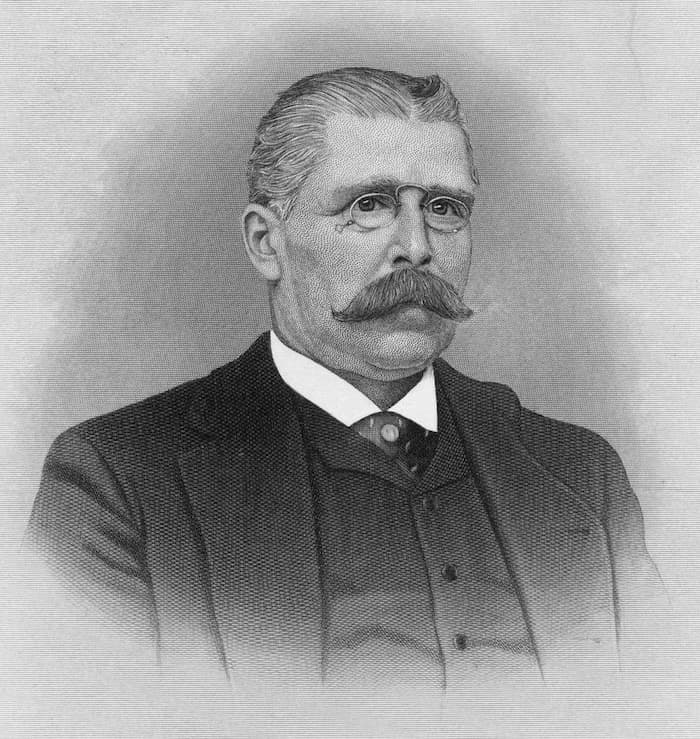
1832–1904
US consul at Larnaca who dug and bought across Cyprus in 1866-76, sold two collections to the Metropolitan Museum and, as its director, was sued for libel by Gaston Feuardent.
Consul / diplomat, Excavator, Collector, Dealer, Donor, Museum director, Cataloguer
- dated events
- 670
- dated events
- people linked
- 324
- people linked
- sources
- 1,734
- sources
1A dated event
1866First excavations at Dali, Alambra and Potamia, begun, in his words, 'in a mere amateur way'
- Date
- As precise as the source allows: a day, a month, a year or a span.
- What happened
- In the source's terms, its own words quoted where they matter.
- Place
- Where it happened, when the source says.
- Citation
- The work and the page. Where the work has a page in the publication register, the citation opens it.
2A connection with another person
Employed Alessandro (Alexander) Palma di Cesnolachief digger and superintendent of excavations; appointed US consular agent at Paphos on Luigi's request, July 1873Barker & Merrillees 2017, 'Cypriot Antiquities from the Cesnola Collections in the Nicholson Museum', Meditarch 30, p. 52
1873–1876- The link
- A kind of tie from a fixed list, read from each side: employed and employed by, sold to and bought from.
- The other person
- A record of their own, where the same link reads the other way.
- Years
- When the tie is dated, the first and last year the sources give.
- What passed between them
- As the source puts it, with its citation.
3An institution
Metropolitan Museum of ArtSecretary, then first Director (appointed 15 May 1879, on his insistence for life), 1877 – November 1904A. G. Marangou (ed.) (2000). The Consul Luigi Palma di Cesnola 1832-1904: Life and Deeds, p. 281, p. 292, p. 345
- The institution
- Its own record in the institution register, where this person is listed among its people.
- Position and years
- As the source states them.
Start here
Records to open first
A consul, excavators and curators of four generations, the museums and the mission at the centre of the web, three digs, two publications and a lecture.
- Person· 1831–1900Thomas Backhouse SandwithBritish Vice-Consul in Cyprus 1865-70 who bought finds from the Dali tombs, sold pieces to the British Museum and read the first classification of Cypriot pottery to the Society of Antiquaries.
- Person· 1850–1917Max Ohnefalsch-RichterGerman press correspondent who reached Cyprus in 1878 and dug there for the British Museum, the Cyprus Museum, private syndicates and Berlin; his finds went to museums in Germany and Vienna.
- Person· 1869–1954John Linton MyresOxford scholar who catalogued the Cyprus Museum in 1894, excavated for the Cyprus Exploration Fund, re-catalogued the Cesnola Collection in New York and advised the Colonial Office on antiquities.
- Person· 1897–1988Einar Nilson GjerstadSwedish archaeologist who led the Swedish Cyprus Expedition of 1927 to 1931, helped draft the 1930 division of its finds between Nicosia and Stockholm, and set out the Cypriot sequence in SCE IV.
- Person· 1904–1971Porphyrios DikaiosCurator of the Cyprus Museum from 1931 and later Director of Antiquities, who signed export permits for Cypriot antiquities and excavated Khirokitia, Sotira, Vounous and Enkomi.
- Person· 1906–1983Joan du Plat TaylorVolunteer in the Cyprus Museum saleroom who found the mining settlement at Apliki and dug Myrtou-Pigadhes, then became Institute of Archaeology librarian and a founder of nautical archaeology.
- Institution· NicosiaCyprus MuseumNicosia museum founded on 15 June 1882 with the antiquities seized from Alessandro Palma di Cesnola as its nucleus, and the island's repository of finds under the Department of Antiquities since 1935.
- InstitutionSwedish Cyprus ExpeditionSwedish excavation of 1927 to 1931 that dug 21 sites under the amended Antiquities Law and took about two-thirds of its finds to Stockholm, where they form the Medelhavsmuseet's Cyprus collection.
- Institution· New YorkMetropolitan Museum of ArtNew York museum that bought Luigi Palma di Cesnola's two Cypriot collections in 1872-1876, made him its director, sold duplicates in 1928 and reopened the rest in four galleries in 2000.
- Excavation· 1867–1873Golgoi: Cesnola's excavations at Ayios PhotiosLuigi Palma di Cesnola's digging at Golgoi in 1867, 1870 and 1873, which produced hundreds of limestone sculptures from Ayios Photios and a sanctuary he called the Temple of Venus.
- Excavation· 1896Enkomi: the British Museum excavations of 1896The British Museum's 1896 excavation of 100 Late Bronze Age tombs at Enkomi, paid for from the Turner Bequest and run in three phases by Murray, Christian and Smith.
- Excavation· 1929–1930Ayia Irini: the Swedish Cyprus Expedition's sanctuaryThe Swedish Cyprus Expedition's winter 1929–30 dig at the sanctuary of Ayia Irini, where almost 2,000 terracotta votives stood in a semicircle facing a limestone altar.
- Publication· J. L. Myres and M. Ohnefalsch-Richter, 1899A Catalogue of the Cyprus MuseumA catalogue of the Cyprus Museum’s antiquities, with a chronicle of excavations since the British occupation and notes on Cypriote archaeology, arranged by period, material, site collection and tomb group.
- Publication· E. Gjerstad et al., 1934The Swedish Cyprus Expedition: Finds and Results of the Excavations in Cyprus 1927-1931, Vol. I (text)An excavation report on settlements, a fortress and cemeteries dug by the Swedish Cyprus Expedition between 1927 and 1931, with plans, burial records and lists of finds for each site.
- Lecture· Fredrik Whitling, 2023Swedish Spades in Terra Incognita: Crown Prince Gustaf Adolf's 1930 Cyprus Sojourn and the Division of Finds of the Swedish Cyprus ExpeditionFredrik Whitling examines Crown Prince Gustaf Adolf's 1930 visit to Cyprus and his role in dividing the finds of the Swedish Cyprus Expedition.
Method
How the registers are compiled
The registers are read from published and archival sources: excavation reports and the yearly surveys of fieldwork, museum catalogues and registers, biographies and histories of the subject, official reports and gazettes, newspapers and letters. Nothing is entered without its source.
1Every statement cited
Each dated event and each connection on a person's page names its source, down to the page where the source gives one: all 33,449 events carry a citation. The full list of a record's sources closes its page.
2One vocabulary
Roles, kinds of link, kinds of institution, publication and fieldwork, and the laws an excavation worked under come from fixed lists, so that every record can be counted and filtered in the same way.
3Links read both ways
A tie between two records is stored once, with the phrasing for each side, and appears on both pages: a sale on the seller's page is a purchase on the buyer's.
4Certainty marked
A connection the sources only suggest is marked as such: of the connections recorded, 1,242 are marked probable, 726 possible and 36 disputed.
5One person, one record
Spellings and other names of the same person are gathered on one record. Where the sources do not show that two names belong to one person, they stay two records.
6What a record does not show
Records grow as more sources are read; a short record means that little has been read about that person yet, not that there is little to know. 8% of the people so far have a written biography.
Using them
Using and citing the registers
Where they are on the site
- People: the network of everyone in the register, and an index to filter by role, nationality and the years they were active.
- Institutions, publications and excavations: each register’s index, and a page for every record.
- Lectures: every recording, to search and filter by period and language, each with its chapters.
- The references in our articles, compendium entries and site pages open the publications they cite.
Reuse
The registers are free to use for personal, educational and research purposes, with attribution to this site, the address of the page and the date you consulted it (our terms). The site is non-commercial.
How to cite a record
Cite the page by its title, the register and the site, with its address and the date you consulted it:
“Luigi Palma di Cesnola.” People register, Ancient Cyprus. https://www.ancientcyprus.com/people/cesnola (consulted 6 November 2026).
For a single fact, cite the source the page gives for it, at the page it gives, as well: the registers lead to the sources, they do not replace them.
Corrections and records
A mistake, a missing person, or letters, photographs and papers that belong in a record? Write to us. If you own a Cypriot antiquity and want to know its history, get in touch too: our advice is confidential, unless the law requires us to share it.
What comes next
Events, a yearly chronicle and more sources
An events register
Every dated happening in the history of Cypriot antiquities, from a dig or a find to a gift, an export, a law, an appointment or a publication, as one record of its own, cited to every source that reports it, with the sources set side by side where they disagree. Today these events sit on the records they concern: 33,449 on people, 10,512 on institutions, 1,601 seasons on excavations. Year pages, site histories and timelines will be built from them.
A yearly Fieldwork Chronicle
One volume for each year, listing every excavation, survey and rescue dig on the island, with its director, sponsor and dates, what was done and found, and its publications, each entry cited. It follows the excavation register, and a year will be counted complete only when every project known for it has its entry.
More sources read in
The government gazettes of the British period and of the Republic, museums' acquisition records and the field diaries in the Archive are being read into the registers, adding people, institutions, excavations and publications, and the dated events that join them.