
The Judge, the Escape, and a Chocolate Box of Six-Thousand-Year-Old Sherds
A wooden Droste chocolate box, five Stone Age potsherds clipped into wire, and the Supreme Court judge who collected them before walking out of his Nicosia courtroom in the 1963 fighting with a portrait of Queen Victoria under his arm. The story of how the oldest pottery on Cyprus ended up in a confectioner's crate runs through the whole British colonial century.

Alexis Drakopoulos
June 16, 2026·History · Archeology · Collecting·24 min read


Share


Alexis Drakopoulos is a Greek Cypriot Machine Learning Engineer working in Financial Crimes. He is passionate about Archeology and making it accessible to everyone. About Me.
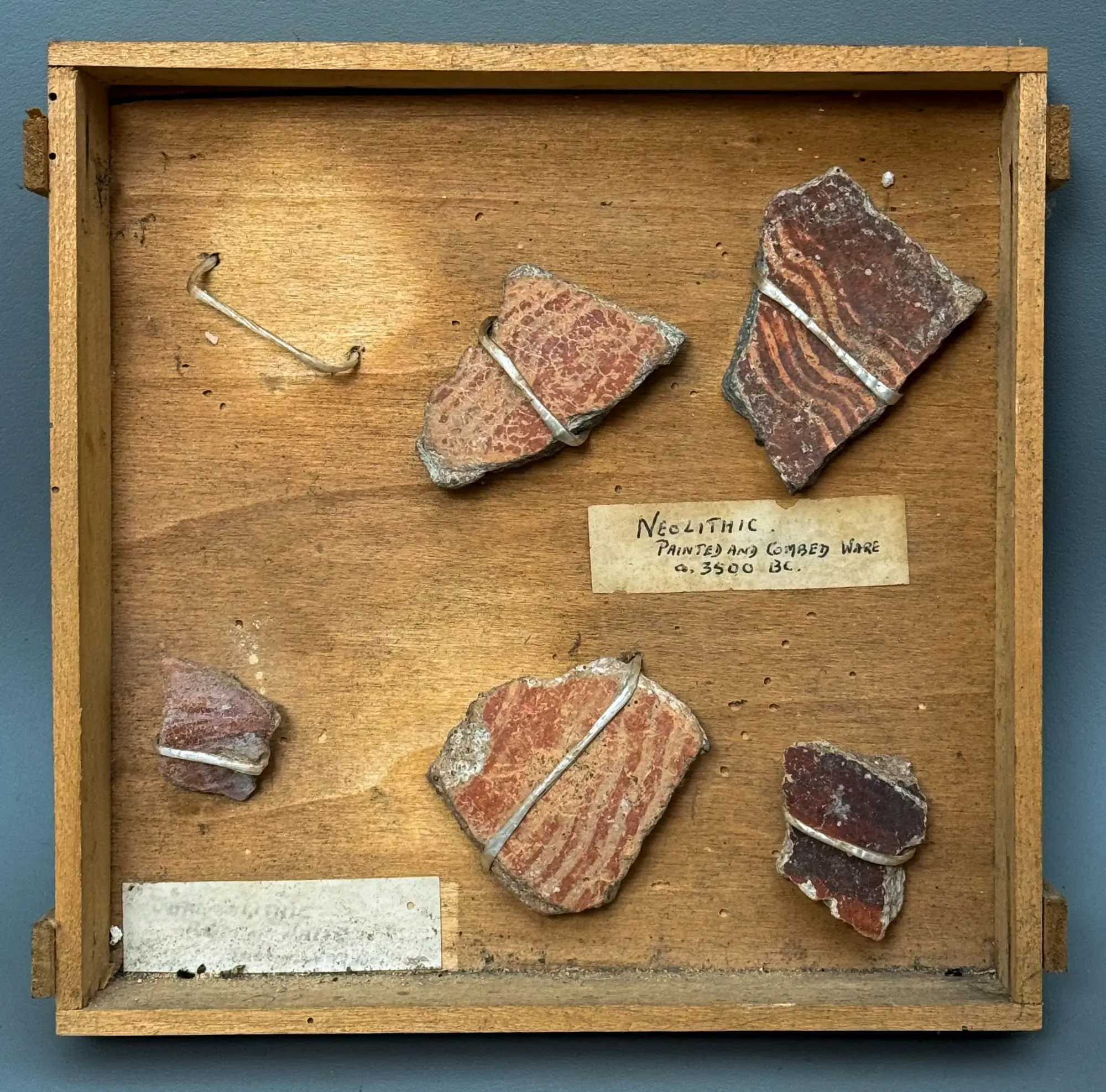
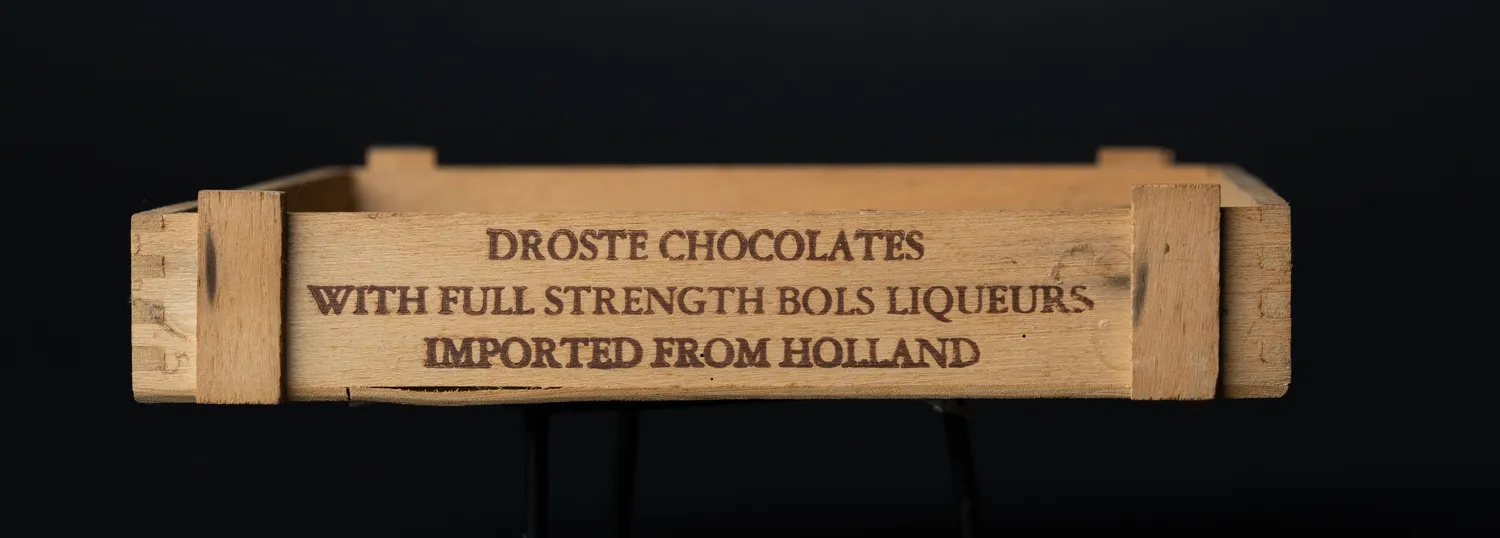
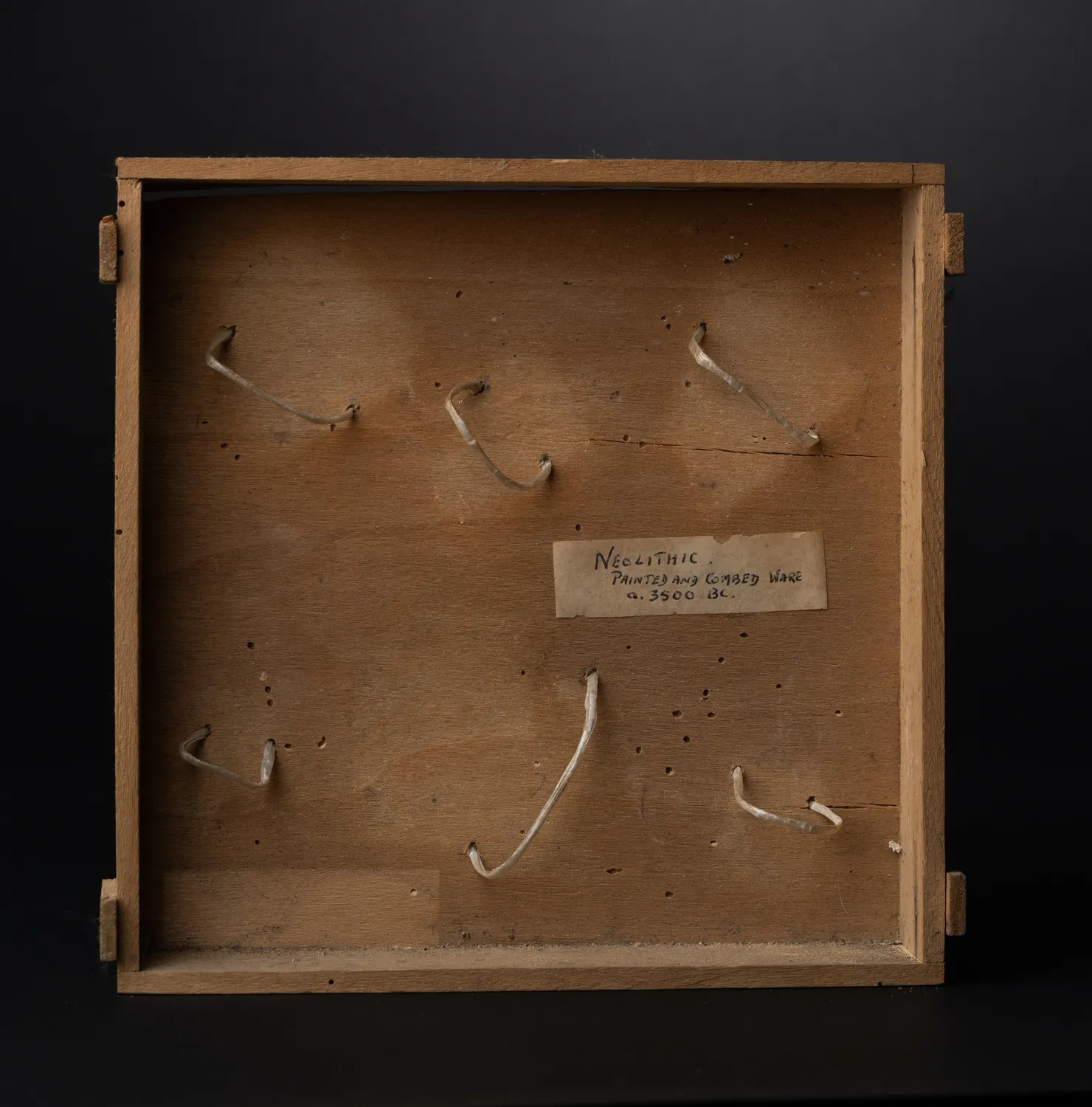
Five potsherds, the oldest pottery ever made on Cyprus, are clipped into a box built to hold Dutch liqueur chocolates. The box is a shallow wooden tray you could hold in two cupped hands, branded along one side in a serif the colour of weak tea: DROSTE CHOCOLATES, WITH FULL STRENGTH BOLS LIQUEURS, IMPORTED FROM HOLLAND. The chocolates are long gone. In their place a thin wooden mount has been drilled with small holes, and through them six loops of soft wire are bent into clips. Five of the clips hold a sherd each. The sixth is empty. Beside them, a slip of paper gone brown at the edges carries three lines in a careful mid-century hand: NEOLITHIC. PAINTED AND COMBED WARE. c. 3500 BC.
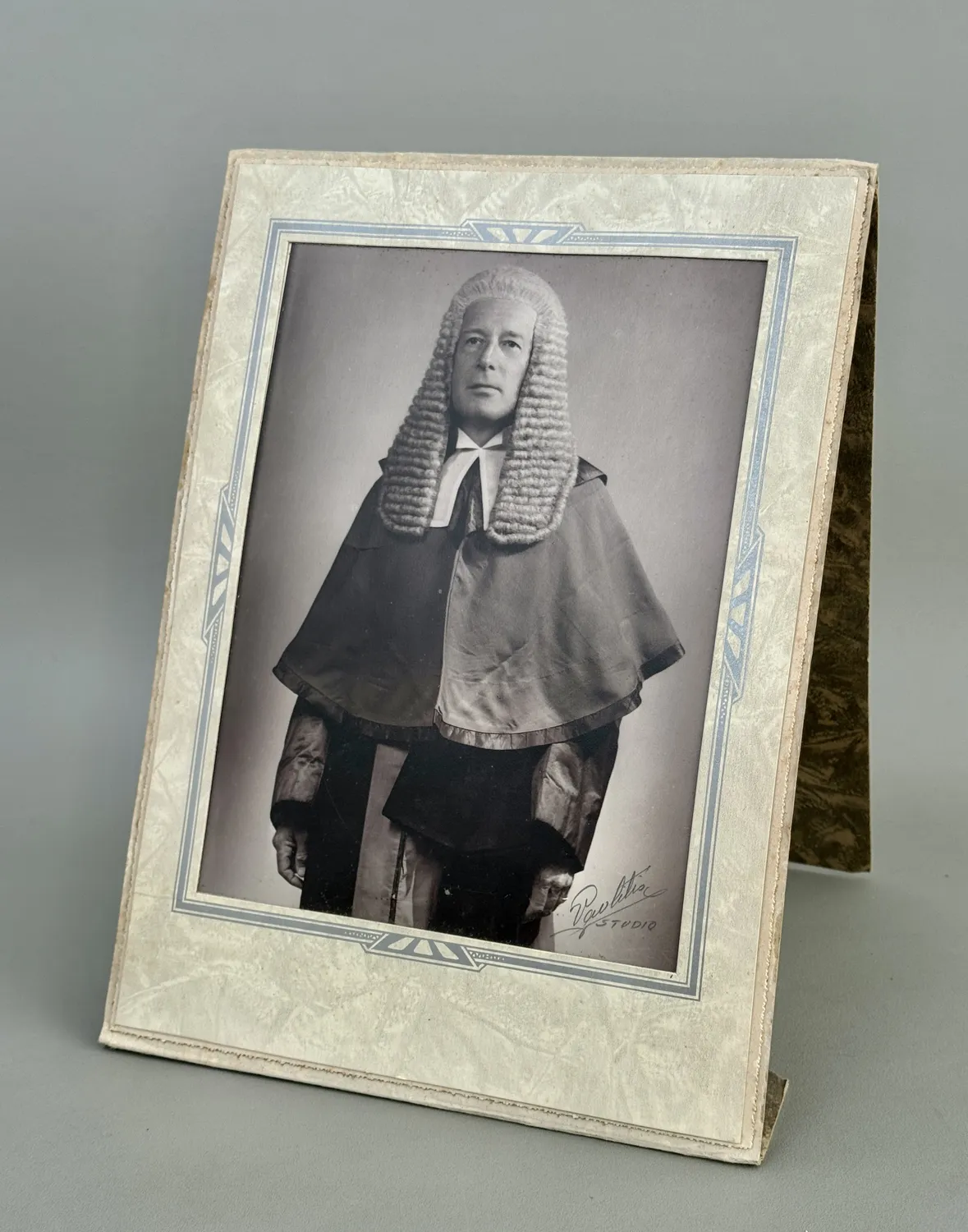
At close to six thousand years old, these fragments are the oldest objects in the Drakopoulos collection of Cypriot antiquities, and the oldest things the man who clipped them down ever owned. He held a pen for a living. He was a judge of the Supreme Court of Cyprus, and the path that carried five Stone Age potsherds into a Dutch confectioner's crate runs through the whole arc of British colonial Cyprus, from a Downing Street letter in 1935 to a courtroom abandoned under gunfire on Christmas Eve. It begins with the judge.
A barrister bound for the islands
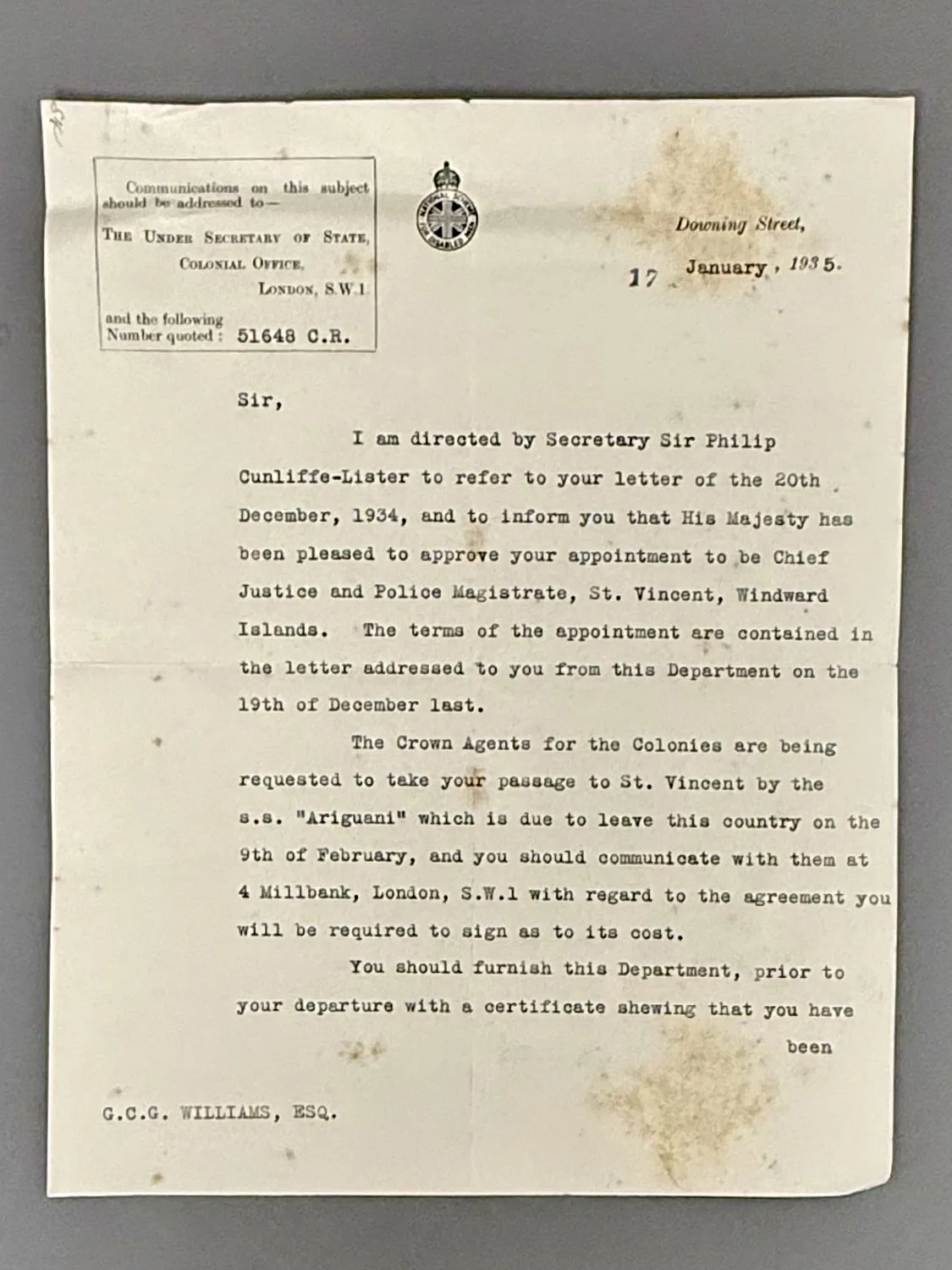
On 17 January 1935, the Colonial Office wrote to a forty-one-year-old barrister to tell him his life was about to move four thousand miles. The letter, on Downing Street paper and signed for the Secretary of State, Sir Philip Cunliffe-Lister, informed "G. C. G. Williams, Esq." that His Majesty had been pleased to approve his appointment as Chief Justice and Police Magistrate of St Vincent, in the Windward Islands. The Crown Agents had booked his passage on the s.s. Ariguani, sailing on 9 February. He was to furnish a medical certificate before he left.
George Cyril Griffith Williams had been born in 1893, schooled at Bromsgrove and at Emmanuel College, Cambridge, and called to the Bar at the Middle Temple. The first war took him to the Royal Field Artillery for its duration, which placed him, at twenty-one, among the gunners of the Western Front [3]. The colonial legal service was the natural home for a barrister of modest private means and steady temperament, and it moved its men around the map. St Vincent was his first judicial command, a small Caribbean island where the chief justice doubled as a police magistrate and the broadsheets reported rioting in the streets of Kingstown alongside the proceedings of the criminal court.
He did not stay long, because in the spring of 1938 a vacancy opened on a far larger and older bench, and on 25 April the King directed his appointment as a Puisne Judge of the Supreme Court of the Colony of Cyprus [2]. A puisne judge is simply a junior judge of a superior court, one of the several who sit below the Chief Justice, and the post carried a salary, a residence, and a place in the thin upper crust of British officials who governed the island. He sailed for the eastern Mediterranean that year and would spend the next quarter of a century there. Everything that gives this story its shape, the digging, the collecting, the chocolate box, and the escape, belongs to the Cyprus years.
The island he arrived on
The Cyprus of 1938 had been British for sixty years and a Crown Colony for thirteen. Britain had taken over its administration from the Ottoman Empire in 1878, annexed it outright in 1914 when the Ottomans entered the war on the other side, and formally constituted it a colony in 1925. By the time Griffith-Williams reached Nicosia, the apparatus of a small colony was fully in place: a Governor, a Government House, a colonial secretariat, district commissioners, and a Supreme Court whose judges rode circuit between the towns. The British community was a few thousand strong, threaded through the administration, the police, the army garrison and the church, and it kept the habits of its class. Men of leisure shot, rode, dined, and, more often than you might expect, took up the antiquities of the island as a hobby.
There was good reason for the hobby. Cyprus in the 1930s was one of the most actively excavated places in the Mediterranean, and the institutions that governed its past had just been rebuilt from the ground up. The Department of Antiquities was founded on the first day of 1935, taking over from the older Museum Committee, and from the summer of 1936 it was run by A. H. S. Megaw, a Cambridge-trained Byzantinist who would direct it for twenty-four years, through to independence. Beside him sat Porphyrios Dikaios, curator of the Cyprus Museum and the leading Cypriot prehistorian of his generation, a man then in the middle of the most important fieldwork on the island. The Swedish Cyprus Expedition had spent four seasons, from 1927 to 1931, digging the great sites of Enkomi, Lapithos, Kition and Marion, and had carried home roughly two-thirds of some eighteen thousand objects under an agreement signed off by the Governor himself [6]. The deep past of Cyprus was being assembled, classified and published in real time, and a judge with curiosity and a few free afternoons could stand very close to the work.
The island learns it has a Stone Age
The most consequential of those afternoons, for our purposes, were the ones nobody recorded. To understand why the sherds in the chocolate box matter, and why a collector of the 1940s would have wanted them, you have to know that when Griffith-Williams arrived the Cypriot Stone Age had only just been discovered. It was, in the most literal sense, news.
For most of the colonial period the known history of Cyprus began with the Bronze Age. The painted pots and copper of the second millennium BC were familiar from a century of digging, but of the millennia before metal almost nothing was understood. That changed in a single decade, and it changed largely through one man. In February 1934 Dikaios, working from a simple theory that the earliest sites would cluster near perennial springs, set out for the village of Sotira and on the same day's ride identified two prehistoric settlements that would rewrite the island's beginnings: Khirokitia and Sotira itself [9]. He dug the Chalcolithic site of Erimi from 1933 to 1935, and then turned to Khirokitia, which he excavated for the Department across 1936 to 1939 and again in 1946.
What came out of the ground at Khirokitia was a world no one had known was there: a dense village of round stone houses on a hill above the Maroni river, its people farming, hunting fallow deer, and burying their dead beneath the floors of their homes with heavy stones laid on the chest. They had cattle and sheep and dogs, they carved fine bowls and basins from grey-green andesite, and for the whole long life of their village, across something close to two thousand years, they made no pottery at all. This was a Neolithic island that had chosen stone over clay, and it was being revealed for the first time in the very years that Griffith-Williams was sitting in court a day's drive away. Dikaios framed his life's work as a trilogy of the three "pre-copper" cultures of Cyprus, Khirokitia, Sotira and Erimi [9], and in doing so he gave the island, and the world, its prehistory. The potsherds in the chocolate box are specimens of exactly that enterprise. They belong to the second of his three cultures, the one that finally took up the pot.
What the comb did
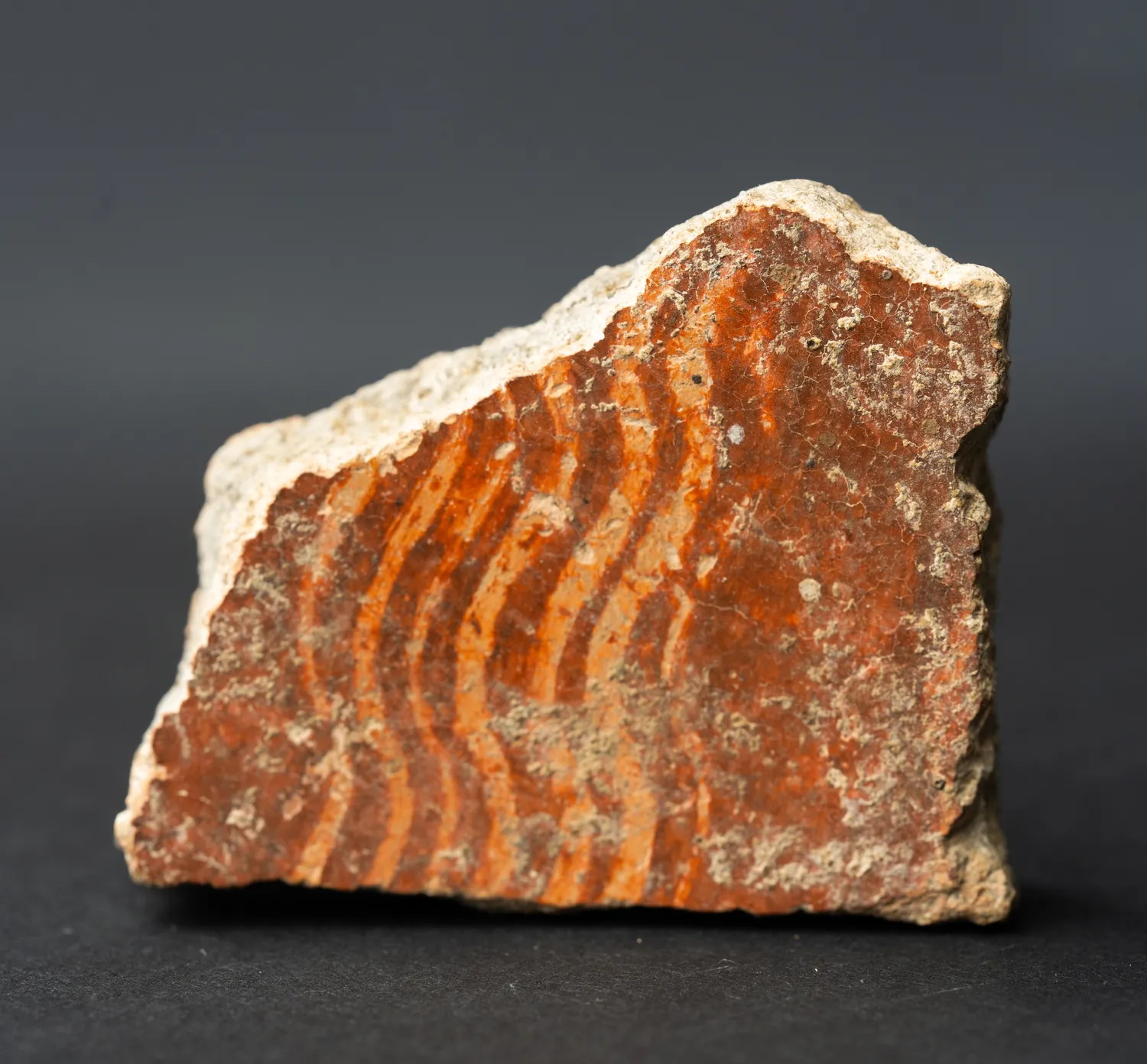
Pick up one of the five sherds and turn its decorated face to the light. The surface carries a run of wavy bands, deep orange-red alternating with the pale buff of the clay body, sweeping in parallel across the fragment like the grain in a length of watered silk. The pattern was not painted on. The potter first coated the whole vessel in a thick red slip, and then, while that slip was still wet, dragged a toothed instrument across it. The teeth scored away the slip in narrow channels and exposed the lighter clay underneath, so that every stroke of the comb laid down several bands at once. Dikaios, who defined the technique from his Cypriot excavations, described the tool plainly: a comb of "shell, bone, or reed," whose notches "exposed the underlying surface while the slip was still wet" [10]. This is combed ware, and it is the signature of the Cypriot Ceramic Neolithic, the period when the island finally began to make pottery in quantity.
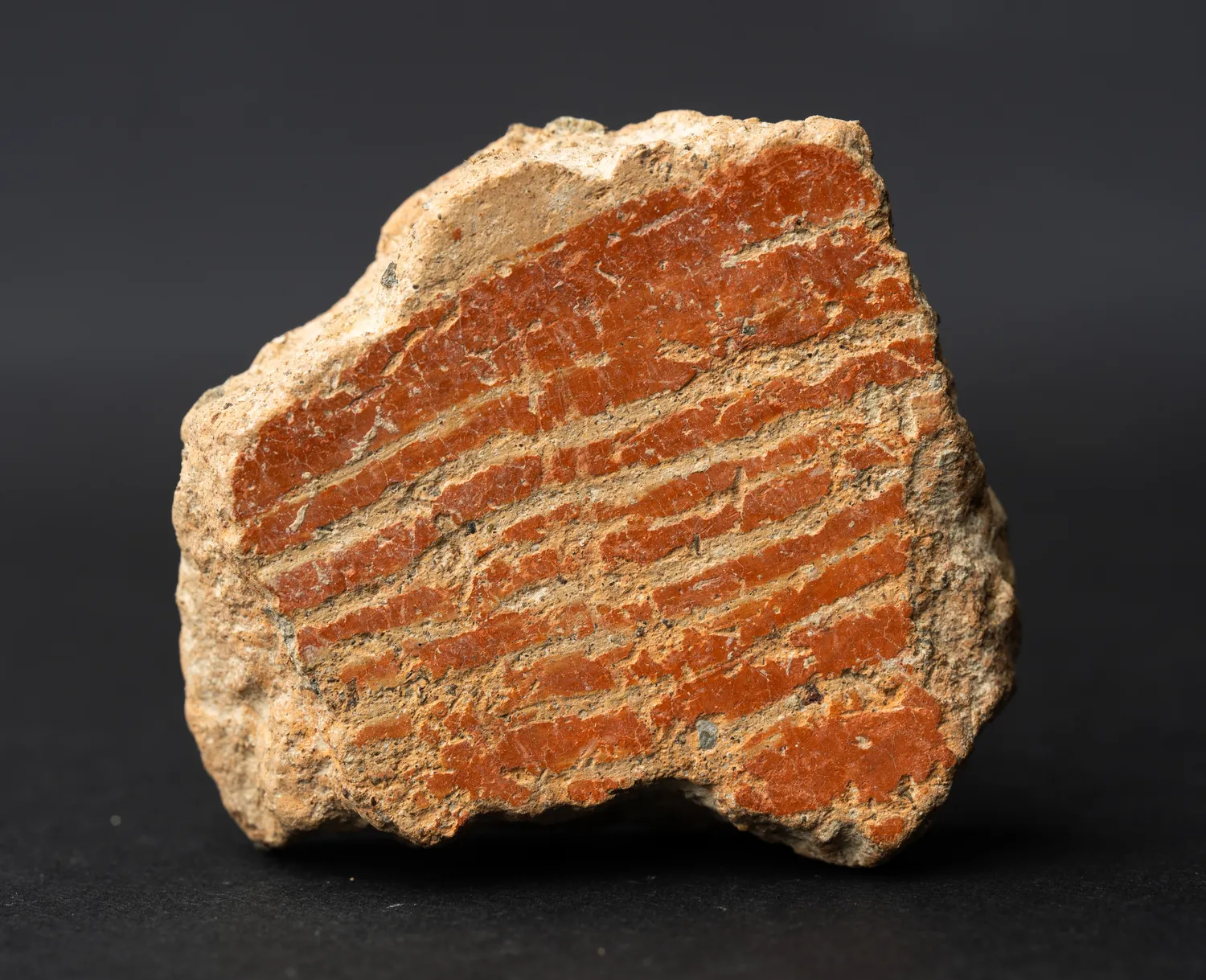
The technique sounds mechanical and turns out to be expressive. A potter could hold the comb steady to lay straight bands, then turn the wrist to send them into long waves, and the finest pieces were combed with tools of eight, eleven, fifteen, even eighteen teeth at once, producing a flawless ripple across the whole body of a bowl [9, 10]. Dikaios rated these multiple wavy bands the high point of the craft. Only two shapes ever carry the decoration, the open bowl and the small handleless jug, and on a bowl the comber would often work the inside and the outside in different schemes, so a fragment scored with waves on both faces almost always comes from a Neolithic bowl. The sherds in the box are body fragments of just such vessels. Their thick walls show, on the broken edges, the dark grey core sandwiched between two reddish layers that is the fingerprint of low, uneven, open-air firing, and the red slip is soft enough to take a fingernail. This is the fabric, the technique, and the period named on the old paper label, identified by a hand that knew exactly what it was holding.
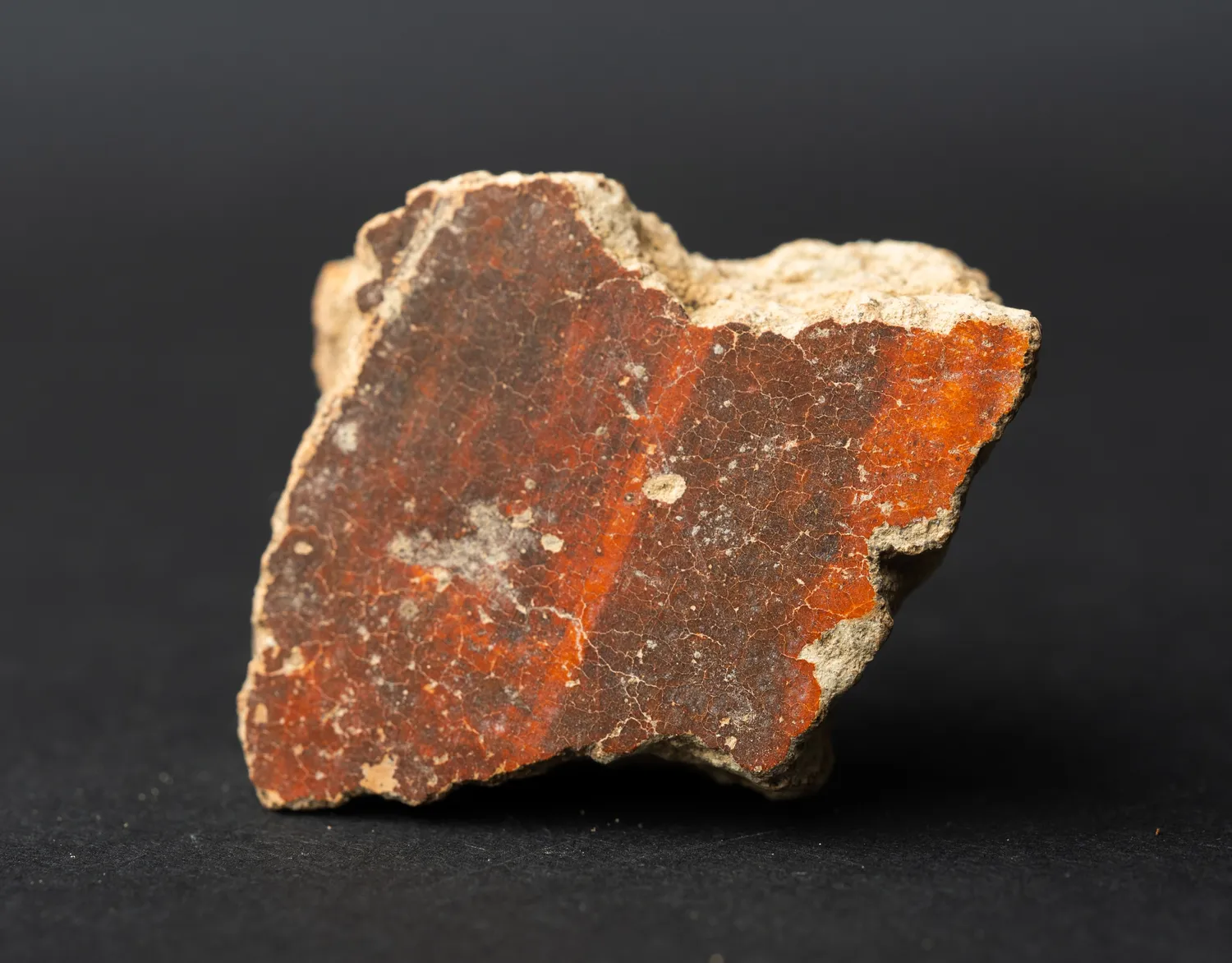
What that hand could not have known, in the 1940s or 50s, is just how old the pots really are. The label reads "c. 3500 BC," which was the honest figure of its day, taken straight from Dikaios's first estimates for the Sotira culture. Radiocarbon dating, when it arrived around 1960, pushed the whole period back by roughly a thousand years, into the later fifth and earlier fourth millennium, somewhere around 4500 to 3900 BC [9, 12]. The sherds are older than the man who labelled them believed.
The first potters of Cyprus
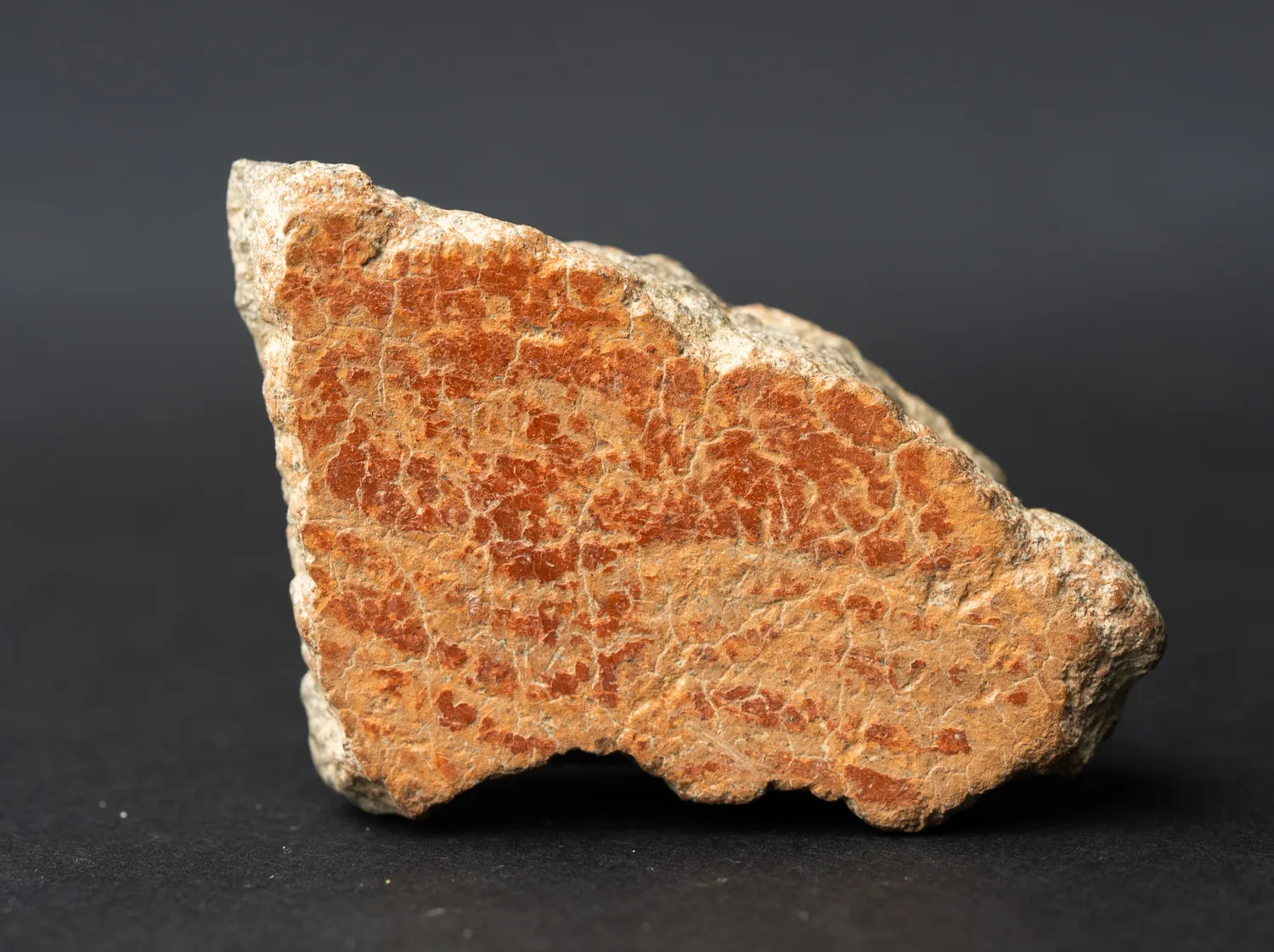
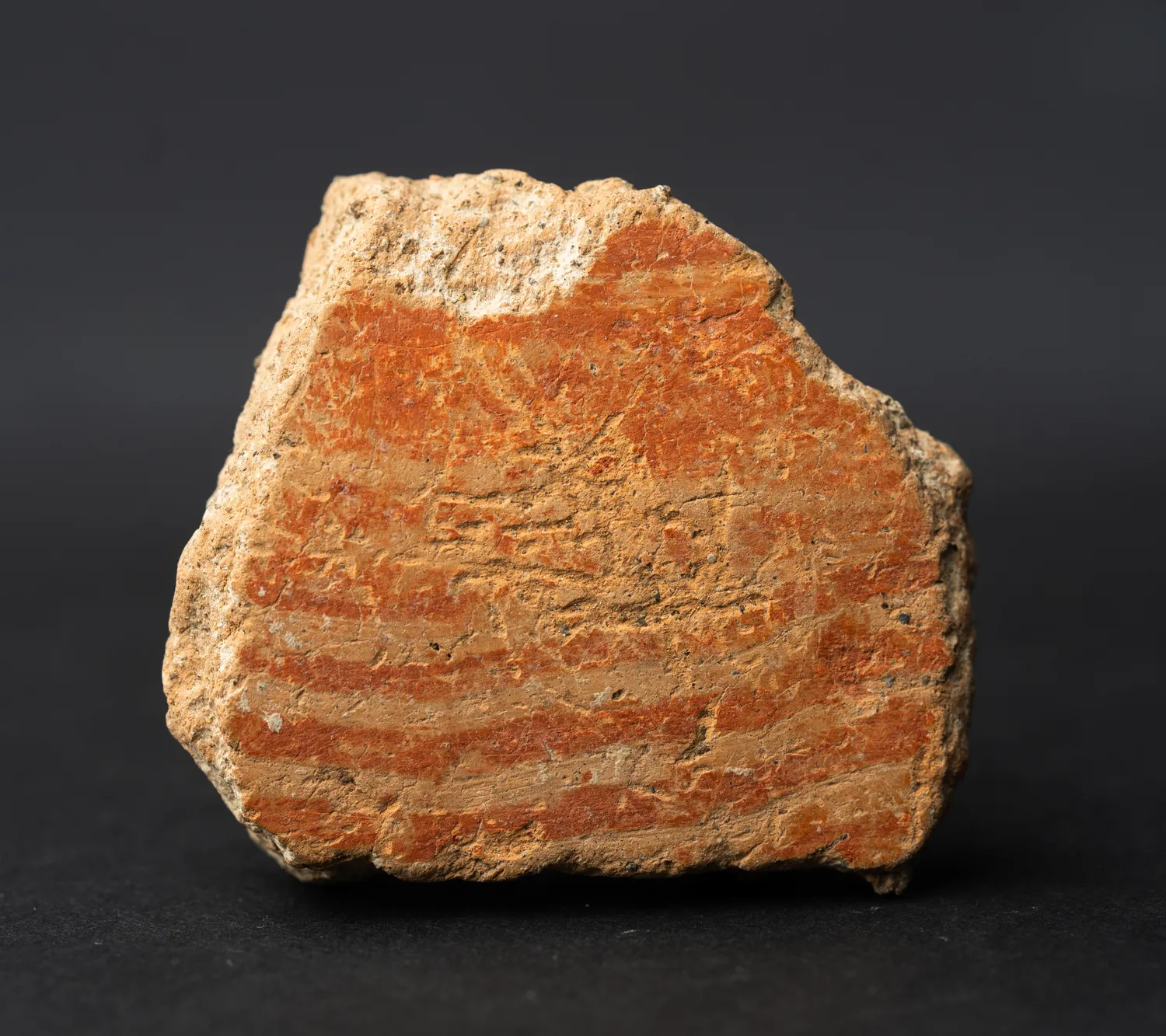
The culture that made them is named after Dikaios's hill at Sotira-Teppes, the type-site of the Ceramic Neolithic, a small fortified-looking settlement of free-standing houses with platform hearths, an open cemetery where the dead were laid in contracted positions under stone slabs without grave goods, and an economy of grain, goats, and herded fallow deer [9, 13]. Its people were the first Cypriots to commit themselves to pottery after the long aceramic centuries, and combed ware was their masterstroke. Geography split the island's potters into two camps that scholars still use to sort the material: the south coast, around Sotira and Khirokitia and the Vasilikos valley, favoured the combed technique, while the north coast preferred to paint its pots red on a white ground [11, 12]. The waves on these sherds place them squarely in the southern, combed tradition, which fits a collection put together on an island whose colonial roads ran along the south.
Combing tells the time as well as the place. The Chalcolithic culture that followed, Dikaios's Erimi, abandoned the comb and turned wholesale to brush-painted decoration, so the presence of combing on a fragment is among the cleanest chronological signals in all of Cypriot prehistory. Edgar Peltenburg's rule for a stray sherd is exactly this: combing signals the Neolithic rather than the Chalcolithic [12]. Hector Catling put it in the same terms, calling combed ware the diagnostic pottery of "Neolithic II," the ceramic phase [11]. The label on the chocolate box, with its "painted and combed ware," named the right family on the first try.
The puzzle at the aceramic site
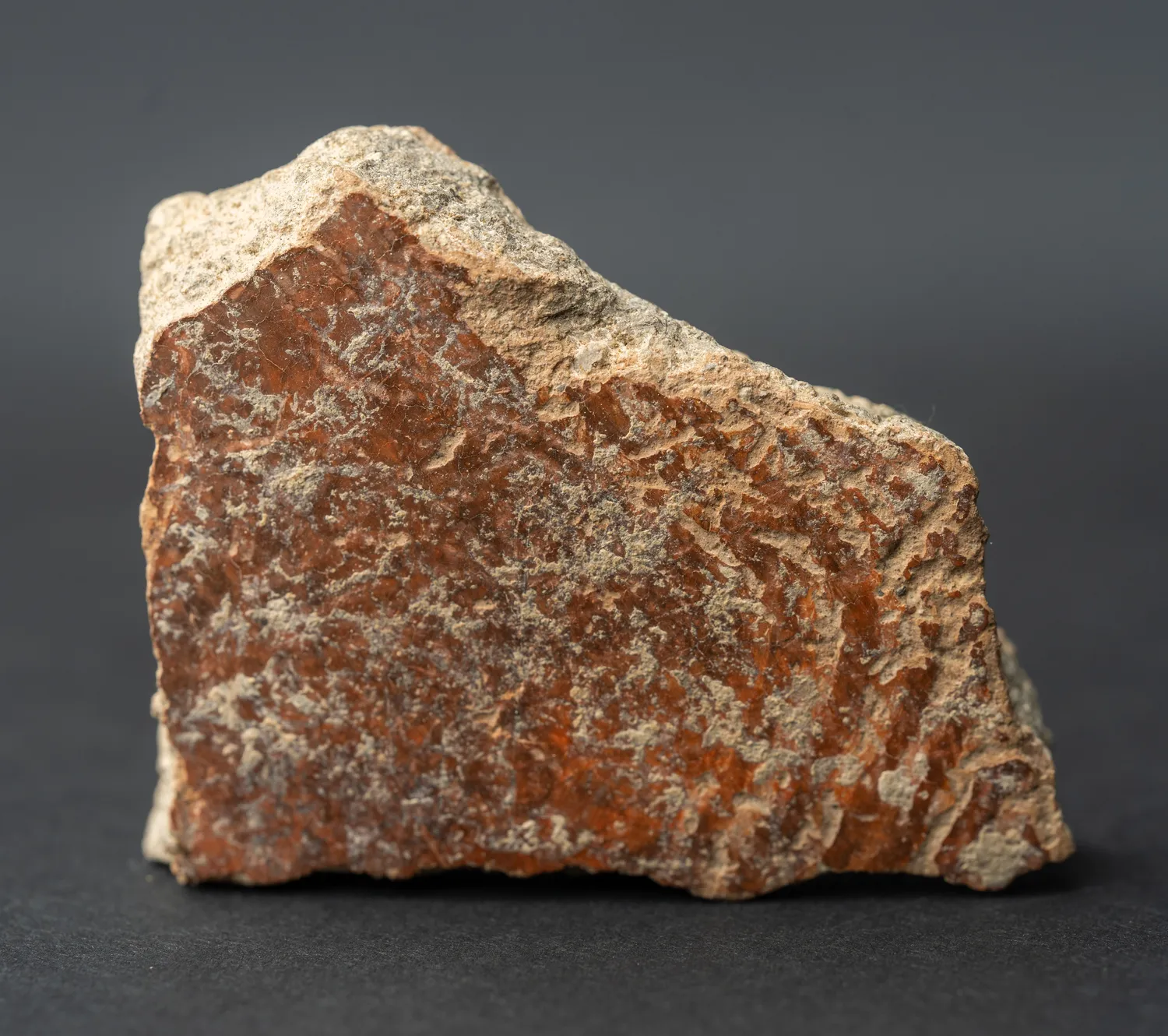
There is a wrinkle worth knowing, because it touches the most famous site on the list. Khirokitia is the textbook aceramic village, the place that proves Cyprus did without pots for two thousand years, and yet Dikaios's report on it illustrates real combed pottery on a run of plates near the back of the volume. The contradiction is only apparent. When the radiocarbon dates came in, Dikaios accepted that the pottery did not belong to the aceramic village at all. It came from a later people who had camped among the ruins long after the original settlement emptied, and he described them, with a candour that did him credit, as "squatters who established themselves among the ruins" [9]. Catling later measured the interval at some 1,500 years between the abandonment of the stone-bowl village and its reoccupation by potters [11]. A combed sherd attributed to Khirokitia, then, belongs to the same Ceramic Neolithic horizon as Sotira, set down on the dead hill of an older world. Whichever southern site these five fragments came from, they belong to those first Cypriot potters.
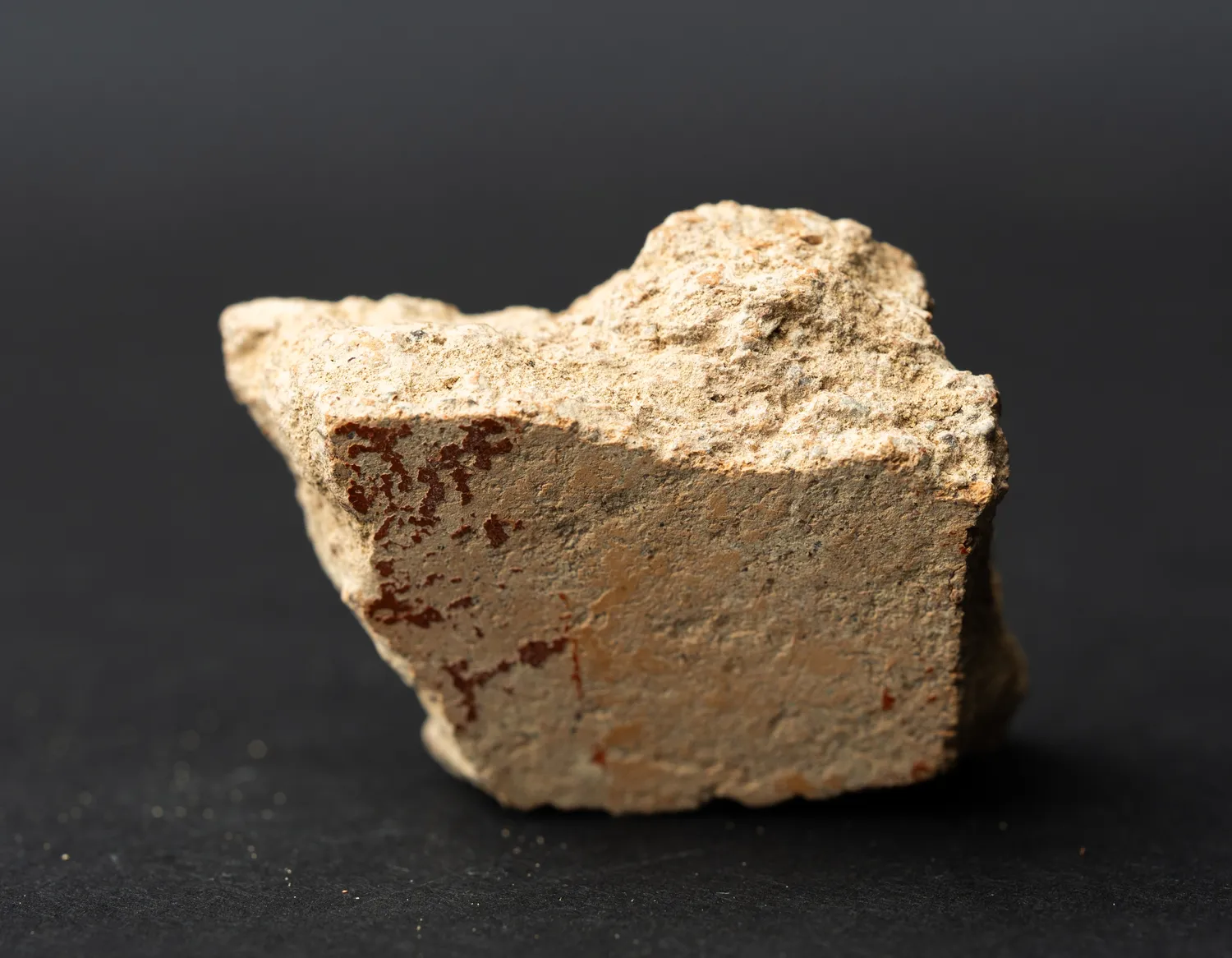
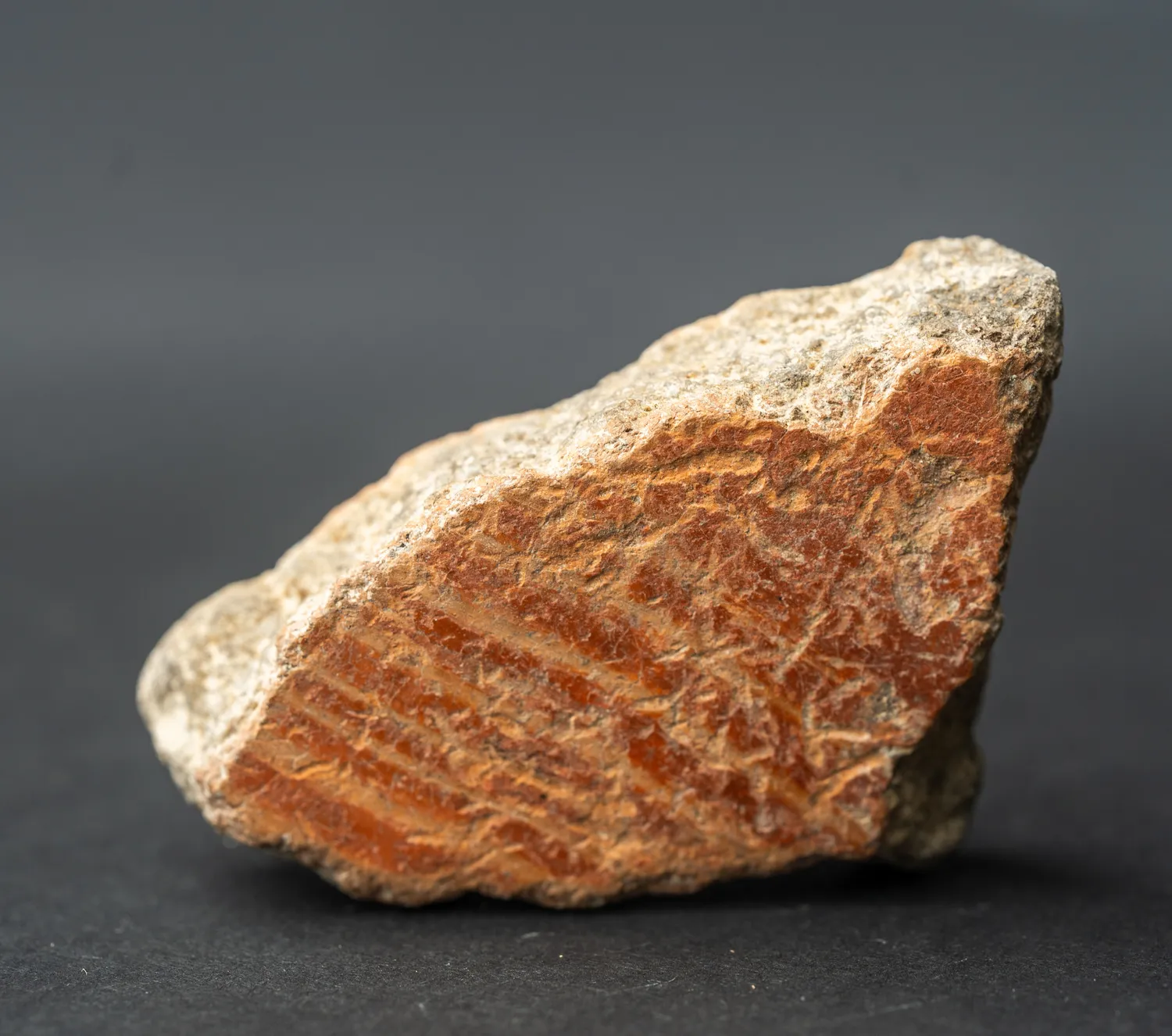
How sherds like these came into private hands in the 1940s and 50s is a question with a hundred ordinary answers, and the law of the day made all the likeliest ones legal. A resident could pick decorated body-sherds off the eroding surface of a known settlement, take them as study pieces from an excavator dividing his finds, buy them from a licensed dealer, or carry away a duplicate sold across the counter of the Cyprus Museum itself. None of these required anything more than the kind of standing a Supreme Court judge had in abundance. He went further than most collectors of his kind, because in one season, with the Department's blessing, he took on the role of excavator himself.
The judge who dug
In 1953 the Department of Antiquities had a problem common to the period: a rich Bronze Age cemetery at Dhenia, in the open country between Dhenia and Akaki north-west of Nicosia, was being torn apart by looters faster than the Department could respond. Short of staff, it did what colonial departments often did and deputised a trusted amateur to clear two of the plundered tombs under official sponsorship. The amateur it chose was Griffith-Williams. The annual review of Cypriot archaeology records the fact without fuss: "with the sponsorship of the Department of Antiquities and the assistance of Mr. G. R. H. Wright... Mr. Justice Griffith-Williams undertook the excavation of two of the large looted tombs in the north part of the cemetery. These proved to be Middle Cypriot, and yielded large quantities of fragmentary but restorable white painted pottery" [1].
It is a striking image, a sitting judge of the Supreme Court down in a robbed tomb with a trowel, and the company he kept underlines how seriously he was taken. His assistant, George "Mick" Wright, was a young architect attached to the British Institute at Ankara who went on to publish the Dhenia tombs and to spend a long career drawing buildings across the Near East. The tombs the two of them cleared were of the Middle Bronze Age, the early second millennium BC, two thousand years younger than the sherds in the chocolate box, and the pottery that came out of them was the painted ware of that period. A share of the Dhenia material left the island and entered the Ashmolean Museum in Oxford, accessioned under 1953 numbers, where it was catalogued decades later by David Frankel [5]. This was not theft. It was partage, the formal division of excavated finds between the colony and the excavator that the law expressly allowed, and it is the same machinery, in a grander form, that had sent two-thirds of the Swedish expedition's haul to Stockholm.
The dig matters to the story for what it shows about the man. He handled excavated prehistoric pottery with his own hands, he worked alongside the Department and the professional excavators of the day, and he saw at first hand how antiquities moved, legally, from Cypriot ground into a foreign museum. A man with that experience knew exactly what he had when he clipped five combed sherds into a chocolate box and labelled them by period and date.
Dealers, duplicates, and a licensed trade
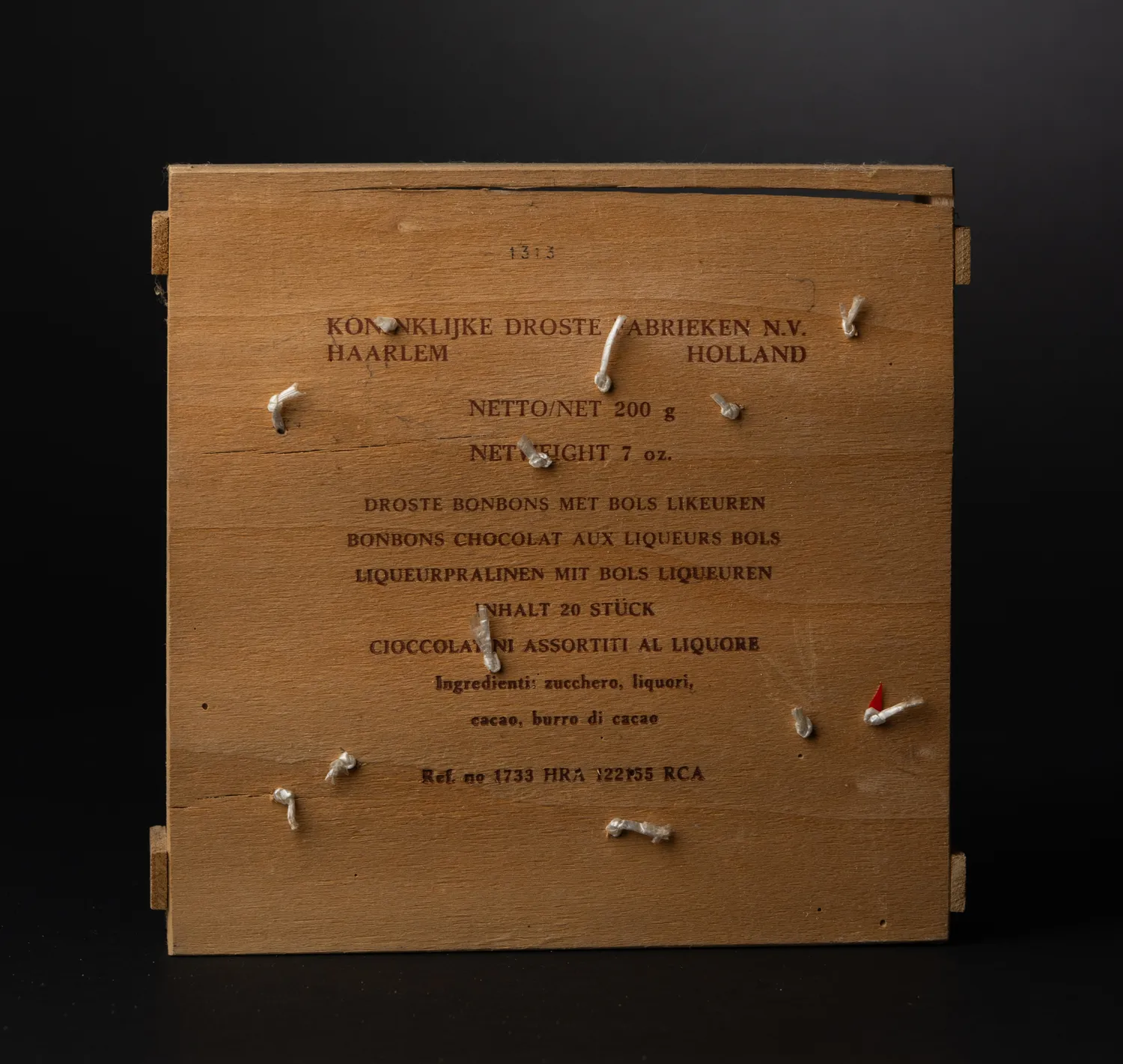
The legal world he collected in is worth setting out, because it surprises modern readers who assume that taking antiquities out of Cyprus was always a crime. For almost the whole of his time on the island the law was permissive by design. Under the Antiquities Law of 1935, the statute in force across his entire Cyprus career, export was never forbidden outright. It was licensed. An object could leave once the Director of Antiquities granted a licence, and the Director's countervailing power reached only to objects he judged worth keeping "in the public interest," which in practice meant the rare and the fine [4]. Common material passed freely.
The channels were several and all above board. The Cyprus Museum ran a saleroom of its own duplicates; in the inter-war years the inspector Rupert Gunnis famously organised "a team of willing ladies, drawn up in the Museum with boxes, paper, string and small change," to sell surplus pieces to cruise passengers as they came ashore [7]. Megaw licensed a small number of approved dealers, three of them, one being Petros Kolokassides of Nicosia, and deliberately steered the collector trade through them, checking their stock and approving items for sale because he thought it "in the interests of the Department to stimulate the trade in antiquities through the authorised channels" [13]. A dealer such as George Palma of Famagusta filed monthly returns of what he had bought and sold and submitted consignments for export licences that were, on the record, routinely approved [8]. The licence itself was a physical thing, a lead tag bearing the Cyprus Museum's stamp, wired to the object, with a typed permit alongside.
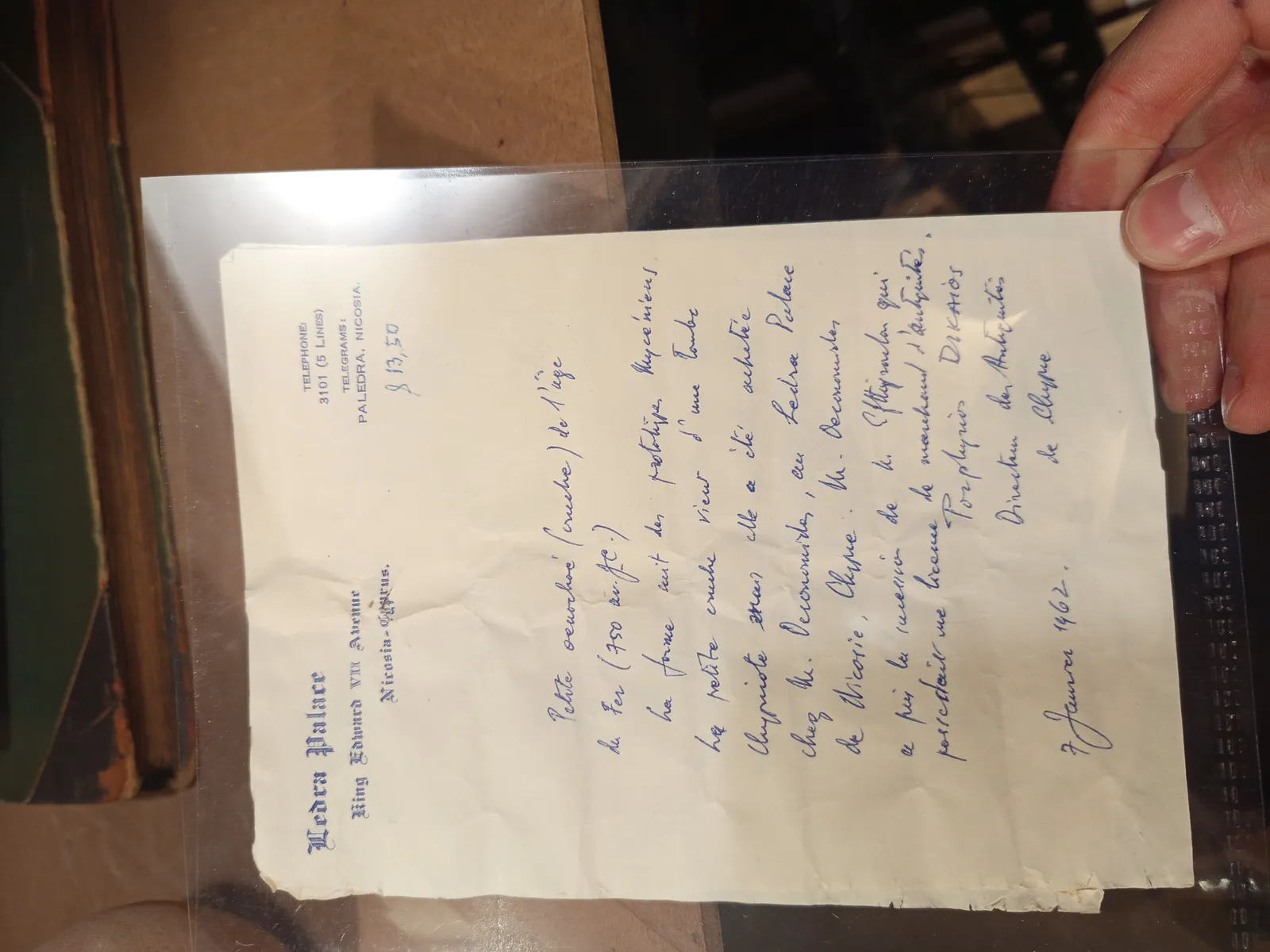
At the top of this machinery sat the Director of Antiquities, whose written licence the law required before anything could leave the island [4]. How readily that office did business with private collectors is caught in a single surviving document. It is a handwritten note, dated 7 January 1962, on the headed paper of the Ledra Palace hotel in Nicosia, and in a quick French hand it authenticates and prices a Cypriot antiquity: a small Iron Age jug, an oenochoe of about 750 BC whose form, the writer observes, follows Mycenaean prototypes, from a tomb on the island, bought from a dealer, a Mr Oeconomides, who had taken over the business of a man once licensed to trade in antiquities. It sets the value at thirteen dollars and fifty cents, reckoned in dollars rather than the local pound, the currency of a buyer looking overseas, and it is signed by the Director himself, Porphyrios Dikaios.
This was the same Dikaios whose theory about springs had led him to Khirokitia and Sotira in 1934, who had spent the following decade pulling the Cypriot Neolithic out of the ground, and who had given combed ware its name. By 1962, after independence, he had risen from curator of the museum to the first Cypriot directorship of the Department. The note names no judge and settles nothing about these particular sherds. What it shows is the world they came out of: the most senior antiquities official on the island, the very man who dug the combed ware and defined it, would sit in a hotel lobby to vouch for a stray tomb-jug and fix its price for the trade. Combed body-sherds like the five in the box were exactly the sort of study material an excavator could pass to an interested collector, and a collector with a judge's standing moved in those rooms. None of it called for breaking a rule. A department whose own director did business this way wanted the trade to run, and to run through its own hands.
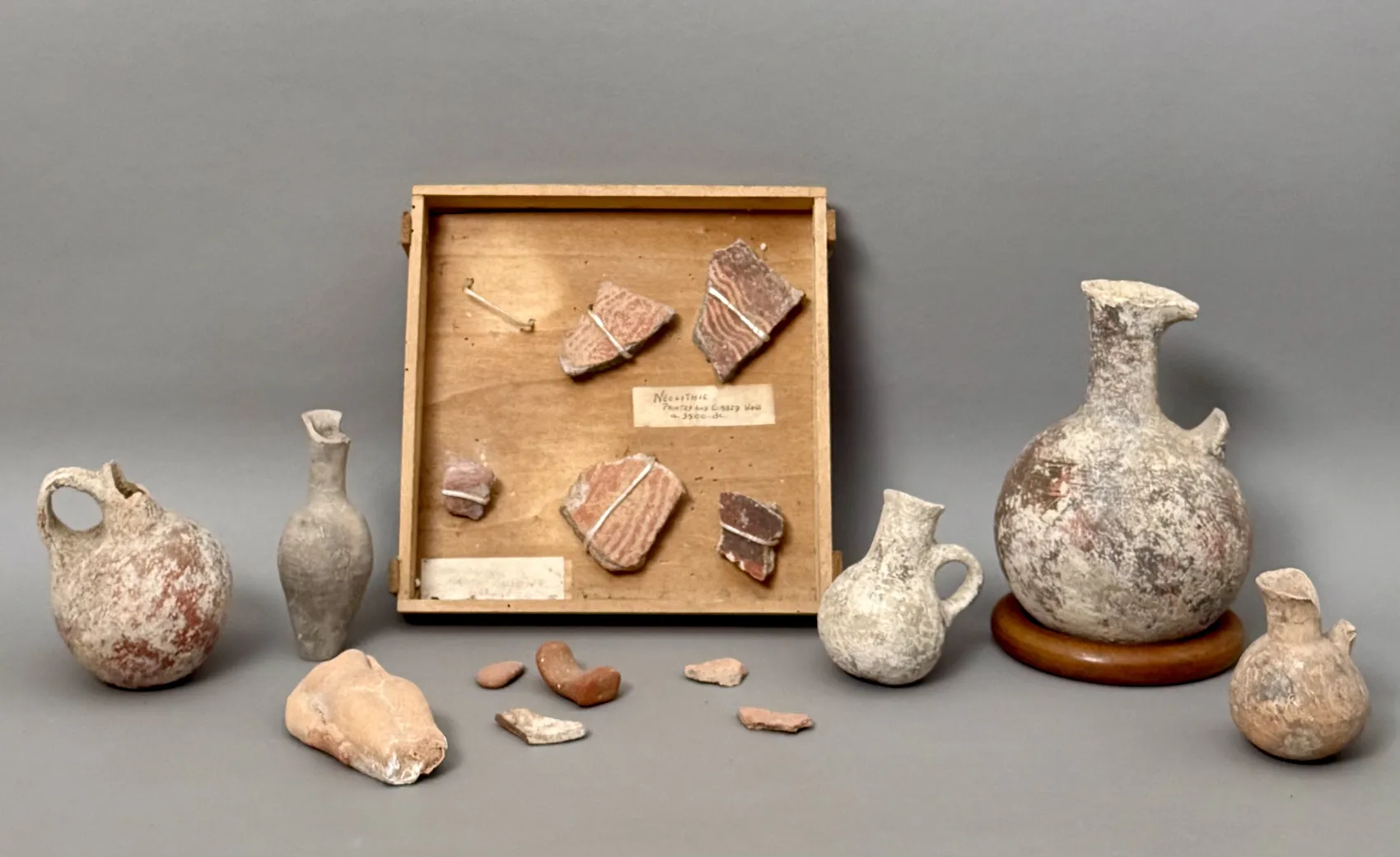
Laid out together, the Griffith-Williams antiquities make a modest group. Round-bodied Bronze Age jugs and flasks, small juglets, a spouted vessel on a turned wooden stand, terracotta fragments: most are common shapes, several are chipped or broken, the kind of inexpensive material that filled a colonial sideboard. This was no connoisseur's cabinet. In the 1930s and 40s a buyer with money and the Director's goodwill could put together something remarkable on Cyprus, with museum-grade pieces passing lawfully into private hands, and the judge's antiquities are quiet by that measure. The standout sits among them in its wooden tray. The five combed sherds the family labelled "c. 3500 BC" are older than everything else in the collection by two or three thousand years, the floor of the whole assemblage and the oldest objects a judge of Cyprus ever carried out of it.
EOKA and the end of the colony
The world that made all this possible was already ending. Through the early 1950s the demand for enosis, union with Greece, hardened among Greek Cypriots into armed insurrection, and in 1955 the guerrilla campaign of EOKA opened against the British administration. Griffith-Williams was by then a senior figure on the bench, sitting under Chief Justice Sir Eric Hallinan alongside the Turkish-Cypriot judge Mehmed Zekia, and the violence reached the courts. On 24 June 1955 The Times reported a demonstration outside a courthouse in Larnaca, dispersed with tear gas, that "began when Mr. Justice Griffith Williams was reading the judgment" [14]. It is a small, exact picture of the man at his work in a collapsing colony: a judge delivering a verdict while the crowd outside is gassed off the steps.
The Emergency ran until 1959 and ended not in union with Greece but in an awkward compromise. Cyprus became an independent republic in 1960, with a constitution that shared power between its Greek and Turkish communities and a treaty that let Britain keep two patches of the island as Sovereign Base Areas, at Akrotiri and Dhekelia, under its own law. Griffith-Williams did not leave with the flag. He stayed on, serving as a judge of the Sovereign Base Areas, one of the last British judicial officers on an island his country had governed for eighty years. He was by then past sixty-five, a man who had spent his entire judicial life in the colonies, from a Caribbean island to a Mediterranean one, watching both move toward the door marked exit.
Bloody Christmas
The republic's power-sharing constitution lasted barely three years before it broke. In December 1963 the long mistrust between the Greek and Turkish communities ignited into open fighting in Nicosia, in the days that Turkish Cypriots remember as Bloody Christmas and that historians treat as the start of the Cyprus conflict proper. The violence reached into the institutions of the state, and it reached into the Supreme Court itself.
A print of Queen Victoria had hung above the bench of the Supreme Court in Nicosia for longer than anyone in the room could remember, the old Queen presiding over the island's law decades after her death. Then the city came apart. Fighting broke out across Nicosia in the days around Christmas, gunfire working its way street by street, and it reached the courts. With armed men closing on the building, Griffith-Williams lifted the portrait down from the wall, tucked it under his arm, and walked out of the courtroom beside Rauf Denktaş, the Turkish-Cypriot leader who would one day become the first president of the Turkish Republic of Northern Cyprus. A man who had kept the island's law for a quarter of a century left it in a hurry, in the middle of the fighting, carrying the things he had decided were his to keep.
The oldest thing he carried
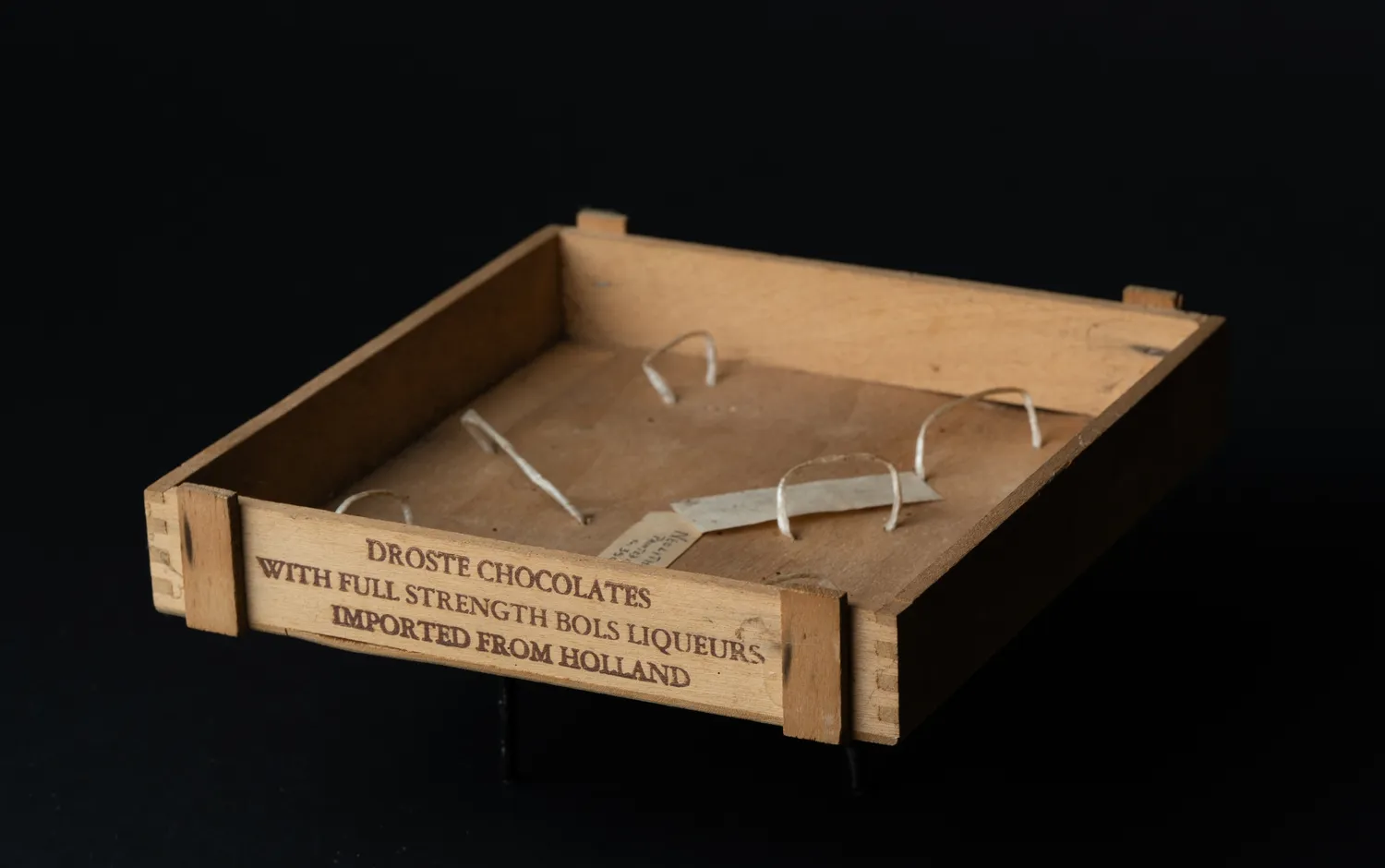
He took a portrait of a dead queen off a courtroom wall. He had already, at some point in those Cyprus years, set five potsherds into a Dutch chocolate box, wired them down, and written their period and their date on a slip of paper in a steady hand. The queen had been dead sixty years. The pots were older than any throne on earth, scored with a comb on the south coast of an island while its people were still learning what clay could do.
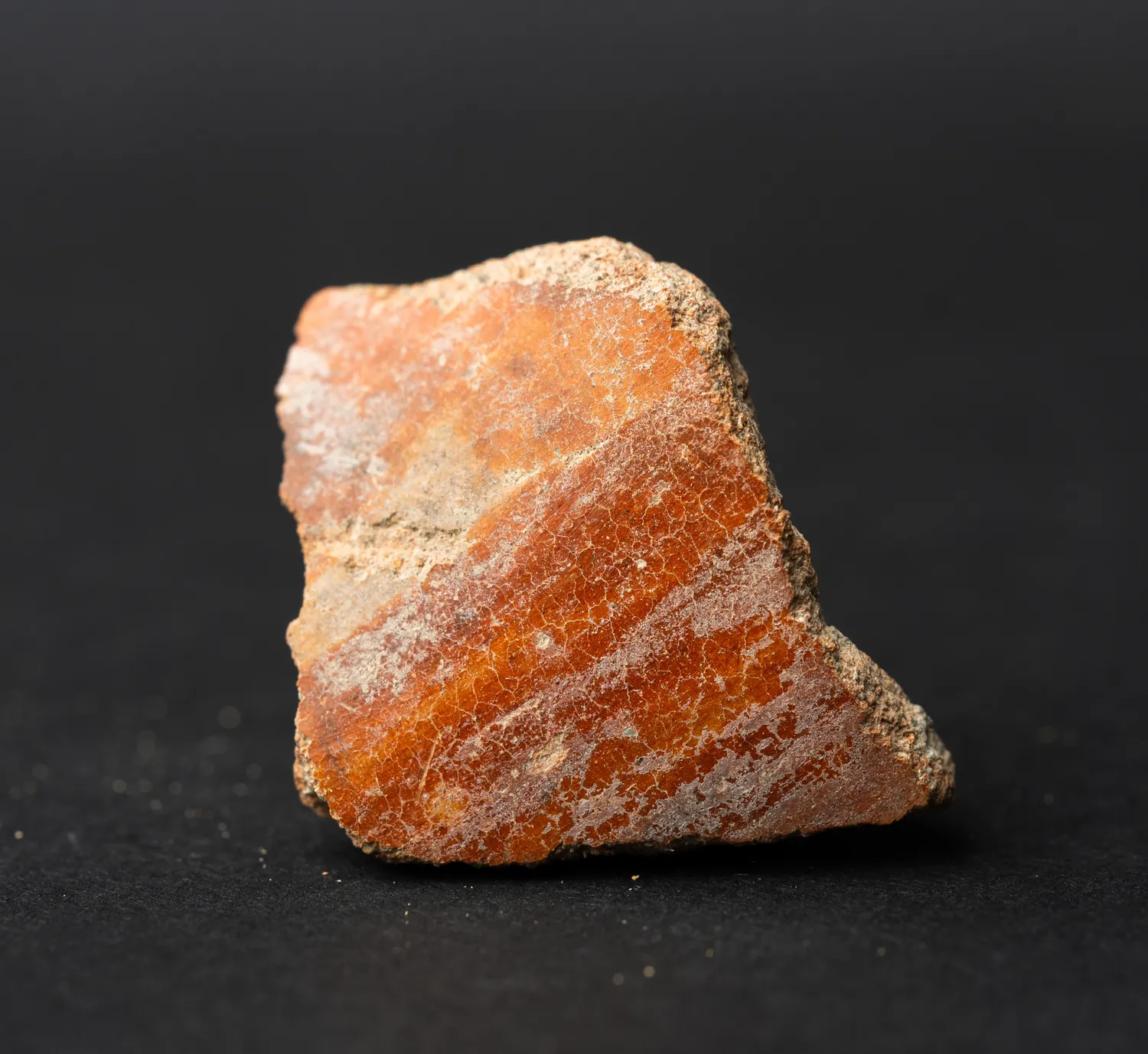
The label undersells them by a thousand years, which is the most honest thing about it, since the man who wrote "c. 3500 BC" was using the best figure the science of his day could give and could not have known that radiocarbon would push the date back into the fifth millennium. Five sherds now live in the Drakopoulos collection of Cypriot antiquities, having been removed from their clips for proper conservation and care. The clips now hold nothing, bent open around the space where their fragments used to be. One can only wonder what happened to the missing fragment, and hope that it is in good hands.
References
- 1.Anon. [Department of Antiquities], "Archaeology in Cyprus, 1953," Journal of Hellenic Studies 74 (1954), p. 172.
- 2.The London Gazette, Issue 34509, 10 May 1938, p. 3018 (appointment of George Cyril Griffith Williams as a Puisne Judge of the Supreme Court of the Colony of Cyprus).
- 3.The Colonial Office List (annual eds. 1936–1955), service record of G. C. Griffith Williams: b. 1893, Bromsgrove School, Emmanuel College Cambridge, Middle Temple, military service 1914–19, Chief Justice St Vincent 1935, Puisne Judge Cyprus from 1938.
- 4.The Antiquities Law, 1935 (No. 41 of 1935, Cyprus), assented 30 December 1935, ss. 5, 16, 25, 26, 27.
- 5.D. Frankel, Corpus of Cypriote Antiquities 7: Early and Middle Bronze Age Material in the Ashmolean Museum, Oxford (SIMA XX:7; Göteborg, 1983).
- 6.T. Kiely, "Britain and the Archaeology of Cyprus," Cahiers du Centre d'Études Chypriotes 42 (2012); Swedish Cyprus Expedition division of finds, p. 14.
- 7.D. Symons, "Rupert Gunnis (1899–1965)," Cahiers du Centre d'Études Chypriotes 7 (1987), pp. 33–42.
- 8.A. T. Reyes & J. Webb, "George Basil Palma, Chemist and Collector of Cypriote Antiquities in Famagusta," Cahiers du Centre d'Études Chypriotes 44 (2014), pp. 17, 31.
- 9.P. Dikaios, Sotira (Museum Monographs; University of Pennsylvania, Philadelphia, 1961), esp. pp. 17, 188–195, 223, 230.
- 10.P. Dikaios, Khirokitia: Final Report on the Excavation of a Neolithic Settlement in Cyprus (Oxford, 1953), pp. 292–298, 345.
- 11.H. W. Catling, "Cyprus in the Neolithic and Bronze Age Periods," Cambridge Ancient History fascicle, pp. 15, 21.
- 12.E. J. Peltenburg, "Cyprus During the Chalcolithic Period," in A. E. Killebrew & M. Steiner (eds.), The Oxford Handbook of the Archaeology of the Levant (2013), pp. 1–12.
- 13.A. Powell, Love's Obsession: The Lives and Archaeology of Jim and Eve Stewart (Wakefield Press, 2016), pp. 46–47 (Megaw's three licensed dealers; Petros Kolokassides).
- 14.The Times, 24 June 1955, Issue 53255, p. 20 ("Demonstration outside Cyprus court... began when Mr. Justice Griffith Williams was reading the judgment").