
Returning or Donating Cypriot Antiquities: How It Works
How heirs hand Cypriot antiquities back to Cyprus through the Department of Antiquities or an embassy, and what museums ask for before they accept a gift.

Alexis Drakopoulos
October 3, 2026·Guides · Collecting·14 min read


Share


Alexis Drakopoulos is a Greek Cypriot Machine Learning Engineer working in Financial Crimes. He is passionate about Archeology and making it accessible to everyone. About Me.
On 30 November 2024, at the Cypriot embassy in Vienna, a private citizen of Austria who had inherited a collection of antiquities handed 69 objects to Cyprus's Deputy Minister of Culture, Vasiliki Kassianidou. The group ran from the Bronze Age to the Ottoman period: pottery, fragments of stone and clay figurines, glass perfume bottles, a bone fork, a tobacco pipe. The heir had contacted the Cypriot authorities in Austria as soon as the inheritance arrived. The Department of Antiquities studied them, confirmed that they had left Cyprus without an export licence, and thanked the owner in its announcement. The heir's name was never published [6].
A return to Cyprus usually goes that way: a letter or phone call, some photographs, a handover at an embassy, and thanks. This guide sets out the steps, who to contact, what returning says about the owner, and the other options open to a family: a gift to a museum in Cyprus or abroad, a loan, or a university teaching collection.
How do I return an antiquity to Cyprus?
Contact the Department of Antiquities in Nicosia or the nearest Cyprus embassy or high commission, send photographs and what you know of the objects' history, and then hand them over in person when asked. There is no application form and no fee. Every reported private return since 2021 has followed roughly these steps:
- Leave the objects as they are. Do not clean, glue or repair them, and keep any group together. Labels, tissue paper, boxes and old envelopes are evidence: an inked number or a lead seal on a handle can date the moment a pot left the island.
- Photograph each piece from several sides with a ruler in the frame, and list them: what each is, its size, and anything written on it.
- Write down the family history. Who brought the objects home, when they lived in Cyprus, where they bought them, and what survives on paper: an export licence, a dealer's receipt, a letter, a photograph of the pieces on a mantelpiece in 1962. Our guide to export licences and labels shows what this paperwork looks like.
- Make the first contact with the Department or the embassy (details below). Say plainly that you wish to return the objects and attach the photographs.
- Hand them over at the embassy, high commission or Department when invited. Cyprus arranges the rest.
If you are unsure what you have, send us photos first; a short identification makes the first message to Cyprus much easier to write.
Should I contact the Department of Antiquities or the embassy?
Either works, and the embassy is usually easier for owners abroad. The Department of Antiquities has sat under the Deputy Ministry of Culture since 2023. Its offices are at 1 Mikis Theodorakis Street (formerly Museum Avenue), Nicosia, its email address is antiquitiesdept@da.culture.gov.cy and its website is culture.gov.cy/da, as of October 2026 [2]. Whichever door you knock on, the Department's archaeologists assess the objects.
In practice, every private return reported outside Cyprus has gone through a diplomatic mission: the embassies in Washington, Berlin and Vienna, and in Britain the cultural section of the Cyprus High Commission in London, which has received single pots and boxes of a hundred [3][5][6][7]. Some owners used an intermediary. Katherine Grayson Wilkins worked with the Cyprus American Archaeological Research Institute (CAARI) in Nicosia and its director, Lindy Crewe [3]; John Gomperts asked an academic who studies the illicit trade for advice [4].
We can play that role too. We can identify the objects, help you assemble their history and paperwork, and draft the first message to the Department or embassy with you. We do not act as anyone's legal representative, and we work openly with the Department of Antiquities, so we cannot offer to keep a return confidential from it.
Who has returned Cypriot antiquities, and what happened to them?
Most private returners have been heirs, several of them holding pieces that a diplomat or official in the family brought home from Cyprus in the 1960s. None was accused of anything. The reported cases:
| When | Where handed over | Who | What |
|---|---|---|---|
| November 2021 | Cyprus Embassy, Washington | Katherine Grayson Wilkins; the pieces had belonged to her father-in-law Fraser Wilkins, first US Ambassador to Cyprus (1960 to 1964) | 38 antiquities of prehistoric and historic periods [3] |
| November 2022 | Several countries | John Gomperts, Washington DC, who had inherited a collection from his grandmother | 19 antiquities sent to Italy, Greece, Cyprus and Pakistan, including two Cypriot vases of the 8th and 7th centuries BC [4] |
| July 2024 | Through the Cyprus Embassy, Berlin | The heir of a German who worked at the German Embassy in Nicosia in the 1960s | 37 objects: Bronze Age to Medieval pottery and Cypro-Classical to Late Roman lamps [5] |
| November 2024 | Cyprus Embassy, Vienna | An heir living in Austria, unnamed in the announcement | 69 objects, Bronze Age to Ottoman [6] |
| December 2024 | Cyprus High Commission, London | UK residents handing over voluntarily, alongside police seizures | More than 100 objects, from Neolithic stone tools to 19th-century icons [7] |
| June 2026 | Cyprus High Commission, London | A private owner and Halls Fine Art Auctioneers | A Base Ring juglet of about 1450 BC, after an online sale [10] |
Gomperts had been reading press reports on looted antiquities, worried that he might be in trouble with the authorities, and decided with his two siblings to give everything back. "It seemed like the right thing to do," he said: "we have these pieces that are 2,500 years old from other countries; we should explore whether we can give them back" [4]. Nothing in the reporting suggests any authority treated him as anything other than a donor.
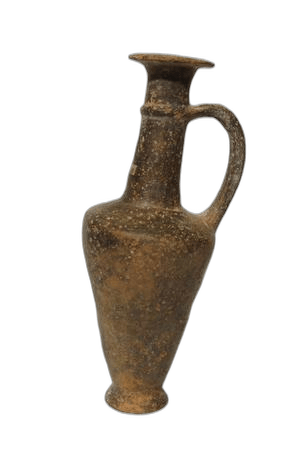
A second pattern has grown since 2025. Officers of the Department watch online sales in Britain, and when they spot a piece that concerns them, they contact the auction house. A juglet of about 750 BC consigned to a Cotswolds auction house was withdrawn in November 2025 and held at the High Commission until the Department could escort it home [8]; a Bichrome stemmed bowl followed in February 2026 [9], and the Base Ring juglet in the table was returned after it had already sold [10]. Owners planning a sale should know this happens; the UK selling guide covers it. In 2024 a London dealer, Costas Paraskevaides, bought a Middle Bronze Age vessel last recorded in Famagusta before 1974 at a German auction specifically in order to give it back.
Will I get into trouble for returning Cypriot antiquities?
No reported voluntary returner has been prosecuted or accused; the Department's announcements thank them by name or, if they prefer, anonymously [3][6][7]. That record is the honest basis for reassurance; no official guarantee exists, and we cannot give one.
Fear of trouble usually rests on a confusion between owning an object and having removed it. Under Cypriot law, antiquities still in the ground when the Antiquities Law came into force on 1 January 1935 belong to the state, and from 1935 every export needed a licence from the Director of Antiquities [1]. For sixty years that licence was routine: the Department licensed dealers, the Cyprus Museum ran its own saleroom, and visitors carried home pots with a numbered licence until the 1996 amendment ended private export (the history of export law sets out each stage). So:
- A piece exported under licence, or before 1935 under the rules of the day, is lawfully owned abroad. Cyprus has no claim on it. Giving it back is a gift, and the Berlin announcement of 2024 described the return without any finding of illegality [5].
- A piece taken out without a licence after 1935 was illegally exported under Cypriot law, whoever carried it. The Department says so when it is the case, as it did for the Austrian group and the December 2024 London batch, which it described as removed illegally "during the 1960s and 1970s" [6][7]. The person returning it is the heir, not the exporter, and was thanked in both cases.
Outside Cyprus, simply having an old object at home is rarely an offence in itself. In the UK, the Dealing in Cultural Objects (Offences) Act 2003 punishes dishonest dealing in an object the dealer knows or believes to be "tainted", and it applies only to objects unlawfully removed or excavated on or after 30 December 2003 [12]. In the United States, the import restrictions agreed with Cyprus in 2002 apply to objects imported after they took effect; the US selling guide deals with seizures and the cases that test the edges. This is general information, not legal advice: if your situation involves recent purchases, a dispute between heirs or a request from the police, speak to a cultural-property lawyer before anything else.
Most Cypriot material abroad left the island legally, often with paperwork since thrown away or lead seals snipped off because they spoiled the look of a pot (see Licence No. 7070). Families return lawful pieces and unlawful ones, and Cyprus receives both in the same way.
Who pays to send them back?
In the reported cases the owner delivered the objects to the embassy or high commission, and Cyprus took them home through the Department, the Ministry of Foreign Affairs and its diplomatic missions [7][8]. None of the announcements mentions a fee or a shipping bill passed to the owner.
For a large group, or an owner far from an embassy, ask the mission how it wants to receive the objects before moving them. Do not post antiquities abroad yourself: a shipment across a border can need an export licence of its own, and a parcel of broken pottery helps nobody.
Will Cyprus accept anything I offer?
Every unconditional offer on record has been accepted. The one offer the Department has publicly explained it could not take up came with conditions attached. In a statement of 7 January 2019, the Director of Antiquities, Marina Solomidou-Ieronymidou, explained that the Department "would gladly accept" a proposed donation of about a hundred Bronze Age pieces, but the offer depended on the Department approving earlier purchases "from unknown sources", with the transfer to follow at a future date; "the involvement of the competent Department in dealings of this kind is inconceivable" [11]. The lesson for an owner is practical. Offer the objects directly to the state, tell the Department what you know, and attach no terms about approval, timing or display.
Two other things can complicate an offer. A modern replica, of which thousands were sold to tourists, is no gift to a national collection; the guide to replicas and fakes shows how to tell. Church icons and frescoes can concern the Church of Cyprus as well as the state, particularly if they come from churches in the occupied north (see looting in occupied northern Cyprus).
Can I donate Cypriot antiquities to a museum in Cyprus?
Yes, and for the state museums it is the same process as a return. The Cyprus Museum in Nicosia and the district museums in Larnaca, Limassol, Paphos and elsewhere are run by the Department of Antiquities, so the Department receives the gift and decides where the objects go. The precedent is old: in 1984 Vassos and Barbara Lyssarides gave "a large part of their private collection, duly registered" to the Cyprus Museum, and the pieces were accessioned in batches through the year [13]. No museum will promise to display a gift, and an owner should not make display a condition.
Cyprus also has foundation and private museums, among them the Pierides Museum in Larnaca (founded on a collection begun in 1839) and the Bank of Cyprus Cultural Foundation in Nicosia. Antiquities held privately on the island fall under the Antiquities Law, so start with the Department and let it advise before sending anything to one of these museums.
Will a museum abroad accept a donation?
Only if the object comes with evidence that it left Cyprus before 1970 or was exported legally, and many family pieces lack that. Gifts are held to the same test as purchases. The Association of Art Museum Directors, whose members run most of the large American art museums, applies its rules to acquisition "by purchase, gift, bequest, or exchange" and asks that provenance research show a work was outside its country of modern discovery before 17 November 1970 or legally exported after it [14]. Donors must hand over what documentation they have, and the museum publishes the acquisition online with its provenance [14].
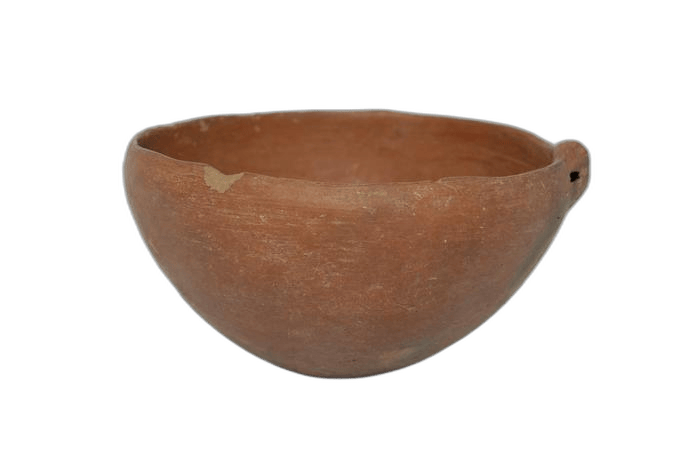
British museums follow the DCMS guidelines of 2005, which say a museum should acquire or borrow an item only if it is "certain" it has not been illegally excavated or exported since 1970, and should ask the donor for documentary evidence: an export licence, a pre-1970 publication, a will or inventory, an old photograph [15]. When a family offers a whole collection, each piece is assessed separately, and undocumented pieces are declined even within a bequest [15]. Museums were built on gifts of the earlier kind. A Red Polished bowl from Ayia Paraskevi entered the British Museum in 1888 as a donation from Colonel Falkland Warren, then Chief Secretary of the British administration in Cyprus and a busy excavator and dealer on the side.
A museum that declines is making no accusation. The usual reasons are the missing pre-1970 evidence, the reputational cost of a claim from Cyprus, the duty to publish the gift and its history, and plain storage: a museum with shelves of White Painted juglets has little use for another one without a findspot.
The same guidelines contain a provision that helps families with a doubtful piece. "When an unacceptable item is offered as a gift, the museum might, with the donor's agreement, arrange to accept it temporarily with the intention of returning it to the country of origin"; it must not accession the item or keep it longer than necessary [15]. A British curator can therefore receive the object from you and pass it to Cyprus.
Are there tax benefits for donating antiquities?
Sometimes, for gifts to museums; rarely for returns to Cyprus, because the reliefs reward gifts to charities and to the nation, and the Republic of Cyprus is neither.
| United Kingdom | United States | |
|---|---|---|
| Gift to a museum | Gifts of objects to museums that are charities are generally free of capital gains tax and inheritance tax. The Cultural Gifts Scheme gives living donors a tax reduction of 30% of the agreed value (20% for companies), usable over up to five years, but only for objects an expert panel judges pre-eminent [16] | A deduction is possible for a gift to a qualified charity. Over $5,000 the IRS requires a qualified appraisal and Form 8283; full market value is deductible only if the museum puts the object to a related use, such as display or study [17] |
| Return to Cyprus | Unlikely to attract UK tax relief | Gifts to foreign governments generally fall outside the charitable deduction |
| Through an estate | Acceptance in Lieu and conditional exemption, covered in the executors' guide | Estate appraisal rules, covered in the executors' guide |
Few ordinary Cypriot pots or figurines will clear the pre-eminence bar, and no museum accepts a gift for its tax value; due diligence comes first. Executors should read the estate guide, anyone counting on a deduction needs a tax adviser, and the value guide explains what drives price.
What about lending instead of giving?
A long-term loan keeps ownership in the family while putting the objects on public view, and it suits a documented collection whose owners are not ready to decide. The model is Thanos Zintilis, a Cypriot businessman in Amsterdam, who in 2002, with the consent of the Cypriot state, placed the core of his collection of about a thousand objects on long-term loan to the Museum of Cycladic Art in Athens, where it has been on display since 2004 and was published in full [18]. A loan is subject to the same checks as a gift: the British guidelines cover "collecting and borrowing" alike [15].
Will a university take them for teaching?
Possibly, if the history is clear. University museums apply the same 1970 test, but many departments of archaeology and classics also keep handling collections of sherds, lamps and plain jugs that students may pick up, and these are the most realistic home for modest material with a good story. Write to the curator or the department with photographs and the family history before offering anything.
Private gifts built these collections. The Ure Museum at the University of Reading holds about a hundred Cypriot objects, and some of them arrived in 1913 among the first bequests the college ever received [19].
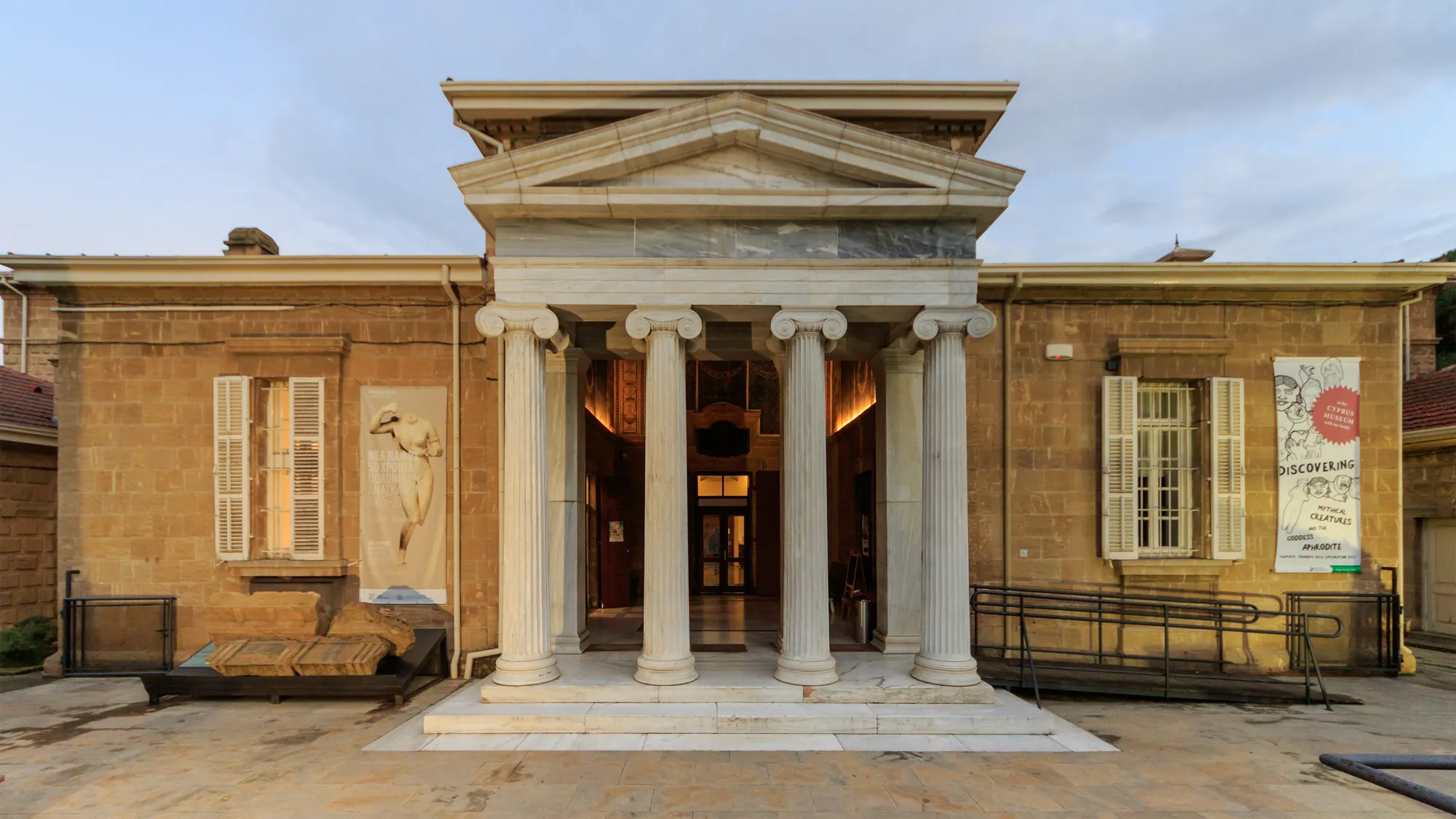
Header photograph: the Cyprus Museum, Nicosia. Photo by A.Savin, Wikimedia Commons, Free Art License.
References
- 1.Republic of Cyprus, Antiquities Law (Cap. 31), as amended 1964, 1973, 1995 and 1996, English translation issued by the Department of Antiquities (UNESCO Database of National Cultural Heritage Laws).
- 2.Department of Antiquities, Cyprus, contact page, Deputy Ministry of Culture, culture.gov.cy/da (accessed 3 October 2026).
- 3.Department of Antiquities, "Handing over of 38 antiquities at the Embassy of the Republic of Cyprus" (Washington, 11 November 2021), archaeology.wiki, 24 November 2021.
- 4.ICOM UK, "Man repatriates 19 antiquities after reading Guardian article", 14 November 2022, summarising The Guardian, November 2022.
- 5."Antiquities repatriated from Germany after 60 years", Cyprus Mail, 2 August 2024.
- 6."69 Cypriot artefacts to be returned from Austria", Cyprus Mail, 30 November 2024; Cyprus Press and Information Office, press release, 30 November 2024.
- 7.Department of Antiquities, "Repatriation of Cypriot antiquities from the United Kingdom", archaeology.wiki, 10 December 2024; "Huge array of ancient artefacts returned to Cyprus from UK", Cyprus Mail, 9 December 2024.
- 8."Cypriot antiquity repatriated from Britain", Cyprus Mail, 25 November 2025.
- 9.Department of Antiquities, "Repatriation of a Cypriot antiquity from the UK", archaeology.wiki, 6 February 2026.
- 10."Ancient Cypriot artefact repatriated from the UK", Cyprus Mail, 1 July 2026.
- 11.M. Solomidou-Ieronymidou (Director, Department of Antiquities), "Regarding the repatriation of 100 Bronze Age antiquities", statement of 7 January 2019, archaeology.wiki.
- 12.Dealing in Cultural Objects (Offences) Act 2003 (c. 27), legislation.gov.uk.
- 13.Karageorghis, V. (1985). Chronique des fouilles et découvertes archéologiques à Chypre en 1984. Bulletin de Correspondance Hellénique, 109, 897-967.
- 14.Association of Art Museum Directors, Guidelines on the Acquisition of Archaeological Material and Ancient Art (revised 2013), adopted 29 January 2013, sections II.C and III.C to III.H.
- 15.Department for Culture, Media and Sport, Combating Illicit Trade: Due Diligence Guidelines for Museums, Libraries and Archives on Collecting and Borrowing Cultural Material (London, October 2005), pp. 5-6, 14.
- 16.Finance Act 2012, Schedule 14 (Cultural Gifts Scheme); Arts Council England, Cultural Gifts Scheme guidance; Art UK, "The Cultural Gifts Scheme: the UK's philanthropic incentive for gifts of art".
- 17.Internal Revenue Service, Publication 526 (Charitable Contributions), Publication 561 (Determining the Value of Donated Property) and Instructions for Form 8283 (Noncash Charitable Contributions); Treas. Reg. §1.170A-17.
- 18.Lubsen-Admiraal, S. M. (2004). Ancient Cypriote Art: The Thanos N. Zintilis Collection. Museum of Cycladic Art.
- 19.Ure Museum of Greek Archaeology, University of Reading, "Cypriote collection", collections overview.