
IV · Sharing it · 3D models
Objects to turn in the hand
Live
Vessels from the Drakopoulos Collection, photographed from every side and rebuilt as 3D models with their true colours, wear and repairs. Turned on the screen as if in the hand, a pot shows what a photograph leaves out: its underside and the marks written on it, the side away from the camera, the inside of a broken neck, old breaks rejoined and filled.
Each model is linked to its object’s entry in the catalogue, where the object is described, dated and compared. On this page every model can be loaded, turned, seen from above and from below, drawn as bare shape or as relief, and read with the details worth looking for.
- vessels in 3D
- 14
- vessels in 3D
- objects in the collection
- 133
- objects in the collection
- painted wares
- 3
- painted wares
- years BCE
- 1050–600
- years BCE
- photographs per object
- 100–350
- photographs per object
- notes pinned to a model
- 4
- notes pinned to a model
- 14 vessels
c. 1050–600 BCE
The viewer
Every model on one stage
Choose a vessel from the strip below the stage. Its photograph shows until you load the model, a large download whose size the button gives; after that, each vessel you choose loads straight away. Jump to a view, change how the surface is drawn, or take one of the details listed beside it, and the camera goes there.
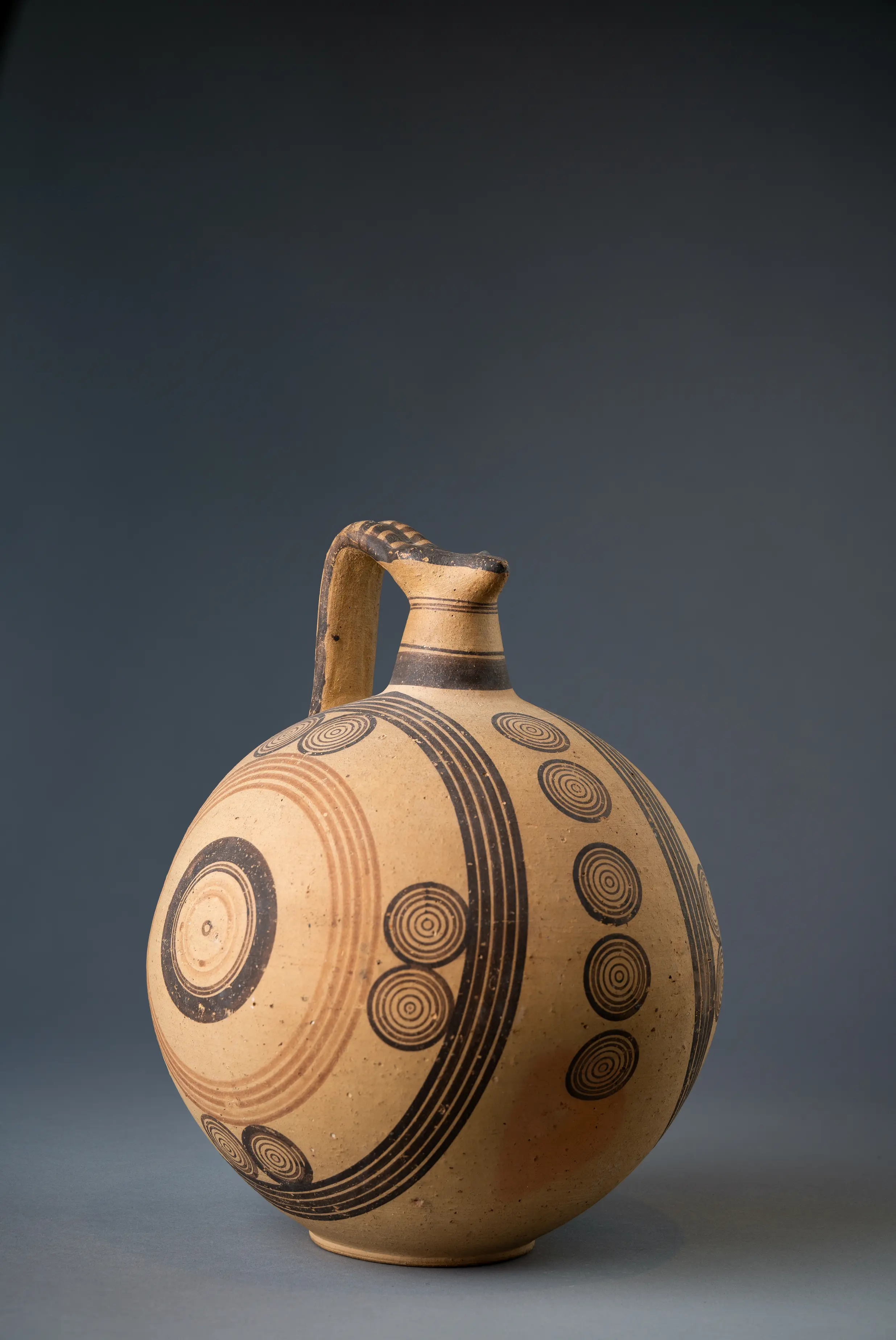
The photograph until you ask: nothing heavy loads before.
JUG-GE-001 · Drakopoulos Collection
Large Bichrome IV Jug with Vertical Circle Systems
Cypro-Archaic I, c. 750–600 BCE · Bichrome IV ware · Wheel-made · H. 31 cm
Look from
Surface
Look for
Notes pinned to the model
- Look from
- three-quarter, profile, from above, underneath: the camera turns round the vessel to each, keeping it in the middle.
- Colour
- The vessel as photographed: clay, paint, deposits and stains in their own colours.
- Shape only
- The colours taken away and one even tone left under a raking light, so that bumps, dents and cracks read without the paint to distract.
- Relief in false colour
- Each tint is a direction the surface faces, so pits, scrapes and throwing ridges stand out, as in the figures of our study of a jug’s surface.
What is in it
The vessels, by ware, shape and date
All 14 models are of painted pottery of the Cypriot Iron Age in the Drakopoulos Collection, and every one is linked to its entry in the catalogue. The counts below come from those entries: the ware and period as each object’s description gives them, the shape as the catalogue classes it.
By ware
One jug is attributed to either of two wares, and is counted on its own row.
| Bichrome | 6 of 14 |
|---|---|
| White Painted | 5 of 14 |
| Black-on-Red | 2 of 14 |
| Bichrome or White Painted | 1 of 14 |
By shape
From a juglet 6 cm high to jars and plates.
| Jugs and juglets | 9 of 14 |
|---|---|
| Plates and bowls | 3 of 14 |
| Jars and amphorae | 2 of 14 |
By period
As each object’s description dates it.
| Cypro-Archaic I | 9 of 14 |
|---|---|
| Cypro-Geometric | 3 of 14 |
| Cypro-Geometric III to Cypro-Archaic I | 2 of 14 |
The dates of the vessels
Each object by the range of years its catalogue entry gives, earliest first, c. 1050–600 BCE in all.
Every model
The object’s name links to its catalogue entry. “Turn it in 3D” loads it on the stage above; the full page has the model on its own, filling the screen.
JUG-GE-001
Large Bichrome IV Jug with Vertical Circle Systems
Cypro-Archaic I, c. 750–600 BCE · Bichrome IV ware · H. 31 cm
5 photographs in the catalogue · 4 notes on the model
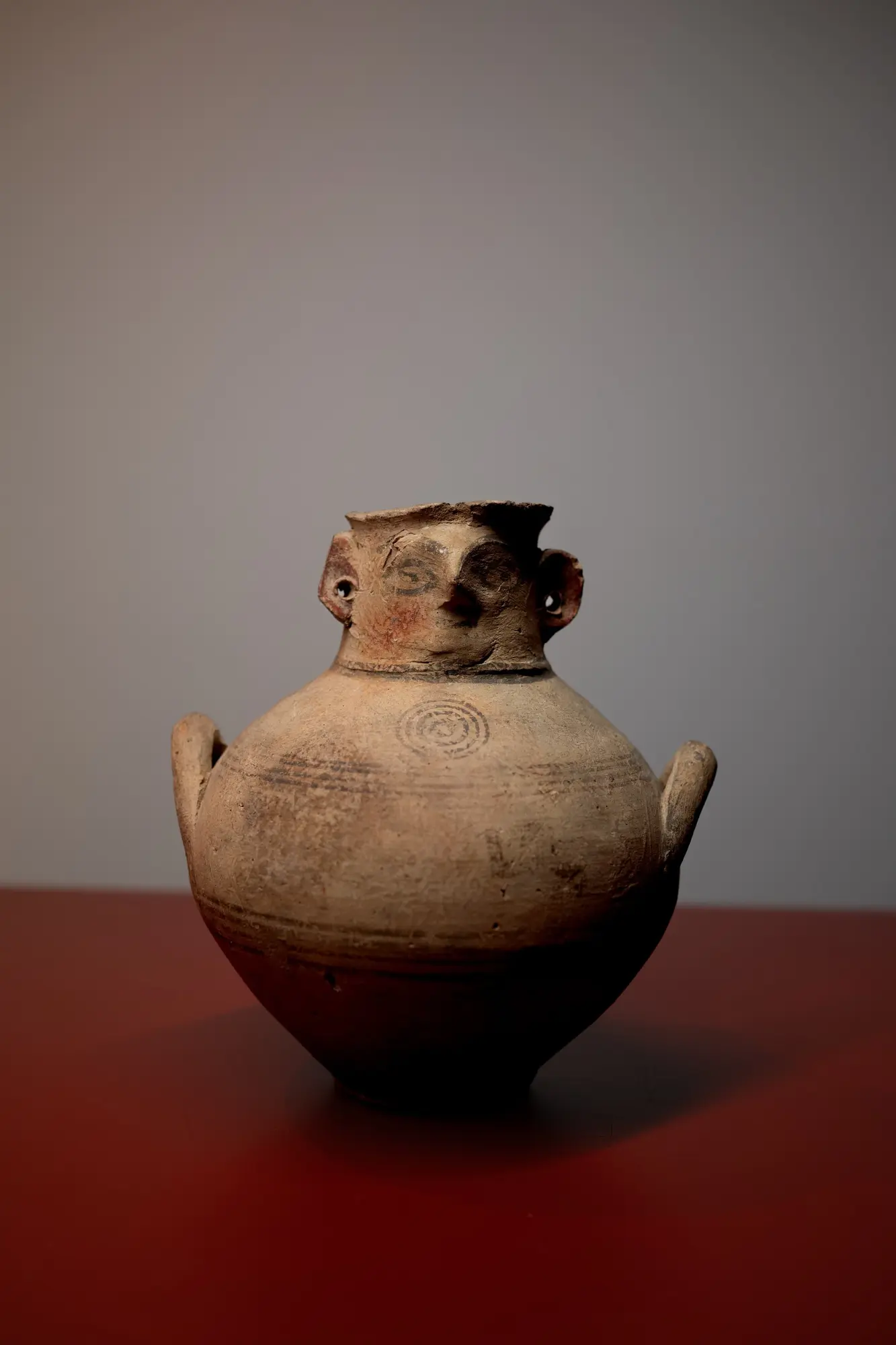
JAR-AR-001
Bichrome IV Face-Neck Jar of the Kourion Type
Cypro-Archaic I, 7th century BCE (range c. 750–600 BCE) · Bichrome IV ware
4 photographs in the catalogue
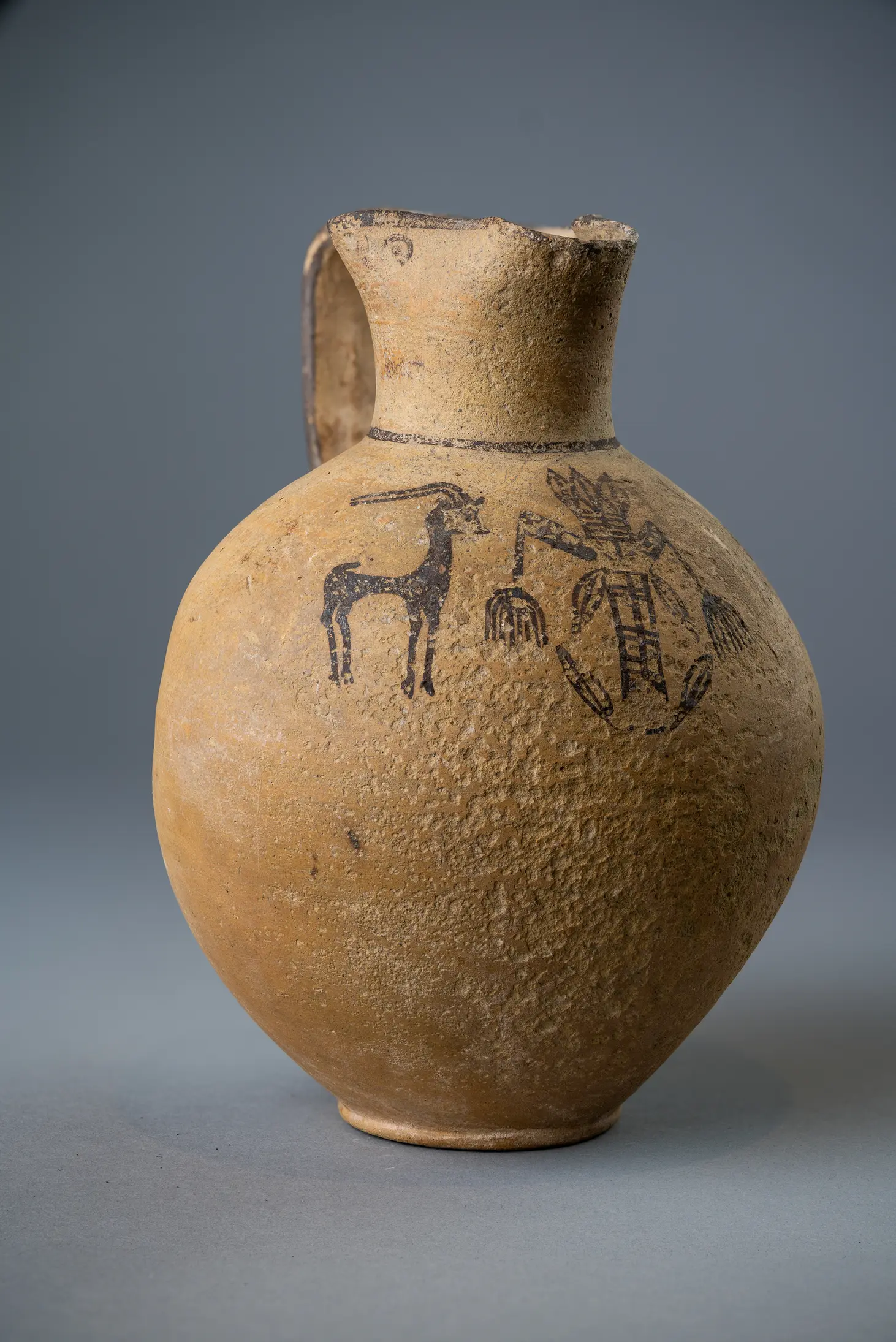
JUG-AR-001
White Painted IV Trefoil Jug with a Wild Goat and a Composite Plant-like Figure
Cypro-Archaic I, c. 750–600 BCE · White Painted IV ware
3 photographs in the catalogue
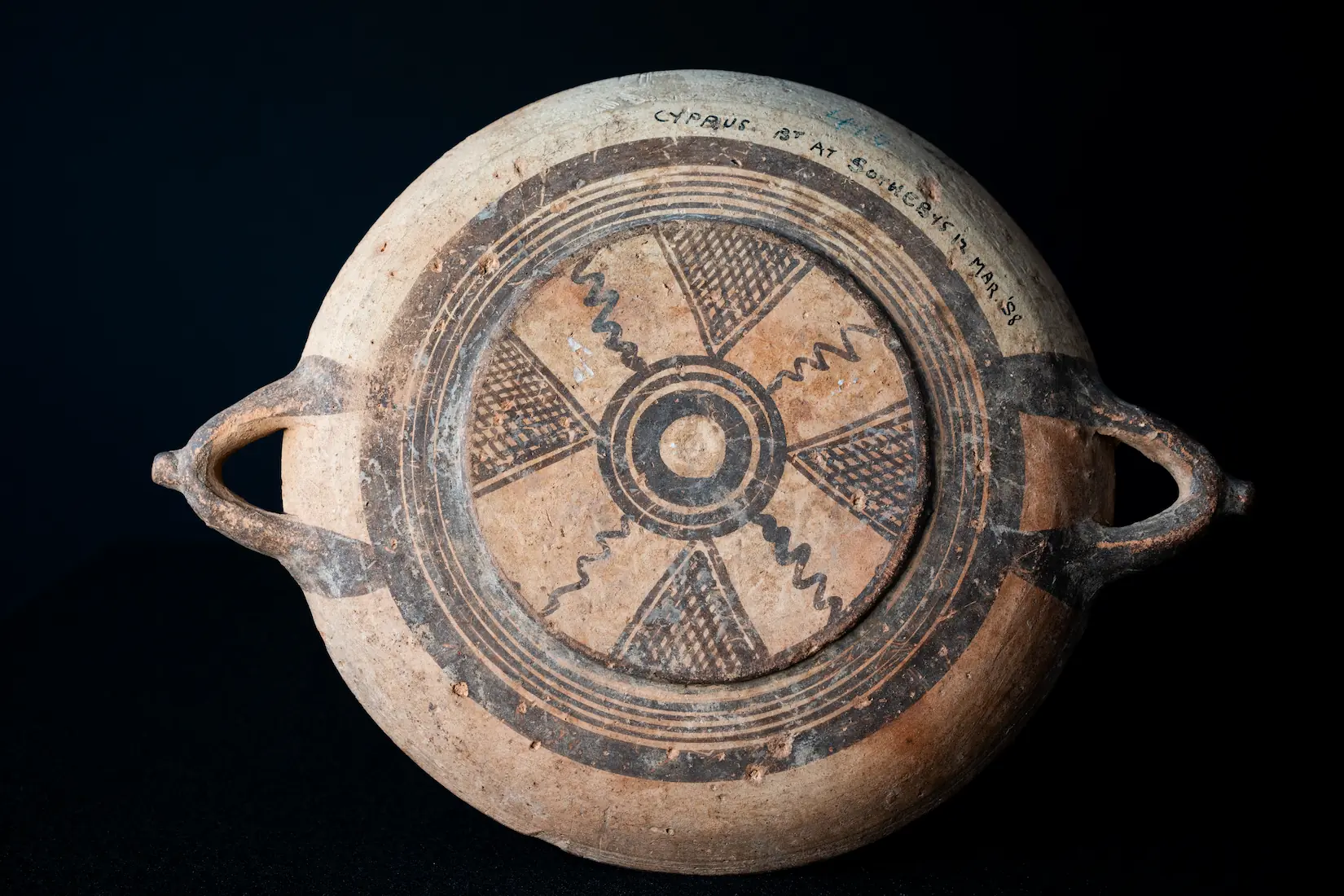
DSH-GE-004
White Painted Plate with Latticed Triangles and Wavy Lines on the Underside
Cypro-Geometric I–II, c. 1050–850 BCE · White Painted ware
5 photographs in the catalogue
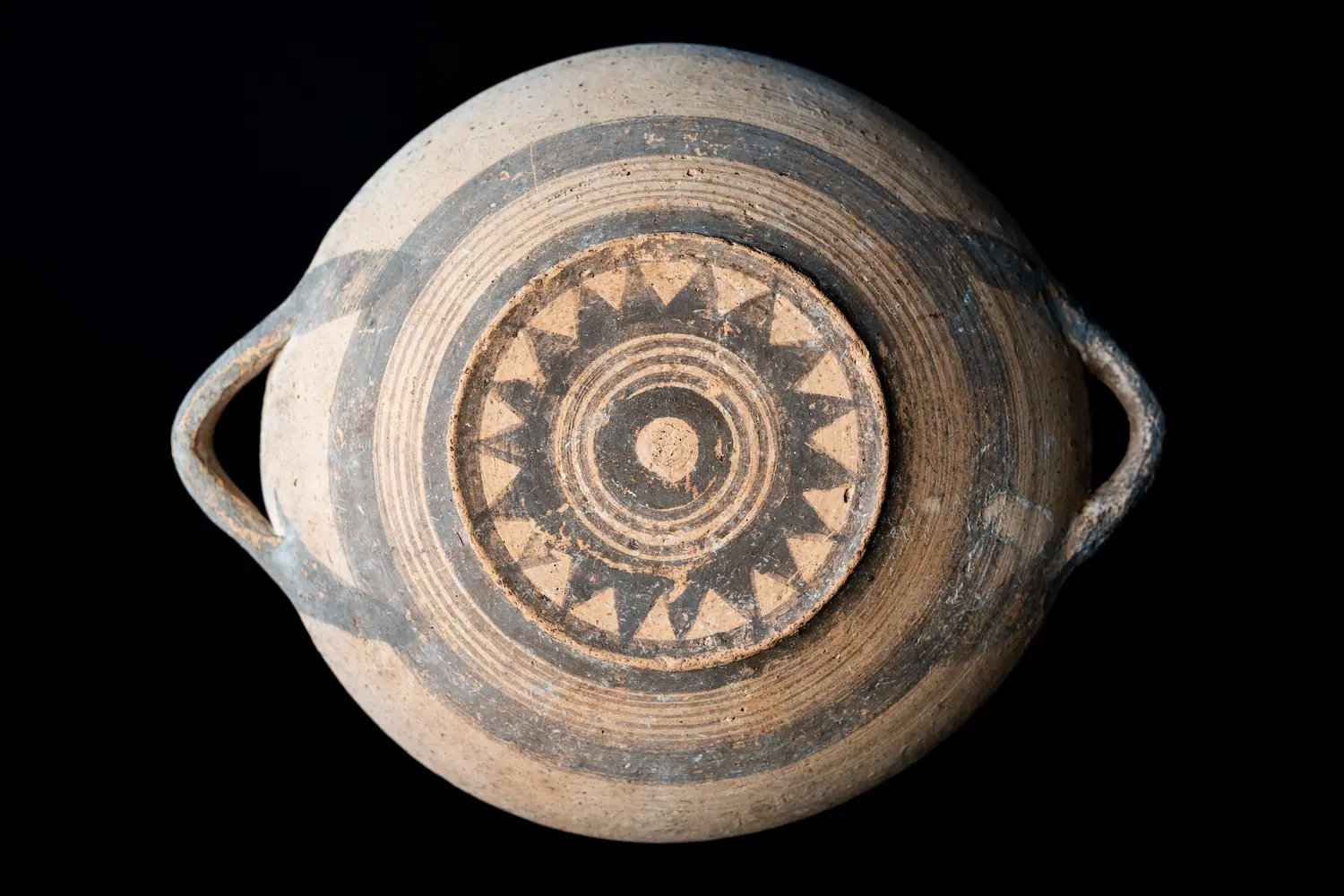
DSH-GE-003
White Painted Plate with a Sawtooth Star on the Underside
Cypro-Geometric II–III, c. 950–750 BCE · White Painted ware
4 photographs in the catalogue
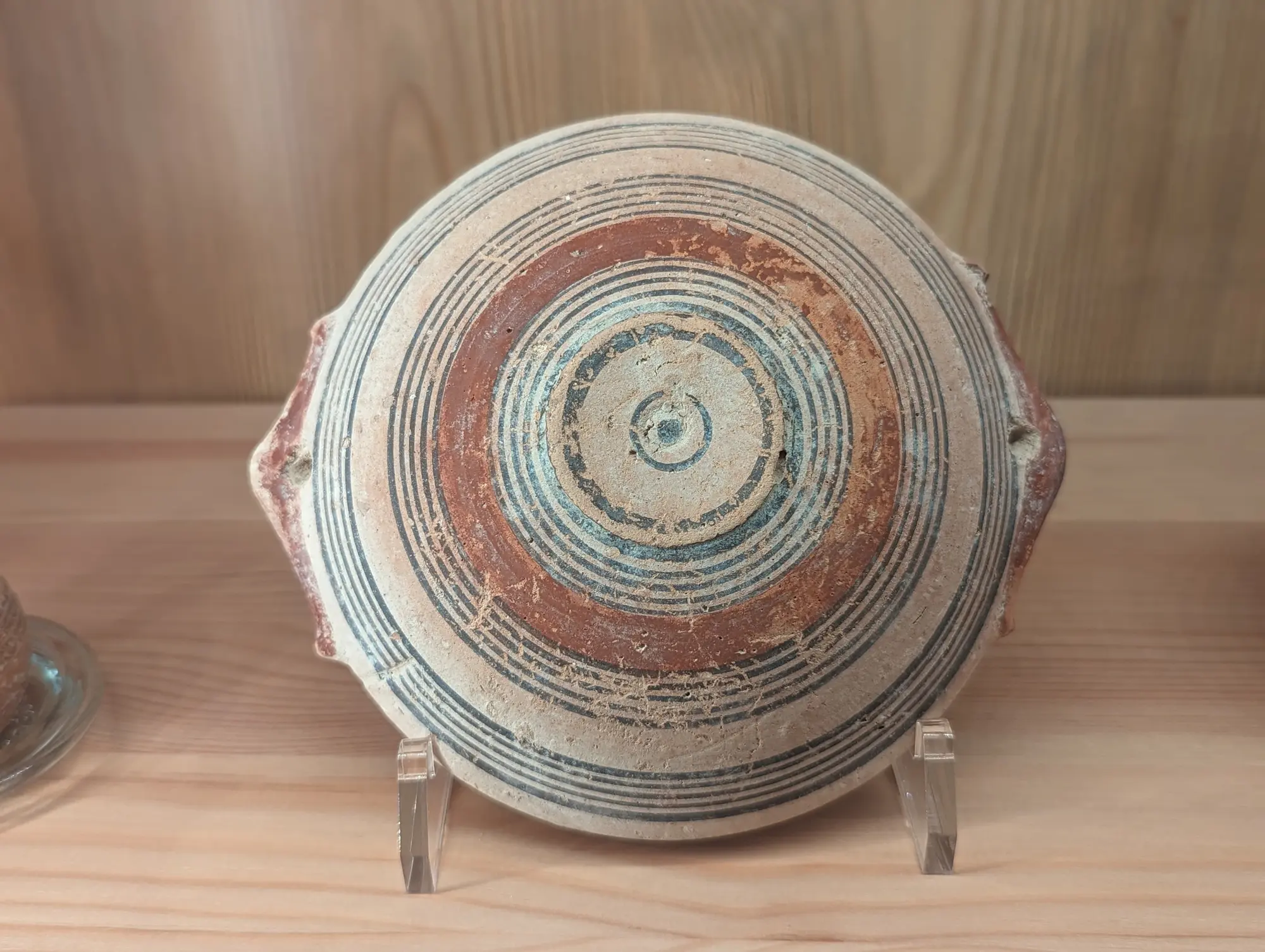
BWL-GE-005
Bichrome IV Bowl with Red-Painted Pierced Lug Handles
Cypro-Archaic I, c. 750–600 BCE · Bichrome IV ware
2 photographs in the catalogue
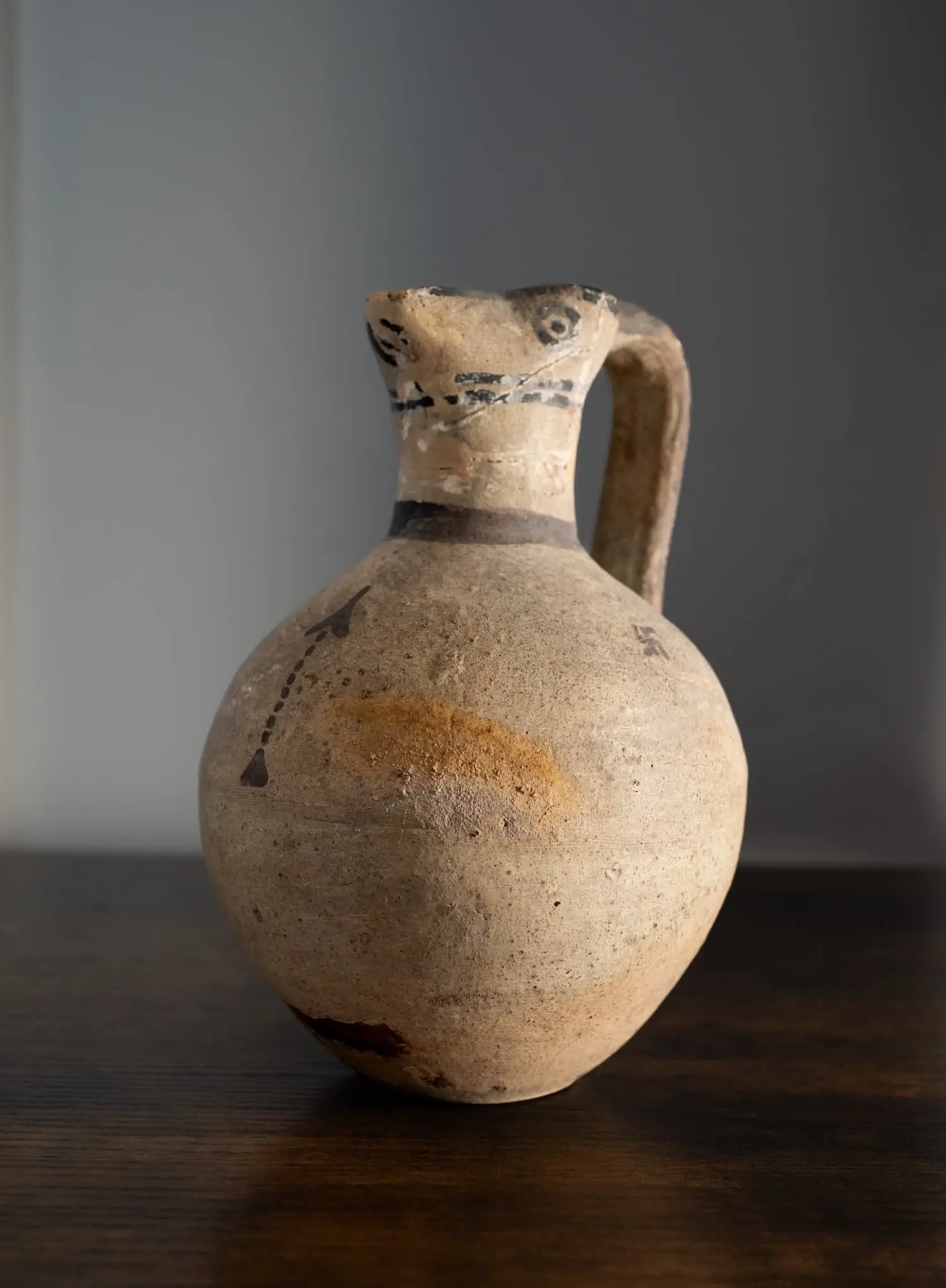
JUG-GE-019
White Painted Jug with Painted Eyes, Chevron Arrow and Swastika
Cypro-Geometric III to Cypro-Archaic I, c. 850–600 BCE · White Painted ware
3 photographs in the catalogue
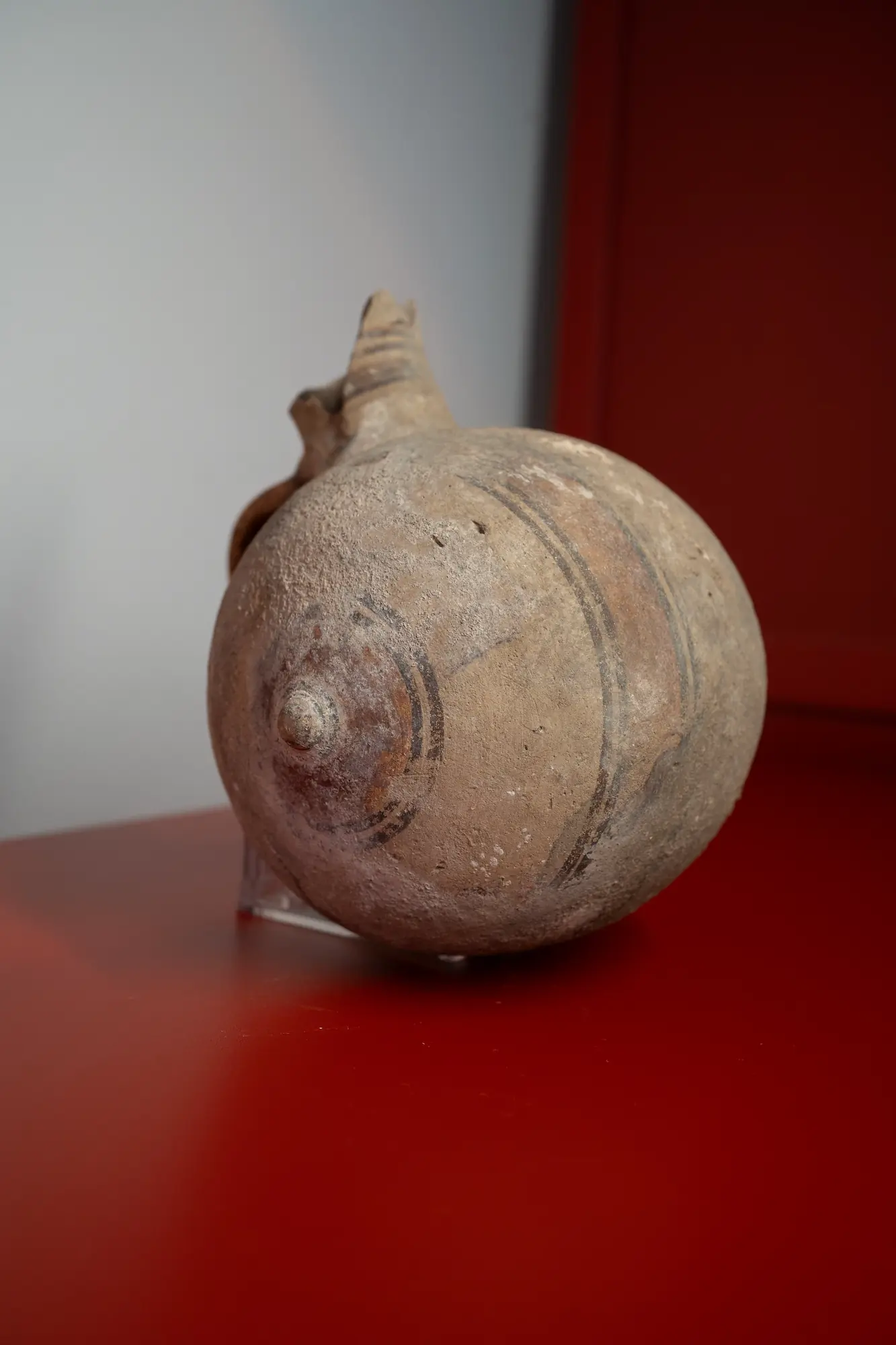
JUG-GE-018
Bichrome Barrel Jug with Circled End-Knobs
Cypro-Geometric, probably CG III, c. 850–750 BCE · Bichrome ware · H. c. 18 cm (as preserved)
3 photographs in the catalogue
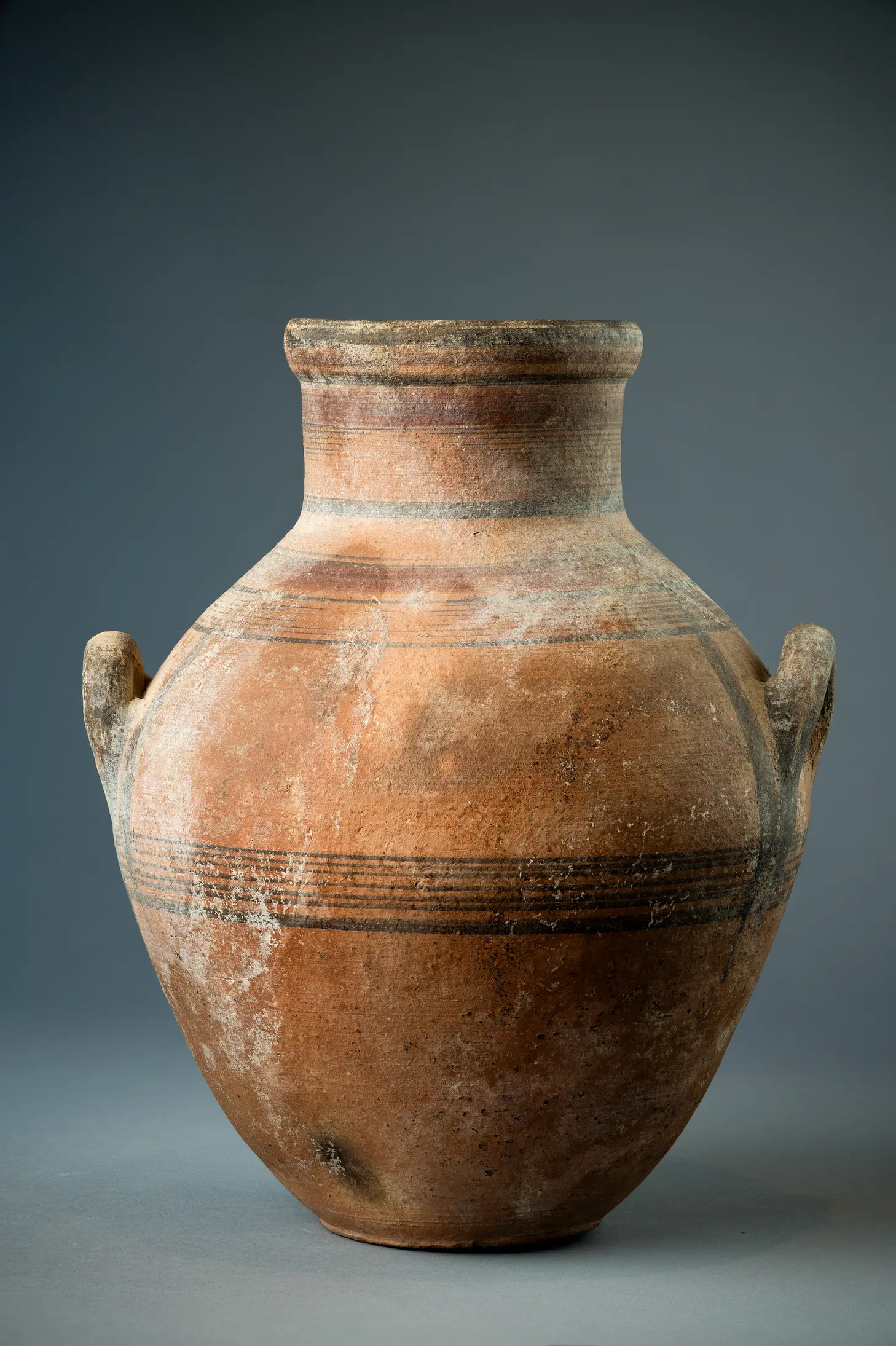
JAR-GE-001
Bichrome IV Amphora with Shoulder Handles and Banded Decoration
Cypro-Archaic I, c. 750–600 BCE · Bichrome IV ware · H. 32 cm
4 photographs in the catalogue
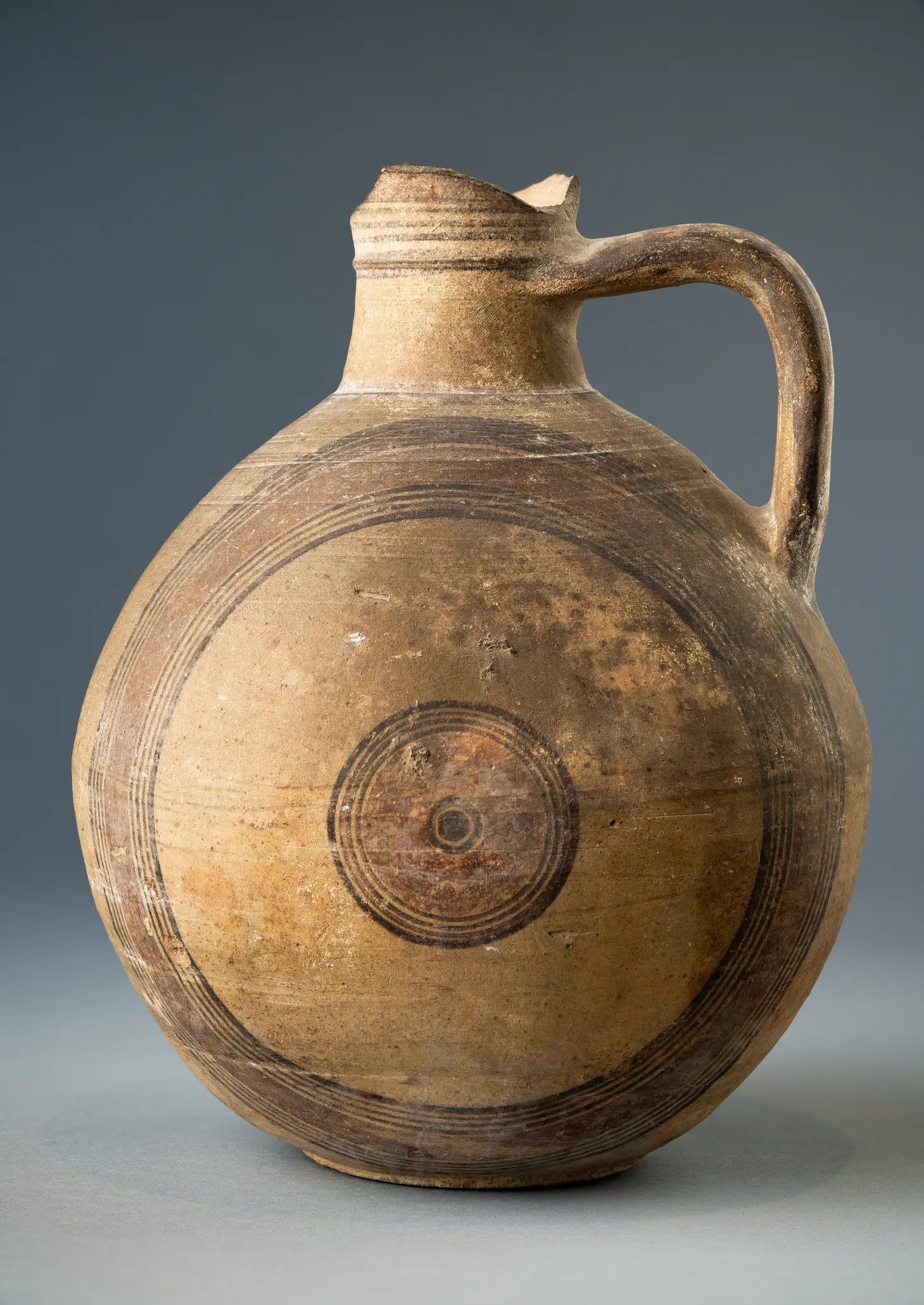
JUG-GE-004
Globular Jug with a Vertical Circle System, Bichrome IV or White Painted IV
Cypro-Archaic I, c. 750–600 BCE · Bichrome IV or White Painted IV ware
1 photograph in the catalogue
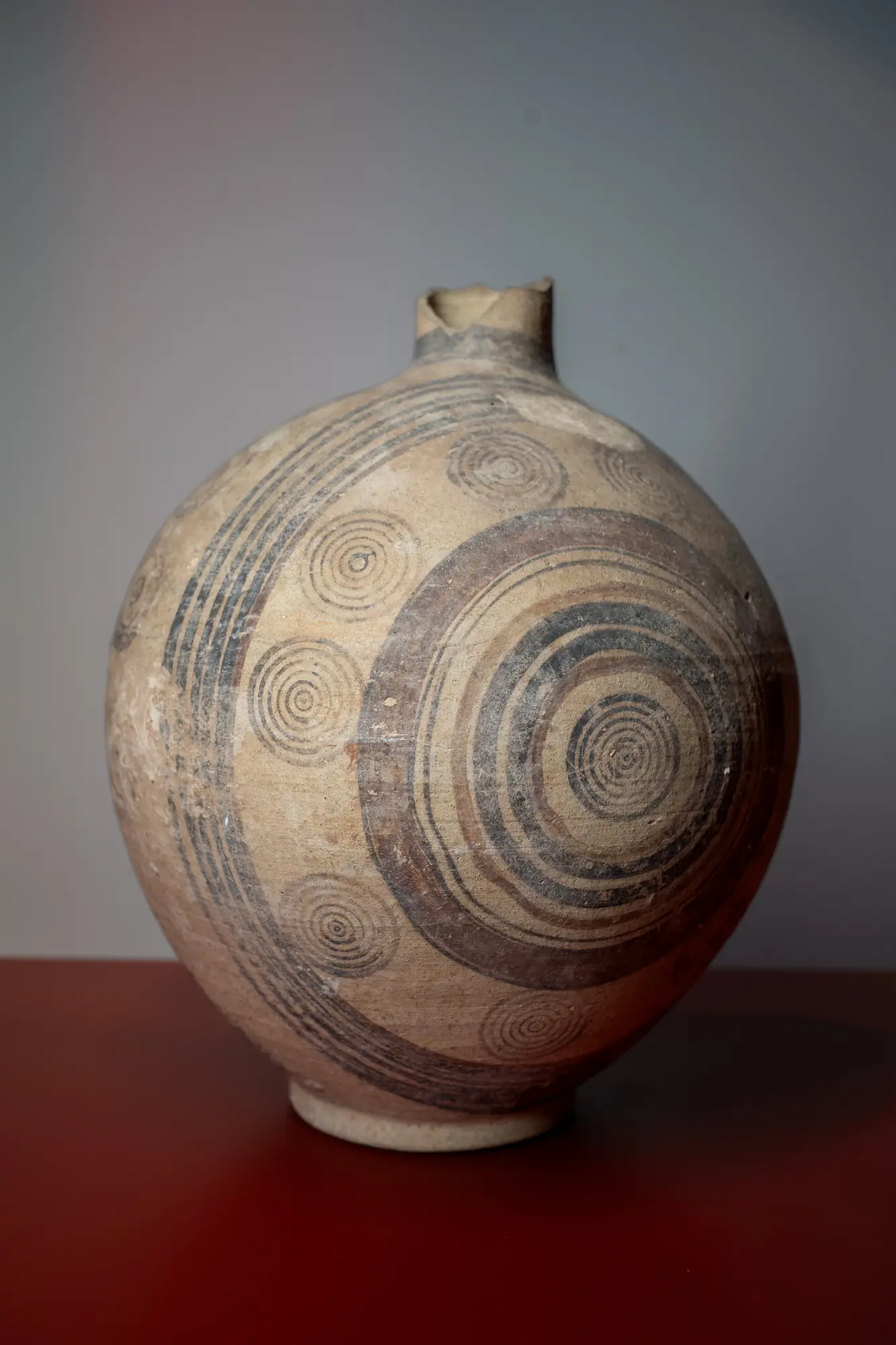
JUG-GE-017
Bichrome IV Jug with Vertical Circle Systems
Cypro-Archaic I, c. 750–600 BCE · Bichrome IV ware · H. 28 cm (as preserved)
5 photographs in the catalogue
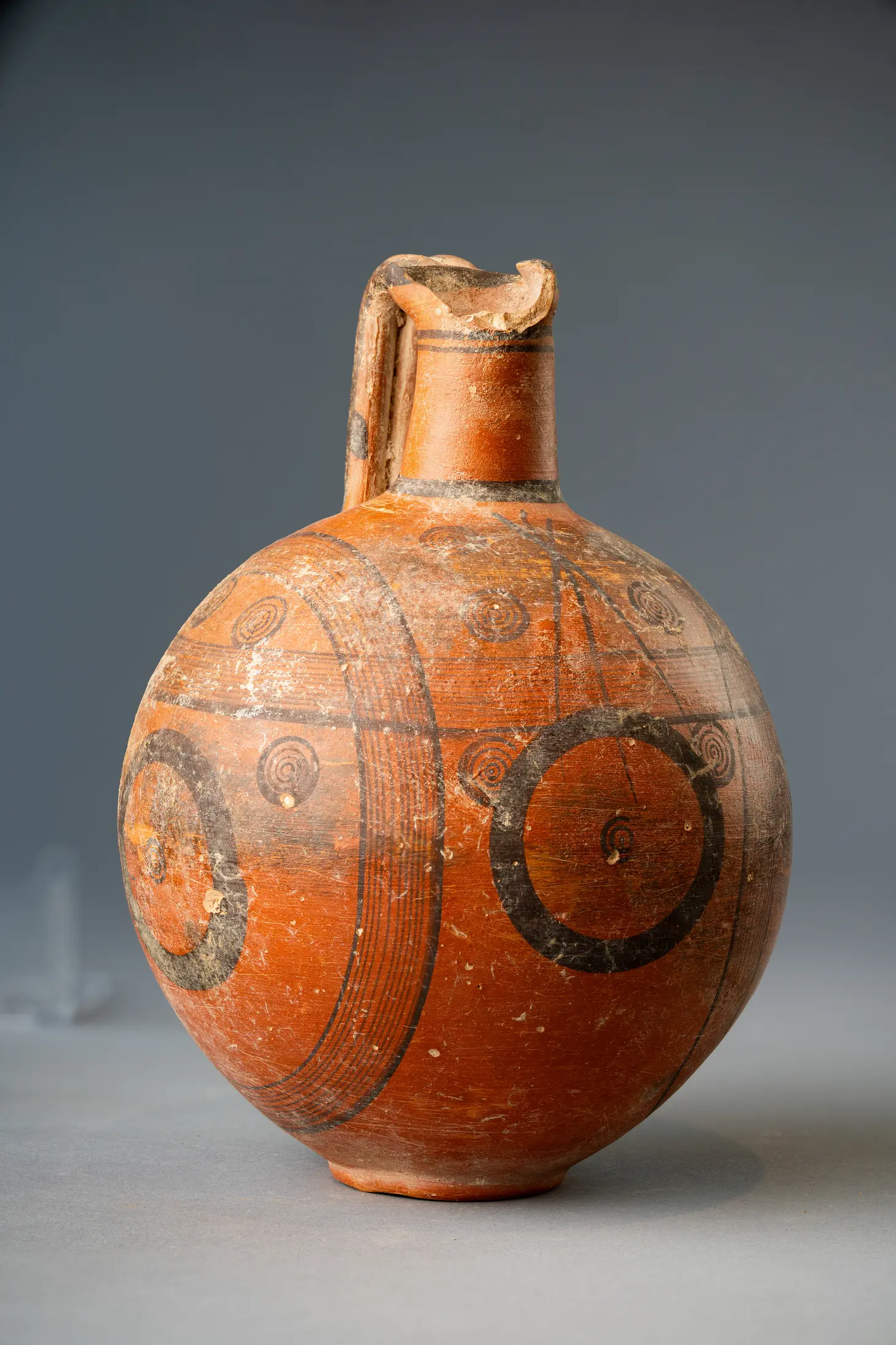
JUG-GE-016
Black-on-Red Globular Jug with Concentric-Circle Decoration
Cypro-Archaic I, c. 750–600 BCE · Black-on-Red ware
3 photographs in the catalogue
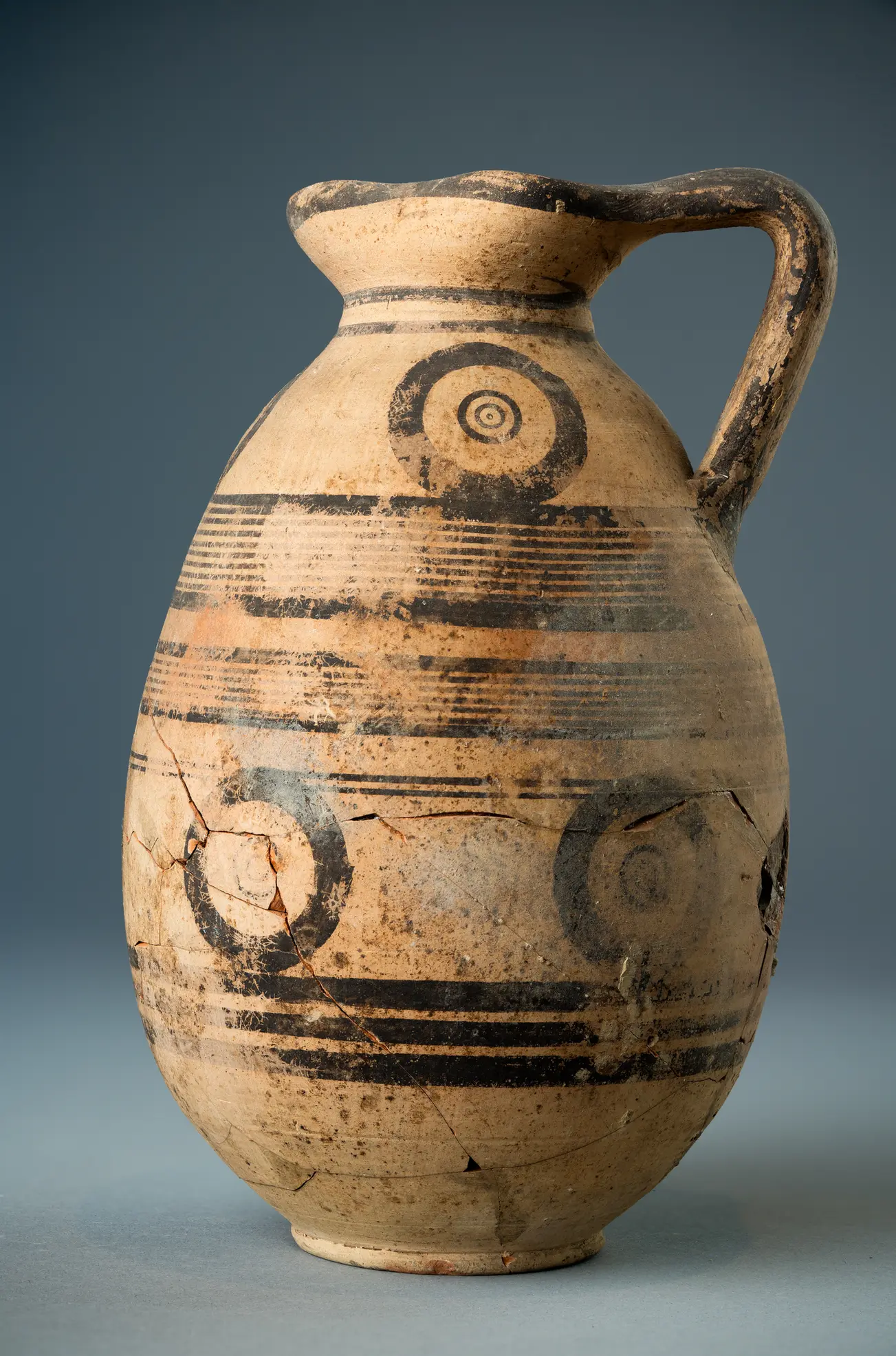
JUG-GE-010
White Painted IV Ovoid Trefoil Jug with Concentric Circles
Cypro-Archaic I, c. 750–600 BCE · White Painted IV ware (possibly Bichrome IV) · H. c. 23 cm
2 photographs in the catalogue
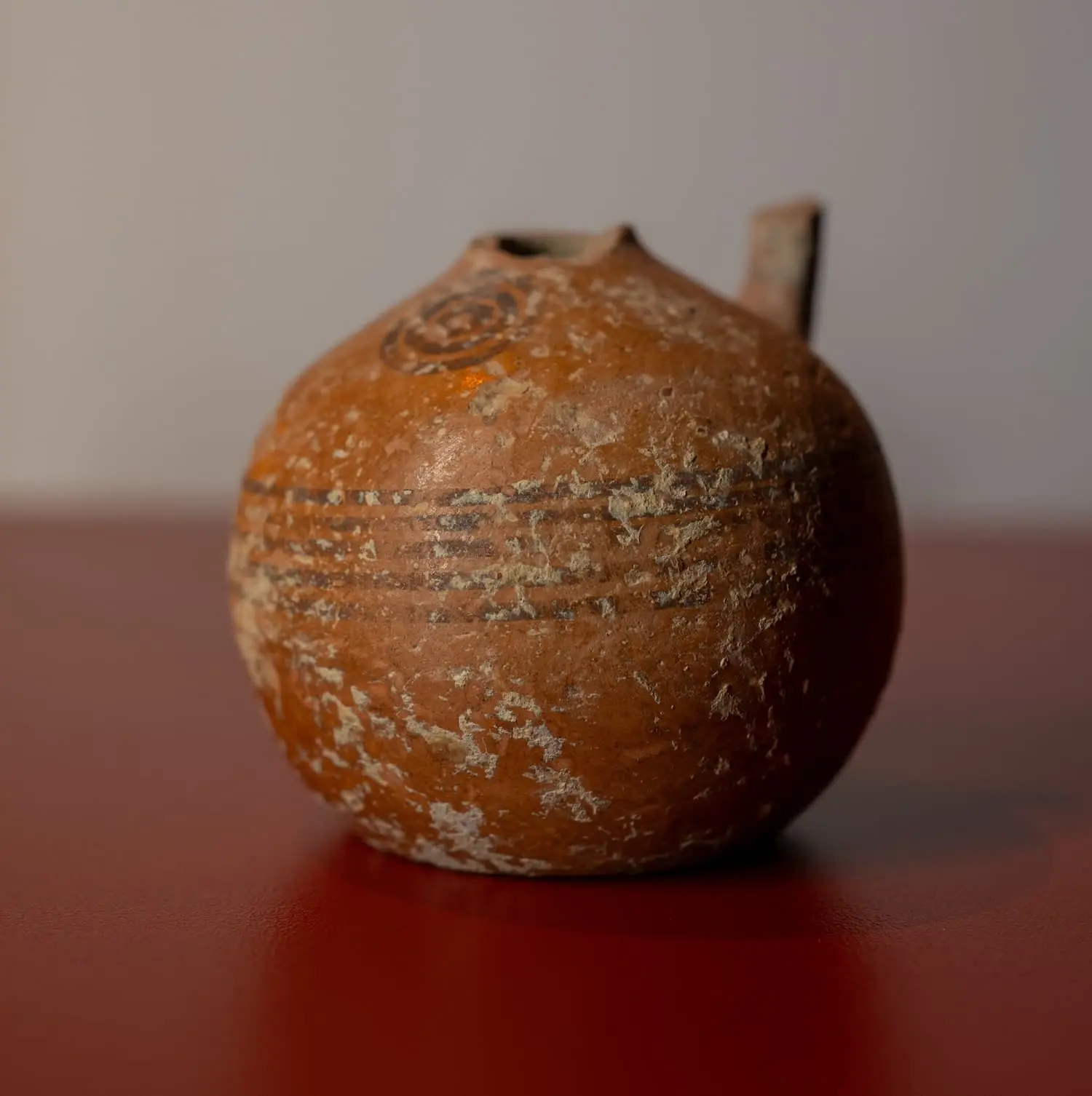
JUG-GE-021
Miniature Black-on-Red Globular Juglet
Cypro-Geometric III to Cypro-Archaic I, c. 850–600 BCE · Black-on-Red ware · H. 6 cm
1 photograph in the catalogue
Start here
What a model shows that a photograph does not
A catalogue photograph shows one side of a pot from one height, lit once. The model can be turned to any side and seen from directly above or below, and its surface can be drawn without its colours. Six of the vessels, and what each one shows; the button puts it on the stage at the view that shows it best.
The underside
White Painted Plate with Latticed Triangles and Wavy Lines on the Underside
The main design of this White Painted plate is on its underside, out of sight when the plate sits on its base: concentric circles from which four cross-hatched triangles radiate, alternating with four freehand wavy lines. An old ink inscription runs along the underside rim with a blue-ink number beside it, and inside, the word “CYPRUS.” is printed near the rim.
Use and wear
White Painted Plate with a Sawtooth Star on the Underside
Turned over, the plate shows a many-rayed star that has kept its paint well. Its interior is much worn, with only faint circles and a dark rim left: it was used, or at least exposed to long abrasion, on the side that faced up.
The side the photograph leaves out
Globular Jug with a Vertical Circle System, Bichrome IV or White Painted IV
The catalogue has a single photograph of this jug, showing one great vertical circle system. The model has the whole pot: the second system on the other side, the throwing ridges round the body, and the rim broken away beside the handle, which leaves the shape of the mouth uncertain.
Old repairs
White Painted Jug with Painted Eyes, Chevron Arrow and Swastika
Fine cracks with pale filling cross the neck of this small White Painted jug: old breaks, rejoined and filled. They interrupt the neck bands and the painted eye on that side, and some of the paint along them may be restored.
Pitting, and restored paint
White Painted IV Trefoil Jug with a Wild Goat and a Composite Plant-like Figure
The front of this jug, where the goat and the plant-like figure are painted, is heavily pitted; the back is much better preserved. Parts of the figure were restored in 2023–24, and some of its lines are crisper than the pitted surface around them, so details of the figure cannot carry an interpretation until restored and original paint are told apart.

The same jug in false colour, from our study of its surface. Read it. Marks of the kiln
Large Bichrome IV Jug with Vertical Circle Systems
Low on one side the clay of this large Bichrome jug is flushed pink. With the colour switched off, the model shows a bump in the same place: the jug may have pressed against something hot in the kiln and been deformed and overheated. Four notes are pinned to its surface.
How they are made
From photographs to a model
Photogrammetry builds the shape of an object from many overlapping photographs of it, taken from all round. Nothing touches the object but light, and the result keeps the colours of the photographs.
- 1
Photographs from every side
Each object is photographed from 100 to 350 angles, depending on its size and how complicated its shape is. It stands on a turntable that turns a step between shots, so the photographs fall in even rings round it, ring above ring.
- 2
Light without glare
A single flash with a polarising filter lights the object, and a second polarising filter, crossed with the first, sits on the lens. Together they take away the shine, so that slip and paint read evenly from every side. The camera works 25 to 75 cm from the object, at 9 to 27 pixels to the millimetre.
- 3
Aligned into a shape
The photographs are adjusted for exposure, to keep detail in the highlights and the shadows, and then aligned: points found in many photographs at once fix where the camera stood for each, and from that the shape of the surface.
- 4
A mesh with its colours
The shape is kept as a mesh of small triangles, and the colours of the photographs are laid over it as one image. Some models carry a second image that records the fine relief of the surface, which the false-colour view draws.
- 5
Linked to the catalogue
Each model is tied to its object’s catalogue entry, which links to it. The models vary in quality, and the weaker ones will be made again.


One model taken apart
The large Bichrome IV Jug with Vertical Circle Systems, layer by layer. Each button puts that layer on the stage.
1 · The object
JUG-GE-001: Cypro-Archaic I, c. 750–600 BCE, Bichrome IV ware, H. 31 cm. Its catalogue entry describes and dates it, with 5 photographs.
2 · The shape
The mesh alone, in one even tone. Without the paint, the swelling of the body, the handle and every bump in the surface read on their own.
3 · The colours
The photographs’ colours laid over the mesh: the pale buff clay, the black and the faded red paint, the pink flush low on one side.
4 · The relief
The same surface in false colour, from the model’s relief image: each tint a direction the surface faces, so that a scrape or a bump shows as a change of colour.
5 · The notes
4 notes are pinned to points on the surface, each a numbered square that stays with the model as it turns:
- 1
- 2
- 3
- 4
Using them
Turning, finding and citing the models
The models open in the browser, on a phone as well as a computer. Nothing loads until it is asked for, and the button shows the size of the download first.
Turning and zooming
- Drag to turn the vessel; on a phone, drag sideways, and scroll the page as usual.
- Pinch, hold ctrl and scroll, or press + and −, to zoom. In full screen the scroll wheel zooms on its own.
- With the stage selected, the arrow keys turn and tilt the vessel, + and − zoom, and 0 puts it back.
- The full-page viewer for each model adds a light control and a switch for the colours, and shows its notes as small circles in space round the model.
Where else they are
- Each object’s catalogue entry links to its model. In the catalogue, tick “Has a 3D model” to see only these objects.
- All the models have their own page, searchable by name.
- 3 lessons of the pottery course set a model into the text: Bichrome and the Free-Field Style, How to Date and Identify a Cypriot Pot and The Cypro-Geometric Repertoire.
- The Drakopoulos Collection presents the whole collection, era by era.
Citing a model
Cite the model by the object’s name and number, and the address of its page. For example:
Ancient Cyprus, “Large Bichrome IV Jug with Vertical Circle Systems”, Drakopoulos Collection JUG-GE-001, 3D model, www.ancientcyprus.com/3dmodels/large-bichrome-oinochoe (accessed on the day you read it).
The model files are not offered for download. To use a model in teaching, research or a publication, ask us.
Own Cypriot antiquities? Get in touch, whether about recording a piece or anything else about it. What you tell us stays confidential, unless the law requires us to share it. Our guide for owners of Cypriot antiquities sets out the options.
What comes next
More of the collection, and better models
119 of the 133 objects in the Drakopoulos Collection have no model yet. The work ahead, in no fixed order:
More of the collection
From the smallest juglets to the large amphorae, each linked to its catalogue entry as these are.
Better models
The weaker models made again, at higher resolution and with truer colour.
A course in photogrammetry
The whole process for archaeological pottery, from photographing a pot to its finished model.
Other collections
Models of vessels beyond our own collection.