II · The registers · The tomb register

Every excavated tomb on the island

Live

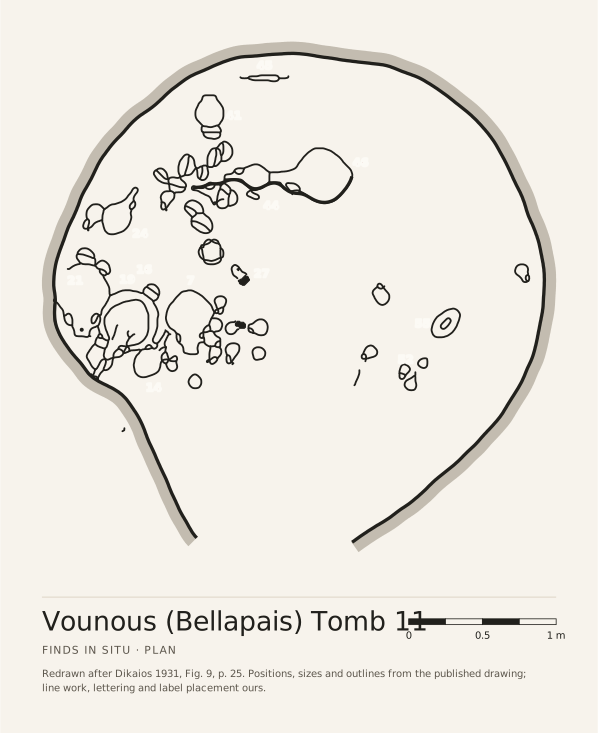
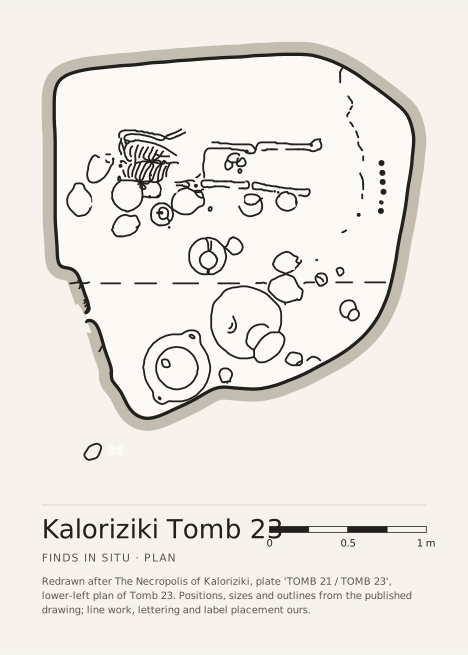
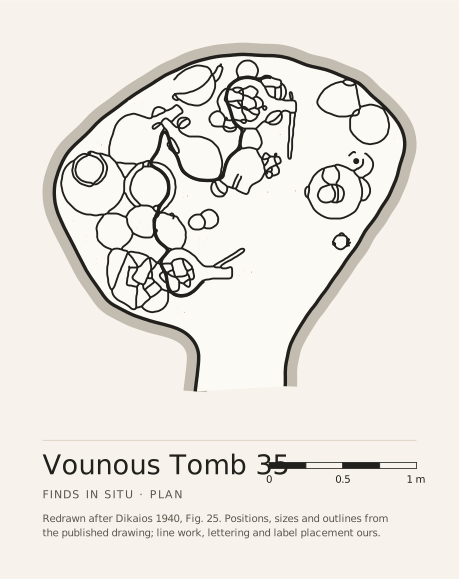
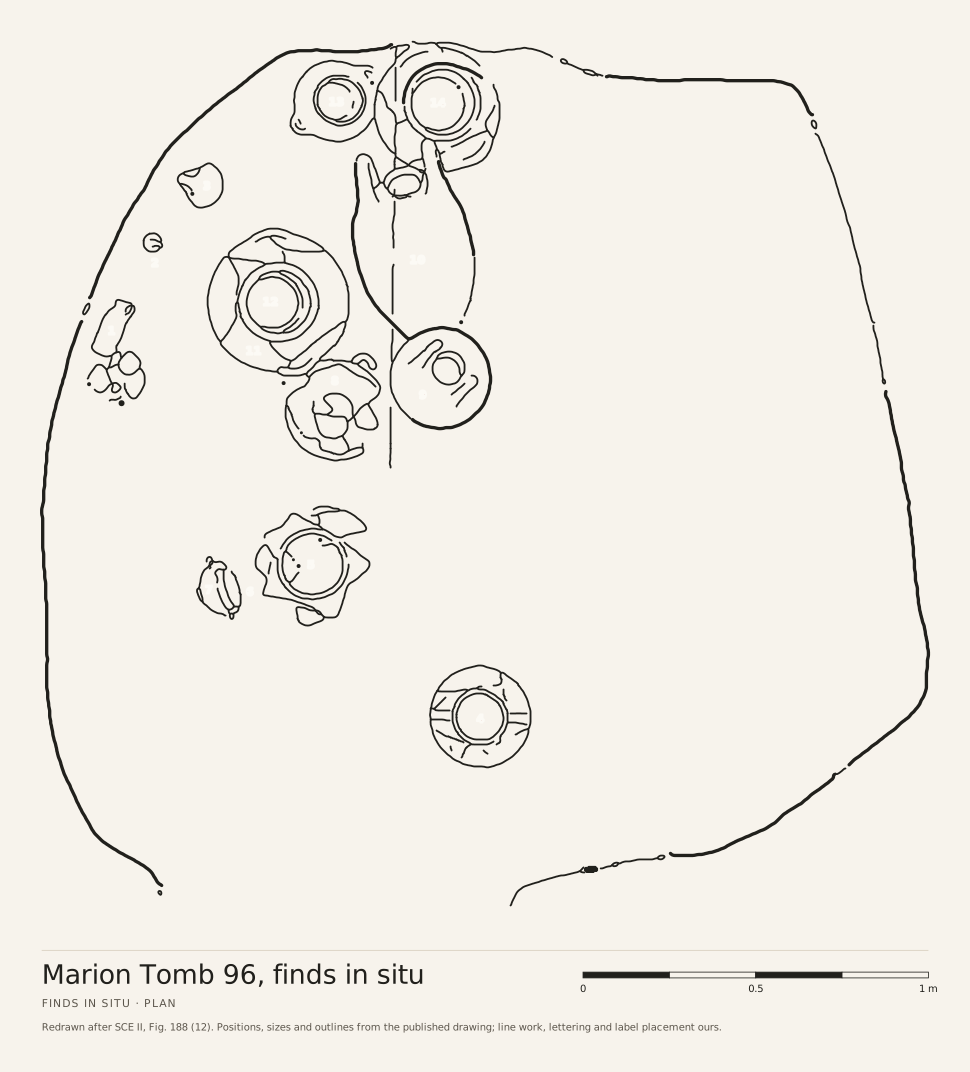
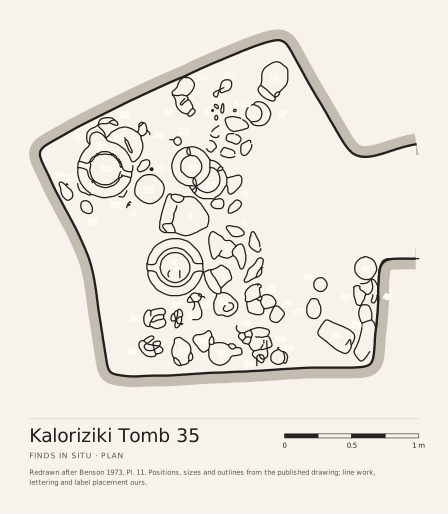
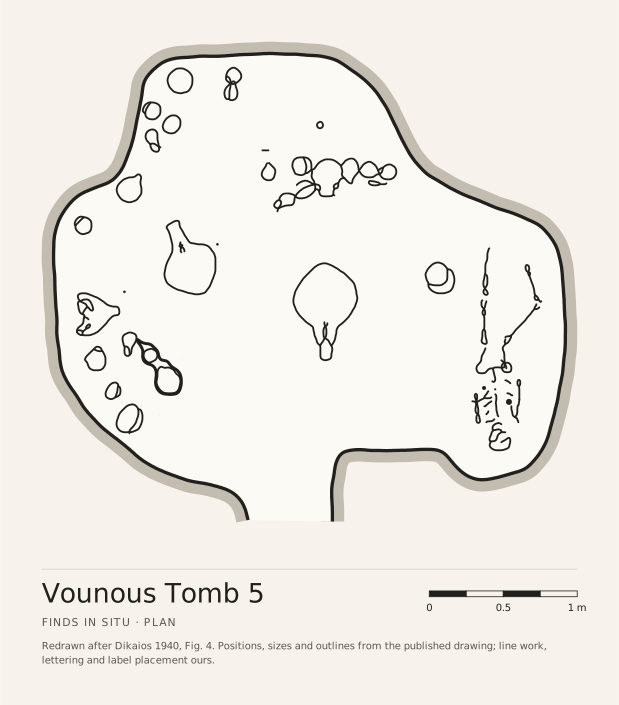
The tomb register records every excavated tomb on Cyprus: its architecture, its burials and everything found in it, read from the excavation reports and cited to the page, and the museums where its finds are now. Where the report printed a plan, the tomb’s page draws it, in our own plans drawn only from the published drawings.

The register follows the publications, so the decades whose reports we are still reading look thinner than the digging was. Its data is published under CC BY-NC 4.0.

tombs
3,585
tombs
read from their own reports
2,365
read from their own reports
objects catalogued
32,440
objects catalogued
burials recorded
2,101
burials recorded
museum records of the finds
14,563
museum records of the finds
plans drawn
173
plans drawn
Six of our plans, each redrawn from the one printed in the excavation report. Choose one to open its tomb.

The atlas

Every tomb on the map

Each circle is a place, sized by its tombs. Filter by period, by the type of tomb and by how the tomb is recorded; choose a decade, or play through them, to see where the digging was; choose a place to list its tombs, each with a link to its page.

The decades are those in which each excavation began. Tombs whose reports we have not yet read are missing from them, so the bars show the register as it stands today. The 3 tombs whose place is not recorded are left off the map.

The tomb atlasFilter, choose a decade or a place

What is in it

What the register holds

3,585 tombs at 254 places, dug by 223 excavations between the 1880s and the 2010s. 2,365 are recorded from their own excavation report; the other 1,220 are known from what later publications say about them, and a further 617 only by name. Between them the reports catalogue 32,440 objects, 23,575 of them vessels, and describe 2,101 burials.

By period

A tomb counts under the earliest period its record gives. The last four columns are shares of the tombs with a catalogue, shown where a period has ten or more: how many held at least one object of metal, of gold, or made overseas.

PeriodTombsFrom its reportCataloguedObjects, medianWith metalWith goldWith imports
Neolithic9000–3900 BC
1
10––––
Chalcolithic3900–2400 BC
107
1056532%0%0%
Early Bronze Age2400–1950 BC
163
11389527%2%1%
Middle Bronze Age1950–1650 BC
117
9351747%2%12%
Late Bronze Age1650–1050 BC
239
1901321259%29%48%
Cypro-Geometric1050–750 BC
262
2291891666%22%33%
Cypro-Archaic750–480 BC
343
304191244%6%16%
Cypro-Classical480–310 BC
140
131911257%16%35%
Hellenistic310–30 BC
113
10444243%25%5%
Roman30 BC–AD 330
43
3813854%31%15%

391 more tombs carry a date in the report’s own words that we have not yet matched to a period, 21 are dated only to a broad age such as “Bronze Age”, and 1,645 have no date in the register yet.

The places with the most tombs

  • 308
  • Enkomi
    215
  • Bellapais-Vounous
    156
  • Amathus-Western Necropolis
    140
  • Marion-Necropolis II
    130
  • Souskiou-Laona
    127
  • Marion
    122
  • Episkopi-Bamboula
    104
  • Lapithos-Vrysi tou Barba
    90
  • Palaepaphos-Skales
    80
  • Kissonerga-Mosphilia
    69
  • Polis-Kaparka
    66
  • Kition-Turabi Tekke
    64
  • Kourion-Kaloriziki
    62
  • Salamis-Cellarka
    62
  • Kalavasos-Village
    58

The register names cemeteries as their reports do, so Amathus and its necropoleis count separately.

By type of tomb

  • Chamber tomb
    830
  • Shaft grave
    157
  • Pit grave
    155
  • Rock cut chamber
    131
  • Built tomb
    54
  • Other
    46
  • Tholos
    25
  • Cist
    14
  • Sarcophagus burial
    4
  • Tumulus
    3
  • House floor burial
    2
  • Jar burial
    2
  • Cremation pit
    1

2,161 tombs have no type in their record yet.

Where the finds are now

Museum records that name the tomb an object came from, 8,389 of them matched to their entry in the report. Most finds from the Department of Antiquities’ own excavations stayed in Cyprus, so this list shows where the finds sent abroad went.

What was found

  • Pottery
    66,685
  • Other
    12,014
  • Jewellery
    8,710
  • Tools
    1,189
  • Toilet objects
    745
  • Lamps
    648
  • Weapons
    622
  • Textile tools
    410
  • Glass
    383
  • Metal vessels
    364
  • Stone vessels
    320
  • Terracotta figures
    231
  • Seals
    224
  • Faience
    196

Objects in the catalogues of the tombs read from their reports, by kind.

Questions

Questions the register already answers

Each answer is counted from the register when this page is built, so it changes as more reports are read.

When do gold and imported objects reach the tombs?

Of the catalogued tombs, 2% of the Early Bronze Age ones held gold and 1% an imported object; in the Late Bronze Age, 29% held gold and 48% an import. The table above gives every period with ten or more catalogued tombs (9 of them).

The Early Bronze Age →The Late Bronze Age →

How many tombs had been robbed before the excavators arrived?

Where the report says either way, 71 of 254 tombs had been robbed in antiquity, wholly or in part, and 51 of 240 in modern times. Most reports do not say, and the register records that as not reported.

Lapithos Tomb 322, looted in modern times →

Which museum abroad holds finds from the most tombs?

The British Museum, with objects from 354 tombs. Medelhavsmuseet, Stockholm holds the most objects: 6,650, from 231 tombs. These are the museum records that name their tomb; most finds from the Department of Antiquities' own excavations stayed in Cyprus.

British Museum →Medelhavsmuseet, Stockholm →

For questions of your own, the Tomb Explorer filters the register by period, site, ware, shape and burial, with every fact cited to its page in the report.

How it is made

How a tomb is read from its report

A tomb enters the register because a publication records it: its excavation report, or a later publication that describes it. Museum records are attached to tombs already in the register. Each tomb is filed under the excavation that dug it, because tomb numbers repeat from one excavation to the next: at Enkomi alone the register holds tombs numbered by 4 different excavations.

The report is read entry by entry: the tomb’s architecture and measurements, each burial, each object in the catalogue with its number, size, findspot and page, and the date the excavators gave. Our reading sits beside the report’s own words, in one vocabulary of wares, shapes and periods shared with the catalogue. Where a report is silent, the record says “not reported” rather than “none”; where two publications differ, both readings are kept.

Museum records are joined to the entries they describe. In Stockholm, an inventory number such as L. 313B:002 is Lapithos Tomb 313, chamber B, catalogue number 2. Where the report printed a plan, we draw our own from it: positions, sizes and outlines from the published drawing, line work and lettering ours, each object marked with its catalogue number and linked to its entry.

One tomb taken apart · Lapithos-Vrysi tou Barba, SCE Tomb 313Point at an object on the plan, or choose a part

How fully each report records a tomb

Reports differ. Some catalogue every object and plot it on a plan; others give a paragraph. Each tomb read from its report is graded on five counts, and its page lists what the report leaves out.

The objects2,344 reports
  • every object catalogued 564
  • a selection 582
  • summarised 738
  • no catalogue 460
The burials2,365 reports
  • studied by an osteologist 58
  • described 376
  • counted 101
  • mentioned 390
  • not reported 1,440
The tomb itself2,365 reports
  • a measured plan 185
  • measured in the text 554
  • described 524
  • not described 1,102
Where each object lay2,365 reports
  • plotted on a plan 162
  • given object by object 313
  • by chamber 229
  • not given 1,661
The date2,365 reports
  • phase by phase 171
  • one date for the tomb 992
  • not dated 1,202

The plans

The plans we have drawn

173 plans of 144 tombs so far, each redrawn from the drawing printed in the report and credited to it. 163 of them mark the finds where they lay, and on the tomb’s page each marked object leads to its catalogue entry. We draw only from published drawings.

The plansChoose a plan

Start here

Tombs to start from

A handful of records that show what the register does: tombs found intact and tombs found robbed, rich catalogues, burials described one by one, and finds followed to the museums that hold them.

Using it

Using and citing the register

Licence

The register’s data is published under CC BY-NC 4.0: you may copy and reuse it with credit, for non-commercial purposes only. For any commercial use, please contact us. Ancient Cyprus is non-commercial and free to use.

Museum photographs are shown only where the museum’s licence allows it, credited to the museum under its own terms, and every museum record links back to the museum’s own page.

How to cite

Each tomb page gives its own citation, in this form:

“Lapithos-Vrysi tou Barba, SCE Tomb 313.” Ancient Cyprus: Cyprus tomb register. https://www.ancientcyprus.com/tombs/lapithos-sce-1927-313 (version of 2026-11-06).

Please cite the excavation report for its facts; each tomb page gives the page for every one of them.

Where it lives

Museums · The records of where the finds are now come from the published collections of these museums: Medelhavsmuseet, Stockholm; British Museum; Penn Museum (University of Pennsylvania Museum of Archaeology and Anthropology); Musée du Louvre; Museum Gustavianum, Uppsala; Ashmolean Museum; Cyprus Museum, Nicosia; Museum of Archaeology and Anthropology, Cambridge; John and Mable Ringling Museum of Art; Princeton University Art Museum; National Museum in Warsaw. We are grateful to each of them for making their records public.

Owners · If you own an object that came from one of these tombs, or know where one is now, please contact us. Our advice is confidential, unless the law requires us to share it.

What comes next

What comes next

  • More reports read

    The annual reports of the Department of Antiquities and the volumes of the large cemeteries, so that the decades that look thin today fill in, and the tombs now known only by name gain a record.

  • More plans

    A plan for every tomb whose report printed one, with each object marked where the drawing shows it.

  • Accounts of the principal tombs

    A written account of the most important tombs, alongside their records.

  • The Tomb Explorer

    Open now in a first version, for asking the register your own questions: which tombs held a given ware or shape, how burials changed, where the finds of a cemetery went. It grows with every report read.

tombs known only by name
617
tombs known only by name
tombs not yet placed in a period
2,036
tombs not yet placed in a period
known from later publications
1,220
known from later publications