
Lecture·CAARI Cyprus·2021
New Research at the Middle Bronze Age Site of Alambra
Chapters
About the lecture
Andrew Sneddon presents the results of four excavation seasons conducted between 2012 and 2016 at Alambra. Following earlier Cornell University excavations of seven buildings in a ravine (Area A), a chance find of storage jars during roadworks 70 metres away prompted salvage excavations by the University of Queensland and La Trobe University, combined with geophysical survey across the site.
In the road cut (Area B), the team excavated the corner of a storage room containing six Red Polished pithoi, smaller Red Polished and White Painted vessels, a bronze chisel, a copper pin, stone tools, a spindle whorl, and a loom weight, buried under 150 millimetres of ash and carbonised roof beams. Geophysical survey in the flat field of Area C revealed looted tombs near rectangular Middle Bronze Age courtyard houses. Trench 10 exposed a house with an incised plaster hearth accompanied by a crudely modelled clay figure, pierced seashells, a copper needle, and a 24-centimetre standing human figure of sun-baked mud and incised plaster. Nearby lay a well with a cluster of wide-mouthed water jars, which Sneddon compares to the Kotchati model.
A second building in Area C held an intramural burial with a faience bead necklace, a copper earring, a copper pin, and two copper ingots on the chest. By the doorway stood a concave plastered mudbrick feature that Sneddon compares to the chair finials on the Vounous bowl, while the next room contained an incised plaster hearth nearly two metres across.
Sneddon compares Alambra with nearby Marki, which overlapped with it between c. 1900 and 1750 BC. Differences in pottery and the scarcity of cattle figurines at Alambra argue against colonisation from Marki, though a pebble-crete pot emplacement in the burial room hints at movement between the two settlements. Combining the new data with Cornell's survey, Sneddon reconstructs Alambra as separate housing clusters with adjacent cemeteries. He contrasts the open ground and built hearths of Area C with the cramped ravine of Area A, suggesting social differentiation, and weighs whether the fire across Areas B and C reflects conflict or a post-abandonment blaze.
In the discussion, Sneddon, Lindy Crewe, Jennifer Webb, Thomas Kiely, and Efthymia Alphas discuss drilled stone objects, tombs at Katolakkos with exterior pot emplacements, and whether the well jars were cooking pots.
From our collection
Pieces in the Drakopoulos collection of the kinds and periods this talk covers: Red Polished ware.
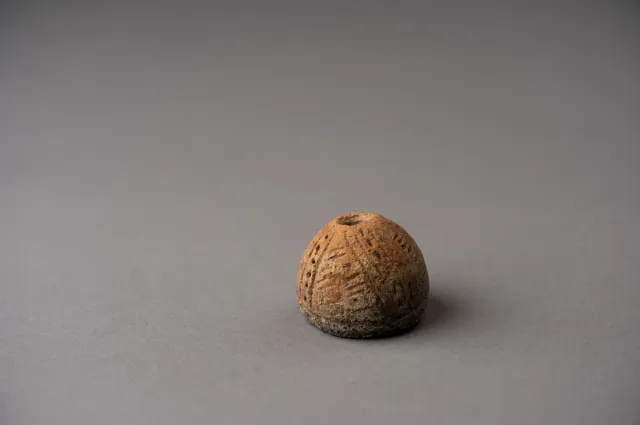
Red Polished Spindle Whorl with Incised Lattice and Dotted Bands
Red Polished ware
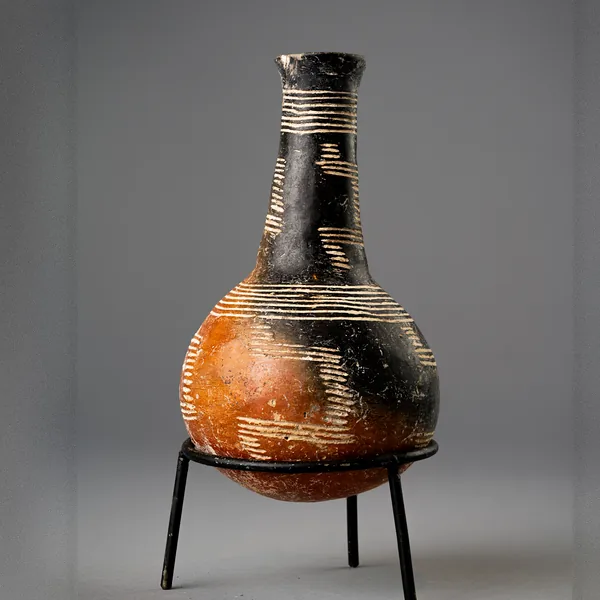
Red Polished Black-Topped Bottle with Stepped Incised Bands
Red Polished ware
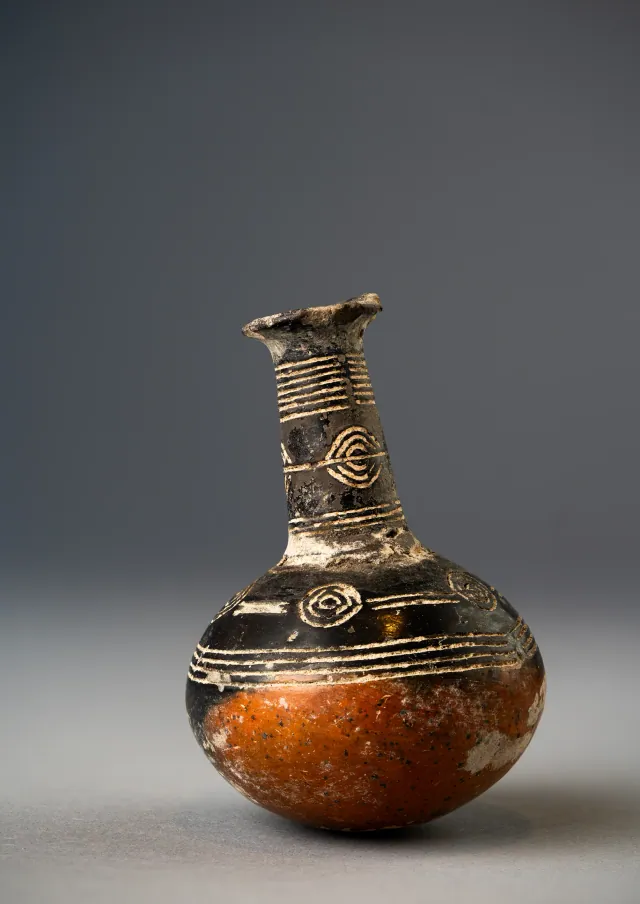
Red Polished Black-Topped Bottle with Incised Concentric Circles
Red Polished ware
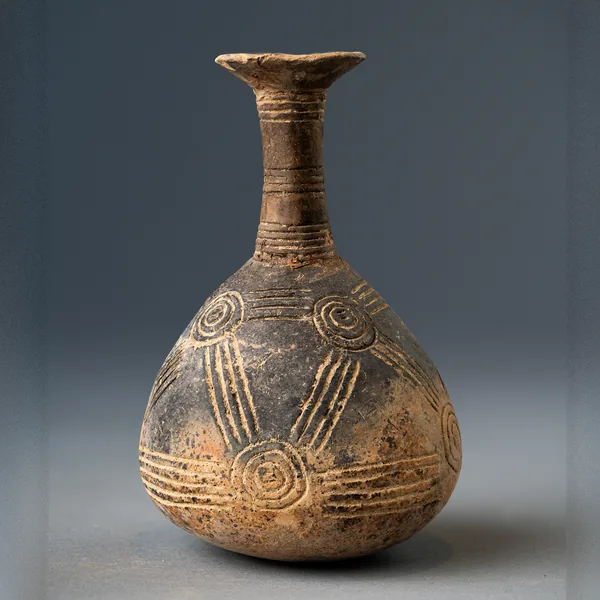
Red Polished Bottle with Linked Concentric Circles
Red Polished ware
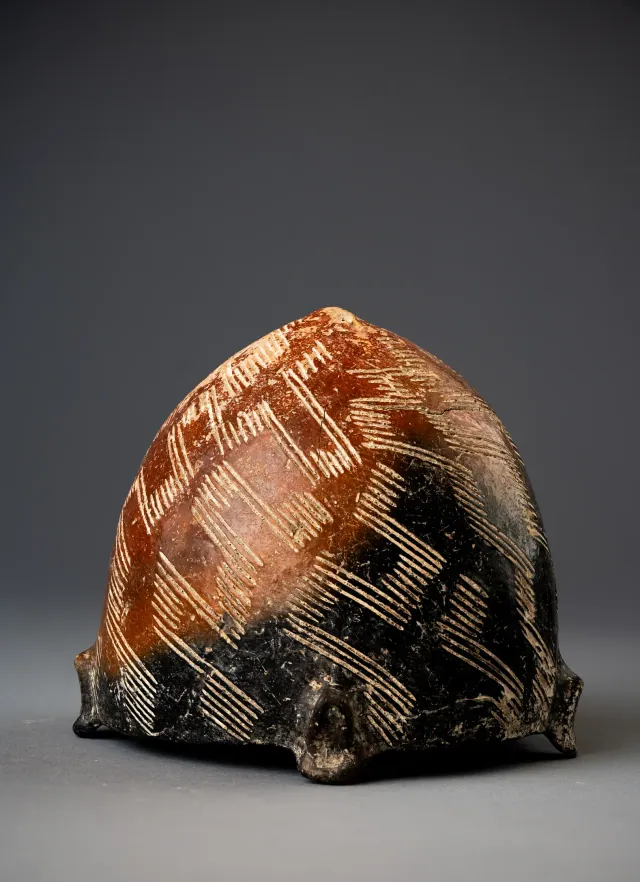
Black-topped Red Polished Tulip Bowl with Incised Hatched Lattice
Red Polished ware
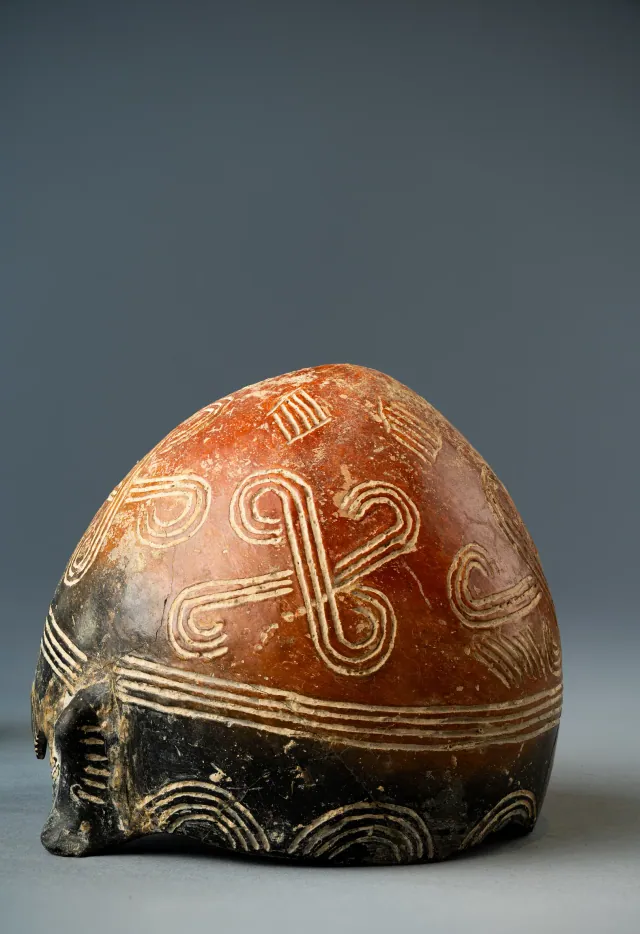
Black-topped Red Polished Tulip Bowl with Incised Spiral-armed Cross, Circles and Arcades
Red Polished ware
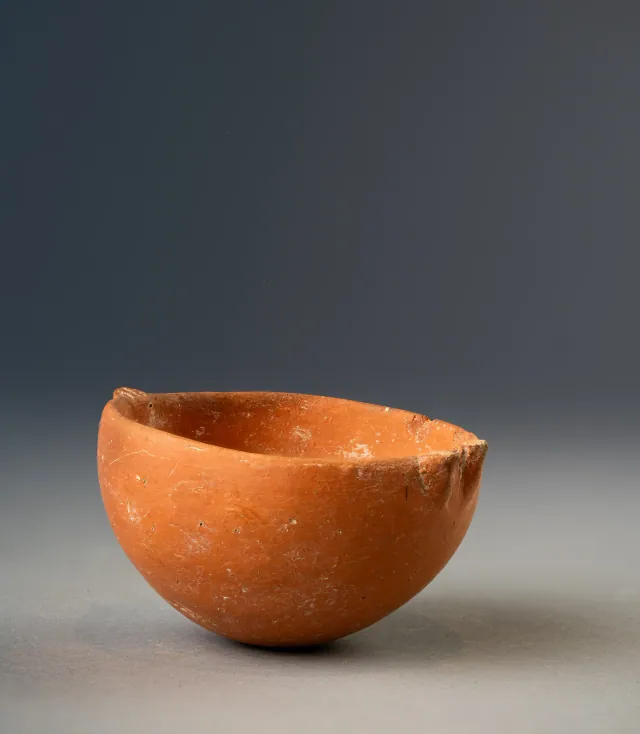
Red Polished Hemispherical Bowl with Two Rim Lugs
Red Polished ware
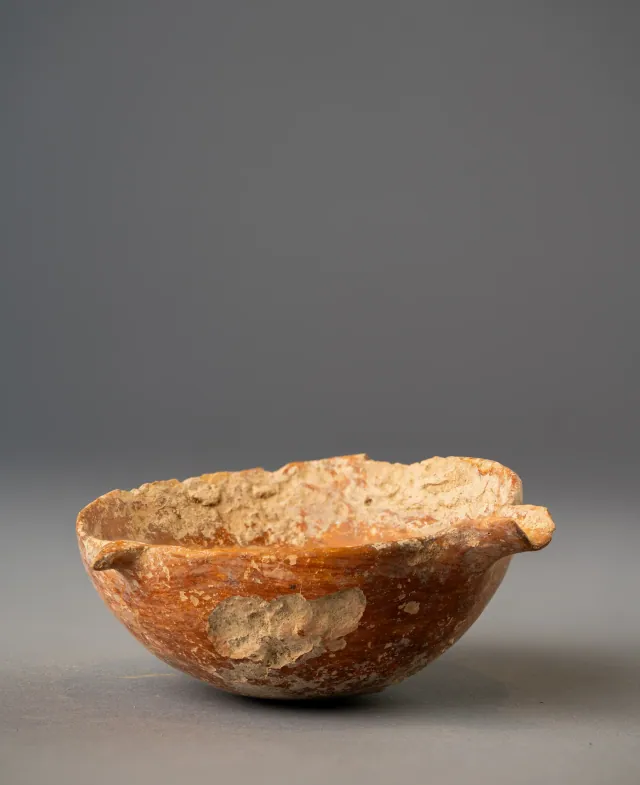
Red Polished Bowl with Two Opposed Tab Lugs
Red Polished ware
Found at the places discussed
Objects in our catalogue, in museum collections, recorded as found at these sites.


Background
Where to read more on this site before or after watching.
The site
Alambra
A village of stone and mudbrick houses on the slopes of the Mouttes-Spileos ridge, about 20 km south of Nicosia, lived in for about a century from around 1900 BC and abandoned peacefully, with cemeteries whose earliest tombs go back to the Early Cypriot period. Excavated by Cornell University in 1974–1985, it is one of the few Bronze Age villages of Cyprus published in full.
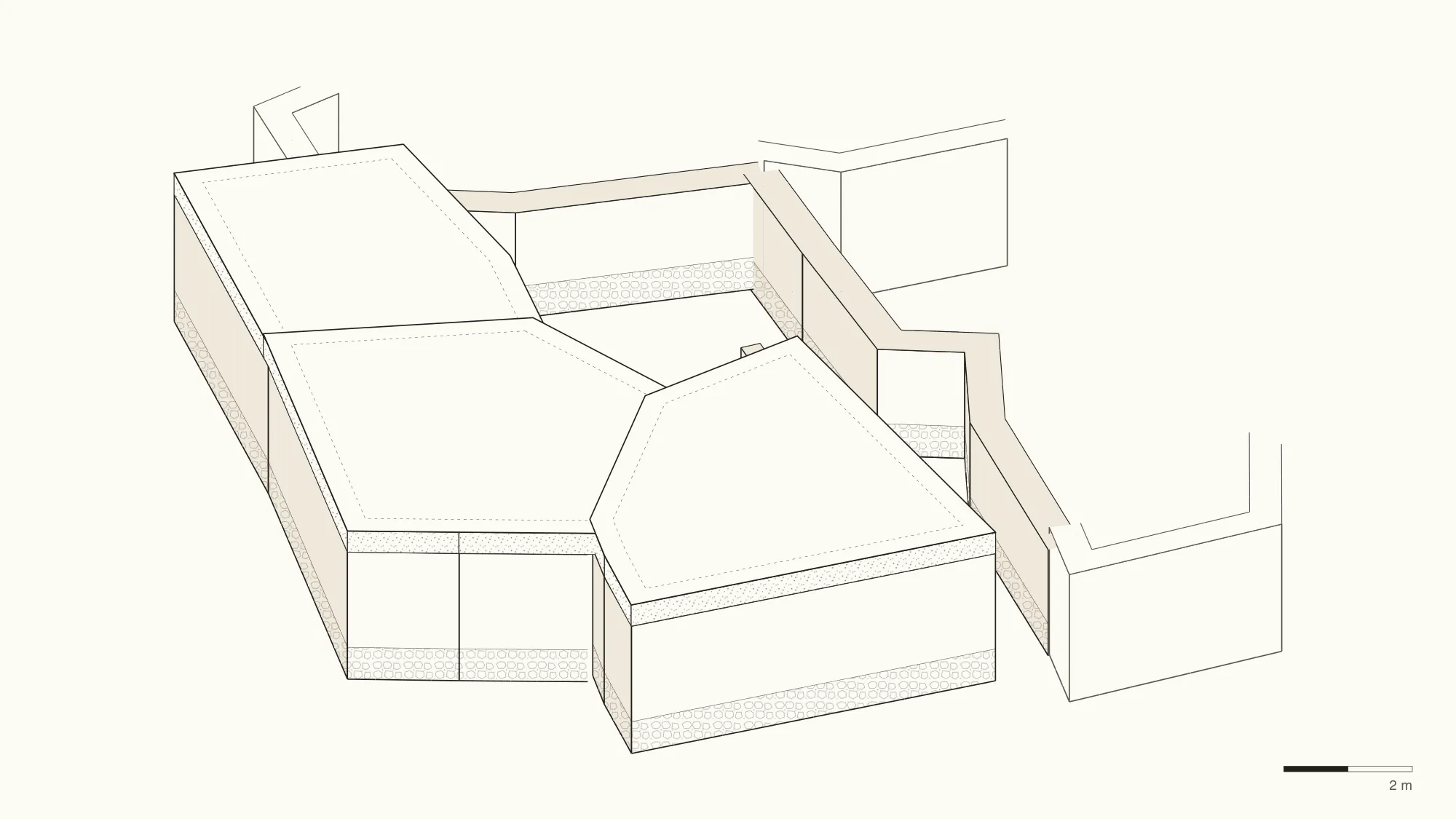
In the compendium
Early and Middle Bronze Age Houses
From about 2400 BC Cypriot villagers built rectangular, multi-roomed houses, usually a walled courtyard with two or three roofed rooms behind it.
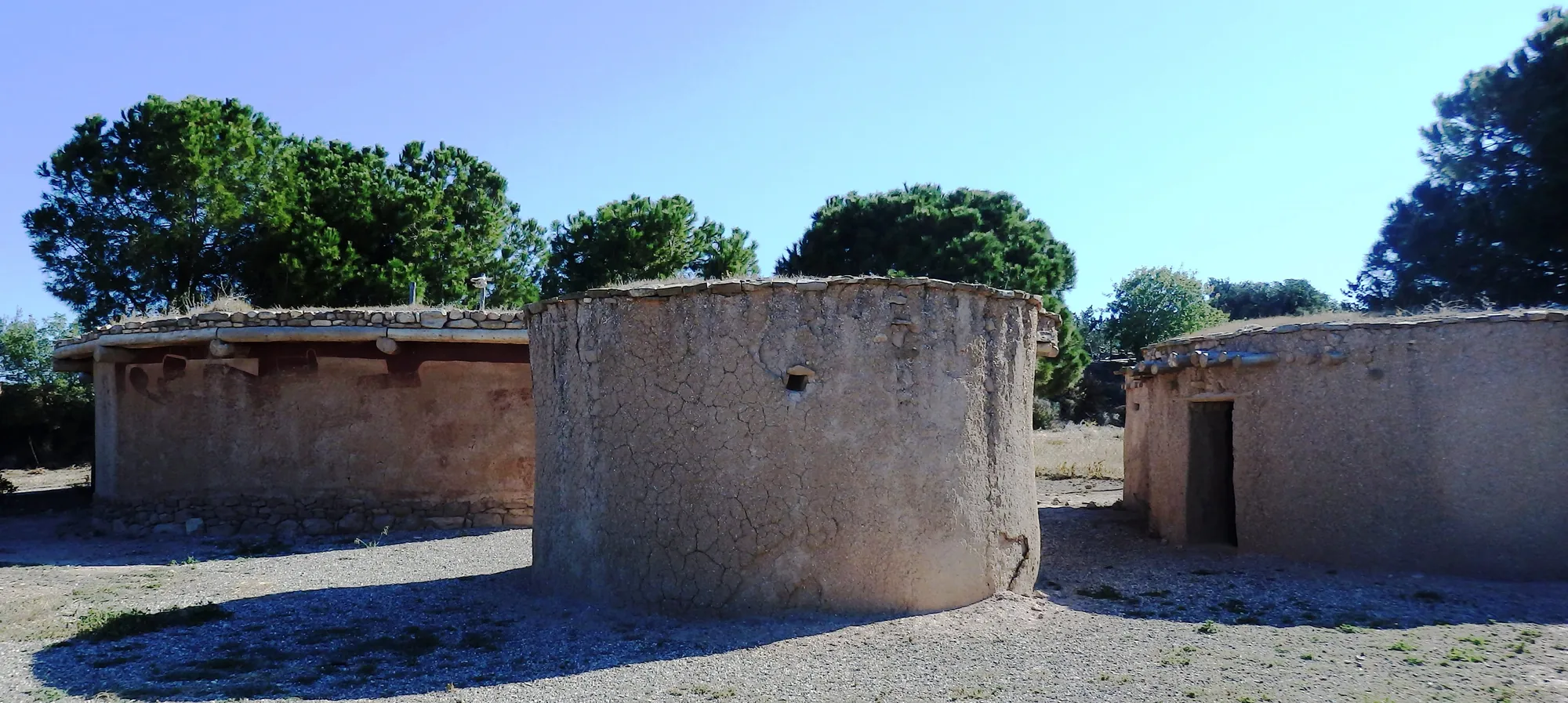
In the compendium
Building Materials and Techniques
Cypriot houses were built of local stone, earth and timber: walls of rubble or mudbrick on stone socles, under flat roofs of beams, brush and packed earth.
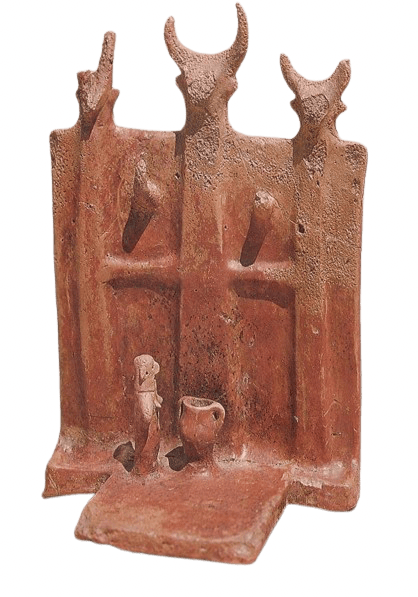
In the compendium
Clay Models
Freestanding miniature models of buildings, cult places, work scenes, boats, vehicles and furniture made in Cyprus from the Chalcolithic to the Cypro-Archaic period.
Map of Cyprus
Places discussed in the talk
- Has a page on this site
- Other places
- Ground above 200, 500, 1,000 m