
Video essay·Dig.·2025
Before Collapse: The Late Bronze Age World
This video covers more than Cyprus. The description below concentrates on its Cypriot parts, the first of which begins at 8:25.
Chapters
About the video
This video essay from the channel Dig. surveys the major regions of the eastern Mediterranean and Near East during the Late Bronze Age, followed by a century-by-century review from c. 1600 to 1200 BC and a discussion of whether contemporaries anticipated the Bronze Age collapse.
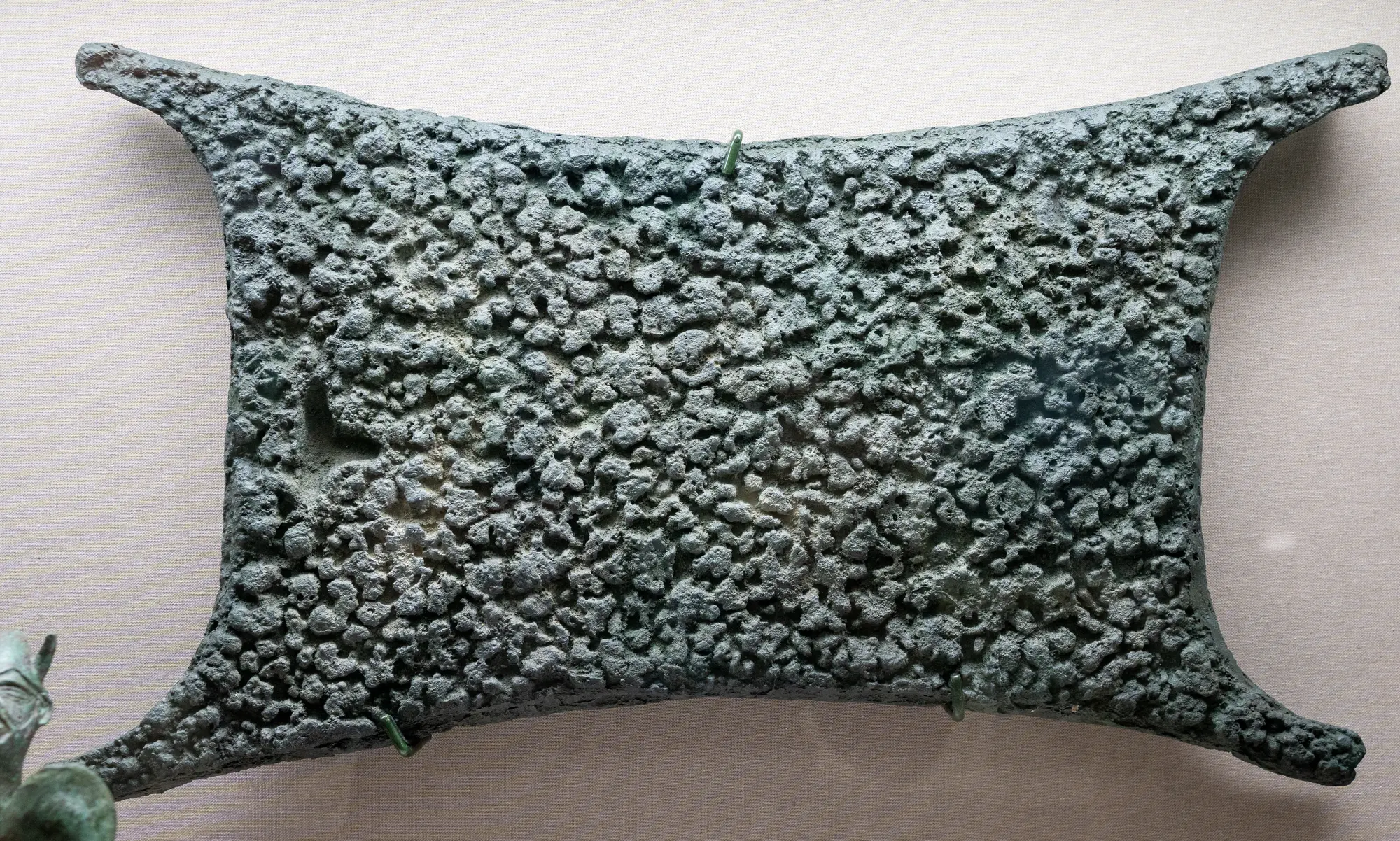
Cyprus first appears in the sections on periodization and trade. Its chronology is defined ceramically from Late Cypriot I, and Cypriot pottery was widely exported across the Levant and Near East. In the section on the economy, the late 14th-century Uluburun shipwreck is described as having a Syrian, Canaanite, or possibly Cypriot crew and a cargo containing Cypriot ceramics and 354 copper ingots, nearly ten tons in weight, almost certainly from Cyprus.
A dedicated section identifies Cyprus with the kingdom of Alashiya, where power was likely distributed among local elite families alongside a recognized king. Cyprus developed urbanism late, with Enkomi founded late in the Middle Bronze Age and becoming the island's largest city. The island exported copper as oxhide ingots, reflected in the bronze Ingot God from Enkomi, and had major centers at Hala Sultan Tekke, Maroni-Vournes, Kalavasos-Ayios Dhimitrios, and Alassa-Paliotaverna. At Palaepaphos, the sanctuary of Aphrodite housed a conical black stone baetyl found in excavation and depicted on Roman coins. The narrator also notes the late foundations at Maa-Palaeokastro and Pyla-Kokkinokremos, built either by Cypriot cities or as Mycenaean colonies.
Finally, the narrator cites letters from Cyprus to Ugarit warning of twenty approaching enemy ships and urging defensive preparations.
From our collection
Pieces in the Drakopoulos collection of the kinds and periods this talk covers: Vessel.
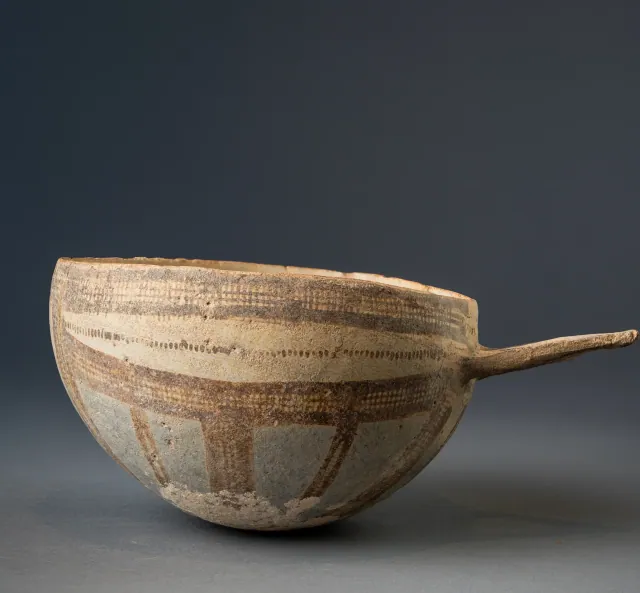
White Slip II Hemispherical Bowl with Wishbone Handle
Vessel
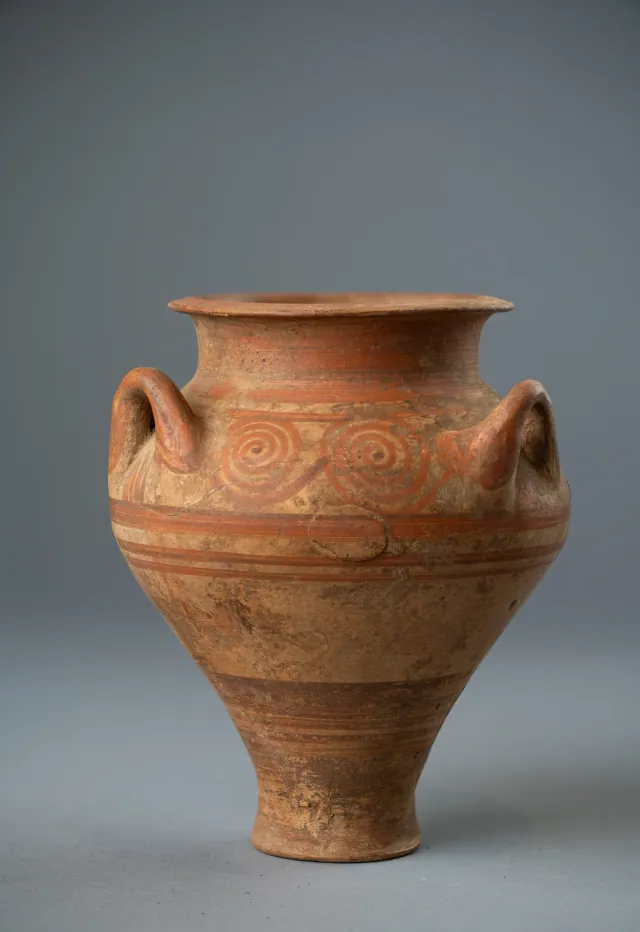
Cypriot Three-Handled Jar in the Mycenaean Style with Running Spirals
Vessel
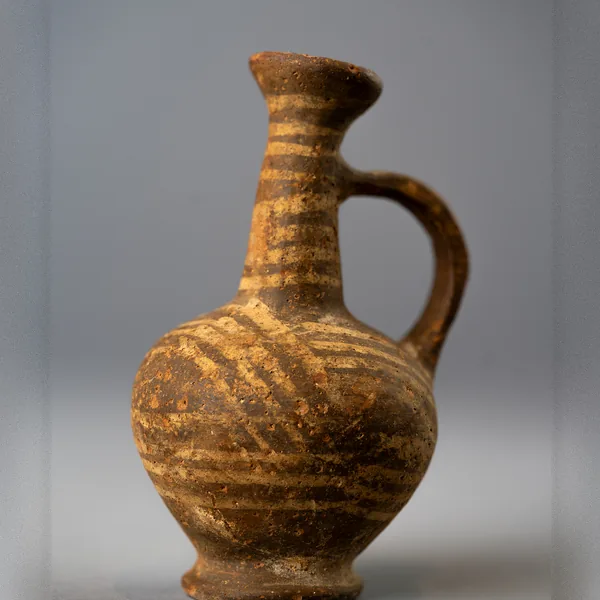
Base Ring II Bilbil Juglet with White-Painted Bands
Vessel
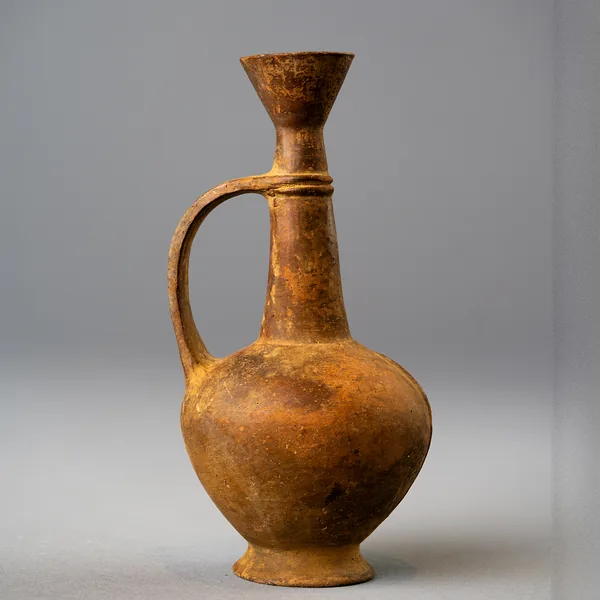
Base Ring Bilbil Juglet with Funnel Mouth and Neck Ridge
Vessel
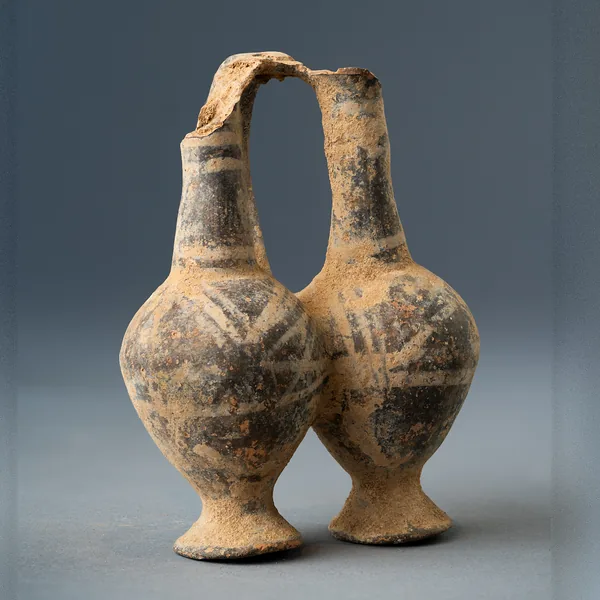
Base Ring II Double Juglet with White-Painted Decoration
Vessel
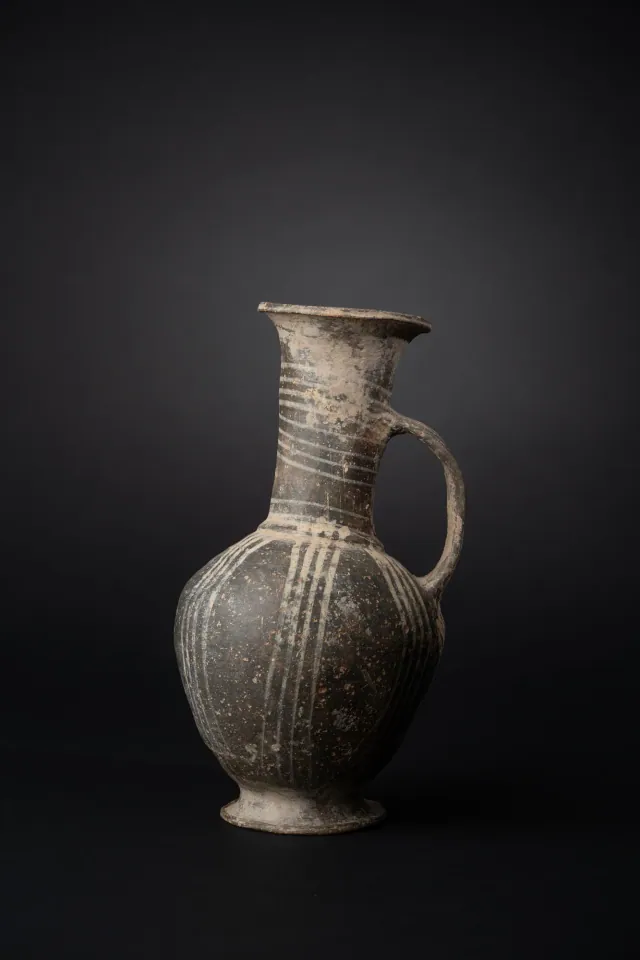
Base Ring II Jug with White-Painted Lattice Bands
Vessel
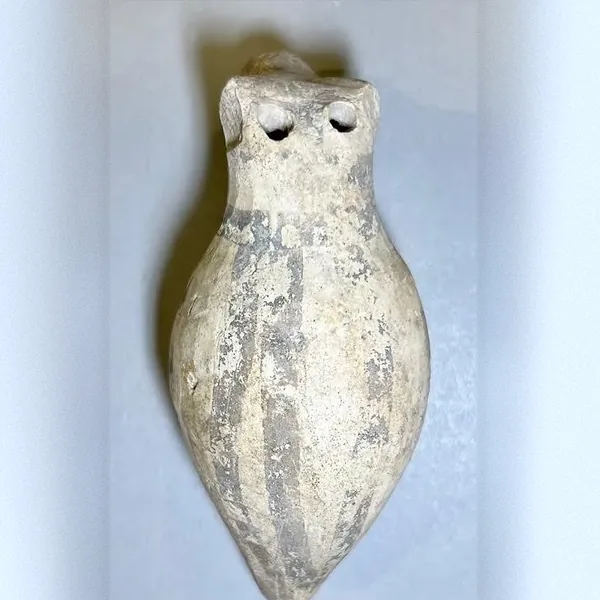
White Painted VI Owl-Headed Rattle
Vessel
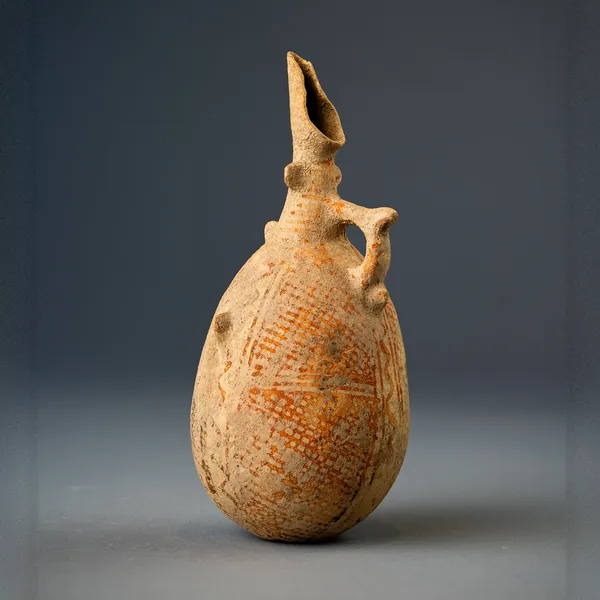
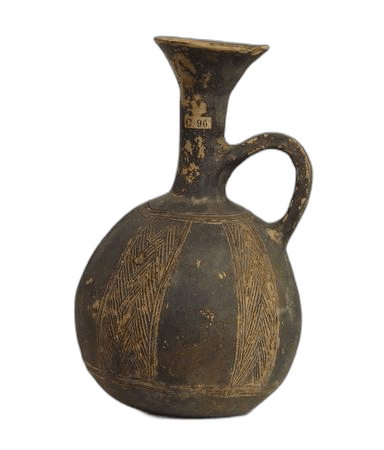
White Painted II Jug with Cut-away Neck and Lattice Panels
Vessel
Found at the places discussed
Objects in our catalogue, in museum collections, recorded as found at these sites.


Background
Where to read more on this site before or after watching.
The site
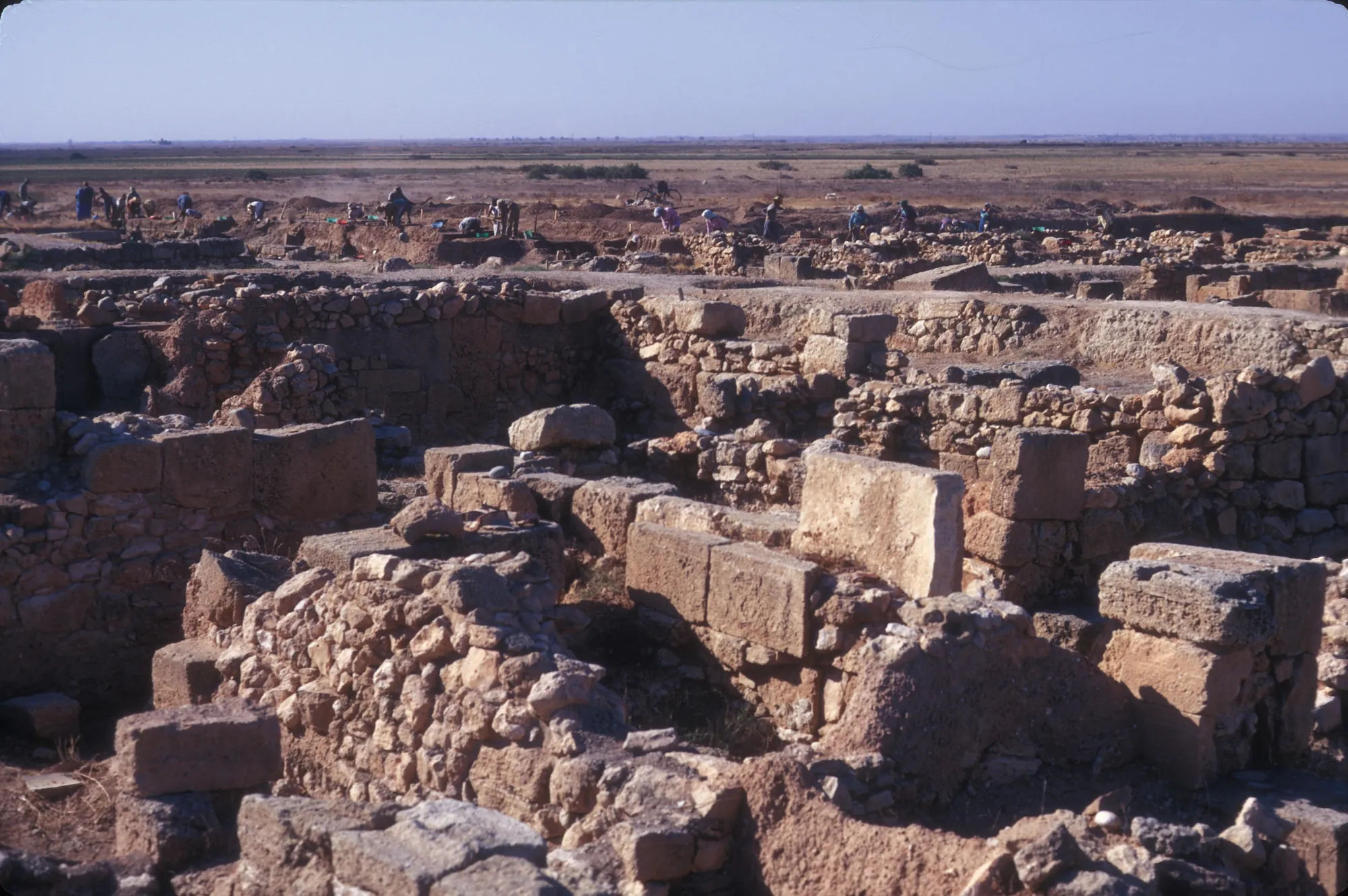
Enkomi
Enkomi is a walled Late Bronze Age town near the mouth of the Pedieos river on the bay of Famagusta, lived in from about 1650 BC until it was gradually abandoned for nearby Salamis. It was a port for Cypriot copper, and its excavations produced metal workshops, sanctuaries with bronze cult statues, rich tombs and the largest group of Cypro-Minoan inscriptions on the island.
In the compendium
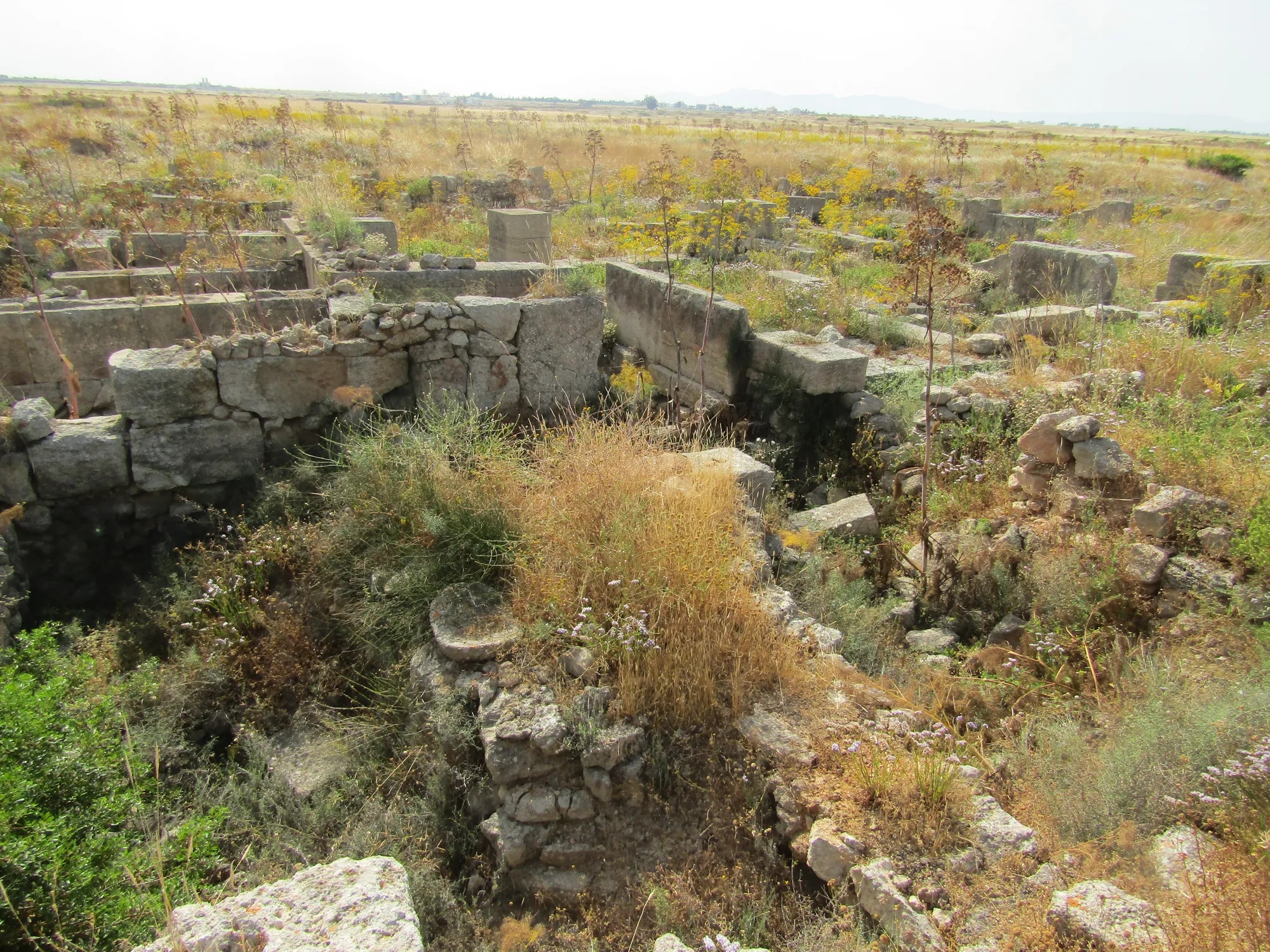
Late Bronze Age Towns and Buildings
How Late Bronze Age Cyprus built its first towns: street grids, large ashlar buildings with storage halls, courtyard houses, and the short-lived settlements of the twelfth century.
In the compendium
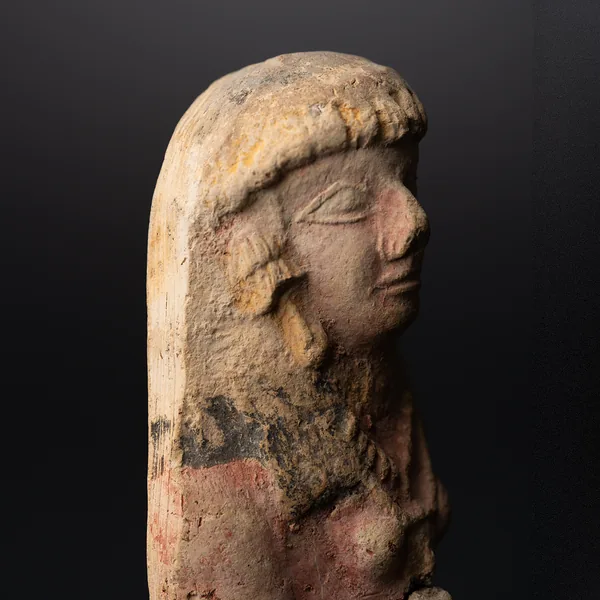
Egypt
Ancient Egypt, Cyprus's partner in copper, pottery and prestige goods from the Middle Kingdom to the Ptolemies, who annexed the island.
In the compendium
Hittite Empire and Cyprus
The Late Bronze Age Anatolian empire that claimed Alashiya as a tributary but left almost no material trace on Cyprus.
Map of Cyprus
Places discussed in the talk
- Has a page on this site
- Other places
- Ground above 200, 500, 1,000 m
Places
- 1Enkomi
- 2Hala Sultan Tekke
- 3Maroni
- 4Alassa
- 5Palaepaphos
- 6Maa-Palaeokastro
- 7Pyla-Kokkinokremos