
Lecture·Archaeological Research Unit - University of Cyprus·2025
Excavations at the sanctuary of the female deity on the eastern acropolis of Idalion
Chapters
About the lecture
Stephan G. Schmid of the Humboldt-Universität zu Berlin presents the results of excavations conducted since 2018 on the eastern acropolis of Idalion (Mouti tou Arvili), a joint project with the University of Cyprus. Identifying the site as the sanctuary of the great Cypriot female goddess, later worshipped as Aphrodite, Schmid shows how modern fieldwork can recover stratigraphic and architectural context from a hill repeatedly dug and looted since the nineteenth century.
The lecture first untangles nineteenth-century toponymy. Schmid demonstrates from maps by Louis de Mas Latrie and reports by Georges Colonna-Ceccaldi that the name Ambeleri, today restricted to the western acropolis, was also applied to the upper eastern hill. Consequently, several life-size female terracotta statues in the Louvre attributed to Ambeleri actually came from this eastern sanctuary. Re-opening the 1894 trenches of Max Ohnefalsch-Richter and locating the 1974 test trenches of the American expedition, the team found pockets of intact stratigraphy beneath up to three metres of debris.
Outside the temenos wall, the excavators uncovered two distinct zones for setting up votives directly on the bedrock, separated by material much as at Arsos. In one sector, six or seven pairs of large terracotta feet wearing sandals and toe rings remained in situ, facing east, alongside fragments of over-life-size faces from the Cypro-Archaic period. In the adjacent sector, around ten square cuttings in the bedrock held the plinths of life-size archaic limestone statues comparable in scale and type to a statue in the Rietberg Museum in Zurich.
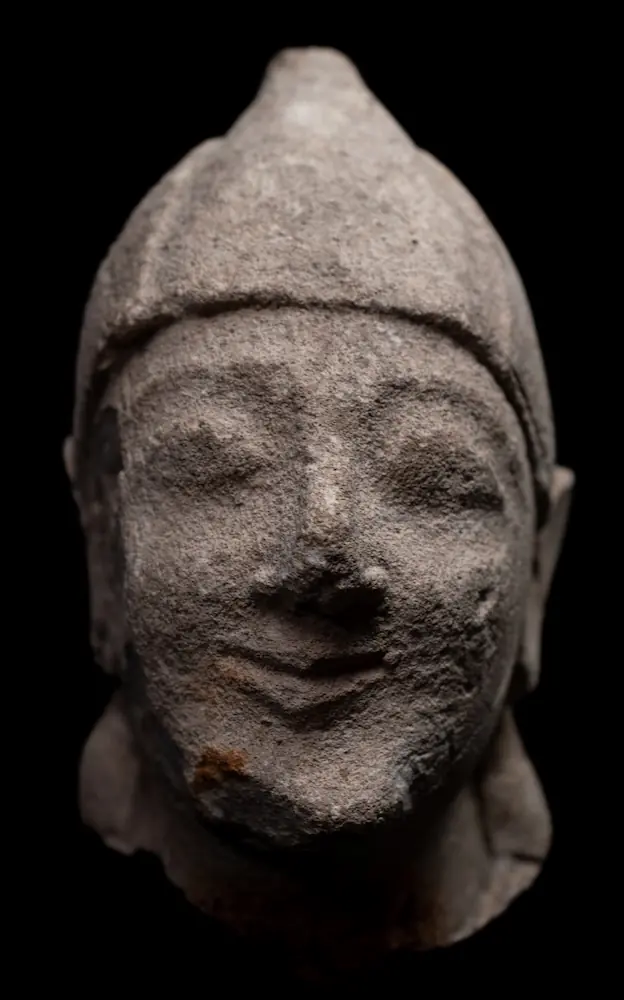
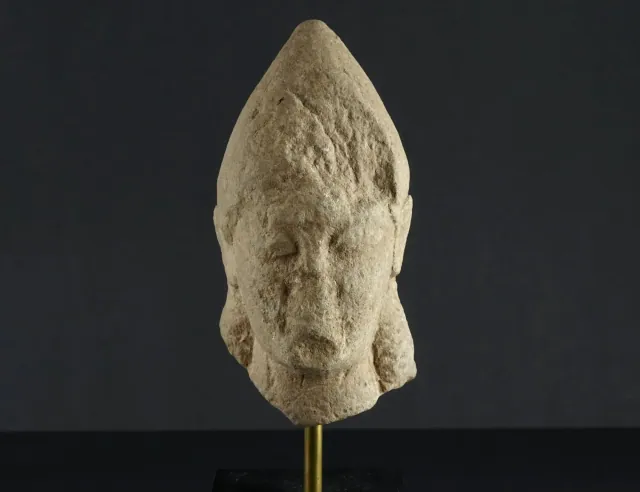
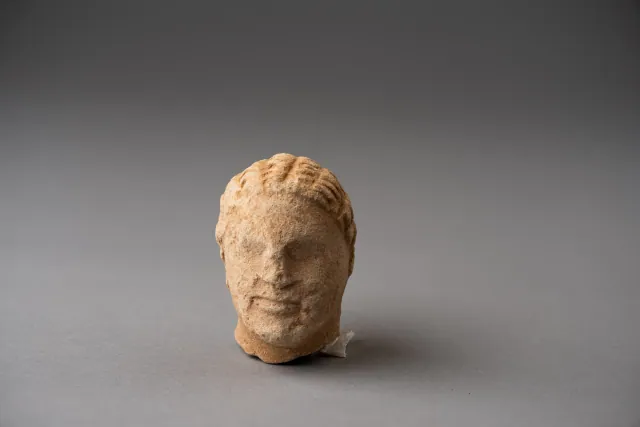
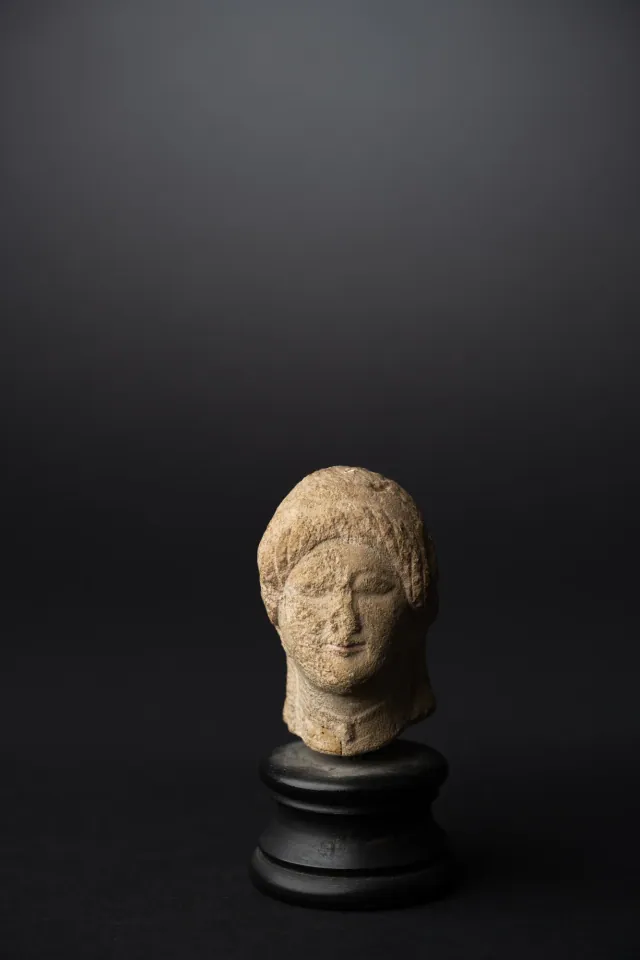
Inside the sanctuary buildings, Schmid traces major reorganisations. Around 500 BC, archaic statues were broken up to lay a new floor in a fill containing arrowheads. In the fourth century BC, a 4.4-metre-wide fortification wall incorporating spolia such as Cypriot capitals was built around the upper hill, blocking the view of the sanctuary from outside. Dedication nevertheless continued through the Cypro-Classical and Hellenistic periods, evidenced by limestone female heads, a base inscribed in alphabetic Greek by a mother named Nikous, a rare male head interpreted as Apollo following a shift from archaic Herakles-Melqart figures, and mixed deposits of archaic and Hellenistic sculpture sealed inside the rooms, including the feet and key-bearing arm of a life-size terracotta priestess.
From our collection
Pieces in the Drakopoulos collection of the kinds and periods this talk covers: Stone sculpture, Terracotta figurine.
Limestone Head of a Beardless Votary in a Conical Helmet
Stone sculpture
Weathered Limestone Head of a Votary in a Tall Pointed Cap
Stone sculpture
Limestone Head of a Boy, probably from a Temple Boy Statuette
Stone sculpture
Limestone Head of a Votary with a Wreath
Stone sculpture
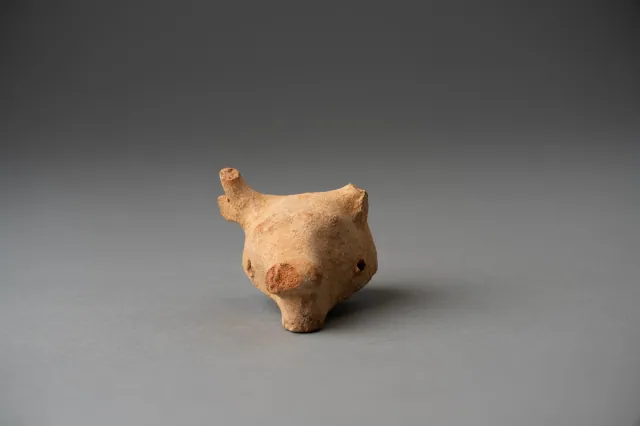
Head of a Terracotta Bull Figurine
Terracotta figurine
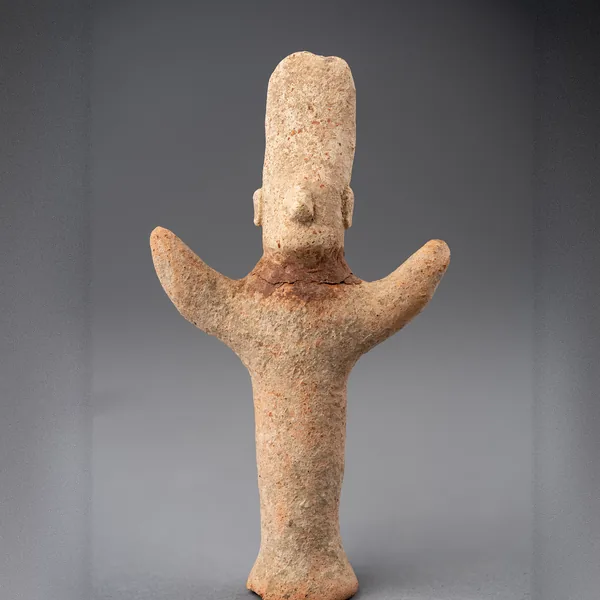
Terracotta Figure with Upraised Arms and Tall Cylindrical Headdress
Terracotta figurine
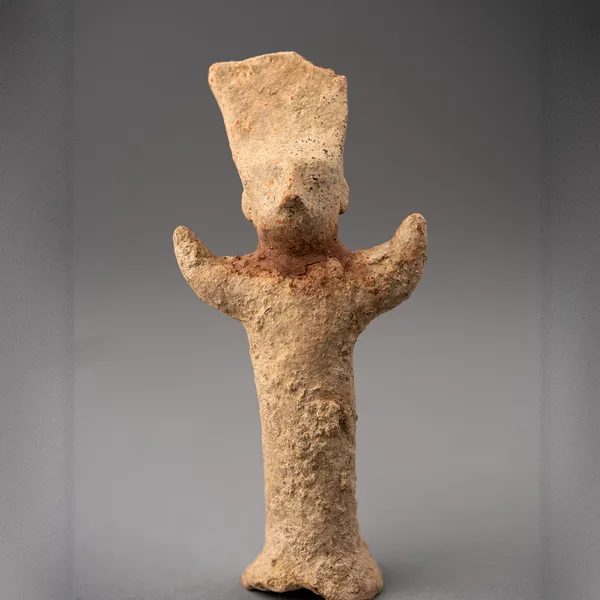
Terracotta Figure with Upraised Arms and Flaring Headdress
Terracotta figurine
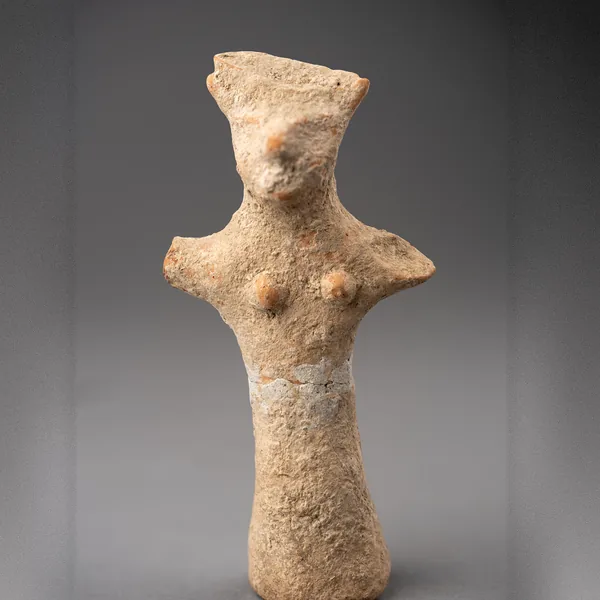
Terracotta Female Figure with Outstretched Arms
Terracotta figurine
Found at the places discussed
Objects in our catalogue, in museum collections, recorded as found at these sites.
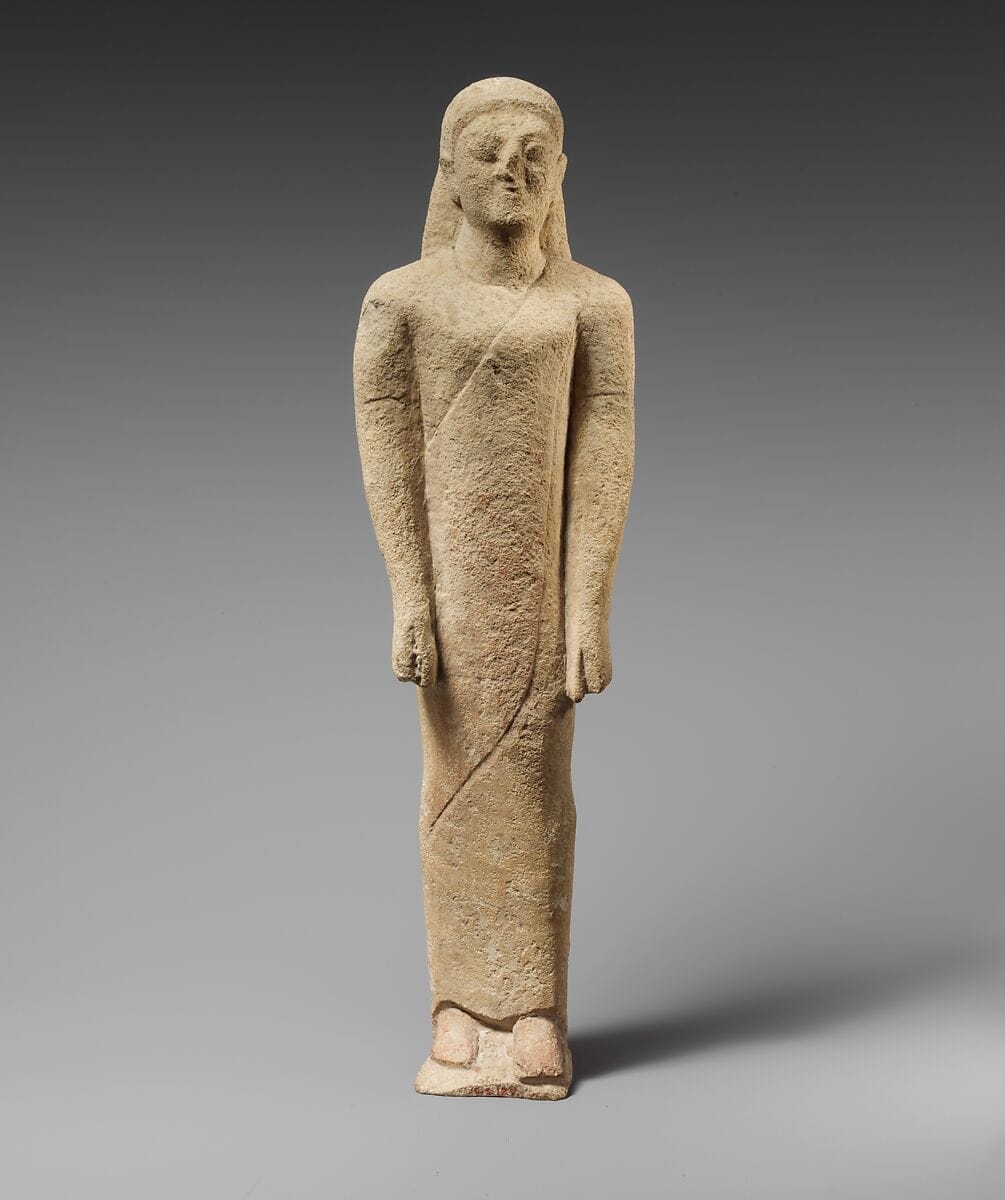
Limestone statuette of a beardless male votary in Greek dress
Idalion · Metropolitan Museum of Art

Limestone head of a female with a plain headdress
Idalion · Metropolitan Museum of Art

Limestone statuette of a female votary holding a flower
Idalion · Metropolitan Museum of Art

Limestone head of a bearded male with a wreath of leaves
Idalion · Metropolitan Museum of Art
Background
Where to read more on this site before or after watching.
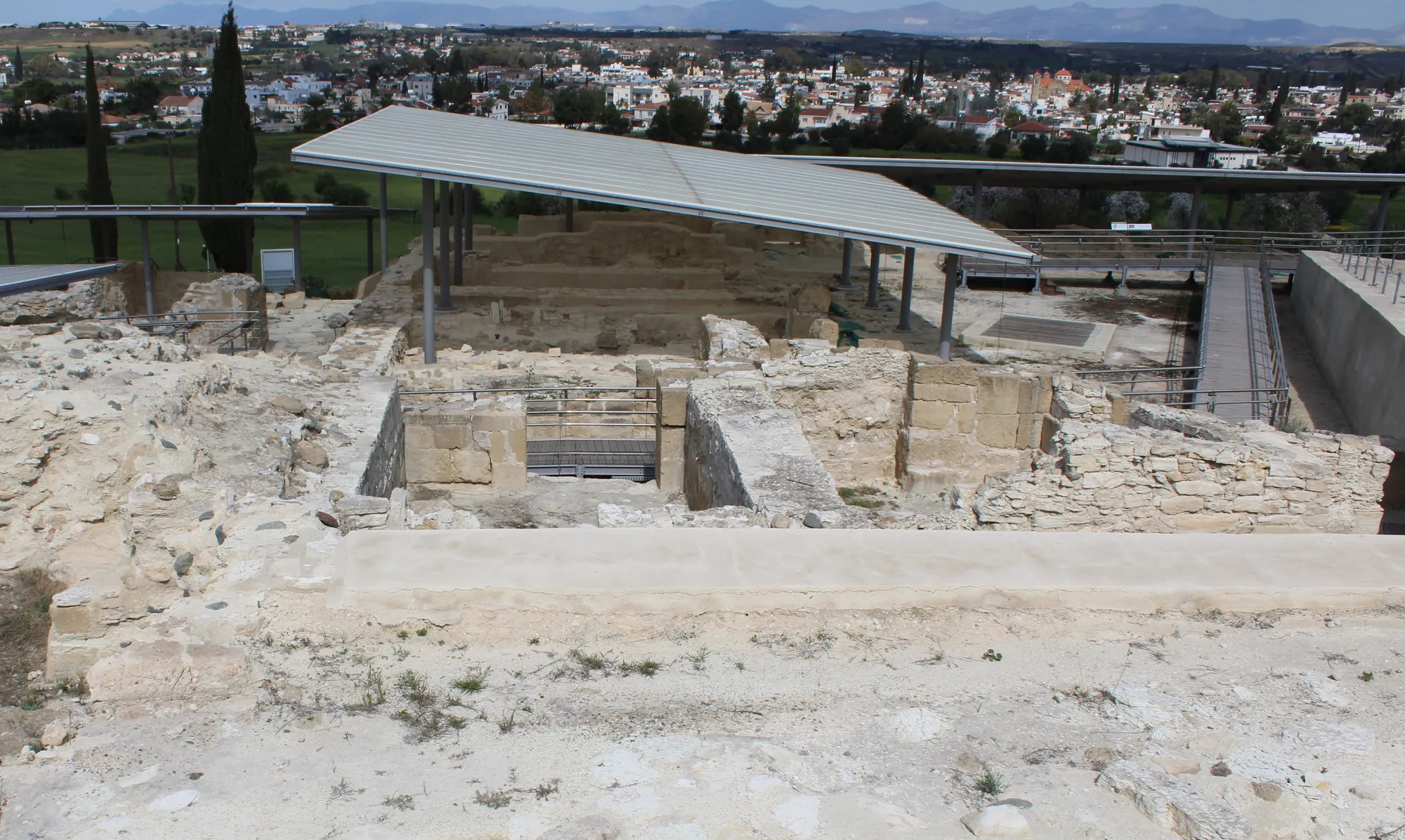
The site
Idalion
Idalion is an inland city-kingdom of Iron Age Cyprus at the modern village of Dali, built round two limestone acropoleis and a walled lower city on the Yialias river. Its bronze tablet, the longest known text in the Cypriot syllabary, records a siege of the city in the first half of the 5th century BC; soon afterwards Idalion passed to the Phoenician kings of Kition, whose administrative archive was found on the west terrace.
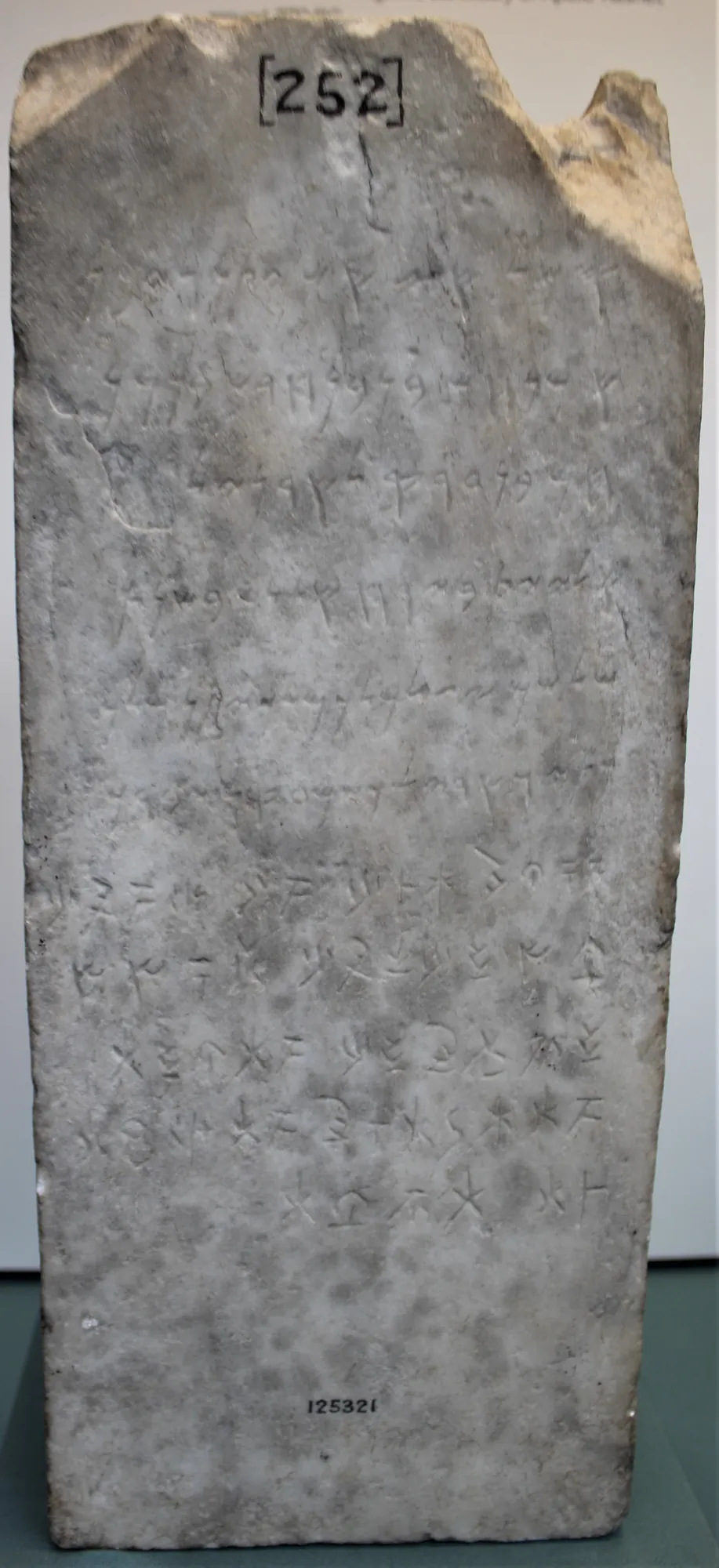
In the compendium
Max Ohnefalsch-Richter: Excavator, Dealer and the Divided Finds of British Cyprus
The German excavator whose finds left British Cyprus lawfully through the division of finds of 1880 to 1895, the patrons he dug for, the sales of 1887 and 1896, and the record he left.
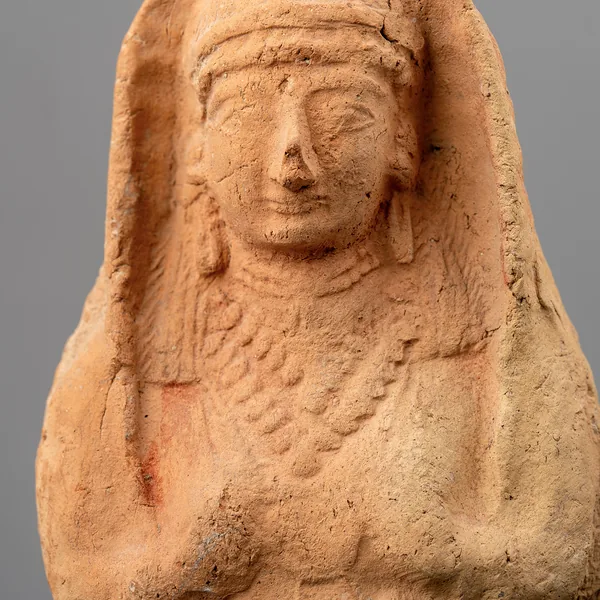
In the compendium
Iron Age Sanctuaries
The Cypriot Iron Age sanctuary was a walled open-air court with an altar, sacred trees and small roofed rooms; Greek-style temples arrived only under Rome.
In the compendium
Archaic Limestone Statues
The limestone votive statues and statuettes dedicated in Cypriot sanctuaries of the Cypro-Archaic period, many in Egyptianizing dress.
Map of Cyprus
Places discussed in the talk
- Has a page on this site
- Other places
- Ground above 200, 500, 1,000 m