
Contents
From the middle of the 7th century BCE, Cypriot coroplasts made clay statues on a scale that most of the Mediterranean reserved for stone or bronze: standing men and women, charioteers and a few deities, from about half life-size up to life-size and beyond [1][2]. They were hollow, built on the wheel or by hand, with faces pressed from moulds, and they were painted [3][4][5]. Most of them were dedicated in sanctuaries, and the best-known group stood in the hundreds around the altar at Ayia Irini on the northwest coast [1]. This page covers the large pieces. The small clay votaries made in their thousands alongside them are described under snowman figurines, horse-and-rider figurines and the Terracotta Figurines of Cyprus article. You can see all large terracotta sculpture in the catalogue.
What counts as large terracotta sculpture
The working definition on this site is a clay statue or head from a figure of roughly half life-size or more. Size alone is a convention: the excavators of Ayia Irini published "statues and statuettes" together, close to 2,000 pieces without counting fragments, and the large and small figures stood side by side in the same sanctuary [6]. What sets the large pieces apart is construction. Darby and de Hulster's survey describes Cypriot medium- and large-scale statuary, "up to life-sized and over-life-sized", made with "wheel, coil, or handmade bodies with appendages added separately", with moulds for faces and other parts and moulds or stamps for details [3]. At Marion, Nancy Serwint traced one workshop tradition that ran from "small-scale to life-size to colossal" [4].
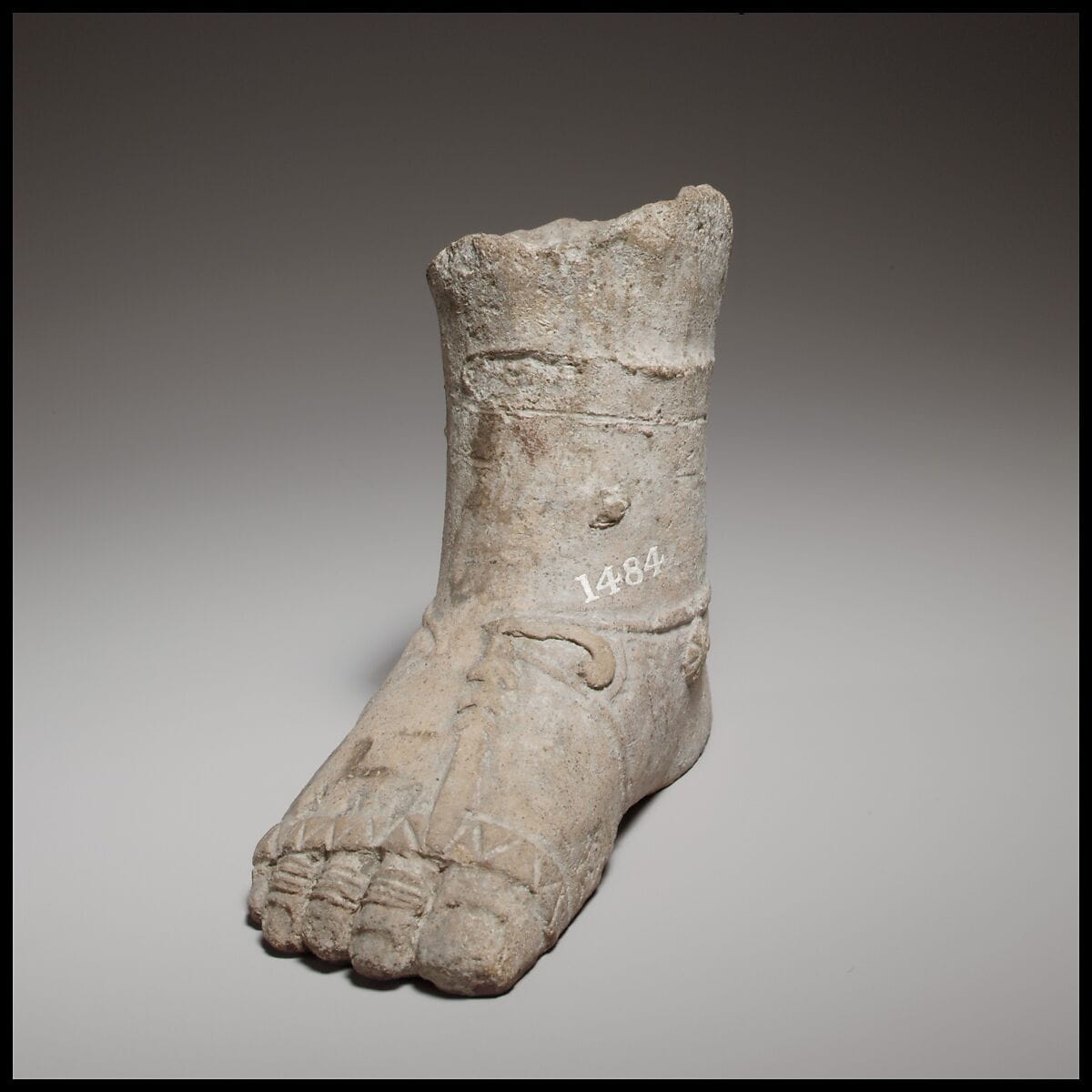
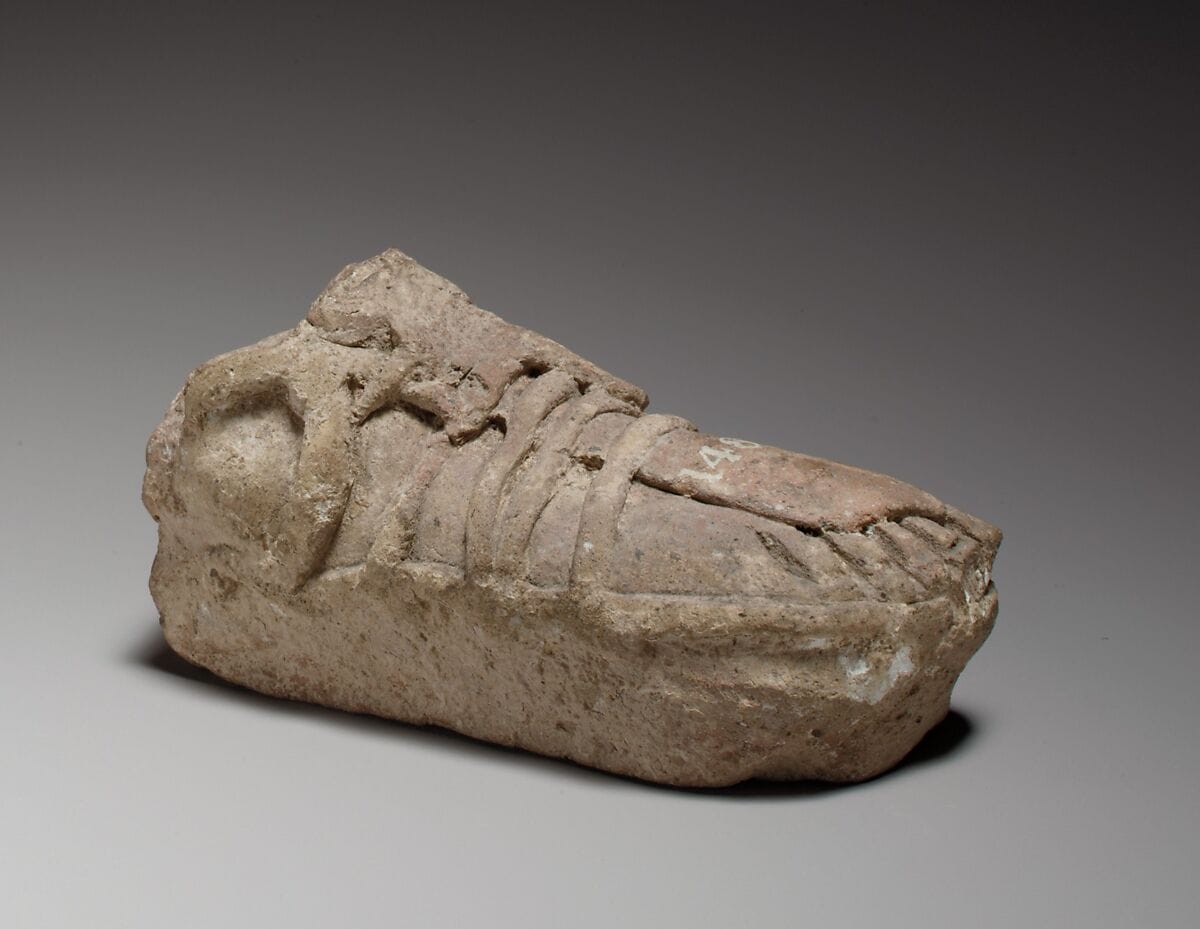
Most surviving examples are fragments, so the original scale has to be estimated from the piece that remains. A head of about 22 to 36 cm, or a foot a few centimetres high, can belong to a large statue or a big statuette. The Metropolitan Museum's records for its Cesnola fragments state the estimate where it can be made: one hollow right foot came from "a figure of approximately life size", another from one of "approximately two-thirds life size or a little less", and a solid handmade foot from one of "approximately half life size or a little less" [5].
Dates: from the mid-7th century BCE
Iacovou places the start of "technically demanding large and even life-size terracotta sculptures" in the mid-7th century BCE [1]. A general history of the island dates the start of monumental sculpture in both limestone and terracotta to the same years, "around the middle of the 7th century", and notes that the clay statues were "often over-life-size" [2, p. 95]. Both accounts treat the large clay statue as a new undertaking of the 7th century, made in the same decades as the first monumental limestone figures.
Production was heaviest in the Cypro-Archaic period, but it did not stop in 480 BCE. Several of the Met's large heads are dated to Cypro-Classical II, c. 400 to 310 BCE, and one head of a youth to the early 3rd century BCE [5]. The Pierides Foundation Museum in Larnaca holds the upper torso and head of a large clay statue of a woman, "perhaps a portrait", from the Paphos District, 40 cm high and dated to the early 3rd century BCE [2, p. 121]. For the Hellenistic period, the British Museum's handbook argues "with some degree of plausibility" that many votive faces were based on portrait sculptures of the rulers [13, p. 44].
| Phase | Date (BCE) | What survives |
|---|---|---|
| Cypro-Archaic I–II | c. 650–480 | Ayia Irini statues; Met heads in Proto- and Neo-Cypriote style; armour fragment |
| Cypro-Classical I | c. 480–400 | Met hollow right foot from a life-size figure (date queried) |
| Cypro-Classical II | c. 400–310 | Met heads of a wreathed man and a woman in a stephane; head and shoulders of a man |
| Early Hellenistic | c. 300–275 | Met head of a youth; Pierides torso of a woman |
| Late Hellenistic | c. 200–100 | Met solid right foot from a half life-size figure |
Ayia Irini
The type site was found by chance. In November 1929 a priest brought to Nicosia the head and upper part of an early 6th-century BCE terracotta statue found on his farm at Ayia Irini, and the Swedish Cyprus Expedition sent Erik Sjöqvist to excavate; Einar Gjerstad, the expedition's leader, published the site in 1935 [6]. The story of the expedition is told in The Swedish Expedition and its Legacy.
The sanctuary was a large, roughly triangular open temenos. Its statues were "mostly found in a semi-circular arrangement facing the altar" [7], more than 2,000 votive statues and statuettes standing "in a frontal position facing the altar" [8, p. 105]. Most of the large figures are male: votaries, warriors and charioteers, with bulls among the animal offerings [7]. Vassos Karageorghis notes that some of the chariot warriors are life-size [9, p. 173]. The cult has been read as that of a fertility deity "possibly of male character", with banquets and dances [6]. A statue in the Cyprus Museum has a tubular body "wheel-made in two halves" with features painted in black; a statuette from the site has a wheel-made tubular body and a hand-modelled head [10, p. 102].
Ayia Irini was used most intensively in Gjerstad's periods 3 to 6, about 800 to 500 BCE, and then lay idle for almost four centuries [7]. A chemical analysis of 66 samples (statues, statuettes and potsherds) found that 59 were chemically similar, so the clay probably came from one area; the groupings did not match Gjerstad's style groups [11]. The site now lies in a military zone in the occupied north and cannot be visited [7]. Since 2011 the Medelhavsmuseet in Stockholm has run a new study of the Ayia Irini material, including more than 100,000 sherds [6].
How they were made
The large statues were built rather than carved. The body was a hollow tube, thrown on the wheel in one or more sections, or built from slabs and coils; arms, attributes and headdresses were added by hand [3][10, p. 102]. Faces were usually pressed from moulds. The Met's label for a Cypro-Archaic II head puts it simply: "Molds were used for the heads, while the bodies were handmade" [5].
Serwint's study of the Marion terracottas found several methods combined on single works: mould, wheel, slab and coil. Moulds were used only for specific parts, they were in use from the 7th century BCE, and the workshop developed "novel methods of executing joins of large-scale statues, previously unattested in Cypriot sculpture" [4]. Some Ayia Irini pieces keep red and black paint [11], and the Met heads still carry enough pigment to show how strongly coloured the finished figures were [5]. The same moulding technique appears at a much smaller scale on the collection's own mould-made head of a woman with a diadem, which shows how far down the size range the method reached.
Moulds also mean copies. The Met's wreathed head of a man (74.51.1475), 31.8 cm high, came from the same mould as a head in the Pierides Museum in Larnaca found in a sanctuary at Pomos in northwestern Cyprus [5].
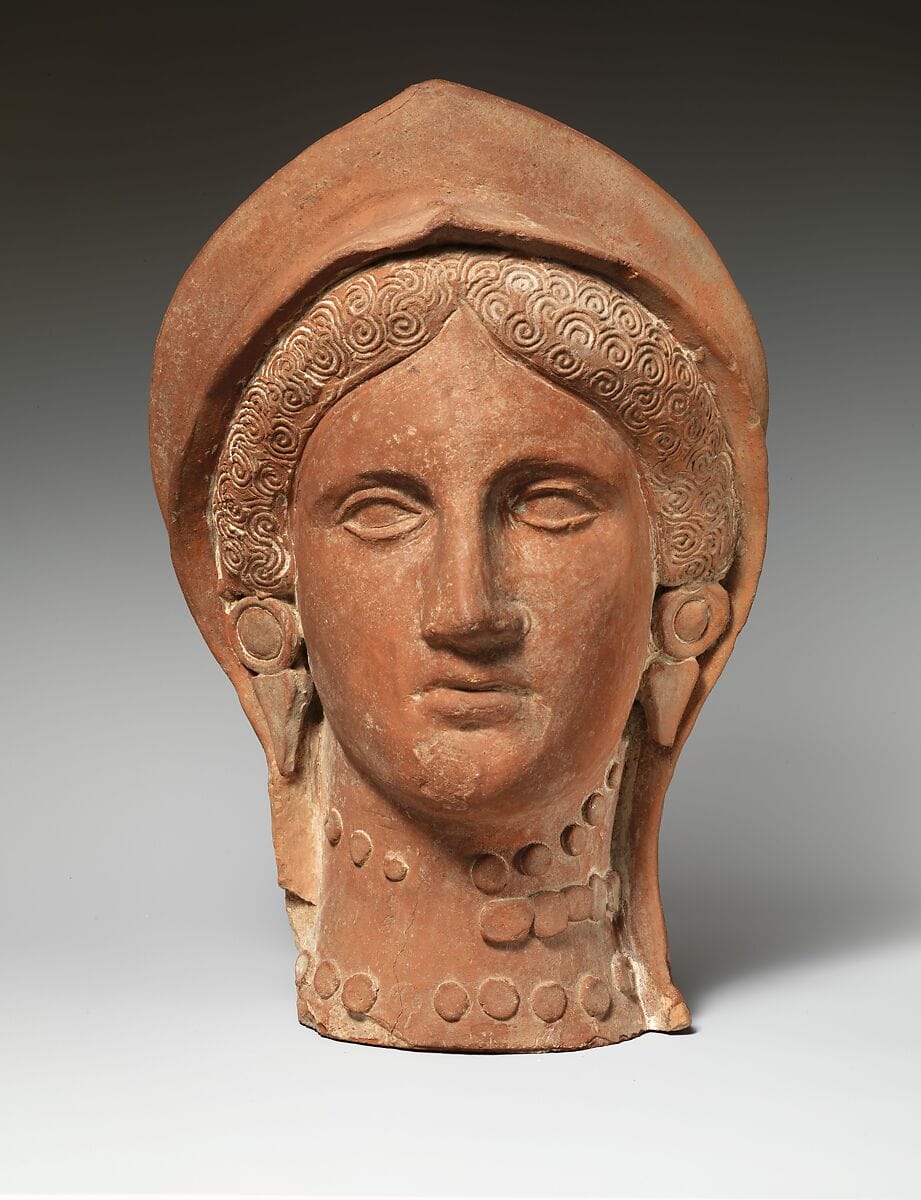
Terracotta head of a woman wearing a stephane, Cypro-Classical II, c. 400 to 310 BCE, H. 35 cm. Metropolitan Museum of Art, Cesnola Collection.
Styles and the debate over Gjerstad's sequence
Gjerstad used the Ayia Irini terracottas as the backbone of his Archaic chronology in The Swedish Cyprus Expedition IV.2 (1948). He sorted them into "Proto-Cypriote", "Neo-Cypriote" and "Archaic Cypro-Greek" styles and treated them as successive phases, a scheme later extended to stone sculpture [12, p. 24]; see How Cypriot Figurines Are Classified. The Met calls its head 74.51.1443 "one of the finest examples of the 'Neo-Cypriot' style", with fine features, large ridged eyes, feathered eyebrows and much colour [5].
The sequence has not held. Fourrier showed that Gjerstad's stratigraphy must be questioned and that Proto-Cypriote and Neo-Cypriote works at Ayia Irini were contemporary: the first was local production of the kingdom of Soloi, the second came in from Idalion or Salamis [12, p. 24]. Bourogiannis calls the stratigraphy "idealised" and points out that Gjerstad had not excavated the site himself [7]. The styles survive as names for workshops and regions; they no longer serve as dating stages.
Clay and stone, Cyprus and abroad
Antoine Hermary has argued that the prestige of the island's terracottas helps explain the early growth of Cypriot limestone sculpture [1]. Hermary and Mertens link the colossal limestone head from Golgoi and the female statues from Arsos closely to the large terracottas of Salamis and Idalion [12, p. 24]. The Golgoi head is the subject of Cesnola's Colossal Head. The painted surfaces of the stone statues are discussed under limestone polychromy.
The clay statues also travelled. Large 7th-century BCE Cypriot terracotta figures have been found at Miletus, and a life-size figure at Old Smyrna; on Samos, large Cypriot-type terracottas were made from local Samian clay [1]. At the temple of Eshmun near Sidon, Cypriot-type terracotta fragments, mostly moulded and mainly 6th century BCE, include both imports from Cyprus and local work [1].
The Cesnola fragments at the Met
The Metropolitan Museum's group comes from the collection of Luigi Palma di Cesnola, bought by subscription in 1874 to 1876 [5]. Their findspots were not recorded, so the dates are stylistic. The group includes:
- A head of a man, Cypro-Archaic II, 29.2 cm high, wearing the helmet-like headgear of the limestone votaries, with traces of paint [5].
- The Neo-Cypriote head of a man, 22.2 cm high [5].
- A fragment of a large statue of a man (Met record), Cypro-Archaic II, showing a lion's head and a figure with a large sword in low relief, read as decorated body armour on a large male figure [5].
- A head and shoulders of a man, Cypro-Classical II, 36.5 cm high, from a full-length figure, possibly a votary [5].
- The head of a woman in a stephane (74.51.1459), from a large votive statue; related heads in Berlin and Paris are attributed to the area near Paphos [5].
- A head of a youth, Early Hellenistic, mould-made and hollow, from a figure of about two-thirds life size [5].
- Three right feet: one from a life-size figure, one from a figure of about two-thirds life size and one, solid and handmade, from a half life-size figure [5].
The feet show the change in practice over time: the two earlier ones are hollow and mould-made, while the Late Hellenistic foot is solid and modelled by hand [5].
Summary
Large terracotta sculpture was a Cypriot speciality from about 650 BCE: hollow statues built from wheel-thrown or hand-built bodies with moulded faces, painted, and set up in sanctuaries such as Ayia Irini, Idalion, Salamis and Marion. Gjerstad's style names still label the Archaic workshops, though they no longer mark successive phases. The tradition continued through the Cypro-Classical period into the Hellenistic, when portrait-like faces appear. For the wider class of Cypriot votive images, see the statues and figurines hub and the temple boys.
Objects on this page
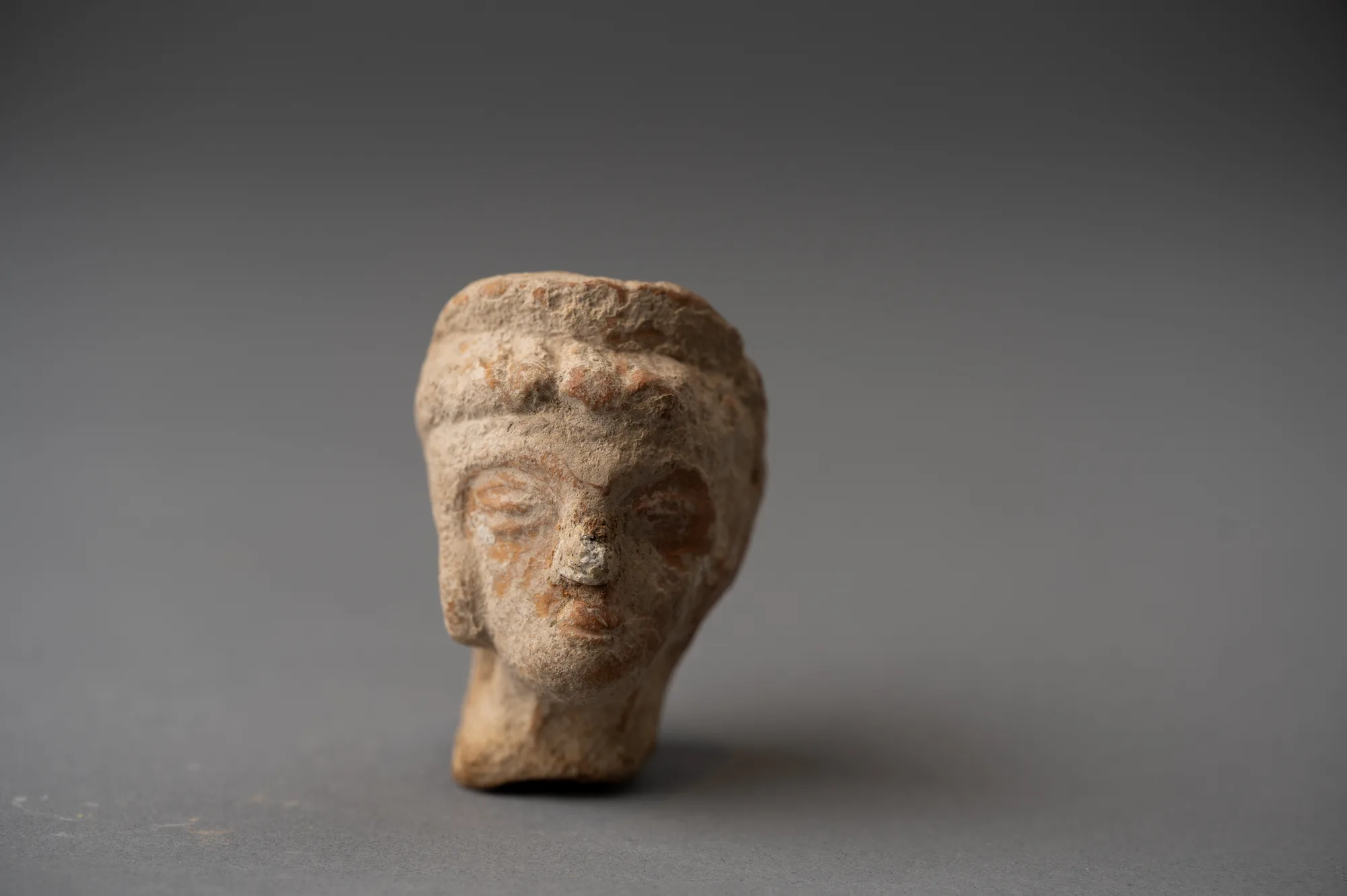 Mould-made Terracotta Head of a Woman with a Diadem and Painted FeaturesArchaic II · 600–400 BC
- Terracotta head of a woman wearing a stephaneClassical · 400–310 BC
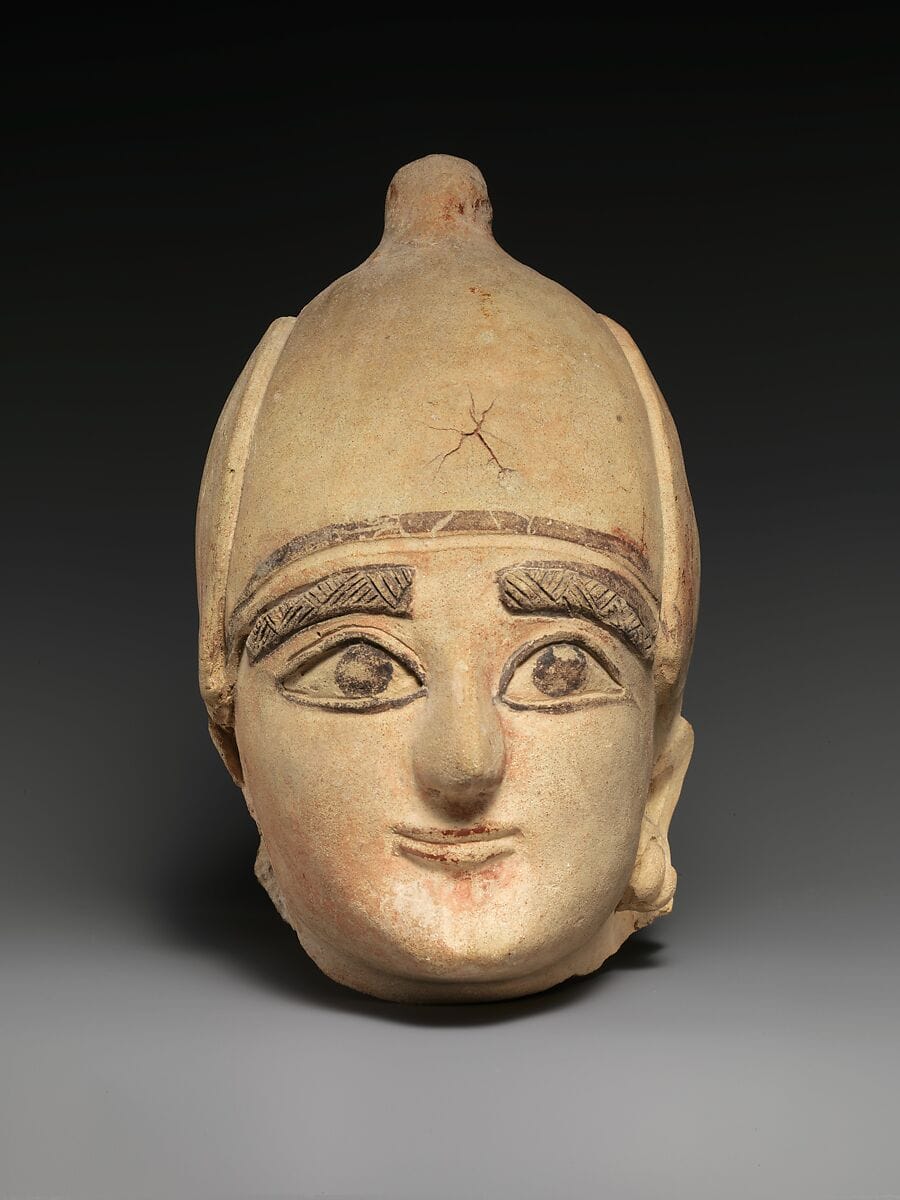 Terracotta head of a manArchaic II · 650–550 BC
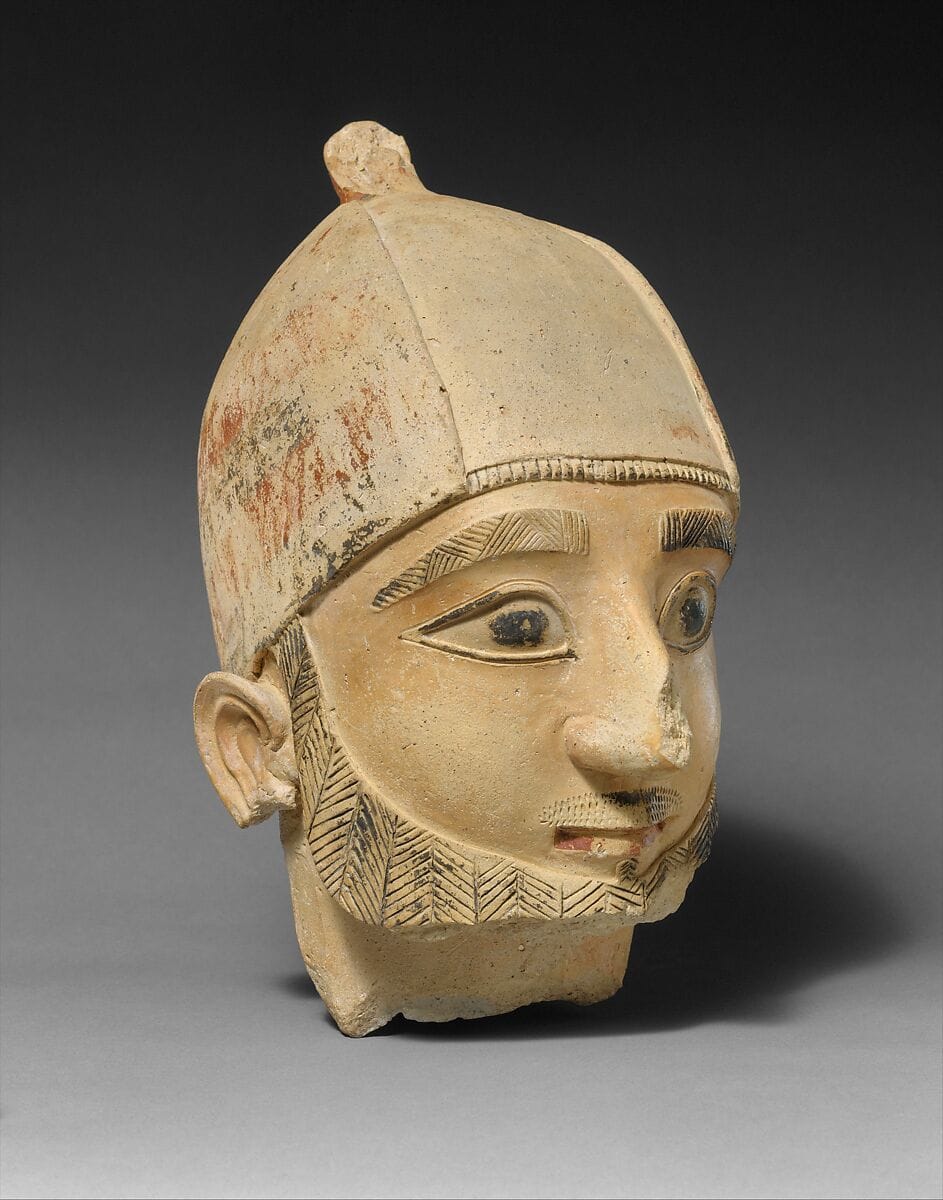 Terracotta head of a manArchaic II · 625–525 BC
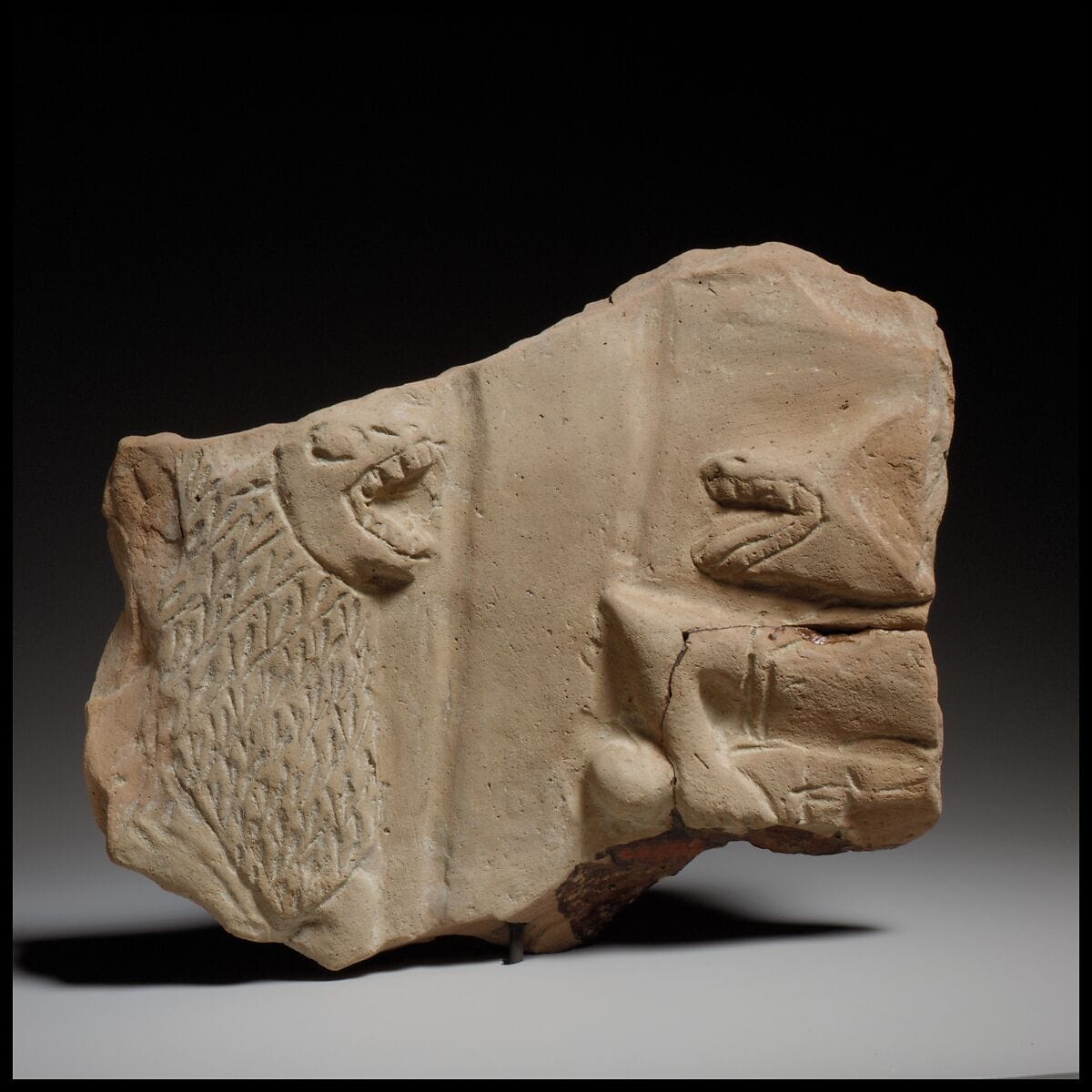 Fragment of a large terracotta statue of a manArchaic II · 599–500 BC
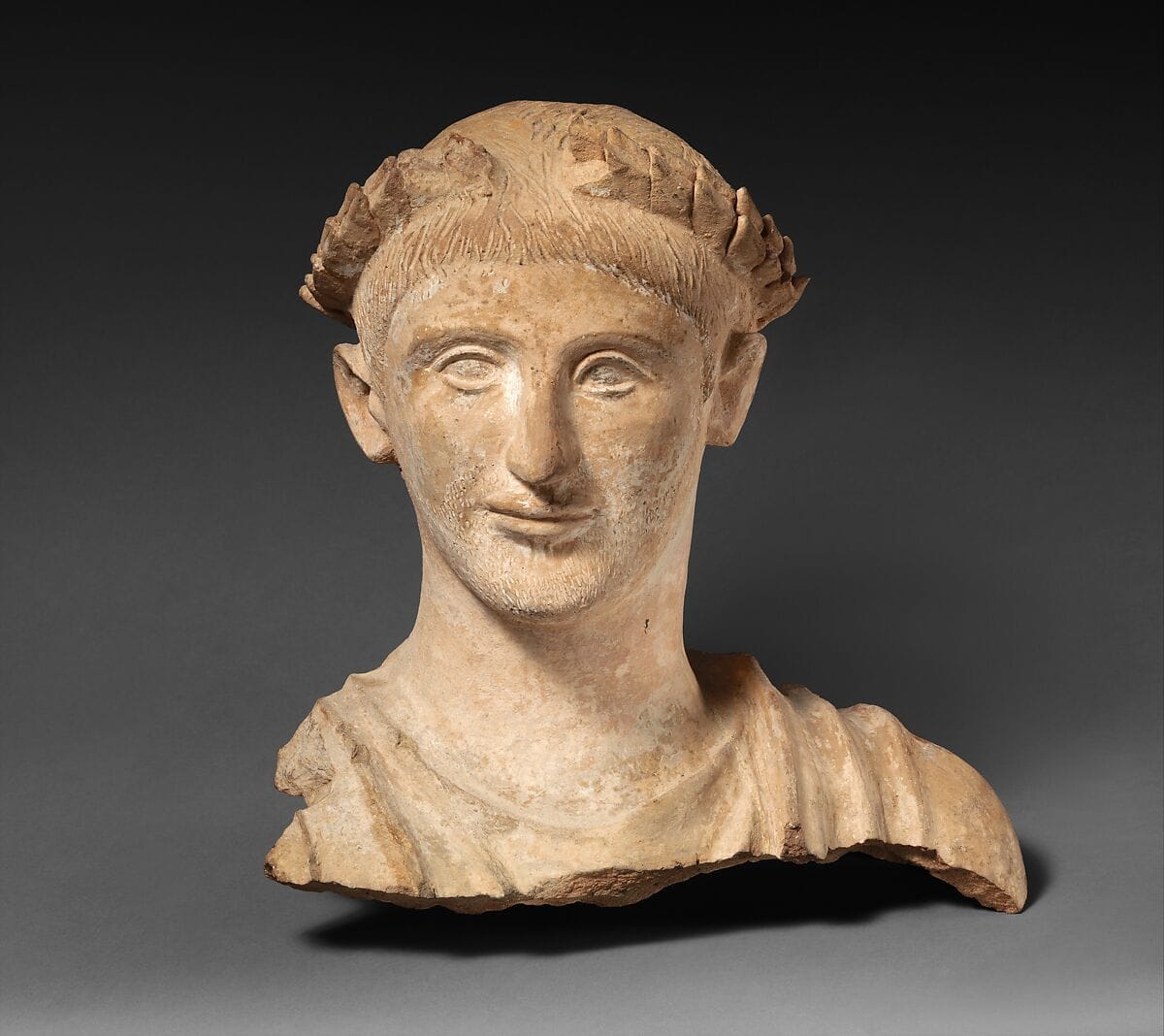 Terracotta head and shoulders of a manClassical · 400–310 BC
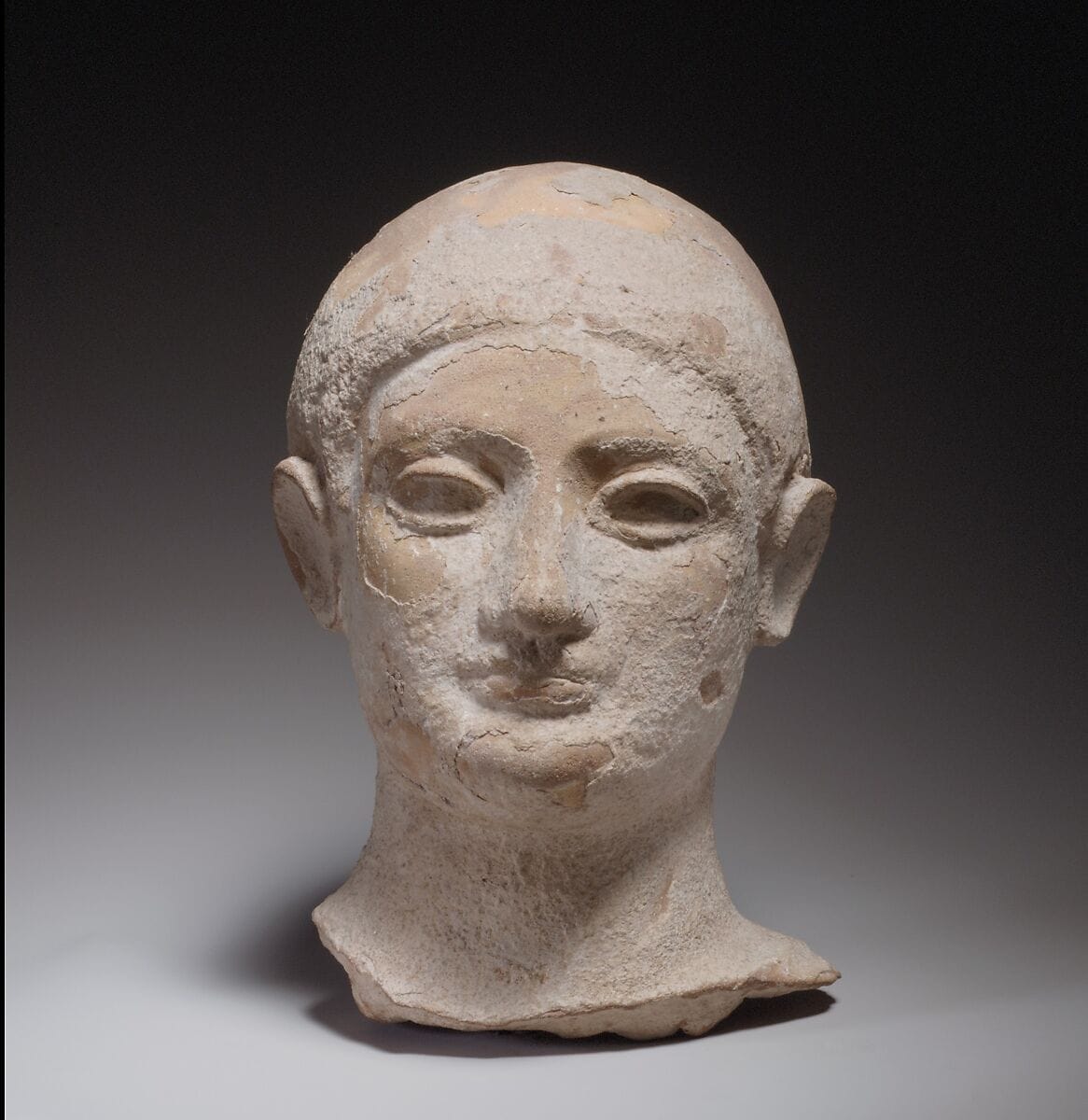 Terracotta head of a youthHellenistic · 299–275 BC
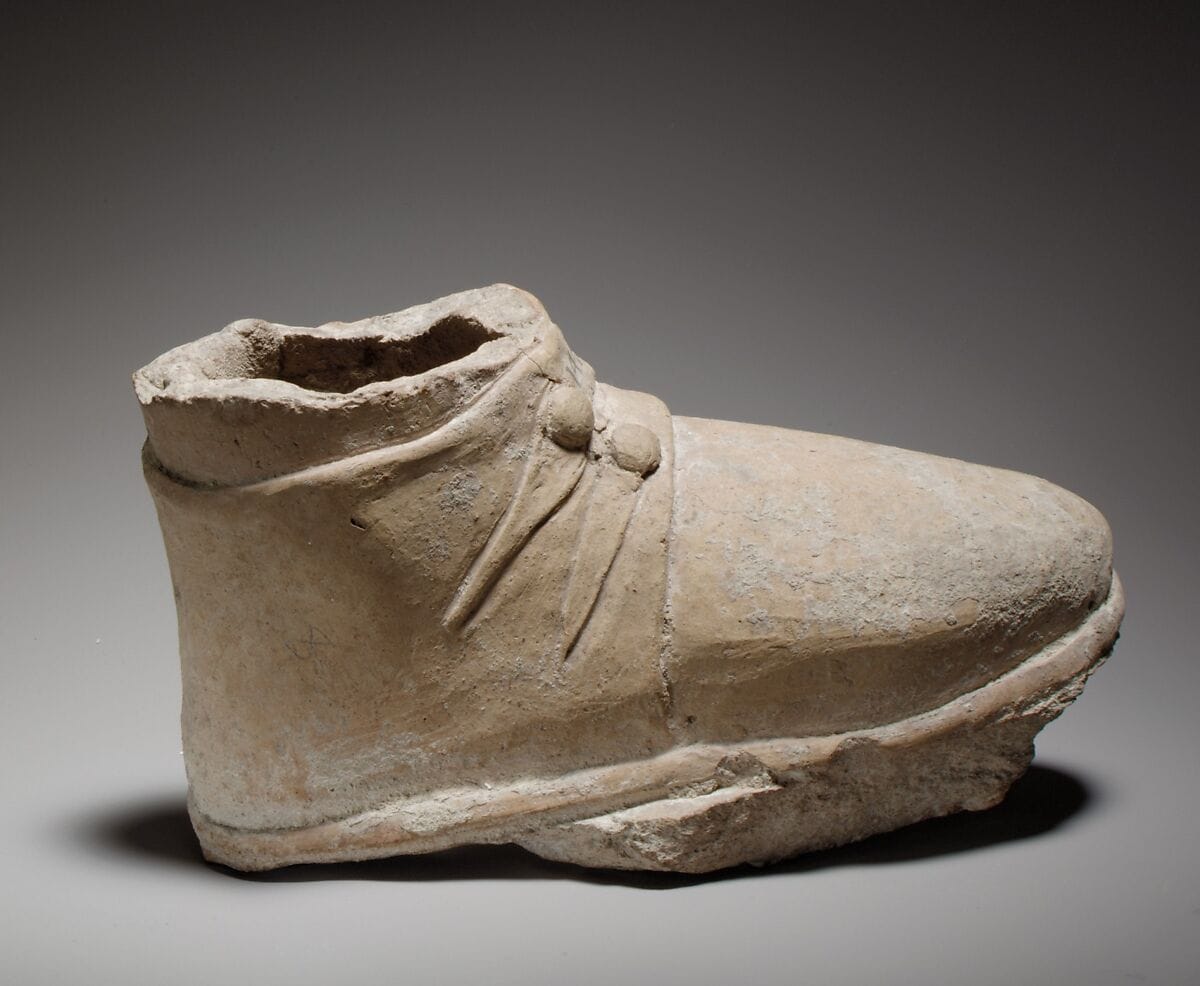 Right footClassical · 480–400 BC
 Right footArchaic II · 600–480 BC
 Right footHellenistic · 199–100 BC
In the catalogue
References
- 1.Iacovou, M. (2014). Cyprus during the Iron Age.
- 2.Footprints in Cyprus: An Illustrated History.
- 3.Darby, E., & de Hulster, I. J. (Eds.). (2021). Iron Age Terracotta Figurines from the Southern Levant in Context. Brill.
- 4.Serwint, N. The Terracotta Sculpture from Ancient Marion: Technical Considerations. Abstract, Archaeological Institute of America Annual Meeting, American Journal of Archaeology.
- 5.Metropolitan Museum of Art. The Cesnola Collection, object records 74.51.1442, 74.51.1443, 74.51.1458, 74.51.1459, 74.51.1462, 74.51.1464, 74.51.1465, 74.51.1474, 74.51.1475, 74.51.1527. New York.
- 6.Medelhavsmuseet. The Ayia Irini Project at Medelhavsmuseet. Stockholm.
- 7.Bourogiannis, G. Ayia Irini at the End of the Cypro-Archaic Period: Between Mirage and Archaeological Testimony.
- 8.Cyprus: A Dynamic Island.
- 9.Karageorghis, V. The Ancient Civilization of Cyprus.
- 10.Cyprus BC: 7000 Years of History.
- 11.Muhlenbock, C., & Brorsson, T. ICP-analysis of 66 terracotta statues, statuettes and pottery sherds from Ayia Irini, Cyprus.
- 12.Hermary, A., & Mertens, J. R. (2014). The Cesnola Collection of Cypriot Art: Stone Sculpture. The Metropolitan Museum of Art.
- 13.Cypriote Art in the British Museum.