
Archaic
Terracotta Female Figure with Outstretched Arms
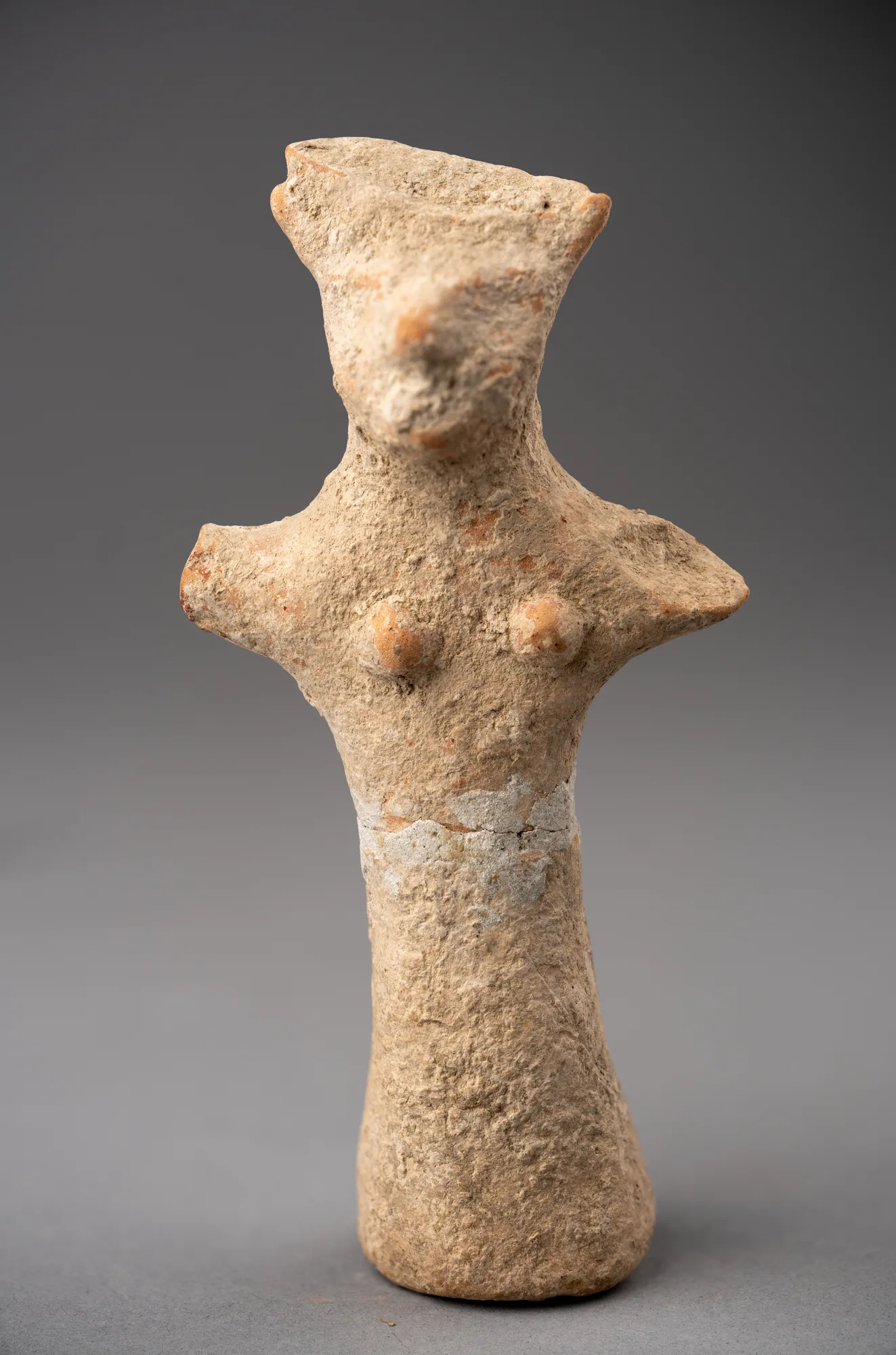
Handmade Cypro-Archaic terracotta female figure with pellet breasts, arms held out sideways, a beak nose and a wide horned polos; bell-shaped lower body.
Date
750 - 480 BC
Accession No.
STA-AR-006
Collection
Alexis Drakopoulos
Provenance
- 1965–1969, The Goodman Collection
- Alexis Drakopoulos, London
Cypro-Archaic, c. 750–480 BCE · Terracotta · Handmade, solid
A solid handmade female figure in pale buff clay, the surface granular with small orange-pink spots where the skin of the clay is worn. The body is a tall column that widens steadily into a bell-shaped lower part and stands on a flat, rounded base. Two small round pellets form the breasts. The arms are held out almost horizontally from broad shoulders; the figure's left arm tapers to a point, while the right ends in a flat surface that looks like an old break. The face is dominated by a long, sharply projecting beak of a nose. The headdress flares outward into a wide polos with pinched, slightly raised corners and a flat top. A pale grey-white band with an irregular edge crosses the body at the waist.
Commentary
The figure is a handmade Cypro-Archaic votive of the snowman class, with the solid body, stump arms and bird-like face that Gjerstad used to define the technique [1]. The applied breasts mark it as female, and the arms held out to the sides are a recognised variant of the Cypriot figure with upraised arms. That series begins with wheel-made figures in the Late Cypriot and Cypro-Geometric periods [2] and continues in handmade form through the Cypro-Archaic period [3]. The traditional name "goddess with uplifted arms" is not supported by any attribute of divinity, and such figures may represent worshippers or priestesses [4].
The closest published parallel for the construction is the Cypro-Archaic II figure 74.51.1615 in the Metropolitan Museum (Cesnola cat. 157), said to come from a tomb at Ormidhia, which combines a solid handmade body slightly flaring at the base, a prominent nose, pellet ears and breasts, and a high flat tiara [5]. A figure excavated at Ayia Irini, A.I. 2804 in the Cyprus Museum, of about 10.5 cm, shows the same traditional type in the same technique at the transition from the Cypro-Geometric to the Cypro-Archaic period. The Louvre holds a nude figure of the type, AM 1646, with traces of black paint on the back, dated Cypro-Geometric [6]. Against these, the pronounced bell-shaped skirt and the wide, horned polos of this piece fit most comfortably in the 7th or 6th century BCE, but handmade figures of this kind changed little and the date cannot be narrowed with confidence. Such figures were dedicated in sanctuaries and placed in tombs; we know of no find-spot for this one.
Two points of condition should be recorded. The pale band at the waist is most probably plaster or filler: its colour, texture and ragged edge are typical of the material used to repair an old break, so the figure has probably been broken across the body and rejoined. The flat end of the right arm suggests that the arm was once longer, and the arms may have been raised at the tips as in other figures of the class.
References
- 1.Gjerstad, E. (1948) The Swedish Cyprus Expedition IV:2. The Cypro-Geometric, Cypro-Archaic and Cypro-Classical Periods. Stockholm: Swedish Cyprus Expedition, pp. 100–101.
- 2.Karageorghis, V. (1993) The Coroplastic Art of Ancient Cyprus II. Late Cypriote II–Cypro-Geometric III. Nicosia: A.G. Leventis Foundation.
- 3.Karageorghis, V. (1998) The Coroplastic Art of Ancient Cyprus V(A). The Cypro-Archaic Period: Small Female Figurines. Handmade/Wheelmade Figurines. Nicosia: A.G. Leventis Foundation.
- 4.Childs, W.A.P., Smith, J.S. and Padgett, J.M. (eds.) (2012) City of Gold: The Archaeology of Polis Chrysochous, Cyprus. Princeton: Princeton University Art Museum, p. 100.
- 5.Karageorghis, V., Mertens, J.R. and Rose, M.E. (2004) Ancient Art from Cyprus: The Cesnola Collection in The Metropolitan Museum of Art. Terracottas. New York: The Metropolitan Museum of Art, cat. 157, p. 94.
- 6.Musée du Louvre, AM 1646, female figure with upraised arms, terracotta, Cypro-Geometric.
More from the Catalogue
Browse related objects
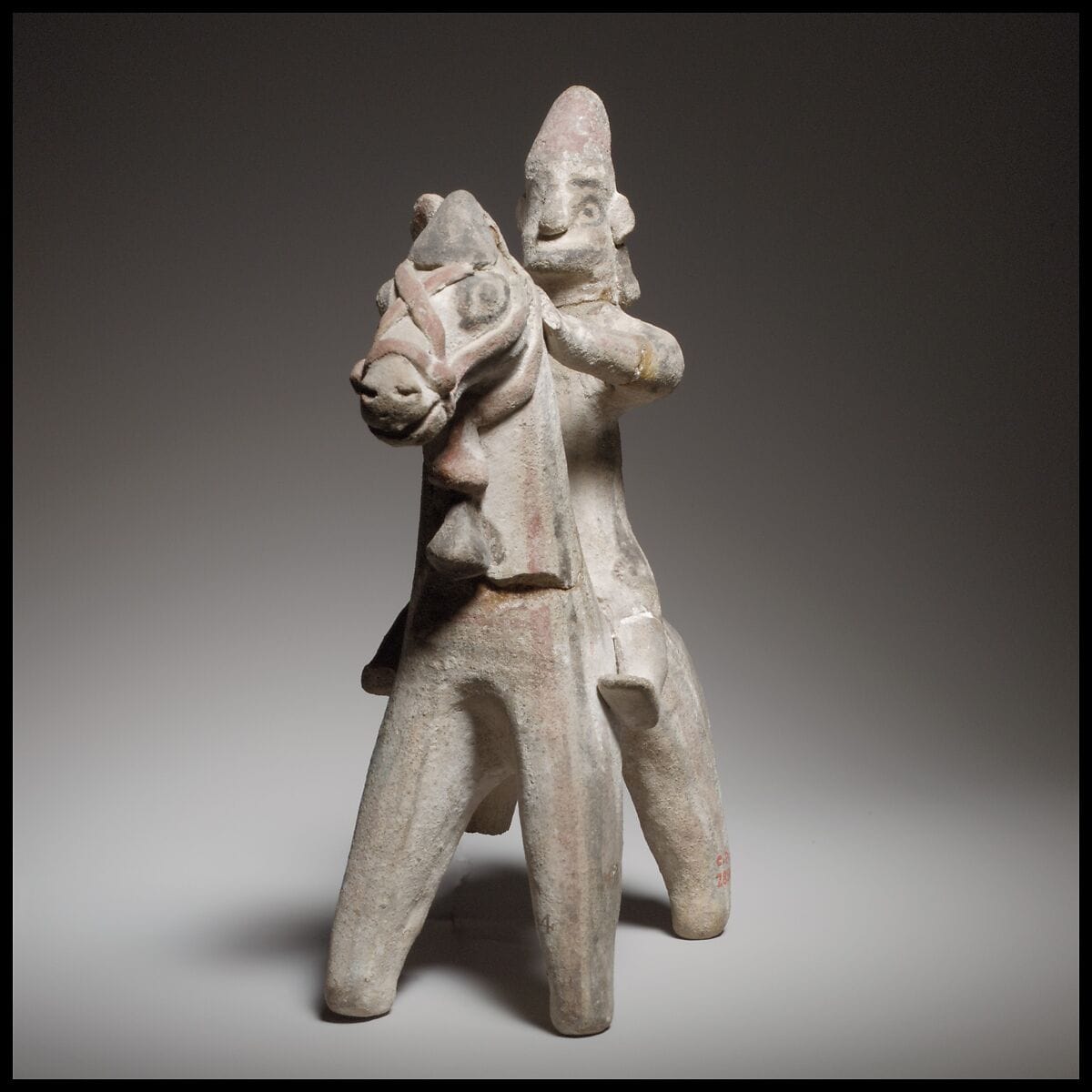
Horse and rider figurine
Archaic II
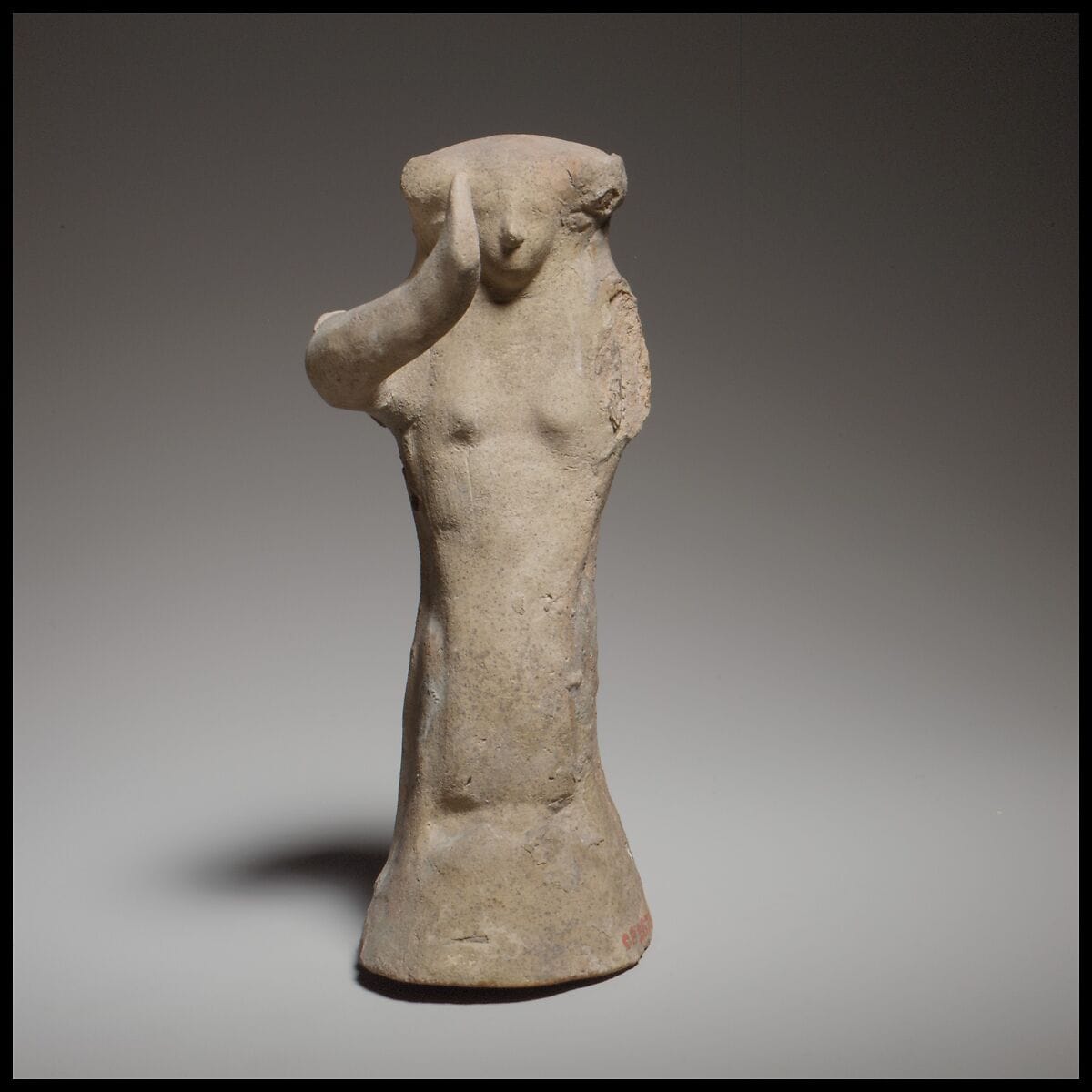
Seated female figurine of the dea gravida type
Archaic II
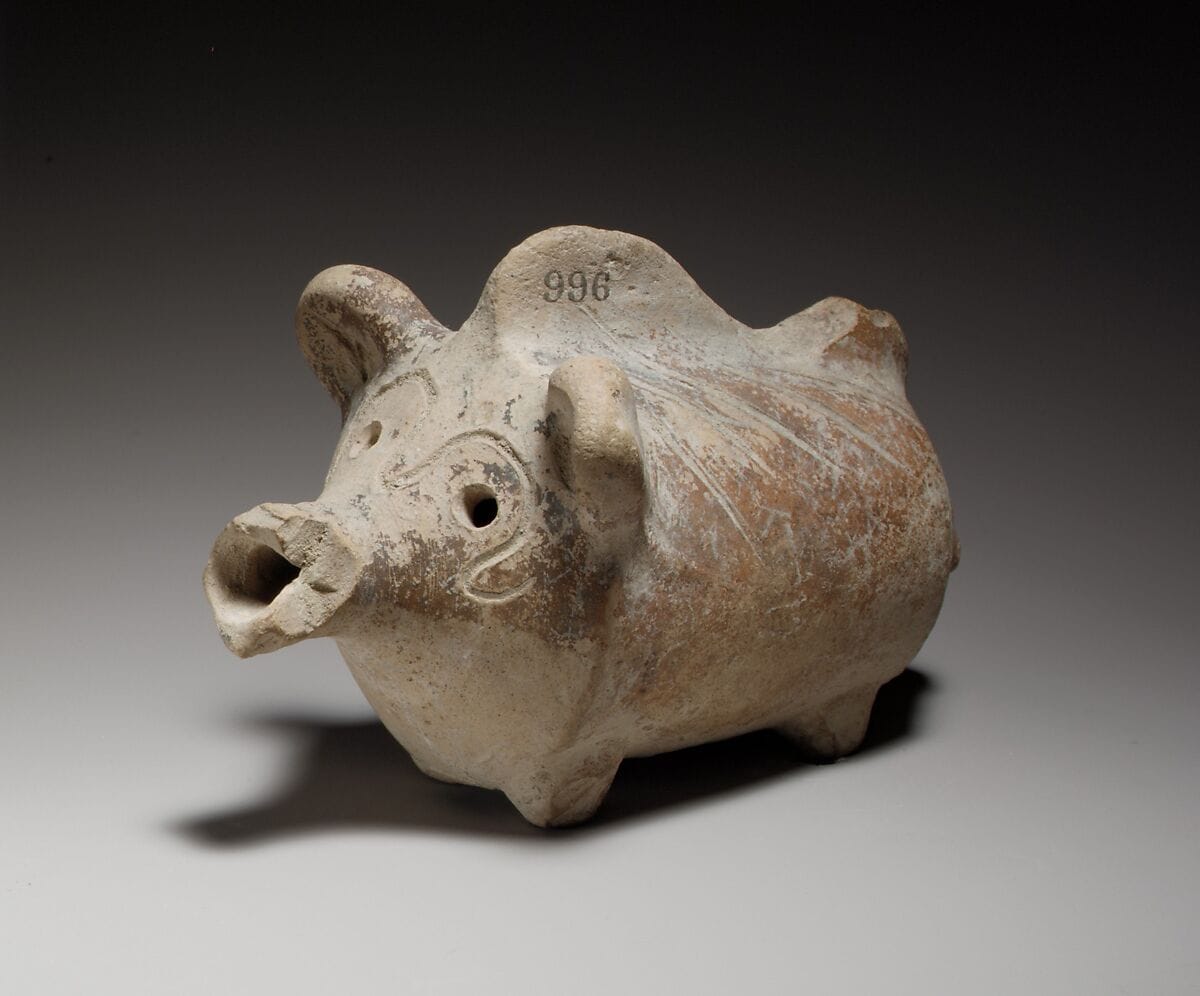
Terracotta rattle in the form of a pig
Hellenistic
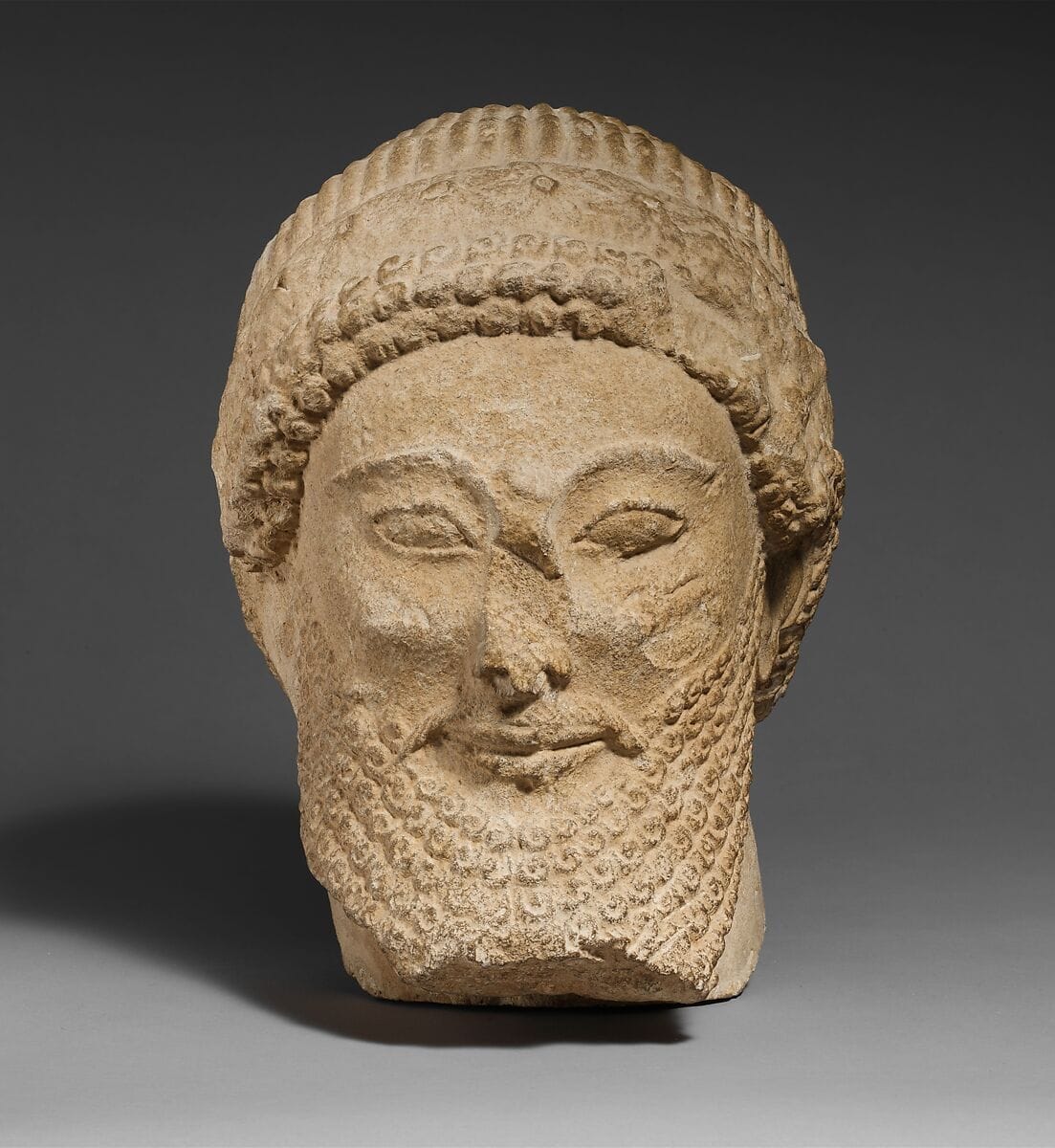
Limestone head of a bearded male with a wreath of flowers
Archaic II
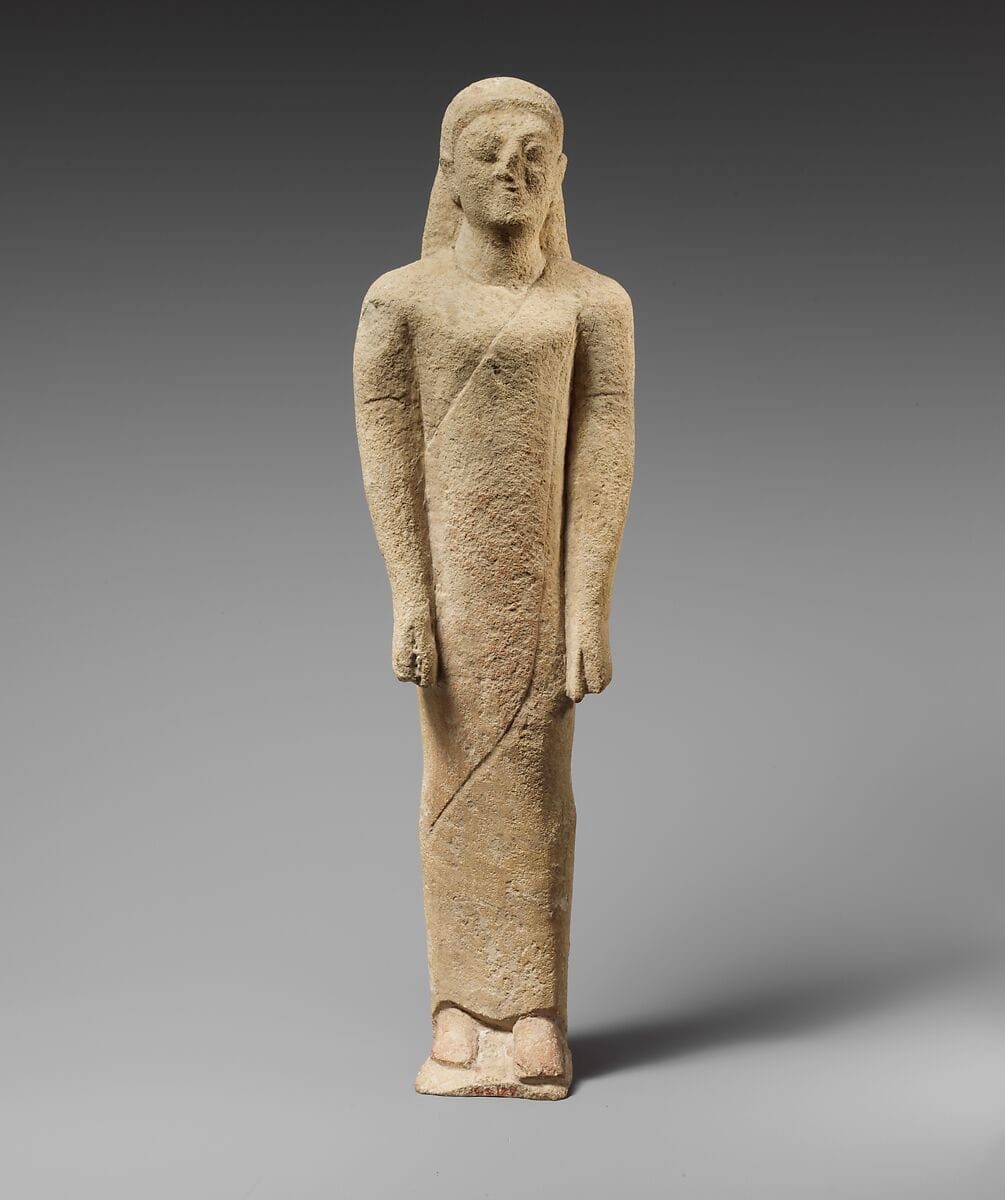
Limestone statuette of a beardless male votary in Greek dress
Archaic II
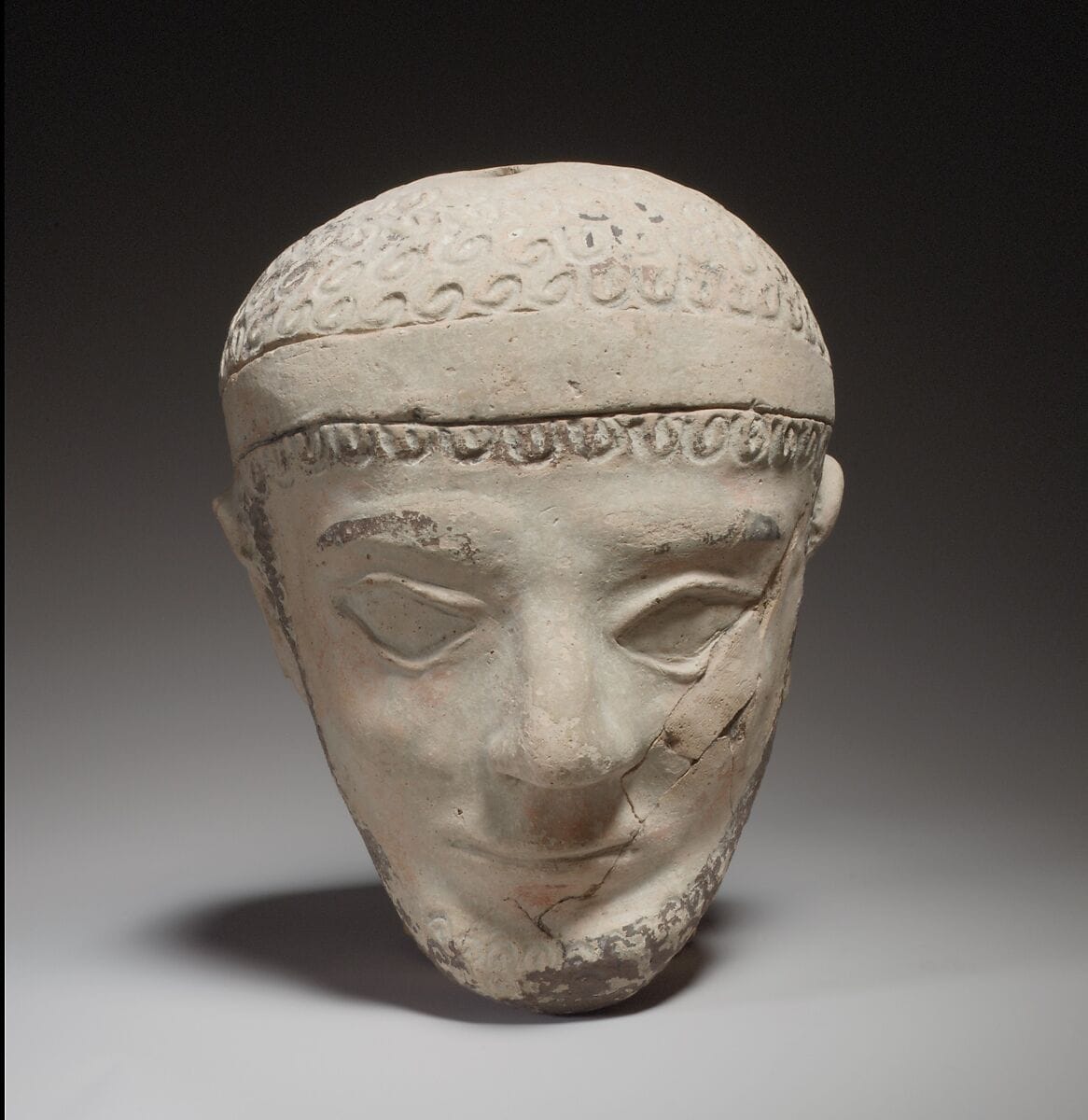
Terracotta head of a man
Archaic II
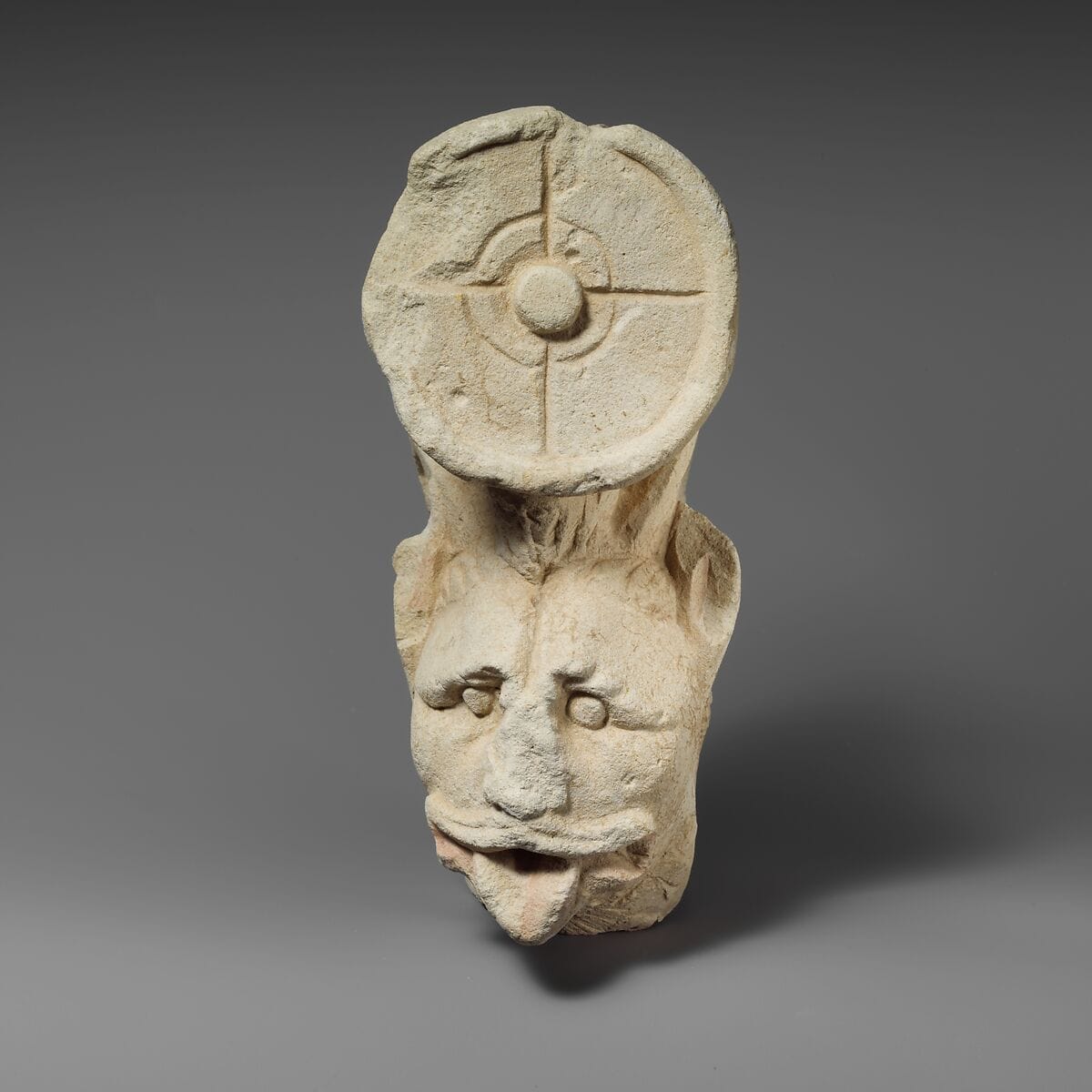
Fragment of a limestone throne (?) with the head of a horned lion
Roman
Head of a comic figurine
Hellenistic
Limestone statuette of a female votary of the kore type
Archaic II
Limestone head of Apollo
Hellenistic
Standing female flute player
Classical
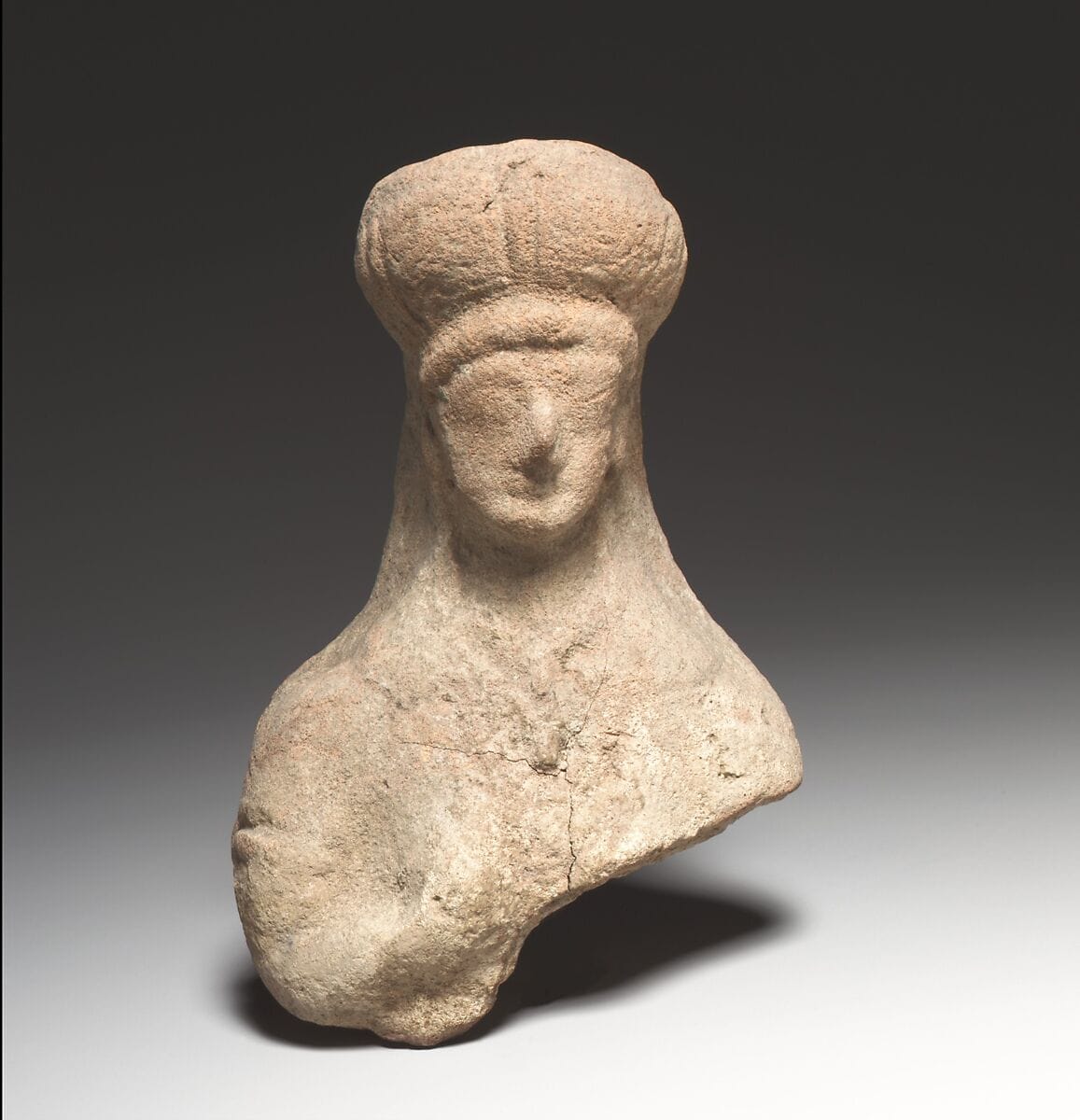
Standing female figurine
Archaic II
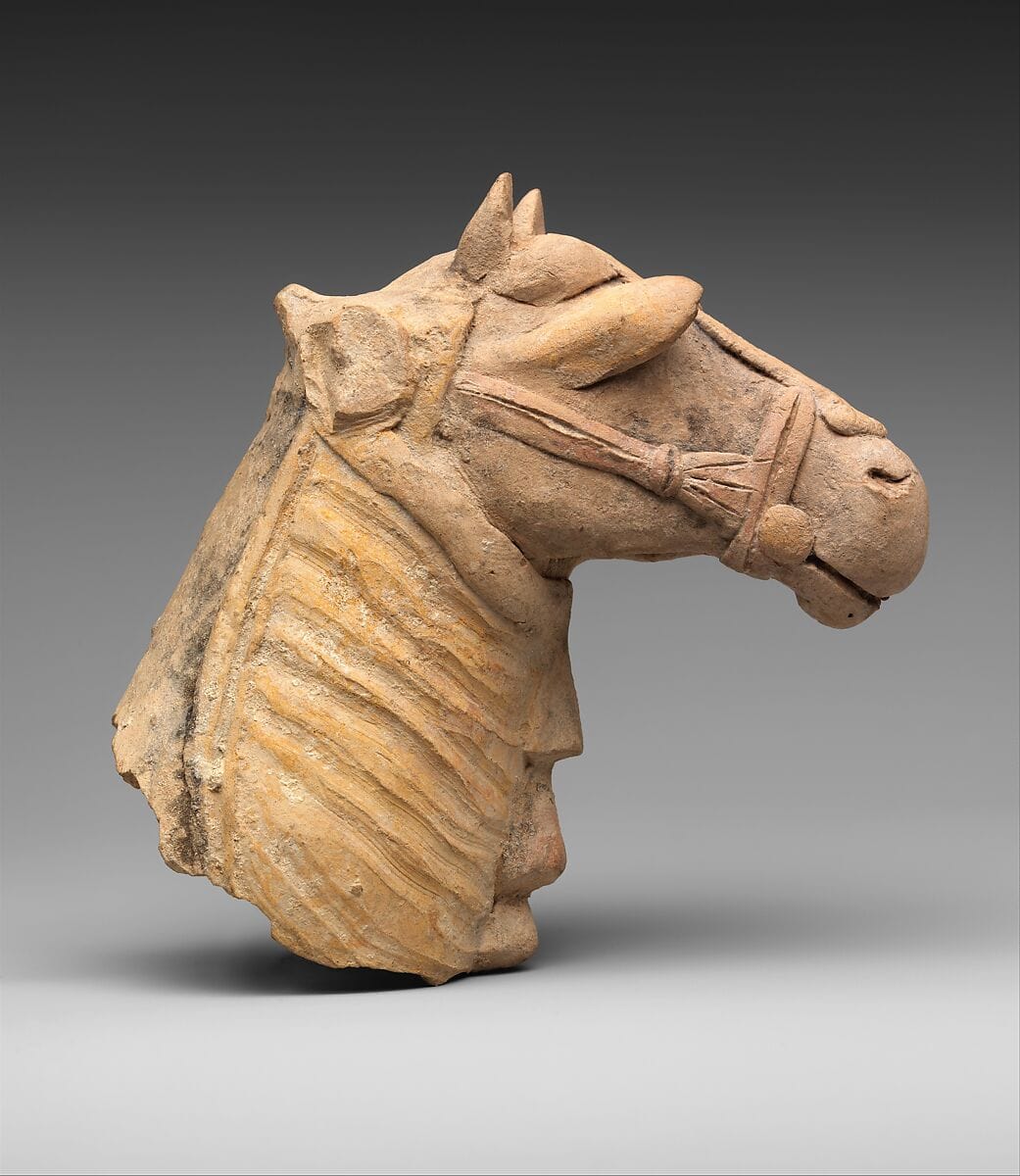
Horse's head with harness
Archaic II
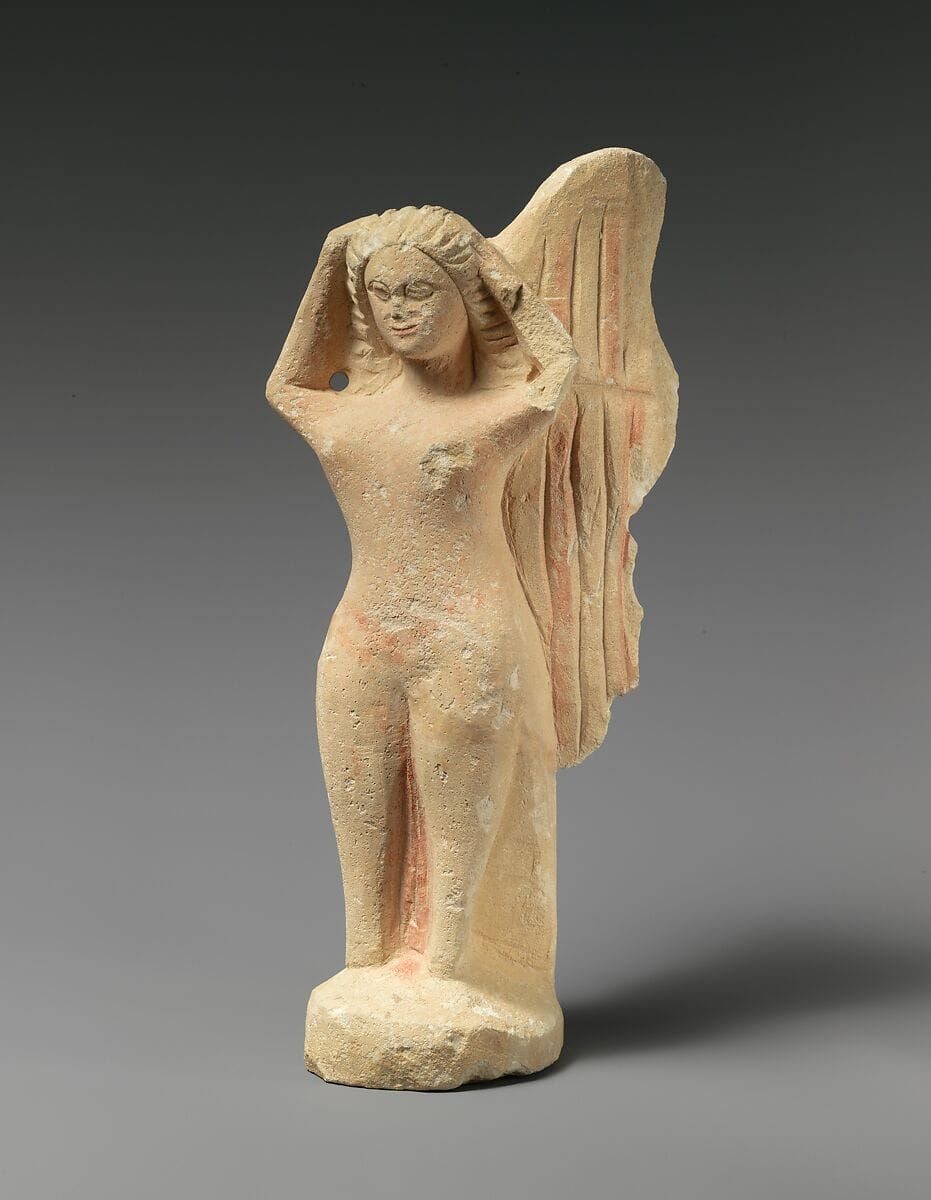
Limestone statuette of a mourning siren
Hellenistic
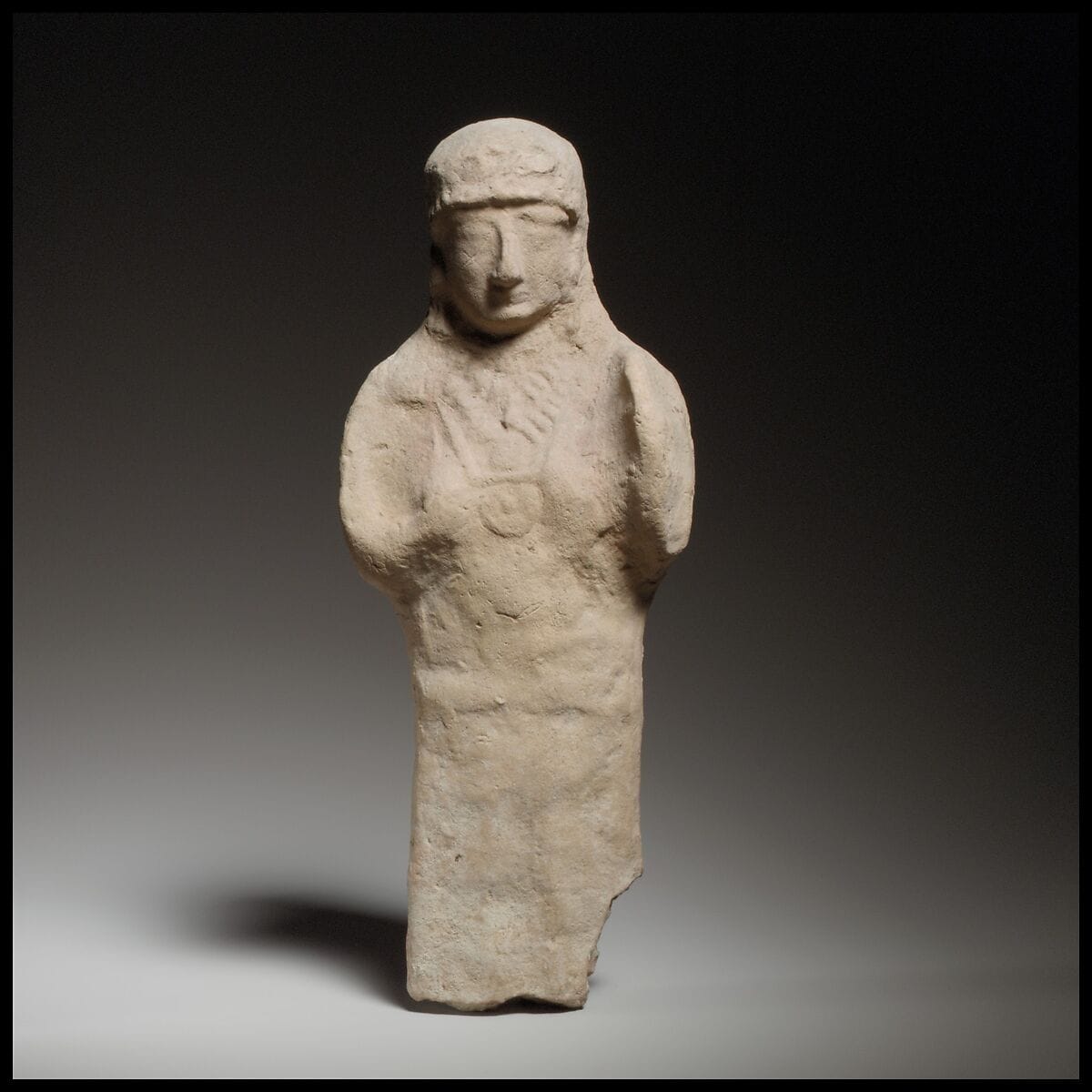
Standing female figurine
Archaic II
Terracotta statuette of Silenos (?) drinking
Hellenistic
Limestone head of beardless male votary with wreath of leaves
Hellenistic
Limestone statuette of a beardless male votary with a wreath of leaves
Classical