
Documentary·History Time·2025
The Complete Bronze Age Greek World
Pete Kelly
This video covers more than Cyprus. The description below concentrates on its Cypriot parts, the first of which begins at 6:52.
Chapters
About the video
Pete Kelly presents a six-and-a-half-hour documentary surveying the archaeology and mythology of the Mycenaean world across twenty-six regional chapters, moving from the mainland Peloponnese and central Greece to Crete, the Aegean islands, western Anatolia, Cyprus, and Euboea. Alongside the fifteen-minute chapter on Cyprus near the end, Cypriot links appear briefly in the chapters on Pylos, on Thebes, where the Kadmeia treasury held imported Cypriot cylinder seals, and on Euboea, where the warrior cremation of around 1000 BC at the Lefkandi Heroon was interred inside a Cypriot bronze amphora.
Chapter 25 opens with the arrival of the Swedish Cyprus Expedition in September 1927 and introduces the island's undeciphered Bronze Age script, which Kelly calls Linear C, appearing around 1550 BC in the Middle Bronze Age and found also at Ugarit.
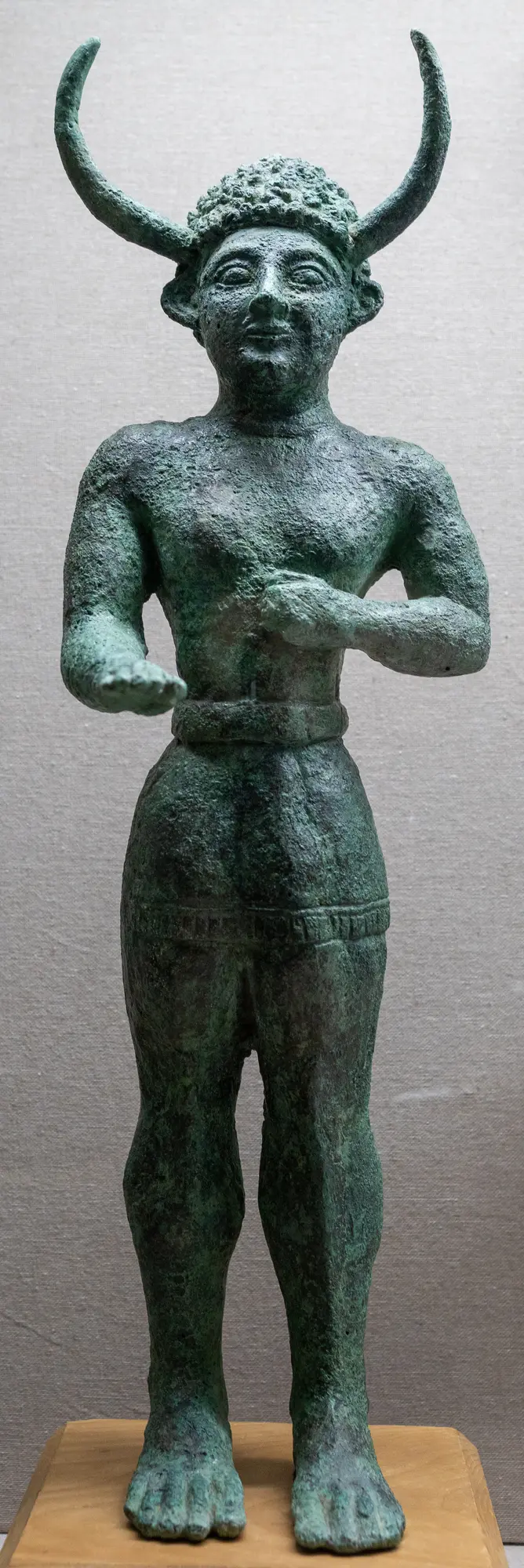
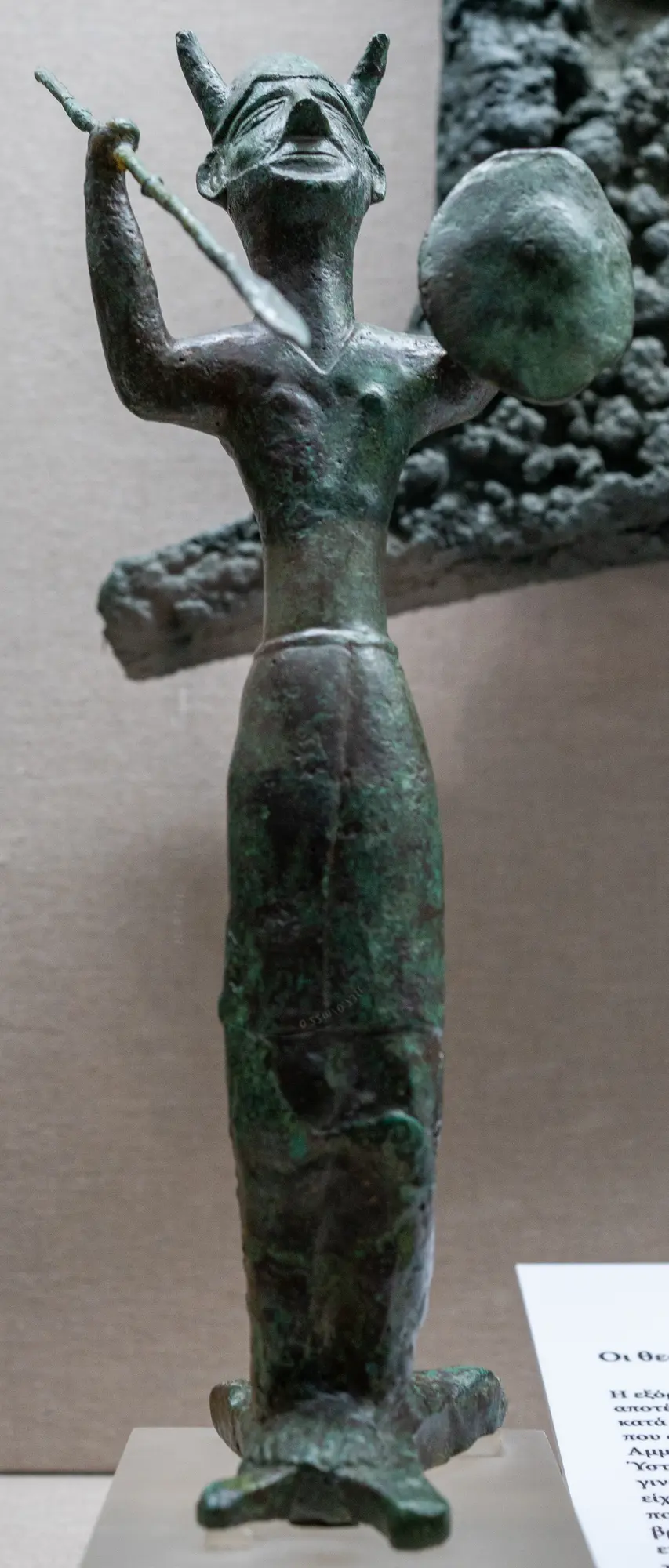
The chapter then turns to Enkomi and its role in mining, smelting, and shipping copper between the 16th and 12th centuries BC. Kelly summarizes the late-19th-century British Museum excavations, which yielded ivory board games, bronze smiting gods, and gold beads, and notes René Dussaud's identification of the city as Alashiya. He describes the twenty intact tombs uncovered by the Swedish team in 1930, which held over three hundred objects per grave with Mycenaean motifs, and outlines Enkomi's stratigraphy, with destructions around 1220 BC and 1125 BC. He connects this sequence, the Homeric foundation legend of Kourion from the Argolid, and Enkomi's horned god to the Sea Peoples reliefs at Medinet Habu and the displacement of warrior elites at the end of the Late Bronze Age.
From our collection
Pieces in the Drakopoulos collection of the kinds and periods this talk covers: Middle Cypriot (Middle Bronze Age), Late Cypriot (Late Bronze Age).
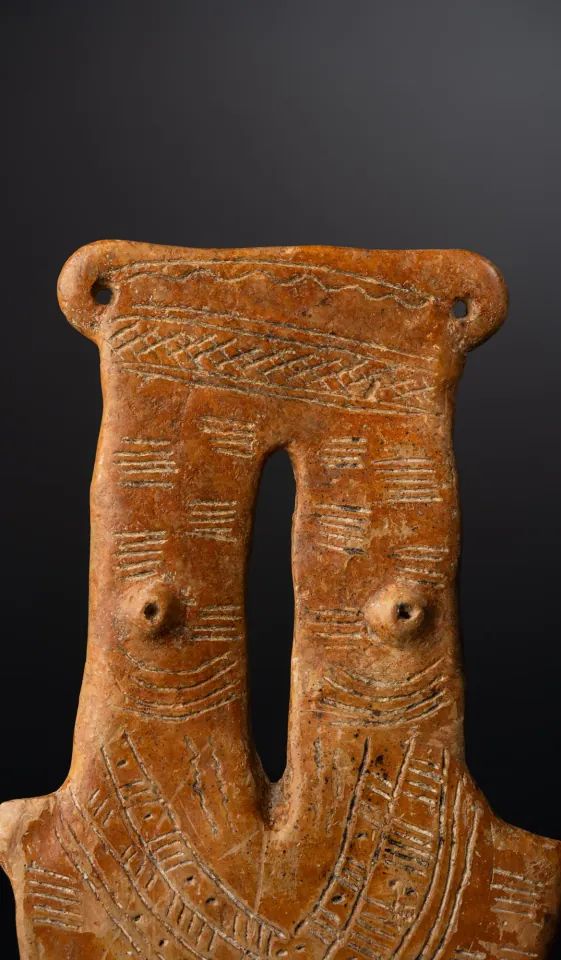
Red Polished Two-Necked Plank Figure
Middle Cypriot (Middle Bronze Age)
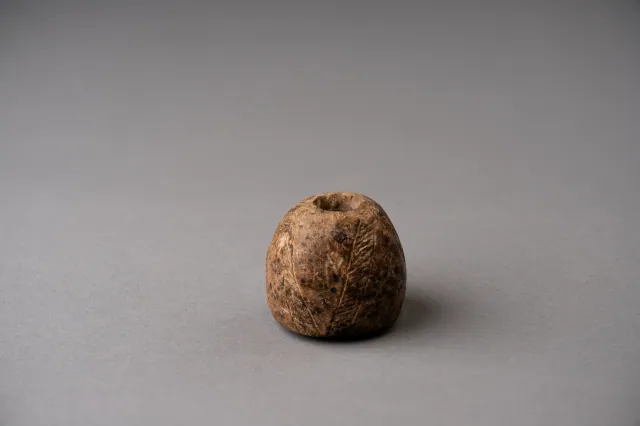
Spindle Whorl with Incised Herringbone Bands
Middle Cypriot (Middle Bronze Age)
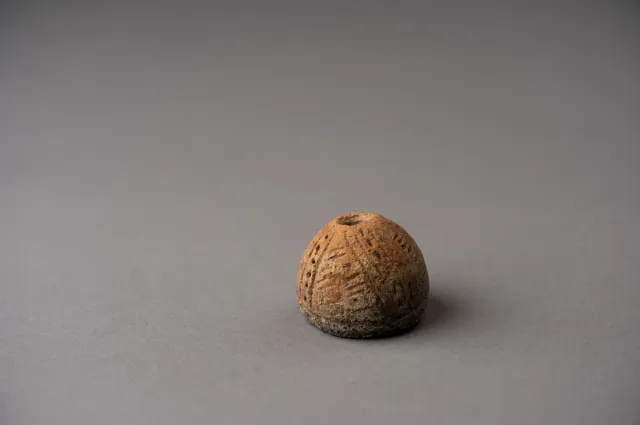
Red Polished Spindle Whorl with Incised Lattice and Dotted Bands
Middle Cypriot (Middle Bronze Age)
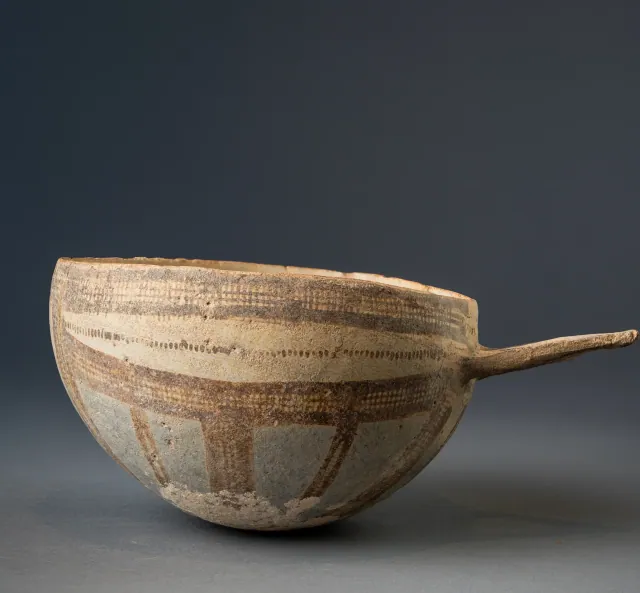
White Slip II Hemispherical Bowl with Wishbone Handle
Late Cypriot (Late Bronze Age)
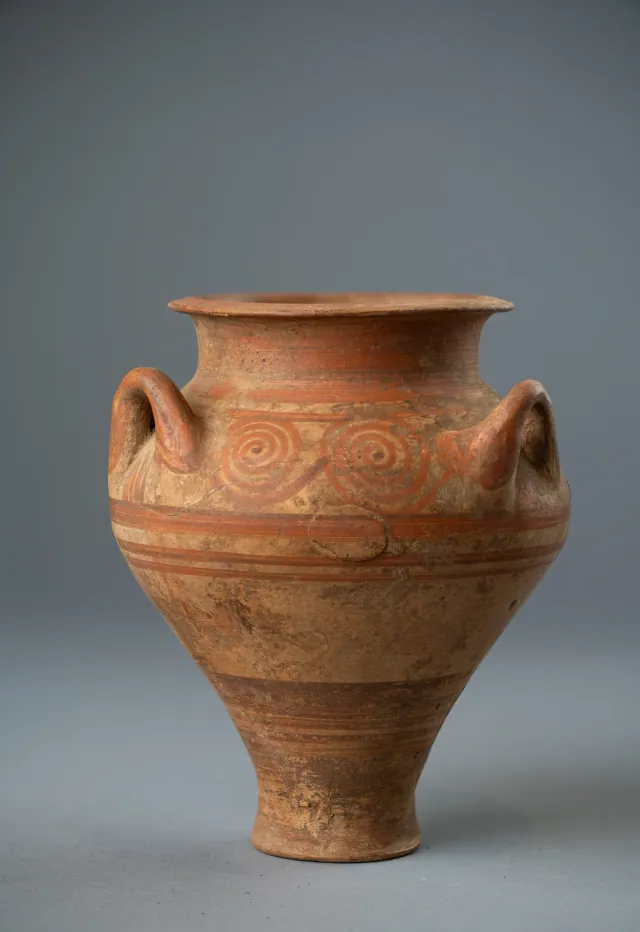
Cypriot Three-Handled Jar in the Mycenaean Style with Running Spirals
Late Cypriot (Late Bronze Age)
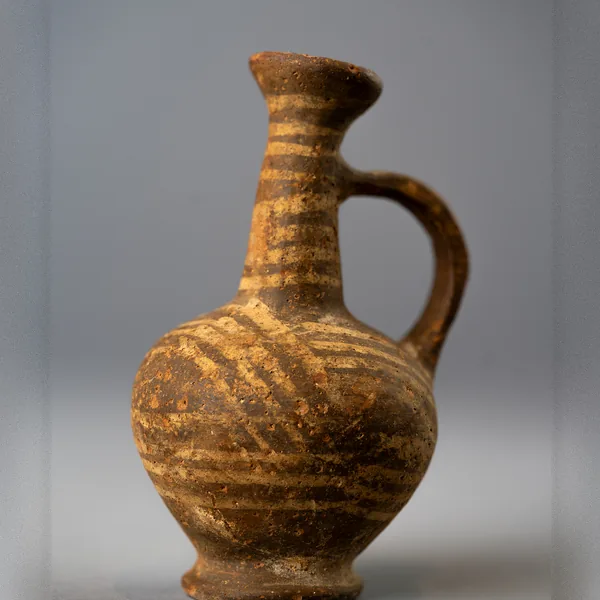
Base Ring II Bilbil Juglet with White-Painted Bands
Late Cypriot (Late Bronze Age)
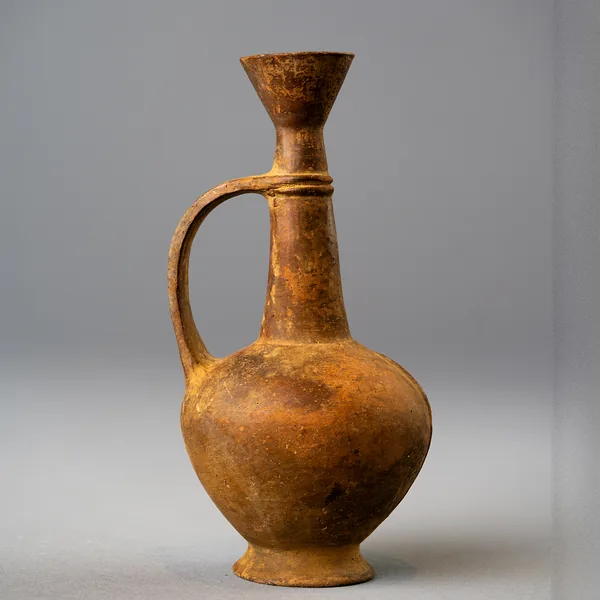
Base Ring Bilbil Juglet with Funnel Mouth and Neck Ridge
Late Cypriot (Late Bronze Age)
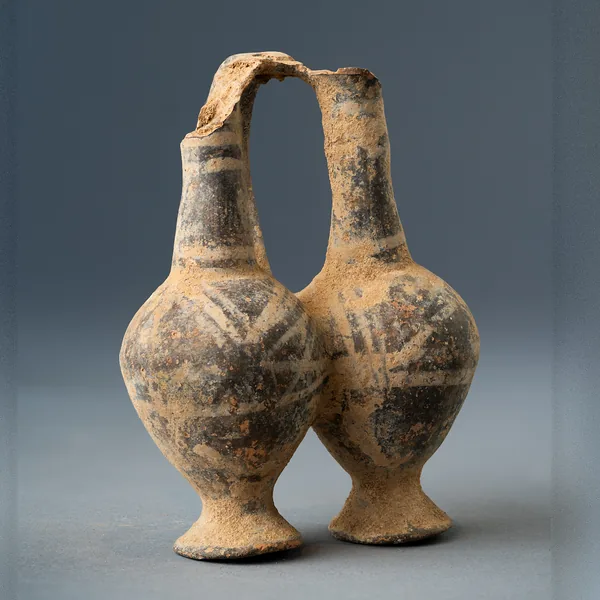
Base Ring II Double Juglet with White-Painted Decoration
Late Cypriot (Late Bronze Age)
Found at the places discussed
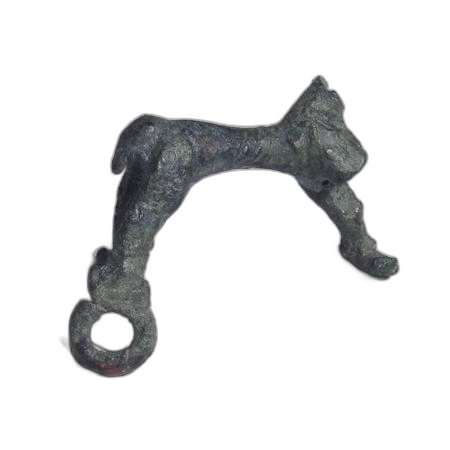
Objects in our catalogue, in museum collections, recorded as found at these sites.

Background
Where to read more on this site before or after watching.
The site
Enkomi
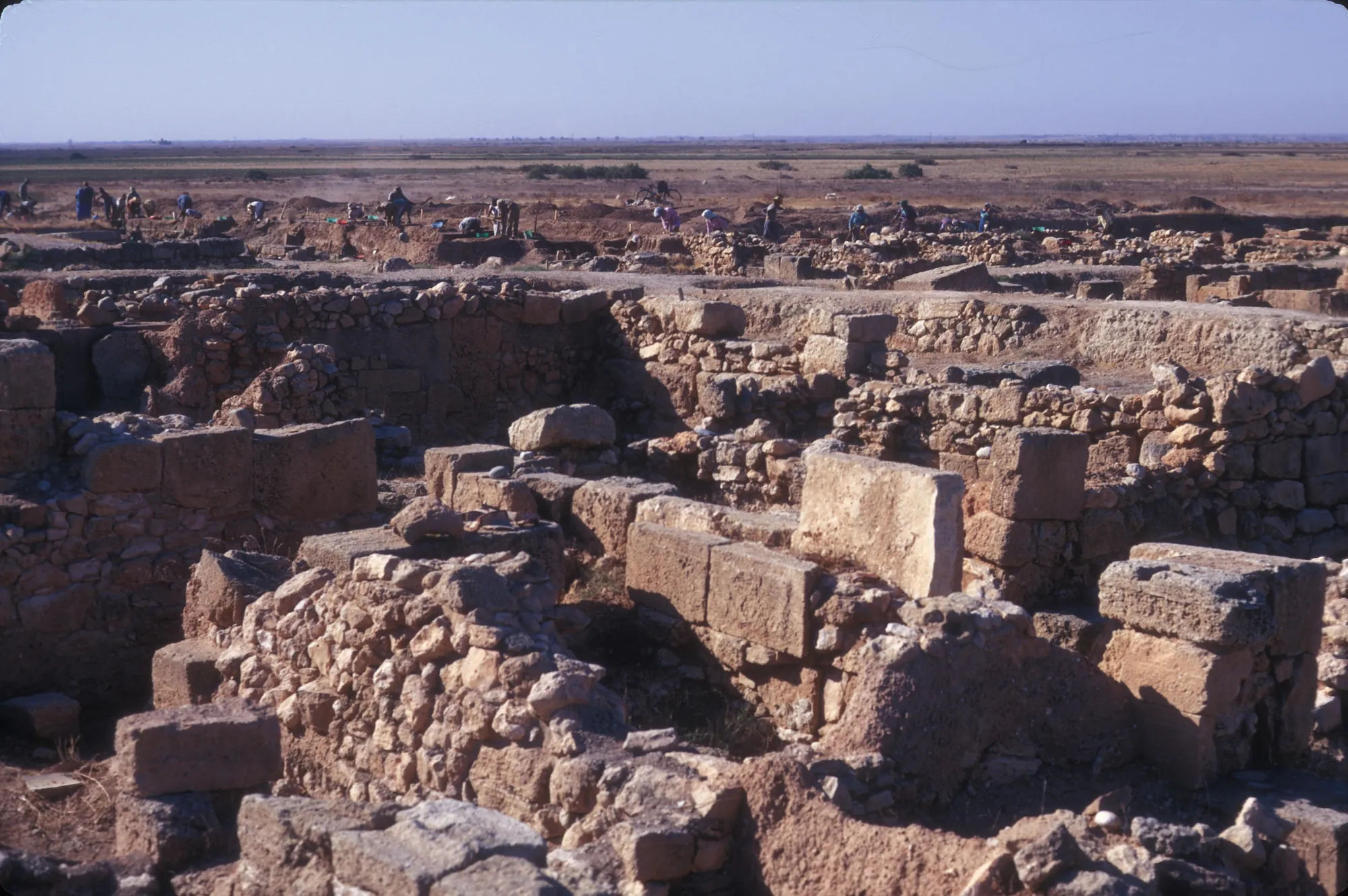
Enkomi is a walled Late Bronze Age town near the mouth of the Pedieos river on the bay of Famagusta, lived in from about 1650 BC until it was gradually abandoned for nearby Salamis. It was a port for Cypriot copper, and its excavations produced metal workshops, sanctuaries with bronze cult statues, rich tombs and the largest group of Cypro-Minoan inscriptions on the island.
In the compendium
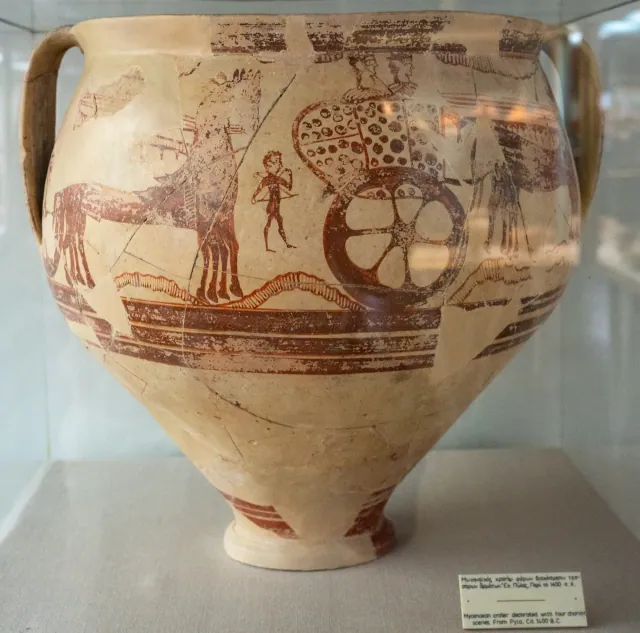
The Mycenaeans and Cyprus
The palatial Late Bronze Age societies of mainland Greece, whose pottery flooded Cypriot coastal towns in the 14th and 13th centuries BCE.
In the compendium
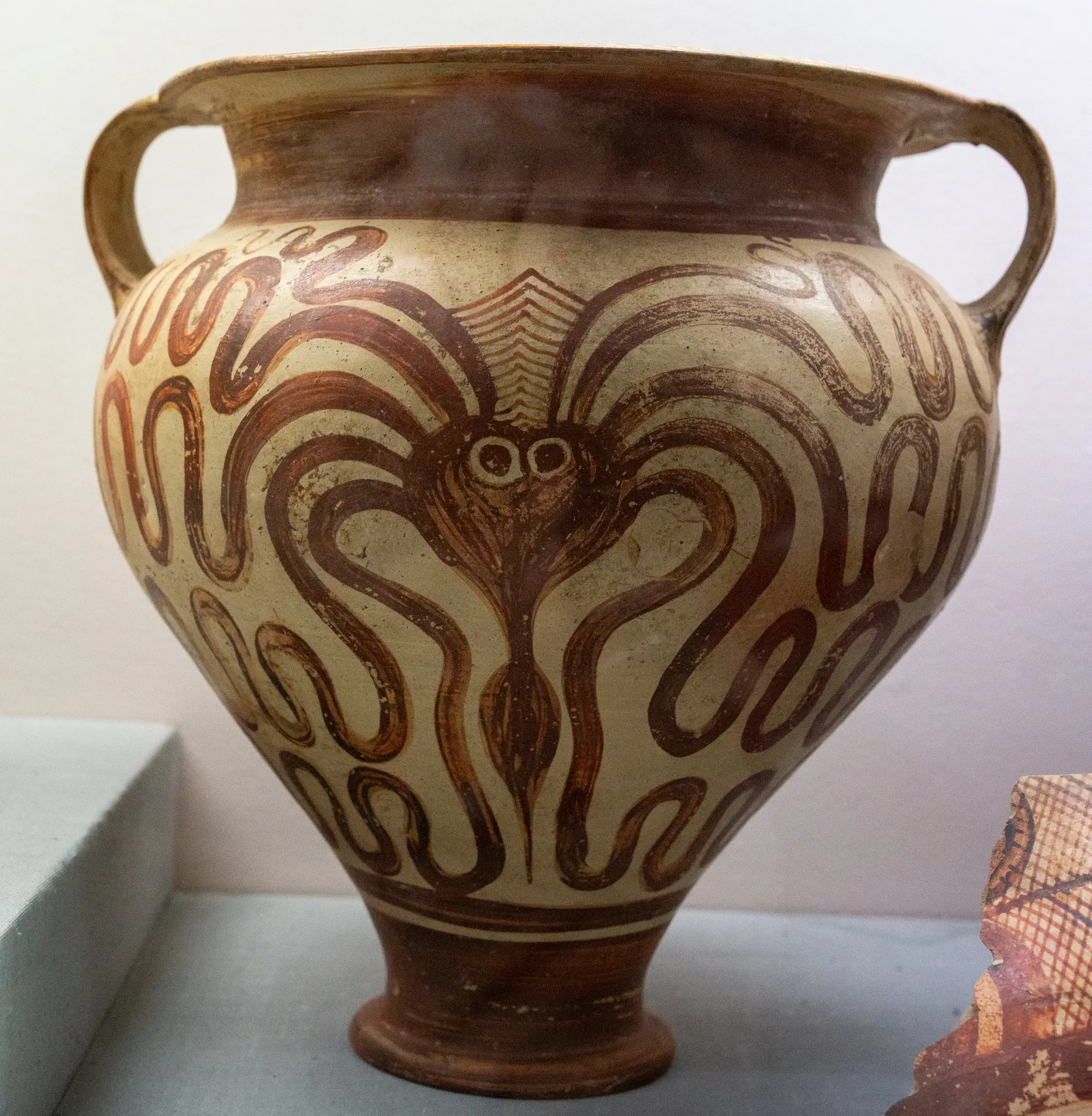
The Minoans
The palatial Bronze Age civilization of Crete, which took Cypriot copper and passed writing to Cyprus in the early Late Bronze Age.

In the compendium
Ugarit and the Levant
The Syrian port kingdom of Ugarit and the wider Levantine coast, Cyprus's closest Bronze Age trading partners across the water.