
Conference paper·CAARI Cyprus·2021
Mining in the archives: the modern mining industry and its contribution to Cypriot archaeology and vice versa
Chapters
About the video
Vasiliki Kassianidou of the University of Cyprus presents archival research from the Skouriotissa project, funded by the A.G. Leventis Foundation, examining how archaeology and the modern mining industry in Cyprus informed one another during the British colonial period.
Although ancient authors such as Strabo, Aristotle, and Pliny wrote of Cypriot copper, mining had ceased on the island by the end of the 7th century AD. By the 19th century, local memory of copper metallurgy had faded to the point that villagers mistook ancient slag heaps for volcanic lava, as Albert Gaudry noted in 1862. After Britain took administration of Cyprus in 1878, colonial authorities and prospectors used these ancient slag heaps to locate unexhausted ore deposits. Horatio Kitchener mapped the largest slag heaps between 1878 and 1883, and Colonial Office reports in the 1920s catalogued ancient workings around the Troodos foothills. In 1912 the American prospector Charles Godfrey Gunther visited Skouriotissa, where an immense slag heap lay beside the church of Panagia Skouriotissa, leading to the establishment of the Cyprus Mines Corporation (CMC) in 1916.
As CMC developed Skouriotissa and other mines, operations uncovered ancient galleries, tools, and artefacts, many since destroyed by open-cast mining after the 1950s. Resident director James Latimer Bruce recorded ancient adits on mine plans and published them in the third volume of the Swedish Cyprus Expedition in 1937. In 1936 miners opening the North Mathiatis mine found the Mathiatis Hoard of the Late Bronze Age, containing numerous oxhide ingot fragments. Under the new Antiquities Law, Peter Megaw retained part of the hoard for the Cyprus Museum, while notes on departmental photographs show the remainder was divided between CMC owner Harvey Mudd, Bruce, and colonial official William Bevan. Two years later at Apliki, CMC uncovered a Late Cypriot mining settlement; the company funded Joan du Plat Taylor's rescue excavations.
CMC staff and Mudd also bought antiquities from villagers and dealers, including a complete oxhide ingot Mudd purchased from Basil Palma for 200 pounds. Kassianidou closes with the 2018 agreement by the Mudd family and Harvey Mudd College to donate Mudd's collection of Cypriot antiquities to the University of Cyprus.
From our collection
Pieces in the Drakopoulos collection of the kinds and periods this talk covers: Late Cypriot (Late Bronze Age).
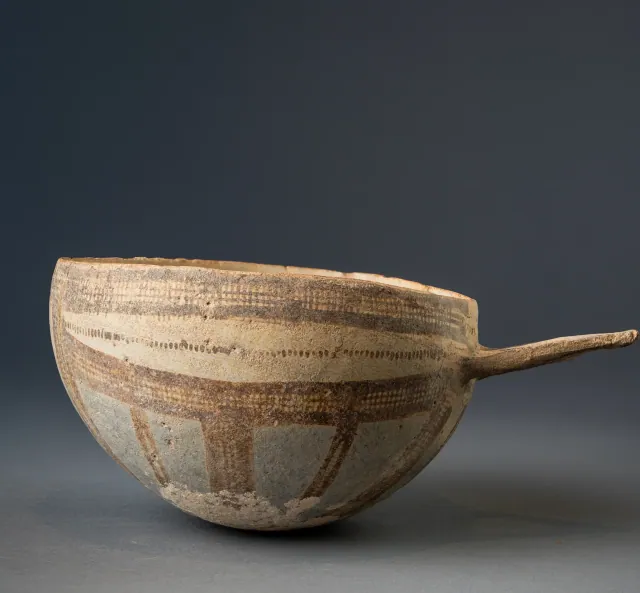
White Slip II Hemispherical Bowl with Wishbone Handle
Late Cypriot (Late Bronze Age)
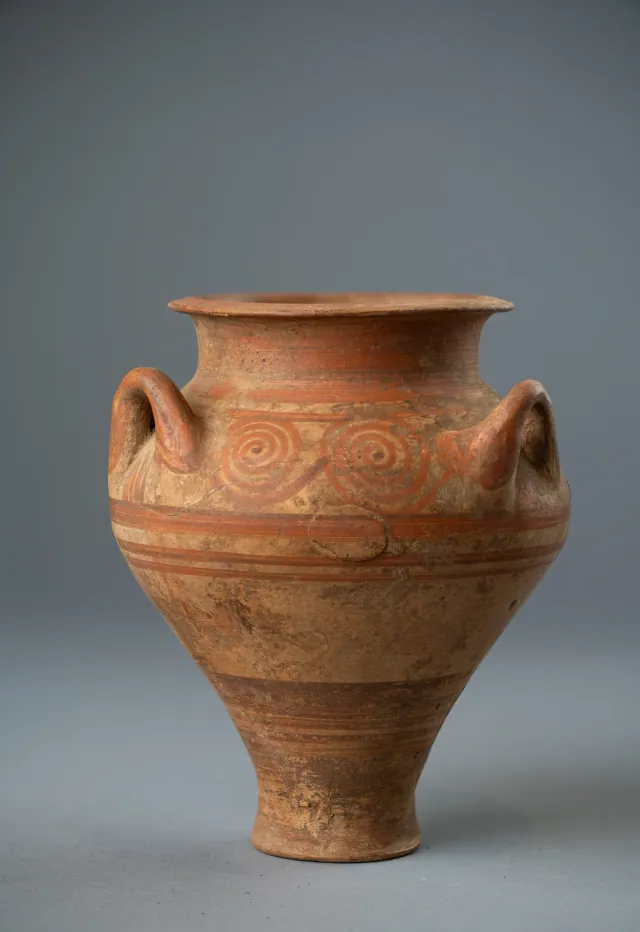
Cypriot Three-Handled Jar in the Mycenaean Style with Running Spirals
Late Cypriot (Late Bronze Age)
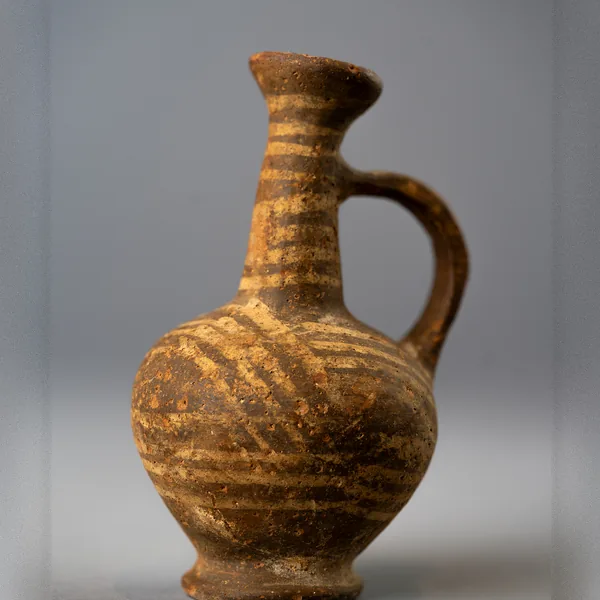
Base Ring II Bilbil Juglet with White-Painted Bands
Late Cypriot (Late Bronze Age)
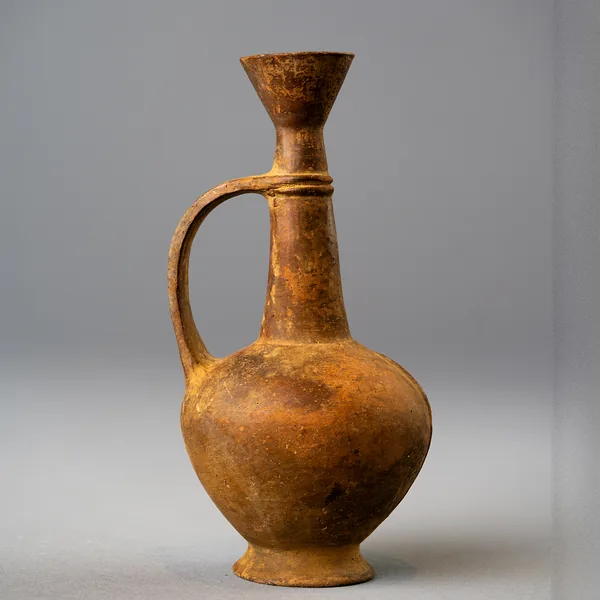
Base Ring Bilbil Juglet with Funnel Mouth and Neck Ridge
Late Cypriot (Late Bronze Age)
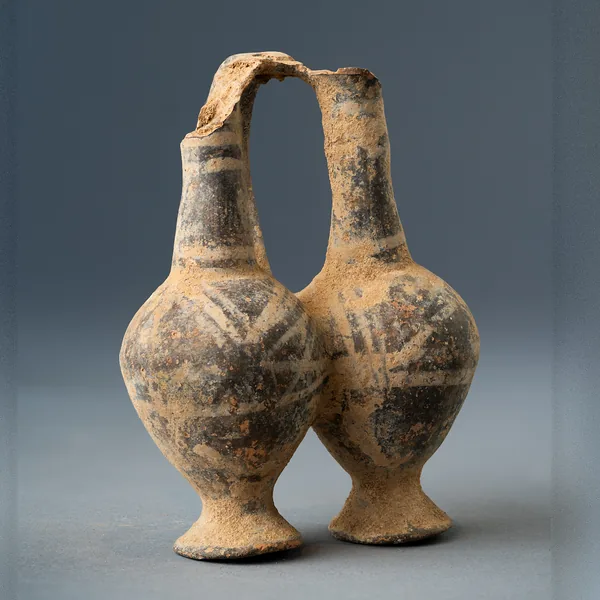
Base Ring II Double Juglet with White-Painted Decoration
Late Cypriot (Late Bronze Age)
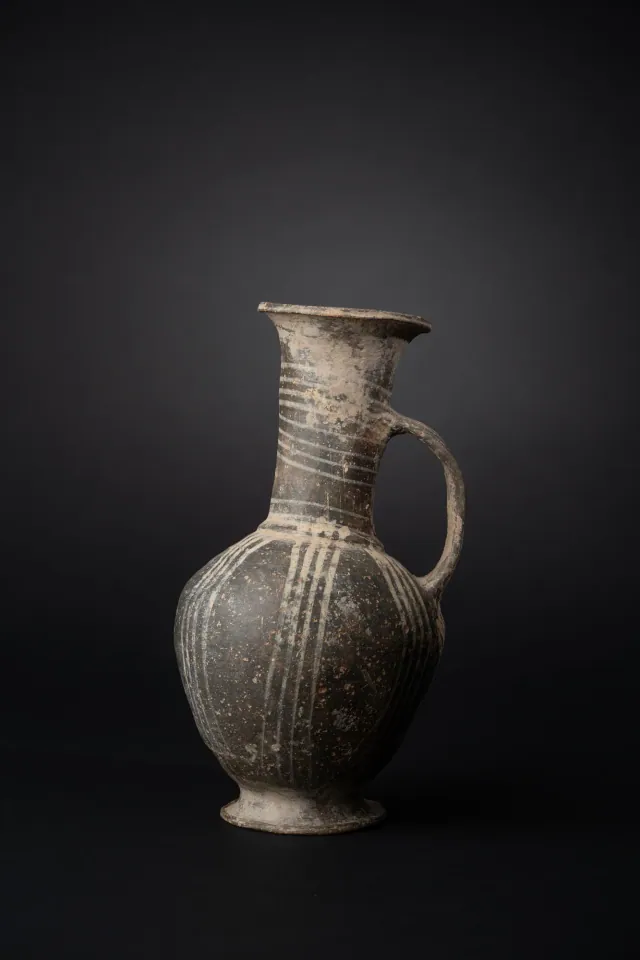
Base Ring II Jug with White-Painted Lattice Bands
Late Cypriot (Late Bronze Age)
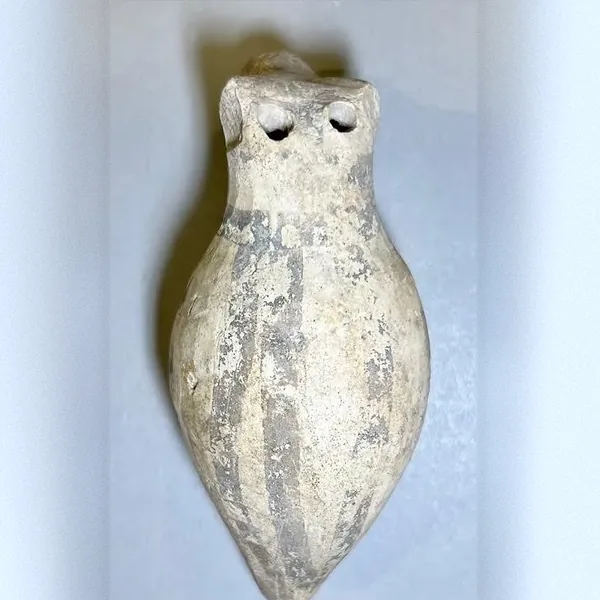
White Painted VI Owl-Headed Rattle
Late Cypriot (Late Bronze Age)
Background
Where to read more on this site before or after watching.
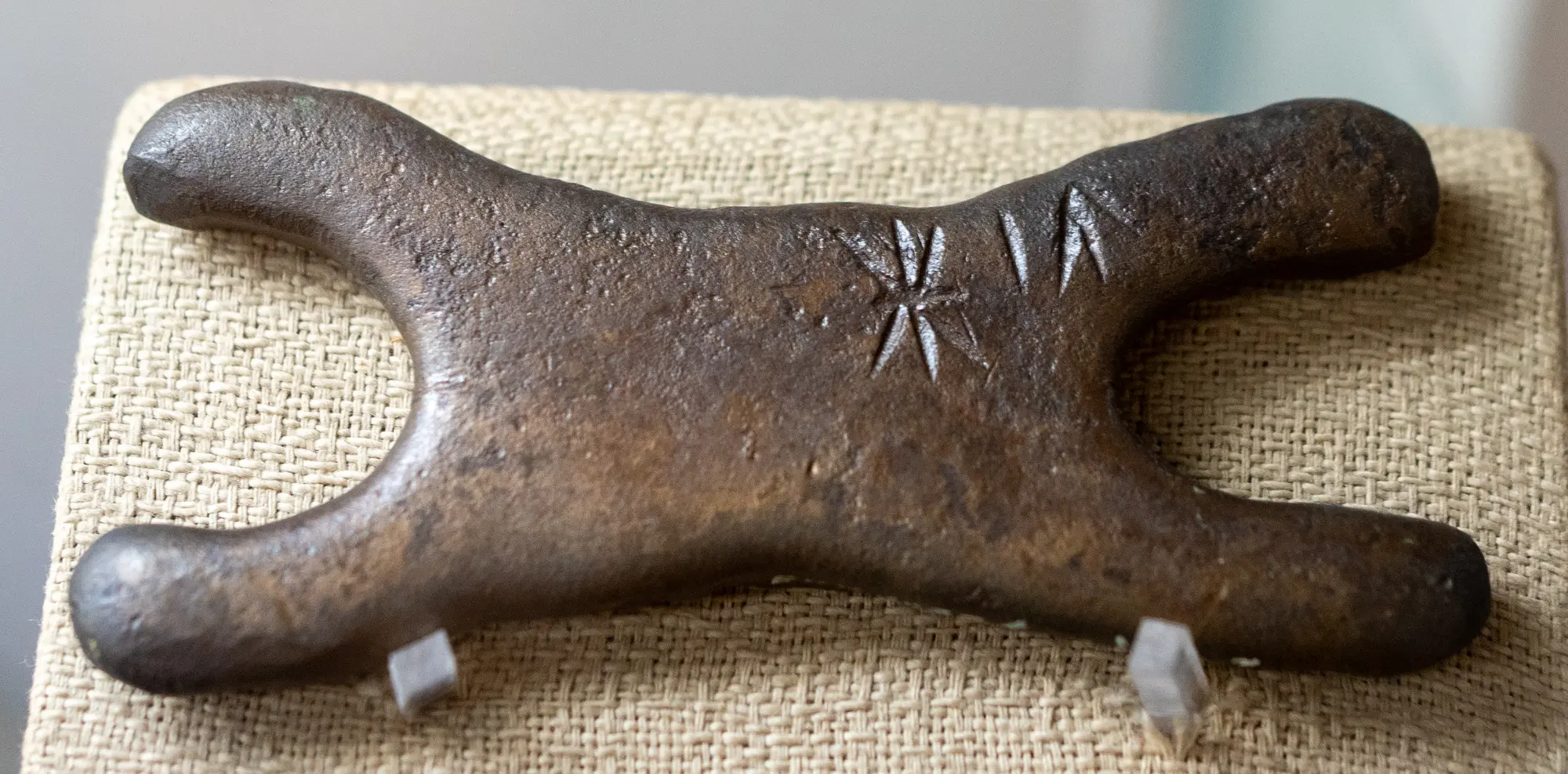
In the compendium
Copper Metallurgy in Ancient Cyprus
The mining, smelting and casting of the Troodos sulphide ores, from hammered Chalcolithic native copper to Late Bronze Age oxhide ingots and Archaic slag heaps.
In the compendium
Weights and Ingots
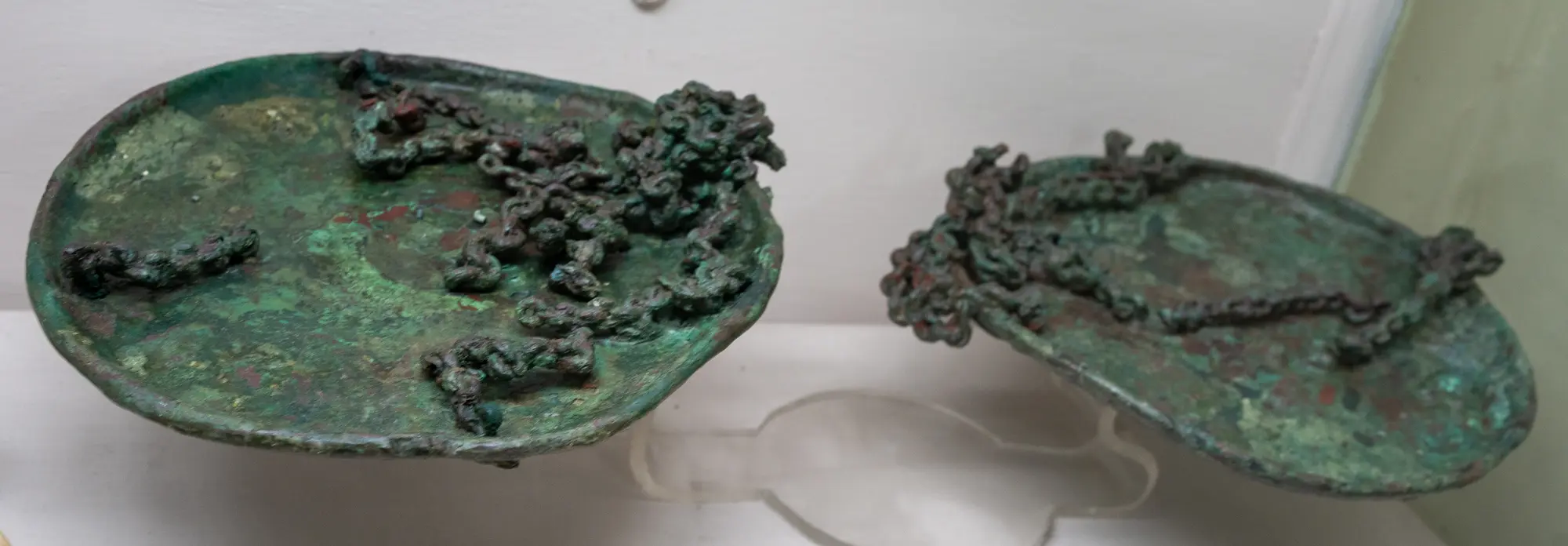
Copper ingots, miniature votive ingots, balance weights and scale pans in Cyprus, from the Late Bronze Age into the Cypro-Geometric and Cypro-Archaic periods.
In the compendium
The Antiquities Laws of 1905 and 1935
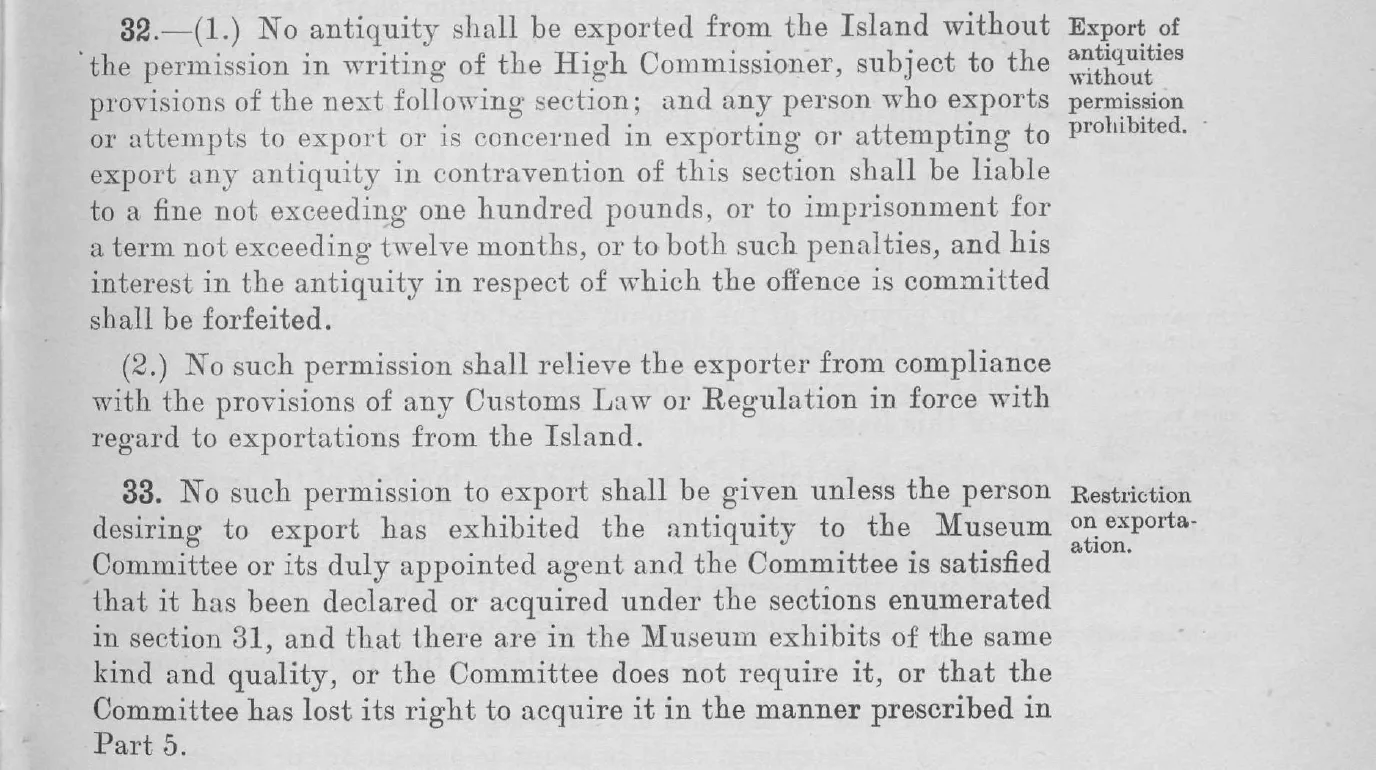
What the Antiquities Laws of 1905 and 1935 said about ownership, finds, excavation, dealing, collections and export, and how they were amended up to 1996.

The period
Late Bronze Age
The Late Cypriot period, c. 1650–1050 BCE, when copper exports made Cyprus an urban, literate trading power before the crisis around 1200 BCE.
Map of Cyprus
Places discussed in the talk
- Ground above 200, 500, 1,000 m
Places
- 1Skouriotissa (approx.)
- 2Soloi
- 3Mathiatis (approx.)
- 4Apliki (approx.)