
Workshop·Archaeological Research Unit - University of Cyprus·2019
PORPHYRA Workshop: Session 2, Aegean Bronze Age Dye Production and Hala Sultan Tekke
Rena Veropoulidou, Anthi Batziou, Lydia Berger, Fabian Kanz, Gerhard Forstenpointner and Peter Fischer
Chapters
About the video
Chaired by Ourania Kouka of the University of Cyprus, this second session of the PORPHYRA Workshop brings together four papers on the materiality of purple dye production in the Aegean Bronze Age and in Late Bronze Age Cyprus.
Rena Veropoulidou opens the session with an archaeomalacological study of purple dye manufacture in the Aegean Bronze Age. Drawing on modern harvesting and shell-breaking experiments alongside assemblages from Thessaloniki Toumba, Pefkakia, Sissi and Palaikastro, she reconstructs the production sequence from gathering live molluscs (predominantly Hexaplex trunculus) to extracting the hypobranchial gland and disposing of waste. She notes that extracting the fresh gland produces little odour and can be done indoors to limit sunlight and control colour hues toward blue-purple, whereas the foul smell arises during fermentation and heating. She also shows how total wet-sieving at Toumba and Palaikastro multiplied minimum individual counts and altered estimates of production scale.
Anthi Batziou presents joint work with Dimitris Agnousiotis and Rena Veropoulidou on a 12th-century BC workshop at Magoula Pefkakia in the Pagasetic Gulf. Excavations in the flat area southeast of the mound uncovered Room 6, a space with four openings, a central hearth holding the imprint of a clay tub, a pounding slab, cooking pots, stirrup jars and two Canaanite jars, together with crushed Hexaplex trunculus shells broken by experienced hands.
Lydia Berger, Fabian Kanz and Gerhard Forstenpointner present interdisciplinary results from chamber K10 in the outer suburb of Cape Kolonna on Aegina, dating to Late Helladic IIA. Berger outlines the four destruction layers, which yielded potsherds with purple pigment on their interiors and a pit filled with crushed purple shells. Kanz explains the high-performance liquid chromatography analysis confirming that the pigment derived from Hexaplex trunculus. Forstenpointner examines the faunal assemblage, noting the predominance of small juvenile Hexaplex shells requiring total crushing alongside abundant Pinna nobilis (pen shell) valves, which he suggests point to the production and possible dyeing of byssus (sea silk).
In the final paper, Peter Fischer turns to Cyprus and his excavations at Hala Sultan Tekke. Alongside evidence for copper working and spindle whorls and loom weights, the site has yielded roughly 200 kilograms of murex shells across 33 concentrations in the old excavations by Paul Åström and the new trenches in City Quarters 1, 2 and 4, dating mainly to Late Cypriot III around 1200 to 1150 BC. In City Quarter 2, a 25-kilogram concentration of shells lay beside a collapsed chalky basin stained with purple that Fischer reconstructs as a dyeing vat positioned on a flat roof. He links the wealth of the harbour town to exports of copper and purple-dyed textiles, showing petrographic evidence for Nuragic pottery from Sardinia found at Hala Sultan Tekke.
From our collection
Pieces in the Drakopoulos collection of the kinds and periods this talk covers: Jar, Late Cypriot (Late Bronze Age).
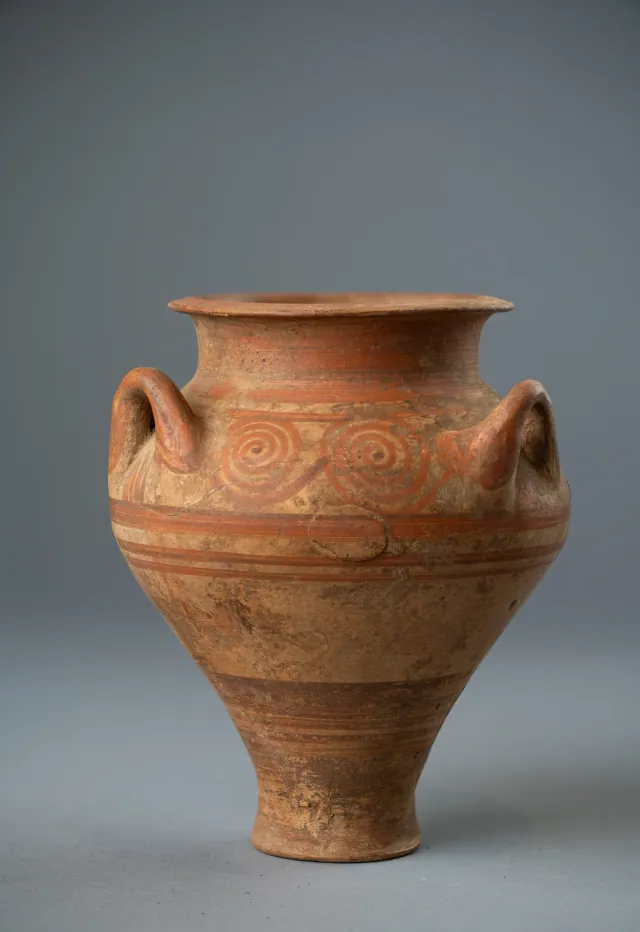
Cypriot Three-Handled Jar in the Mycenaean Style with Running Spirals
Jar
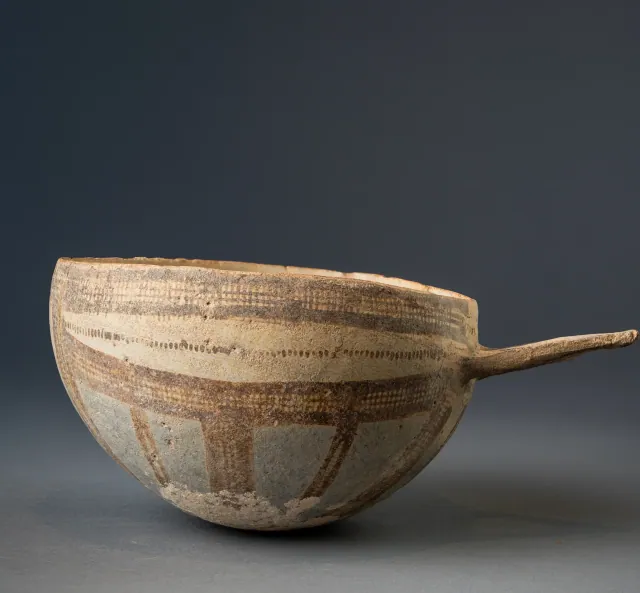
White Slip II Hemispherical Bowl with Wishbone Handle
Late Cypriot (Late Bronze Age)
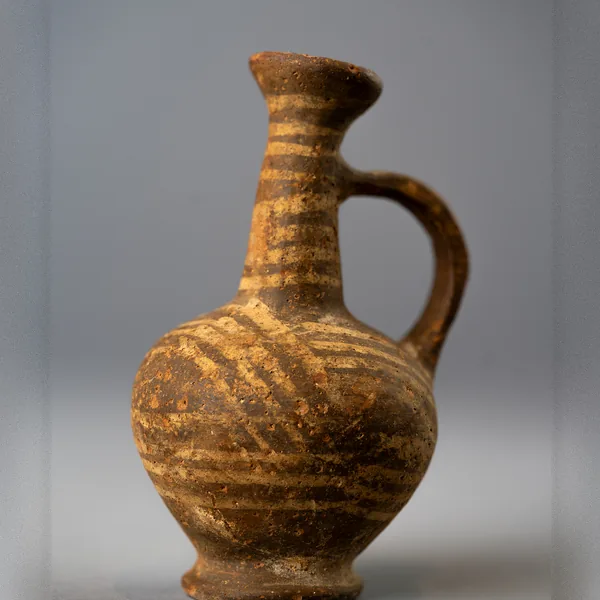
Base Ring II Bilbil Juglet with White-Painted Bands
Late Cypriot (Late Bronze Age)
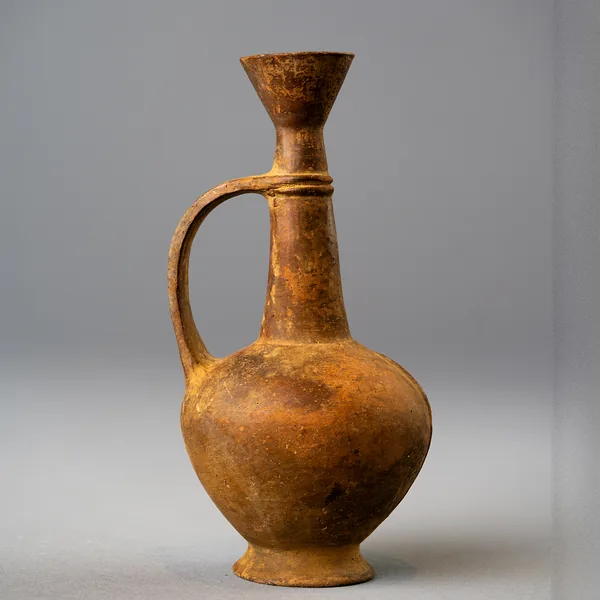
Base Ring Bilbil Juglet with Funnel Mouth and Neck Ridge
Late Cypriot (Late Bronze Age)
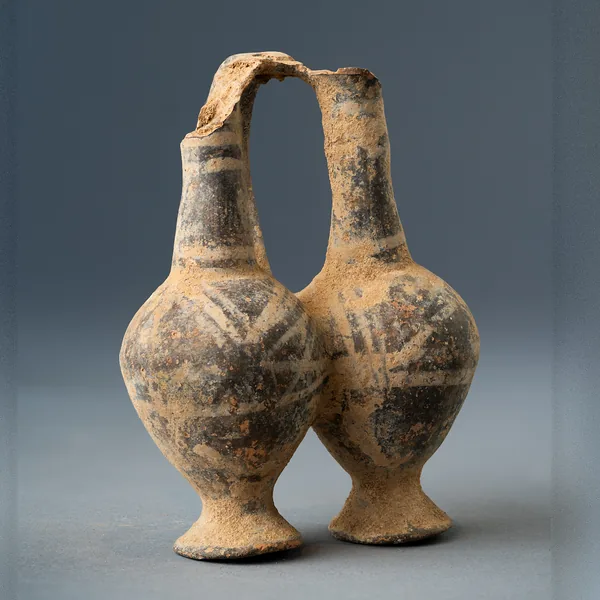
Base Ring II Double Juglet with White-Painted Decoration
Late Cypriot (Late Bronze Age)
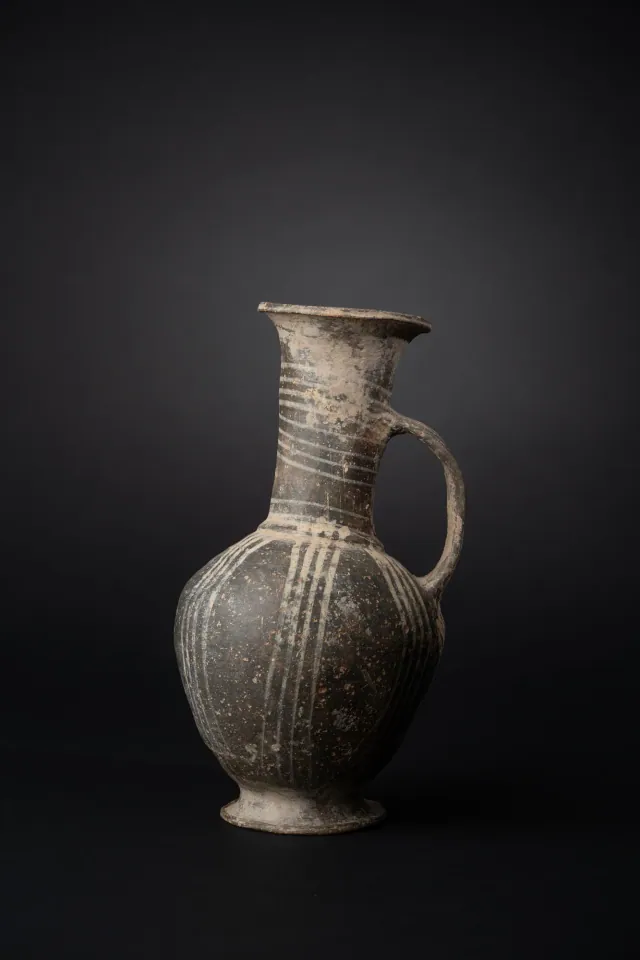
Base Ring II Jug with White-Painted Lattice Bands
Late Cypriot (Late Bronze Age)
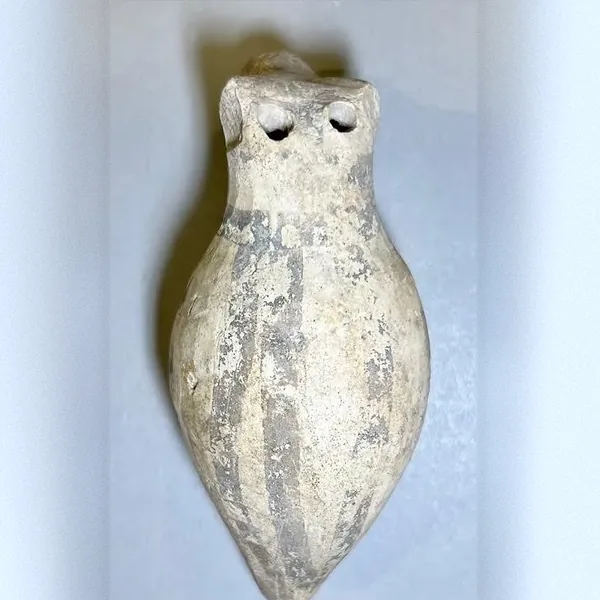
White Painted VI Owl-Headed Rattle
Late Cypriot (Late Bronze Age)
Found at the places discussed
Objects in our catalogue, in museum collections, recorded as found at these sites.


Background
Where to read more on this site before or after watching.
In the compendium
Clothing and Dress in Ancient Cyprus
What Cypriots wore from the Neolithic to the Cypro-Classical period, reconstructed from figurines, statues, textile tools and metal fasteners.
In the compendium
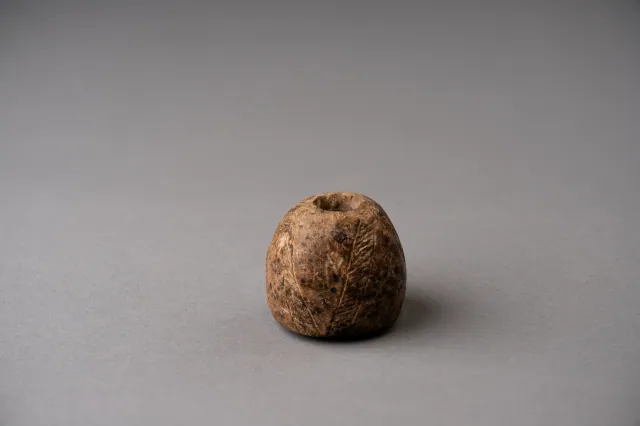
Spindle Whorls and Textile Tools in Ancient Cyprus
The tools of spinning, weaving and dyeing in ancient Cyprus, from Neolithic bone needles to the terracotta whorls and loom weights of the Bronze Age.
In the compendium
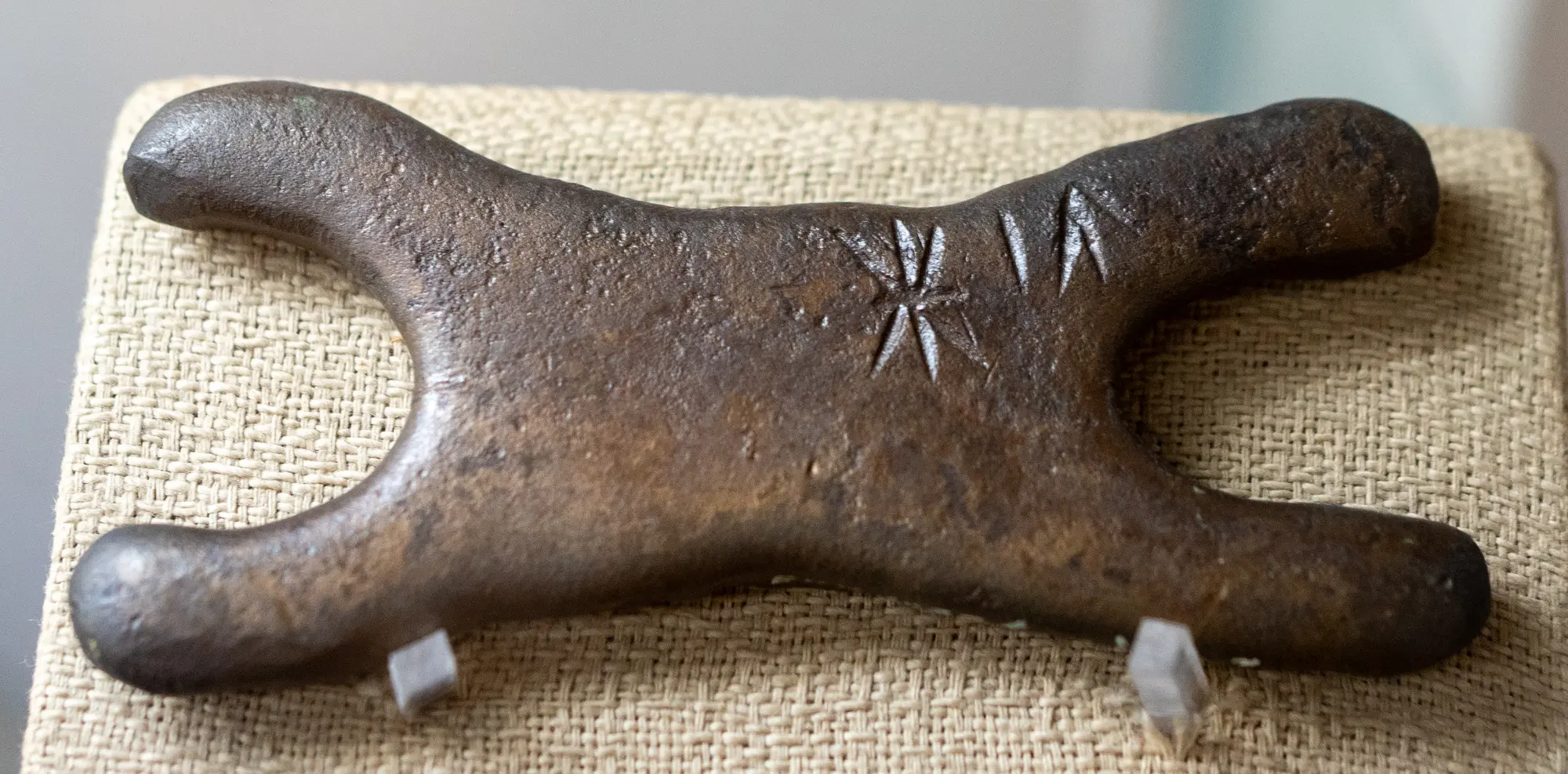
Copper Metallurgy in Ancient Cyprus
The mining, smelting and casting of the Troodos sulphide ores, from hammered Chalcolithic native copper to Late Bronze Age oxhide ingots and Archaic slag heaps.

The period
Late Bronze Age
The Late Cypriot period, c. 1650–1050 BCE, when copper exports made Cyprus an urban, literate trading power before the crisis around 1200 BCE.