
Archaic I
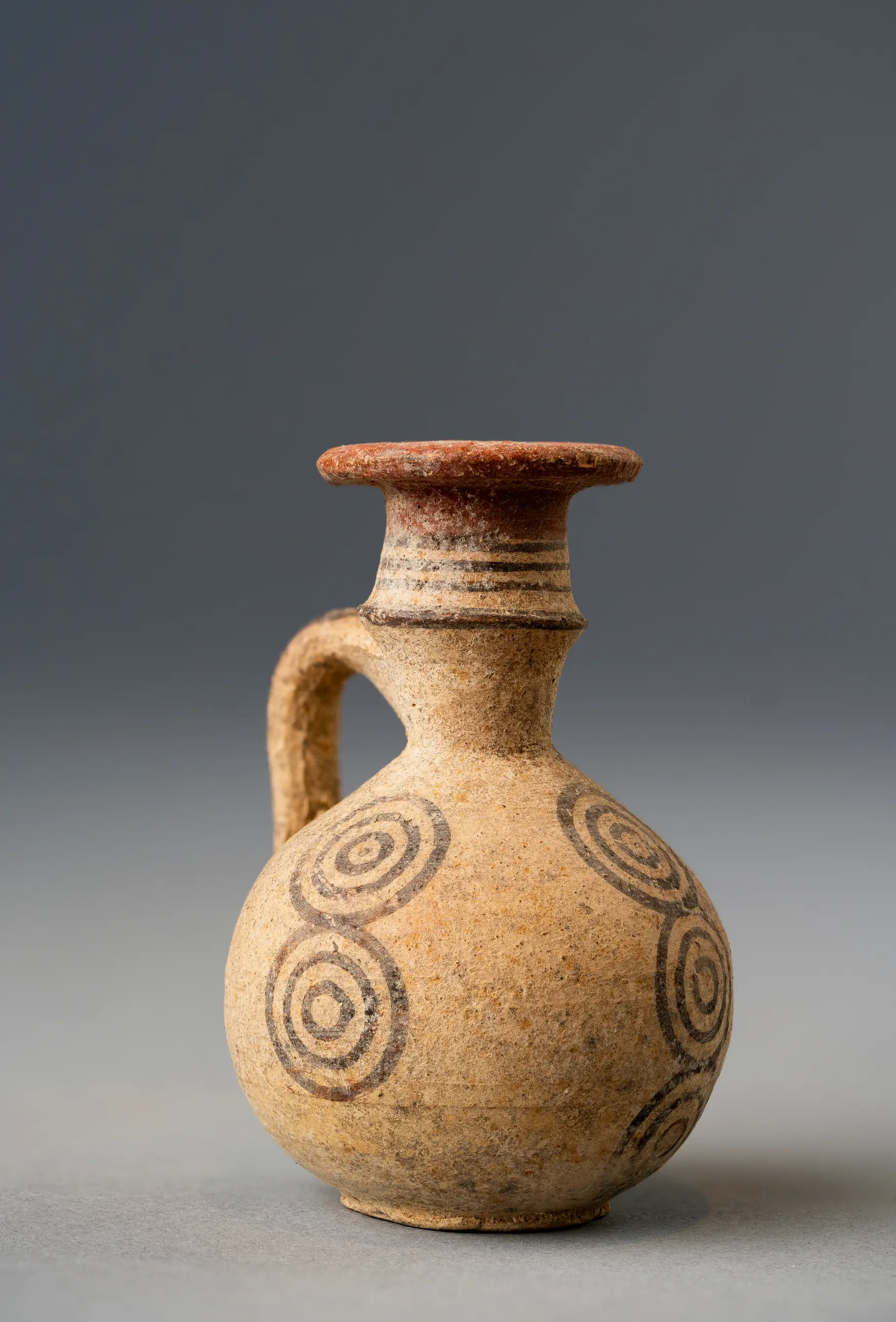
Bichrome IV Handle-Ridge Juglet with Rows of Concentric Circles
Small Bichrome IV juglet with a red-painted disc rim, a neck ridge and vertical columns of black concentric circles on each side, Cypro-Archaic I.
Date
750 - 600 BC
Accession No.
JUG-GE-006
Collection
Alexis Drakopoulos
Provenance
- 1965–1969, The Goodman Collection, formed in Cyprus
- 1969–2025, retained in the Goodman Collection
- 2025–present, Alexis Drakopoulos, London
Cypro-Archaic I, c. 750–600 BCE · Bichrome IV ware · Wheel-made
A small juglet with a round body on a low ring base, a short narrow neck and a broad, flat disc rim. Midway up the neck a sharp moulded ridge encircles it, and the handle springs from this ridge and drops in a tight loop to the shoulder. The rim is painted red all over, a solid disc of colour against the pale buff clay, and a red wash runs down the top of the neck. Below it the neck carries a group of fine black lines and a black band on the ridge. On each side of the body the painter set a vertical column of concentric-circle groups, three rings round a central dot, stacked so that they touch or nearly touch. The paint is well preserved and the surface clean, with fine throwing lines visible on the lower body.
Commentary
This is a handle-ridge juglet, a small Cypriot shape in which the handle rises from a ridge on the neck and the mouth ends in a flat, projecting disc. Gjerstad lists handle-ridge juglets among the White Painted and Bichrome shapes of Types III and IV and notes that the form was influenced by Black-on-Red ware, where it is a standard shape [1, pp. 47, 51]. In Black-on-Red the juglet is the classic container for oil and perfumed oil, and the Bichrome version served the same purpose [2]. The earlier description of this piece as a "squat oinochoe" is inaccurate: the mouth is round and flat, with no pinched spout.
The ware is Bichrome IV. The red is confined to the rim, while the body ornament is in black alone, a common economy on small Bichrome vessels. The columns of concentric circles on each side are a small-scale version of the circle scheme of the larger Bichrome IV jugs, which carry rows of small circle groups between their big side circles [3]. Gjerstad's account of the Western style, with circles "often connected in vertical or horizontal rows", fits this arrangement closely [1, p. 52].
The best parallel is the British Museum juglet 1896,0201.288 from the excavations at Kourion, which has the neck ridge, a flat rim painted red and vertical concentric ornament on the body, and is dated to Cypro-Archaic I [4]. A juglet in the Museum of Fine Arts, Boston, with a red flat rim and a vertical row of circles, is closely similar. On this evidence the juglet can be dated to Cypro-Archaic I, c. 750–600 BCE. The painter spaced the circles slightly differently on the two sides, with the lowest group on one side sliding round the curve of the body, a sign of quick freehand work with a multiple brush.
References
- 1.Gjerstad, E. (1948) The Swedish Cyprus Expedition IV.2: The Cypro-Geometric, Cypro-Archaic and Cypro-Classical Periods. Stockholm: Swedish Cyprus Expedition, pp. 47, 51–52.
- 2.Schreiber, N. (2003) The Cypro-Phoenician Pottery of the Iron Age. Leiden: Brill.
- 3.Bombardieri, L. & Panero, E. (eds) (2021) Cyprus. Crossroads of Civilizations. Exhibition catalogue. Turin: Musei Reali, cat. 092, pp. 287–288.
- 4.British Museum, London, 1896,0201.288. Bichrome juglet from Kourion, Cypro-Archaic I. Collection online record.
More from the Catalogue
Browse related objects
Bichrome Oinochoe
Archaic I
Free-field bichrome jug with image of an Ibis bird and reeds
Archaic
Squat bichrome jug in free-field style with image of bird picking a lotus flower
Archaic
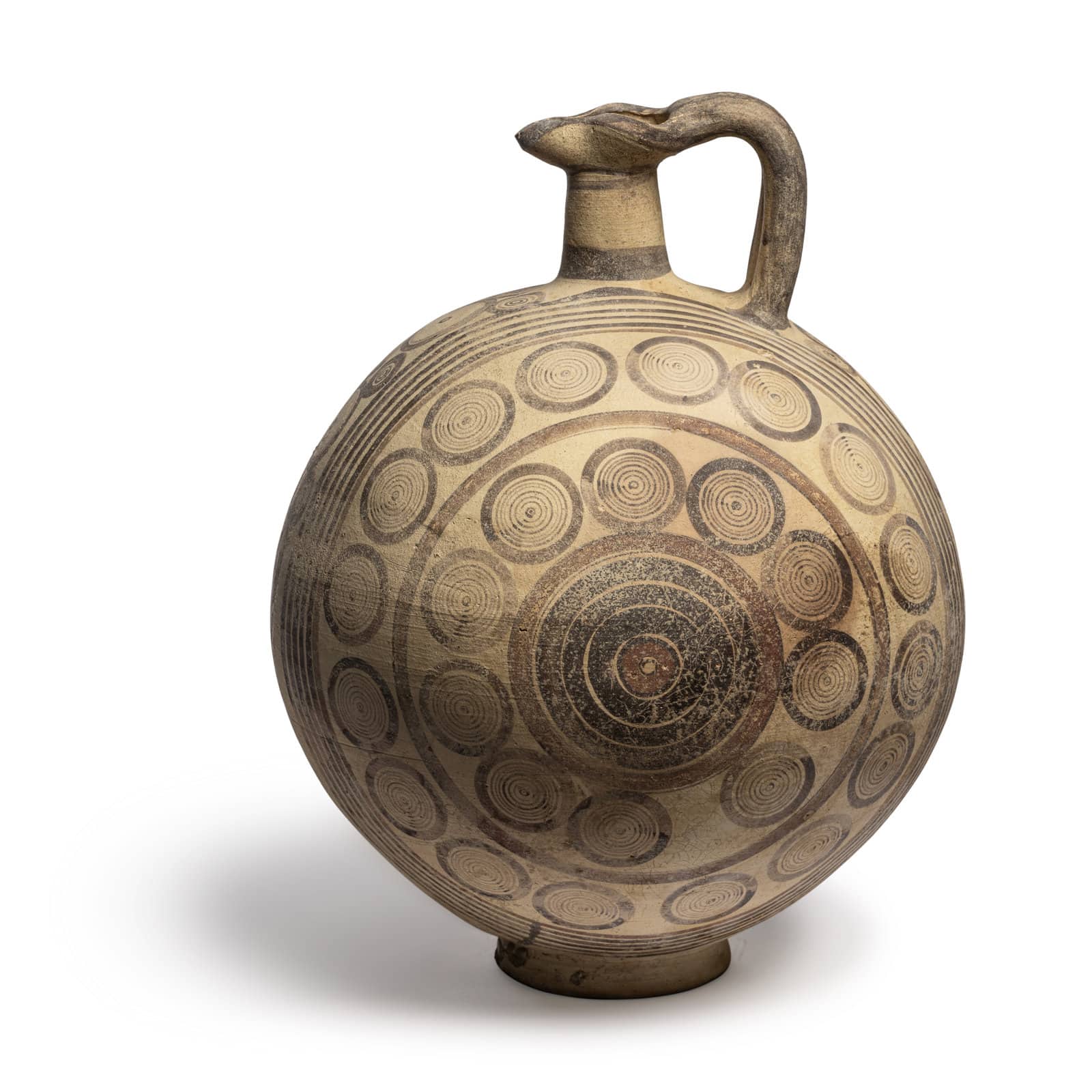
A Cypriot Bichrome-Ware Oinochoe Jug
Archaic I
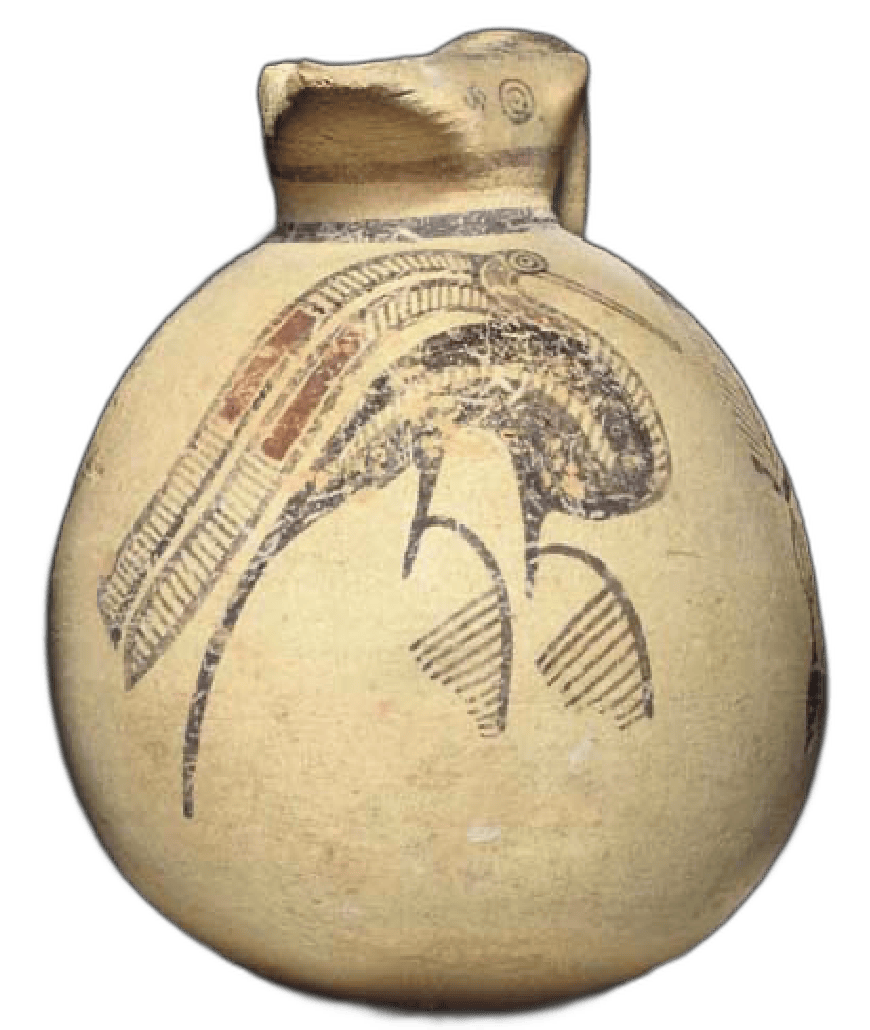
Oinochoe with Free Field Bird
Archaic I
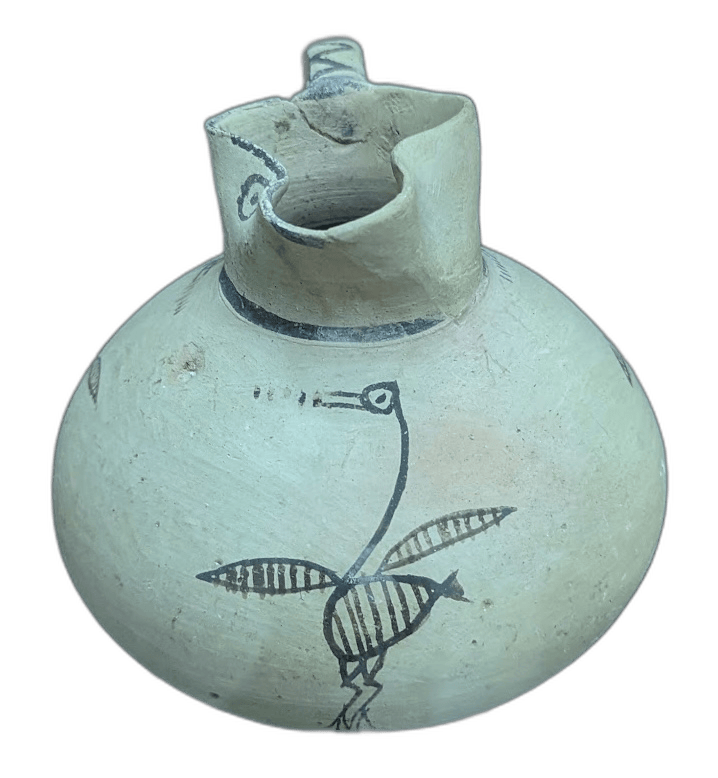
Small Oinochoe with Free Field Bird
Archaic I
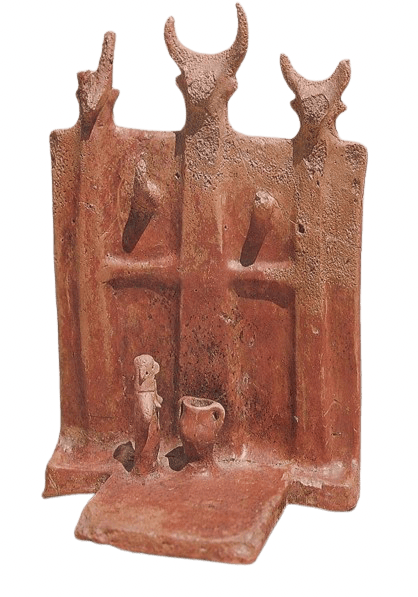
Red Polished Shrine
Middle Bronze Age I
Black-On-Red Geometric Jug Sherd
Geometric II
Bichrome Jug
Geometric
Bichrome Juglet
Geometric
Bichrome Oinochoe
Geometric
Juglet
Archaic II
Oinochoe
Geometric III
Jug
Archaic I
Juglet
Archaic I
Jug
Geometric I
Terracotta jug
Early Bronze Age I
Juglet
Geometric I