
Lecture·CAARI Cyprus·2025
Building Bronze Age Cyprus: An Integrative Approach to Monumental Architecture and Ashlar Masonry
Caroline Barnes and Graham Braun
Chapters
About the lecture
Caroline Barnes of the University of British Columbia presents a paper co-authored with Graham Braun of the University of Cincinnati on stone construction in the Late Bronze Age, based on fieldwork conducted in 2023 and 2024 with Kevin Fisher across five Cypriot sites. Rather than treating monumental ashlar masonry solely as an expression of elite control, the project examines the practical construction process from the perspective of the builders and masons.
Barnes outlines the spread of ashlar in Cyprus from its earliest appearance at the fort of Korovia-Nitovikla after 1750 BCE to its wider adoption in Late Cypriot IIC agricultural storage buildings and Late Cypriot III sanctuaries. The study combines architectural energetics with photogrammetry and terrestrial laser scanning to measure tool marks and estimate the person-hours needed to extract, transport, assemble and dress stone from the Pakhna formation, such as that from the Tochni sandstone quarry.
The talk compares three Late Cypriot IIC storage complexes: Building X at Kalavasos-Ayios Dhimitrios, the Ashlar Building at Maroni-Vournes and Building II at Alassa-Paliotaverna. At Kalavasos and Maroni, where stone was hauled over greater distances, ashlar was integrated with rubble and placed in visible areas of social interaction; Kalavasos kept rough surfaces, drafted margins and lifting bosses, whereas Maroni cut the bosses away. At Alassa, where stone was quarried in the immediate vicinity, ashlar forms every wall of Building II, including internal partitions and a five-tonne plinth block, requiring an estimated 27,000 person-hours. In the Late Cypriot III sanctuaries of Kition-Kathari and Palaepaphos, masonry techniques remained conservative while the scale increased: Kition shipped white limestone 20 kilometres across Larnaca Bay, and Palaepaphos erected massive orthostats without drafted margins, with corner channels cut for ropes.
Barnes notes that top drafted margins at four of the five sites measure 7.5 to 8 centimetres, matching the four-digit unit of the Egyptian cubit system and suggesting an anatomical measurement standard. Drawing on comparative labour theory and the 50,000-litre olive oil capacity of Building X at Kalavasos, she argues that these projects relied on reciprocal negotiation and communal participation rather than simple coercion, and closes with the Iron Age reuse and imitation of Late Cypriot ashlar, including 42 masons' marks and double drafted margins at the palace of Palaepaphos-Hadjiabdoulla.
From our collection
Pieces in the Drakopoulos collection of the kinds and periods this talk covers: Stone, Cypro-Archaic.
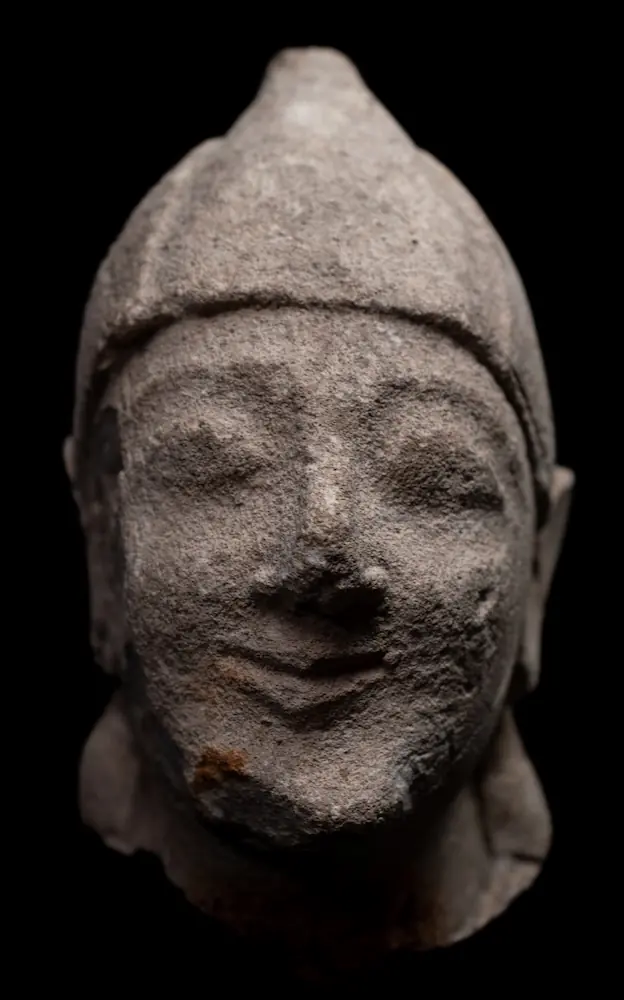
Limestone Head of a Beardless Votary in a Conical Helmet
Stone
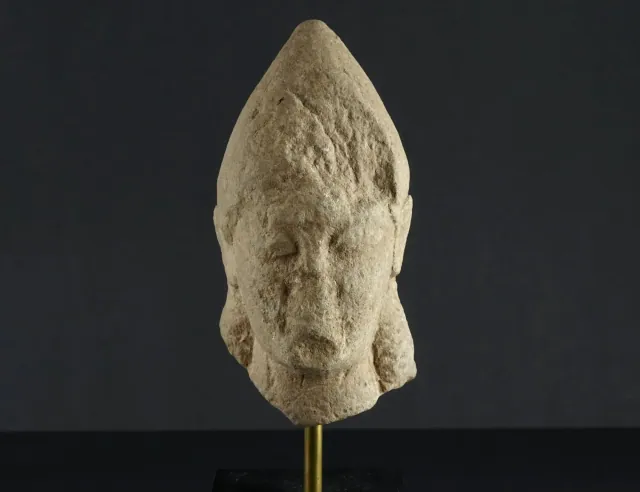
Weathered Limestone Head of a Votary in a Tall Pointed Cap
Stone
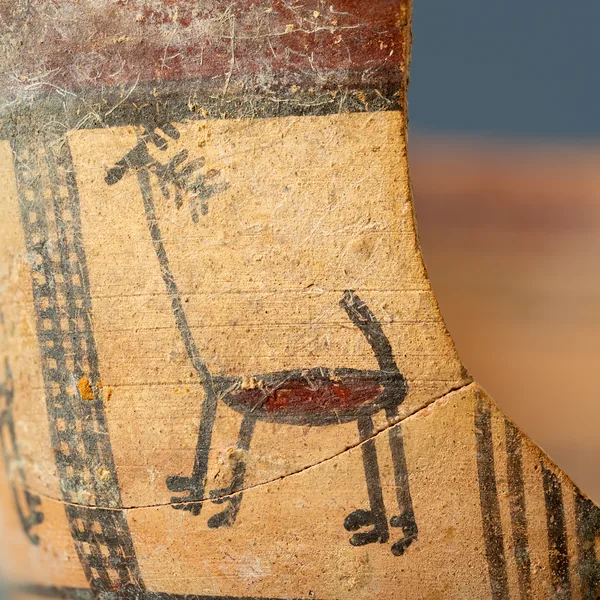
Bichrome Skyphos with Stags in Metopes
Cypro-Archaic
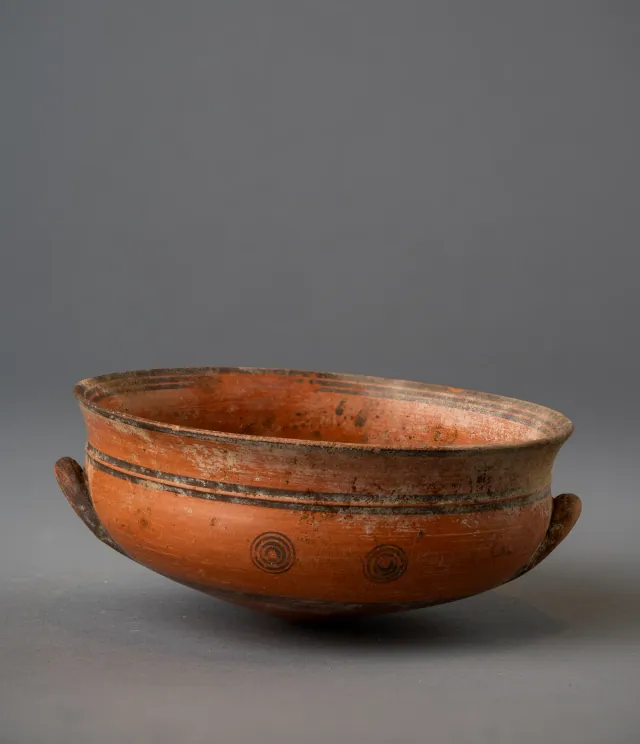
Black-on-Red Two-Handled Bowl with Raised Flaring Rim
Cypro-Archaic
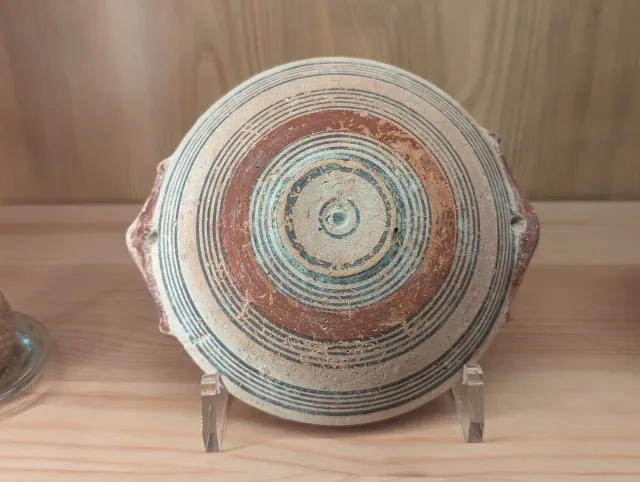
Bichrome IV Bowl with Red-Painted Pierced Lug Handles
Cypro-Archaic
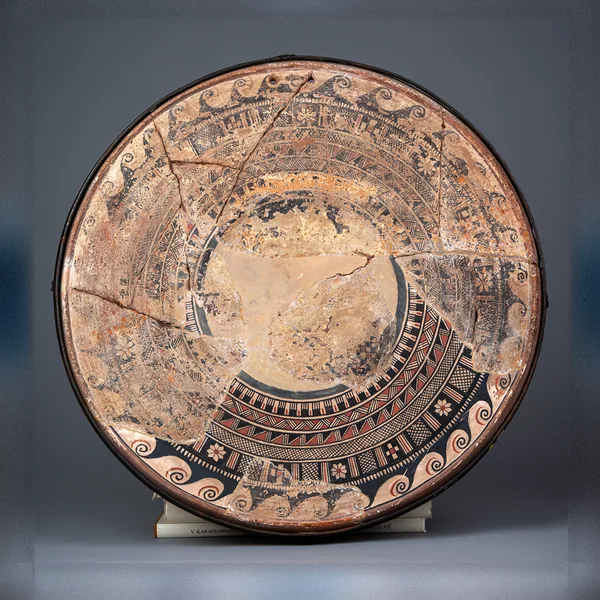
Large Bichrome Plate from Salamis with a Wave Band and Rosette Metopes
Cypro-Archaic
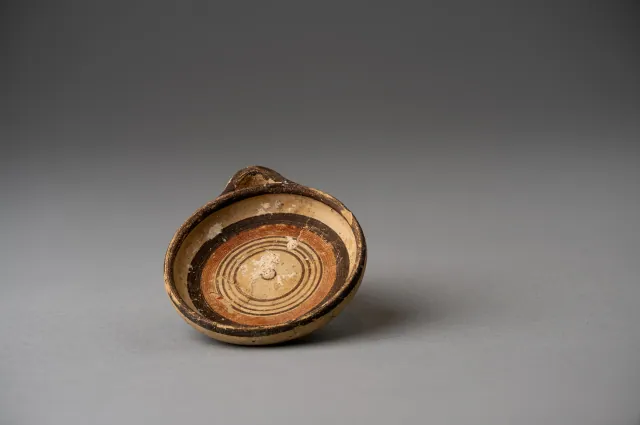
Miniature Bichrome Plate with Concentric Circles
Cypro-Archaic
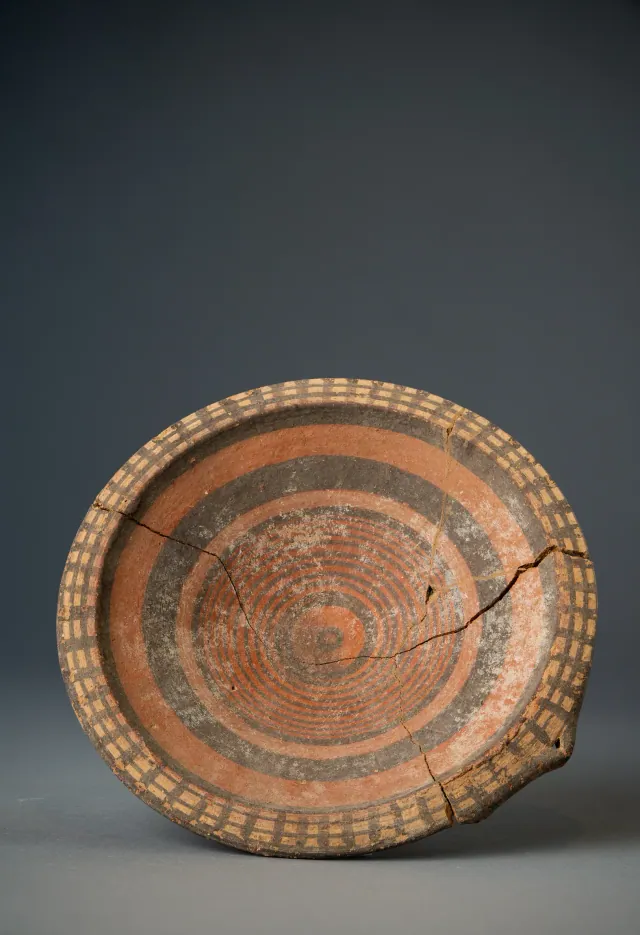
Black-on-Red Plate with Barred Rim and Concentric Circles
Cypro-Archaic
Found at the places discussed
Objects in our catalogue, in museum collections, recorded as found at these sites.

Background
Where to read more on this site before or after watching.
The site
Maroni
A Late Bronze Age centre of several parts in the lower Maroni valley: the Ashlar Building and West Building at Vournes, the tombs, buildings and anchorage at Tsaroukkas on the shore, and smaller localities around them. It was settled from about 1650 BC and abandoned around 1200 BC. From about 750 BC until about 200 BC the ruin of the Ashlar Building served as a rural sanctuary.
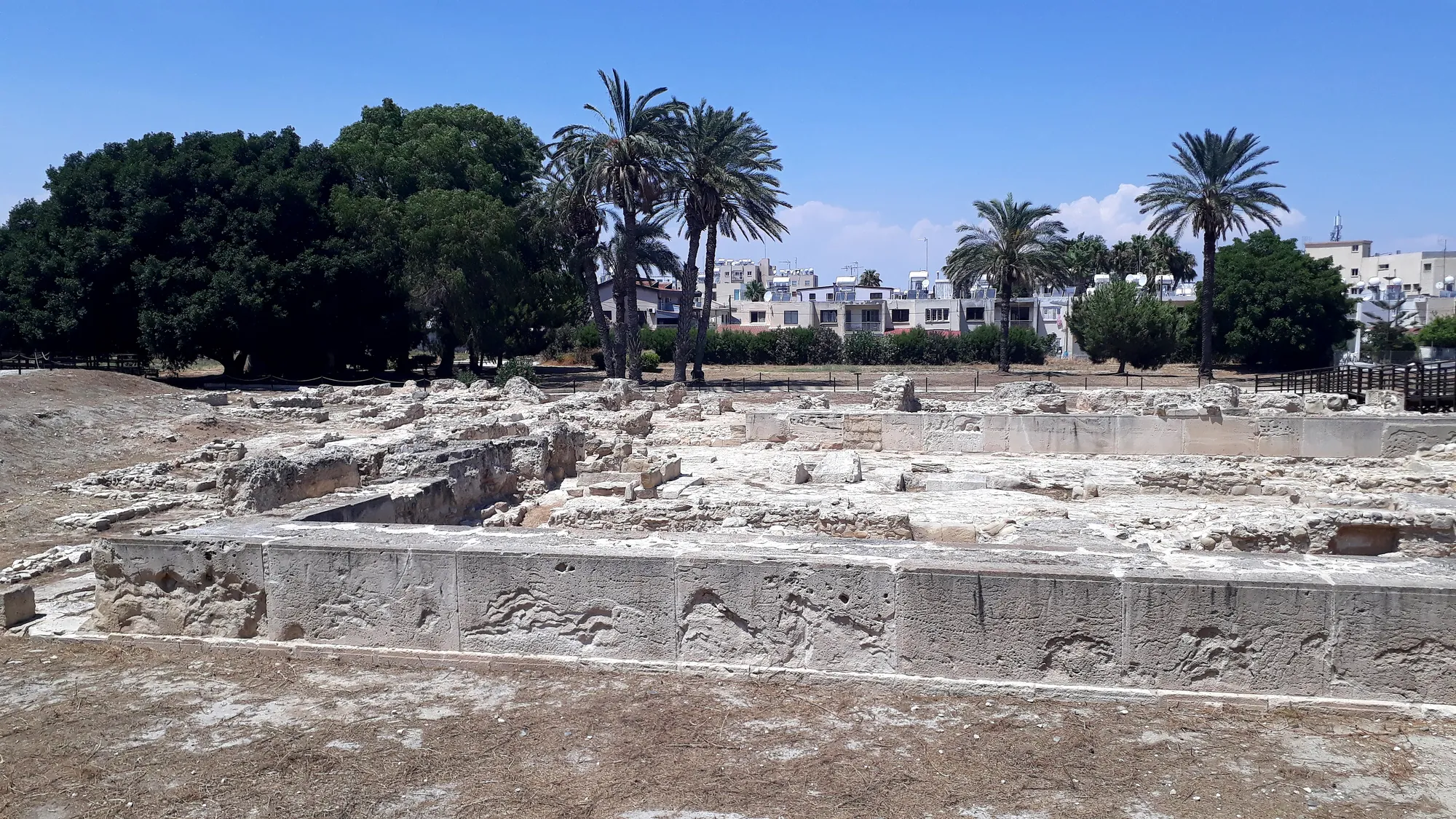
In the compendium
Ashlar Masonry
Squared, dressed stone used on Cyprus from about 1500 BC for gateways, tombs and the largest buildings of the Late Bronze Age towns, set below walls of mudbrick.
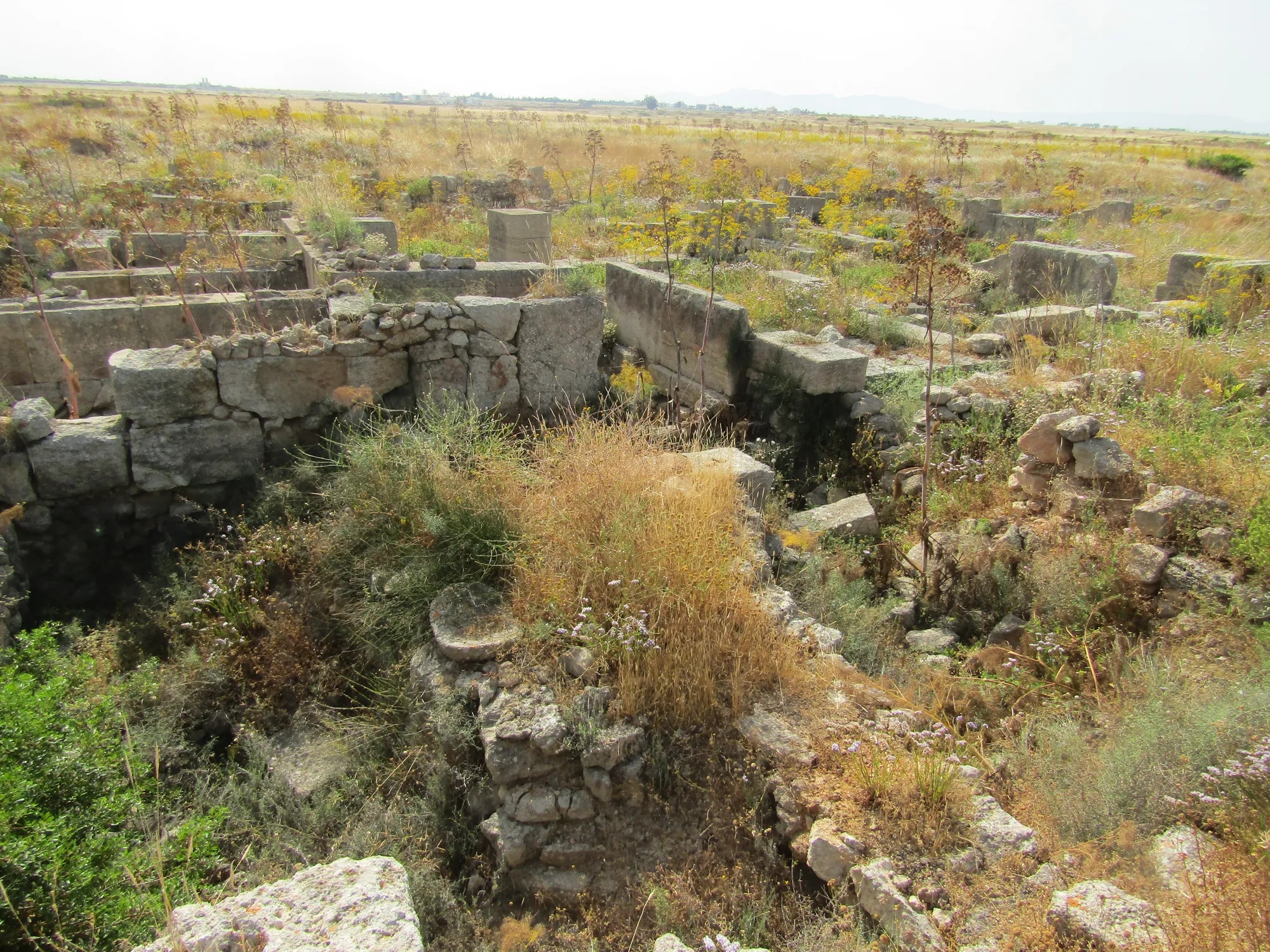
In the compendium
Late Bronze Age Towns and Buildings
How Late Bronze Age Cyprus built its first towns: street grids, large ashlar buildings with storage halls, courtyard houses, and the short-lived settlements of the twelfth century.
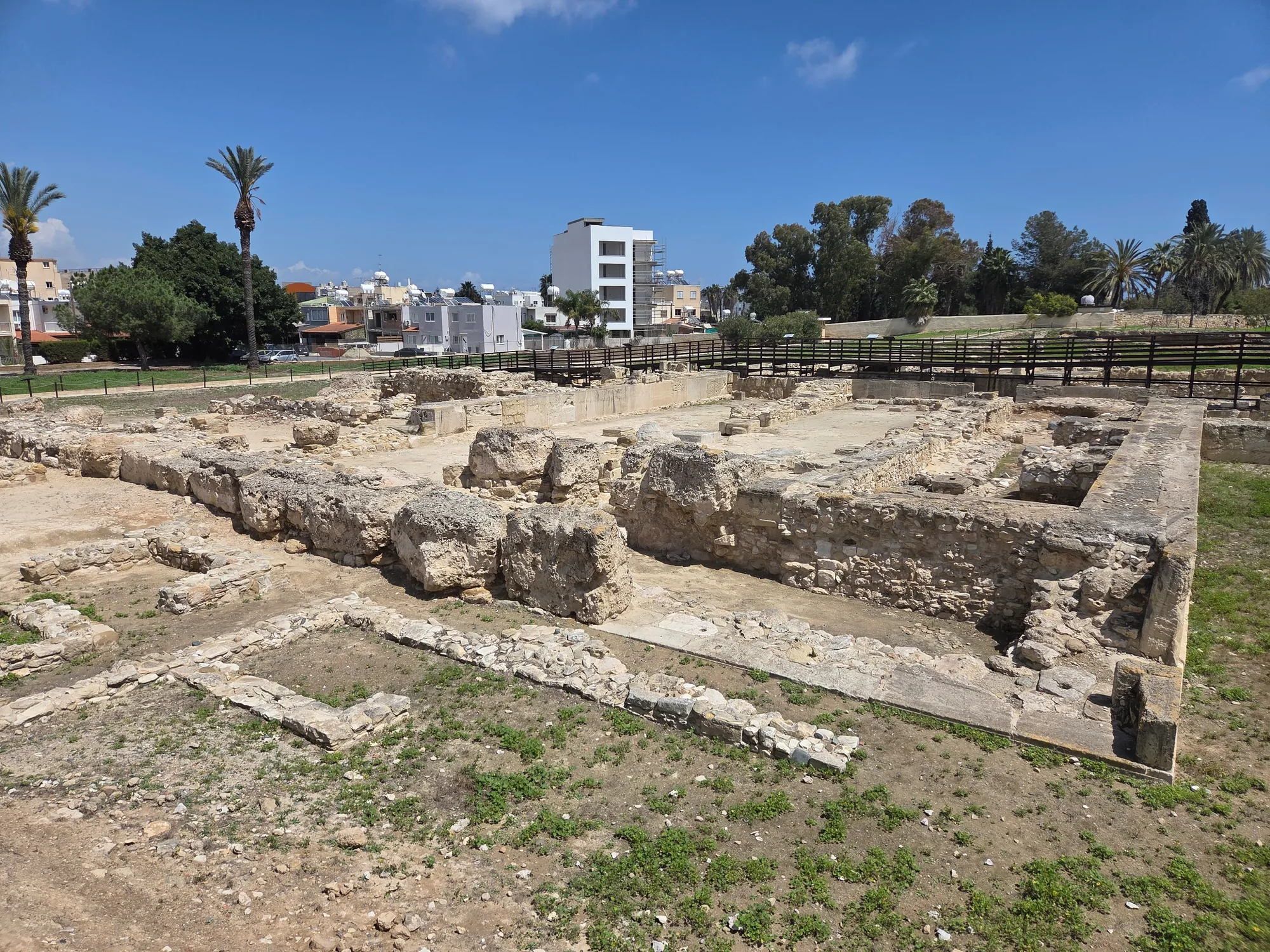
In the compendium
Bronze Age Sanctuaries and Temples
Cypriot cult buildings of the Bronze Age, from the clay sanctuary model of Vounous to the walled courts, altars and inner rooms of the Late Cypriot temples.
Map of Cyprus
Places discussed in the talk
- Has a page on this site
- Other places
- Ground above 200, 500, 1,000 m
Places
- 1Maroni
- 2Alassa
- 3Kition
- 4Palaepaphos
- 5Nitovikla
- 6Tochni (approx.)