
Lecture·Archaeological Research Unit - University of Cyprus·2021
Prices and values of metals in the Late Bronze Age Eastern Mediterranean
Chapters
About the lecture
Georgios Papasavvas of the University of Cyprus examines the economic value, exchange rates, and purchasing power of copper, silver, and gold in the Late Bronze Age Eastern Mediterranean. Because Cyprus lacks deciphered administrative archives, Papasavvas uses textual records from Egypt, Ugarit, Anatolia, and Mesopotamia to reconstruct how Cypriot copper was valued at its destinations.
The lecture opens with 18th-century BC Mari texts mentioning Alashiyan copper and moves to the scale of Late Bronze Age trade, exemplified by the Amarna letters and the Uluburun shipwreck, which carried ten tons of Cypriot copper oxhide ingots and one ton of tin. Papasavvas outlines how ancient economies functioned as monetary systems without coinage, using standardized weights of silver and copper as indices of value. At the Egyptian workmen's village of Deir el-Medina, daily goods and wages were priced in copper deben of 91 grams.
Comparing textual records, Papasavvas shows how relative metal values fluctuated by region and period. In New Kingdom Egypt, the ratio of gold to silver to copper stood at 1:2:200, whereas at 14th- and 13th-century BC Ugarit it was 1:4:800, making precious metals four times more expensive relative to copper. By the 12th century BC, copper appreciated against silver in both Egypt (1:60) and Babylonia (1:90), a shift Papasavvas suggests benefited the Cypriot economy.
To illustrate these ratios, Papasavvas contrasts the light weights of Late Cypriot precious metal finds, such as a gold bowl from Enkomi and an inscribed silver cup from Hala Sultan Tekke, with Egyptian royal wealth, and calculates the copper equivalents of several archaeological assemblages. Acquiring the 1,430 grams of gold objects in Enkomi Tomb 93 would have required 10 oxhide ingots at Egyptian rates or 41 ingots at Ugaritic rates, roughly the entire copper cargo of the Cape Gelidonya shipwreck (1,135 kilos). He similarly converts two silver ingots from Pyla (2.6 kilos total), an Amarna hoard, and a silver armlet from Enkomi into copper ingots, and translates the Uluburun cargo into Deir el-Medina grain wages, estimating it could have fed over 6,400 people for a year.
The final section turns to Linear B tablets from Knossos and Pylos and the weights of surviving bronzes to calculate how many weapons and tools the Uluburun cargo could yield, such as 25,000 swords of the type found at Enkomi or 30,000 double adzes, while noting that Ugaritic and Egyptian texts also priced the smith's labour above raw material weight. A lengthy discussion follows, with contributions from Carol Bell, Diamantis Panagiotopoulos, Susan Sherratt, and Martin Odler on tin prices, domestic versus international exchange rates, and bronze scrap recycling.
From our collection
Pieces in the Drakopoulos collection of the kinds and periods this talk covers: Late Cypriot (Late Bronze Age).
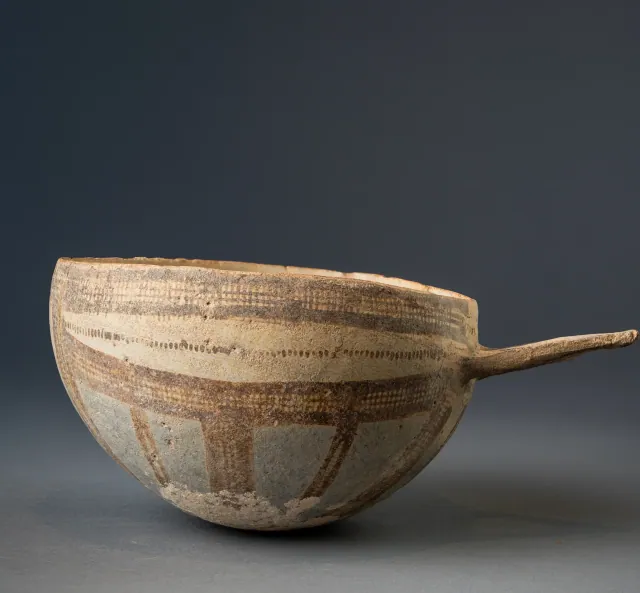
White Slip II Hemispherical Bowl with Wishbone Handle
Late Cypriot (Late Bronze Age)
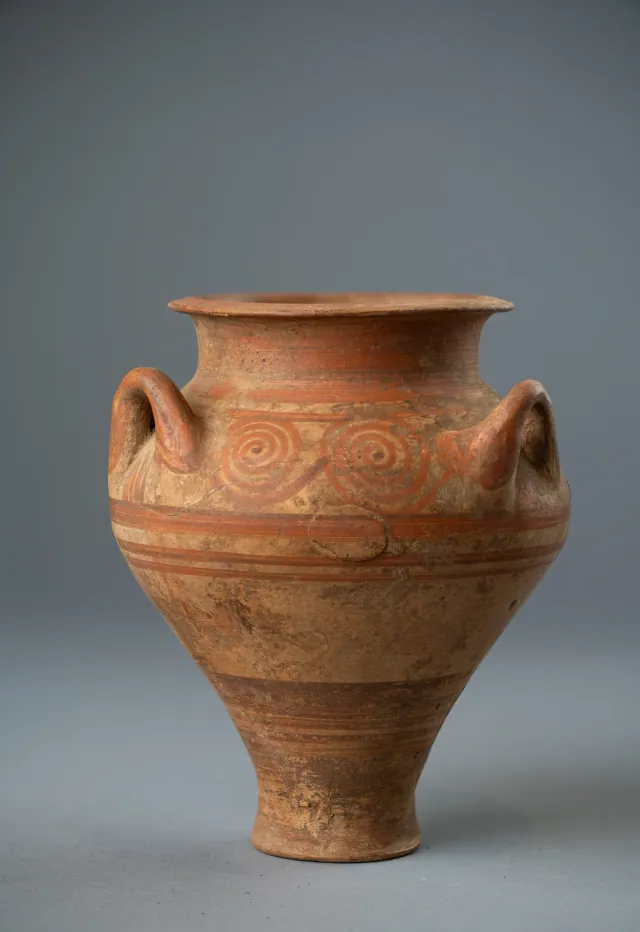
Cypriot Three-Handled Jar in the Mycenaean Style with Running Spirals
Late Cypriot (Late Bronze Age)
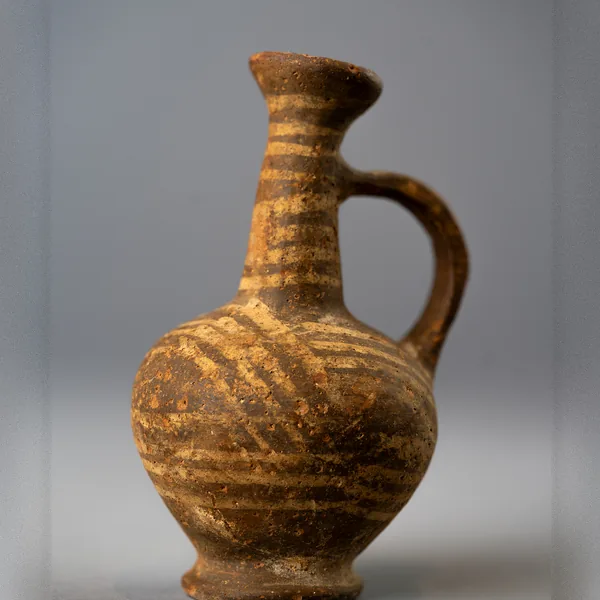
Base Ring II Bilbil Juglet with White-Painted Bands
Late Cypriot (Late Bronze Age)
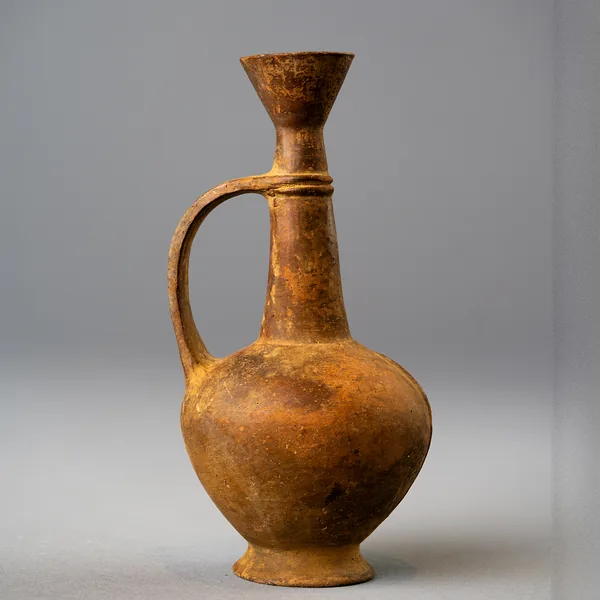
Base Ring Bilbil Juglet with Funnel Mouth and Neck Ridge
Late Cypriot (Late Bronze Age)
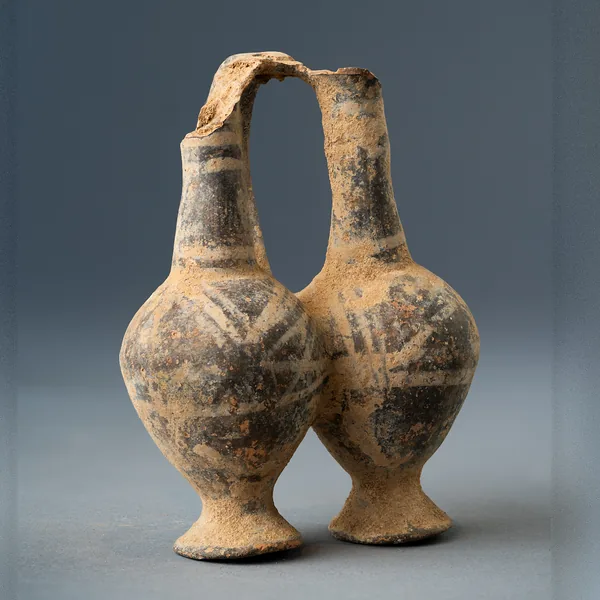
Base Ring II Double Juglet with White-Painted Decoration
Late Cypriot (Late Bronze Age)
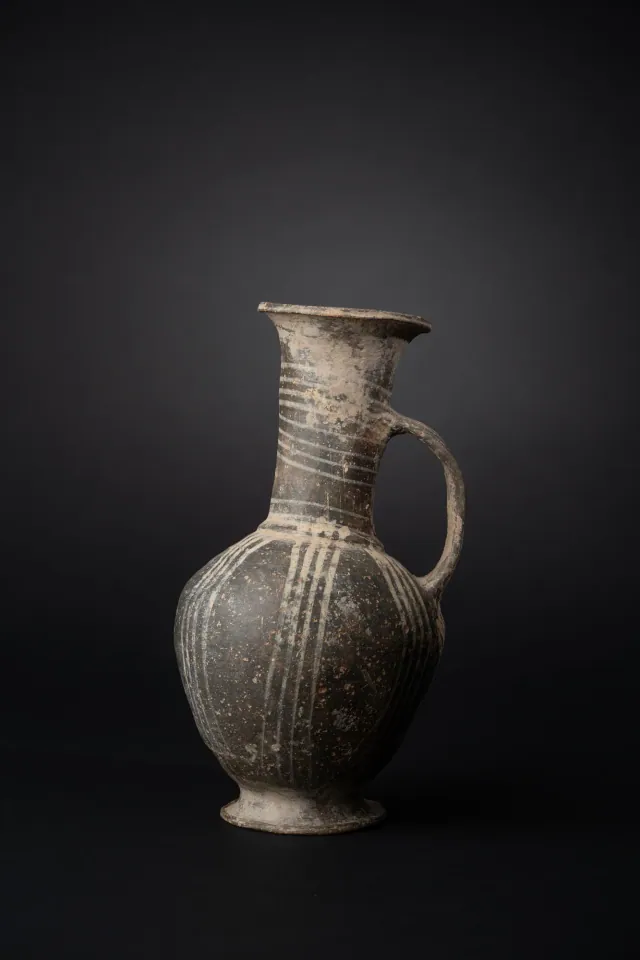
Base Ring II Jug with White-Painted Lattice Bands
Late Cypriot (Late Bronze Age)
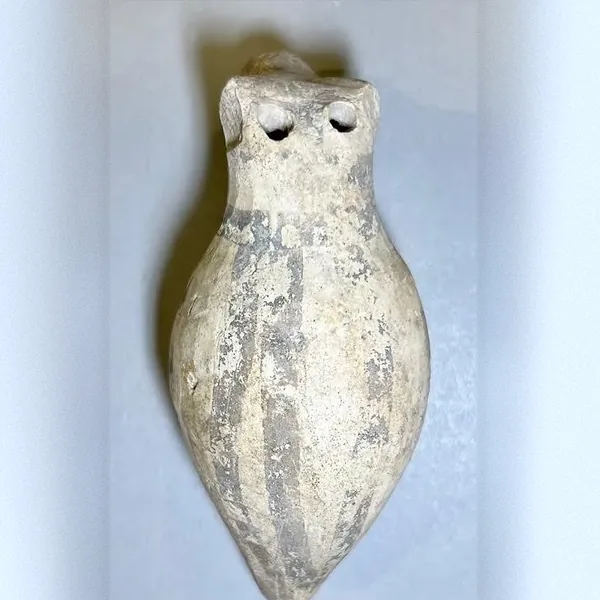
White Painted VI Owl-Headed Rattle
Late Cypriot (Late Bronze Age)
Found at the places discussed
Objects in our catalogue, in museum collections, recorded as found at these sites.

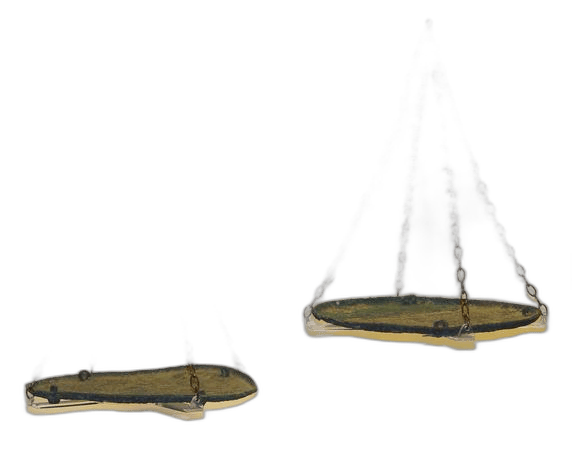

Background
Where to read more on this site before or after watching.
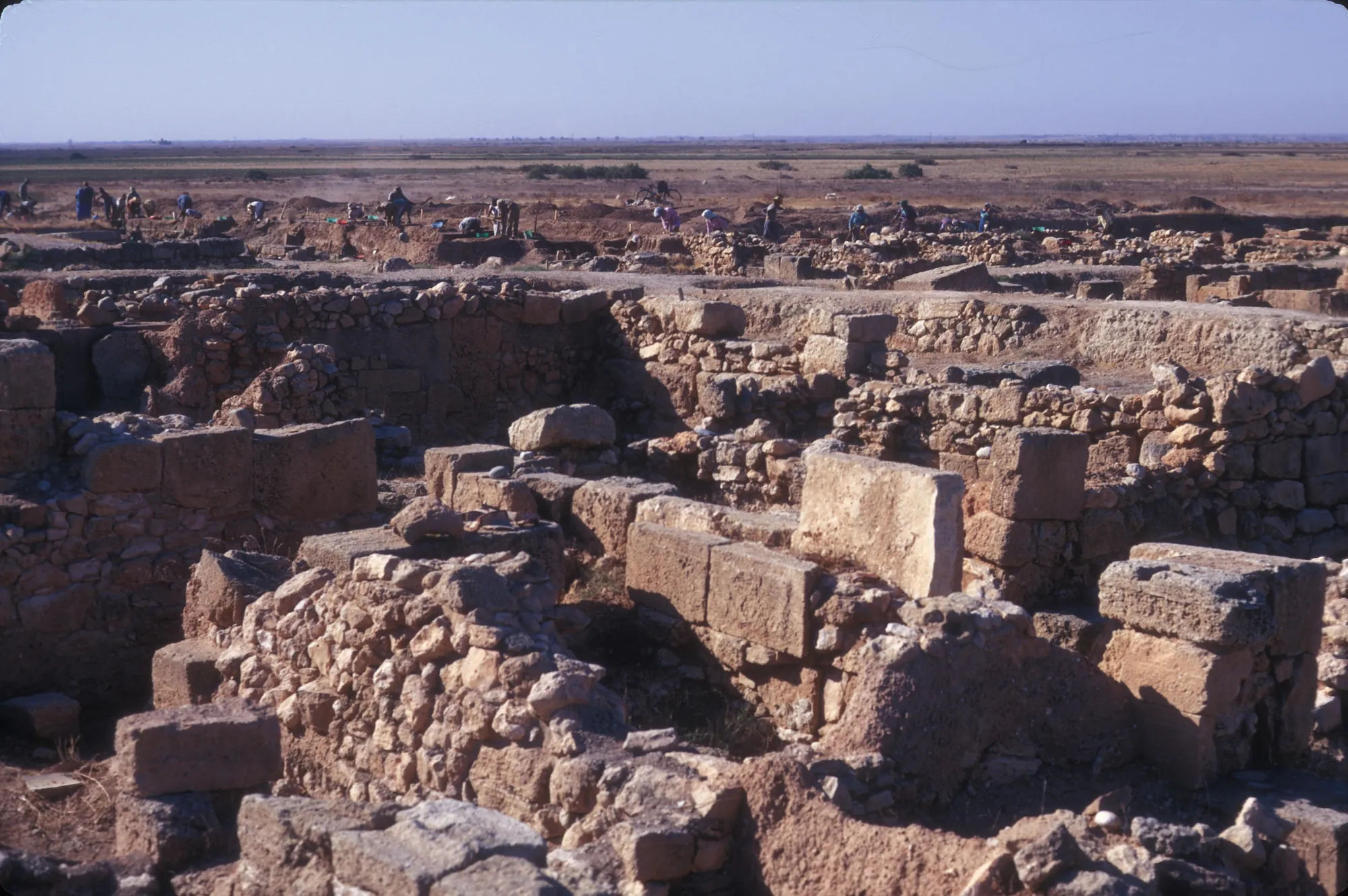
The site
Enkomi
Enkomi is a walled Late Bronze Age town near the mouth of the Pedieos river on the bay of Famagusta, lived in from about 1650 BC until it was gradually abandoned for nearby Salamis. It was a port for Cypriot copper, and its excavations produced metal workshops, sanctuaries with bronze cult statues, rich tombs and the largest group of Cypro-Minoan inscriptions on the island.
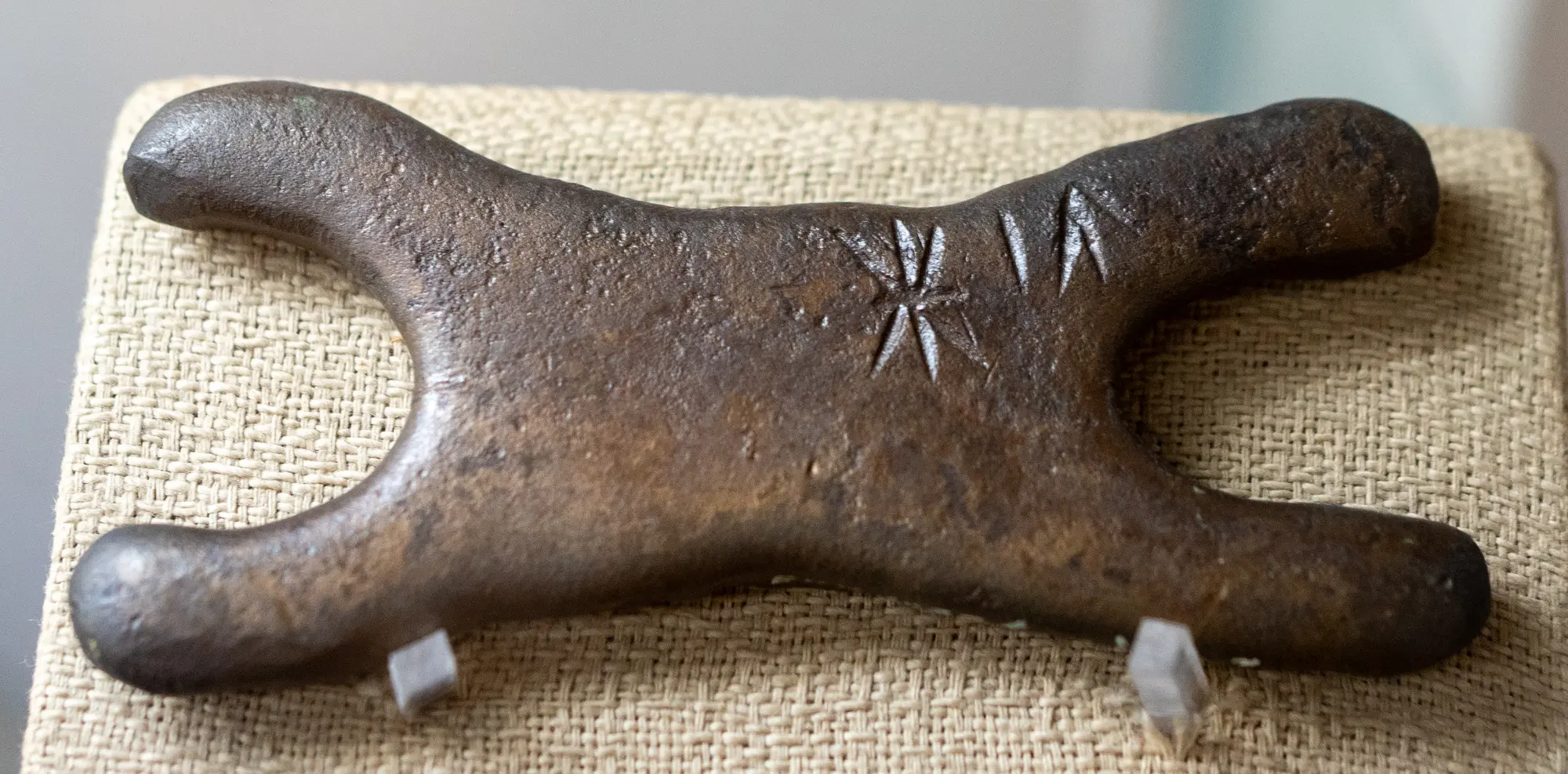
In the compendium
Copper Metallurgy in Ancient Cyprus
The mining, smelting and casting of the Troodos sulphide ores, from hammered Chalcolithic native copper to Late Bronze Age oxhide ingots and Archaic slag heaps.
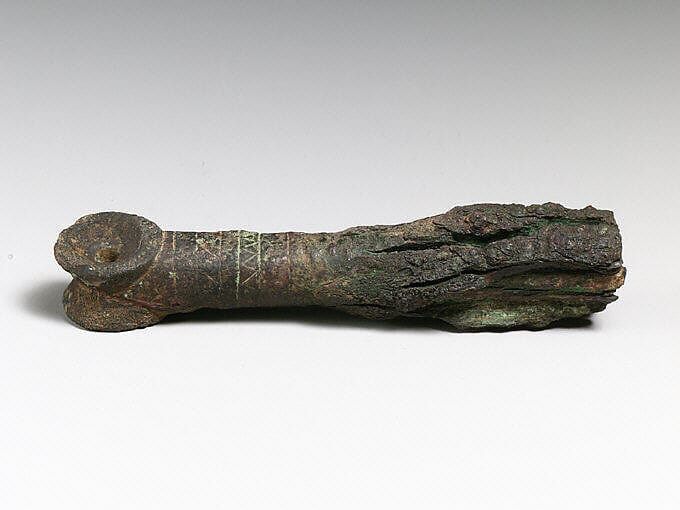
In the compendium
Gold, Silver, Tin, Arsenic and Iron in Ancient Cyprus
The metals other than copper used by Cypriot smiths from the Philia facies to the Hellenistic period, including arsenic, tin, gold, electrum, silver, lead and iron.
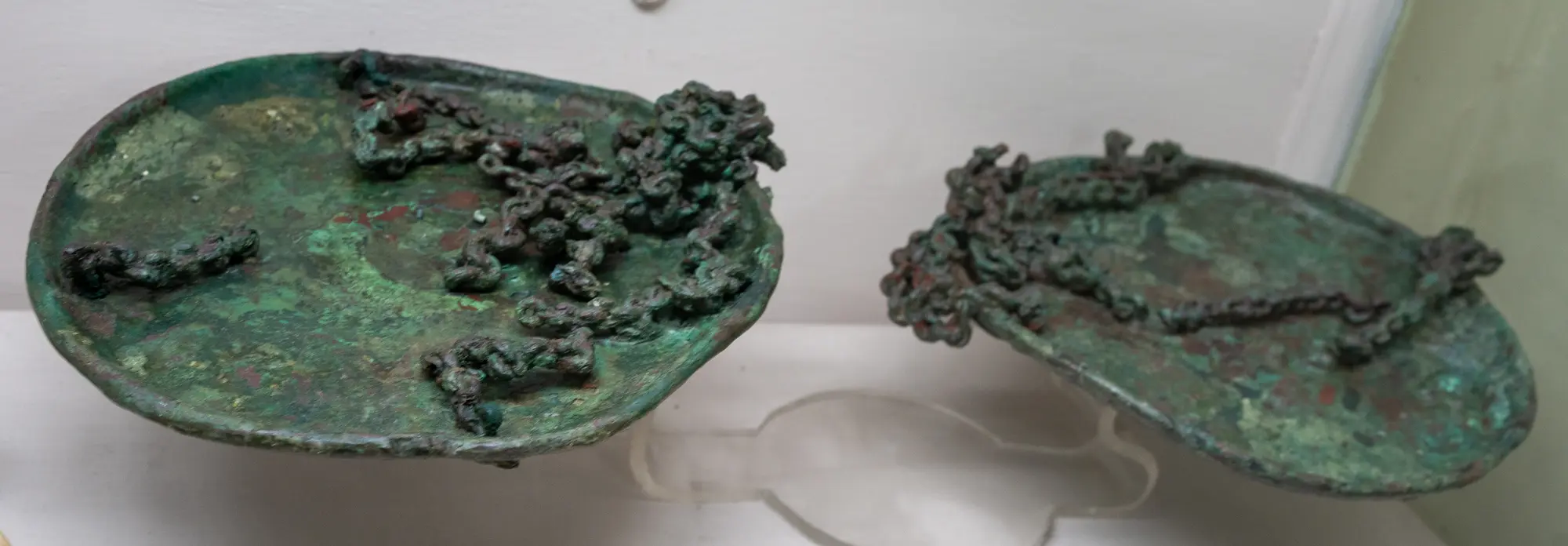
In the compendium
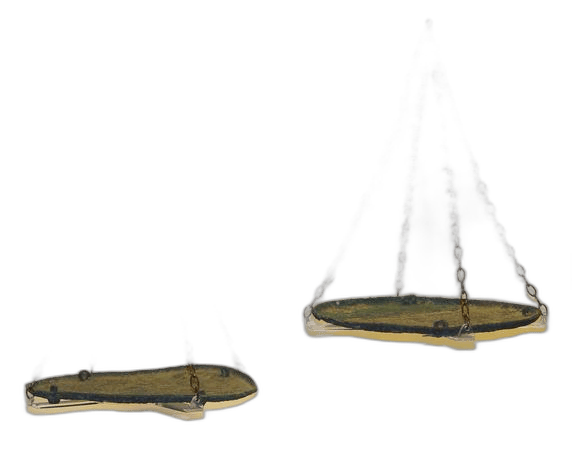
Weights and Ingots
Copper ingots, miniature votive ingots, balance weights and scale pans in Cyprus, from the Late Bronze Age into the Cypro-Geometric and Cypro-Archaic periods.
Map of Cyprus
Places discussed in the talk
- Has a page on this site
- Other places
- Ground above 200, 500, 1,000 m
Places
- 1Enkomi
- 2Hala Sultan Tekke
- 3Pyla (approx.)