
Contents
A tree standing between two animals that face it is one of the oldest pictures in the art of the Near East, and Cyprus took it up with more enthusiasm than almost anywhere else. Scholars call the scheme the "sacred tree" or "Tree of Life"; Lesley Bushnell defines its commonest form as "a composition of two wild goats placed antithetically about a tree", also known as the palm-and-ibex motif, the most widespread of the group called "Animals at the Tree of Life" or "Heraldic animal groups" [1, p. 65]. In Cypriot art the tree appears on Late Bronze Age seals and gold, on Cypro-Phoenician silver bowls, on Cypro-Archaic painted vases and on carved limestone. This entry is the reference page for the catalogue term tree and sacred tree: what counts, how to tell a tree from its neighbours, and where it turns up. The full history of the goat-and-tree on pottery, period by period, is told in Plants, Trees and Palms.
What counts as a tree
The catalogue applies the term to any upright plant drawn as a single unit, with or without flanking figures. In practice four forms occur.
The first is a recognisable date palm, a trunk with a fan of fronds. Veronica Tatton-Brown names the lily, the date palm and the lotus as "the inspiration behind the many representations of the 'tree of life' in Cypriot art, which are generally of eastern origin" [2]. The second is the composite tree, built up from stacked plant ornaments. Einar Gjerstad, publishing the Iron Age pottery of the Swedish Cyprus Expedition, described the Cypro-Archaic version as "the sacred tree of superimposed open palmettes or other plant ornaments and flanked by opposed animals" [3]. The third is the drilled glyptic tree of Late Bronze Age Common Style seals, a "simple trunk with five or seven branches ending in globular foliage" [1, p. 71]. The fourth is a lotus flower set in the tree's place, between the same pair of animals; Bushnell notes lotus and papyrus used "as tree substitutes" on faience vases from Kition and a lotus replacing the tree on the Klavdhia gold diadem [1, p. 72].
| Form | How to recognise it | Where it is commonest |
|---|---|---|
| Date palm | Single trunk, crown of long fronds, sometimes fruit | Late Bronze Age gold and pottery |
| Composite tree | Stacked palmettes or volutes on a stem | Cypro-Archaic vases, silver bowls, stone |
| Glyptic tree | Stem with five to seven drilled globes | Late Cypriot cylinder seals |
| Lotus as tree | Petalled flower on a tall stem between animals | Late Bronze Age faience and gold, Bichrome IV |
| Palmette (not a tree) | Fan of leaves on volutes, used as a border or finial | Capitals, jewellery, Classical vases |
The last row is the trap. A palmette on its own is a plant ornament, and Tatton-Brown dates the Greek form of it in Cypriot art "mainly from the fifth century BC onwards" [2]. Gjerstad held that the earlier open palmette of Cypro-Archaic pottery "copies Phoenician prototypes" [3]. A palmette becomes a tree only when it forms the central upright of a composition, which is why the catalogue lists a few palmette-decorated objects under this term with the word "probably".
Where the composition came from
Bushnell traces the goat-and-tree icon to the mid-fourth millennium BC and argues that it "almost certainly originated in Iran, in the Susiana plain", against those who place its origin in Mesopotamia [1, p. 66]. In Cyprus "the icon had no history" and was "unknown before it was first imported in the late Middle Cypriot period", yet in the Late Bronze Age it became more popular there than in Iran [1, p. 66]. Cypriot seal-cutters changed it: they drew new kinds of tree, added birds, and on one seal replaced the goats with copper ingots on either side of the tree [1, p. 72]. Gold-work carried it too. A Late Bronze Age gold mouthpiece from Enkomi in the British Museum is "decorated with goats and palm trees" [2].
At the end of the Bronze Age the icon died out elsewhere. Bushnell writes that "only in Cyprus, did it seem to have survived", on bronze tripods and on eleventh-century pictorial pottery with "wild goats, trees and stylised hills", and that Cyprus was probably responsible for passing it on in the Early Iron Age [1, pp. 66, 73]. The Cypro-Geometric stages are set out in the Plants entry.
On Cypro-Archaic vases
The painted tree is mainly a Cypro-Archaic motif. Tatton-Brown notes "arrow-like patterns, which may represent conifers, and the occasional stylised but more realistic tree" on vases of the later eighth and seventh centuries BC, and adds that apart from these "the tree is seldom represented before the fifth century" [2]. Gjerstad listed the sacred tree among the motifs of Syrian derivation, "modified in the Cypriote style", and suggested that "the corresponding ornaments on the Cypro-Phoenician metal bowls" gave the potters their models [3].
Three compositions recur. In the grandest, sphinxes face each other across the tree. A Bichrome amphora of about 600 BC in the Cyprus Museum (B 333, 61 cm high) has helmeted sphinxes "confronting an elaborate floral motif" in its handle zone [4, no. 306]. Gjerstad identified this kind of sphinx, with conical helmet, apron and straight wings, as Phoenician in type [3]. In the second, goats graze at the tree; Bushnell describes Bichrome IV vases with "rosette-patterned, rather stout goats, nibbling at an elaborate lotus" [1, p. 73]. In the third, a single bird or animal stands before a tree in free-field style, as on a Bichrome jug of 750-650 BC in the Cyprus Museum with a "bird to the right before a stylised tree" [4, no. 301].
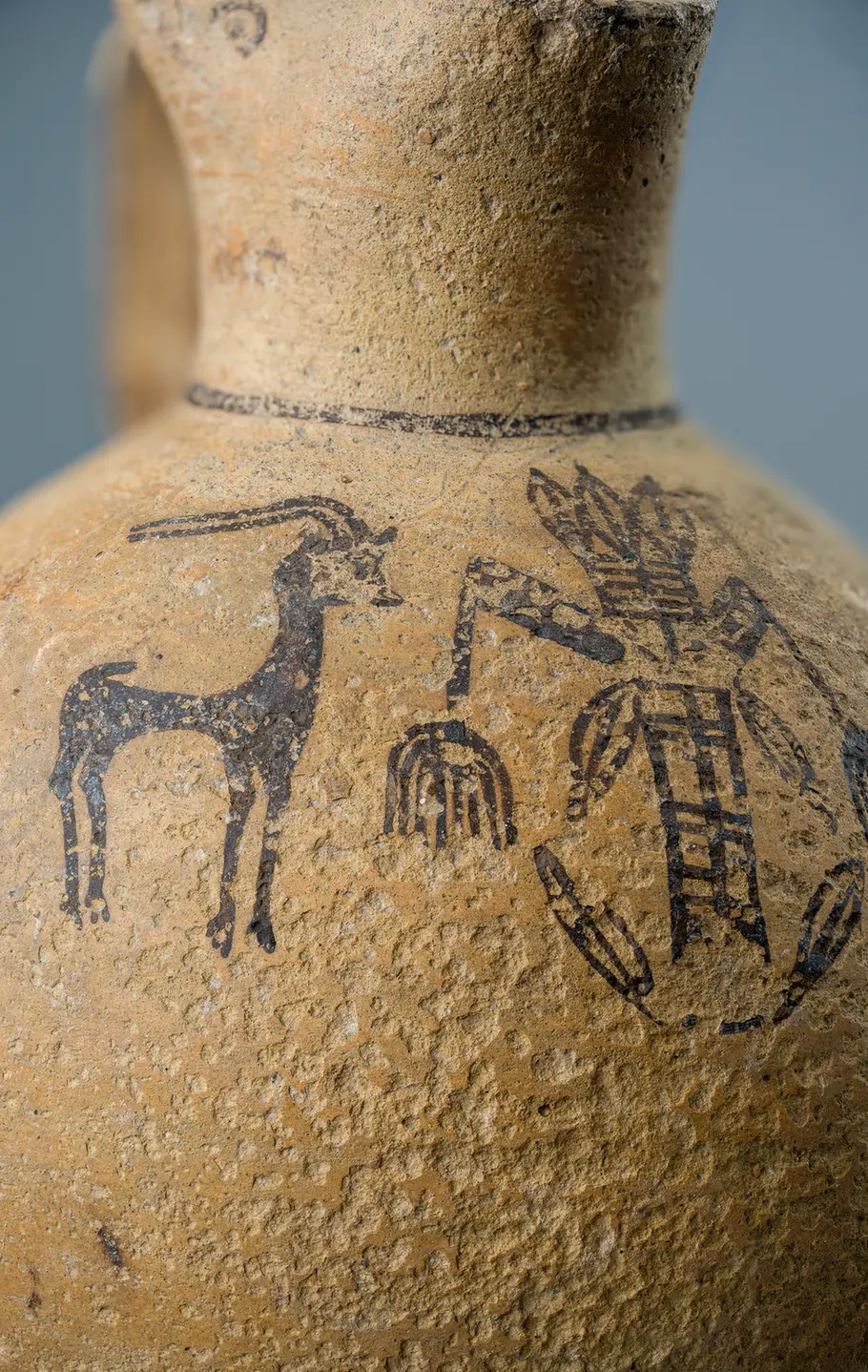
The Drakopoulos White Painted IV jug with a wild goat and a composite plant-like figure belongs with the third group: one goat facing a tall plant with a ladder-like stem and a fan-like crown. It has a single goat, where Bushnell's icon has a pair, and its plant has also been read as a human figure, so the catalogue does not file it under this term; the Plants entry discusses it.
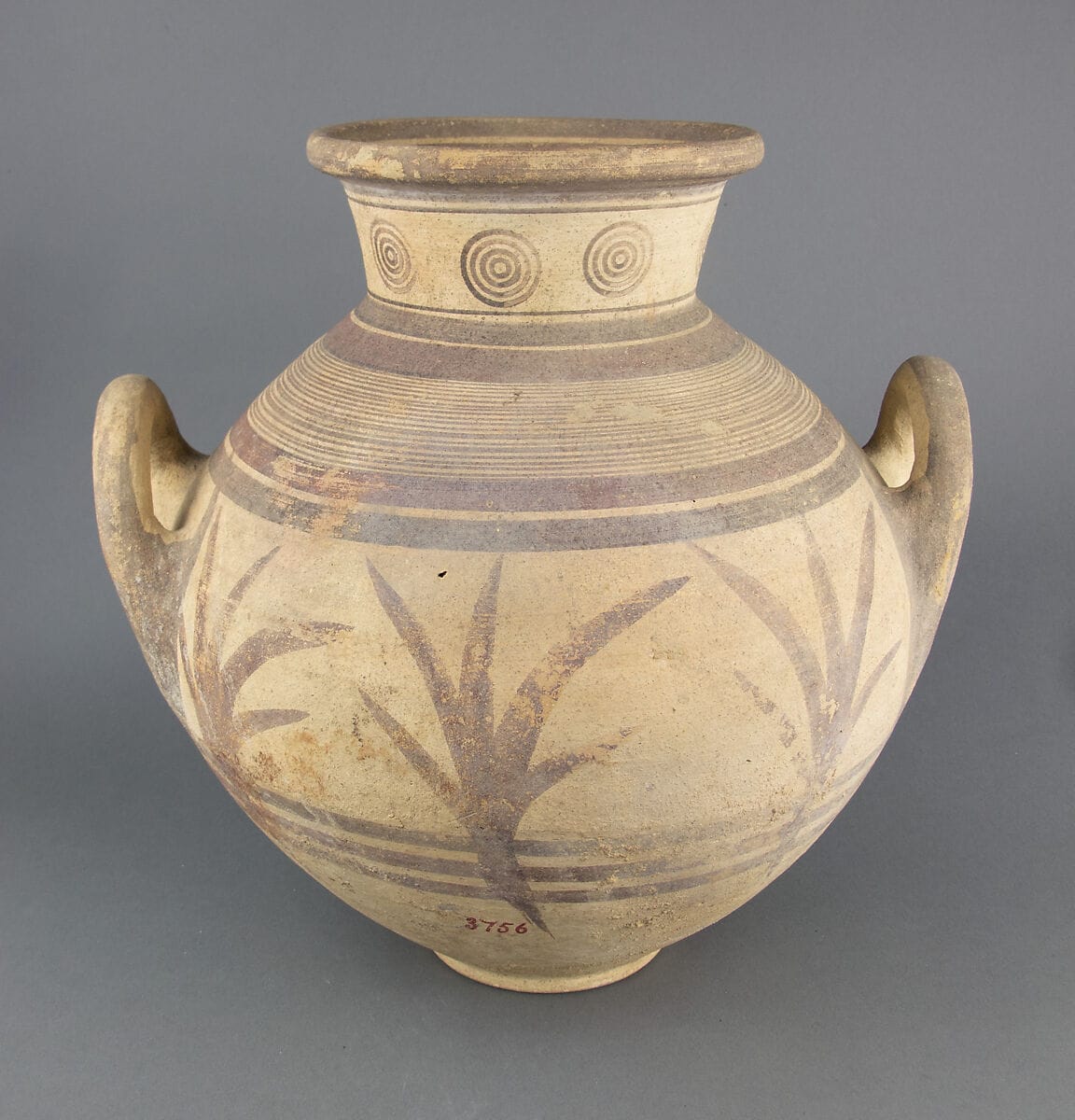
Most of the trees in the catalogue are simpler. They are bands of small stylised trees round the shoulders of White Painted and Bichrome jugs and amphorae from the Cesnola collection in the Metropolitan Museum, recorded as Cypro-Archaic. The Met's own descriptions give the range: a jug with "horizontal bands and tree on shoulder" (18.4 cm), an amphoriskos with "trees on shoulder", an amphora with a "frieze of trees in white", and a juglet combining circles, a tree and lotus buds. On these small jugs the tree has lost its animals and become a filling ornament.
Seals, gold, silver and stone
Outside pottery the full heraldic scheme survives longer. The Late Cypriot cylinder seals are the largest group: a sandstone cylinder from Hala Sultan Tekke in the British Museum carries a stylised sacred tree and other figures and is catalogued here as the stylised tree cylinder seal.
In the Iron Age the tree moved onto precious metal. Two fragments of a silver bowl in the Metropolitan Museum preserve friezes of goats and lions among trees below a band of hieroglyph-like signs, the kind of Cypro-Phoenician bowl Gjerstad thought the potters copied [3]. A gold hoop with a plasma scarab has two sphinxes flanking a tree on its bezel, the same scheme as the Bichrome amphora reduced to the size of a fingernail.
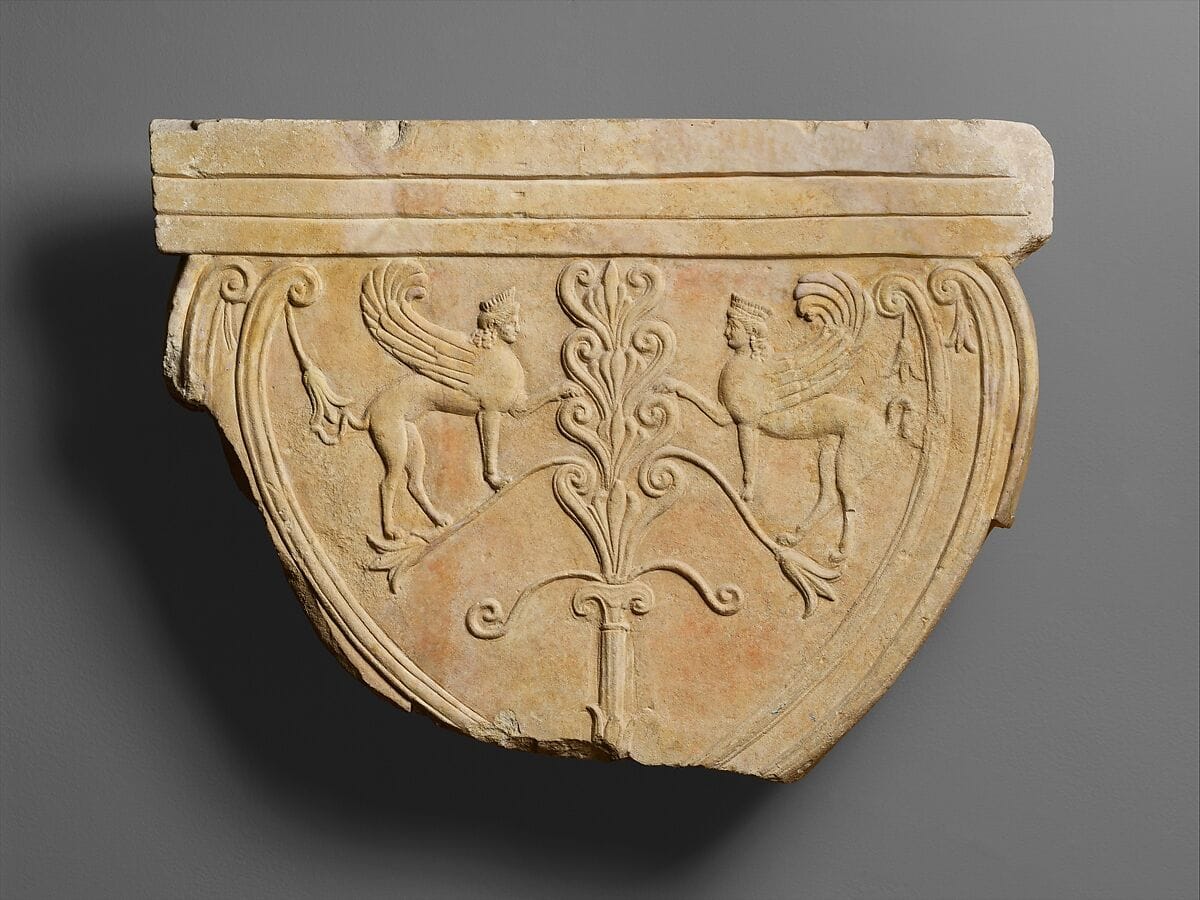
In stone, the tree crowned a type of capital that the Metropolitan Museum describes as "known only on Cyprus". On the fragmentary limestone capital from the necropolis of Golgoi, "two pairs of curved frondlike forms surround an elaborate 'tree of life'", and on the more complete example two sphinxes standing on lotus stems each lay a paw against the tree. The Met dates the fragment to the Classical period, which makes it one of the latest objects in the group.
The tree could also be modelled. At the centre of some terracotta ring-dance groups the dancers circle a tree; the Drakopoulos group of two veiled figures keeps only the stump of its central shaft, so whether it was a tree or a pillar cannot be decided. The class is described under ring-dance groups and in the article Two Figures and a Tree.
Sacred, or decorative?
"Sacred tree" and "Tree of Life" are modern labels, and no inscription on a Cypriot object names the tree. Three readings are in use.
Bushnell argues from distribution: the icon was rarer elsewhere and lasted longer in Cyprus, so it must have carried special meaning there [1, pp. 66, 73]. Caroline Tully, in her study of tree cult across the eastern Mediterranean, treats the sacred tree as "essentially a physiomorphic deity". She asks whether, as the Kourion cult stand suggests, full-sized copper ingots "were offered as votives to a deity represented by a tree", and notes that no full-sized ingot has been found in a cult context, so the ingots on Common Style seals may refer to a general link between metallurgy and cult [5]. Tatton-Brown is more cautious about Cypriot ornament in general: she found "no reason to believe" the rosette "had any deep significance", while treating the tree as part of an eastern symbolic repertoire [2].
The evidence points in different directions by medium. On Late Bronze Age seals and gold the tree is the centre of a structured scene with animals, ingots and attendants. On Cypro-Archaic jugs, a row of small trees between bands reads as ornament. The catalogue tags both, and a reader comparing the Bichrome sphinx amphorae with the Met's banded juglets should keep the difference in view.
In the catalogue
The term covers 73 objects. Twenty-eight are pottery vessels, mostly Cypro-Archaic jugs, trefoil-mouthed jugs and amphorae; 24 are seals, almost all Late Cypriot; the rest are jewellery, models, reliefs, architectural pieces, figurines and toilet objects, with a handful of Cypro-Classical examples. Most of the vessels have no recorded ware, so their attribution rests on the published description and the photograph. See all trees and sacred trees in the catalogue.
Related entries: lotus flowers, which often take the tree's place; birds, the commonest single companion on free-field jugs; and the Phoenicians, Egypt and Ugarit and the Levant for the eastern sources of the scheme.
Objects on this page
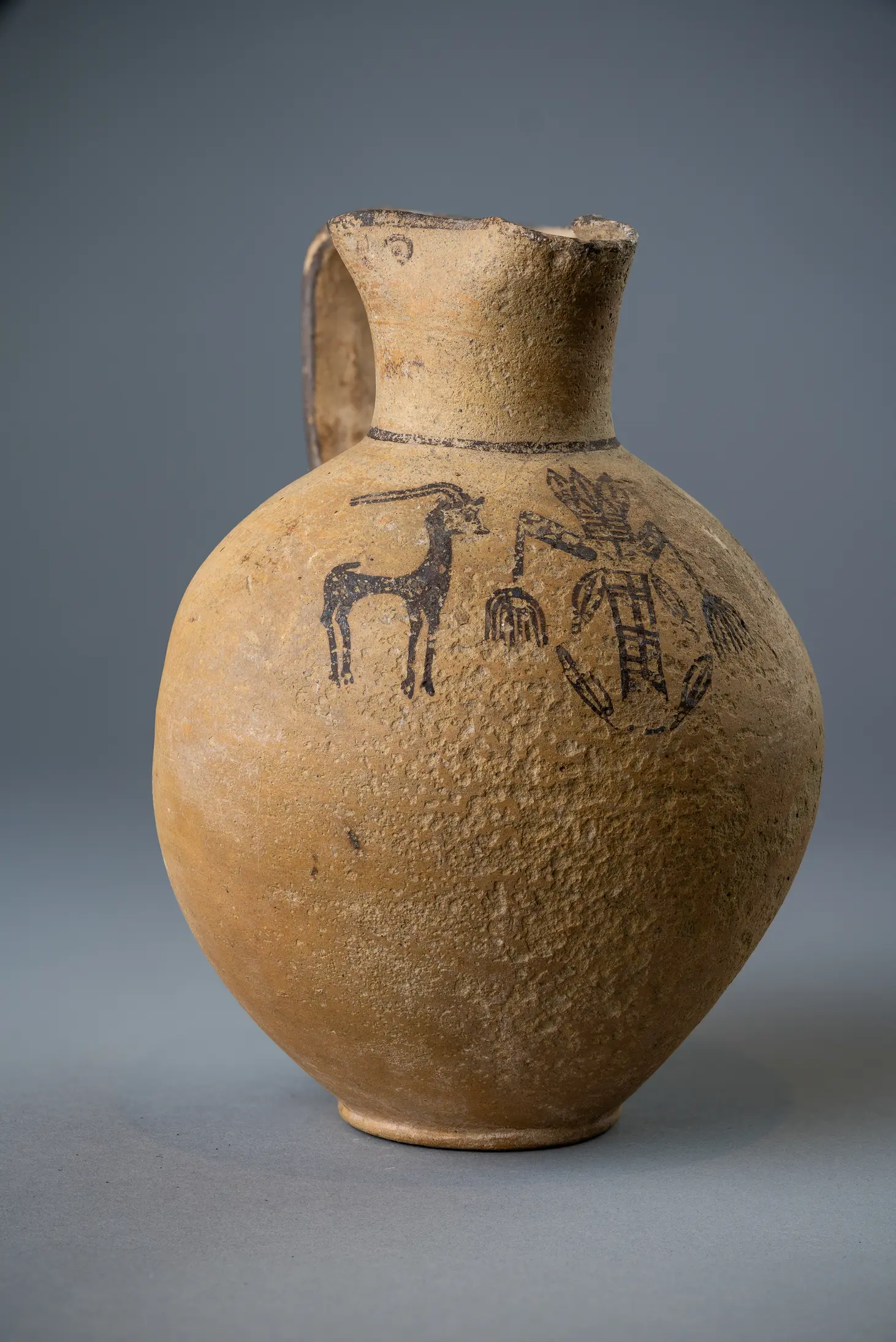 White Painted IV Trefoil Jug with a Wild Goat and a Composite Plant-like FigureArchaic I · 750–600 BC
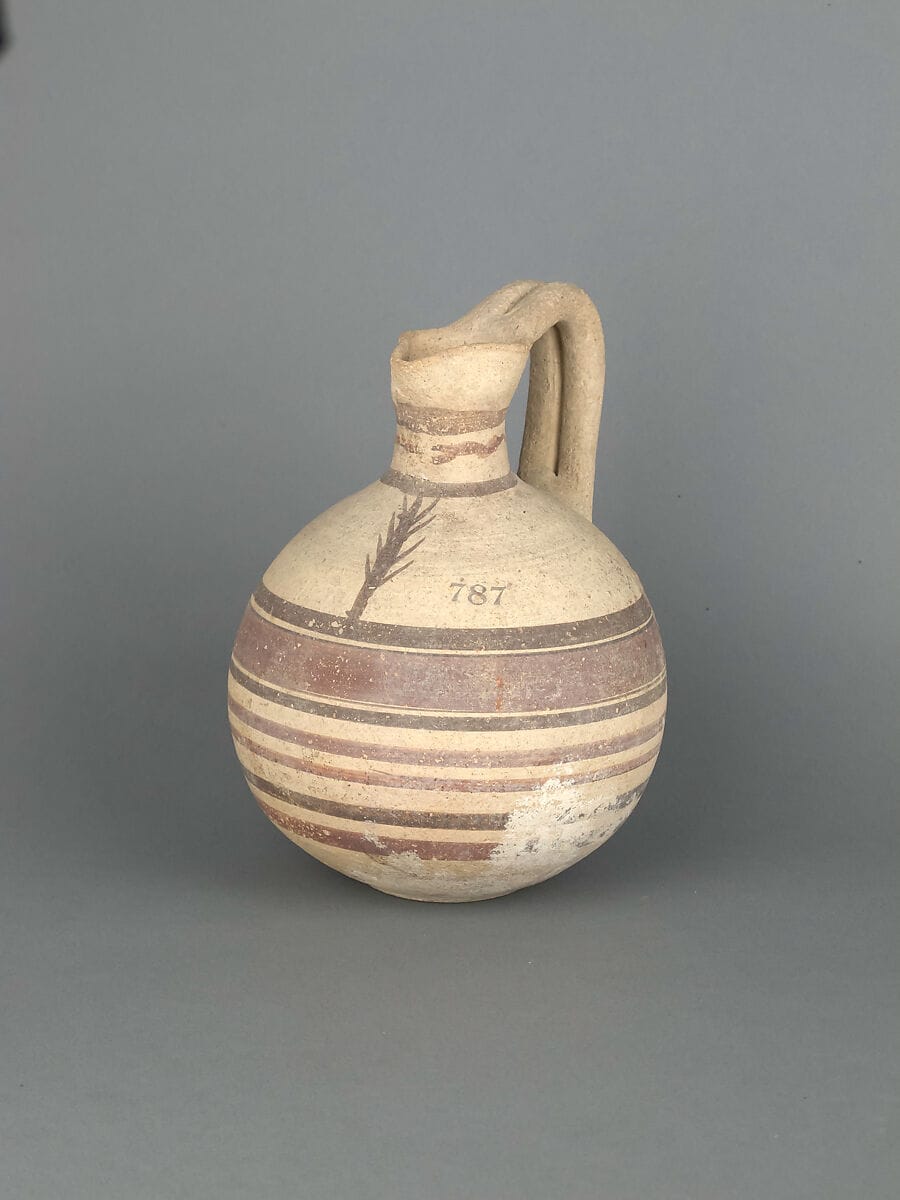 JugArchaic II · 600–480 BC
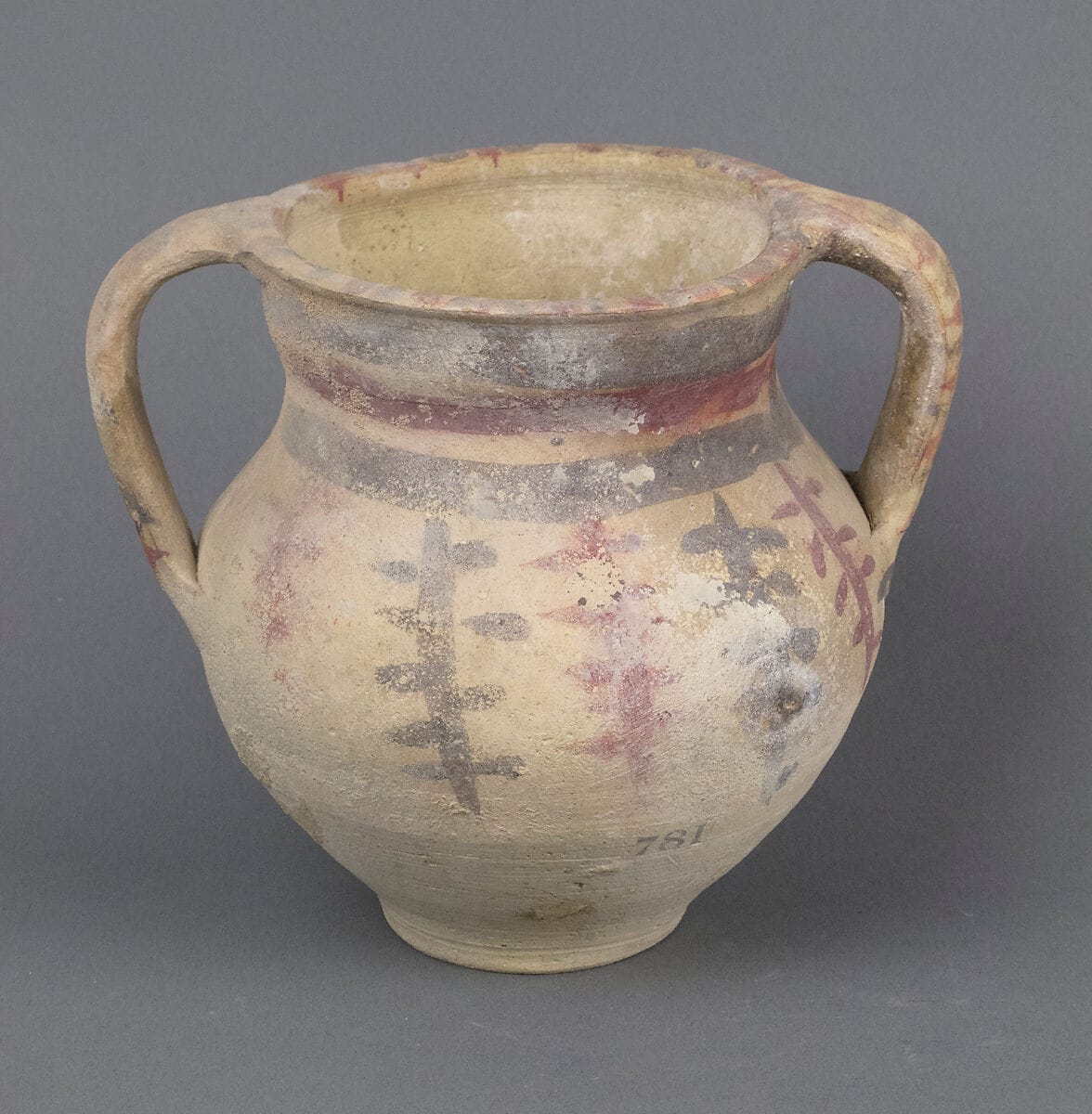 AmphoriskosArchaic II · 600–480 BC
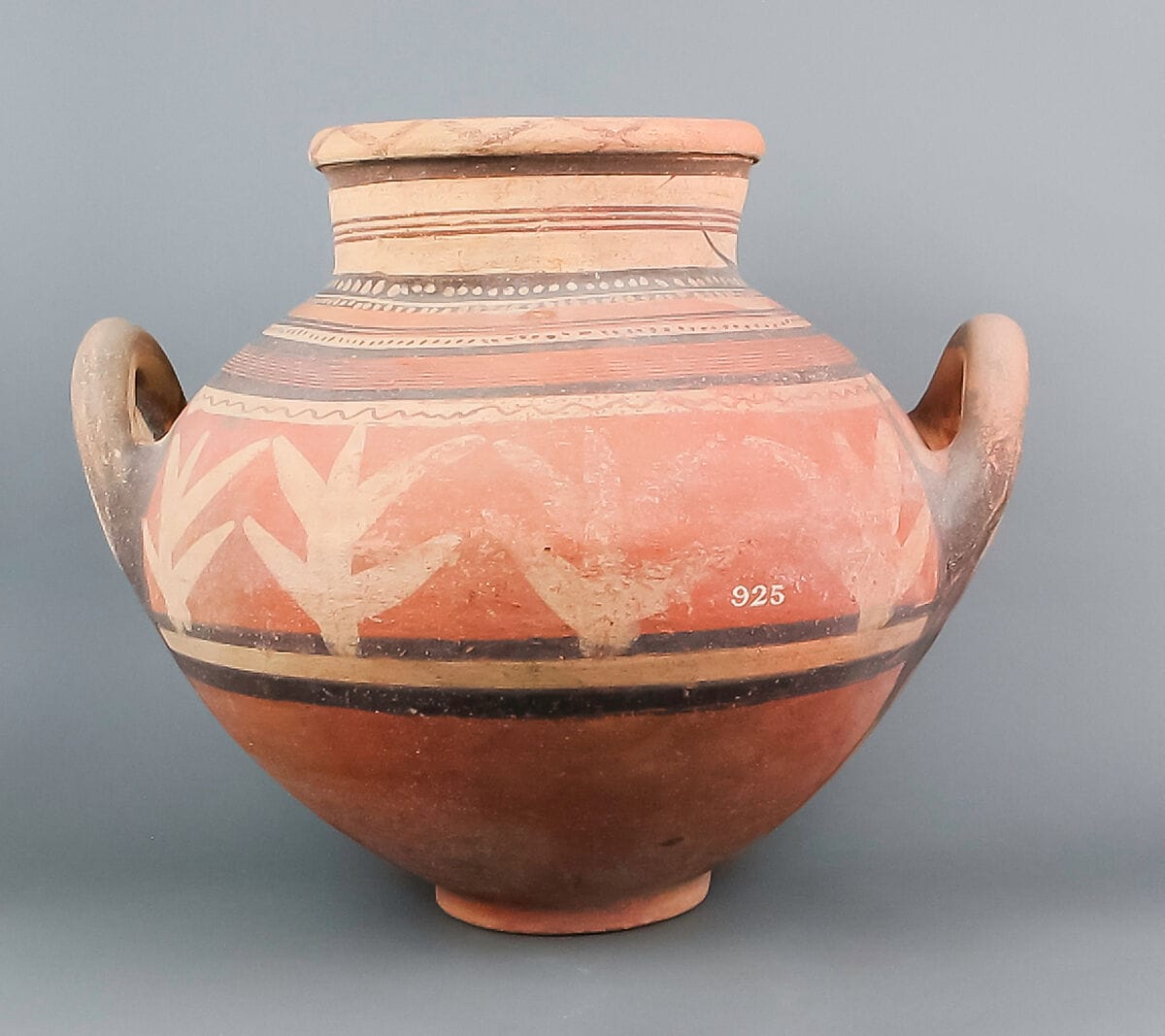 AmphoraArchaic I · 750–600 BC
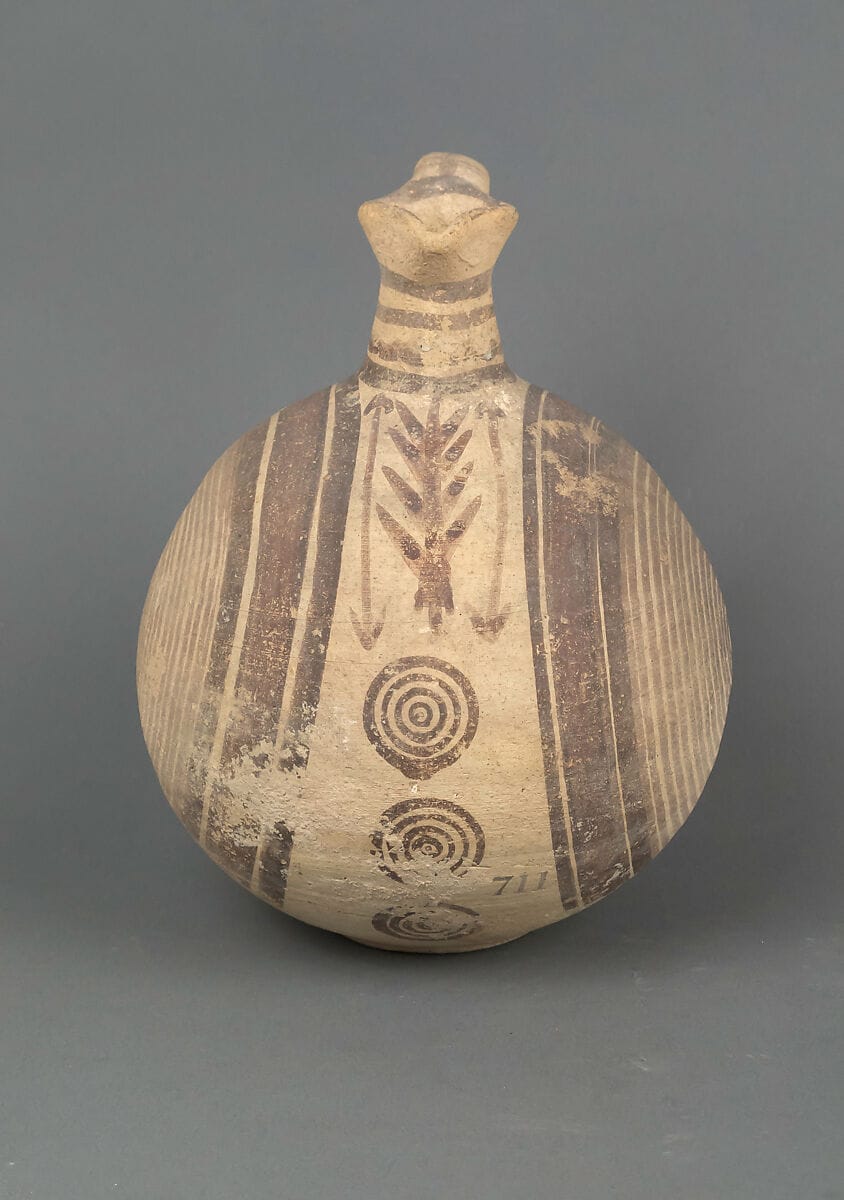 JugletArchaic II · 600–480 BC
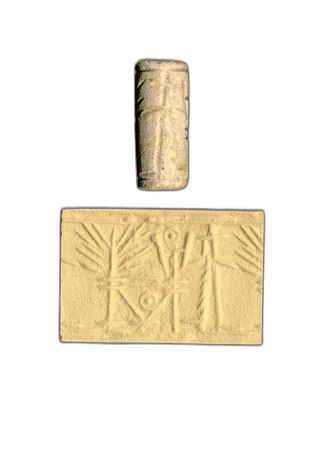 Stylised Tree Cylinder SealLate Bronze Age I · 1650–1050 BC
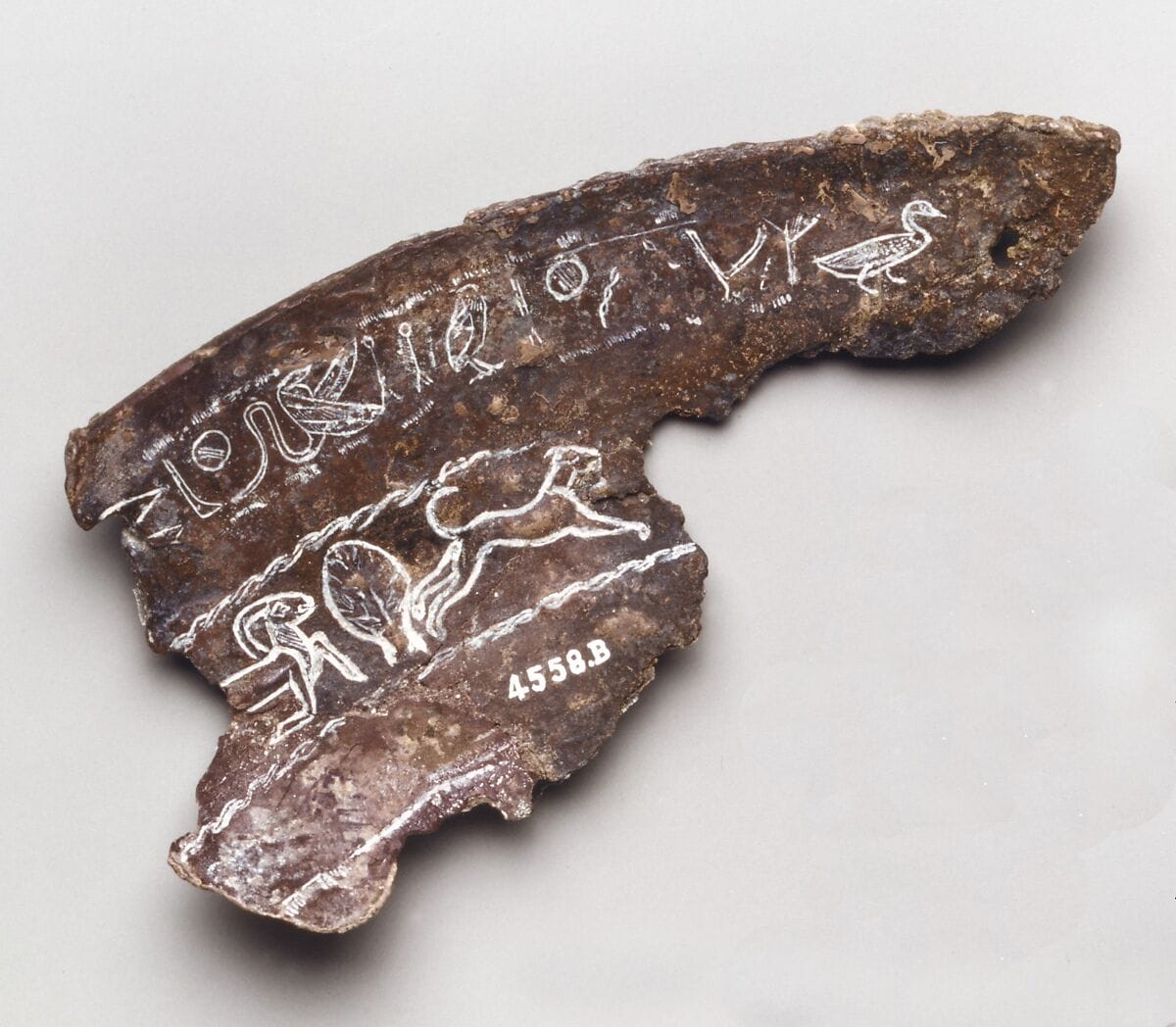 Two fragments of a silver bowlArchaic I · 699–600 BC
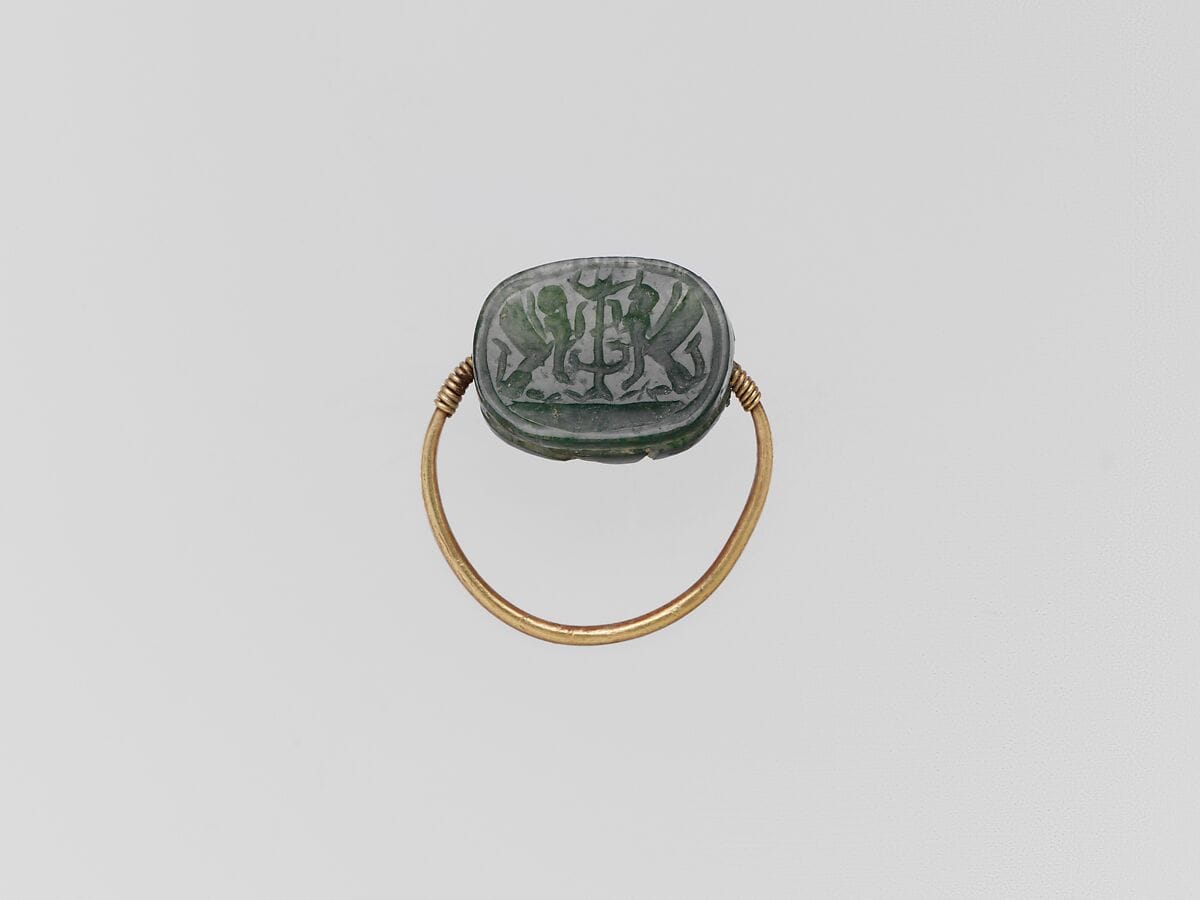 Gold hoop with plasma scarabArchaic II · 599–400 BC
- Fragmentary limestone Cypriot capitalClassical · 499–400 BC
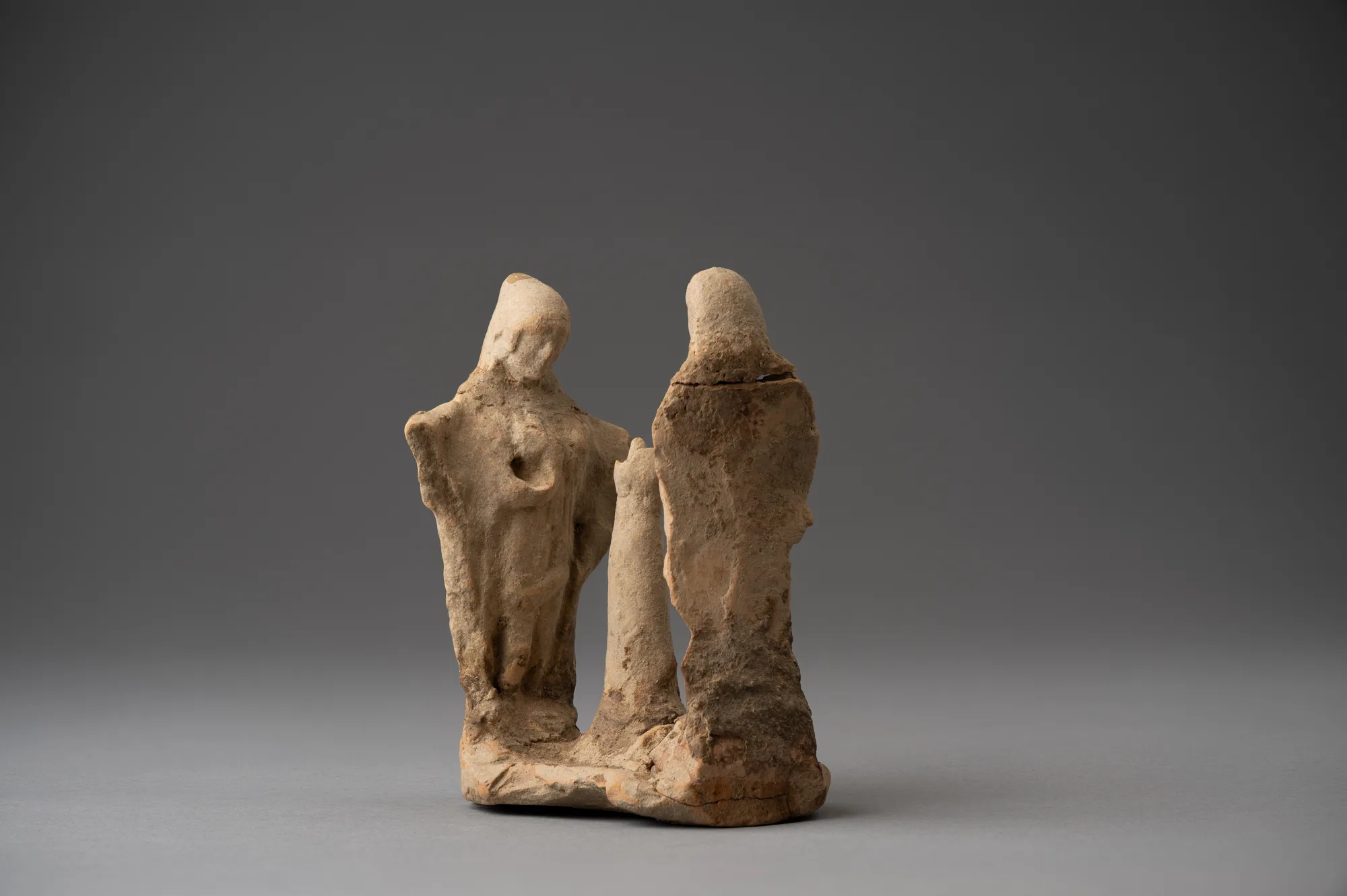 Two Veiled Figures from a Terracotta Ring-Dance Group, with the Stump of the Central TreeArchaic · 750–480 BC
In the catalogue
References
- 1.Bushnell, L. (2008). The wild goat-and-tree icon and its special significance for ancient Cyprus. In G. Papantoniou (Ed.), with A. Fitzgerald & S. Hargis, POCA 2005: Postgraduate Cypriot Archaeology (BAR International Series 1803, pp. 65-76). Archaeopress.
- 2.Tatton-Brown, V. (1987). Ancient Cyprus. British Museum Publications.
- 3.Gjerstad, E. (1948). The Swedish Cyprus Expedition, Vol. IV, Part 2: The Cypro-Geometric, Cypro-Archaic and Cypro-Classical Periods. Stockholm: The Swedish Cyprus Expedition.
- 4.Tatton-Brown, V. (Ed.). (1979). Cyprus BC: 7000 years of history. British Museum.
- 5.Tully, C. J. (2018). The cultic life of trees in the prehistoric Aegean, Levant, Egypt and Cyprus (Aegaeum 42). Peeters.