
Archaic I
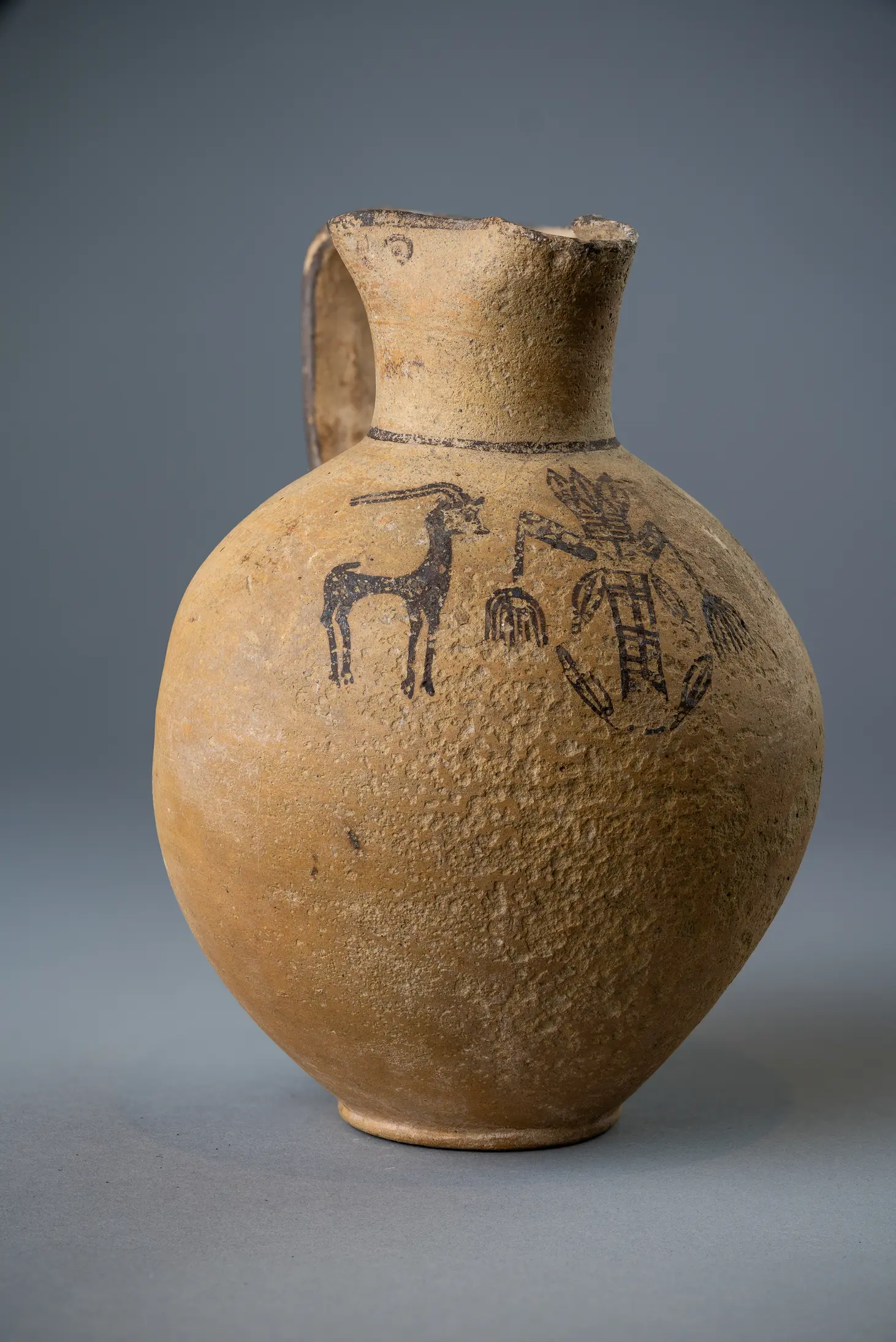
White Painted IV Trefoil Jug with a Wild Goat and a Composite Plant-like Figure
Cypro-Archaic White Painted IV pinched-mouth jug painted in black with a wild goat beside a composite figure, perhaps a stylised tree, earlier read as a human.
Date
750 - 600 BC
Accession No.
JUG-AR-001
Collection
Alexis Drakopoulos
3D Model
Provenance
- Before the 1980s, private collection
- By the 1980s–2023, Henry Sandon Collection, United Kingdom
- 18 April 2023, Chorley's, lot 5
- 2024, Kallos Gallery, London
- 2024–present, Alexis Drakopoulos, London
Cypro-Archaic I, c. 750–600 BCE · White Painted IV ware · Wheel-made
A wheel-made jug with a full ovoid-globular body on a low ring base, a short, wide neck that flares slightly, and a broad pinched mouth, chipped at the front. A strap handle runs from the rim to the shoulder. The pale buff surface carries decoration in matt black only: a single band at the base of the neck, a small circle with a central dot on the lip beside the handle, and, on the shoulder opposite the handle, two motifs set on bare ground.
At left a wild goat stands in silhouette, facing right, its long horns swept back over the spine and the eye left in reserve. At right rises a larger composite motif: a fan-like crown of feathery leaves above a hatched band, a ladder-like vertical stem, paired leaf shapes at its sides and base, and two comb-like pendants hanging from angled branches. The lower body is heavily pitted and weathered. Parts of the painted figure were restored in 2023–24.
Commentary
The jug belongs to the pinched-mouth class that carried most Cypriot free-field painting of the Cypro-Archaic I period. Gjerstad observed that the free-field style was used above all on jugs with pinched mouths, while other shapes kept zone and panel decoration [1]. The paint here is black alone on a light ground, which places the piece in White Painted IV, the monochrome sibling of Bichrome IV; the two wares share their fabric and shapes and are told apart by the red [1]. White Painted IV free-field jugs are fewer than their bichrome counterparts but well attested: the Metropolitan Museum holds one with a ship (74.51.511) and another with a marching spearman in silhouette (74.51.532) [2]. A date in the 8th–7th century BCE, most probably within Cypro-Archaic I (c. 750–600 BCE), follows from the shape, the dotted circle on the lip and the single motif group on unframed ground [2][6].
The goat is drawn with confidence: a solid silhouette, thin legs with small hooves, and horns rendered as one long curve. Caprids of this kind are a standing subject of Cypriot Iron Age figural painting [3].
The figure beside it is harder to read. When the jug entered the collection it was published on this site as an abstract human with comb-like hands and leaf-like feet. A plant reading fits the painted elements at least as well. The ladder stem, fan crown, paired leaves and drooping comb-shaped pendants resemble the composite trees and lotus-trees of Cypriot vase-painting, and a caprid set beside a tree is one of the oldest schemes in the island's imagery. Bushnell traces this goat-and-tree icon into the Iron Age, where it appears in a highly stylised form on Bichrome IV pottery [4][3], and Morris describes free-field trees flanked by deer or large birds that seem to feed on them [5]. Read this way, the jug shows a wild goat approaching a stylised tree, with only one animal present instead of the usual heraldic pair. We know of no close parallel for the figure under either reading.
Two cautions apply. Some of the painted slip was restored after the 2023 sale, and several lines of the figure are crisper than the pitted surface around them, so details such as the number of "fingers" or the exact angle of the "arms" cannot carry an interpretation until the restored and original paint are separated. Identifications of the figure as a deity or a ritual performer have no support in the surviving evidence.
The jug would have served for pouring wine or water, and most complete figured jugs of this class come from tombs. Its find-spot is unknown.
References
- 1.Gjerstad, E. (1948) The Swedish Cyprus Expedition IV.2: The Cypro-Geometric, Cypro-Archaic and Cypro-Classical Periods. Stockholm: The Swedish Cyprus Expedition, White Painted IV and Bichrome IV sections.
- 2.Karageorghis, V., Mertens, J.R. and Rose, M.E. (2000) Ancient Art from Cyprus: The Cesnola Collection in The Metropolitan Museum of Art. New York: The Metropolitan Museum of Art, pp. 108–110, nos. 150 and 154.
- 3.Karageorghis, V. and des Gagniers, J. (1974) La céramique chypriote de style figuré: Âge du Fer (1050–500 av. J.-C.). Rome: Consiglio Nazionale delle Ricerche; Supplément 1979.
- 4.Bushnell, L. (2008) 'The Wild Goat-and-Tree Icon and its Special Significance for Ancient Cyprus', in POCA 2005. BAR International Series 1803. Oxford: Archaeopress.
- 5.Morris, D. (1985) The Art of Ancient Cyprus. Oxford: Phaidon, pp. 246–248.
- 6.Georgiadou, A. (2016) 'Pottery of Geometric, Archaic and Classical periods in Cyprus', Kyprios Character, pp. 5–7.
More from the Catalogue
Browse related objects
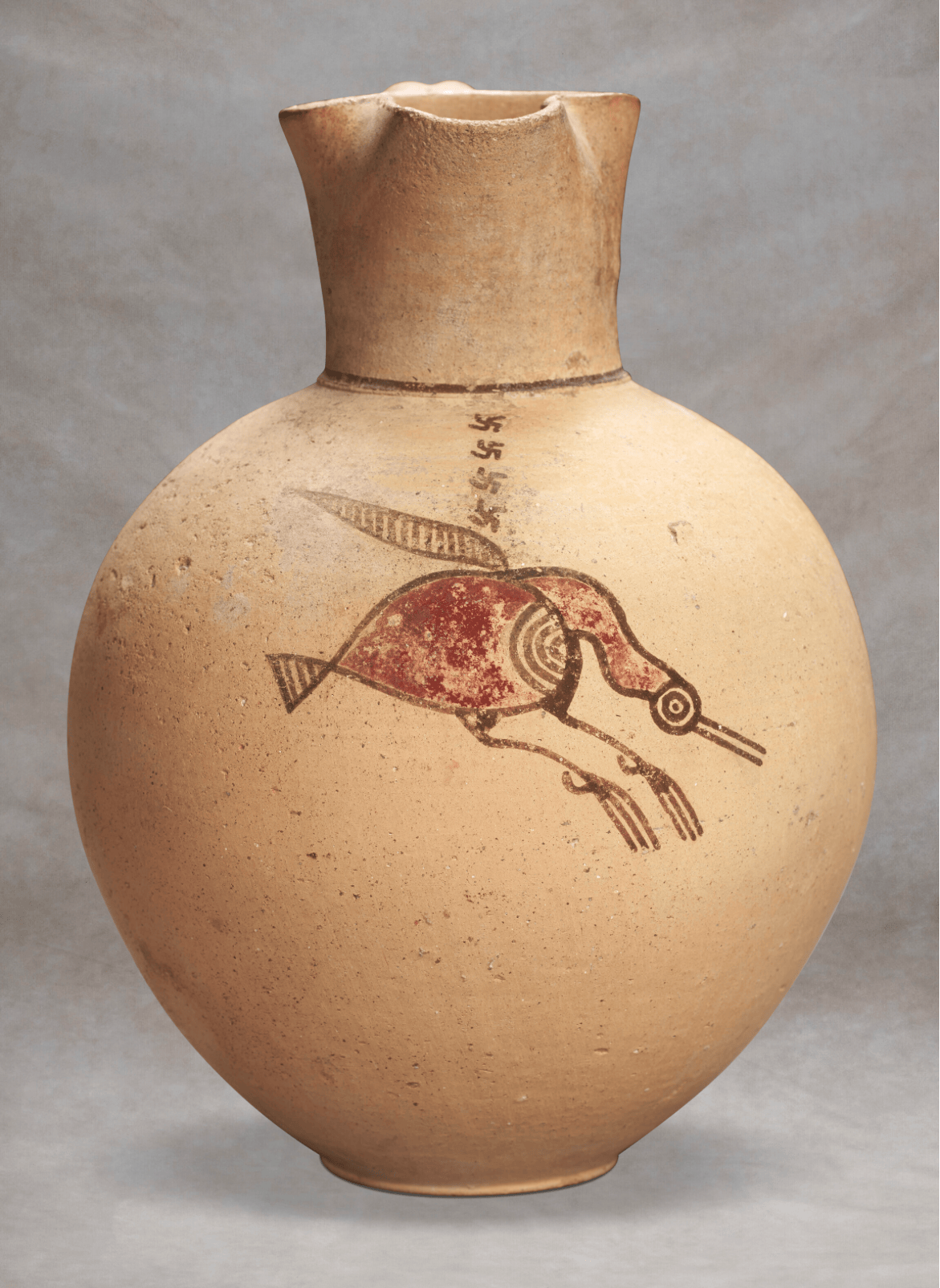
Bichrome Oinochoe
Archaic I
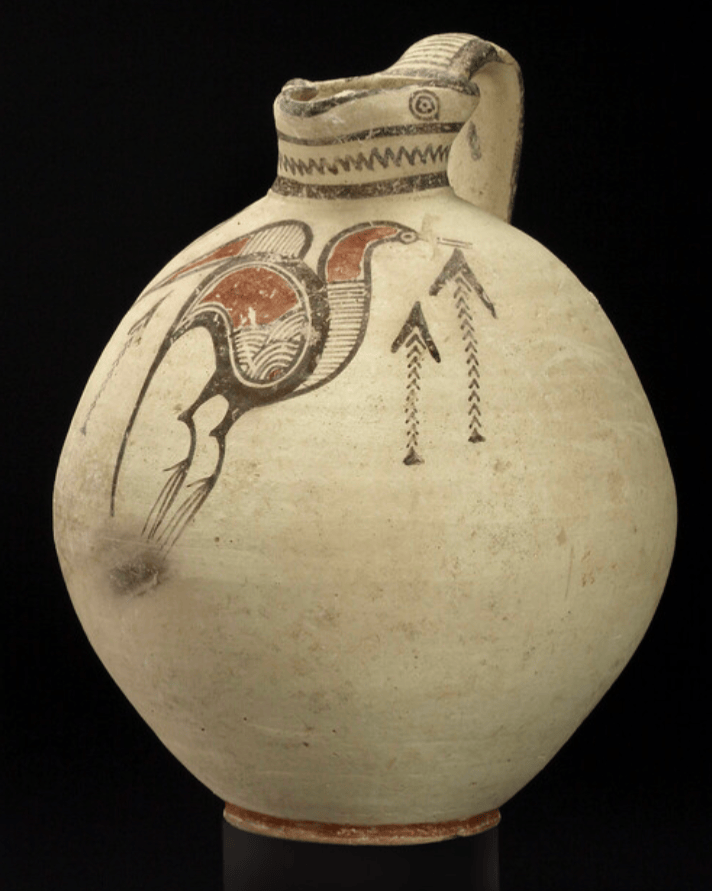
Free-field bichrome jug with image of an Ibis bird and reeds
Archaic
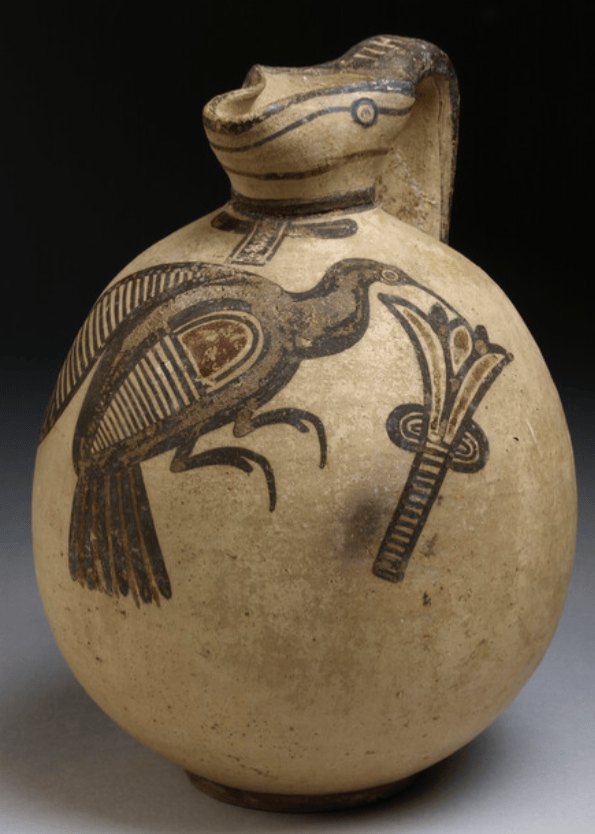
Squat bichrome jug in free-field style with image of bird picking a lotus flower
Archaic
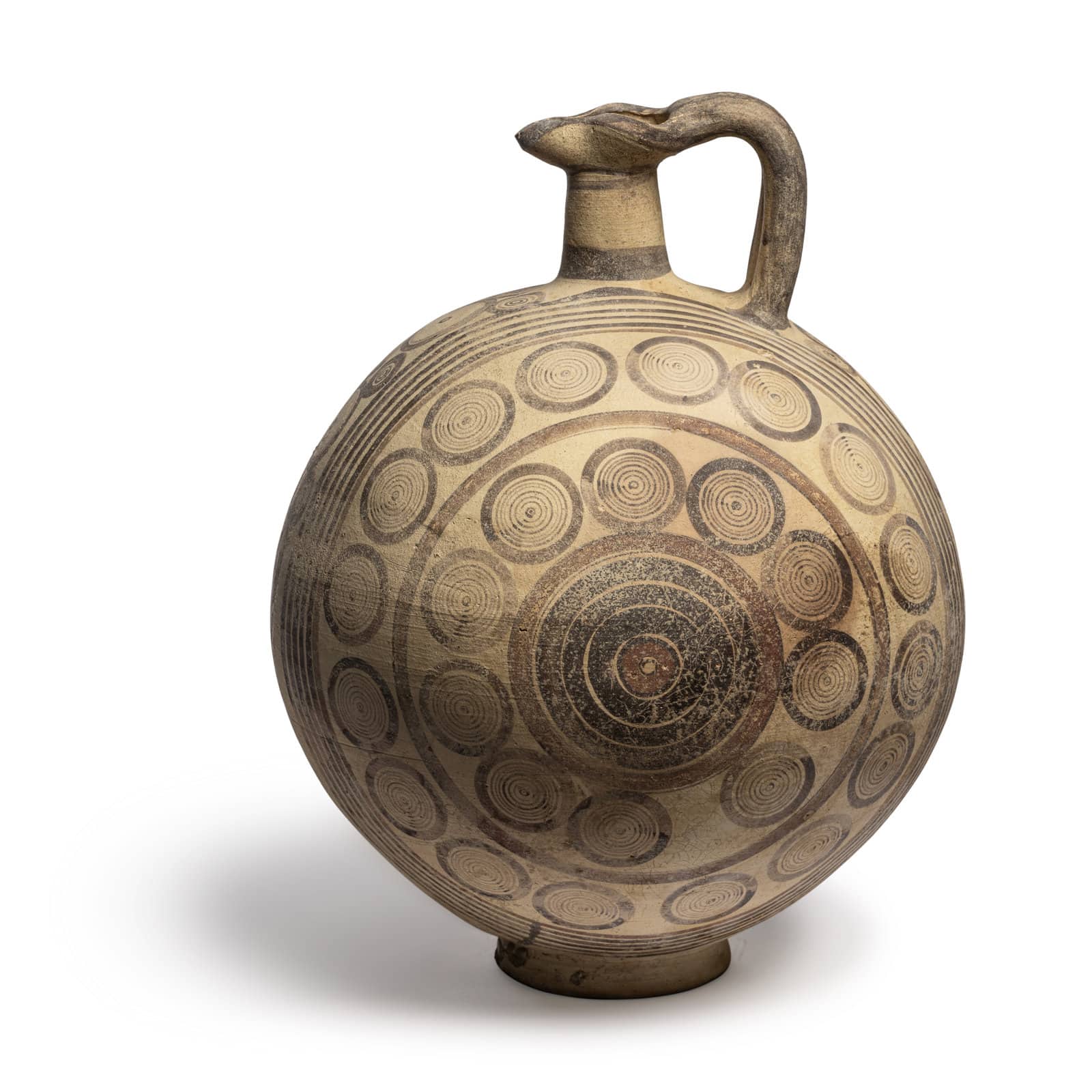
A Cypriot Bichrome-Ware Oinochoe Jug
Archaic I
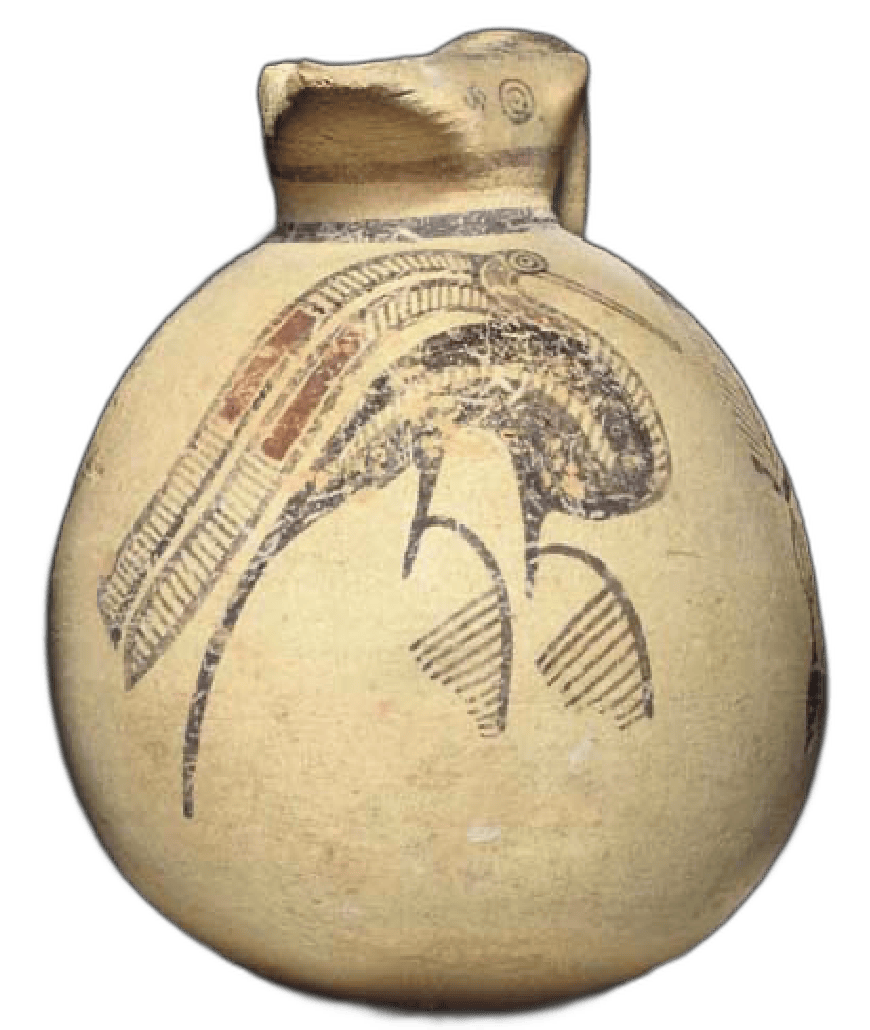
Oinochoe with Free Field Bird
Archaic I
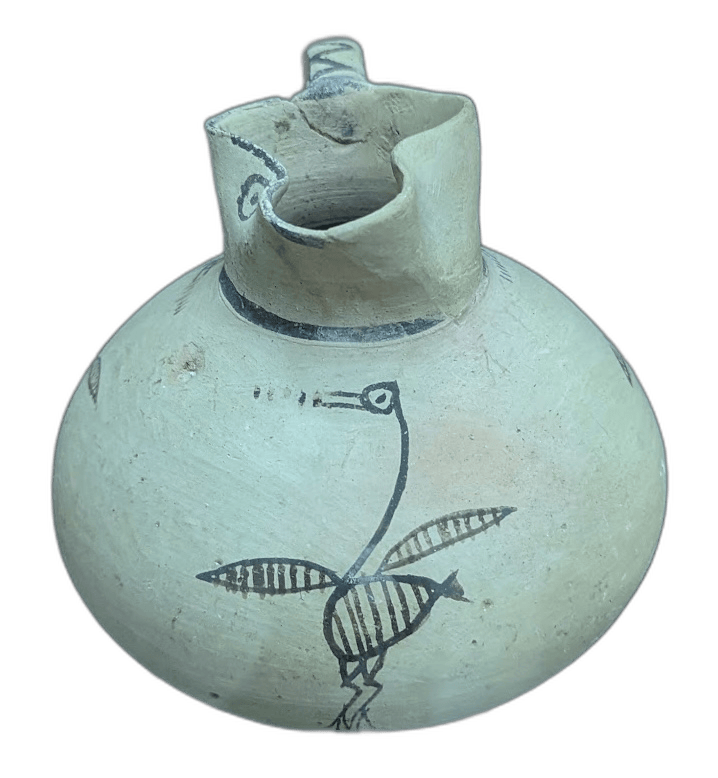
Small Oinochoe with Free Field Bird
Archaic I
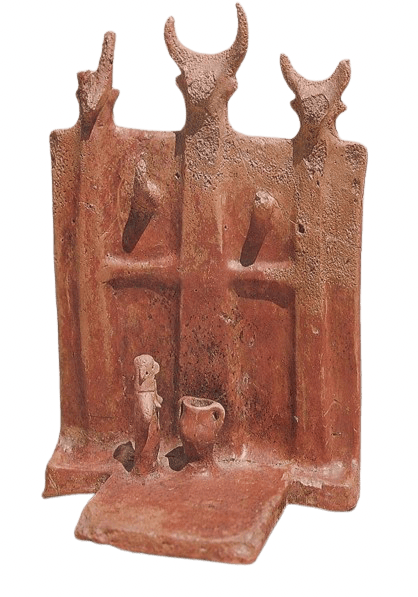
Red Polished Shrine
Middle Bronze Age I
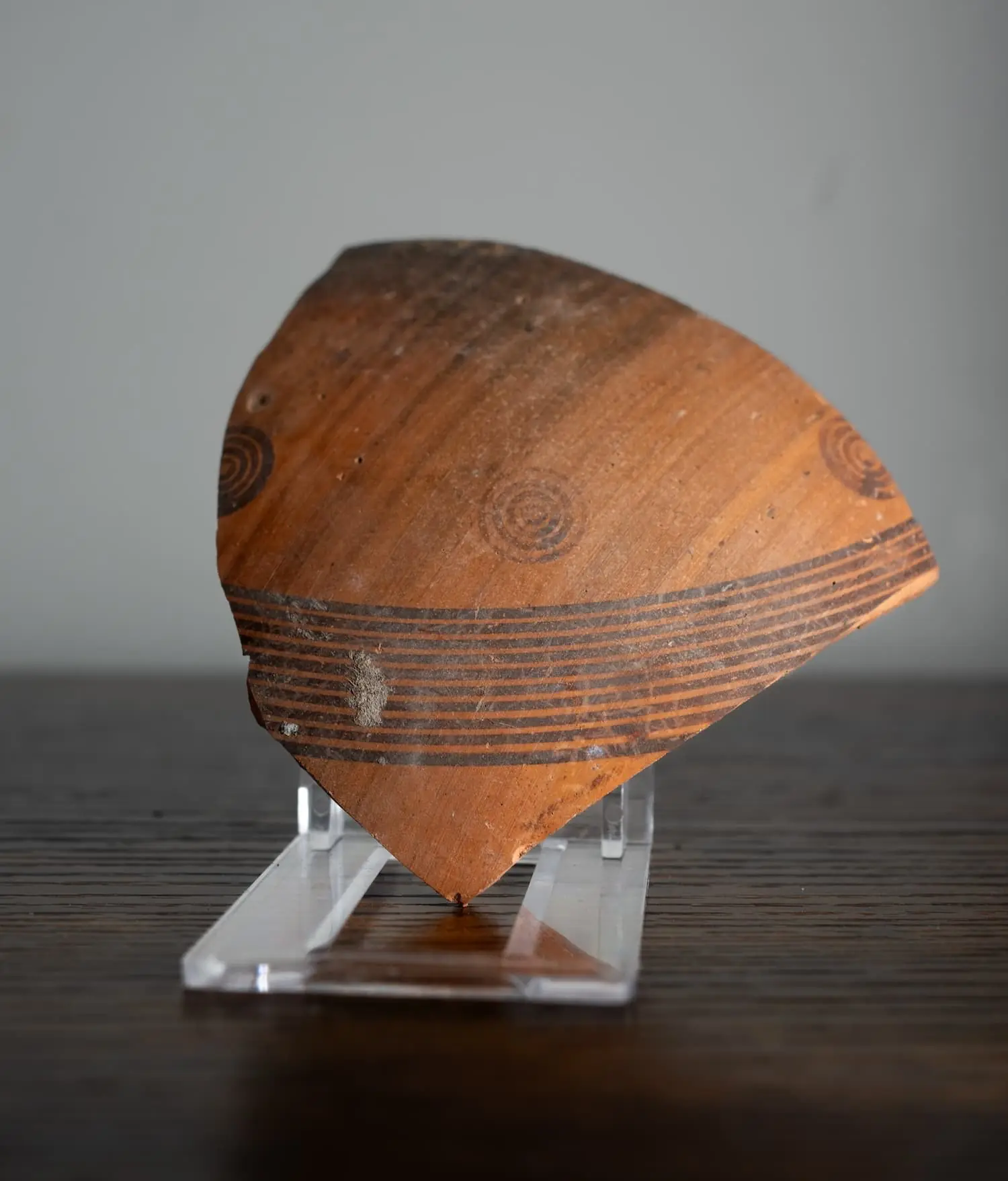
Black-On-Red Geometric Jug Sherd
Geometric II
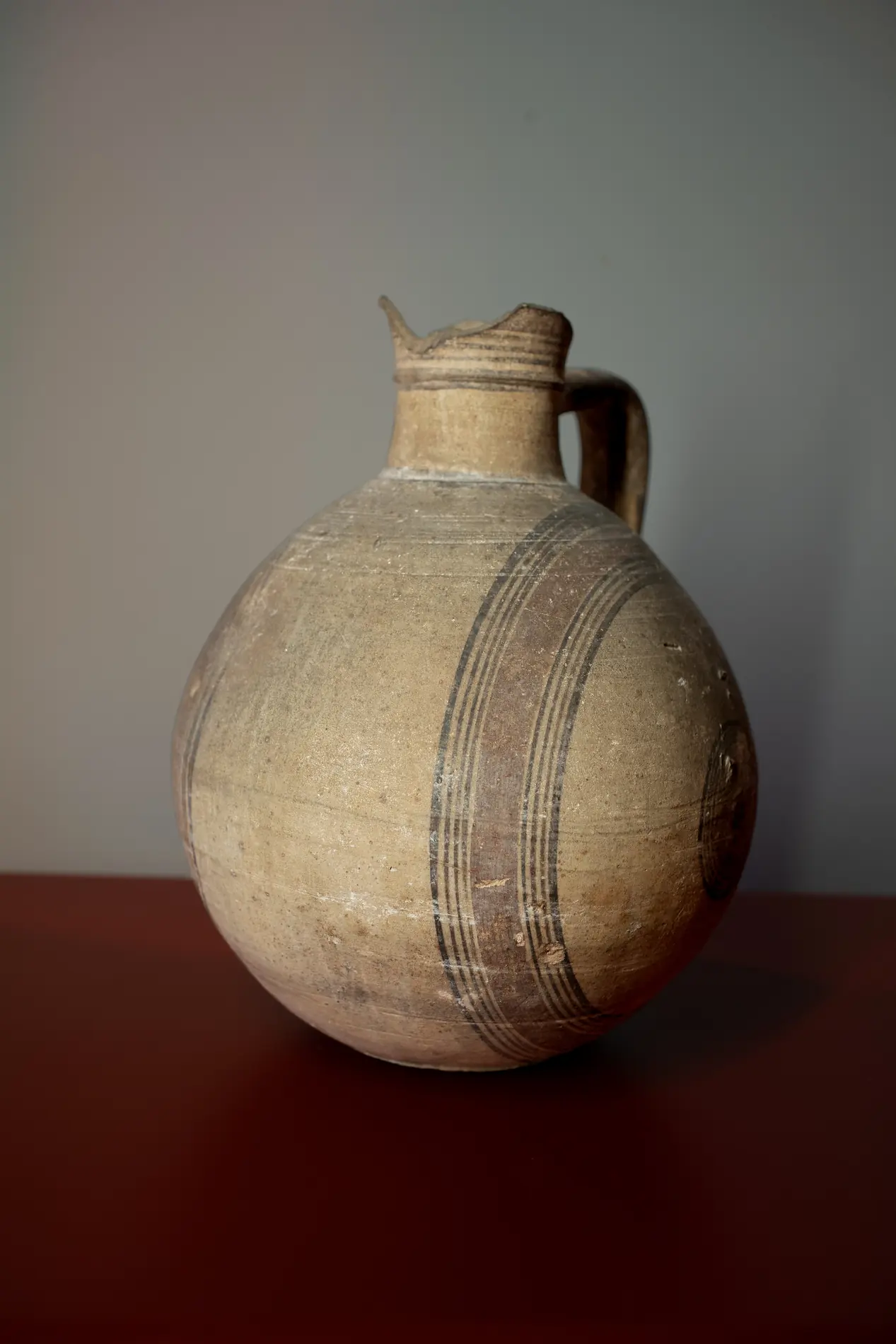
Bichrome Jug
Geometric
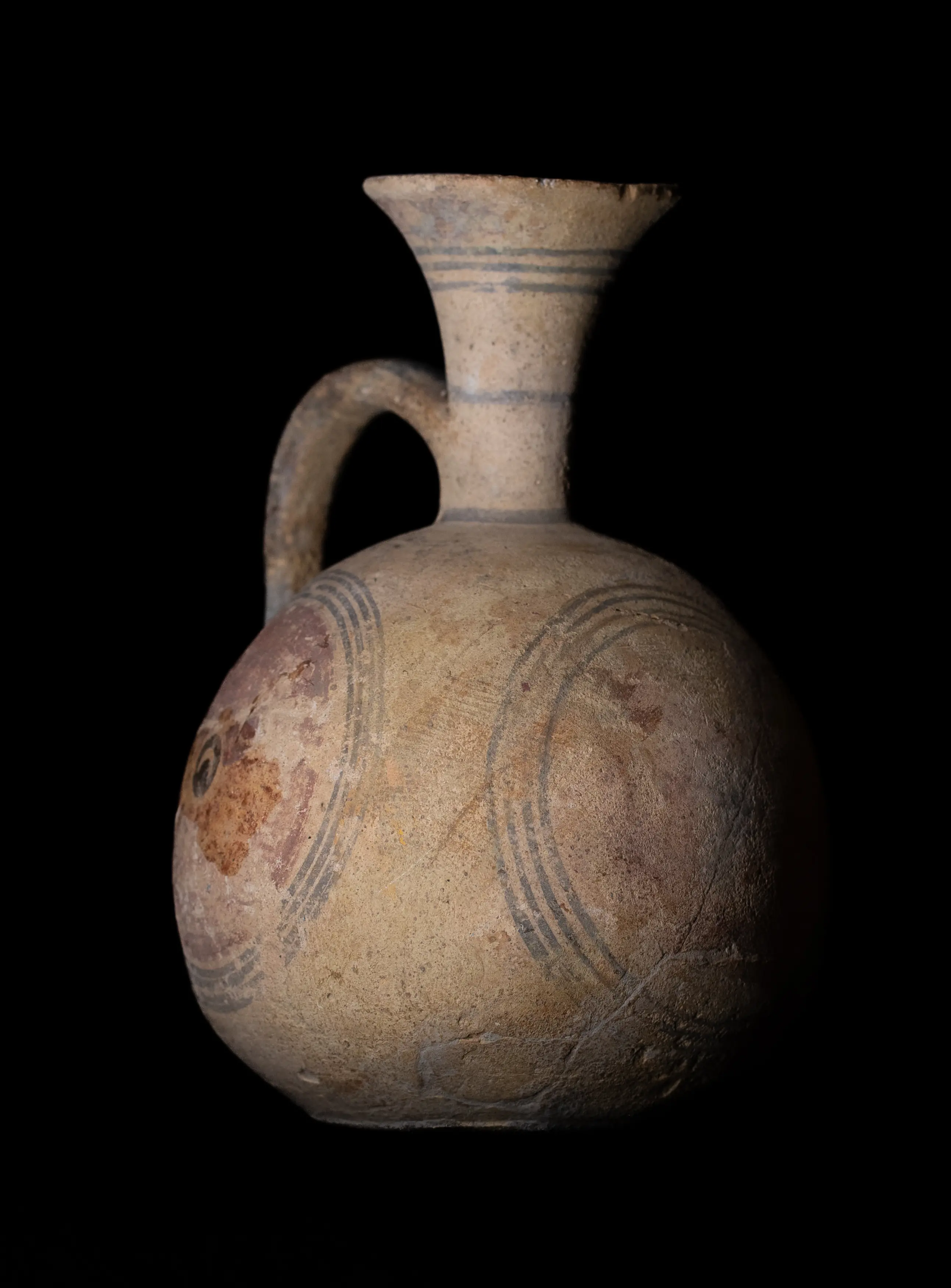
Bichrome Juglet
Geometric
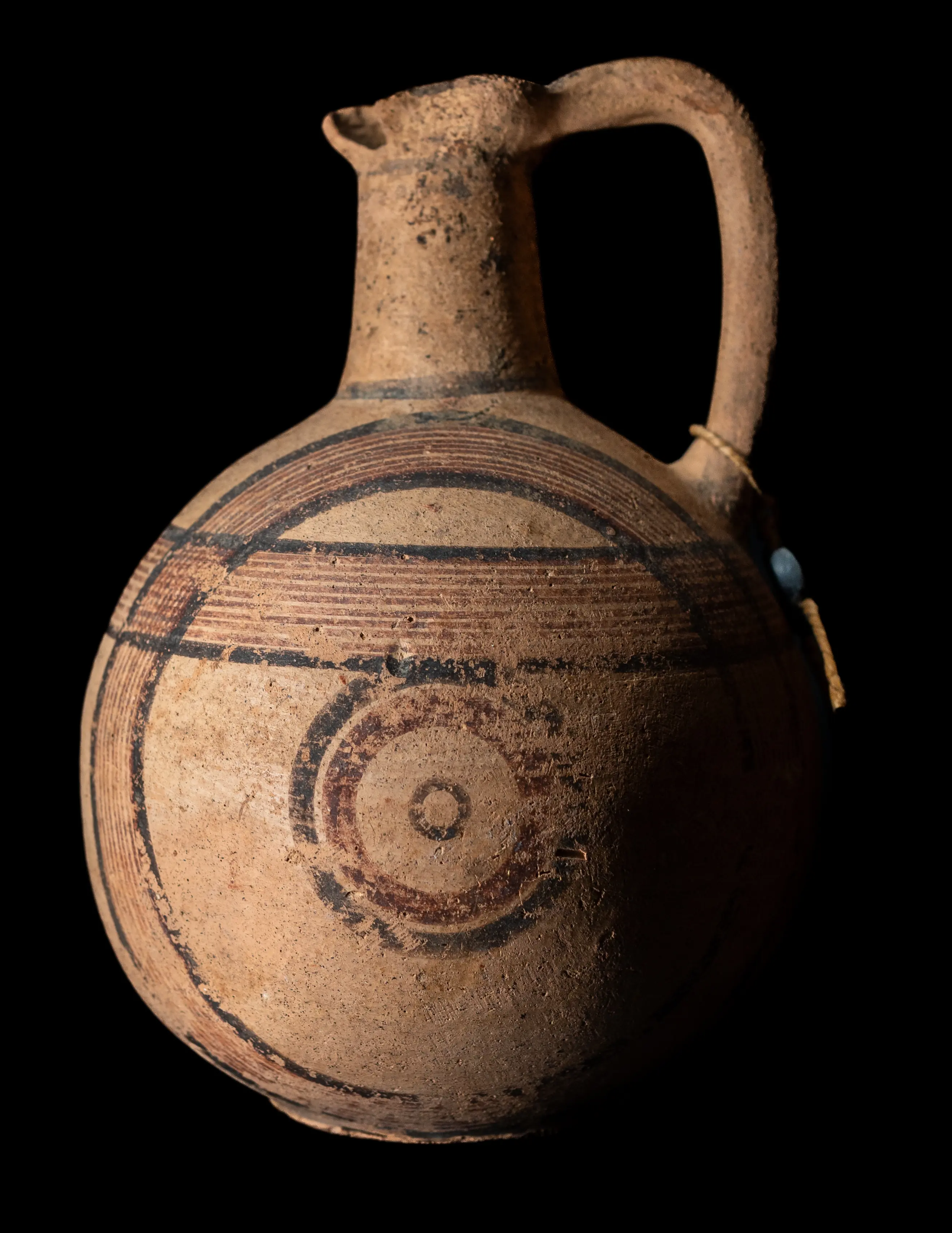
Bichrome Oinochoe
Geometric
Juglet
Archaic II
Oinochoe
Geometric III
Jug
Archaic I
Juglet
Archaic I
Jug
Geometric I
Terracotta jug
Early Bronze Age I
Juglet
Geometric I