
Conference paper·Archaeological Research Unit - University of Cyprus·2019
‘A living shipwreck’: A composite study of scrambling devices: three-dimensional modeling and biological analysis for the understanding of site formation processes in archaeological shipwreck sites
Chapters
About the video
In this paper from the 2018 annual review of the archaeological work of the University of Cyprus, Massimiliano Secci of the MARELab laboratory, directed by Stella Demesticha, outlines the theoretical and methodological framework of his 2018 to 2019 postdoctoral project, "A Living Shipwreck". Because the project is in its data-gathering phase, the talk presents its approach rather than final results.
Secci begins with the theory of site formation processes formulated by Michael Schiffer in 1973, which distinguishes the systemic context of artefacts during their active use from their archaeological context after loss or abandonment, and identifies natural and cultural transforms acting upon them. He then turns to Keith Muckelroy's 1978 book Maritime Archaeology, which adapted this framework to shipwrecks by defining "extracting filters" that remove material from a wreck and "scrambling devices" that rearrange or alter it through seafloor composition, waves, currents, sediment chemistry, and marine flora and fauna.
The project applies these concepts to the bow area of the Mazotos shipwreck, which has been almost fully excavated. Secci plays a short explanatory video produced by the University of Sarajevo with MARELab within the iMARECULTURE project for a virtual "dry visit" to the wreck. The video illustrates how buried, semi-buried, and exposed amphorae accumulate marine concretions differently as waves and currents shift the sediment in alternating cycles of exposure and burial.
In the final part of the talk, Secci explains how the team records individual amphorae in 3D using photogrammetry to map the interface marks between the anoxic buried zone, the benthic transition zone, and the exposed water column. Because some amphorae carry similar encrustations on both their buried and exposed surfaces, visual interface lines alone cannot reconstruct the history of sediment movement. To resolve these anomalies, Carlos Jimenez of Enalia Physis is analysing the encrusting marine organisms on each amphora from the bow. Combining the biological data with the 3D models aims to distinguish between successive natural burial events, the physical dislocation of vessels on the seabed, and human disturbance such as the pillaging of amphorae.
From our collection
Pieces in the Drakopoulos collection of the kinds and periods this talk covers: Amphora.
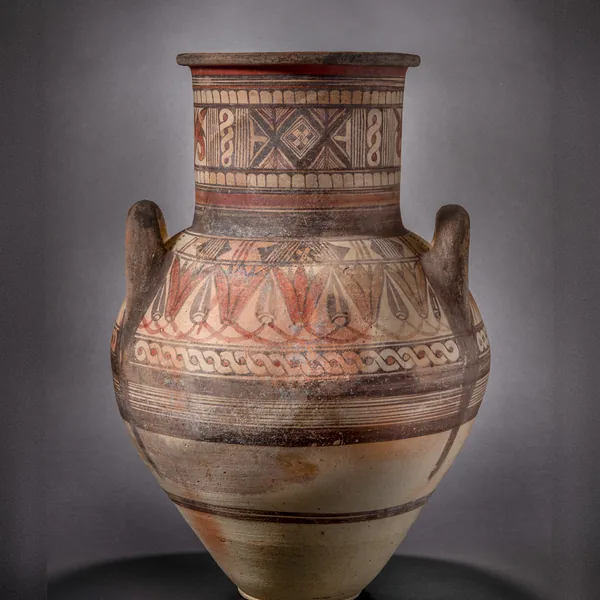
Bichrome IV Amphora with a Lotus-and-Bud Shoulder Frieze
Amphora
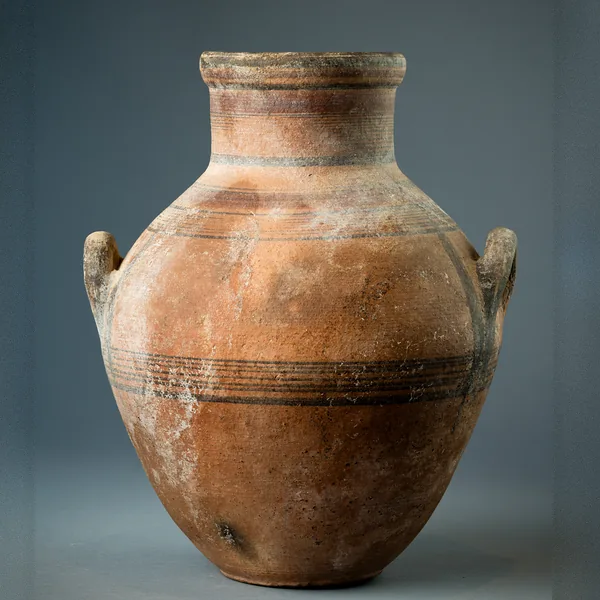
Bichrome IV Amphora with Shoulder Handles and Banded Decoration
Amphora
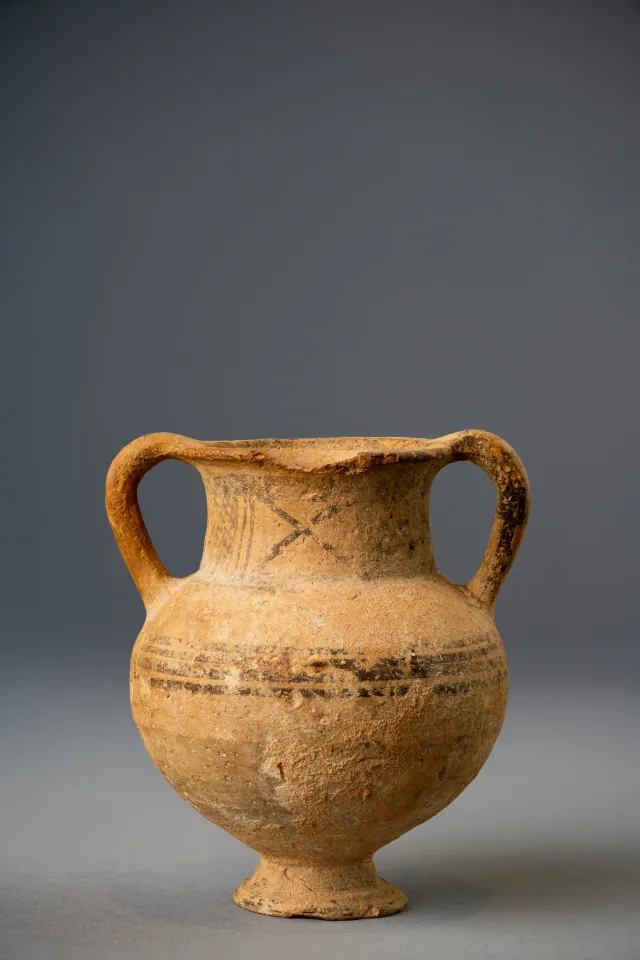
White Painted Amphoriskos on a Conical Foot
Amphora
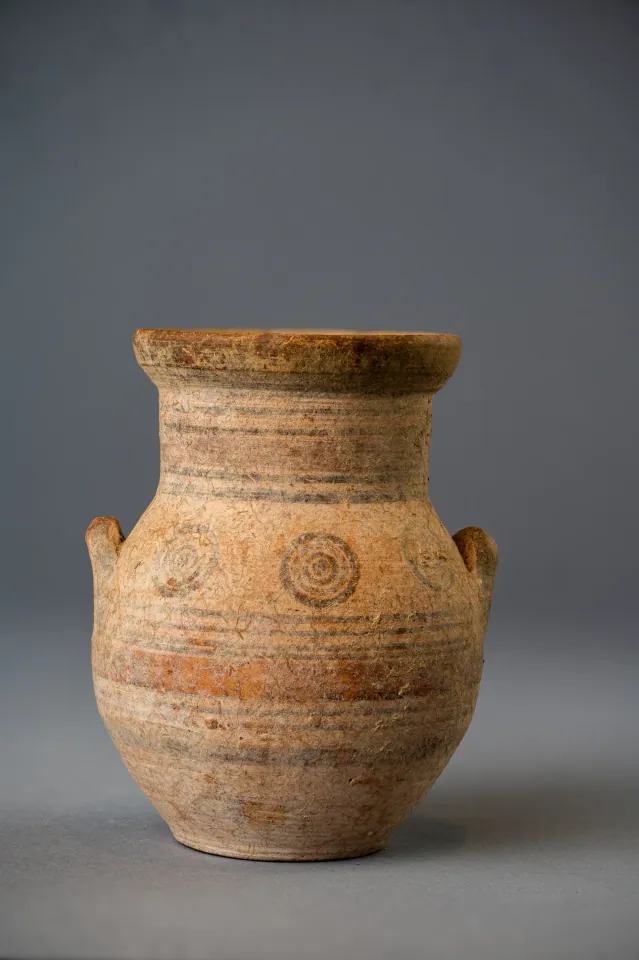
Bichrome IV Amphoriskos with Concentric Circles
Amphora
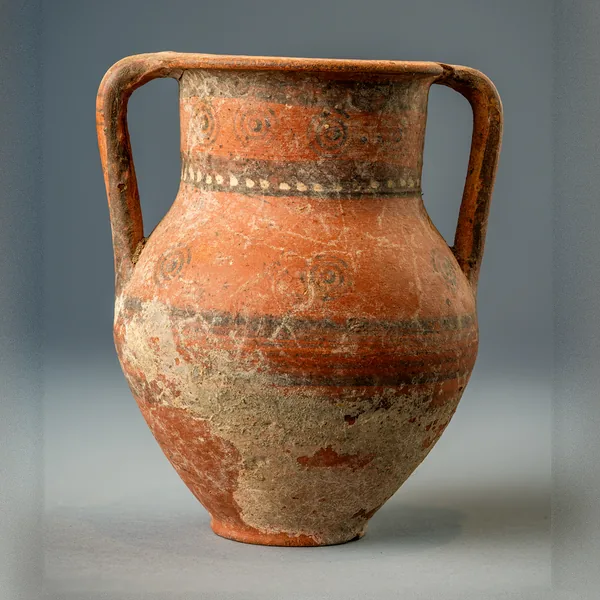
Bichrome Red Amphora with Concentric Circles and a Row of White Dots
Amphora
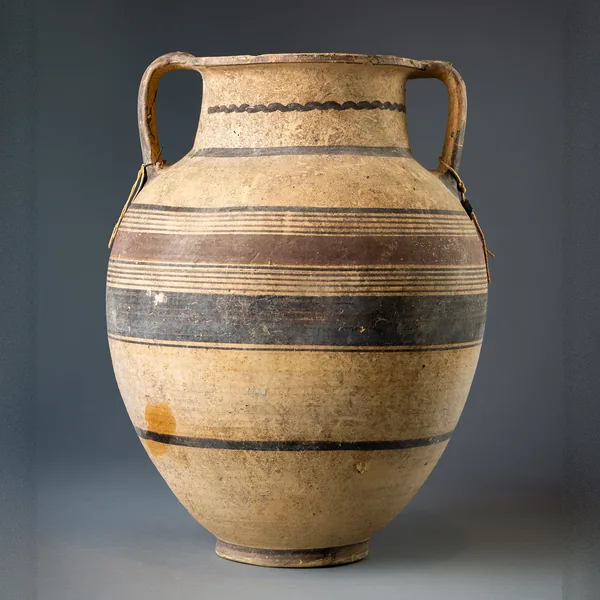
Large Bichrome Amphora with a Wavy Line on the Neck
Amphora
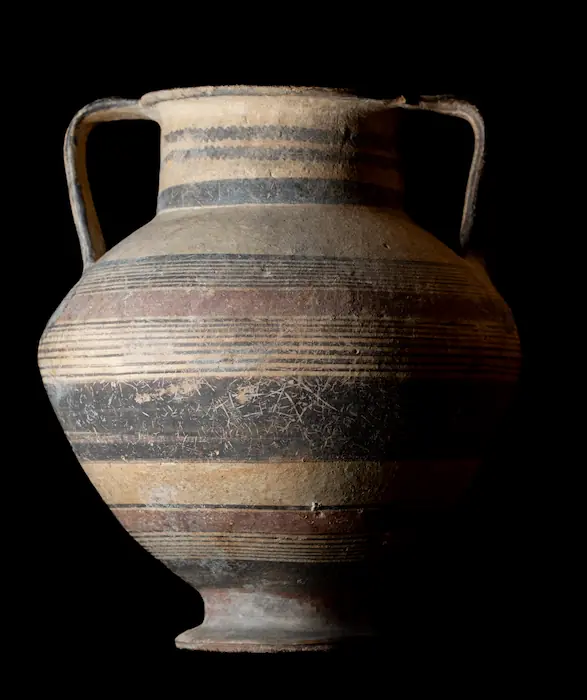
Bichrome Amphora on a Pedestal Foot with Wavy Lines on the Neck
Amphora
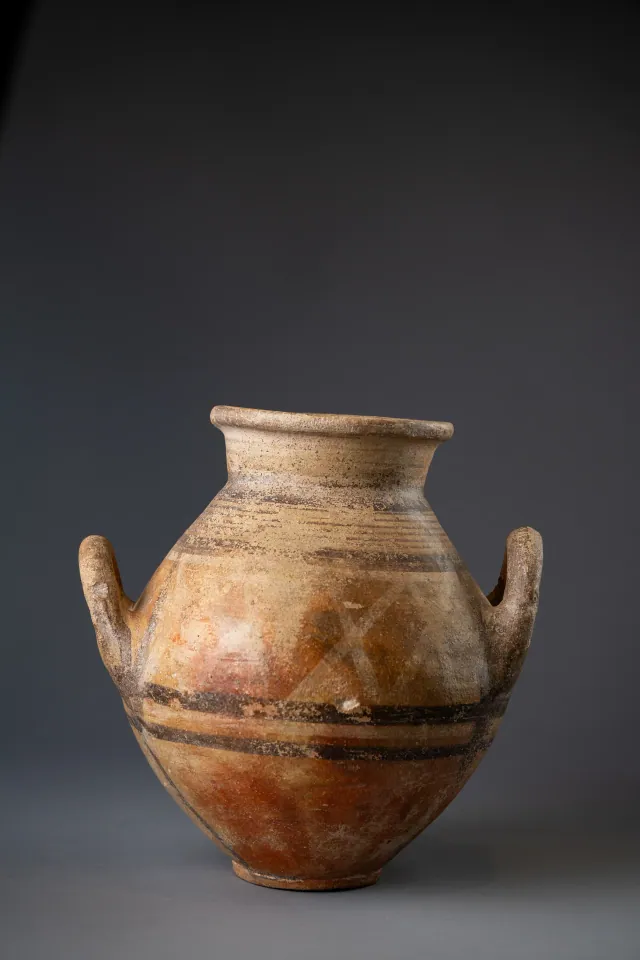
Red-Slipped Amphora with Pale Crosses on the Shoulder, probably Bichrome Red Ware
Amphora
Background
Where to read more on this site before or after watching.
In the compendium
Amphora
A closed jar with two opposed handles, made in Cyprus in belly-handled and vertical-handled painted series and as a basket-handled transport jar.
In the compendium
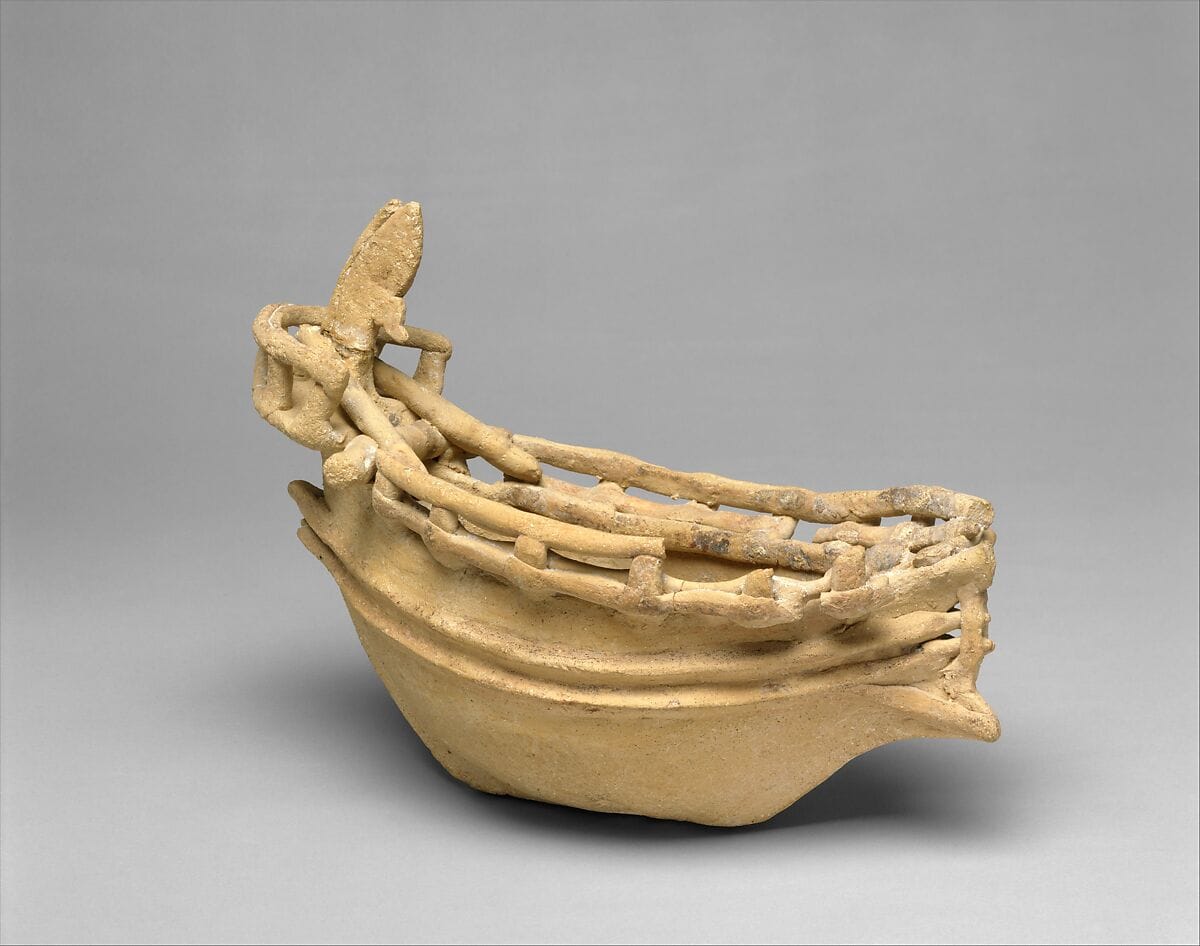
Seafaring and Ships in Ancient Cyprus
The evidence for boats and seafaring around Cyprus from the first crossings to the Classical period, from anchors, models and graffiti to wrecks and shipsheds.