
Conference paper·Archaeological Research Unit - University of Cyprus·2018·In Greek
The abandonment of the Sanctuary of the Horned God and the desertion of Enkomi: problems of chronology and stratigraphy
Η εγκατάλειψη του ιερού του Κεραάτη και η ερήμωση της Έγκωμης: προβλήματα χρονολόγησης και στρωματογραφίας
Chapters
About the video
In this conference paper, delivered in Greek at the annual review of the archaeological work of the University of Cyprus, Georgios Papasavvas re-examines the stratigraphy and final phases of the Sanctuary of the Horned God at Enkomi. He opens with a recording of George Seferis reading his poem on Enkomi, inspired by visiting the site in 1953 and 1954 during the excavations of Porphyrios Dikaios. The paper arises from a University of Cyprus research project studying the metallurgy and metalwork of the now inaccessible Late Bronze Age town.
Papasavvas first outlines Dikaios's published sequence for the Ashlar Building, erected shortly before 1200 BC. After an initial destruction attributed by Dikaios to the Sea Peoples, the building was reconstructed with Floor III, dedicating the southern sector around Hall 45 and Rooms 9, 10, and 13 to the cult of the Horned God, where bucrania, deer antlers, and gold-foil horns were found. On Floor III of Room 10, Dikaios found three piles of 276 inverted bowls and a 15-centimetre layer of sand that he attributed to flooding, followed by Floor II, an earthquake destruction layer 80 centimetres thick in the late 12th century BC that killed three children in Rooms 8 and 2, and a final reduced reconstruction on Floor I (Level IIIC) lasting until c. 1075 BC. Dikaios argued that the survivors dug blindly through the debris to recover the 55-centimetre bronze statuette and reburied it in a pit in the corner of Room 10 to revive the cult.
Re-evaluating Dikaios's plans, sections, and photographs, Papasavvas proposes a different sequence. He identifies the 276 vessels in Room 10 as wheelmade Base Ring ware bowls commissioned deliberately in a traditional shape rather than the prevailing Mycenaean-type skyphoi. He argues that these deposits represent a final communal feast held to close the sanctuary before the population moved three kilometres northeast to Salamis around 1100 BC as the Pedieos river silted up Enkomi's harbour.
In this reading, the sterile sand above Floor III was windblown sand from the decaying roof, and the reddish earth of Floor I was collapsed packed earth from the roof rather than a floor of use. The antlers in Rooms 9 and 13 had fallen from the walls, the supposed hearths in Hall 45 were collapsed wall superstructure resting on a fallen doorjamb, and the pit around the Horned God was created by Dikaios's workmen when extracting the statuette, which had been left standing in situ at the closing ceremony. Papasavvas concludes that Floors II and I and Level IIIC were phases of gradual natural collapse in an already deserted building, where the children died while playing in the ruins, while the Sanctuary of the Ingot God remained in use slightly longer.
From our collection
Pieces in the Drakopoulos collection of the kinds and periods this talk covers: Bowl, Base Ring ware, Late Cypriot (Late Bronze Age).
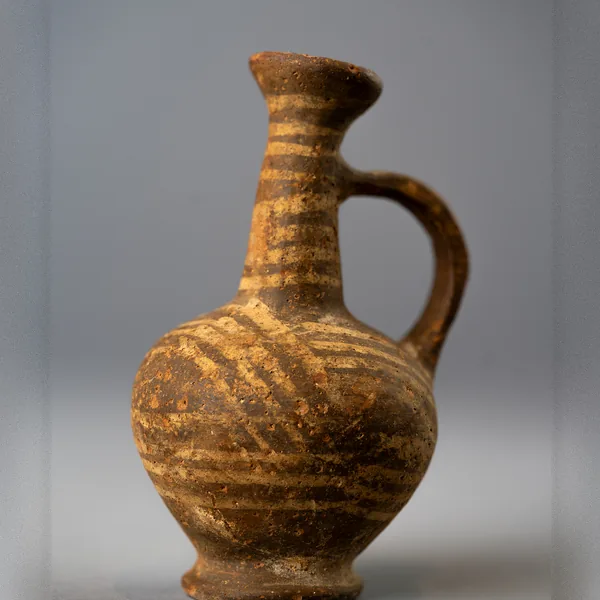
Base Ring II Bilbil Juglet with White-Painted Bands
Base Ring ware
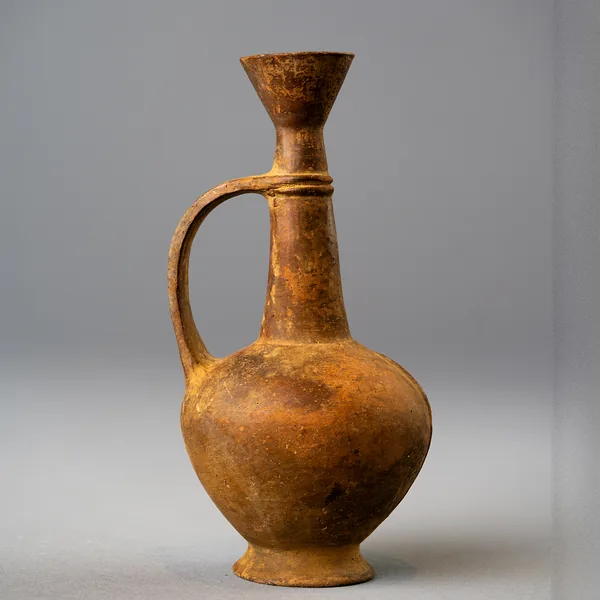
Base Ring Bilbil Juglet with Funnel Mouth and Neck Ridge
Base Ring ware
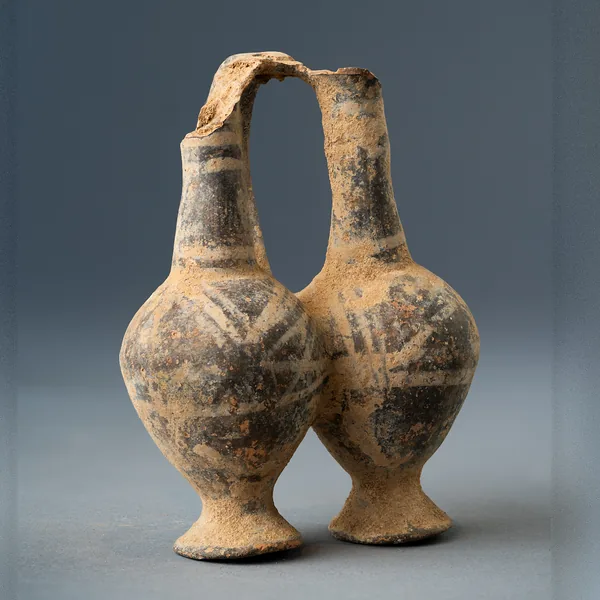
Base Ring II Double Juglet with White-Painted Decoration
Base Ring ware
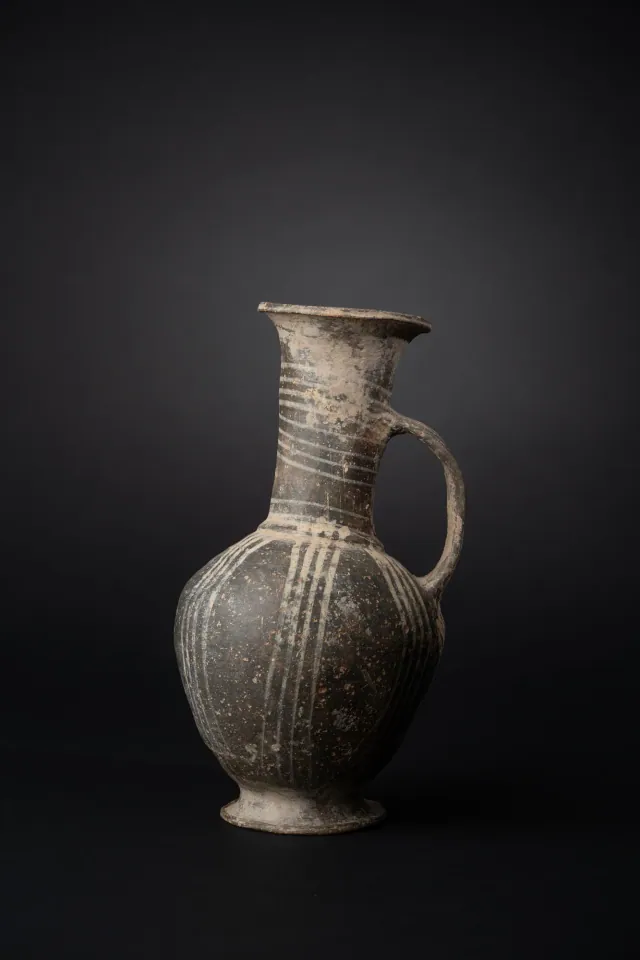
Base Ring II Jug with White-Painted Lattice Bands
Base Ring ware
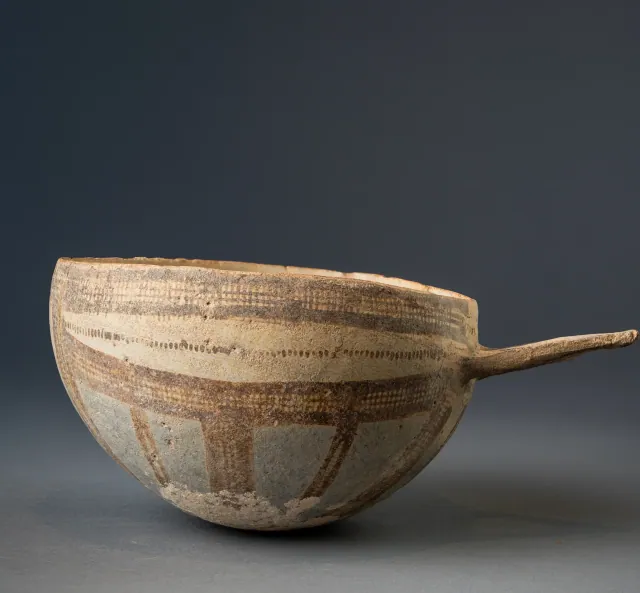
White Slip II Hemispherical Bowl with Wishbone Handle
Bowl
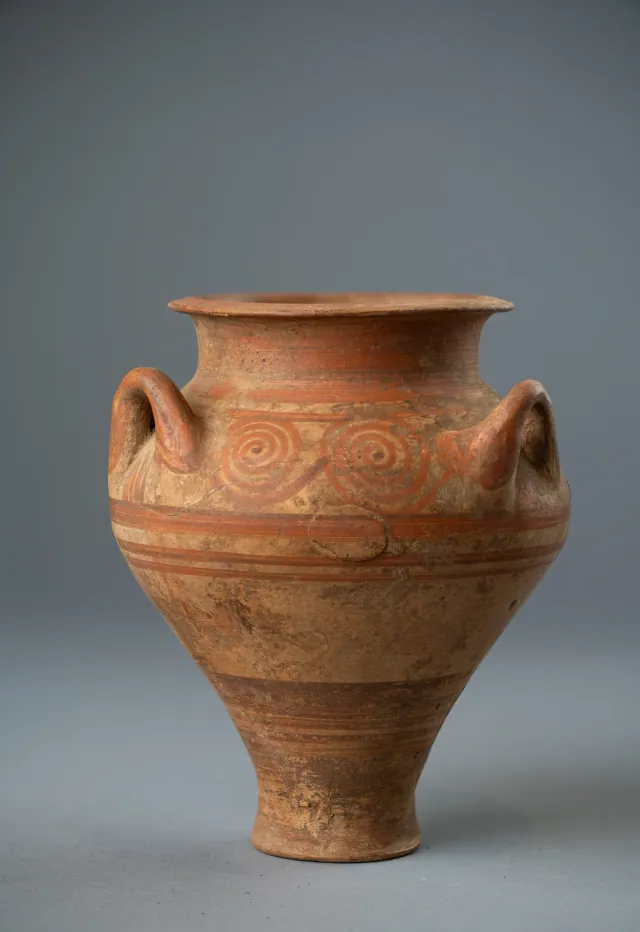
Cypriot Three-Handled Jar in the Mycenaean Style with Running Spirals
Late Cypriot (Late Bronze Age)
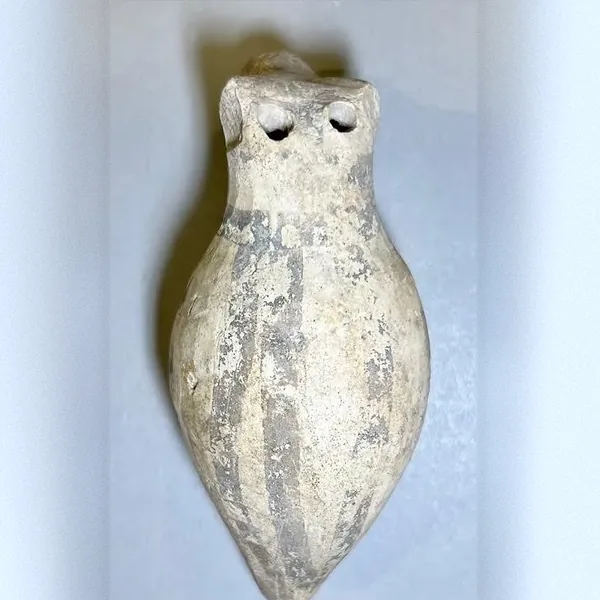
White Painted VI Owl-Headed Rattle
Late Cypriot (Late Bronze Age)
Found at the places discussed
Objects in our catalogue, in museum collections, recorded as found at these sites.


Background
Where to read more on this site before or after watching.
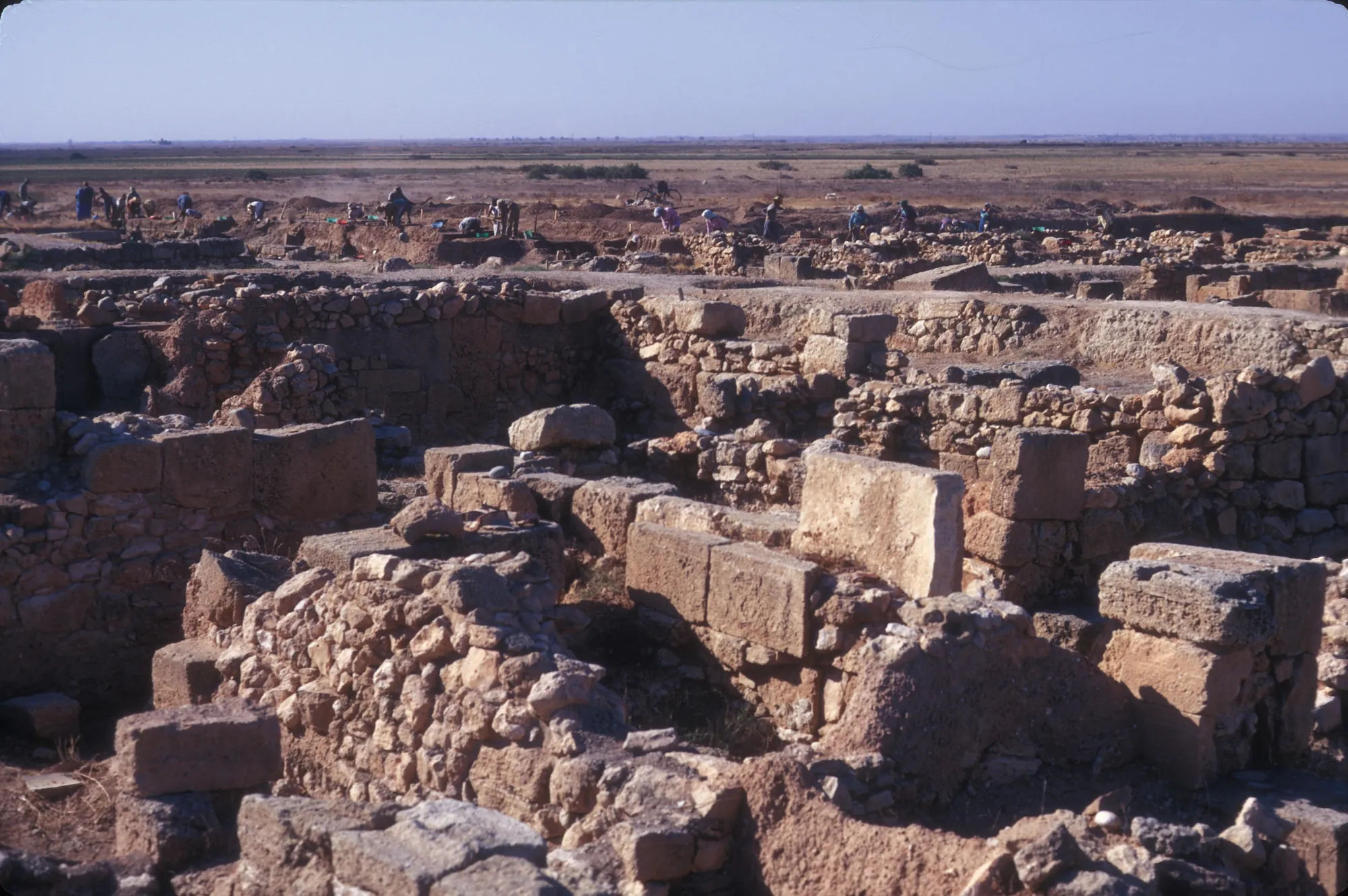
The site
Enkomi
Enkomi is a walled Late Bronze Age town near the mouth of the Pedieos river on the bay of Famagusta, lived in from about 1650 BC until it was gradually abandoned for nearby Salamis. It was a port for Cypriot copper, and its excavations produced metal workshops, sanctuaries with bronze cult statues, rich tombs and the largest group of Cypro-Minoan inscriptions on the island.
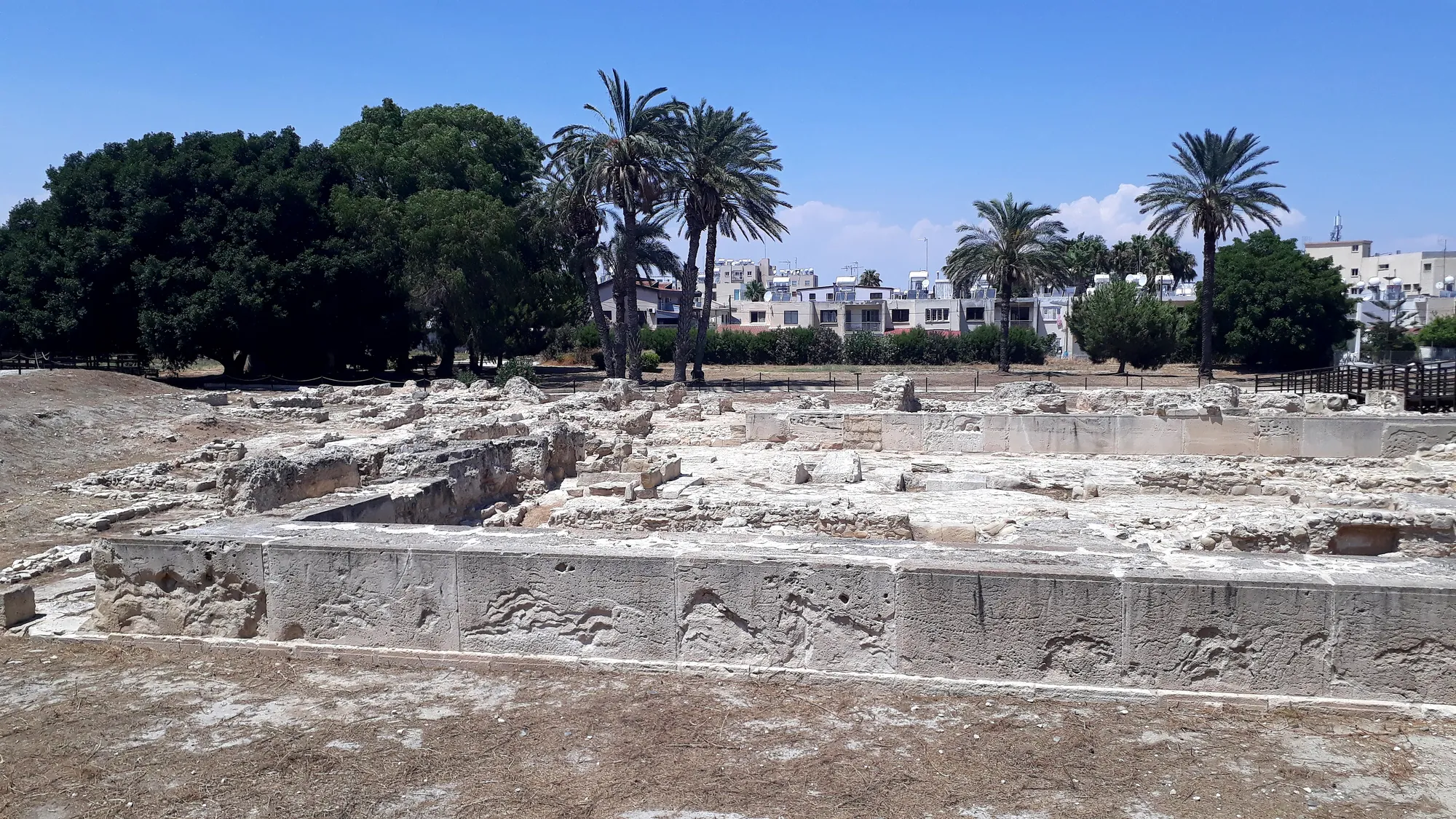
In the compendium
Ashlar Masonry
Squared, dressed stone used on Cyprus from about 1500 BC for gateways, tombs and the largest buildings of the Late Bronze Age towns, set below walls of mudbrick.
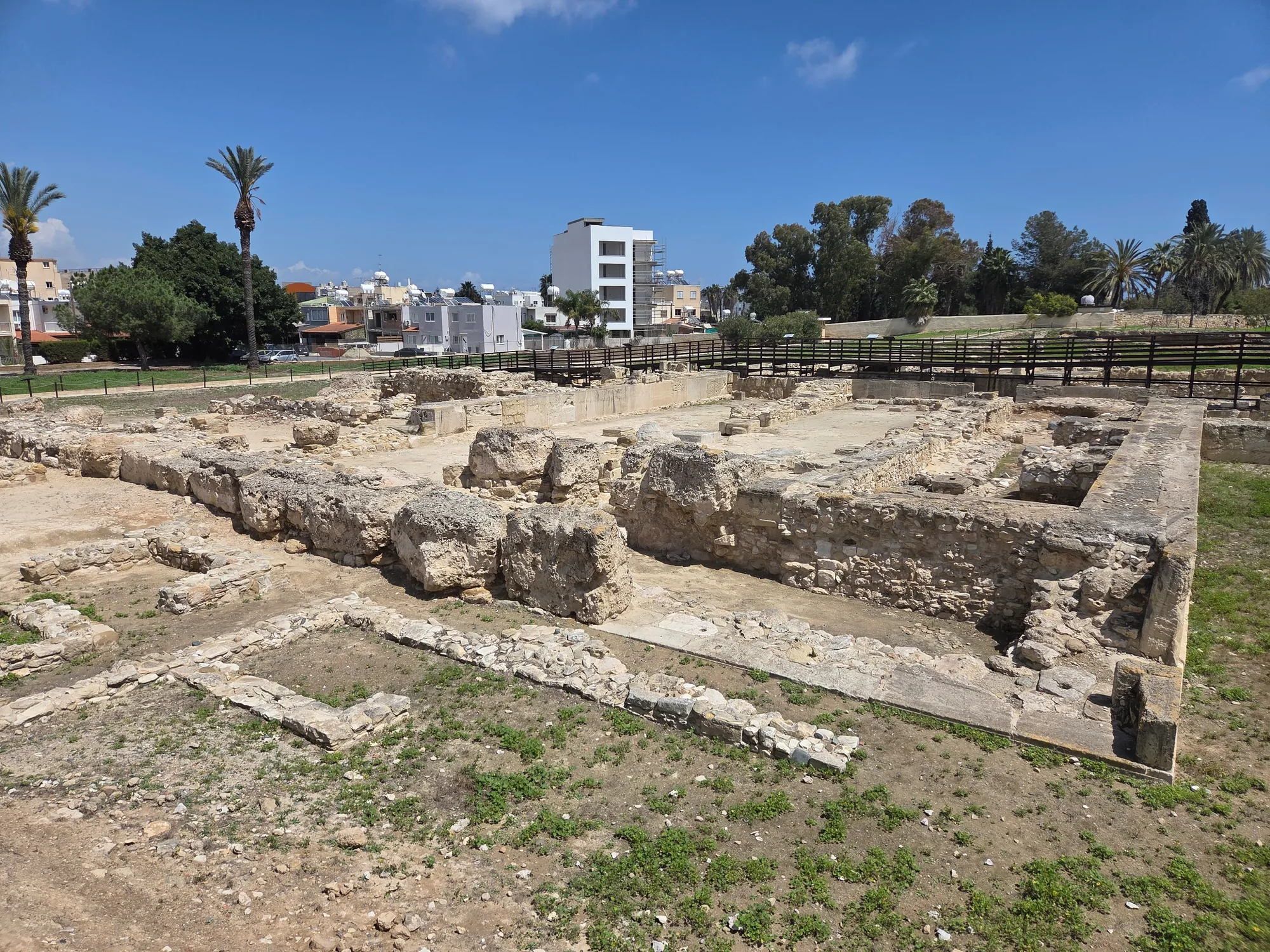
In the compendium
Bronze Age Sanctuaries and Temples
Cypriot cult buildings of the Bronze Age, from the clay sanctuary model of Vounous to the walled courts, altars and inner rooms of the Late Cypriot temples.
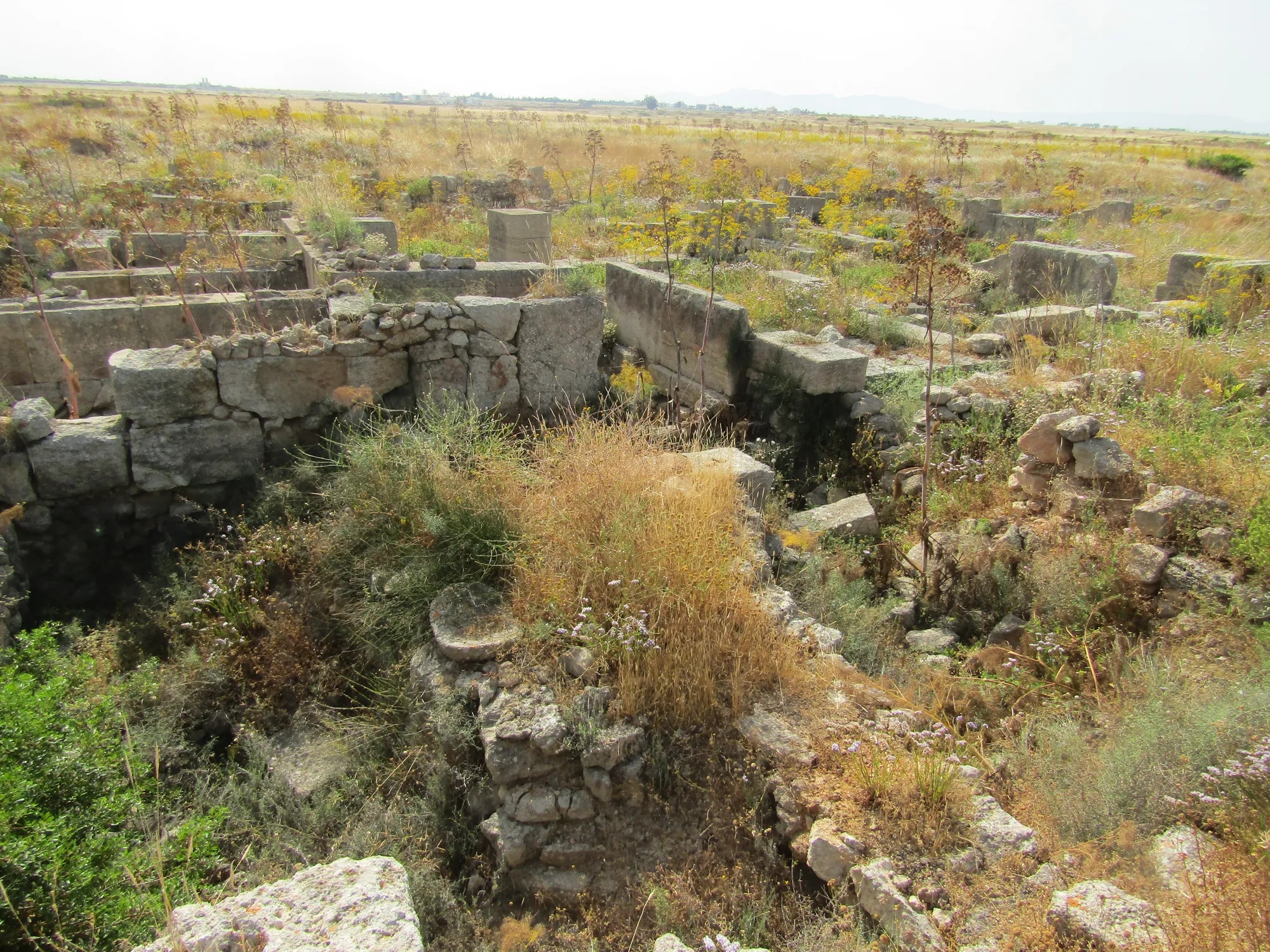
In the compendium
Late Bronze Age Towns and Buildings
How Late Bronze Age Cyprus built its first towns: street grids, large ashlar buildings with storage halls, courtyard houses, and the short-lived settlements of the twelfth century.