
Conference paper·CAARI Cyprus·2021
A Clash of Empires at Enkomi: A French Excavator, a British Director, and a Cypriot Curator
Chapters
About the video
Giorgos Papasavvas examines the mid-twentieth-century dispute over the excavations and stratigraphy of Enkomi through official and personal correspondence preserved in the archives of Claude Schaeffer. Opening with Emily Vermeule's account of the heated debates at the 1972 Mycenaean Congress in Nicosia, the paper traces the conflict back to the joint expedition established in 1947 between Schaeffer, A. H. S. Megaw as director of the Department of Antiquities, and Porphyrios Dikaios as curator.
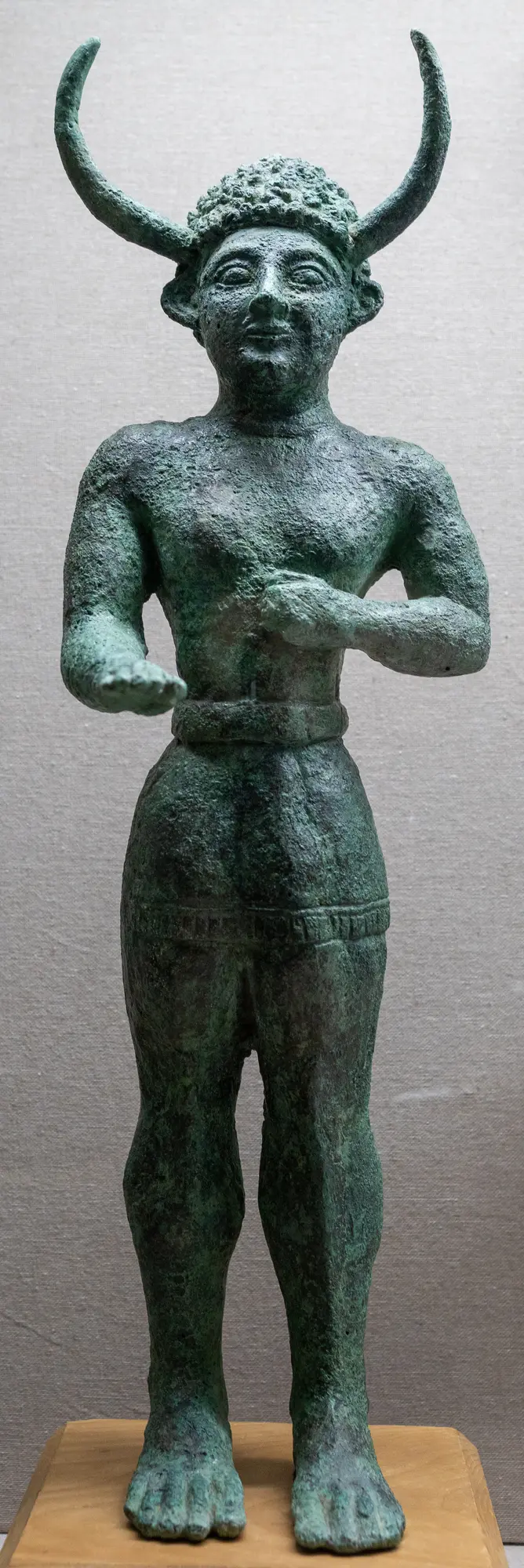
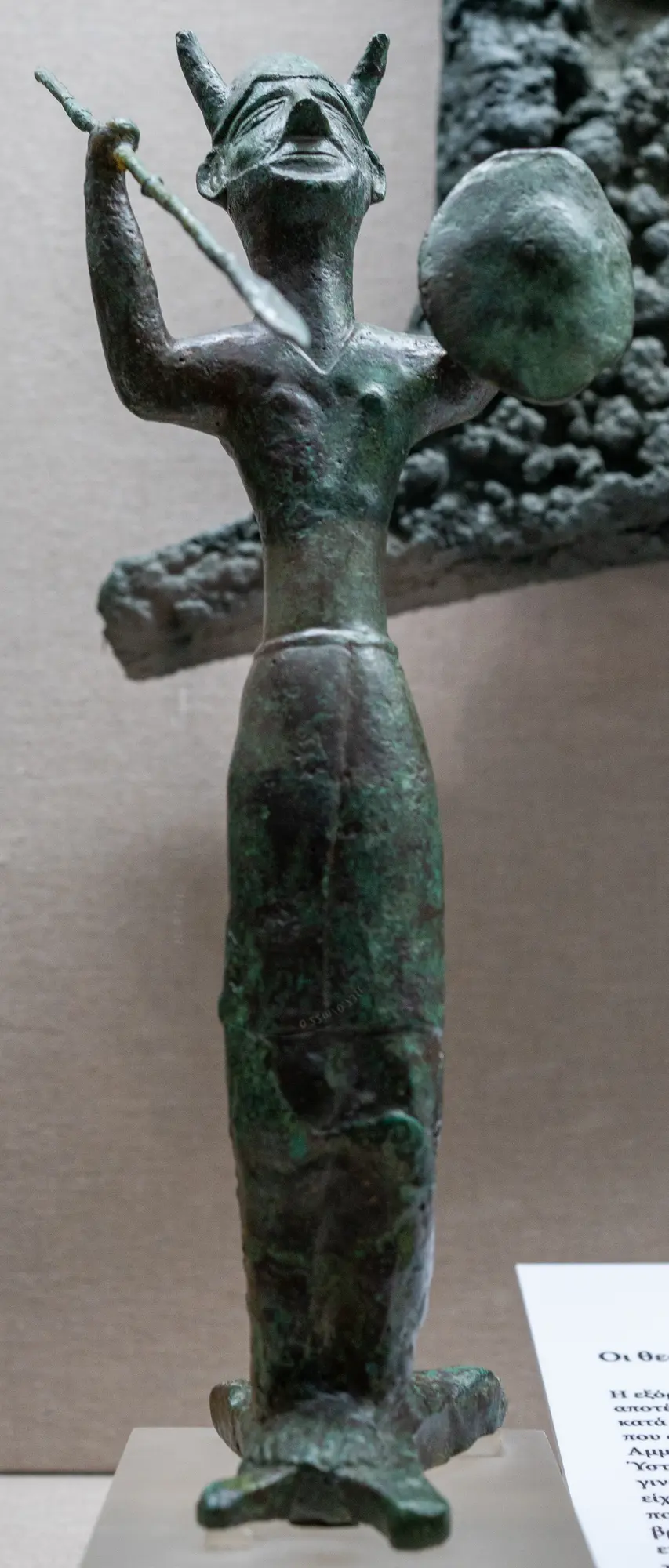
Although the two teams excavated the same levels in the Late Bronze Age town, Schaeffer and Dikaios reached conflicting chronological conclusions about the arrival of the Mycenaeans. Based on his soundings in Building 18, Schaeffer dated the monumental structures and Mycenaean colonization to the 14th century. Dikaios, finding 12th-century pottery of Mycenaean types in the earliest layers of his Ashlar Building and discovering the Horned God near the French trenches, dated the construction of the building to the 12th century.
When Dikaios submitted a 200-page report on his findings in 1950, Schaeffer demanded that Megaw halt Dikaios's excavations and claimed exclusive authority over the site and its interpretation. The dispute escalated after Schaeffer's 1951 presentation to the Académie des Belles-Lettres and his 1952 volume Enkomi-Alasia I. Megaw accused Schaeffer of failing to acknowledge the Department's work and of plagiarizing Dikaios's unpublished report. Schaeffer denied the charge, accused Dikaios of stealing his ideas, and refused to name him in a twelve-page reply, referring to him twenty-seven times as "your curator". The joint mission was formally terminated by a new memorandum taking effect in 1954.
In the second half of the paper, Papasavvas sets the dispute against post-war British and French mandate archaeology in Western Asia and the political tensions of 1950s colonial Cyprus. He notes that Schaeffer attempted to use the political climate by accusing Dikaios in a report to Megaw of being guided by philhellenic sentiments rather than scholarly truth, a charge Megaw dismissed. Papasavvas concludes that Schaeffer acted as a "colonialist by opportunity" driven primarily by personal pride, while Megaw defended scientific standards and the interests of Cypriot archaeology, and Dikaios prevailed on his scientific strengths.
From our collection
Pieces in the Drakopoulos collection of the kinds and periods this talk covers: Late Cypriot (Late Bronze Age).
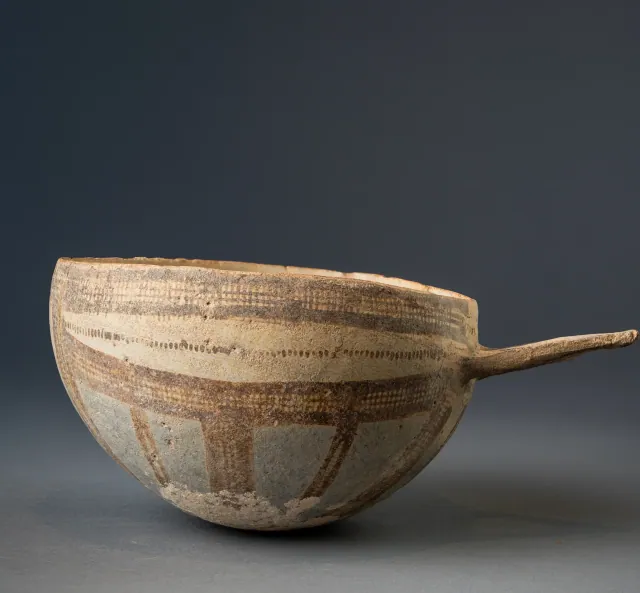
White Slip II Hemispherical Bowl with Wishbone Handle
Late Cypriot (Late Bronze Age)
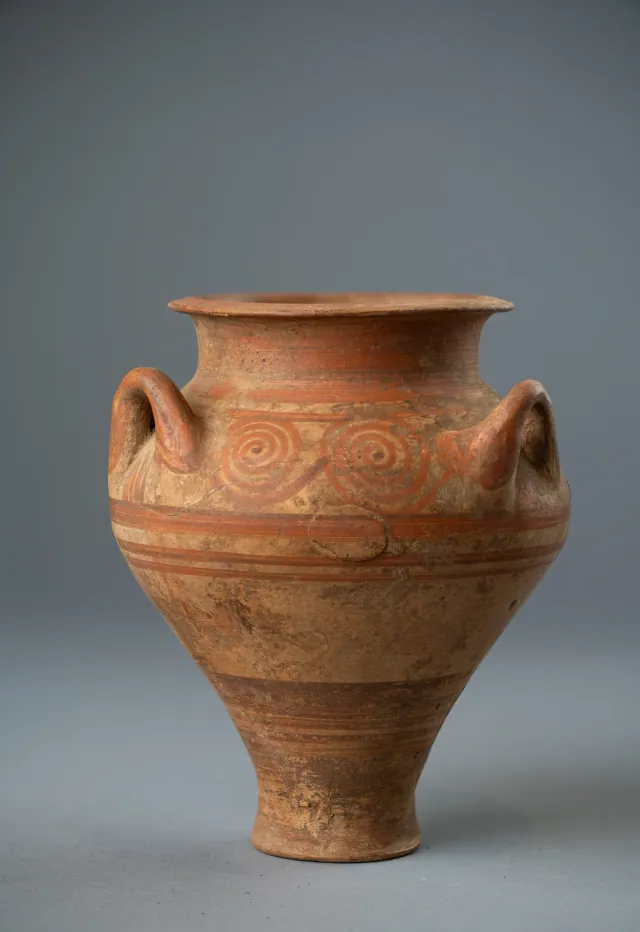
Cypriot Three-Handled Jar in the Mycenaean Style with Running Spirals
Late Cypriot (Late Bronze Age)
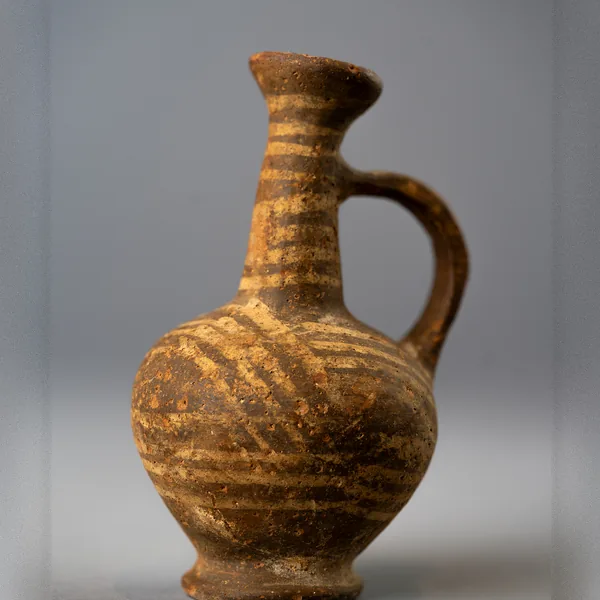
Base Ring II Bilbil Juglet with White-Painted Bands
Late Cypriot (Late Bronze Age)
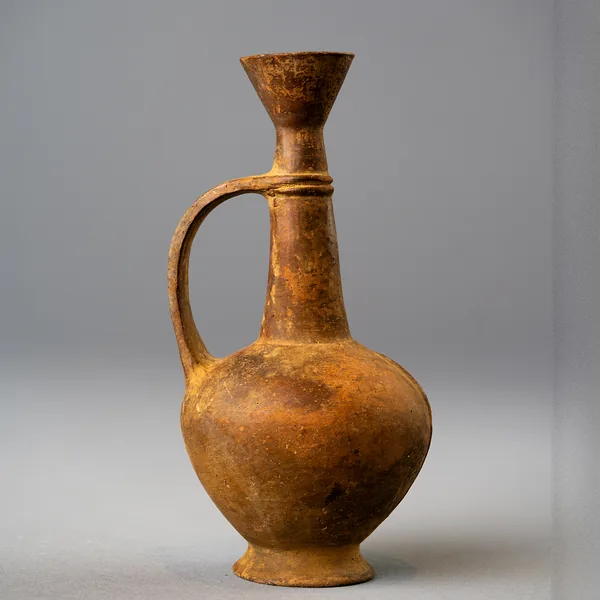
Base Ring Bilbil Juglet with Funnel Mouth and Neck Ridge
Late Cypriot (Late Bronze Age)
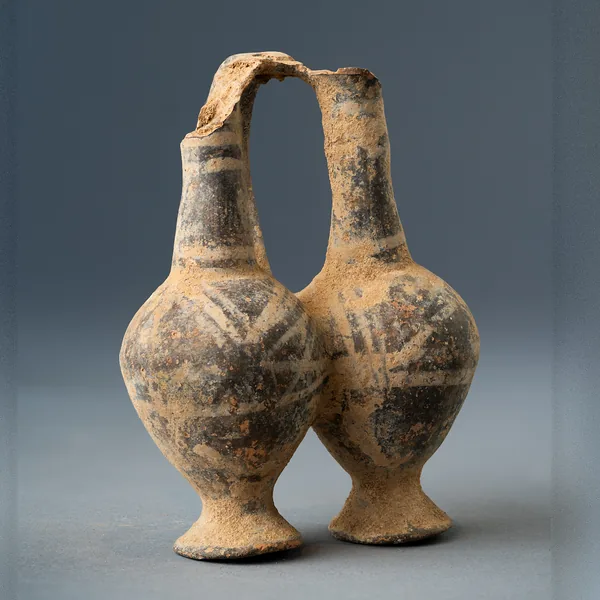
Base Ring II Double Juglet with White-Painted Decoration
Late Cypriot (Late Bronze Age)
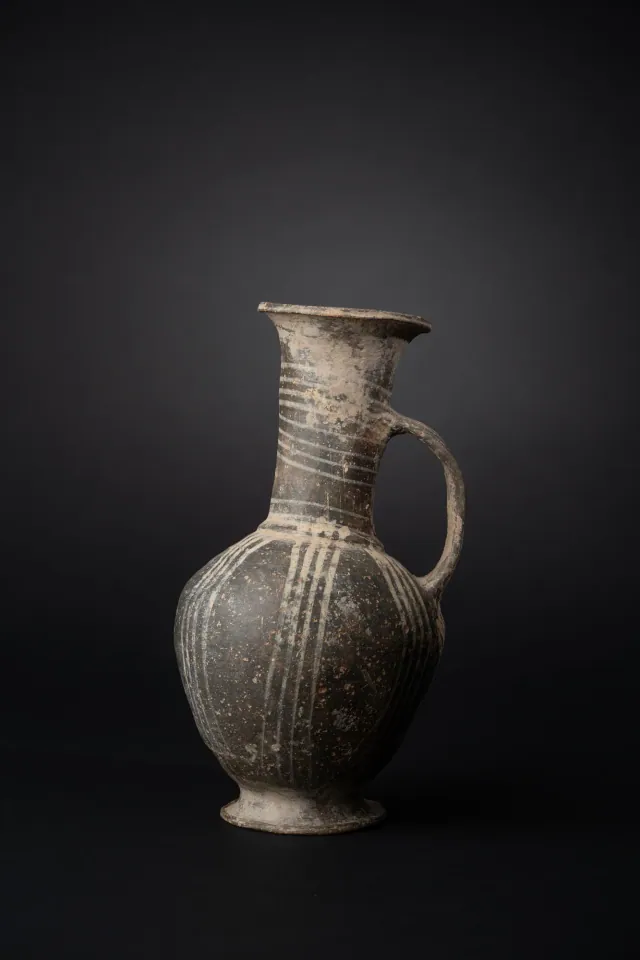
Base Ring II Jug with White-Painted Lattice Bands
Late Cypriot (Late Bronze Age)
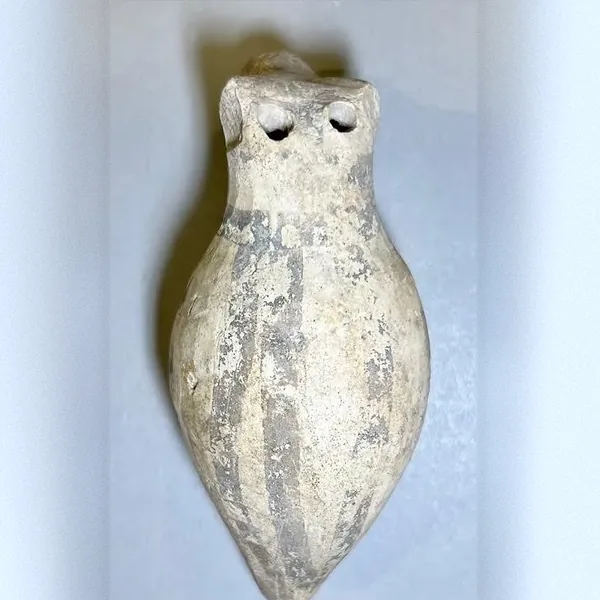
White Painted VI Owl-Headed Rattle
Late Cypriot (Late Bronze Age)
Found at the places discussed
Objects in our catalogue, in museum collections, recorded as found at these sites.
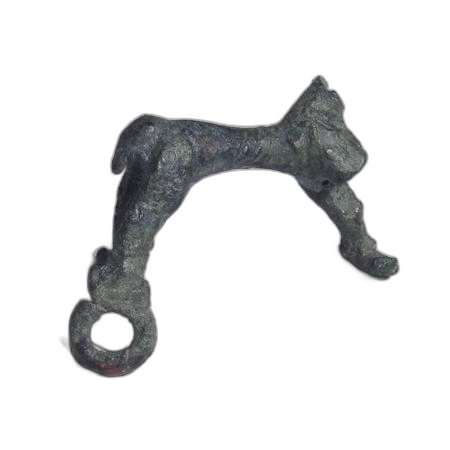

Background
Where to read more on this site before or after watching.
The site
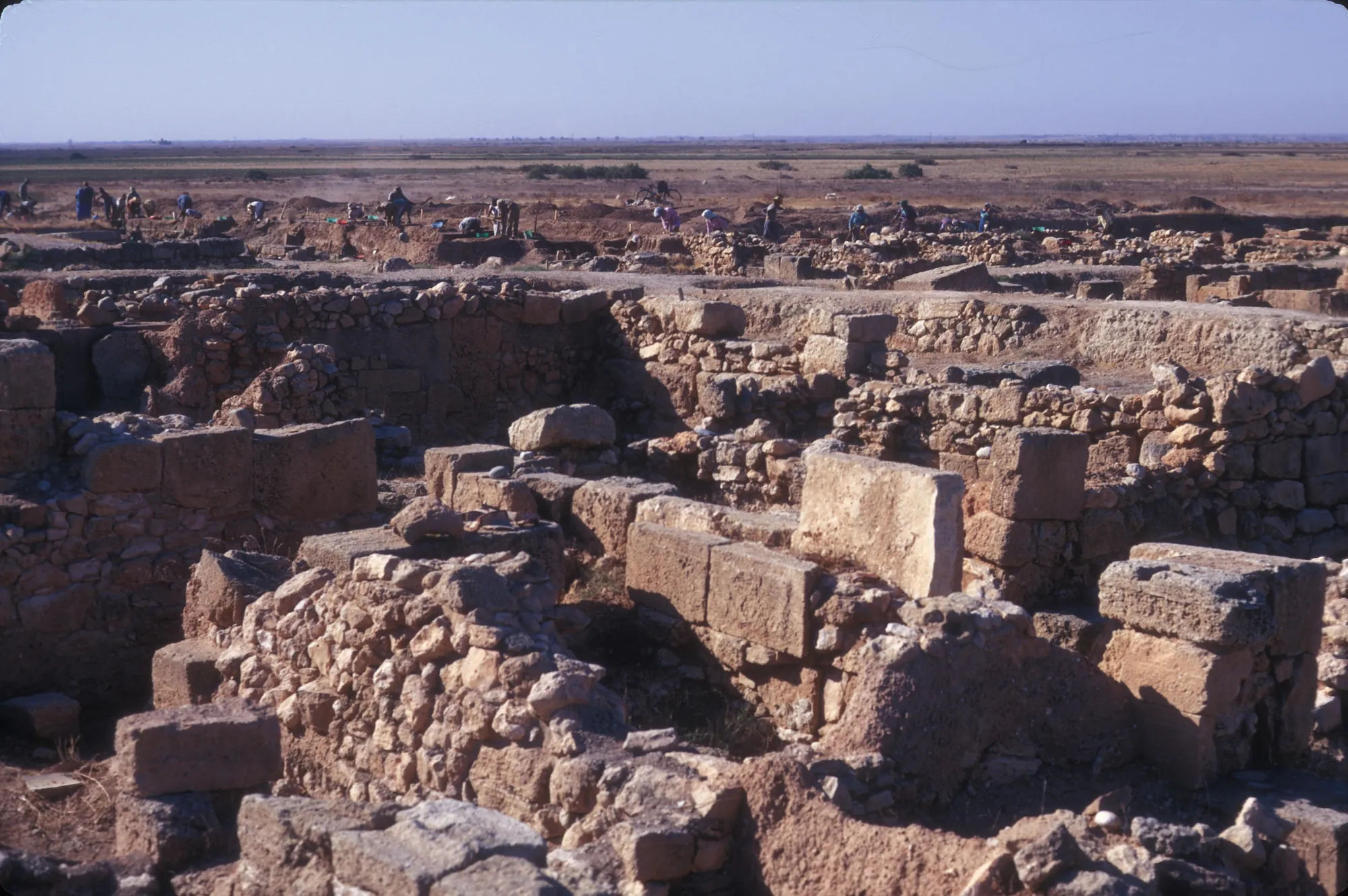
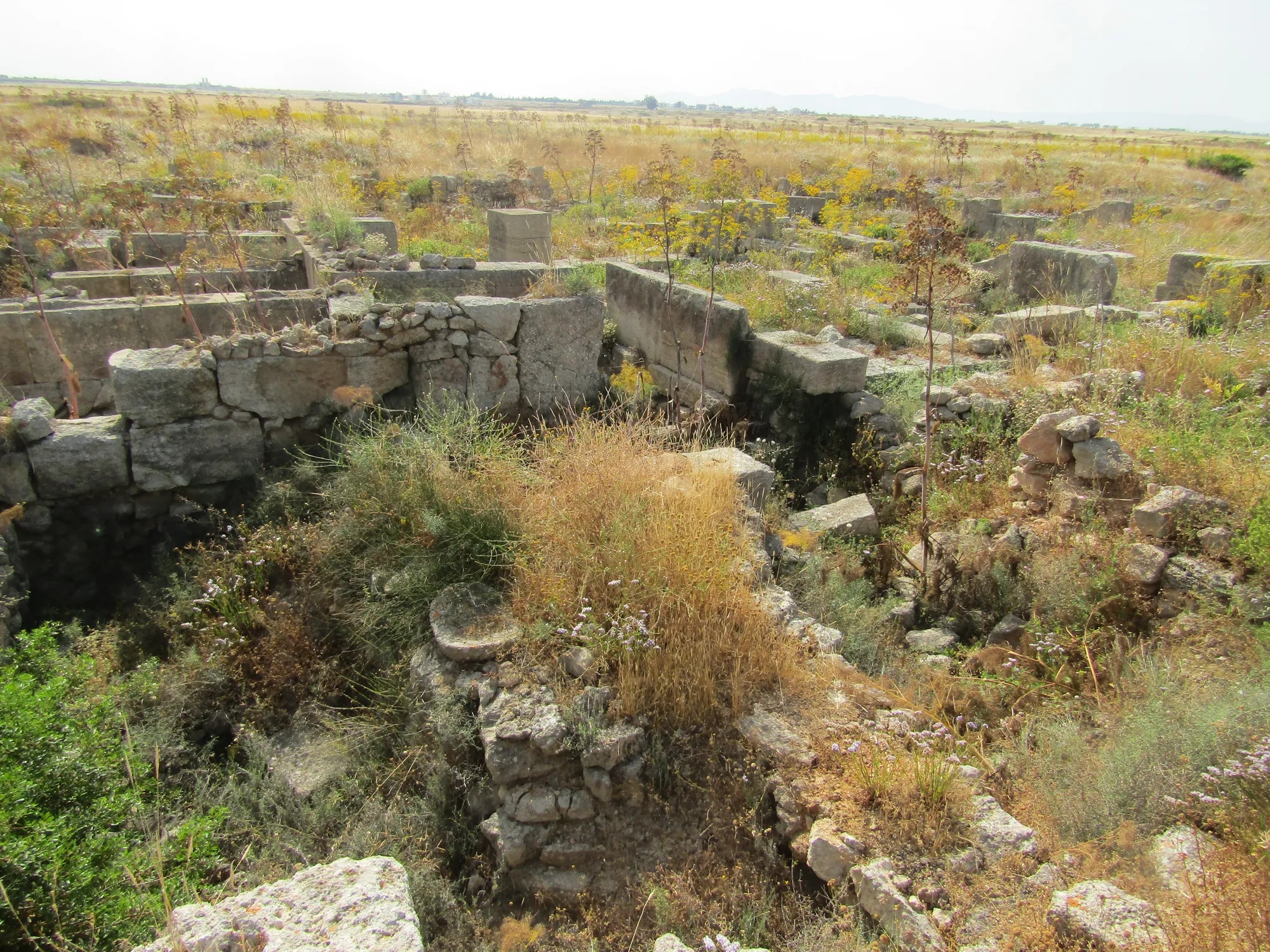
Enkomi
Enkomi is a walled Late Bronze Age town near the mouth of the Pedieos river on the bay of Famagusta, lived in from about 1650 BC until it was gradually abandoned for nearby Salamis. It was a port for Cypriot copper, and its excavations produced metal workshops, sanctuaries with bronze cult statues, rich tombs and the largest group of Cypro-Minoan inscriptions on the island.
In the compendium
Late Bronze Age Towns and Buildings
How Late Bronze Age Cyprus built its first towns: street grids, large ashlar buildings with storage halls, courtyard houses, and the short-lived settlements of the twelfth century.
In the compendium
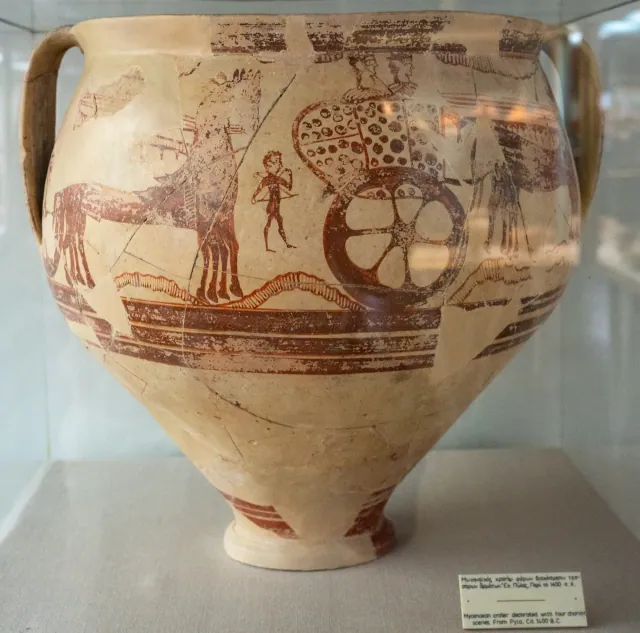
The Mycenaeans and Cyprus
The palatial Late Bronze Age societies of mainland Greece, whose pottery flooded Cypriot coastal towns in the 14th and 13th centuries BCE.

In the compendium
Ugarit and the Levant
The Syrian port kingdom of Ugarit and the wider Levantine coast, Cyprus's closest Bronze Age trading partners across the water.