
Conference paper·Archaeological Research Unit - University of Cyprus·2017·In Greek
Second Annual Study Day of the Archaeological Research Unit: Palaepaphos, the Kofinou survey and the Heraion of Samos
Δεύτερη Ετήσια Ημερίδα Ερευνητικής Μονάδας Αρχαιολογίας: «Το Αρχαιολογικό Έργο του Πανεπιστημίου Κύπρου»
Constantinos Christofides, Marina Solomidou-Ieronymidou, Maria Iacovou, Stella Diakou, Athanasios Vionis and Ourania Kouka
Chapters
About the video
This first session of the second annual study day of the Archaeological Research Unit of the University of Cyprus, given in Greek, presents fieldwork conducted in 2016. It opens with welcome addresses by ARU director Vasiliki Kassianidou, who reports on research grants, building upgrades, and Kate Clerides's donation of the archaeological collection of her father Glafcos Clerides; Rector Constantinos Christofides; and Marina Solomidou-Ieronymidou, Director of the Department of Antiquities.
Maria Iacovou presents the 2016 season of the Palaepaphos Urban Landscape Project (PULP), prepared with Jacopo Tabolli, at Laona and Hadjiabdoulla east of Kouklia. Focusing on the western complex on the Hadjiabdoulla plateau, which she identifies as part of the administrative and economic centre of the Paphian kingdom in the Cypro-Classical period, she describes the 60-metre northern acropolis wall and the terraced workshops and storerooms built against its exterior. In 2016 the team lifted the collapsed plastered roofs sealing the floors and began systematic bioarchaeological sampling with Wiener Laboratory specialists, including water flotation, starch and phytolith analysis, and anthracology. Finds include sunken pithoi, a bath installation with drainage channels, millstones, uncrushed olive pits, imported Aegean amphorae continuing to the late 2nd century BC, and a room packed with murex shells from purple-dye production, which Iacovou argues were brought there in secondary use after processing near the sea.
Stella Diakou, in a paper co-authored with Athos Agapiou, explains the digital recording system for Hadjiabdoulla, combining a FileMaker Pro database and standardised context sheets with three-scale GIS mapping. Using Room 1 as a case study, she shows how 131 amphora sherds studied by Antigone Marangou, imported from Chios, Mende, Kos, Rhodes, and Syria and dating from the 5th to the late 2nd century BC, were plotted in three dimensions, isolating a 4th-century BC working floor sealed beneath the collapsed roof.
Athanasios Vionis reports on the third season of the Settled and Sacred Landscapes of Cyprus project (SeSaLaC), co-directed with Giorgos Papantoniou and Doria Nicolaou around Kofinou, Ayios Theodoros, Alaminos, and Menoyia. Walking half of the 27-square-kilometre survey area in 150-metre transects, the team identified two main concentrations: an Early and Middle Bronze Age settlement in the Alaminos valley and a settlement around the Byzantine church of Panagia at Kofinou occupied from the Cypro-Archaic period to the end of the Ottoman period, surrounded by satellite farmsteads. Applying German settlement-chamber theory (Siedlungskammer) to Late Antique Kofinou, Vionis estimates a 13-hectare settlement of 300 families within a 40-minute walk of 1,500 hectares of arable land.
Ourania Kouka closes with the University of Cyprus excavations at the Heraion of Samos (2009 to 2016). After outlining the Chalcolithic and Early Bronze Age fortified proto-urban phases by the Imbrasos river, she presents a Middle Bronze Age settlement of six architectural phases (to c. 1750 BC) with flood-protection walls, local pottery, Cycladic and Middle Helladic imports, and Minoan Crete Kamares ware, conical cups, and loom weights, arguing that the Heraion served as an Old Palace period trading station.
From our collection
Pieces in the Drakopoulos collection of the kinds and periods this talk covers: Amphora.
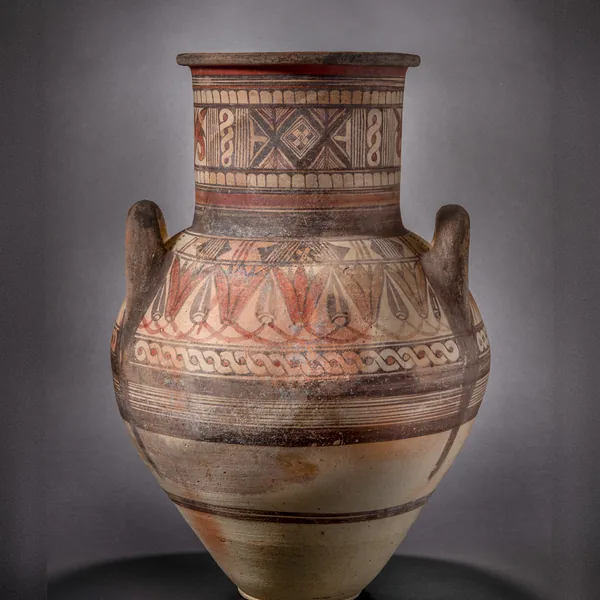
Bichrome IV Amphora with a Lotus-and-Bud Shoulder Frieze
Amphora
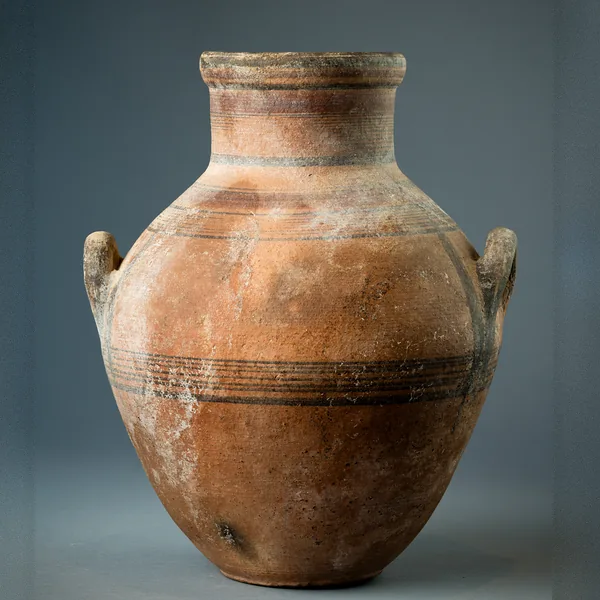
Bichrome IV Amphora with Shoulder Handles and Banded Decoration
Amphora
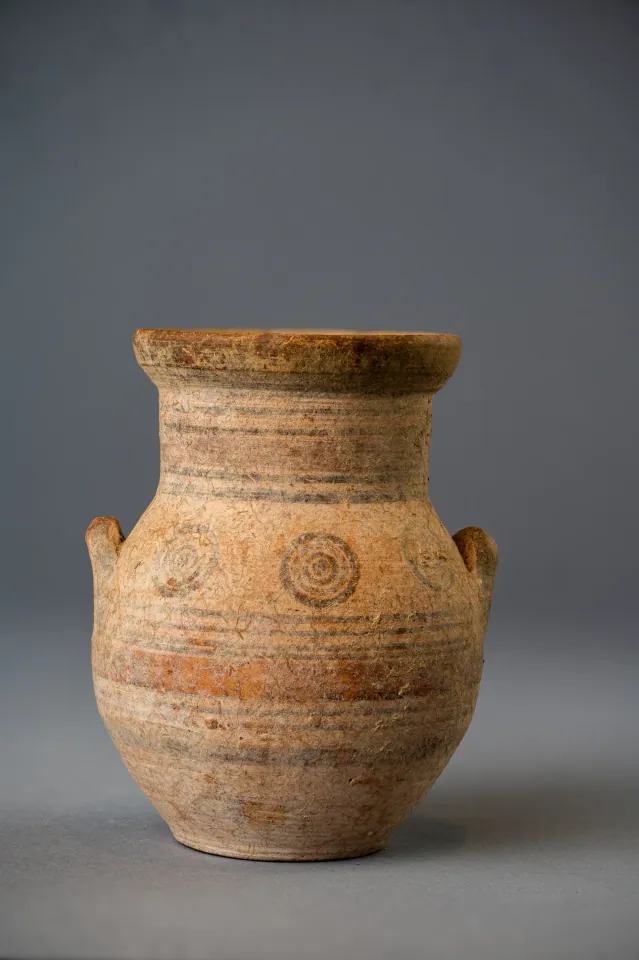
Bichrome IV Amphoriskos with Concentric Circles
Amphora
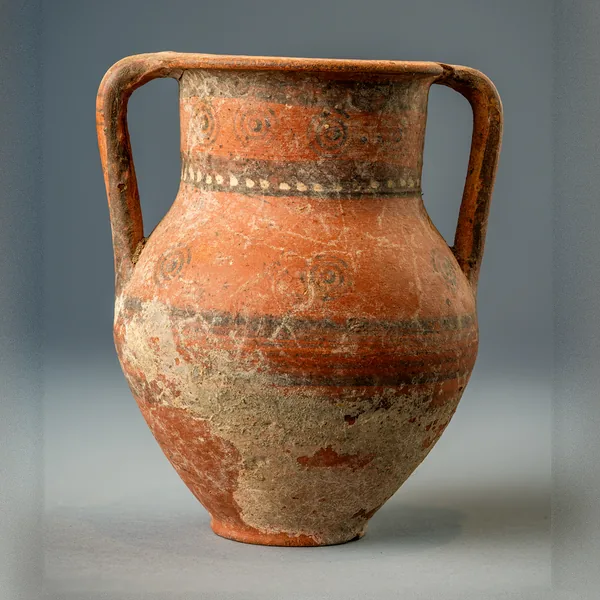
Bichrome Red Amphora with Concentric Circles and a Row of White Dots
Amphora
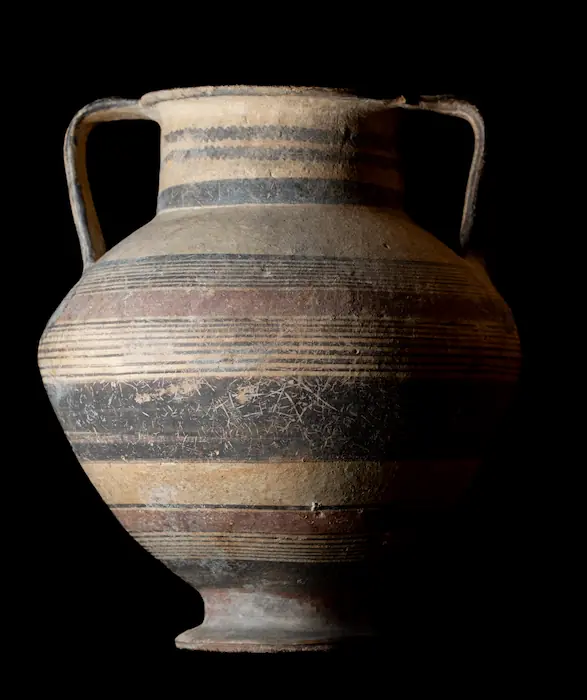
Bichrome Amphora on a Pedestal Foot with Wavy Lines on the Neck
Amphora
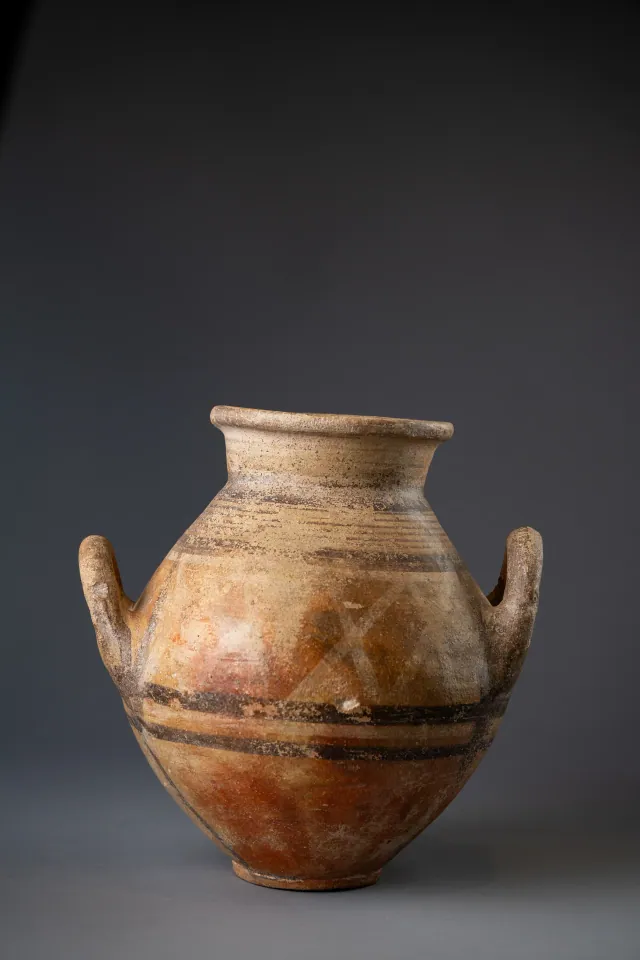
Red-Slipped Amphora with Pale Crosses on the Shoulder, probably Bichrome Red Ware
Amphora
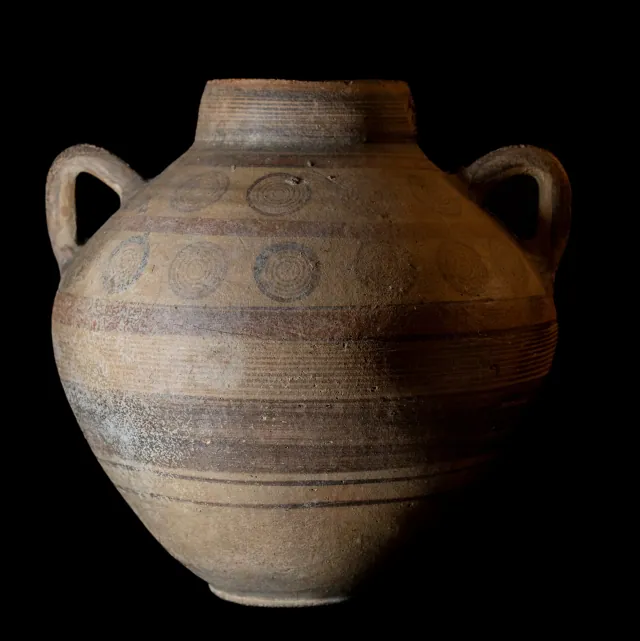
Globular Bichrome Amphora with Two Registers of Concentric Circles
Amphora
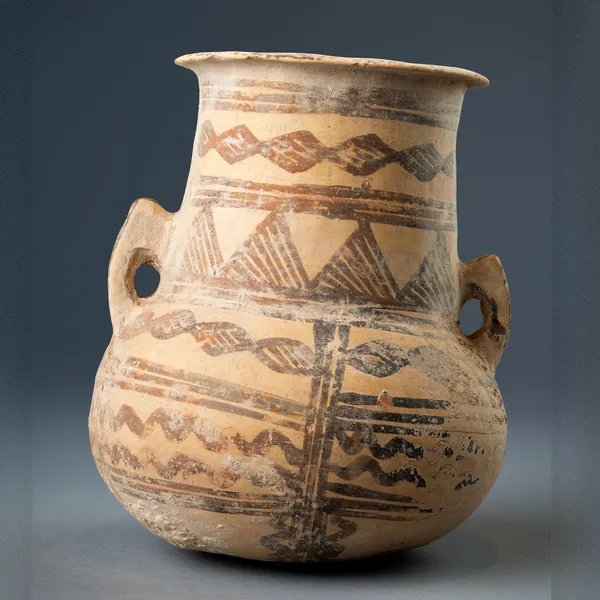
White Painted III-IV Amphora with Lozenge Chains and Hatched Triangles
Amphora
Found at the places discussed
Objects in our catalogue, in museum collections, recorded as found at these sites.


Background
Where to read more on this site before or after watching.
The site
Palaepaphos (Kouklia)
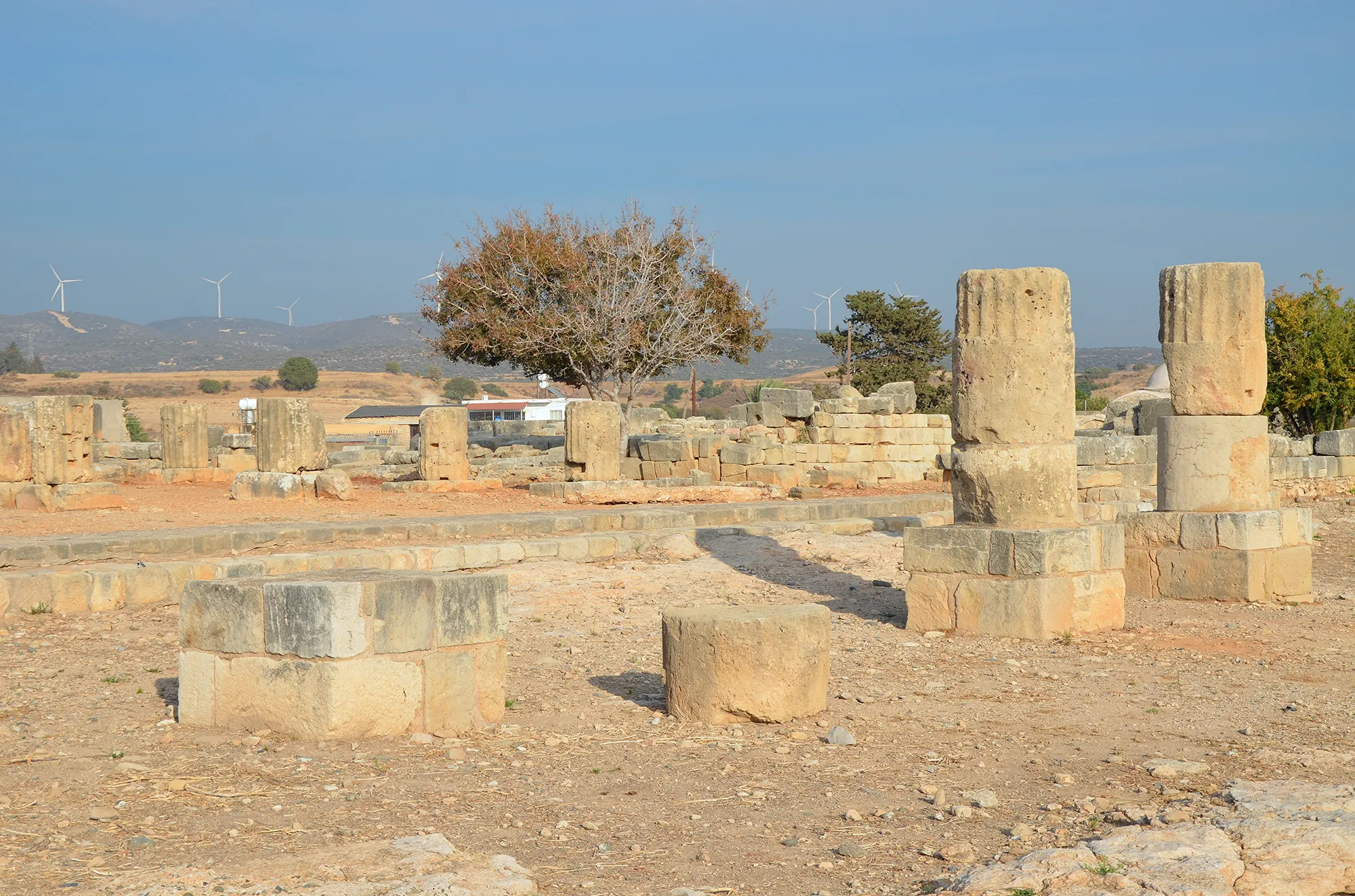
Palaepaphos, Old Paphos, lies under and around the village of Kouklia in western Cyprus. Founded in the Middle Bronze Age, it was the only large town of the south-west until the early Hellenistic period, the seat of the kings of Paphos and the site of the sanctuary of the Paphian goddess, Aphrodite, worshipped here from about 1200 BC to the end of the 4th century AD.
In the compendium
Iron Age Cities and Palaces
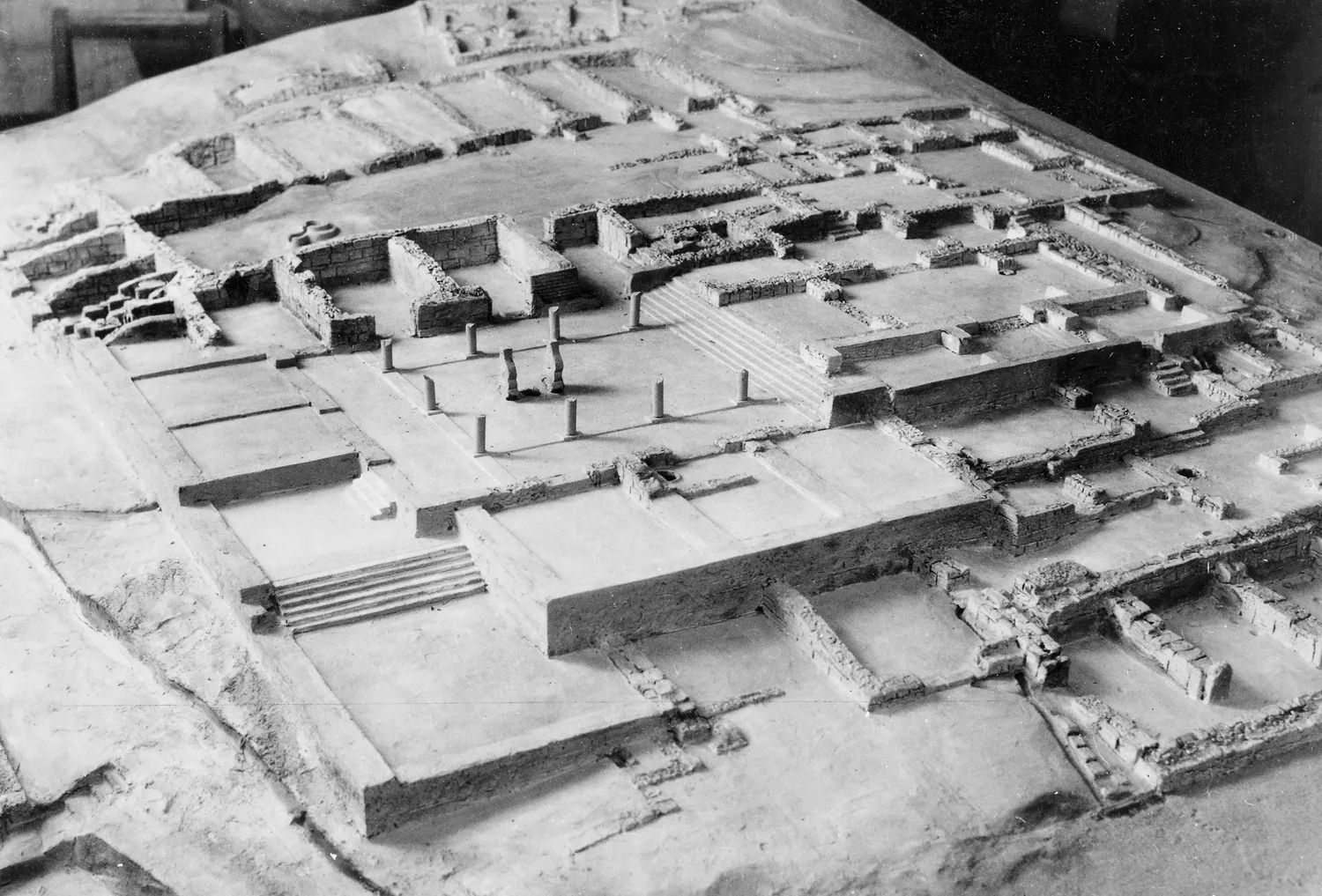
The capitals of the Iron Age kingdoms of Cyprus, their palaces at Vouni, Amathus, Idalion and Palaepaphos, their houses, and the volute and Hathor capitals of the period.
In the compendium
The Minoans
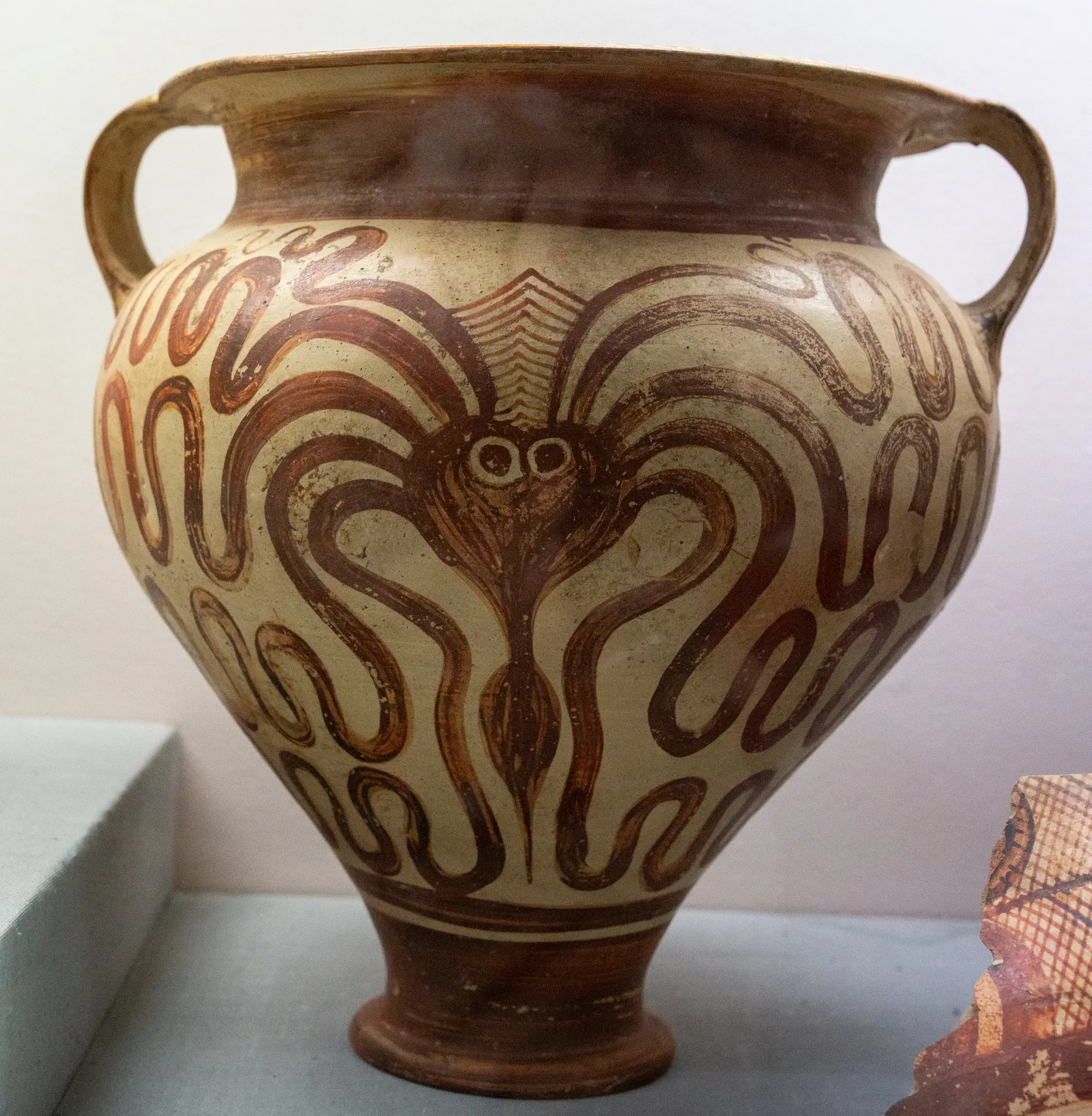
The palatial Bronze Age civilization of Crete, which took Cypriot copper and passed writing to Cyprus in the early Late Bronze Age.
In the compendium
Food Storage in Ancient Cyprus: Pits, Pithoi and Storerooms
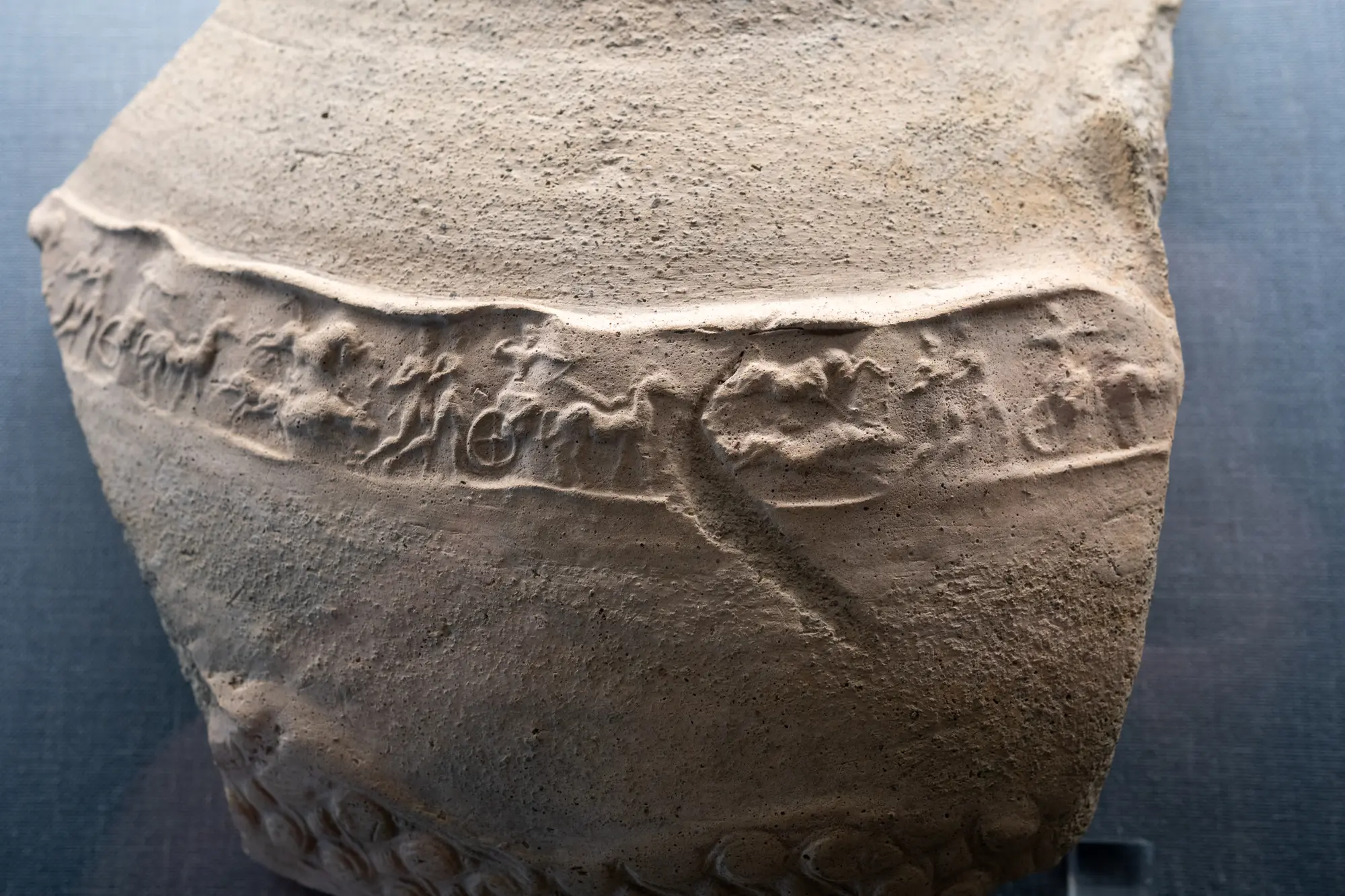
How Cypriots stored grain, oil and wine, from Chalcolithic pits and household jars to the great pithos halls of the Late Bronze Age towns.
Map of Cyprus
Places discussed in the talk
- Has a page on this site
- Other places
- Ground above 200, 500, 1,000 m
Places
- 1Palaepaphos
- 2Nea Paphos
- 3Kofinou (approx.)
- 4Alaminos (approx.)