
Conference paper·Archaeological Research Unit - University of Cyprus·2022
1st Graduate Forum for Mediterranean Archaeology: Session 1 on Aegean Contacts, Seals, and Late Bronze Age Cyprus
Aikaterini Bertou, Tatiana Stamatia Andriopoulou, Enrico De Benedictis and Chara Theotokatou
Chapters
About the video
This recording covers the first session of the 1st Graduate Forum for Mediterranean Archaeology, hosted by the Archaeological Research Unit at the University of Cyprus. Four doctoral candidates present papers on the Bronze Age Aegean and the Late Bronze Age in Cyprus.
Aikaterini Bertou (University of Heidelberg) examines relations between the Cyclades and Crete during the Early Bronze Age. Reviewing cemeteries such as Poros-Katsambas, Gournes, and Ayia Photia on the northern and eastern coasts, she notes that petrographic analysis of Cycladic-style pottery shows local Cretan manufacture using grog temper rather than wholesale importation or colonization. In Early Minoan IIA, contacts extended to southern Crete, including Phourni in Archanes and the Mesara tholos tombs, where Cycladic forms such as Koumasa-variety figurines were selectively adapted in local materials like ivory, steatite, and bone, probably moving along a north-south route through sites such as Archanes.
Tatiana Stamatia Andriopoulou (University of Heidelberg) discusses representations of the human body on approximately 1,200 Bronze Age Aegean seals and sealings. She contrasts Prepalatial and Protopalatial soft-stone seals, such as those from the Malia workshop where hand-engraved figures appear abstract and without binary gender markers in everyday activities, with Neopalatial and Late Helladic hard-stone seals and gold signet rings carved with rotary tools. These later examples render anatomical details, elaborate dress, bull-leaping, combat, and ritual scenes. Drawing on Judith Butler's theory of performativity and experimental work on lighting, she argues that viewing seals and their clay impressions actively constructed and destabilized gender and social identities.
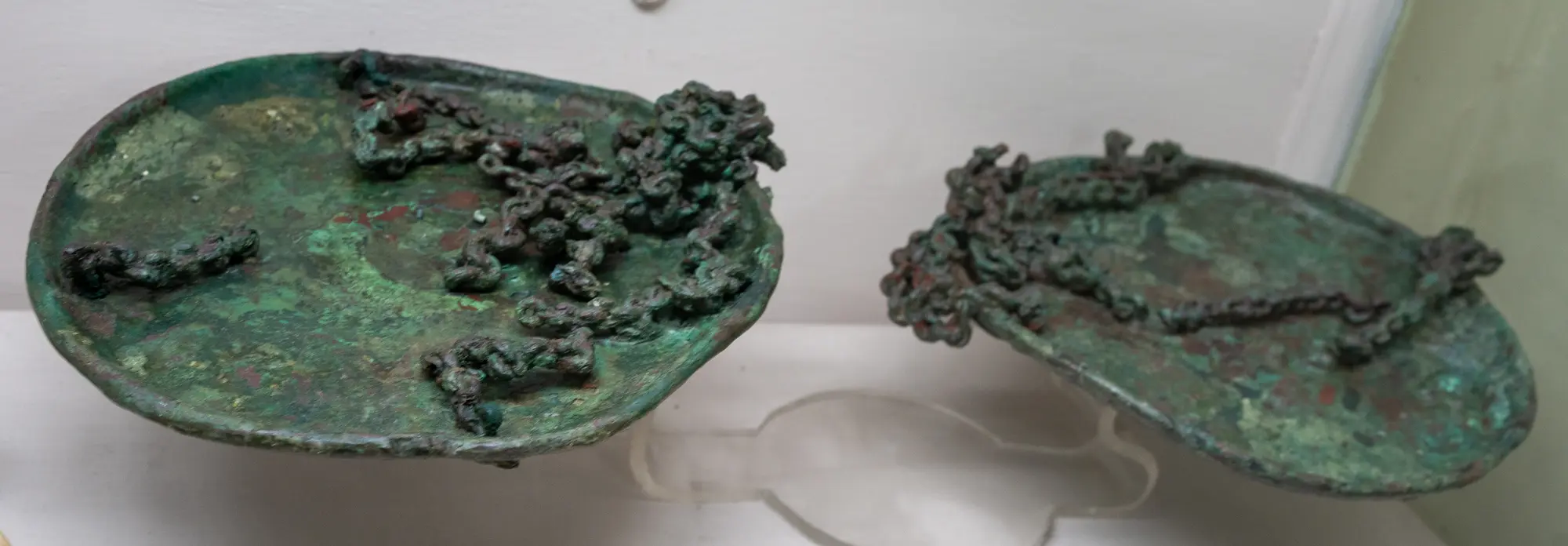
Enrico De Benedictis (University of Cyprus) presents preliminary findings on balance weights and scale pans from two Late Cypriot I sites on Morphou Bay: Toumba tou Skourou and Ayia Irini. At Toumba tou Skourou Tomb 1, he uses 3D modelling to reconstruct a lead-calibrated weight that had lost its lead filling, identifying it as two Syrian shekels. At Ayia Irini Tomb 21, two sets of weights following Mesopotamian and Syrian standards were found alongside scale pans, a lock, and hinges, which he interprets by comparison with Qatna and Megiddo as a wooden box for weighing and metallurgical tools.
Chara Theotokatou (University of Athens) analyses household organization at three Late Cypriot settlements: Episkopi-Phaneromeni, Toumba tou Skourou, and Alassa (Pano Mandilaris and Paliotaverna). Mapping the distribution of pithoi, querns, mortars, cooking pots, and hearths, she argues that storage at Phaneromeni and Pano Mandilaris was concentrated in certain rooms while cooking was conducted cooperatively, indicating economic interdependence among additive households, whereas the freestanding ashlar buildings at Alassa-Paliotaverna held up to 31,544 litres of staple storage.
In the closing discussion, questions from Stella Demesticha, Giulia Muti, Bernard Knapp, and Luca Bombardieri address Cretan sea routes, the fixed nature of seal impressions, additional weight sets from Ayia Irini Tombs 3 and 11, and the reinterpretation of a supposed stylus from Ayia Irini Tomb 21 alongside examples from Enkomi and Phlamoudhi-Melissa as an engraving or carving tool.
From our collection
Pieces in the Drakopoulos collection of the kinds and periods this talk covers: Jar, Early Cypriot (Early Bronze Age).
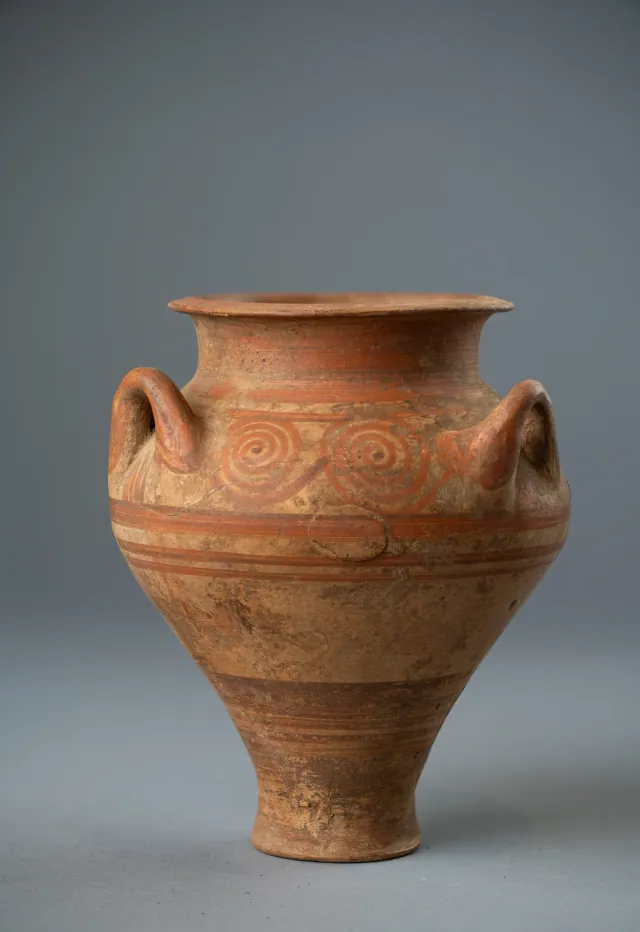
Cypriot Three-Handled Jar in the Mycenaean Style with Running Spirals
Jar
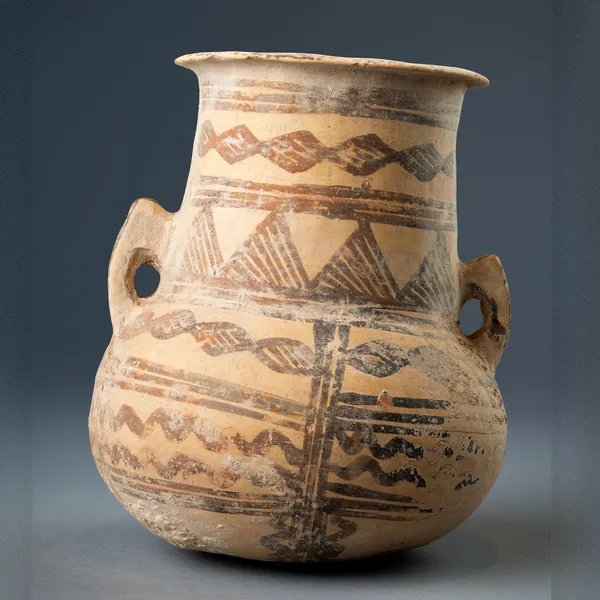
White Painted III-IV Amphora with Lozenge Chains and Hatched Triangles
Jar
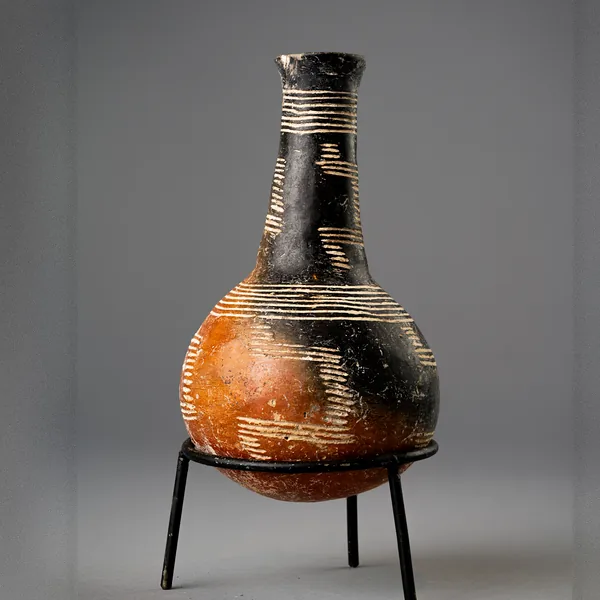
Red Polished Black-Topped Bottle with Stepped Incised Bands
Early Cypriot (Early Bronze Age)
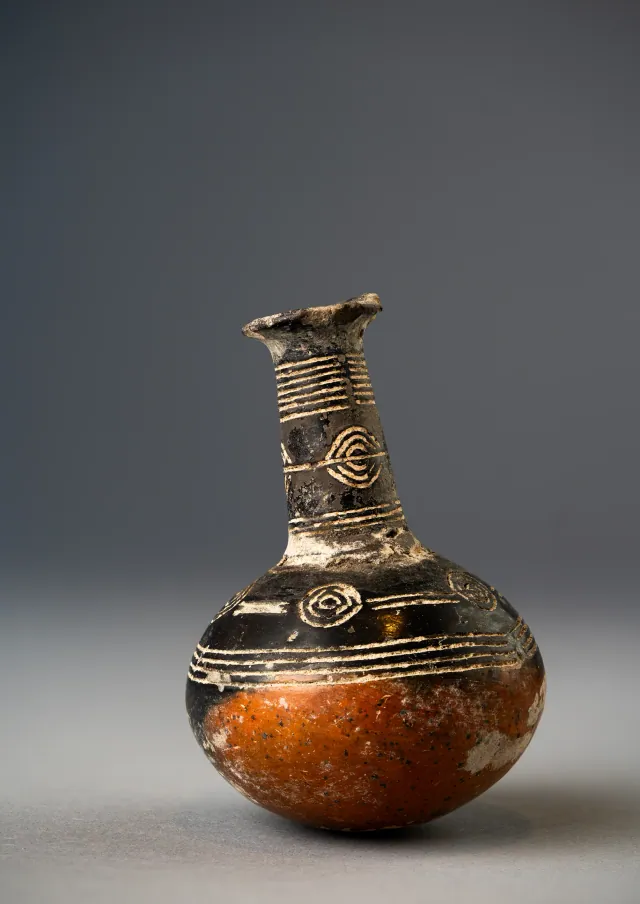
Red Polished Black-Topped Bottle with Incised Concentric Circles
Early Cypriot (Early Bronze Age)
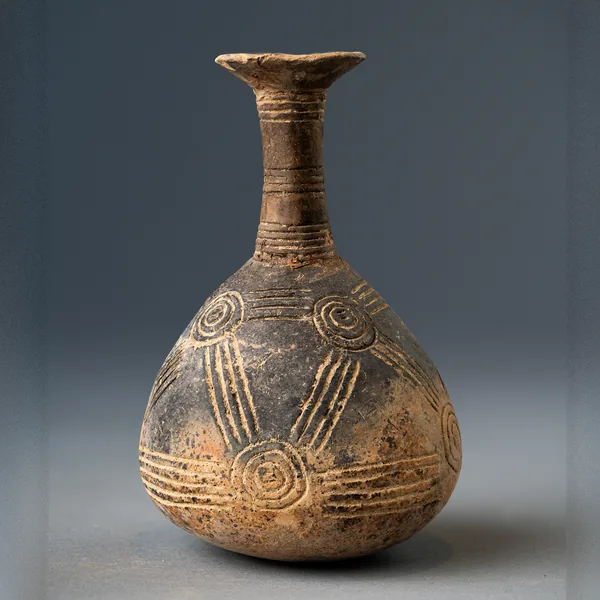
Red Polished Bottle with Linked Concentric Circles
Early Cypriot (Early Bronze Age)
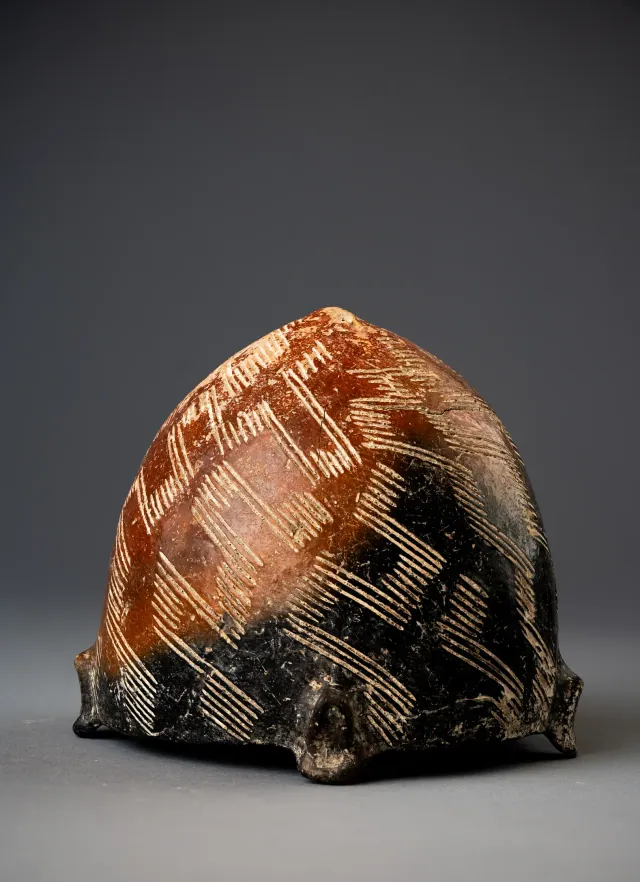
Black-topped Red Polished Tulip Bowl with Incised Hatched Lattice
Early Cypriot (Early Bronze Age)
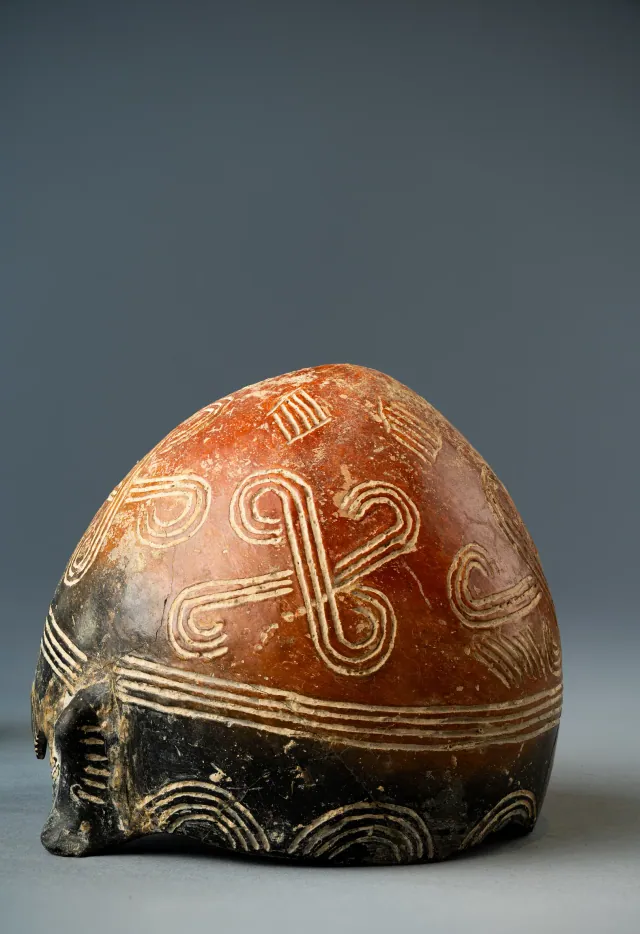
Black-topped Red Polished Tulip Bowl with Incised Spiral-armed Cross, Circles and Arcades
Early Cypriot (Early Bronze Age)
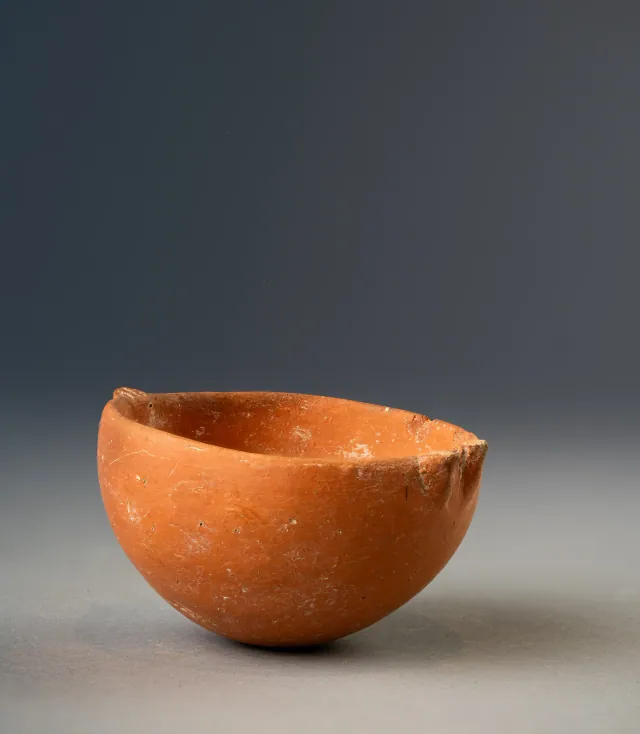
Red Polished Hemispherical Bowl with Two Rim Lugs
Early Cypriot (Early Bronze Age)
Found at the places discussed
Objects in our catalogue, in museum collections, recorded as found at these sites.


Background
Where to read more on this site before or after watching.
The site
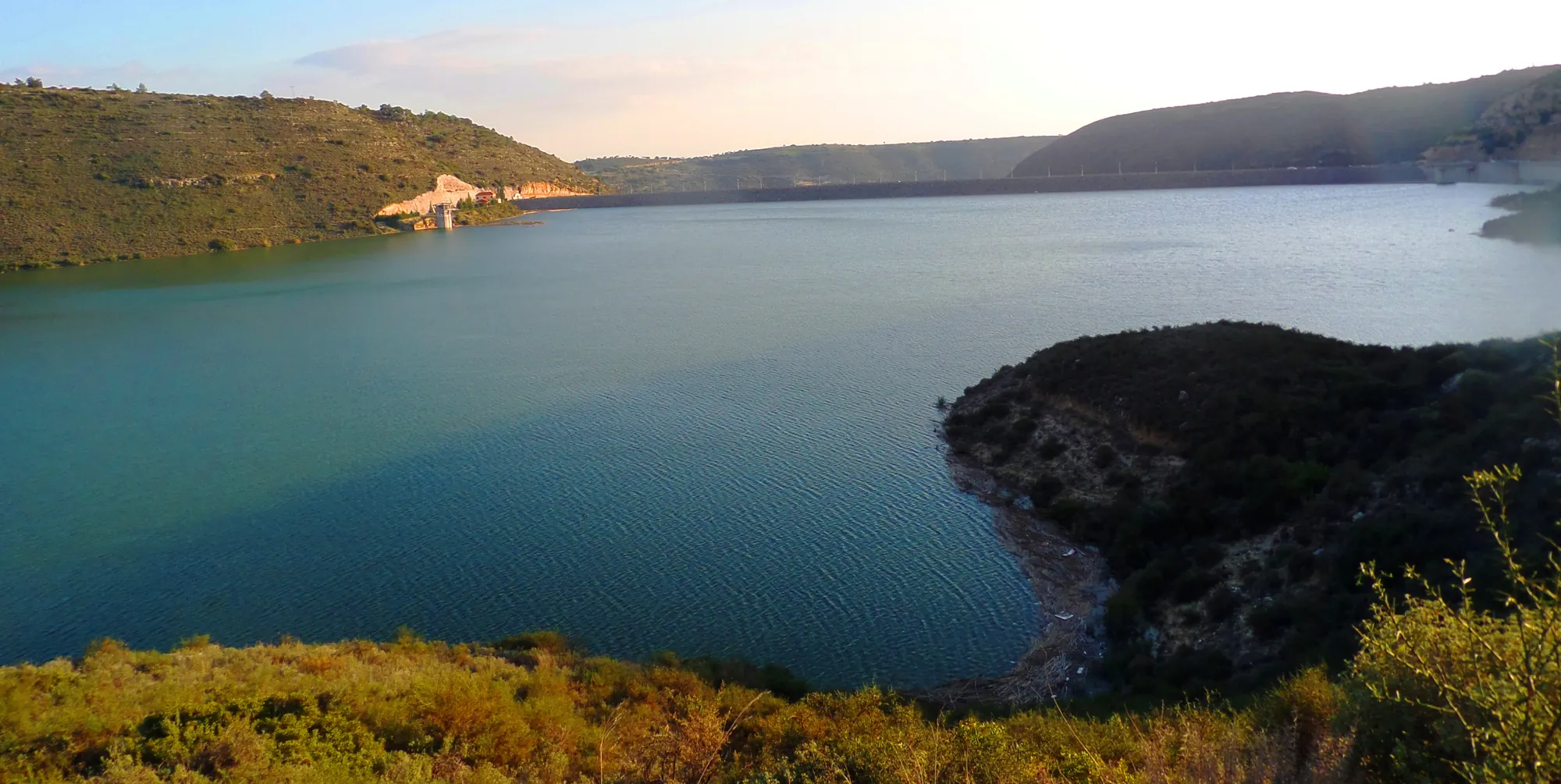
Alassa
A Late Bronze Age town in the Kouris valley, found in 1983 during survey ahead of the Kouris dam and excavated by Sophocles Hadjisavvas for the Department of Antiquities from 1984 to 2000. Its upper quarter at Paliotaverna has the largest ashlar building of the period on Cyprus; houses and tombs lie downslope at Pano Mandilaris.
In the compendium
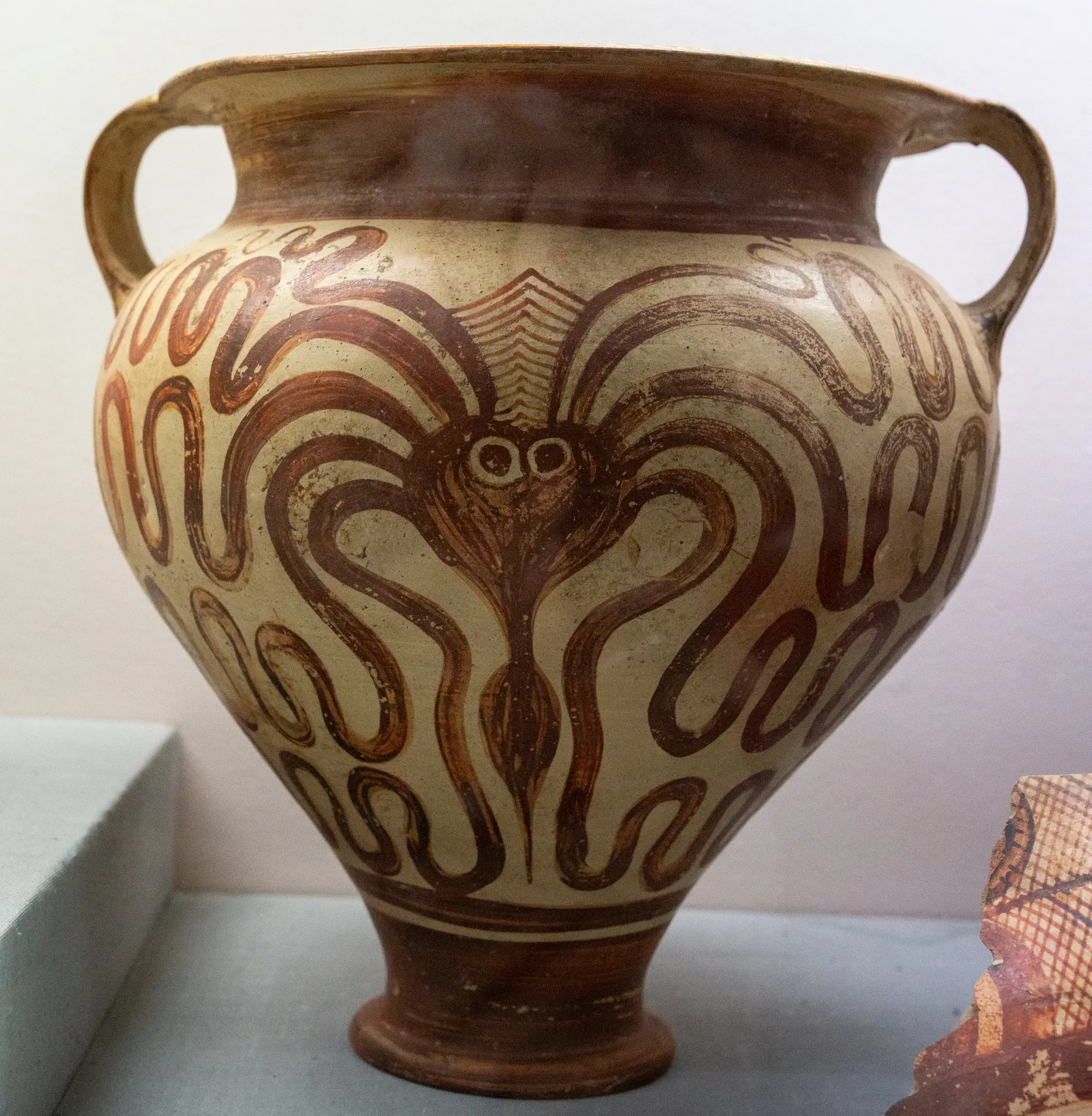
The Minoans
The palatial Bronze Age civilization of Crete, which took Cypriot copper and passed writing to Cyprus in the early Late Bronze Age.

In the compendium
Seals
Engraved stone stamps and cylinders used in Cyprus from the Late Chalcolithic to the Classical period, often worn or set in gold.
In the compendium
Weights and Ingots
Copper ingots, miniature votive ingots, balance weights and scale pans in Cyprus, from the Late Bronze Age into the Cypro-Geometric and Cypro-Archaic periods.
Map of Cyprus
Places discussed in the talk
- Has a page on this site
- Other places
- Ground above 200, 500, 1,000 m