
Conference paper·Archaeological Research Unit - University of Cyprus·2018·In Greek
Palaepaphos 2017 and the MEANING Research Project
Παλαίπαφος 2017 και ερευνητικό πρόγραμμα MEANING
Chapters
About the video
In this talk, given in Greek, Maria Iacovou of the University of Cyprus presents the 2017 field season of the Palaepaphos research project and the first year of its A. G. Leventis-funded programme, "From the Metalliferous Sources to the Citadel Complex of Ancient Paphos". Launched in 2006 using digital humanities methods developed with Apostolos Sarris and Athos Agapiou, the project expanded in 2017 into a full archaeoenvironmental investigation across both the urban centre of ancient Paphos and its hinterland, in collaboration with the Wiener Laboratory of the American School of Classical Studies at Athens.
In the southern foothills of the Paphos Forest, where eleven slag heaps were mapped in 2014 and 2015, Vasiliki Kassianidou collected samples to establish the chemical signature of Paphian copper for comparison with slag from the acropolis monuments. Iacovou also describes the conversion of a traditional house, granted by the Department of Antiquities, into a field laboratory and public centre managed by Anna Georgiadou, where Anaya Sarpaki supervised archaeobotanical sorting.
At the mound of Laona, work focused on the eroded southeastern quadrant. The tumulus, dated by pottery to the 3rd century BC and built from nearly 10,000 cubic metres of marl and red soil, sealed an earlier Cypro-Classical fortification with opposing staircases erected in the very early 5th century BC and preserved to a height of six metres. Macroscopic, geochemical and XRF studies of its moulded mudbricks by Andreas Charalambous and Marta Lorenzon identified four building phases and two mudbrick recipes. Micromorphological sampling of the tumulus fill was led by Dr Karkanas and Myrsini Gouma, while excavations under Jacopo Tabolli reached bedrock and exposed a long rock-cut trench filled with pure wet marl.
Seventy metres to the south, on the Hadjiabdoulla plateau, excavation of the western workshop complex uncovered an eastern entrance, indicating central control from the side of the eastern complex or palace. Antigone Marangou dated transport amphorae from Units 1 and 3, showing 4th-century BC trade links with North Africa, the Lebanese coast, southern Syria and the Aegean. Dimitra Mylona examined crushed purple-dye shells covering the floor of Unit 2, concluding they had been brought there for secondary processing after dye extraction elsewhere. Units 3 and 4 preserved all stages of olive oil production, including olive pits, four millstones, two press weights, a hearth, a pithos and a shallow plaster basin with a stone spout. Finally, phytolith and starch analyses by Calla McNamee and Georgia Tsartsidou independently identified date palm groves in the ancient vegetation of Paphos.
From our collection
Pieces in the Drakopoulos collection of the kinds and periods this talk covers: Cypro-Classical, Hellenistic.
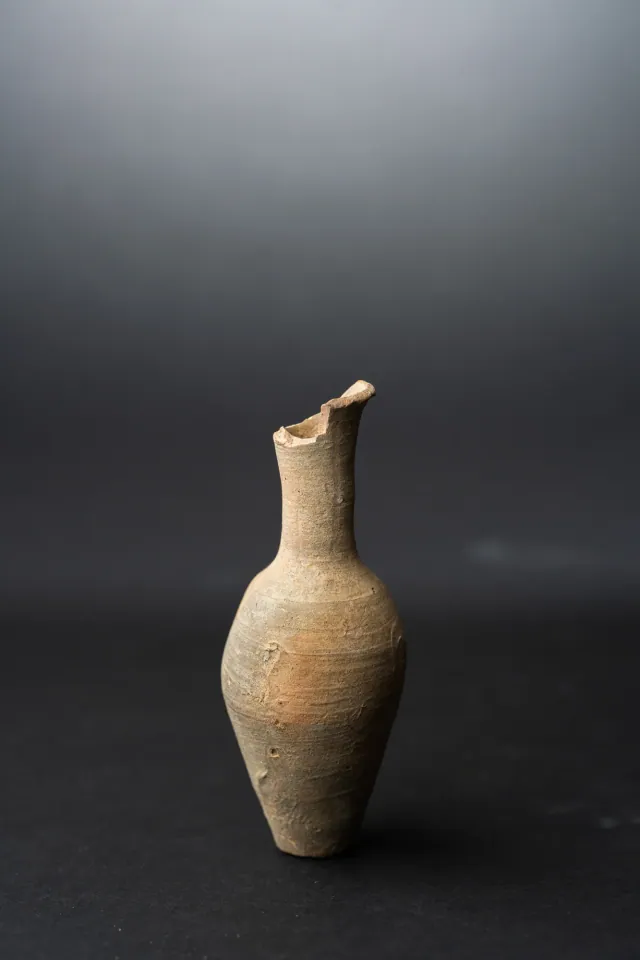
Fusiform Unguentarium
Hellenistic
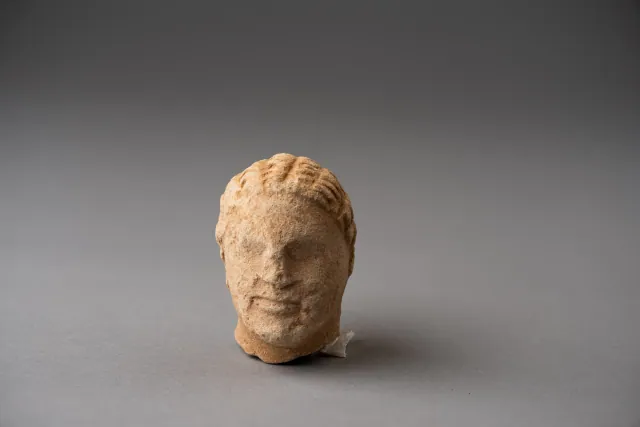
Limestone Head of a Boy, probably from a Temple Boy Statuette
Cypro-Classical
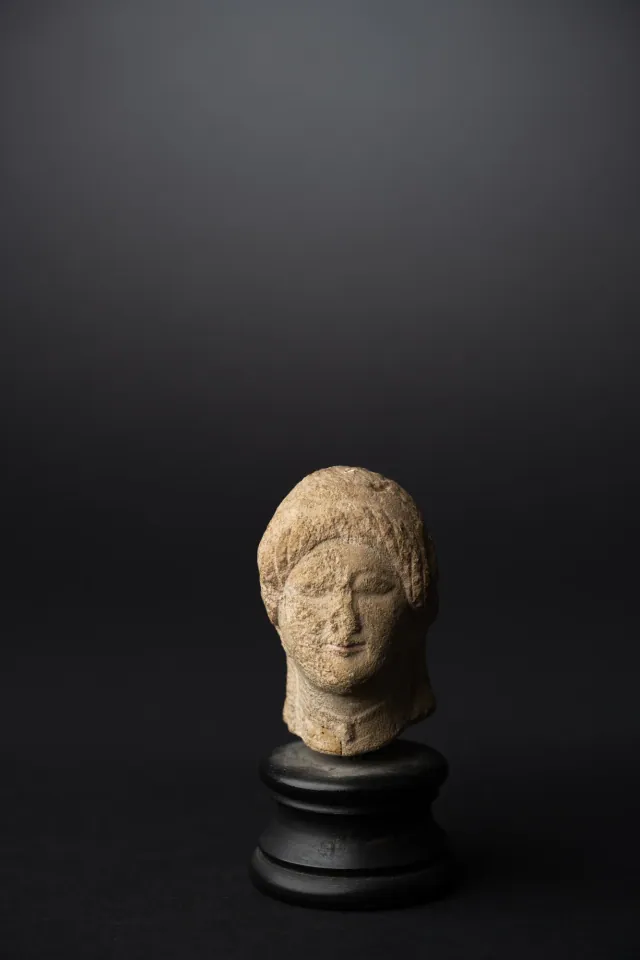
Limestone Head of a Votary with a Wreath
Cypro-Classical
Found at the places discussed
Objects in our catalogue, in museum collections, recorded as found at these sites.

Background
Where to read more on this site before or after watching.
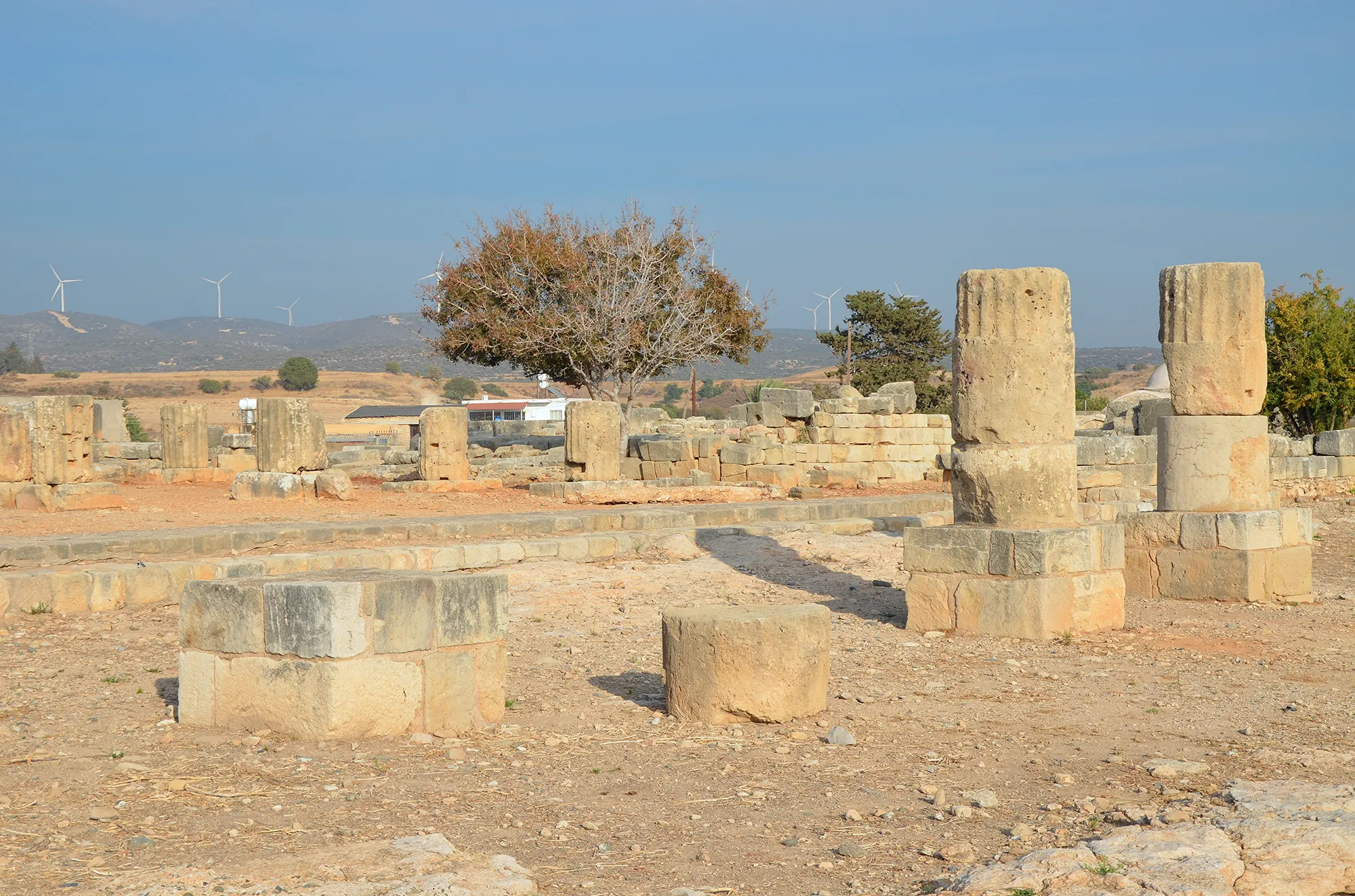
The site
Palaepaphos (Kouklia)
Palaepaphos, Old Paphos, lies under and around the village of Kouklia in western Cyprus. Founded in the Middle Bronze Age, it was the only large town of the south-west until the early Hellenistic period, the seat of the kings of Paphos and the site of the sanctuary of the Paphian goddess, Aphrodite, worshipped here from about 1200 BC to the end of the 4th century AD.
In the compendium
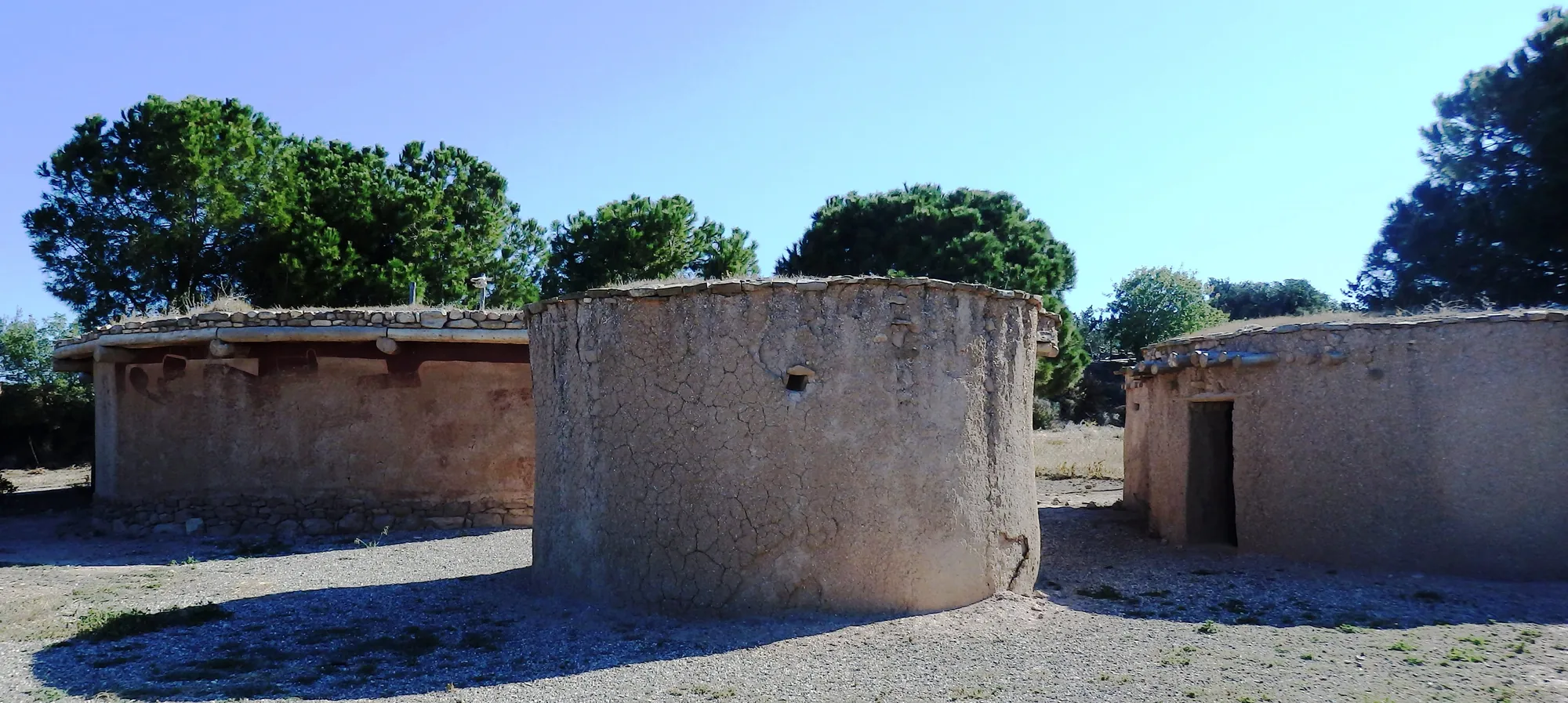
Building Materials and Techniques
Cypriot houses were built of local stone, earth and timber: walls of rubble or mudbrick on stone socles, under flat roofs of beams, brush and packed earth.
In the compendium
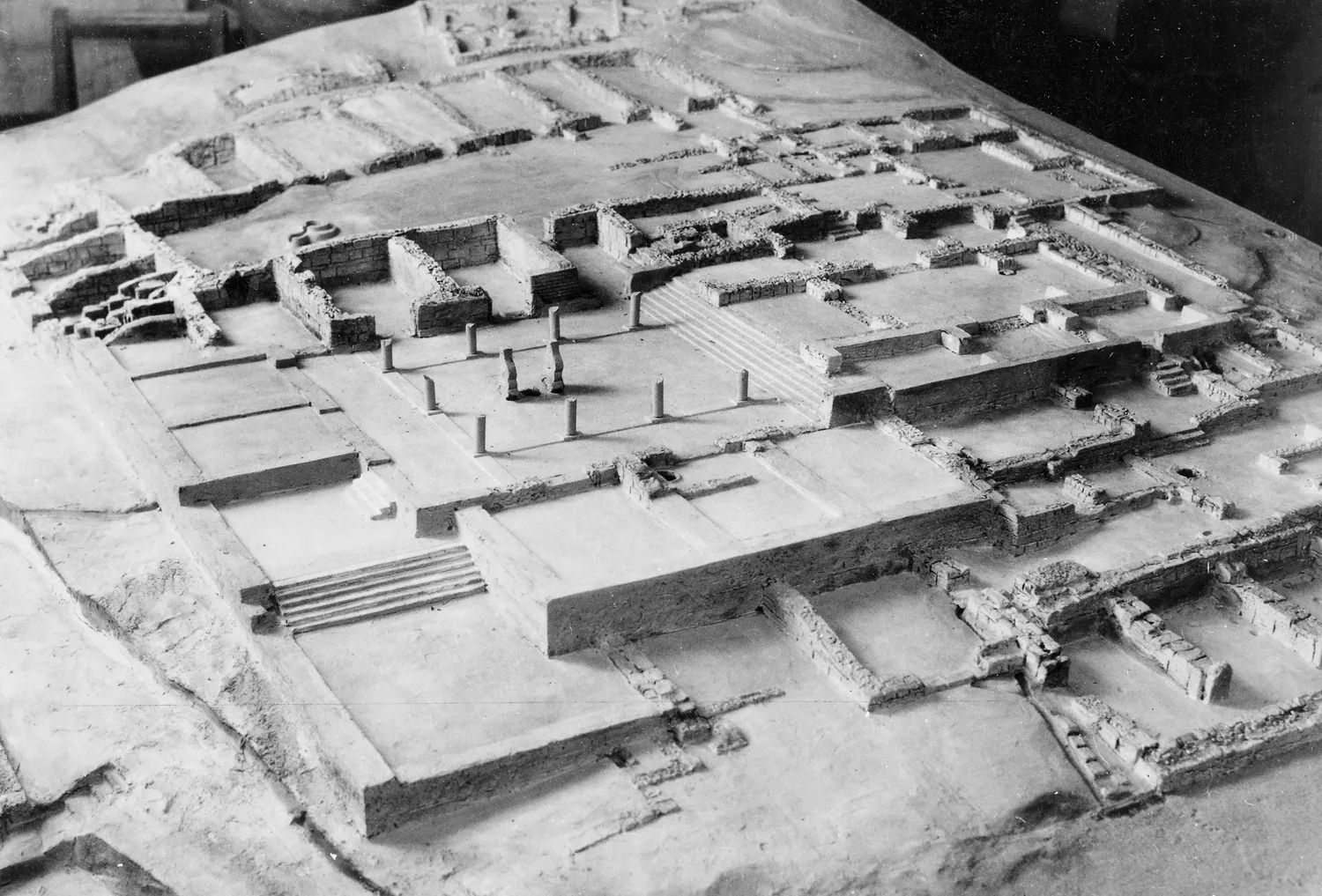
Iron Age Cities and Palaces
The capitals of the Iron Age kingdoms of Cyprus, their palaces at Vouni, Amathus, Idalion and Palaepaphos, their houses, and the volute and Hathor capitals of the period.
In the compendium
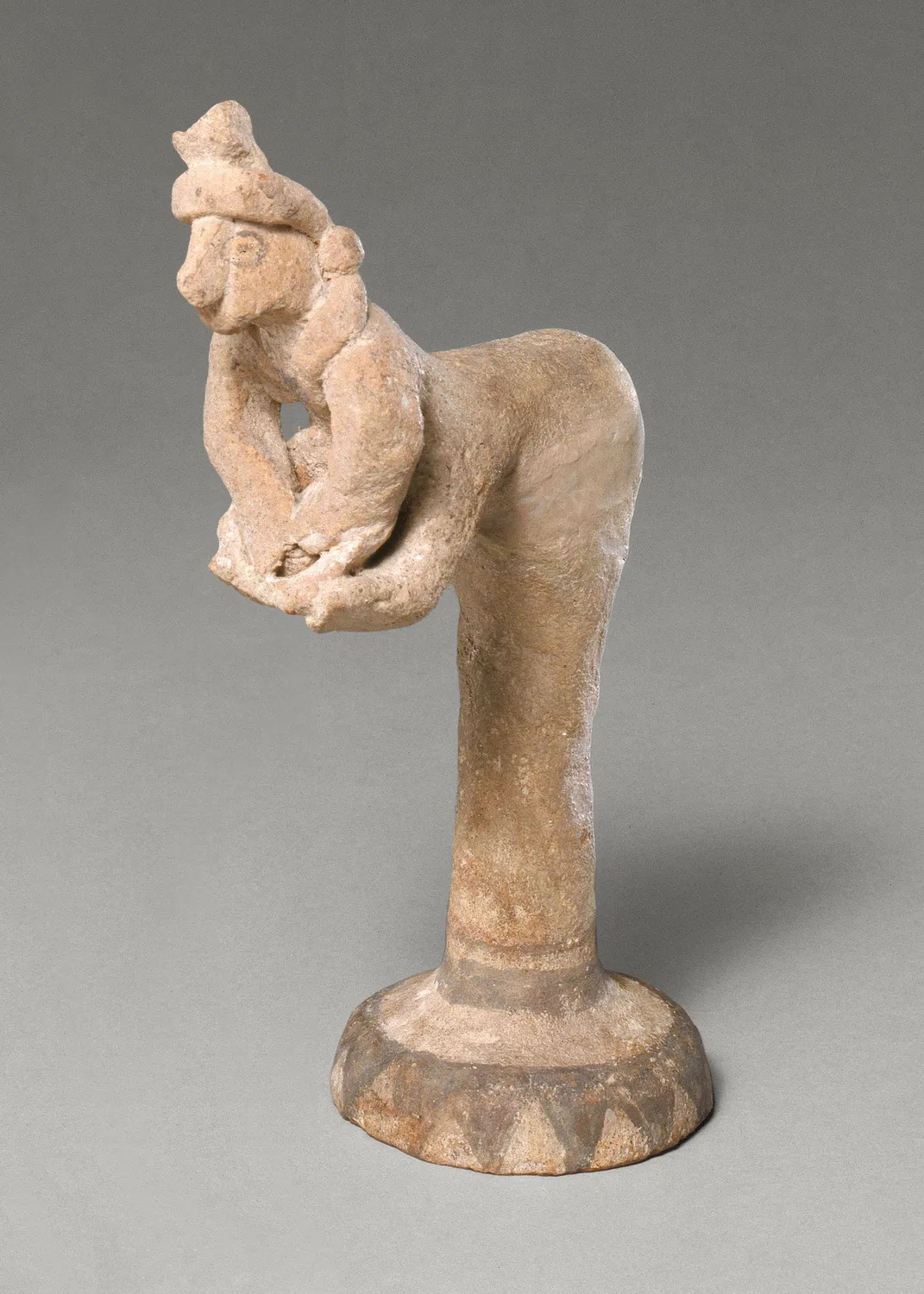
Food and Diet in Ancient Cyprus
What Cypriots grew, herded, hunted, cooked and drank from the first Neolithic villages to the end of the Cypro-Archaic period.