
Video essay·Dig.·2025
How many Alashiyas were there?
Chapters
About the video
This video essay from the channel Dig. examines the political organization of the Late Bronze Age kingdom of Alashiya on Cyprus, weighing Near Eastern texts against the archaeology of Late Cypriot towns. It opens with the debate framed by Priscilla Schuster Keswani between hierarchical models of a unified island state and heterarchical models of autonomous regional polities.
To show why archaeologists favour a segmented view, the narrator surveys Late Cypriot centres. Enkomi, often proposed as the capital of Alashiya, resembles Ugarit and Alalakh with its orthogonal plan, cultic centres, and fortification wall. Other sites differ: Kalavasos-Ayios Dhimitrios has a palace at the edge of a modest settlement, Maroni has a monumental ashlar building and port facilities without a town, and in the Kouris valley a palatial complex at Alassa-Paliotaverna lies upstream from Episkopi-Bamboula. Petrographic analysis of Alashiya tablets sent to Egypt sources the clay to the southern Troodos foothills near Alassa and Kalavasos rather than Enkomi.
The second half reviews evidence for political division. In the 14th-century Amarna letters, the king of Alashiya denies that his subjects raided Egypt and complains that men of Lukki seized towns on the island. Late 13th-century Ugaritic and Hittite records also indicate ships and leaders operating outside a single king's control, including a treaty addressing both a king and a pidduri official. For the transition from the Middle Bronze Age, the narrator notes mass graves at Pendayia-Mandres, Myrtou-Stephania, and Ayios Iakovos-Melia, inland fortresses, and an east-west ceramic divide. Citing Susan Sherratt, the video concludes that regional elite families controlled copper metallurgy and trade independently while presenting a single Great King of Alashiya for Near Eastern diplomacy.
From our collection
Pieces in the Drakopoulos collection of the kinds and periods this talk covers: Middle Cypriot (Middle Bronze Age), Late Cypriot (Late Bronze Age).
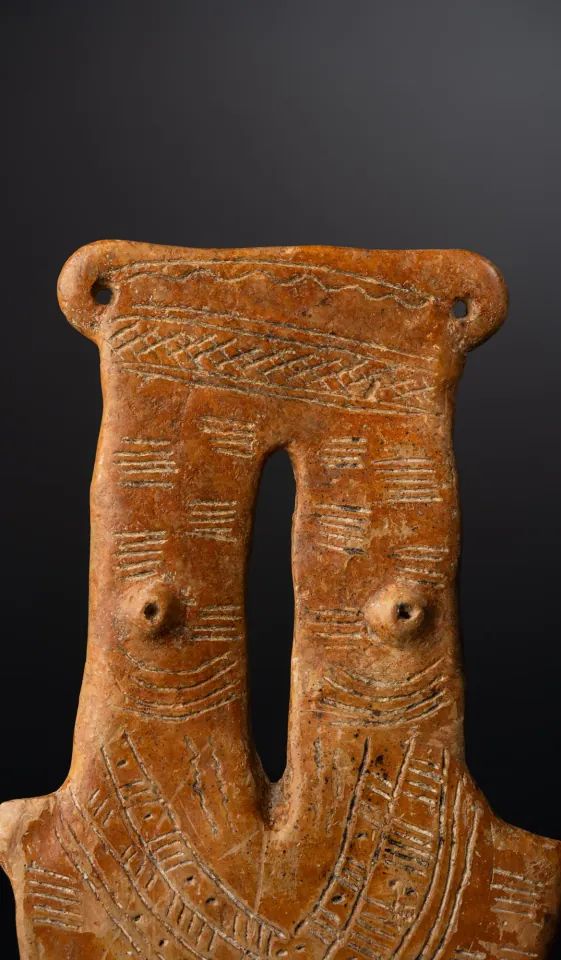
Red Polished Two-Necked Plank Figure
Middle Cypriot (Middle Bronze Age)
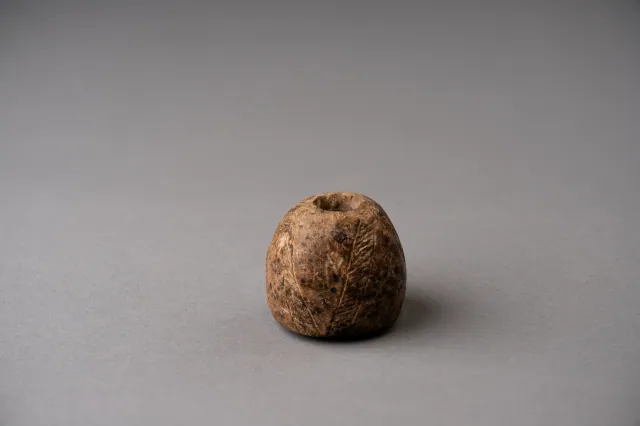
Spindle Whorl with Incised Herringbone Bands
Middle Cypriot (Middle Bronze Age)
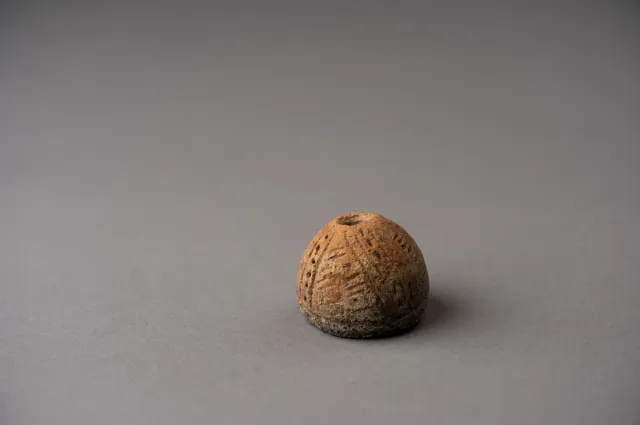
Red Polished Spindle Whorl with Incised Lattice and Dotted Bands
Middle Cypriot (Middle Bronze Age)
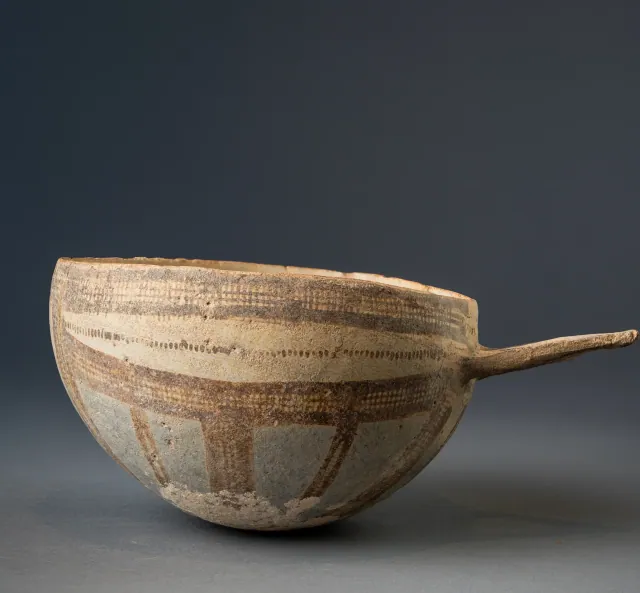
White Slip II Hemispherical Bowl with Wishbone Handle
Late Cypriot (Late Bronze Age)
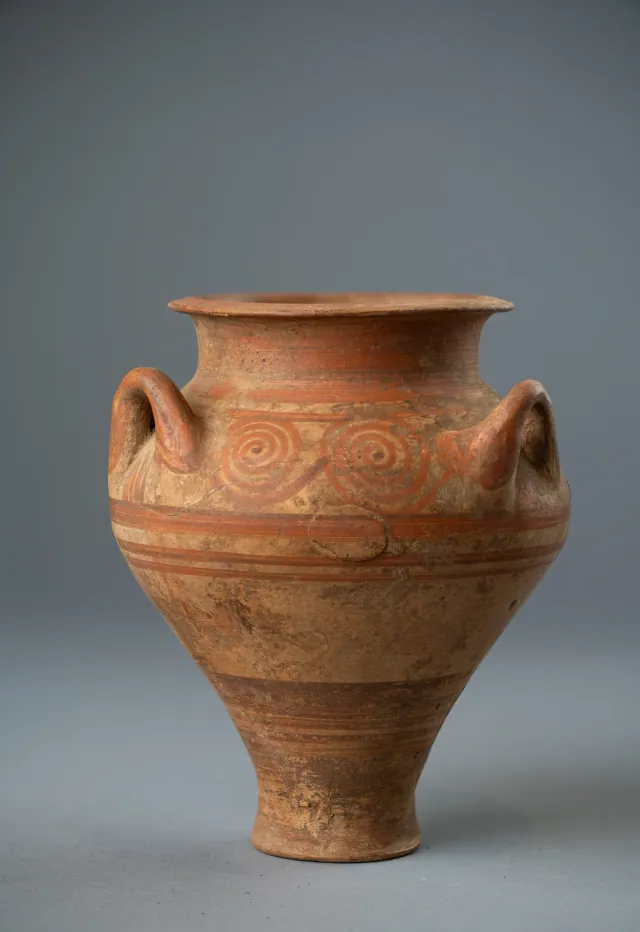
Cypriot Three-Handled Jar in the Mycenaean Style with Running Spirals
Late Cypriot (Late Bronze Age)
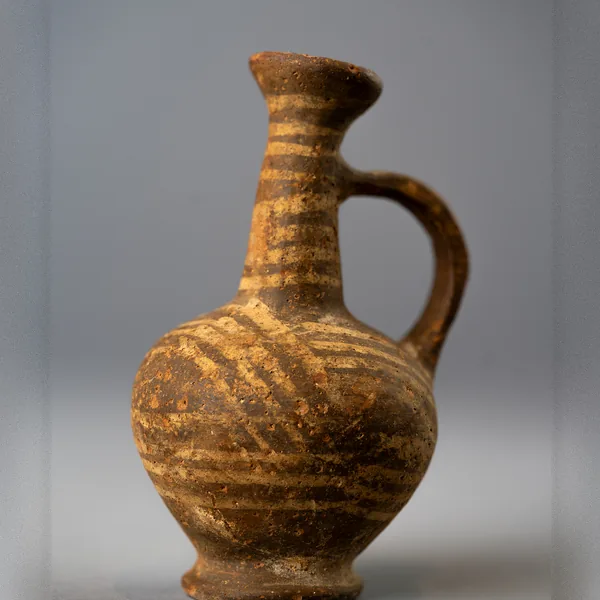
Base Ring II Bilbil Juglet with White-Painted Bands
Late Cypriot (Late Bronze Age)
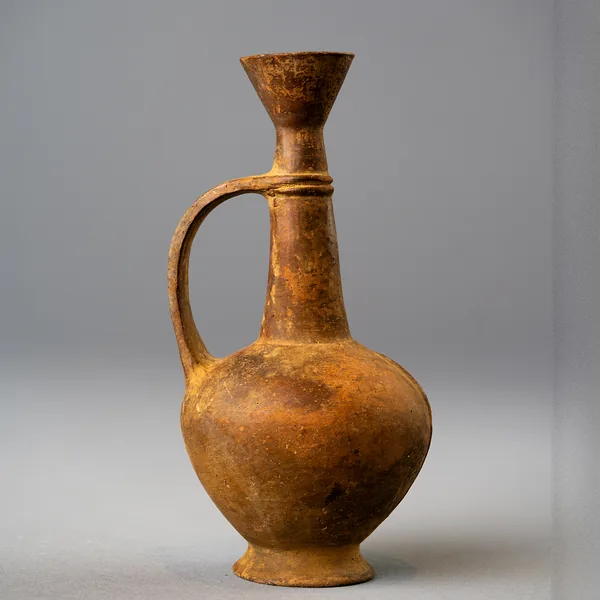
Base Ring Bilbil Juglet with Funnel Mouth and Neck Ridge
Late Cypriot (Late Bronze Age)
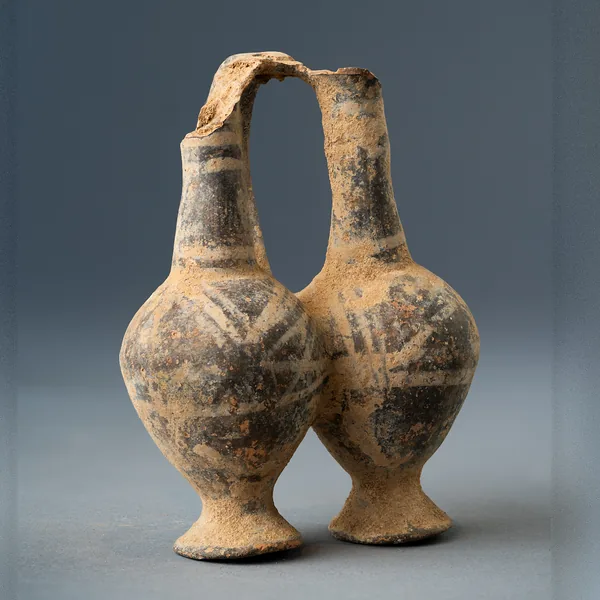
Base Ring II Double Juglet with White-Painted Decoration
Late Cypriot (Late Bronze Age)
Found at the places discussed
Objects in our catalogue, in museum collections, recorded as found at these sites.


Background
Where to read more on this site before or after watching.
The site
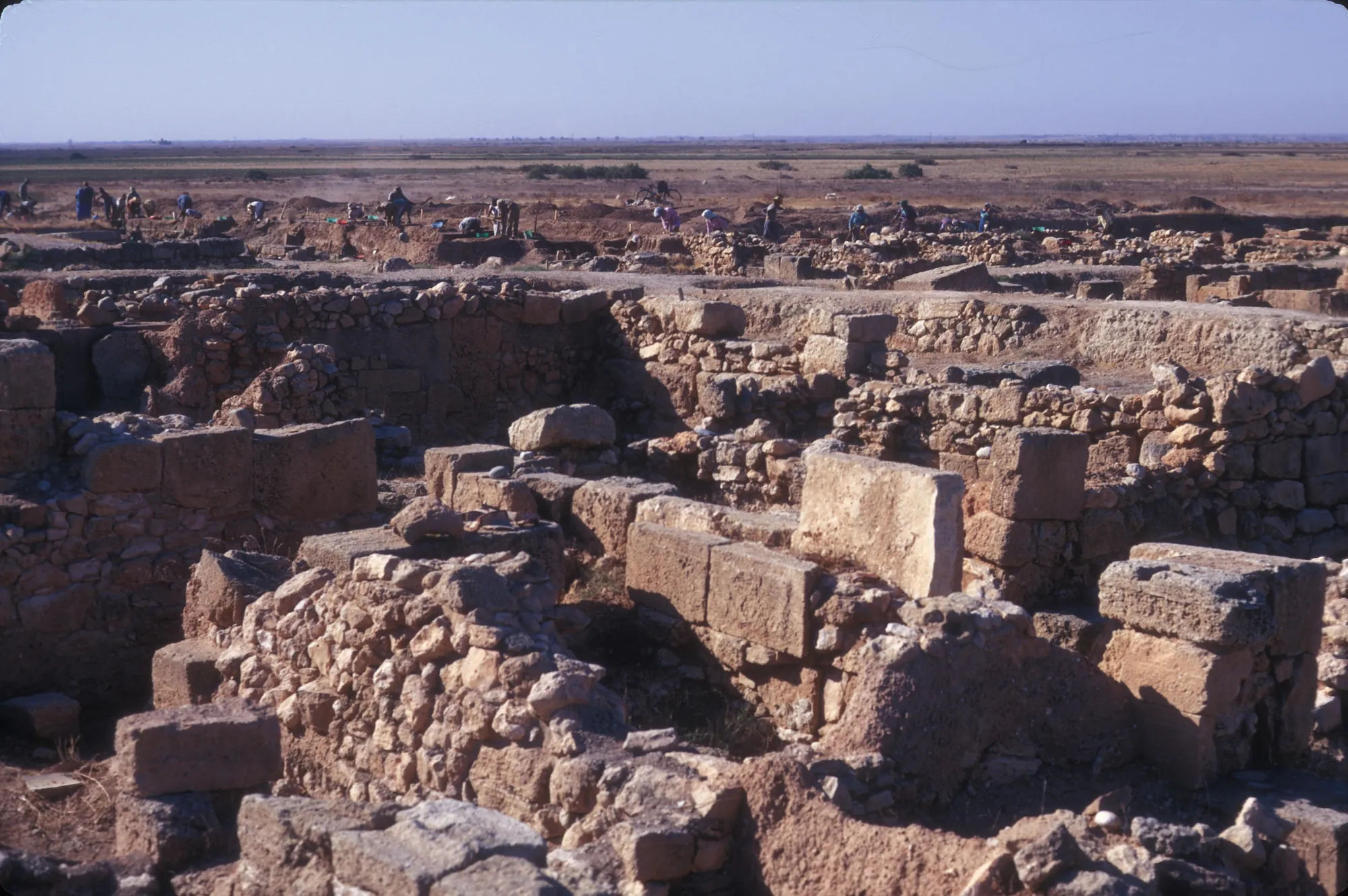
Enkomi
Enkomi is a walled Late Bronze Age town near the mouth of the Pedieos river on the bay of Famagusta, lived in from about 1650 BC until it was gradually abandoned for nearby Salamis. It was a port for Cypriot copper, and its excavations produced metal workshops, sanctuaries with bronze cult statues, rich tombs and the largest group of Cypro-Minoan inscriptions on the island.
In the compendium
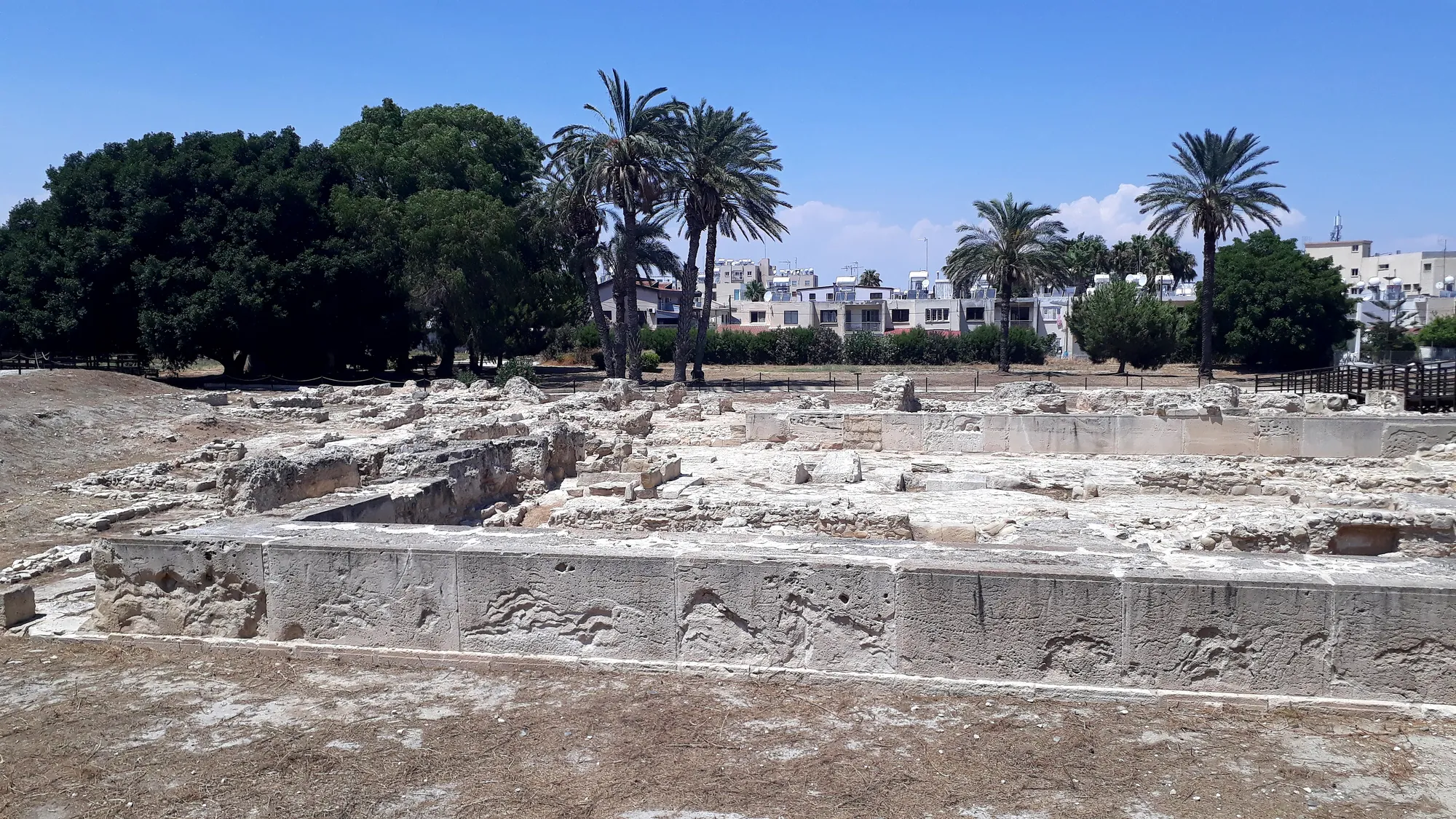
Ashlar Masonry
Squared, dressed stone used on Cyprus from about 1500 BC for gateways, tombs and the largest buildings of the Late Bronze Age towns, set below walls of mudbrick.
In the compendium
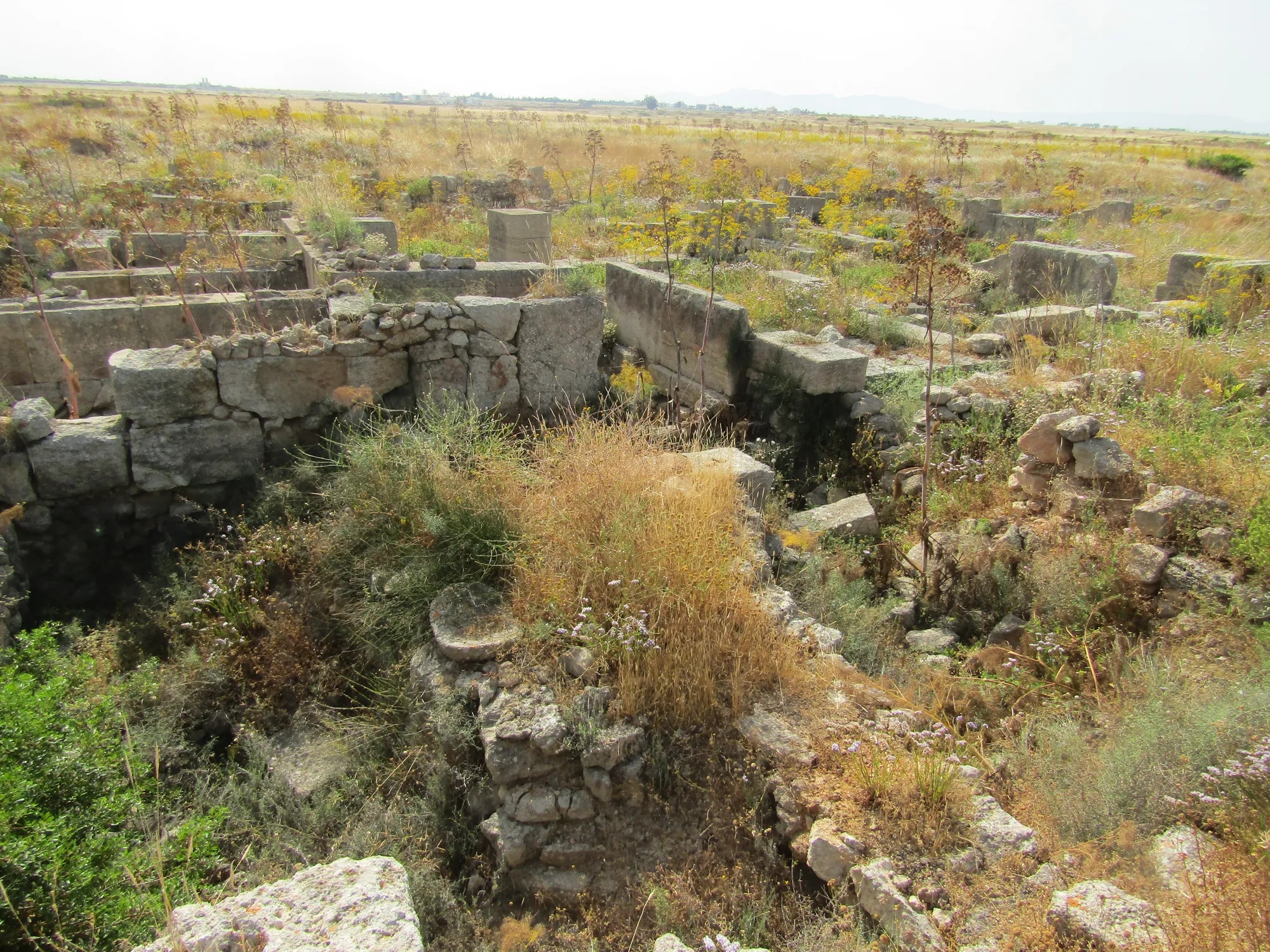
Late Bronze Age Towns and Buildings
How Late Bronze Age Cyprus built its first towns: street grids, large ashlar buildings with storage halls, courtyard houses, and the short-lived settlements of the twelfth century.
In the compendium
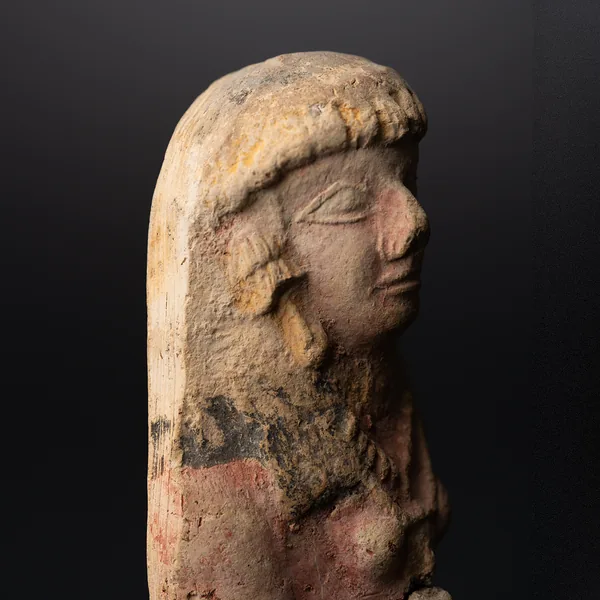
Egypt
Ancient Egypt, Cyprus's partner in copper, pottery and prestige goods from the Middle Kingdom to the Ptolemies, who annexed the island.
Map of Cyprus
Places discussed in the talk
- Has a page on this site
- Other places
- Ground above 200, 500, 1,000 m
Places
- 1Enkomi
- 2Kalavasos-Ayios Dhimitrios
- 3Maroni
- 4Episkopi-Bamboula
- 5Alassa
- 6Hala Sultan Tekke
- 7Palaepaphos
- 8Toumba tou Skourou
- 9Pendayia (approx.)
- 10Myrtou-Stephania (approx.)
- 11Milia (approx.)