
Lecture·Archaeological Research Unit - University of Cyprus·2020
Ancient Marion and Arsinoe and the Votive Terracotta Corpus
Chapters
About the lecture
Nancy Serwint of Arizona State University presents the excavations conducted by Princeton University since 1983 at Polis Chrysochous, the site of ancient Marion and its Hellenistic successor Arsinoe, followed by her technical study of the site's corpus of votive terracotta figurines and large terracotta sculpture.
Whereas earlier work by the Swedish Cyprus Expedition and the Department of Antiquities concentrated on the cemeteries, the Princeton project opened more than 300 trenches across five urban and suburban zones to investigate the ancient settlements. Ptolemy I destroyed Marion in 312 BC and deported its population to Paphos; in 270 BC Ptolemy II Philadelphus refounded the town as Arsinoe. Serwint walks through the five excavated areas. Trench E.F2 yielded workshops of Arsinoe producing lamps, glass, metal and terracottas, beneath a sixth-century three-aisled basilica with mosaic tesserae and 250 burials. Area E.G0 contained a seventh-century basilica with twelfth-century Paphos-region glazed bowls in its graves, alongside a large Ptolemaic courtyard building overlooking Chrysochou Bay with painted wall plaster, a five-metre bottle-shaped cistern, and Scythian-type arrowheads that suggest a military garrison. Near the local high school, a monumental building of the late sixth century BC with metalworking evidence and imported Greek pottery from Athens, Corinth and East Greece is identified as a possible palace of Marion.
The remaining two areas are sanctuaries that produced the bulk of the 30,000 terracotta fragments. An Archaic sanctuary on the outskirts of Polis, in use from 750 to 450 BC, yielded over 25,000 terracotta fragments, mostly small female figurines with raised arms or holding their breasts in the Near Eastern Astarte tradition, together with life-size heads showing Nubian, Phoenician and Greek features, Egyptianizing faience, an inscribed cylinder seal, terracotta masks and 154 miniature clay sacred trees. A later Classical temple beside the city wall yielded nearly 5,000 fragments, including a statuette of Aphrodite and Eros, a three-metre colossal male statue, and coins of King Stasioikos II (330 to 312 BC) pairing Zeus and Aphrodite. Deliberate mutilation of the heads and a ten-centimetre ash layer point to destruction by Ptolemy's soldiers.
In the final part of the lecture, Serwint explains how her team documents the 49 moulded figural types, clay inclusions and forming methods. With graduate student Casey Gibson, she replicated four variants of the miniature sacred trees in coloured plasticine to reconstruct the sequence of wheel-throwing, thumb-mounting, stick-building and loop application, and introduced digital microscopy to scan ancient fingerprints on the clay.
From our collection
Pieces in the Drakopoulos collection of the kinds and periods this talk covers: Terracotta figurine, Painted in two colours, Undecorated.
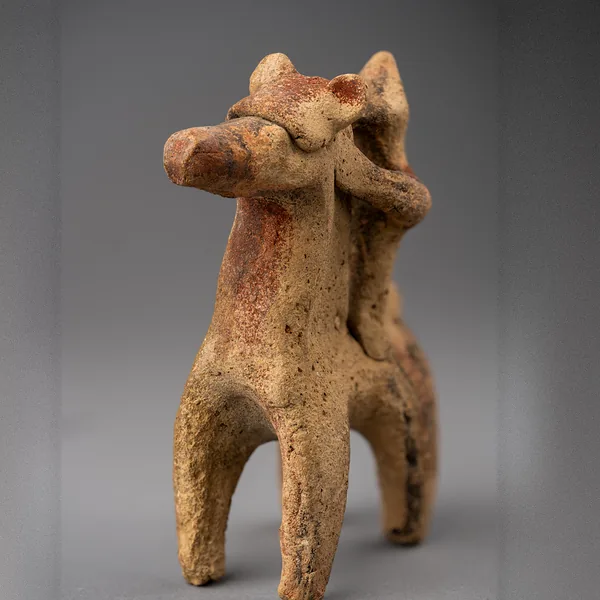
Horse and Rider Figurine with a Painted Star on the Neck
Terracotta figurine
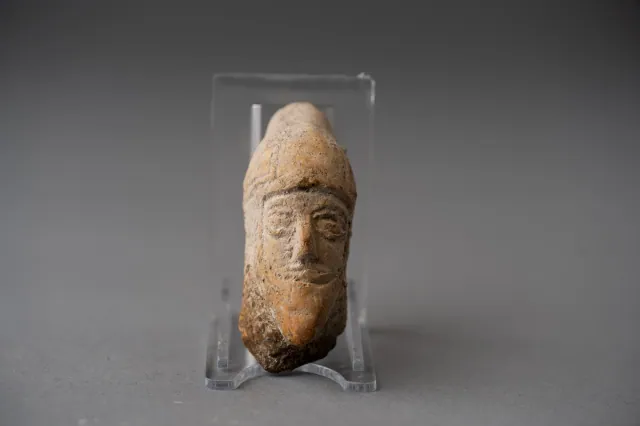
Terracotta Head of a Bearded Votary in a Pointed Cap
Terracotta figurine
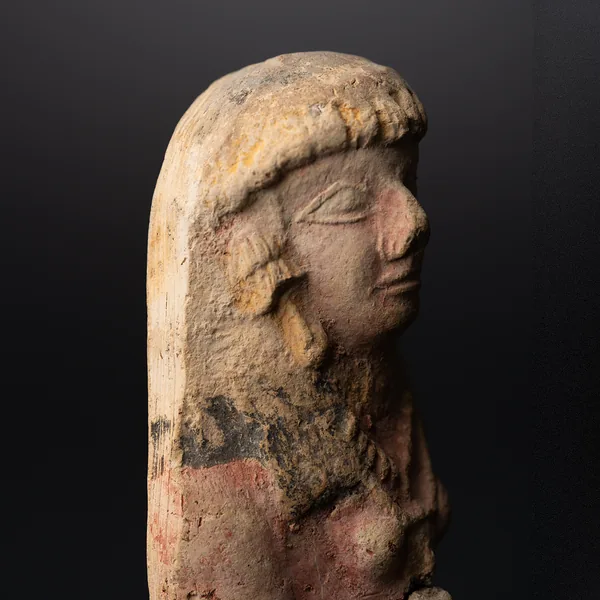
Upper Part of a Mould-Made Female Figure with an Egyptianizing Wig
Terracotta figurine
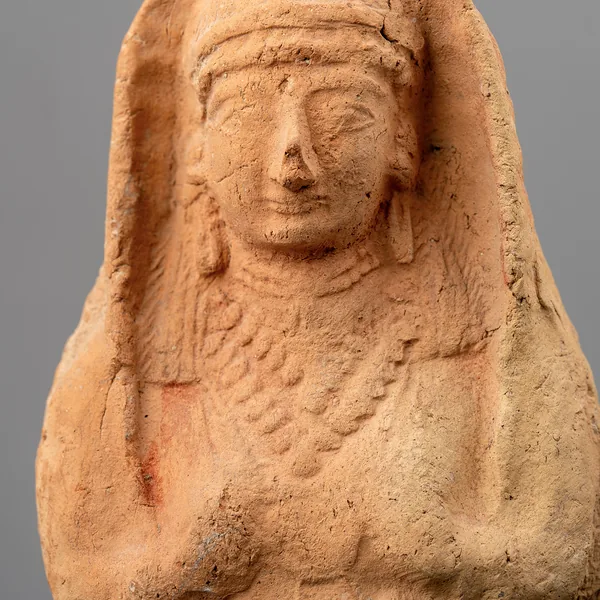
Hollow Mould-Made Female Votary of the Achna Type, Hands to the Breasts
Terracotta figurine
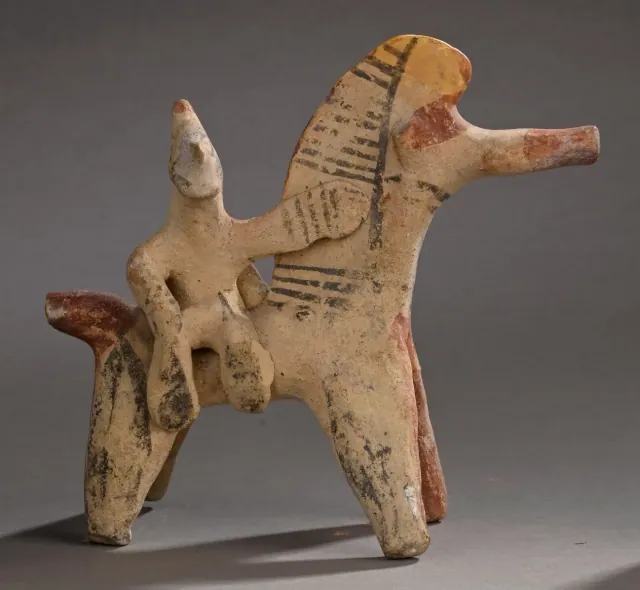
Handmade Horse and Rider with a High Painted Crest
Terracotta figurine
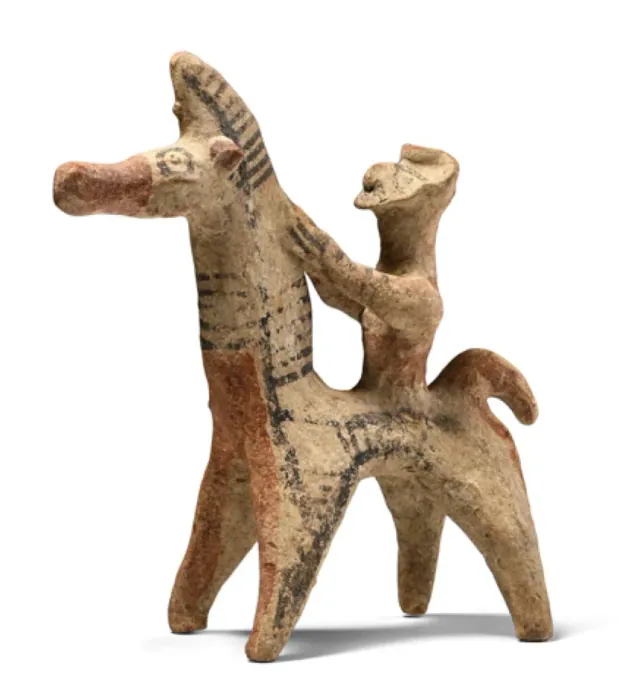
Handmade Horse and Rider, the Rider in a Flaring Cap
Terracotta figurine
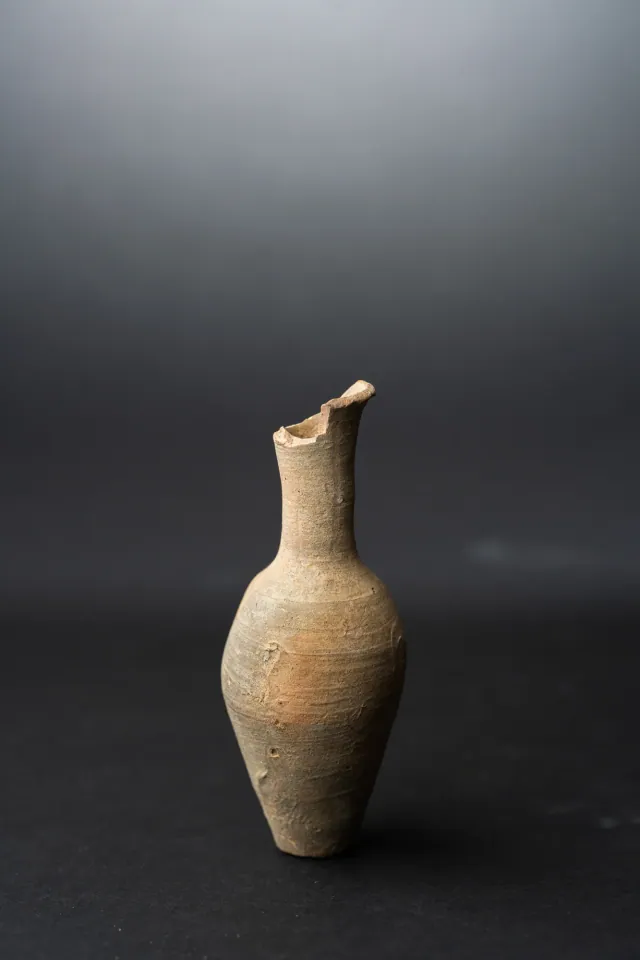
Fusiform Unguentarium
Undecorated
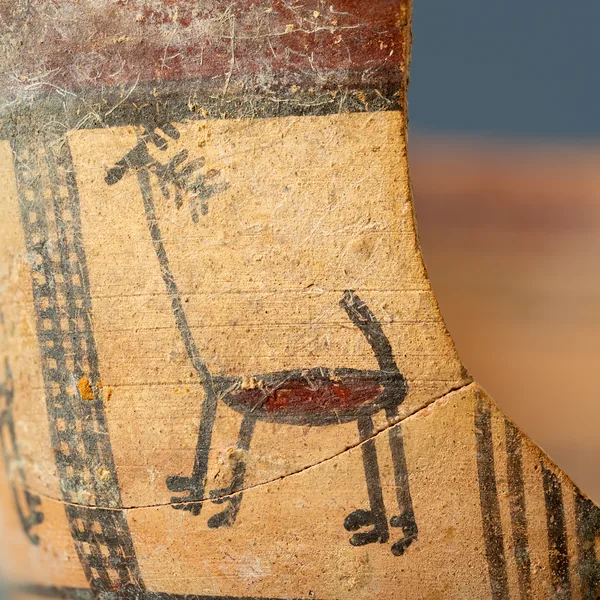
Bichrome Skyphos with Stags in Metopes
Painted in two colours
Found at the places discussed
Objects in our catalogue, in museum collections, recorded as found at these sites.


Background
Where to read more on this site before or after watching.
In the compendium
Iron Age Cities and Palaces
The capitals of the Iron Age kingdoms of Cyprus, their palaces at Vouni, Amathus, Idalion and Palaepaphos, their houses, and the volute and Hathor capitals of the period.
In the compendium
Iron Age Sanctuaries
The Cypriot Iron Age sanctuary was a walled open-air court with an altar, sacred trees and small roofed rooms; Greek-style temples arrived only under Rome.
In the compendium
Egypt
Ancient Egypt, Cyprus's partner in copper, pottery and prestige goods from the Middle Kingdom to the Ptolemies, who annexed the island.
The period
Cypro-Geometric
The Early Iron Age of Cyprus, c. 1050–750 BCE, of new dromos tombs, early ironworking, the Cypriot Syllabary and the debated origins of the city-kingdoms.