
Lecture·Archaeological Research Unit - University of Cyprus·2022
Late Antique Arsinoe and the Princeton Excavations at Polis Chrysochous
Chapters
About the lecture
William Caraher of the University of North Dakota presents his team's study of the Late Antique and Early Byzantine remains at Polis Chrysochous, ancient Marion and Arsinoe, excavated by the Princeton Cyprus Expedition since 1983. Working alongside R. Scott Moore and Amy Papalexandrou, and supported by project directors Nancy Serwint, Joanna Smith, and William Childs, Caraher examines legacy excavation records and ceramic assemblages from two areas on the northern edge of the ancient city: EF2 and EF1.
After outlining the history of archaeological investigation at Polis from Max Ohnefalsch-Richter and the Swedish Cyprus Expedition to Princeton, Caraher turns to area EF2. In the Hellenistic and early Roman periods this zone hosted industrial activities including smelting and a lamp kiln, before a first-century AD levelling fill and the construction of paved north-south and east-west roads in the second century. A quadrifrons arch was later erected at the road intersection, and in the sixth or seventh century the South Basilica was built across a natural drainage channel. Originally a wood-roofed, three-aisled church without a narthex, the basilica underwent a major second phase around the late seventh or early eighth century: builders added a narthex, a long south porch atop a deep rubble fill that functioned as a drain, and interior buttresses to support masonry vaulting.
About 100 metres northeast, area EF1 revealed a building constructed in the late sixth century, rebuilt with a stone drain in the early seventh century, and abandoned before a burial containing a late seventh-century lead seal cut into the ruins by the mid-eighth century. Caraher explains how combining digitised trench notebooks and context pottery with inventoried finds refines the dating of these phases. Comparing the pottery from the South Basilica rubble fill, where Cypriot Red Slip (Late Roman D) makes up 97 per cent of the fine ware alongside Dhiorios cooking pots and Late Roman amphorae, with survey assemblages from Pyla-Koutsopetria, Panayia Ematousa, and Kalavasos-Kopetra, he argues for strong micro-regional variation in trade networks across Cyprus. He also notes architectural parallels between the churches at Arsinoe and those at Amathus, contrasting them with basilicas at Paphos and Peyia. Rather than showing abrupt urban collapse during the seventh-century Arab raids, the rebuilding at EF2 and EF1 demonstrates civic resilience and continued investment in a monumentalised Christian entrance to the city into the eighth century.
From our collection
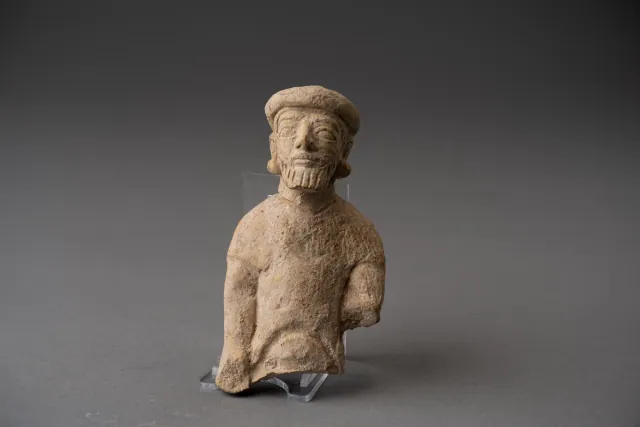
Pieces in the Drakopoulos collection of the kinds and periods this talk covers: Hellenistic.
The Drakopoulos collection →Found at the places discussed
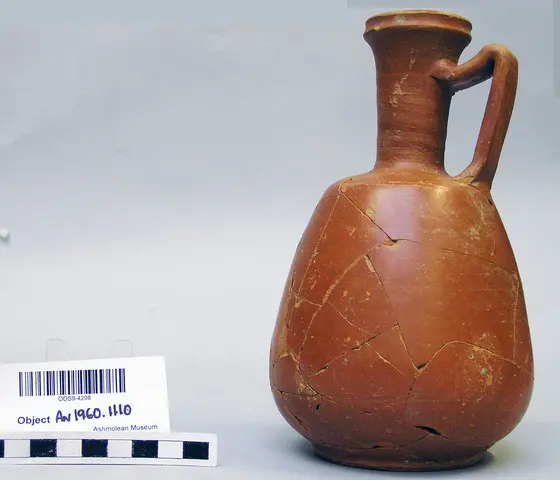
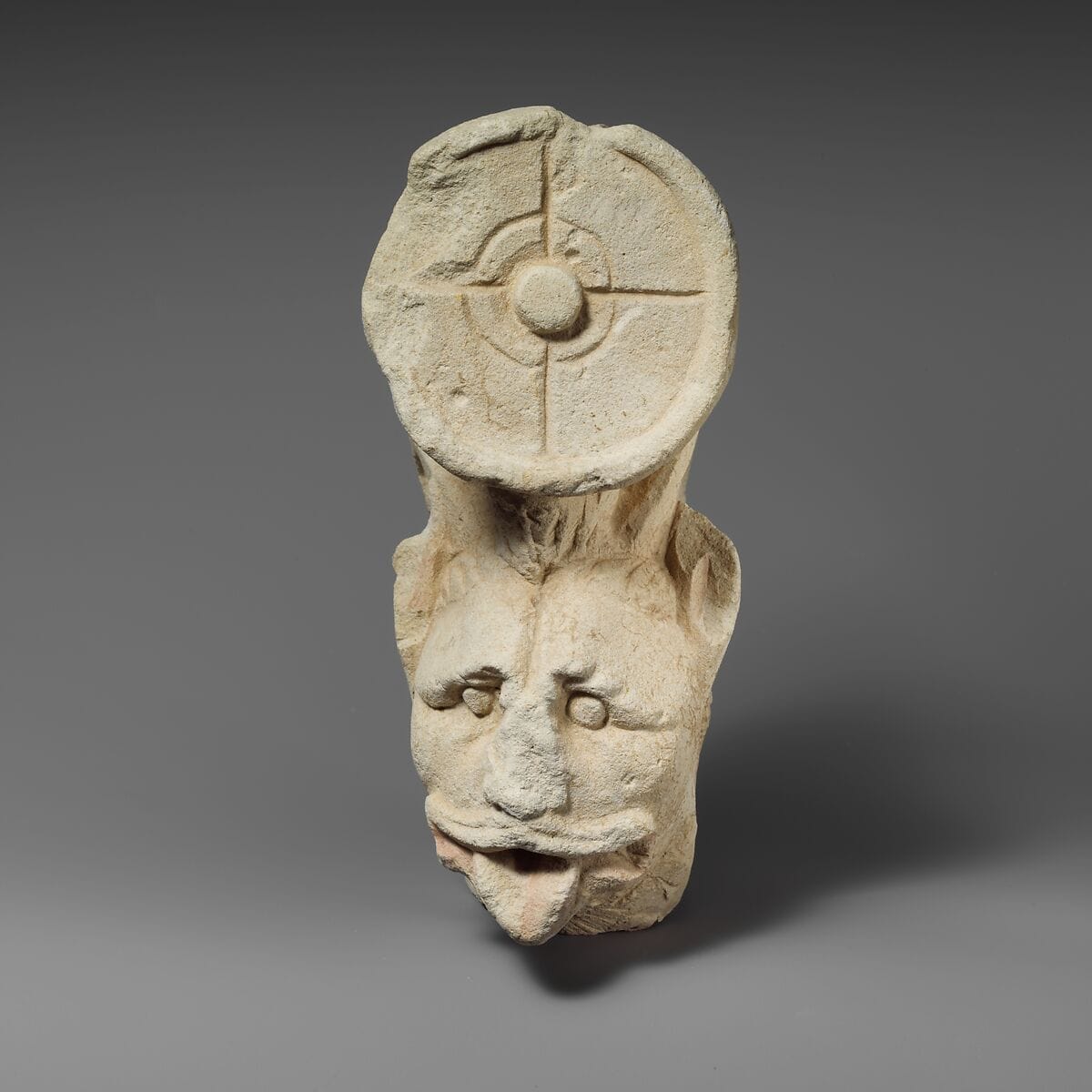
Objects in our catalogue, in museum collections, recorded as found at these sites.
Background
Where to read more on this site before or after watching.
The site
Amathus
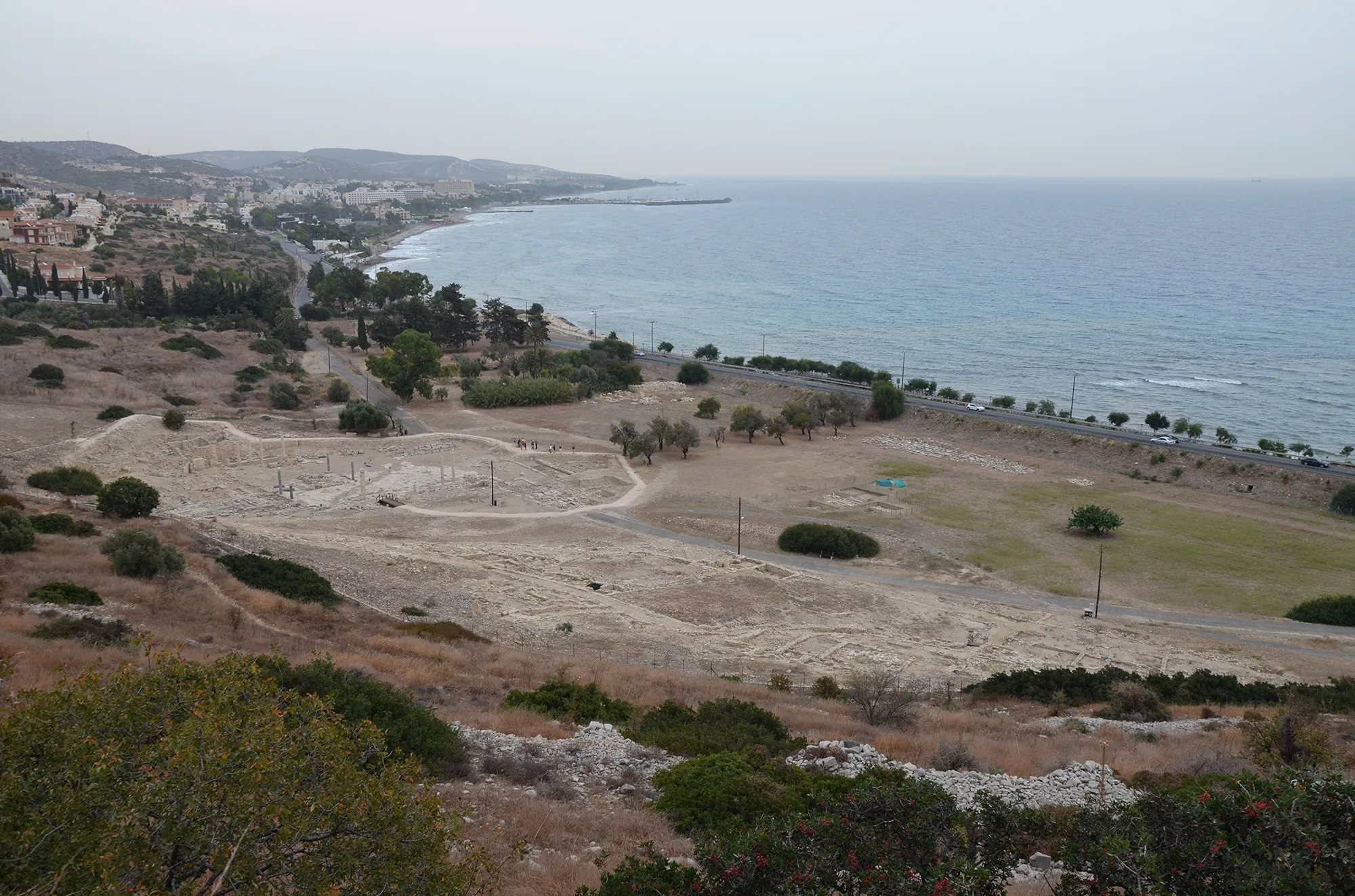
Amathus was the capital of one of the Iron Age kingdoms of Cyprus, on a coastal hill about 10 km east of Limassol. It was founded on an empty site in the 11th century BC and lived in until the end of the 7th century AD. Its acropolis carried a sanctuary of Aphrodite and the kings' palace; its people kept the island's old non-Greek language, Eteocypriot, at least until the time of Alexander.
In the compendium
Hellenistic and Roman Pottery in Cyprus
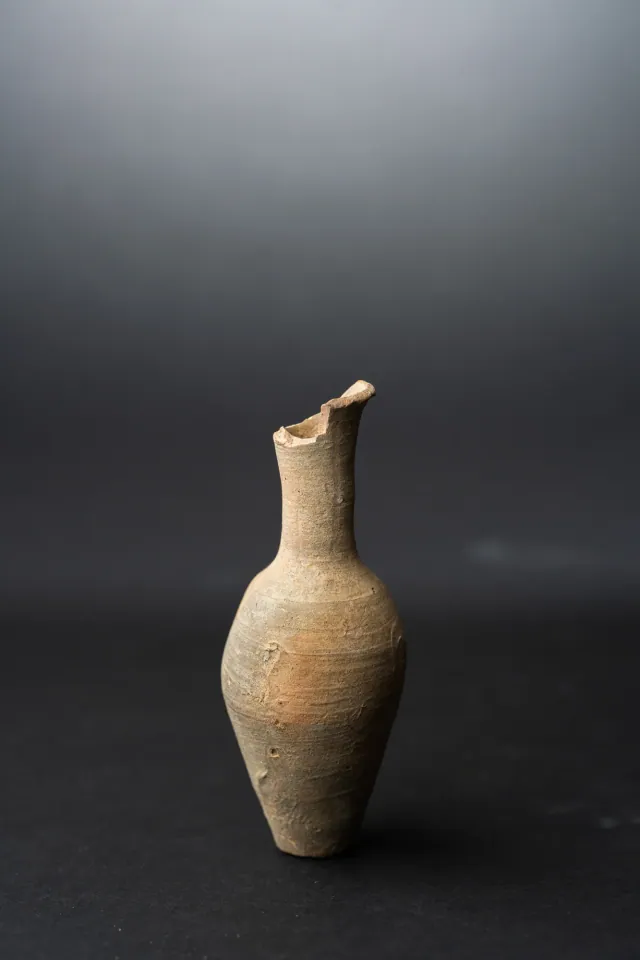
Cyprus used a succession of slipped fine wares from c. 310 BCE to the 7th century CE, some made on the island and many imported from Syria, Cilicia and Pamphylia.
The period
Hellenistic
The Ptolemaic period in Cyprus, c. 310–31 BCE, when the city-kingdoms were abolished and the island was governed as one province from Nea Paphos.
Map of Cyprus
Places discussed in the talk
- Has a page on this site
- Other places
- Ground above 200, 500, 1,000 m
Places
- 1Polis Chrysochous
- 2Pyla-Koutsopetria (approx.)
- 3Amathus
- 4Peyia (approx.)
- 5Kalavasos-Kopetra (approx.)
- 6Panayia Ematousa (approx.)
- 7Dhiorios (approx.)