
Conference paper·Archaeological Research Unit - University of Cyprus·2019·In Greek
The Mines and the Hoard of Mathiatis: New Data
Τα μεταλλεία και ο θησαυρός του Μαθιάτη: νέα δεδομένα
Chapters
About the video
Vasiliki Kassianidou of the University of Cyprus presents new archival and archaeological evidence on the mines and the Late Bronze Age hoard of Mathiatis. The paper is given in Greek.
The talk opens with the modern mining history of Mathiatis, where the Cyprus Mines Corporation (CMC) began exploiting gold and copper deposits in 1935 at two locations: Laona (North Mathiatis) and Strongylos (South Mathiatis). During works in the 1930s, traces of ancient copper extraction came to light. Combining plans from the State Archives, photographs from the Department of Antiquities, and a 1937 publication by CMC director James Latimer Bruce, Kassianidou shows that ancient galleries, timber supports, wooden tools recorded in 1951 by Hector Catling, and a fourth-century AD coin of Constantine II belong to South Mathiatis. Later excavations there by Georgios Georgiou and Sophocles Hadjisavvas uncovered a smelting furnace and an Archaic to Roman sanctuary later buried under Late Roman or Early Byzantine slag heaps.
The second part of the lecture examines the Mathiatis hoard, discovered in 1936 during mining at North Mathiatis. Divided under the Antiquities Law that came into force in 1936, the find was split between the Cyprus Museum, CMC owner Harvey Mudd, Bruce, W. Bevan, and the CMC collection at Skouriotissa (transferred to the Department of Antiquities in 1976). Notes discovered on the backs of archival photographs allow Kassianidou to reconstruct the exact division of the oxhide ingot fragments, demonstrating that the hoard contained the largest quantity of raw copper of any Cypriot Late Bronze Age hoard.
Archival negatives and letters also resolve a longstanding error in the scholarship. In his 1964 study, Catling confused the Mathiatis export photographs with photographs of a Larnaca private collection bought by Bruce for Mudd from Georgios Pavlides, adding some thirty-nine unrelated objects to the hoard while dismissing authentic pieces as post-Bronze Age. Restoring the true contents from Bruce's second photograph, Kassianidou highlights an unfinished ploughshare, a bronze mould for a pruning hook, fragments of a portable hearth or table of the type known from Enkomi (identified by George Papasavvas), and a cast bronze human ear with earring holes and a large dowel. Previously dismissed by Catling as later, the ear matches the right-angled ears of Late Cypriot figurines and provides rare evidence for a life-size composite statue made in Late Bronze Age Cyprus.
From our collection
Pieces in the Drakopoulos collection of the kinds and periods this talk covers: Cypro-Archaic.
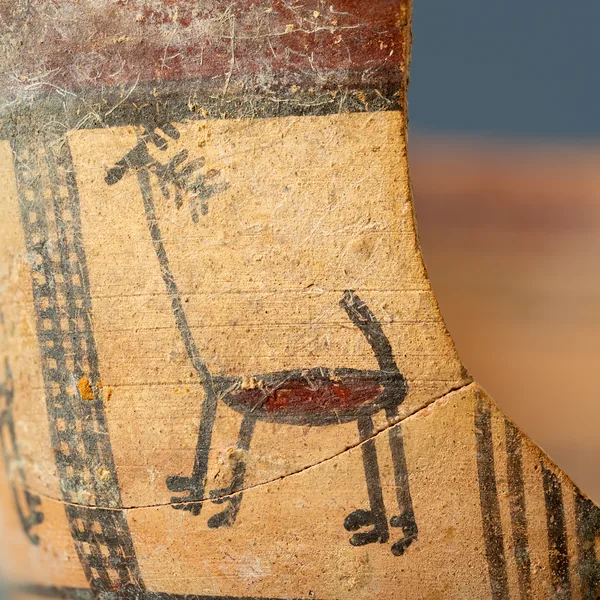
Bichrome Skyphos with Stags in Metopes
Cypro-Archaic
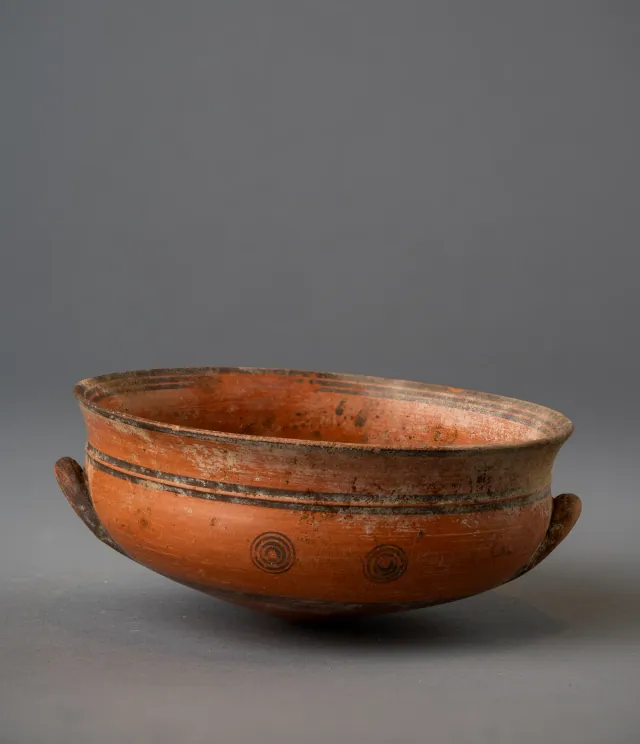
Black-on-Red Two-Handled Bowl with Raised Flaring Rim
Cypro-Archaic
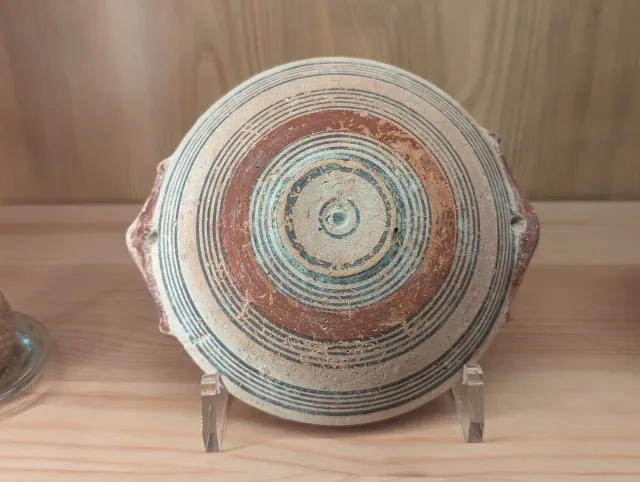
Bichrome IV Bowl with Red-Painted Pierced Lug Handles
Cypro-Archaic
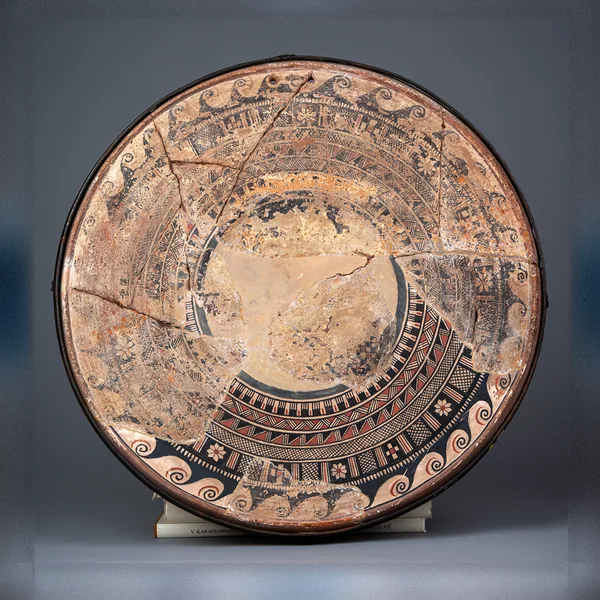
Large Bichrome Plate from Salamis with a Wave Band and Rosette Metopes
Cypro-Archaic
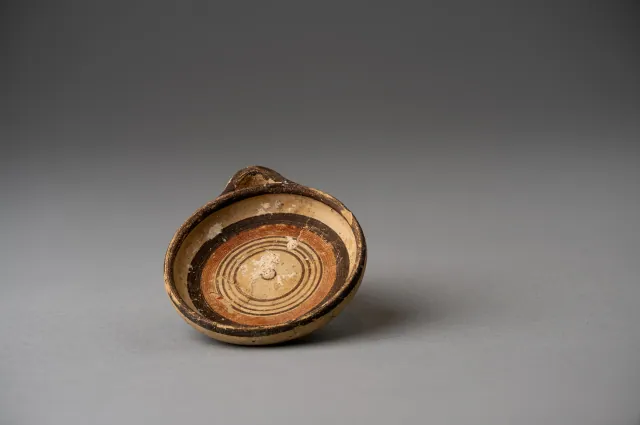
Miniature Bichrome Plate with Concentric Circles
Cypro-Archaic
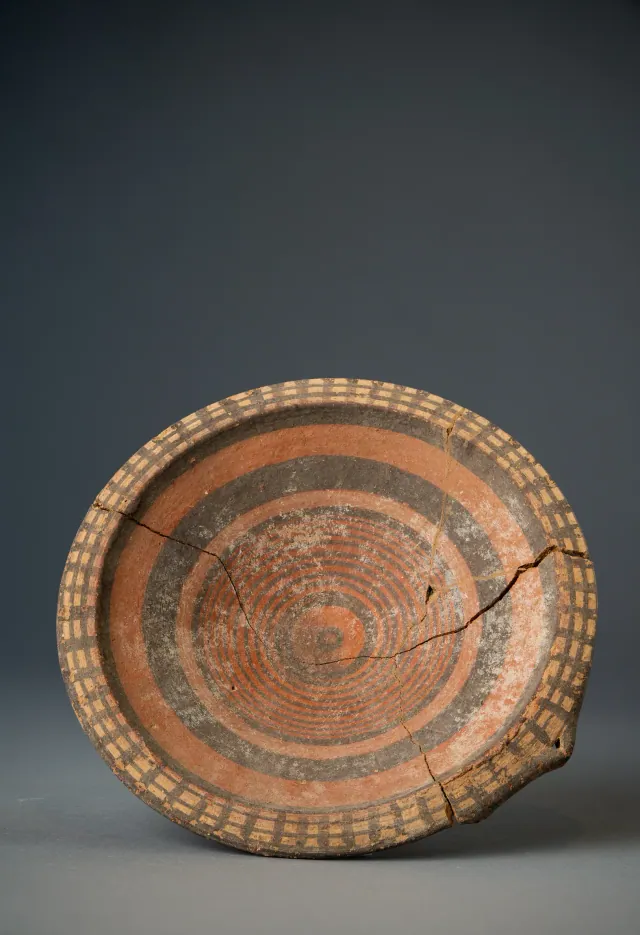
Black-on-Red Plate with Barred Rim and Concentric Circles
Cypro-Archaic
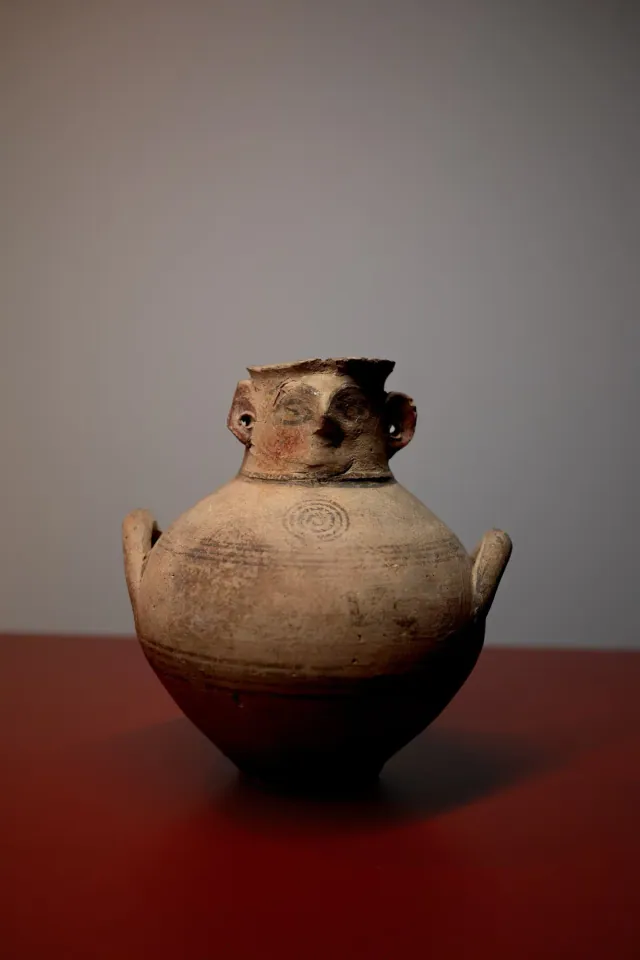
Bichrome IV Face-Neck Jar of the Kourion Type
Cypro-Archaic
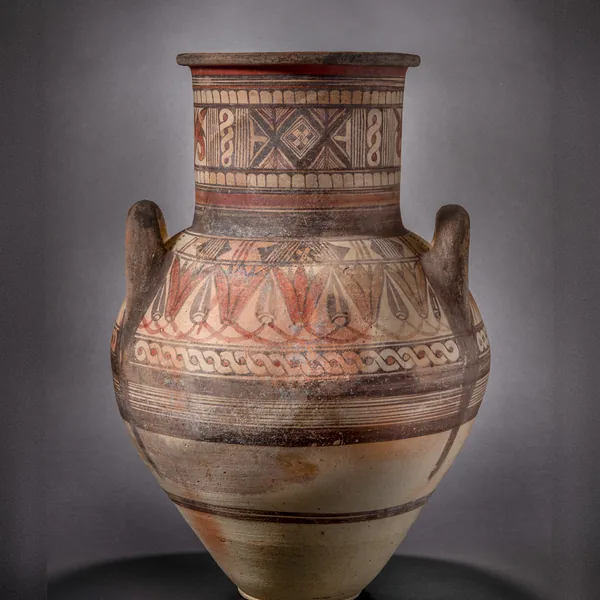
Bichrome IV Amphora with a Lotus-and-Bud Shoulder Frieze
Cypro-Archaic
Background
Where to read more on this site before or after watching.
In the compendium
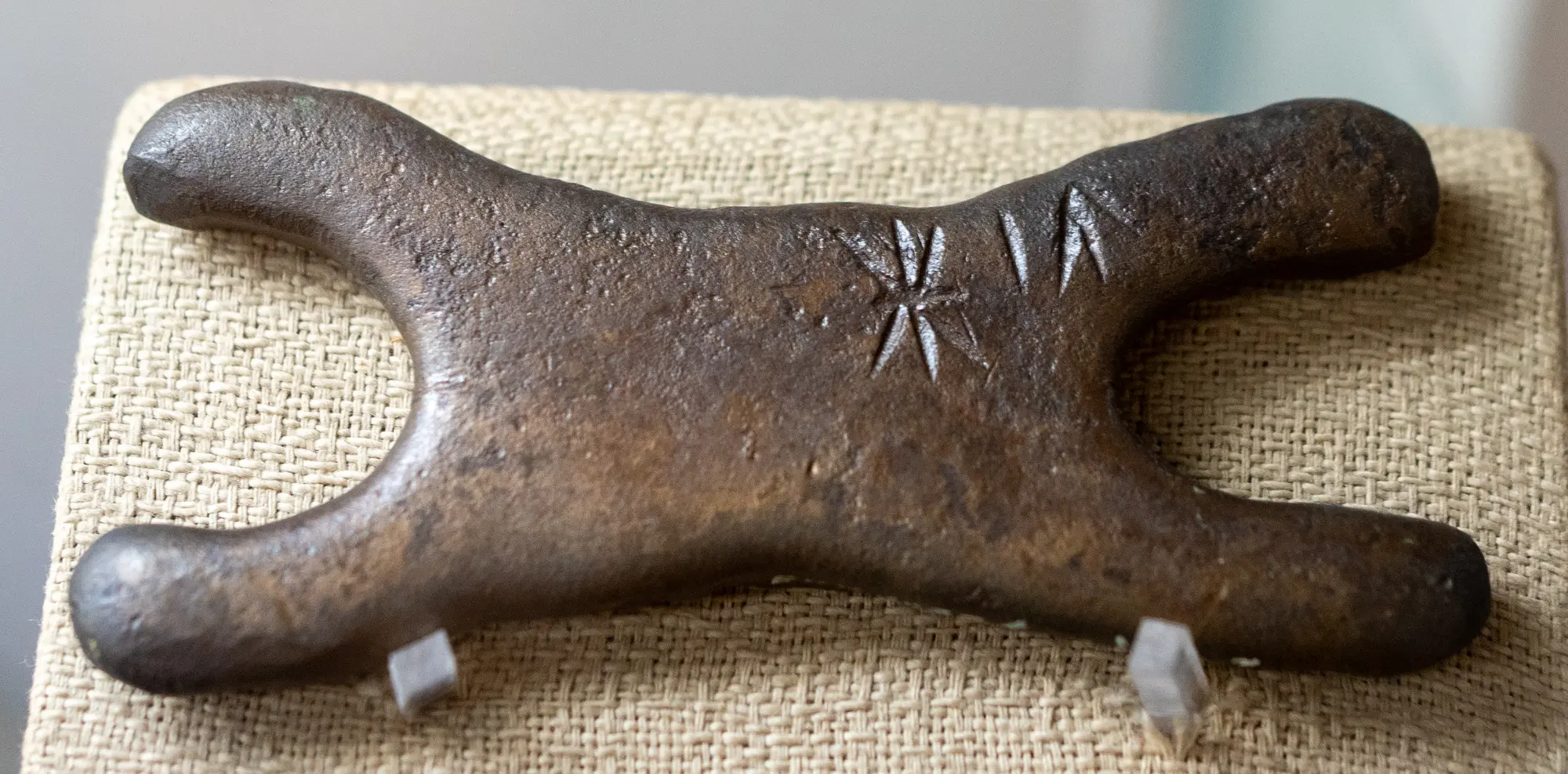
Copper Metallurgy in Ancient Cyprus
The mining, smelting and casting of the Troodos sulphide ores, from hammered Chalcolithic native copper to Late Bronze Age oxhide ingots and Archaic slag heaps.
In the compendium
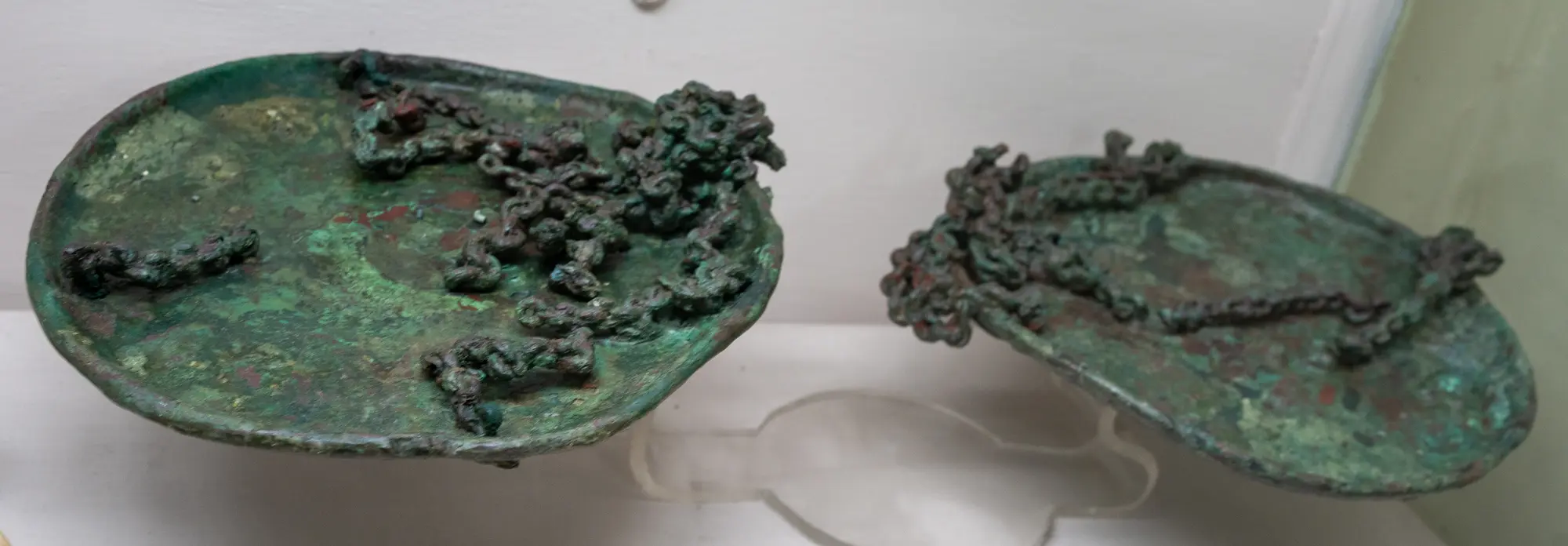
Weights and Ingots
Copper ingots, miniature votive ingots, balance weights and scale pans in Cyprus, from the Late Bronze Age into the Cypro-Geometric and Cypro-Archaic periods.
In the compendium
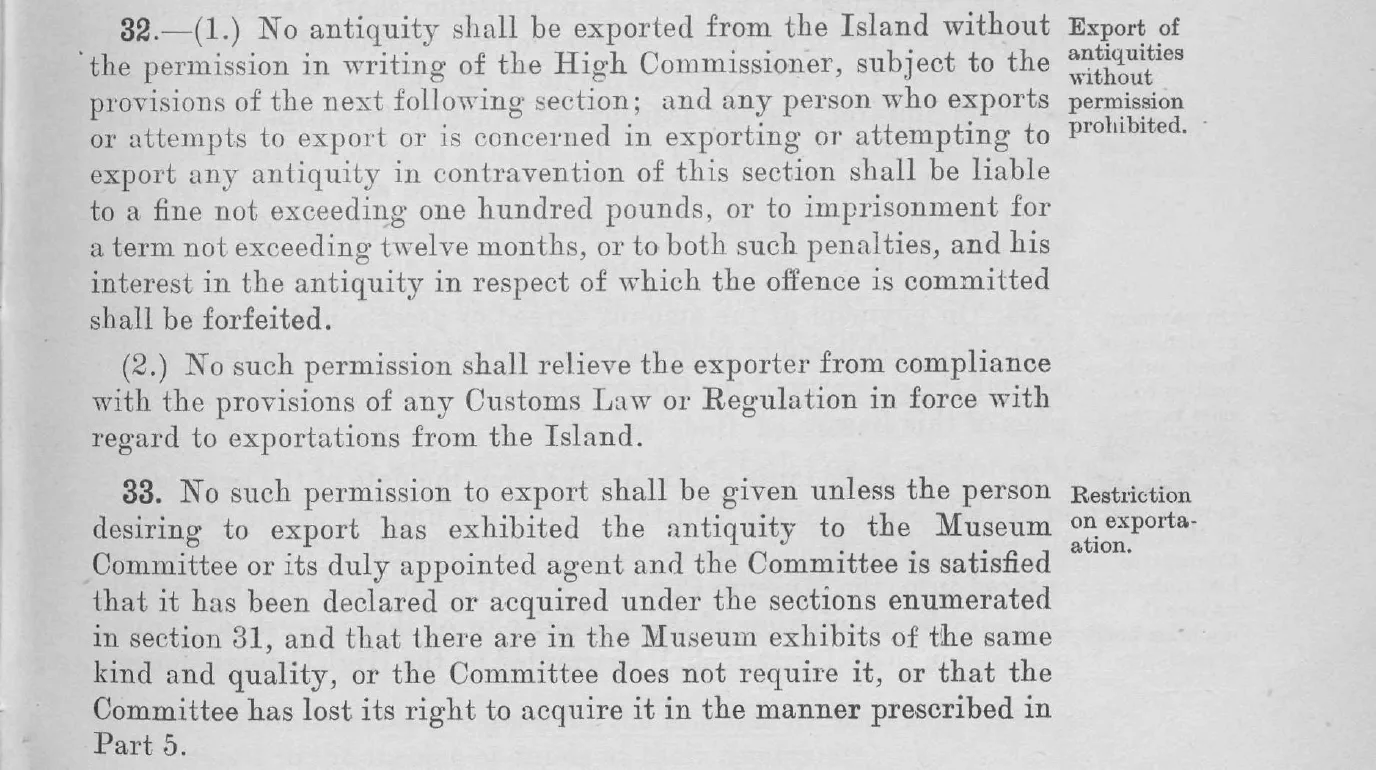
The Antiquities Laws of 1905 and 1935
What the Antiquities Laws of 1905 and 1935 said about ownership, finds, excavation, dealing, collections and export, and how they were amended up to 1996.

The period
Late Bronze Age
The Late Cypriot period, c. 1650–1050 BCE, when copper exports made Cyprus an urban, literate trading power before the crisis around 1200 BCE.
Map of Cyprus
Places discussed in the talk
- Ground above 200, 500, 1,000 m
Places
- 1Mathiatis (approx.)
- 2Skouriotissa (approx.)