
Documentary·History Time·2020
The Sea Peoples and the Late Bronze Age Collapse (1200–1150 BC)
The Sea Peoples & The Late Bronze Age Collapse // Ancient History Documentary (1200-1150 BC)
Pete Kelly
This video covers more than Cyprus. The description below concentrates on its Cypriot parts, the first of which begins at 16:15.
Chapters
About the video
Pete Kelly narrates a two-and-a-half-hour documentary on the collapse of the Late Bronze Age Mediterranean world between c. 1200 and 1150 BC and the groups named in Egyptian inscriptions as the Sea Peoples. After an overview of the Medinet Habu reliefs of Ramesses III and systemic causes of collapse such as drought, earthquakes, and disruptions to the tin and copper trade, the video examines each named group in turn.
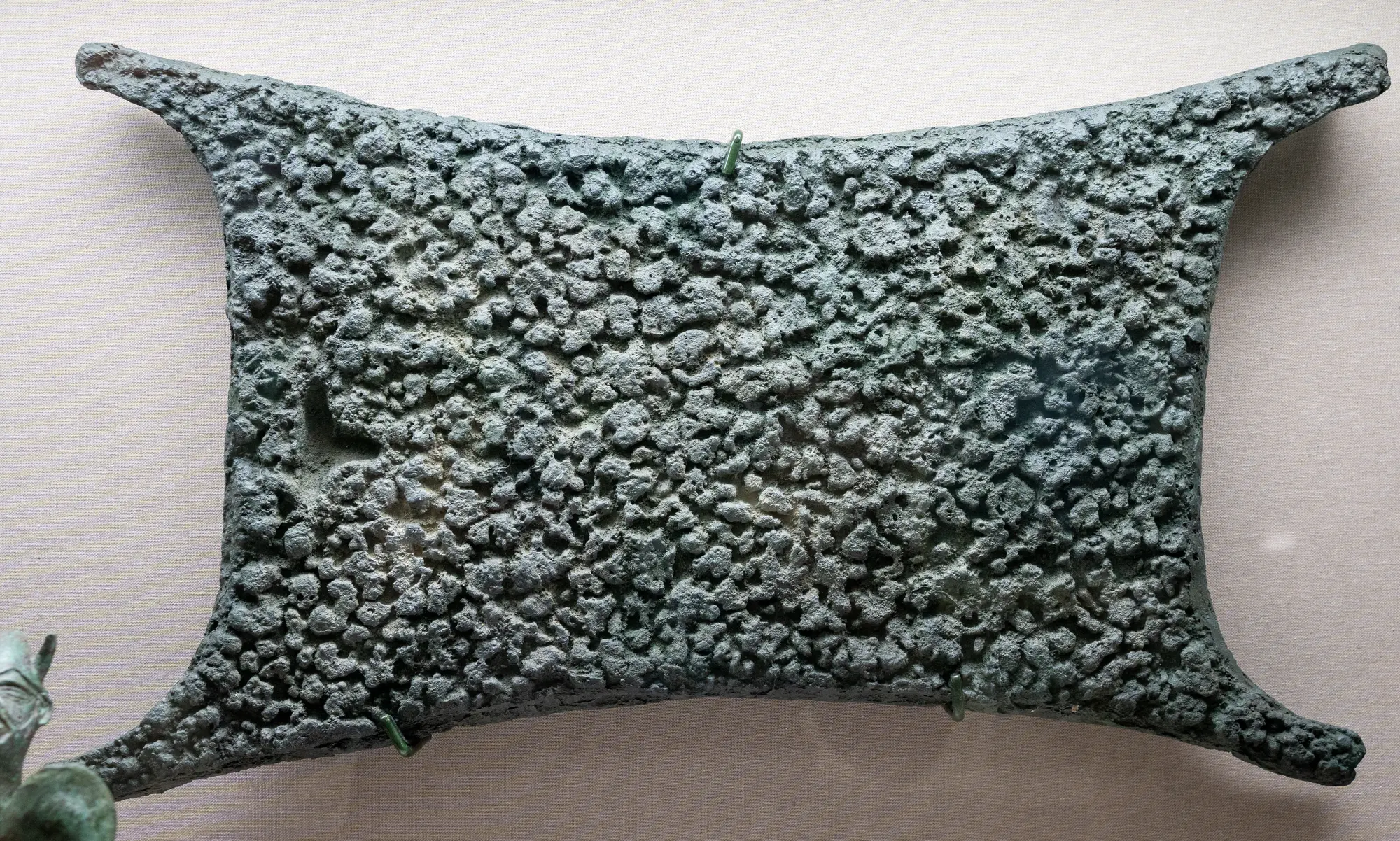
Cyprus, identified with the Bronze Age kingdom of Alashiya, recurs across several chapters. In the opening sections Kelly notes Ramesses III's record that the invaders devastated Alashiya and mustered in the seas around the island, as well as Cyprus's role as the region's main copper source. The Sherden and Shekelesh chapters present Cyprus as a gateway linking Sardinia with the East, citing Cypriot-type copper ingots in Sardinia, Nuragic pottery on Cyprus, similar horned bronze figurines on both islands, and Cypriot cargo on the Uluburun shipwreck.
The Lukka, Karkisha, and Ekwesh chapters trace earlier conflicts over Alashiya: the Amarna letter complaining of Lukka raids, the final letter of King Ammurapi of Ugarit to the king of Alashiya, attacks by Madduwatta and Attarsiya of Ahhiyawa, Hittite campaigns under Tudhaliya IV and Suppiluliuma II, and a 12th-century BC construction and refortification boom at Maa-Palaeokastro, Hala Sultan Tekke, and Enkomi. In the Peleset chapter, Enkomi is discussed as a probable capital of Alashiya that came under Aegean-style control after c. 1200 BC, yielding an ivory game box and horned bronze figurines before an earthquake around 1050 BC.
From our collection
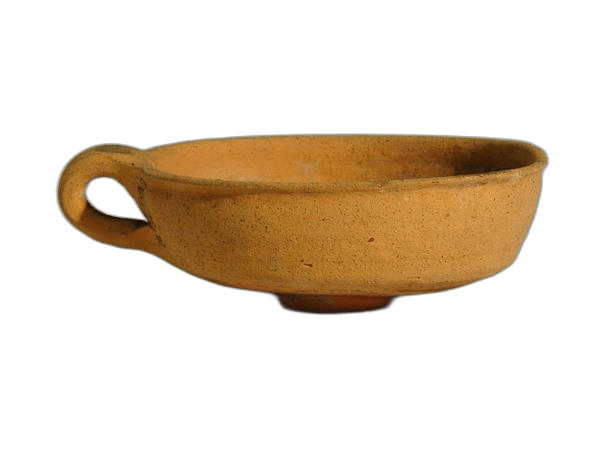
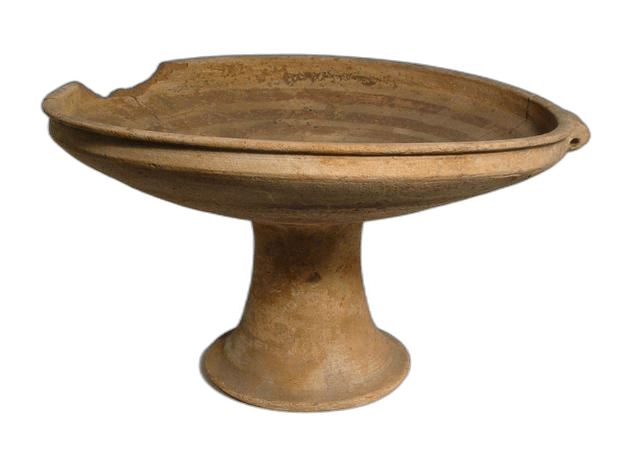
Pieces in the Drakopoulos collection of the kinds and periods this talk covers: Late Cypriot (Late Bronze Age).
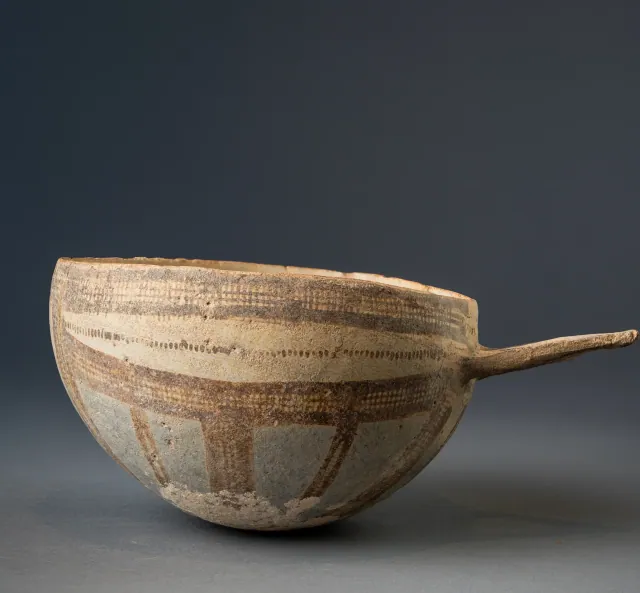
White Slip II Hemispherical Bowl with Wishbone Handle
Late Cypriot (Late Bronze Age)
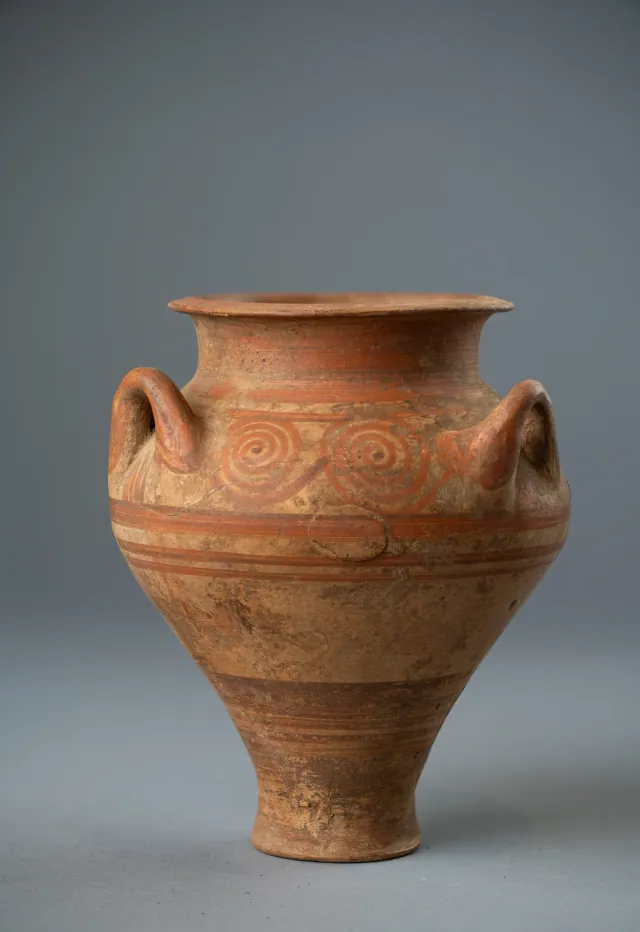
Cypriot Three-Handled Jar in the Mycenaean Style with Running Spirals
Late Cypriot (Late Bronze Age)
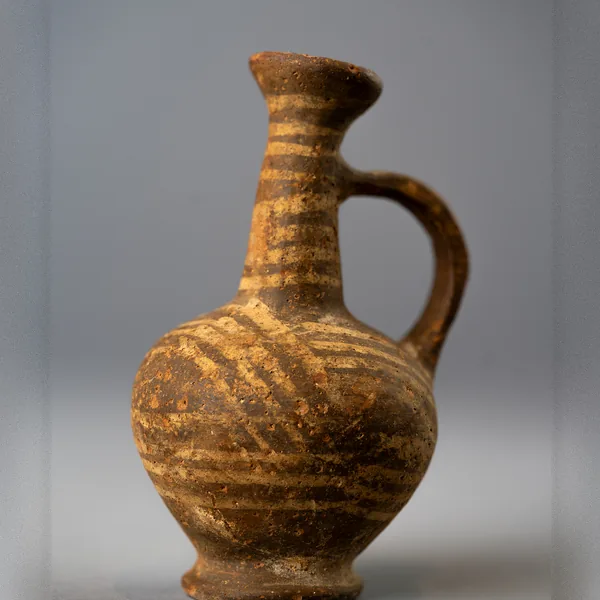
Base Ring II Bilbil Juglet with White-Painted Bands
Late Cypriot (Late Bronze Age)
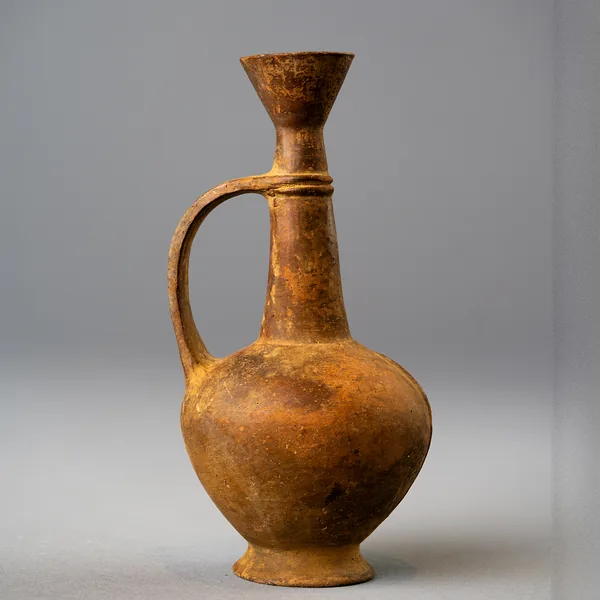
Base Ring Bilbil Juglet with Funnel Mouth and Neck Ridge
Late Cypriot (Late Bronze Age)
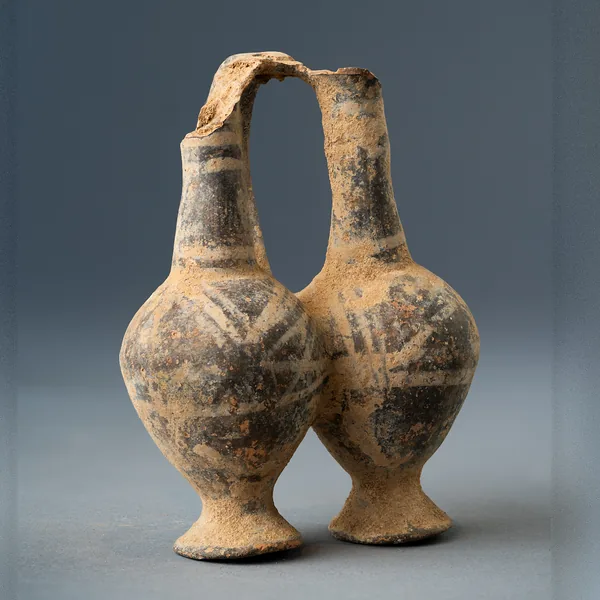
Base Ring II Double Juglet with White-Painted Decoration
Late Cypriot (Late Bronze Age)
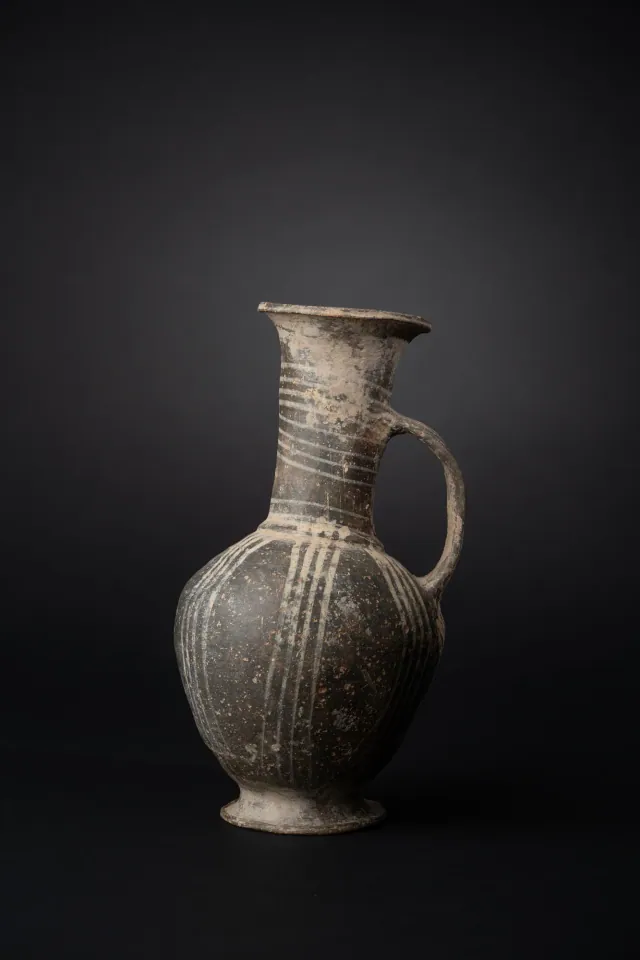
Base Ring II Jug with White-Painted Lattice Bands
Late Cypriot (Late Bronze Age)
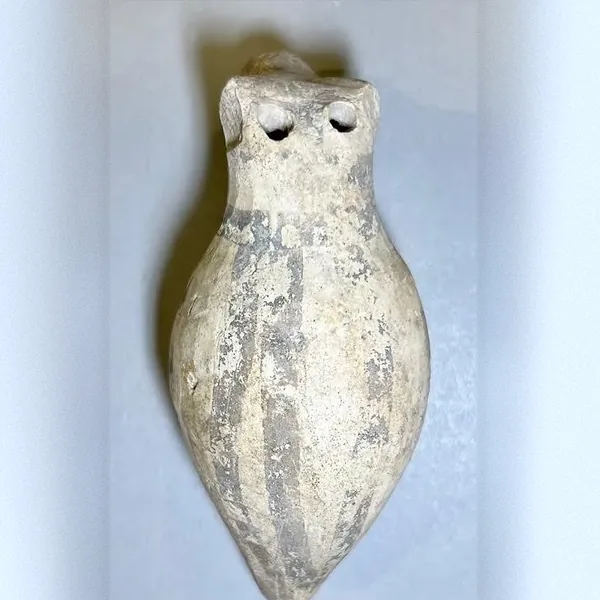
White Painted VI Owl-Headed Rattle
Late Cypriot (Late Bronze Age)
Found at the places discussed
Objects in our catalogue, in museum collections, recorded as found at these sites.
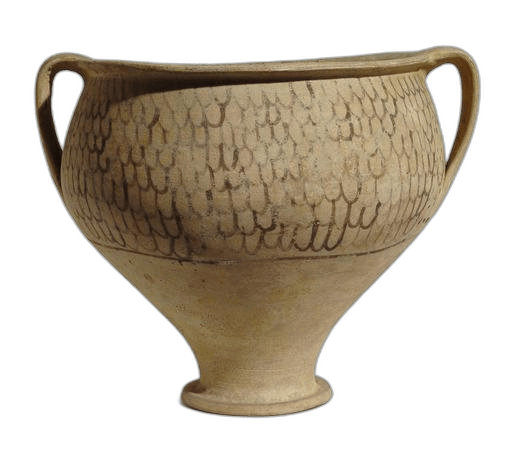

Background
Where to read more on this site before or after watching.
The site
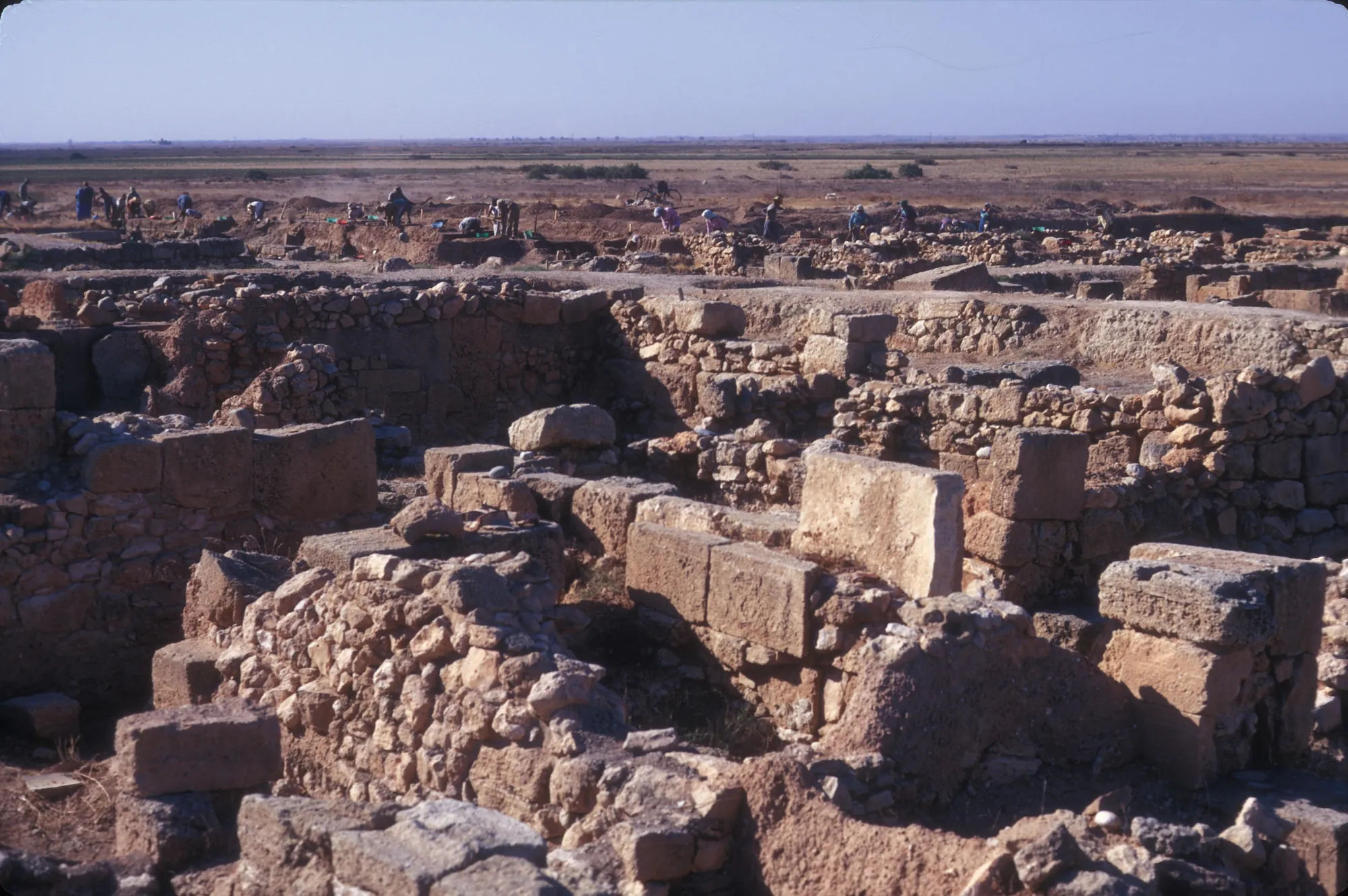
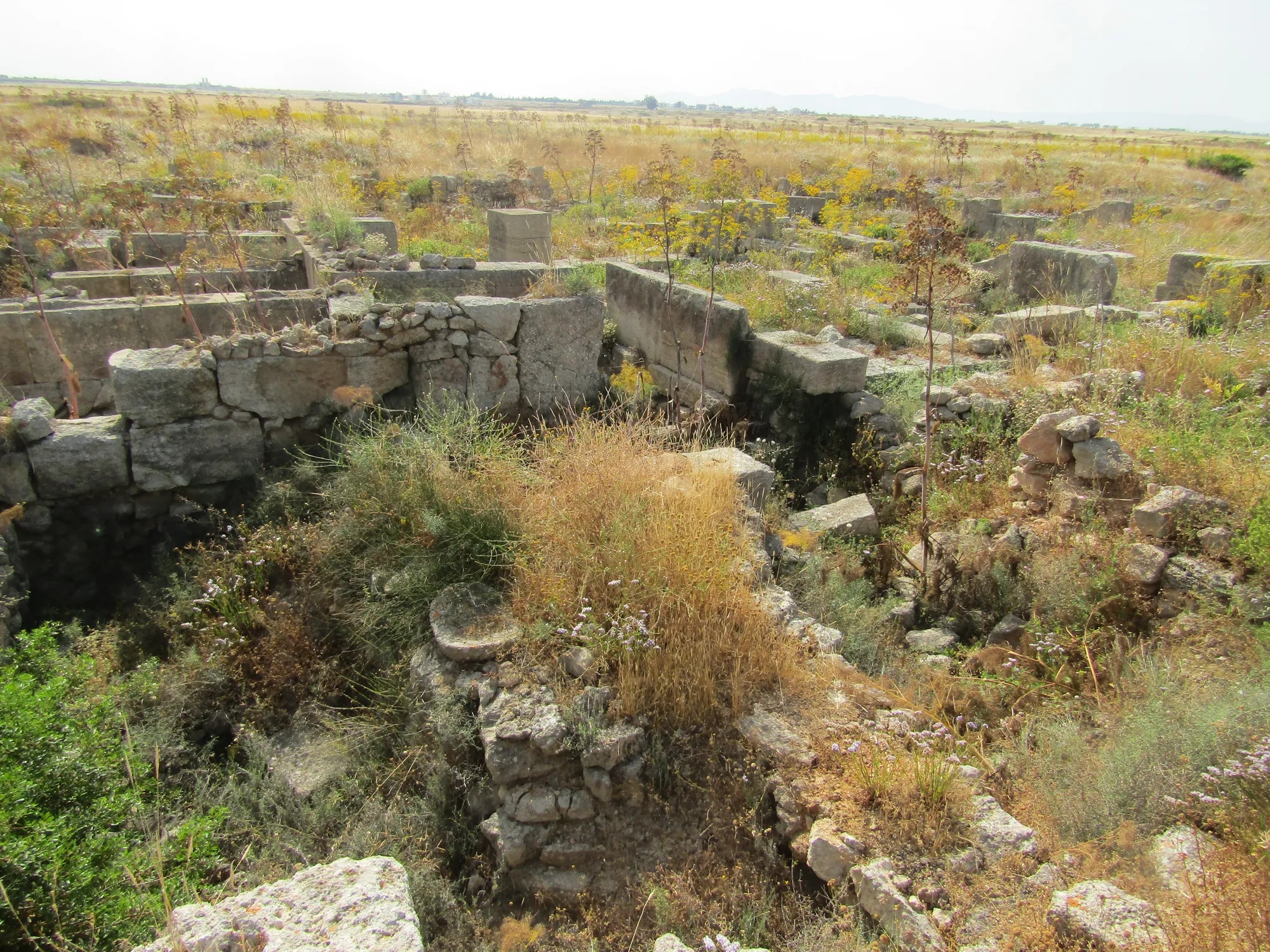
Enkomi
Enkomi is a walled Late Bronze Age town near the mouth of the Pedieos river on the bay of Famagusta, lived in from about 1650 BC until it was gradually abandoned for nearby Salamis. It was a port for Cypriot copper, and its excavations produced metal workshops, sanctuaries with bronze cult statues, rich tombs and the largest group of Cypro-Minoan inscriptions on the island.
In the compendium
Late Bronze Age Towns and Buildings
How Late Bronze Age Cyprus built its first towns: street grids, large ashlar buildings with storage halls, courtyard houses, and the short-lived settlements of the twelfth century.
In the compendium
Egypt
Ancient Egypt, Cyprus's partner in copper, pottery and prestige goods from the Middle Kingdom to the Ptolemies, who annexed the island.
In the compendium
Hittite Empire and Cyprus
The Late Bronze Age Anatolian empire that claimed Alashiya as a tributary but left almost no material trace on Cyprus.
Map of Cyprus
Places discussed in the talk
- Has a page on this site
- Other places
- Ground above 200, 500, 1,000 m
Places
- 1Enkomi
- 2Hala Sultan Tekke
- 3Maa-Palaeokastro