
Keynote·Archaeological Research Unit - University of Cyprus·2019
PORPHYRA Workshop, session 1: opening addresses and Bronze Age purple dye production on Chrysi
Purple Production on the Chrysi Island in the Bronze Age
Marina Solomidou-Ieronymidou, Maria Iacovou and Thomas Brogan
Chapters
About the lecture
This first session of the PORPHYRA Workshop, organised by the Archaeological Research Unit of the University of Cyprus and the INSTAP Study Center for East Crete on the materiality of purple dye production in Cyprus and the Aegean, comprises the opening addresses and the keynote lecture.
Chair Athanasios Vionis introduces Marina Solomidou-Ieronymidou, Director of the Department of Antiquities, who welcomes participants and notes that the workshop grew out of the discovery of great amounts of purple shells at the Hadjiabdullah site at Kouklia since 2016.
Maria Iacovou then explains how the Palaepaphos Urban Landscape Project unexpectedly encountered a 430-kilogram cache of purple shells in the industrial and storage units of the Cypro-Classical citadel complex at Palaepaphos. She describes bringing zooarchaeologist Dimitra Mylona from Crete to study the 4th-century BC assemblage at a laboratory in Ktima Paphos, and reviews the scarce Cypriot evidence for purple dye production atPyrgos-Mavrorachi, Marion and the Late Bronze Age site of Hala Sultan Tekke.
In the keynote lecture, co-authored with Dimitra Mylona, Chrysa Sofianou, Vilia Apostolakou, Philip Betancourt and Melissa Eaby, Thomas Brogan presents excavations on the island of Chrysi south of Ierapetra in Minoan Crete. In the Late Minoan IB Building B1 (1525 to 1450 BC), rooms 2 to 4 functioned as a purple dye workshop with two hearths, tripod cooking pots over ash from crushed olive stones and almond shells, stone pounding tools, triton shells used as scoops, and some 3,900 crushed and intact Hexaplex trunculus shells alongside Euthria cornea shells bearing predation holes from live storage in baskets or tanks. Brogan contrasts Building B1 with Buildings A2 and A3, which held paved platforms and saddle querns, and Building B2, an administrative residence containing copper and tin ingots, gold and lapis lazuli jewellery, and a nodulus sealing. He also examines Middle Minoan II (c. 1850 to 1750 BC) sorted shell deposits on Chrysi, linking them through granodiorite-tempered pottery to Gournia and the rock-cut dyeing vats at Alatzomouri-Pefka.
In the discussion afterwards, Brogan and Mylona address the Late Minoan IB abandonment of Cretan coastal sites, why whole small shells were sorted from crushed ones, the chemical stability of purple pigment during transport, and Minoan loom weights.
From our collection
Pieces in the Drakopoulos collection of the kinds and periods this talk covers: Textile tool, Middle Cypriot (Middle Bronze Age), Late Cypriot (Late Bronze Age).
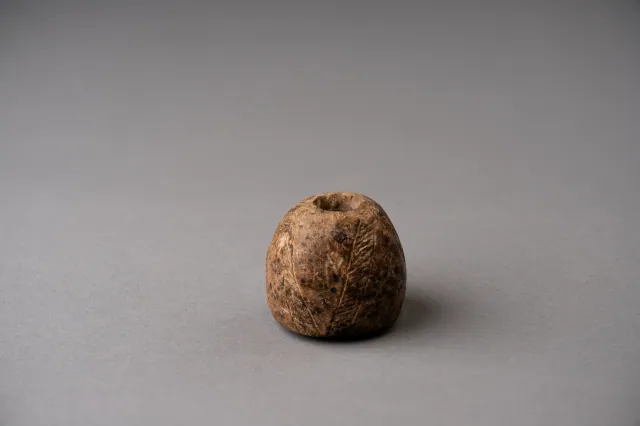
Spindle Whorl with Incised Herringbone Bands
Textile tool
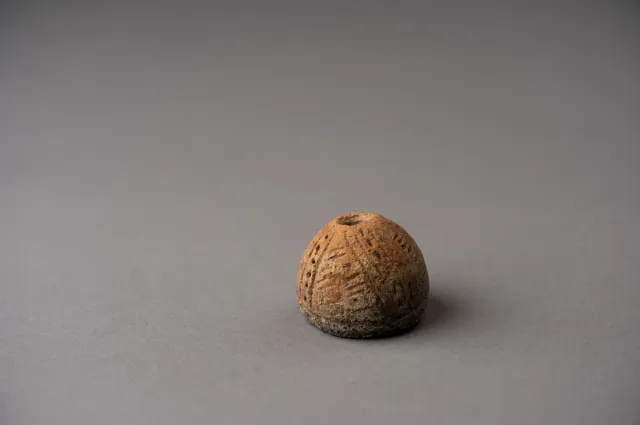
Red Polished Spindle Whorl with Incised Lattice and Dotted Bands
Textile tool
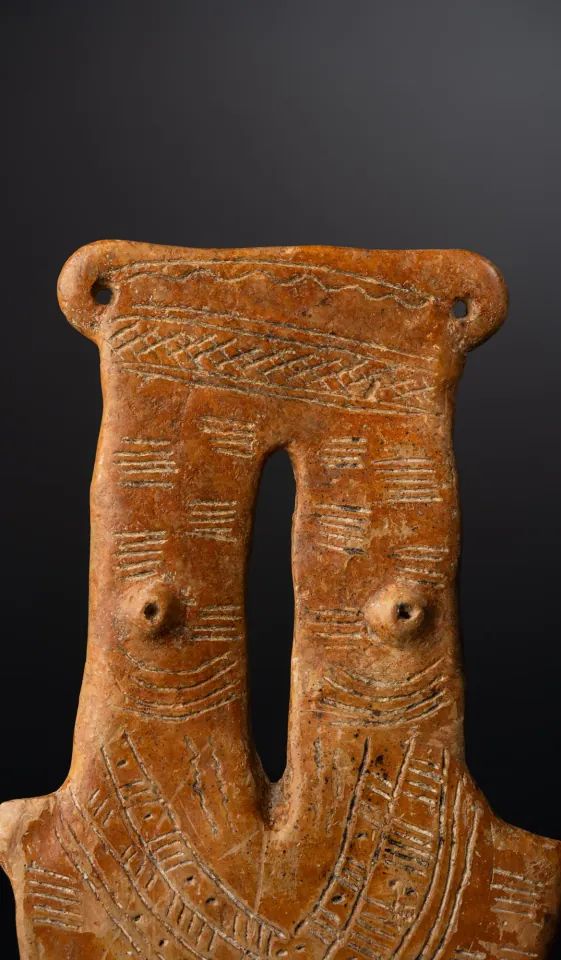
Red Polished Two-Necked Plank Figure
Middle Cypriot (Middle Bronze Age)
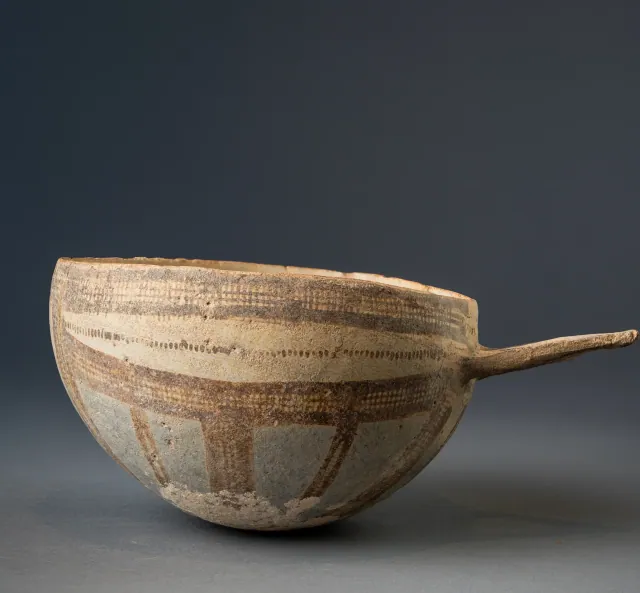
White Slip II Hemispherical Bowl with Wishbone Handle
Late Cypriot (Late Bronze Age)
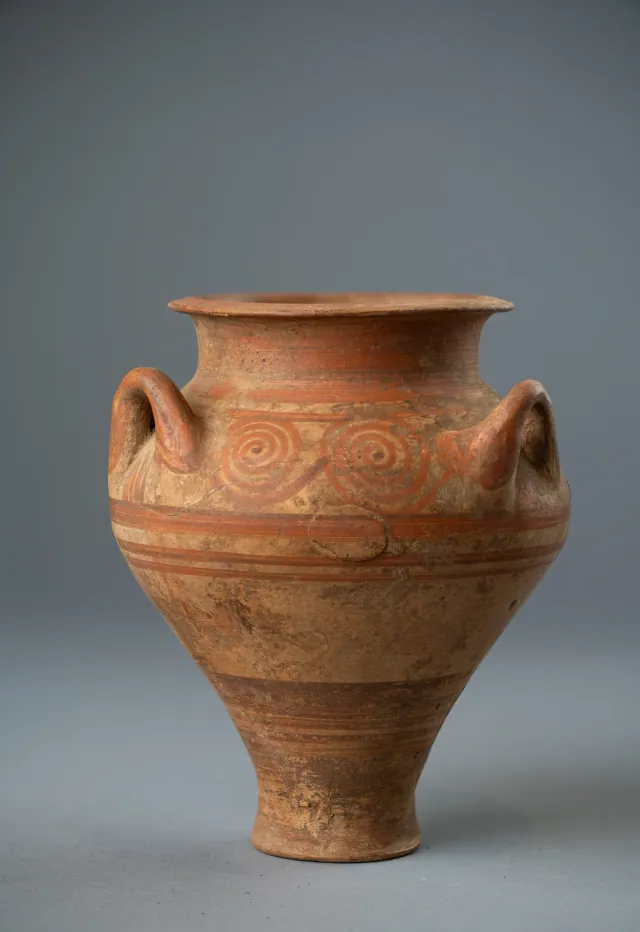
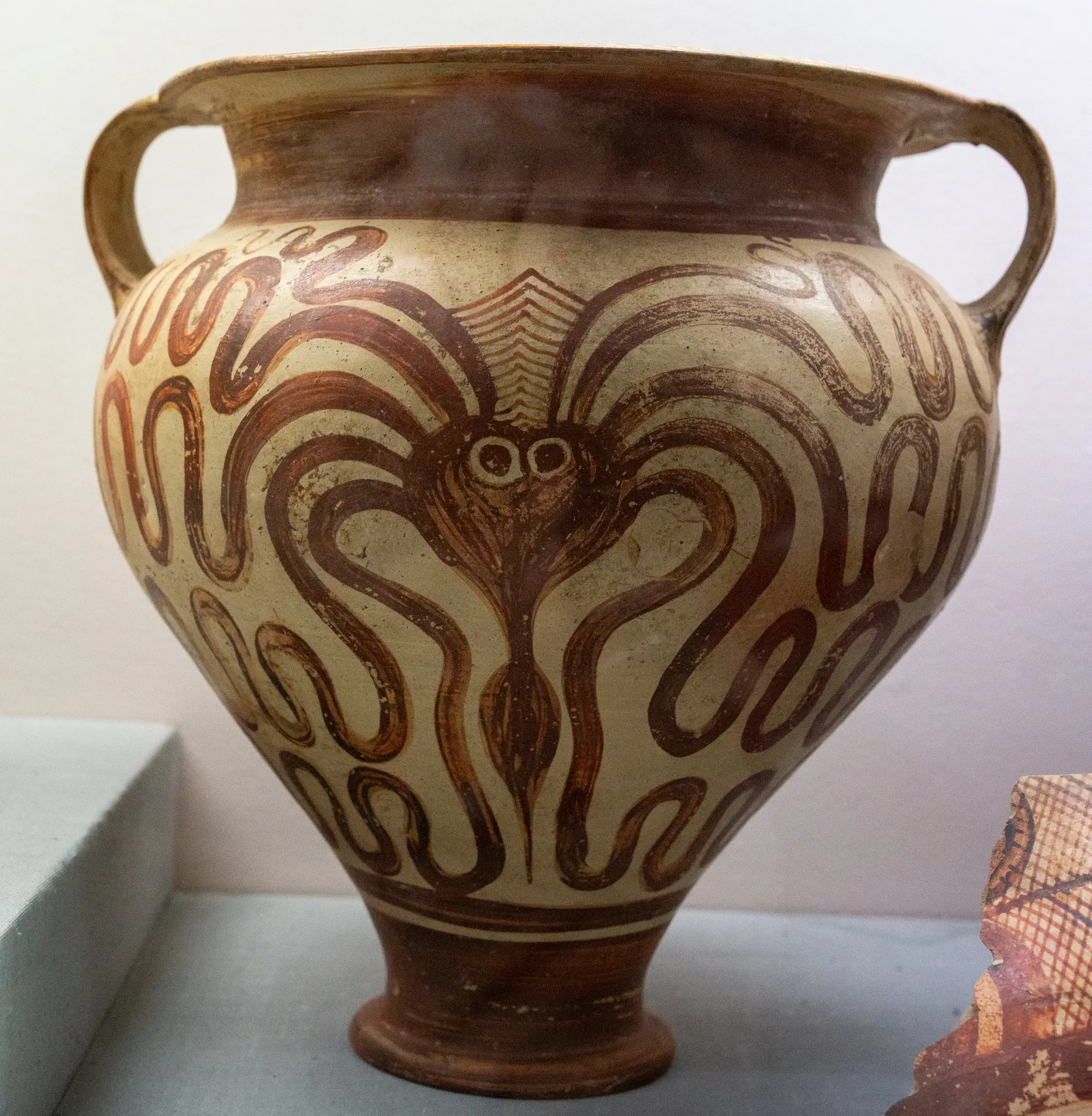
Cypriot Three-Handled Jar in the Mycenaean Style with Running Spirals
Late Cypriot (Late Bronze Age)
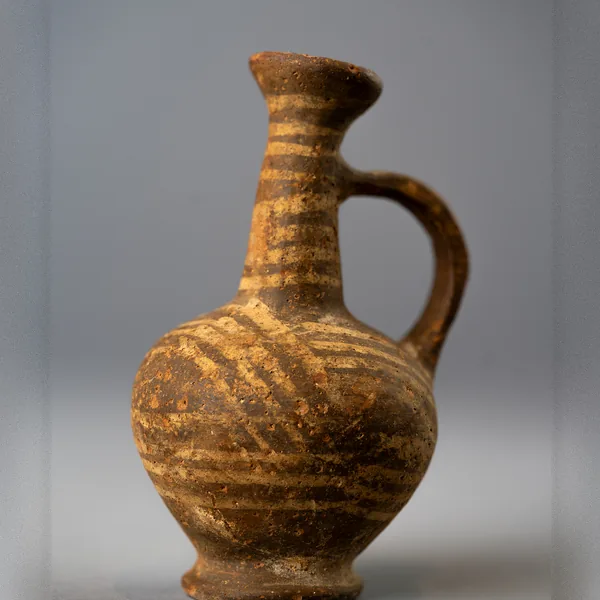
Base Ring II Bilbil Juglet with White-Painted Bands
Late Cypriot (Late Bronze Age)
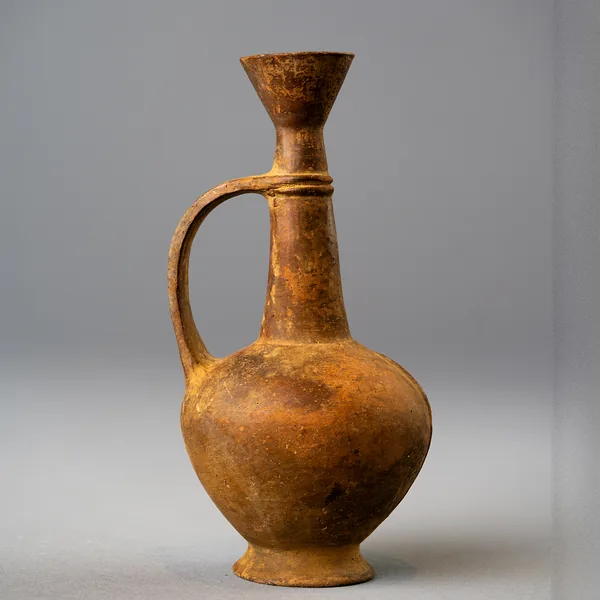
Base Ring Bilbil Juglet with Funnel Mouth and Neck Ridge
Late Cypriot (Late Bronze Age)
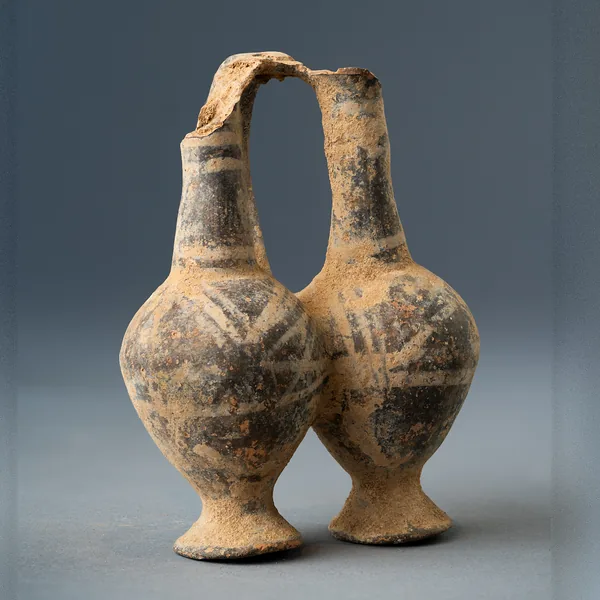
Base Ring II Double Juglet with White-Painted Decoration
Late Cypriot (Late Bronze Age)
Found at the places discussed
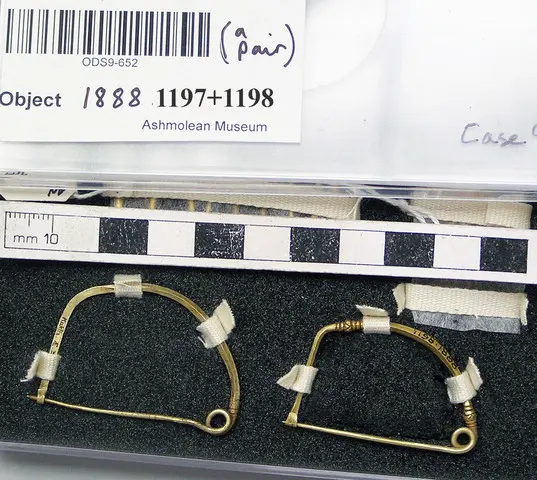
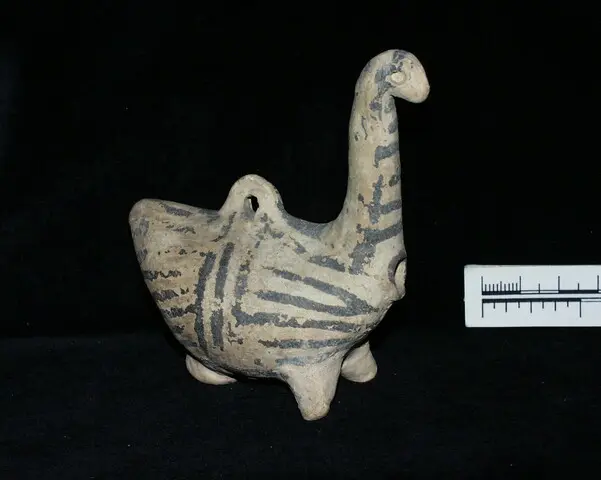
Objects in our catalogue, in museum collections, recorded as found at these sites.


Background
Where to read more on this site before or after watching.
The site
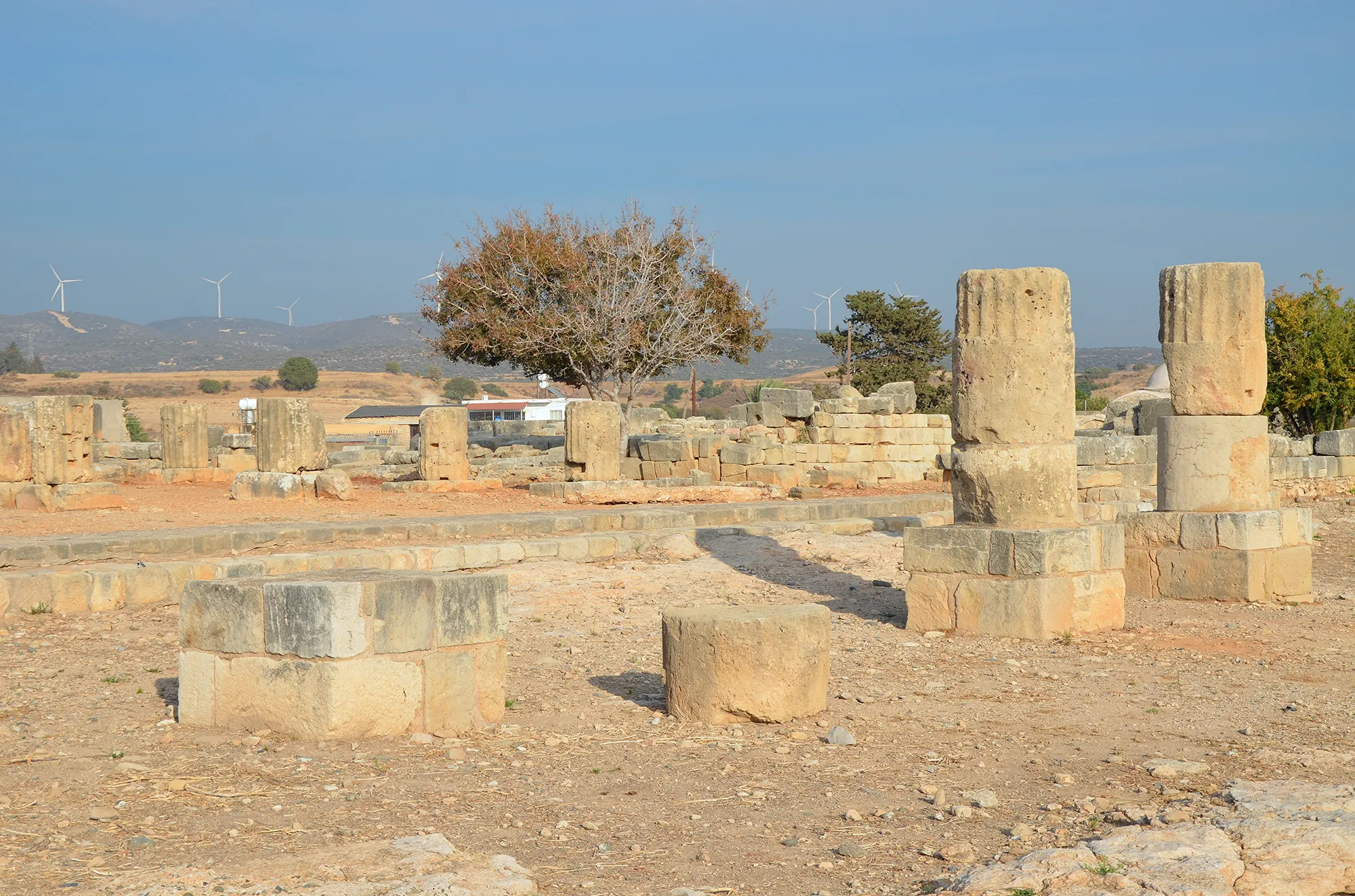
Palaepaphos (Kouklia)
Palaepaphos, Old Paphos, lies under and around the village of Kouklia in western Cyprus. Founded in the Middle Bronze Age, it was the only large town of the south-west until the early Hellenistic period, the seat of the kings of Paphos and the site of the sanctuary of the Paphian goddess, Aphrodite, worshipped here from about 1200 BC to the end of the 4th century AD.
In the compendium
The Minoans
The palatial Bronze Age civilization of Crete, which took Cypriot copper and passed writing to Cyprus in the early Late Bronze Age.
In the compendium
Clothing and Dress in Ancient Cyprus
What Cypriots wore from the Neolithic to the Cypro-Classical period, reconstructed from figurines, statues, textile tools and metal fasteners.
In the compendium
Spindle Whorls and Textile Tools in Ancient Cyprus
The tools of spinning, weaving and dyeing in ancient Cyprus, from Neolithic bone needles to the terracotta whorls and loom weights of the Bronze Age.