
Lecture·Archaeological Research Unit - University of Cyprus·2022
Textile Technologies in Aegean Prehistory
A guest lecture in the University of Cyprus series on a subject outside Cyprus.
Chapters
About the lecture
Kalliope Sarri of the Centre for Textile Research at the University of Copenhagen surveys textile production and dress in the prehistoric Aegean from the Neolithic to the Early Iron Age. Because organic fibres rarely survive in Greece, she draws on indirect evidence: clay spindle whorls and loom weights, bone awls, seals, pottery motifs, figurines, frescoes, and Linear B tablets.
Sarri begins with the Neolithic, when flax and plant fibres predominated because early domesticated sheep and goats had short hair. Early Neolithic sites such as Achilleion and Nea Nikomedeia yield discoid spindle whorls and clay spools, while warp-weighted loom weights appear in the Aegean only in the Late Neolithic II or Chalcolithic period, despite 7th-millennium BC examples at Ulucak in Anatolia. Based on perforated clay objects from Sesklo and Dimini, she suggests that the earliest Aegean loom was a horizontal ground loom using these objects as heddle-rod supports. Questioning whether Neolithic seals printed fabrics, she instead links Middle Neolithic painted pottery from Thessaly, Gioura, and Agios Petros to textile patterns, counted embroidery, and patchwork, and argues that Middle Neolithic figurines and a Franchthi bead depict clothing, including female trousers.
In the Early Bronze Age, woolly sheep and Anatolian-type cylindrical and crescent-shaped loom weights appear, though loom weights vanish on the Middle Bronze Age and Early Mycenaean mainland. On Minoan Crete, palatial workshops used standardized discoid loom weights, while imagery from Crete and Thera shows flounced skirts, sheer fabrics, a Theran silkworm cocoon, and what she interprets as wide flounced trousers. She concludes with Mycenaean dress, Linear B records of specialized wool workers at Knossos, mineralized Early Iron Age textiles from bronze cremation cauldrons at Lefkandi and Stamna, and experimental approaches to textile tools.
From our collection
Pieces in the Drakopoulos collection of the kinds and periods this talk covers: Textile tool.
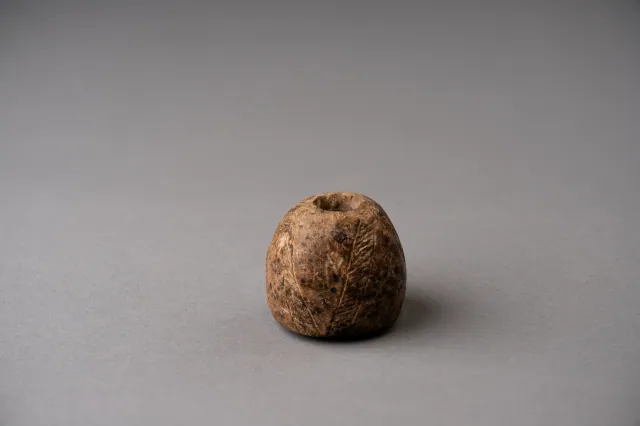
Spindle Whorl with Incised Herringbone Bands
Textile tool
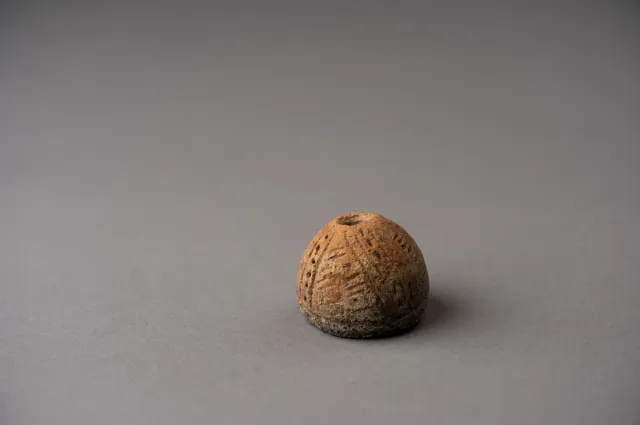
Red Polished Spindle Whorl with Incised Lattice and Dotted Bands
Textile tool
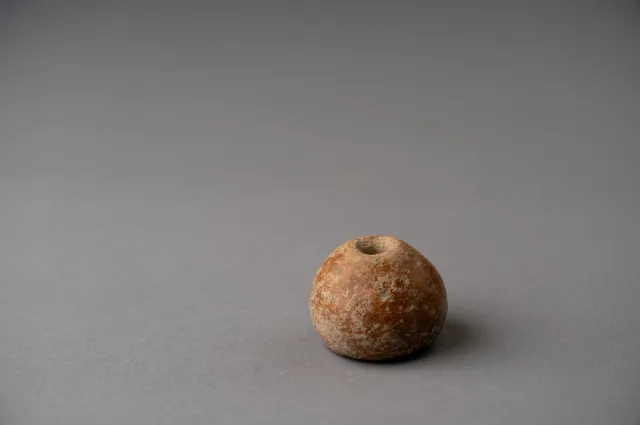
Plain Red Polished Spindle Whorl
Textile tool
Background
Where to read more on this site before or after watching.
In the compendium
Spindle Whorls and Textile Tools in Ancient Cyprus
The tools of spinning, weaving and dyeing in ancient Cyprus, from Neolithic bone needles to the terracotta whorls and loom weights of the Bronze Age.
In the compendium
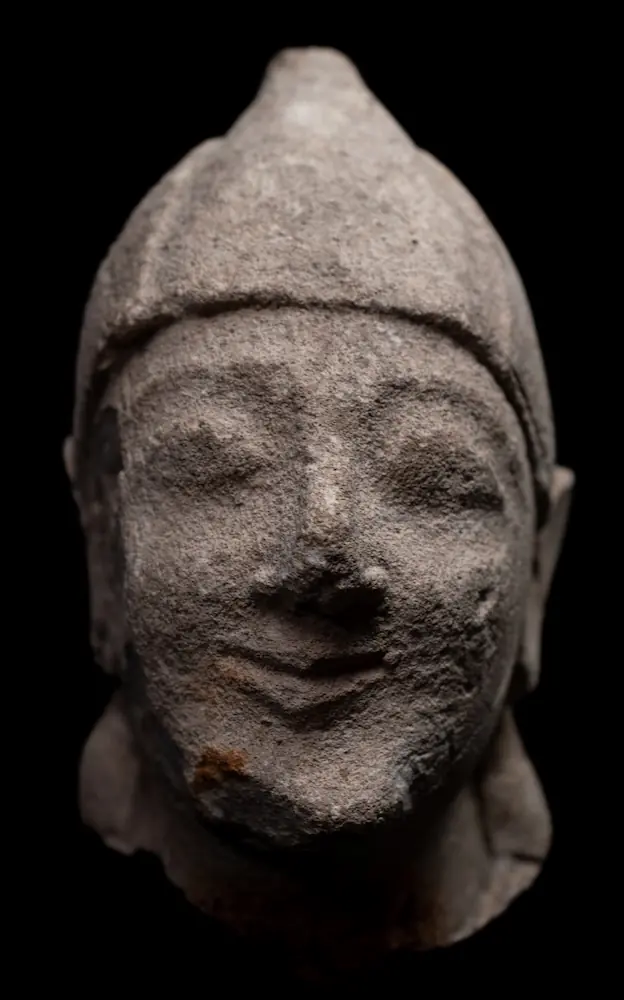
Clothing and Dress in Ancient Cyprus
What Cypriots wore from the Neolithic to the Cypro-Classical period, reconstructed from figurines, statues, textile tools and metal fasteners.

In the compendium
Seals
Engraved stone stamps and cylinders used in Cyprus from the Late Chalcolithic to the Classical period, often worn or set in gold.