
Workshop·CAARI Cyprus·2026
Textiles in ancient Cyprus and modern weaving practice
Giulia
Chapters
About the video
Recorded at the CraftCY Workshop on 13 March 2026, this session pairs an archaeological lecture on ancient Cypriot textile production with a practical demonstration by a contemporary textile designer and weaver.
In the first part, textile archaeologist Giulia outlines how researchers reconstruct an industry whose organic products rarely survive in the temperate Mediterranean climate. Framing her work through Eva Andersson Strand's model of resources, technology and society, she focuses on the surviving inorganic components of composite tools: spindle whorls and loom weights from the Early Bronze Age to the Roman period. She explains how plotting a whorl's mass against its maximum diameter, or calculating its moment of inertia, indicates whether it was suited to spinning fine, short fibres or thicker, longer ones. She also notes the limits of experimental models, pointing to work by Margarita Gleba and Susanna Harris on manually joined plant fibres and to the difficulty of distinguishing low-whorl from high-whorl spinning through use-wear alone. Turning to twentieth-century Cyprus, she discusses photographs of Cypriot men and priests spinning thread with central wooden cross-whorls (which a traditional practitioner identified as thread-making for leatherwork rather than textile spinning) and the survival of hand spindles alongside spinning wheels.
Moving to weaving, she explains how the mass and thickness of loom weights on a warp-weighted loom govern warp tension and thread count in a tabby weave, and considers evidence for spools, beaters, ground looms for mat-making, and narrow band weaving. After describing the analysis of mineralised textile fragments under portable and scanning electron microscopes, she warns against reading small variations in household whorl counts as proof of specialist workshops. She concludes with textile dyeing, comparing indirect evidence for liquid-processing installations at Middle Bronze Age Erimi and in the temple area at Kition with direct dye stains at Hala Sultan Tekke, and noting that traditional Cypriot vegetable dyeing in a clay pithari leaves no visible stain.
In the second part, a Cyprus-based textile designer compares archaeological grid systems with point-paper weaving notation, tracing how binary over-and-under thread structures led from seventeenth-century drafts to punch cards and the Jacquard loom. She introduces a folding four-shaft educational handloom built in Cyprus after an English Harris Looms design, invites participants to draft patterns on graph paper and weave them in tabby, basket weave and twill, and displays samples dyed with local hibiscus flowers, madder, marigold, walnut, sunflower seeds and iron-rich clay, alongside unfired clay replica loom weights.
From our collection
Pieces in the Drakopoulos collection of the kinds and periods this talk covers: Textile tool, Early Cypriot (Early Bronze Age), Hellenistic.
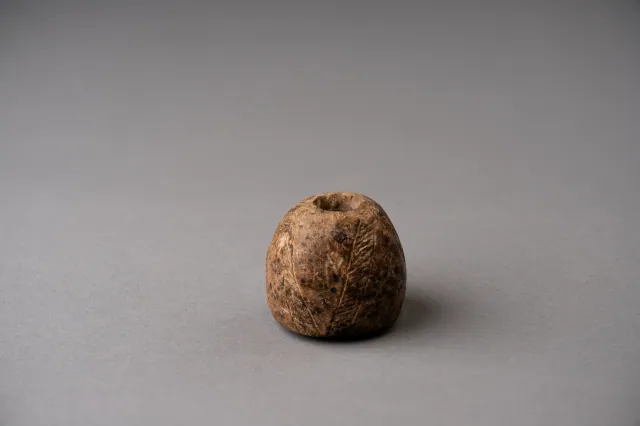
Spindle Whorl with Incised Herringbone Bands
Textile tool
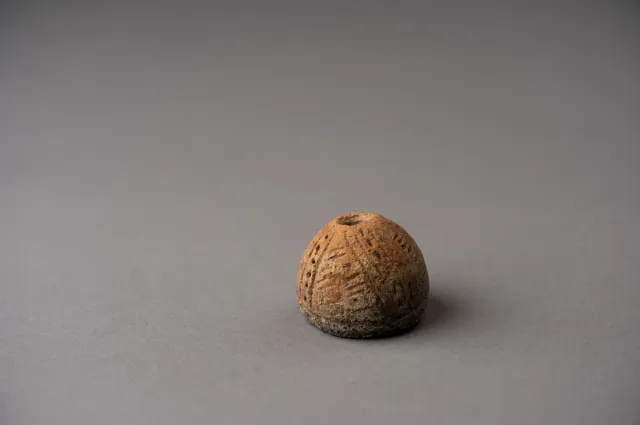
Red Polished Spindle Whorl with Incised Lattice and Dotted Bands
Textile tool
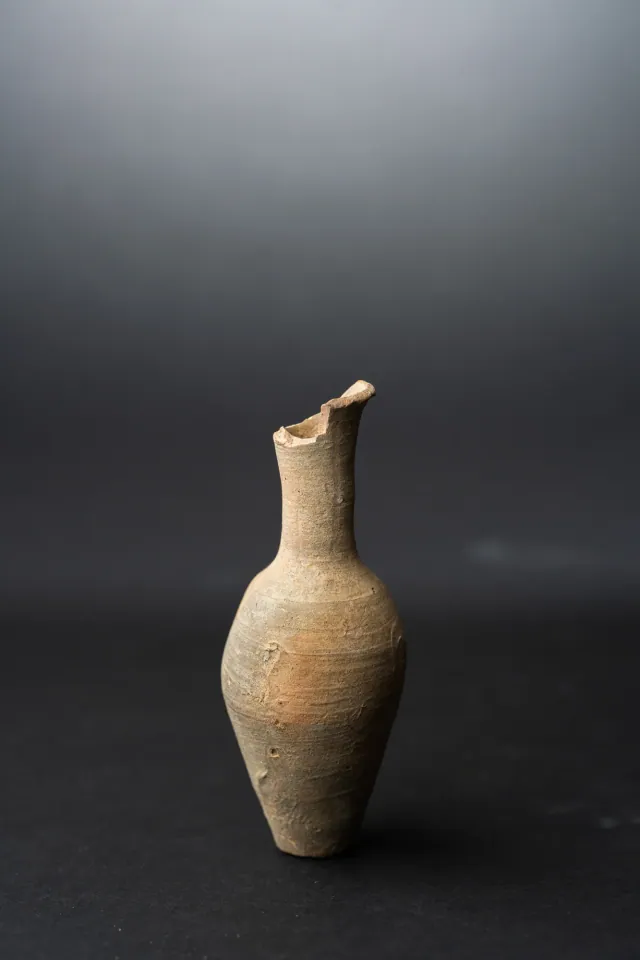
Fusiform Unguentarium
Hellenistic
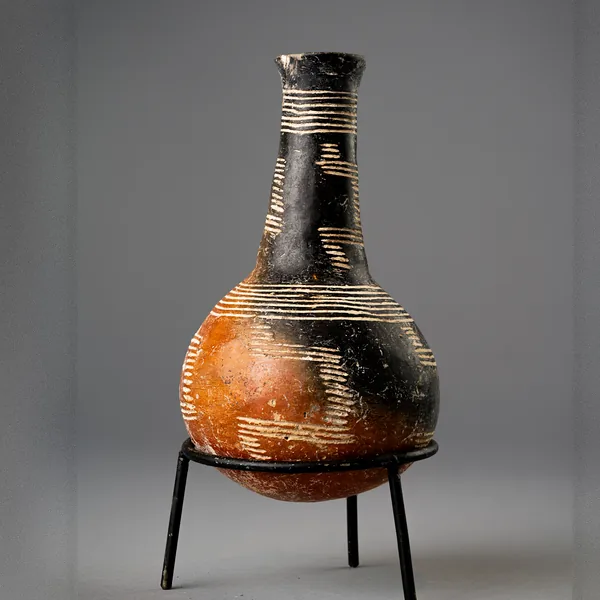
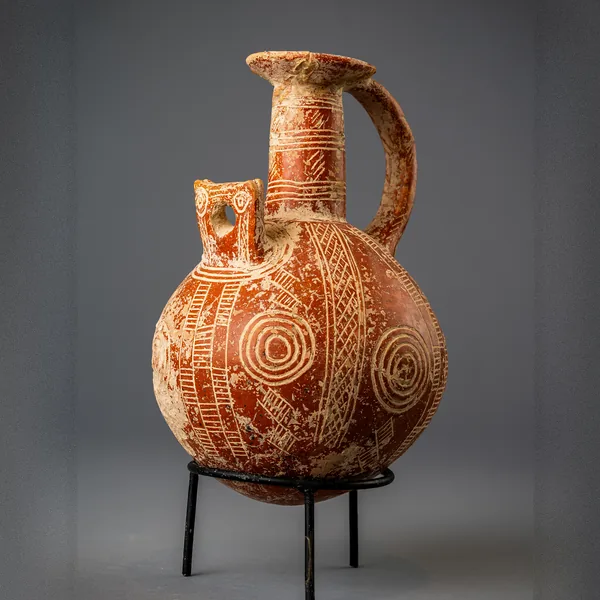
Red Polished Black-Topped Bottle with Stepped Incised Bands
Early Cypriot (Early Bronze Age)
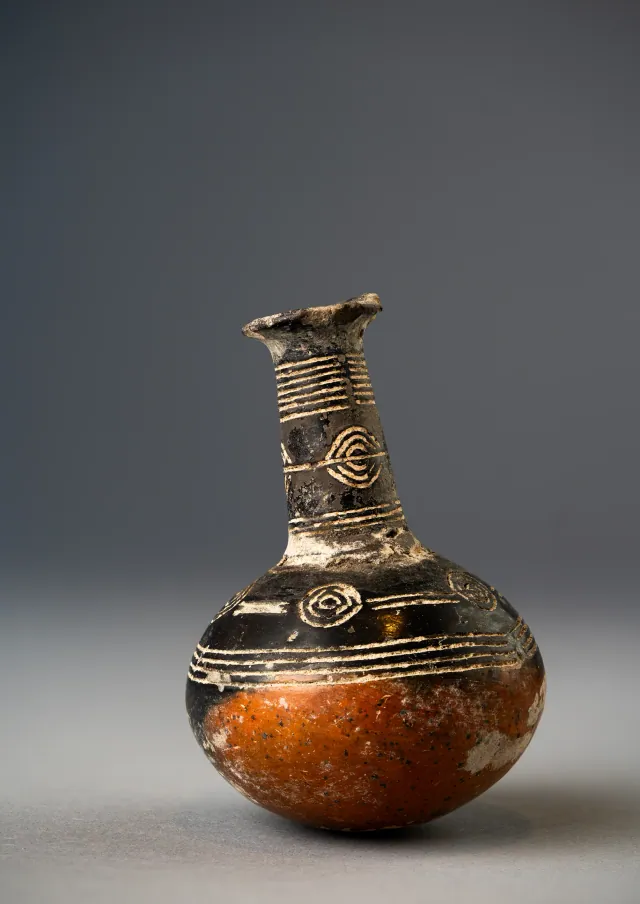
Red Polished Black-Topped Bottle with Incised Concentric Circles
Early Cypriot (Early Bronze Age)
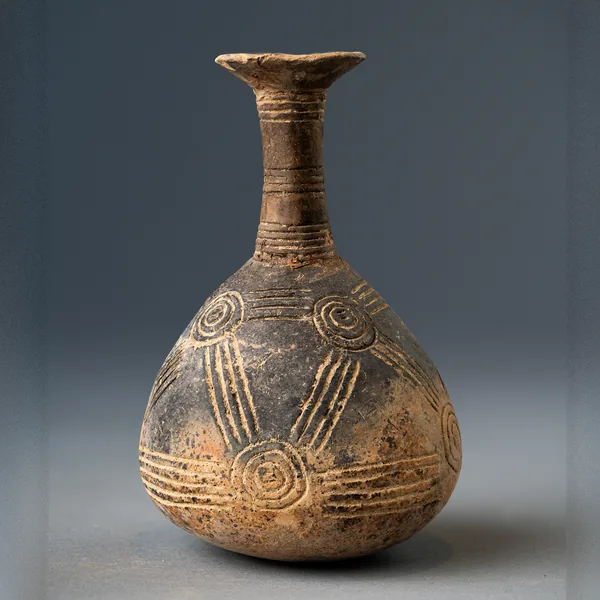
Red Polished Bottle with Linked Concentric Circles
Early Cypriot (Early Bronze Age)
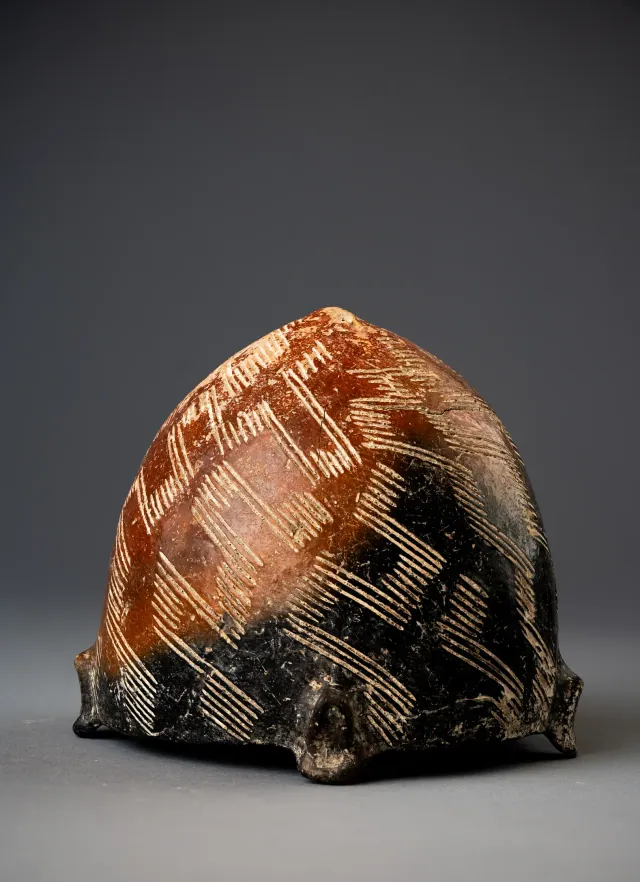
Black-topped Red Polished Tulip Bowl with Incised Hatched Lattice
Early Cypriot (Early Bronze Age)
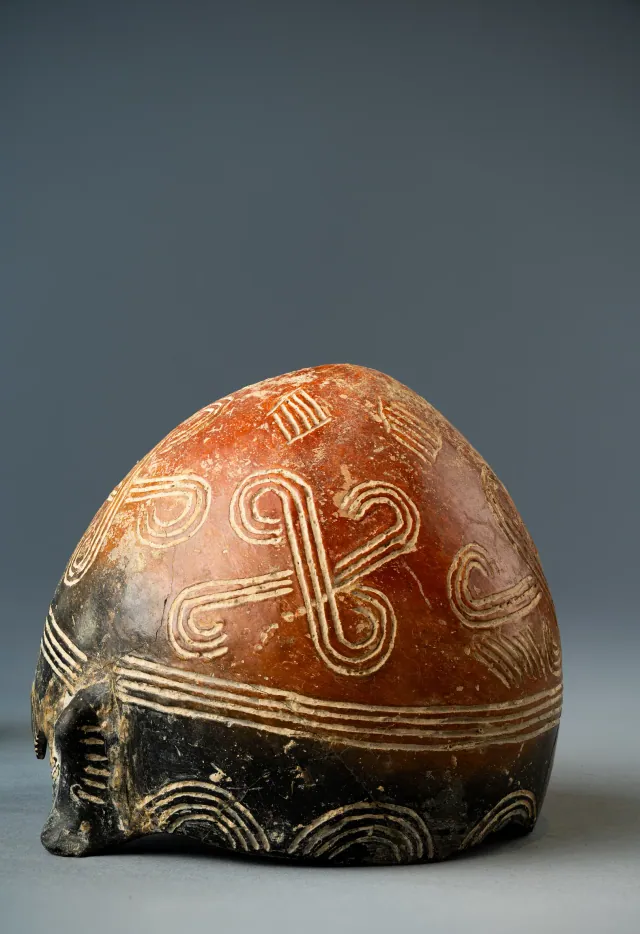
Black-topped Red Polished Tulip Bowl with Incised Spiral-armed Cross, Circles and Arcades
Early Cypriot (Early Bronze Age)
Found at the places discussed
Objects in our catalogue, in museum collections, recorded as found at these sites.

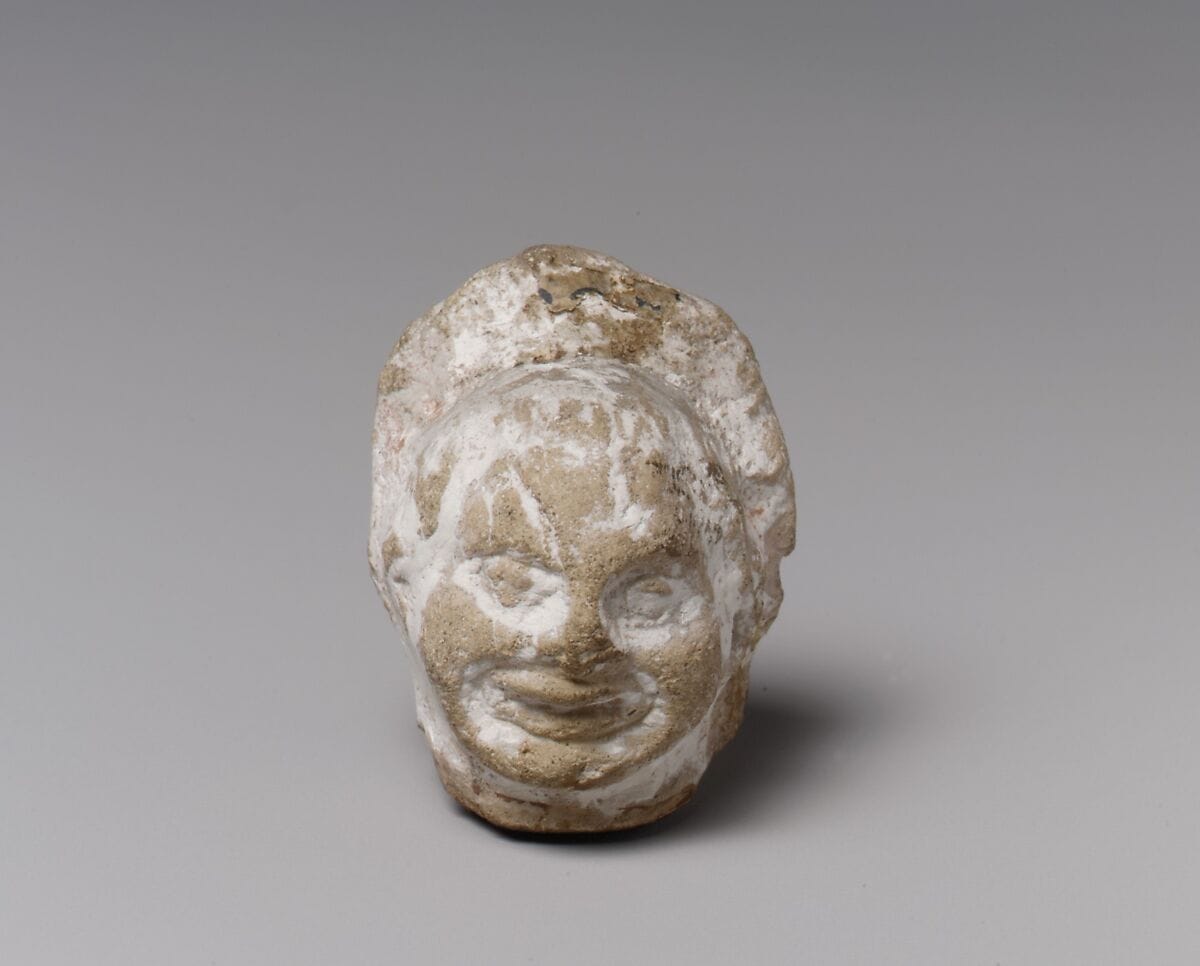
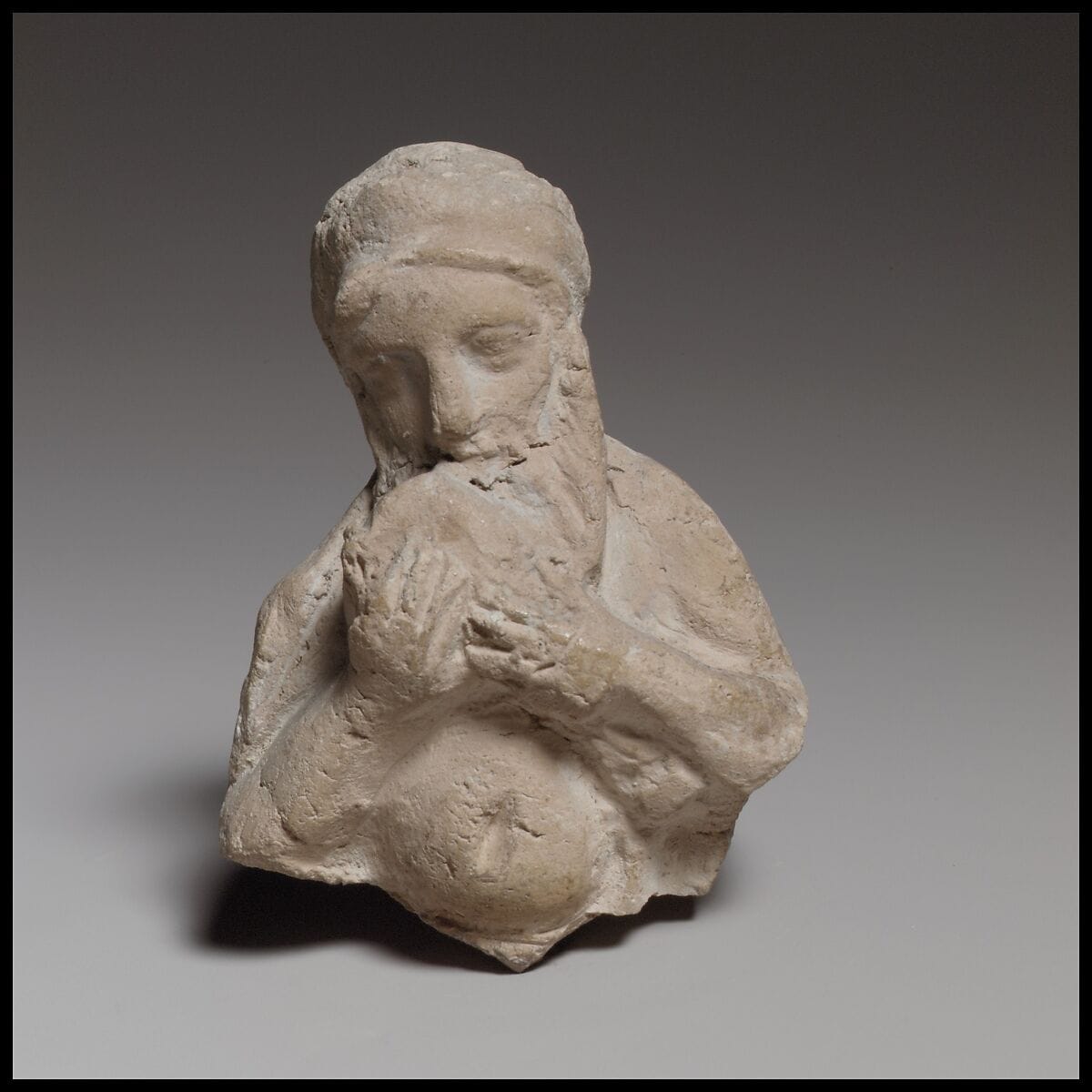

Background
Where to read more on this site before or after watching.
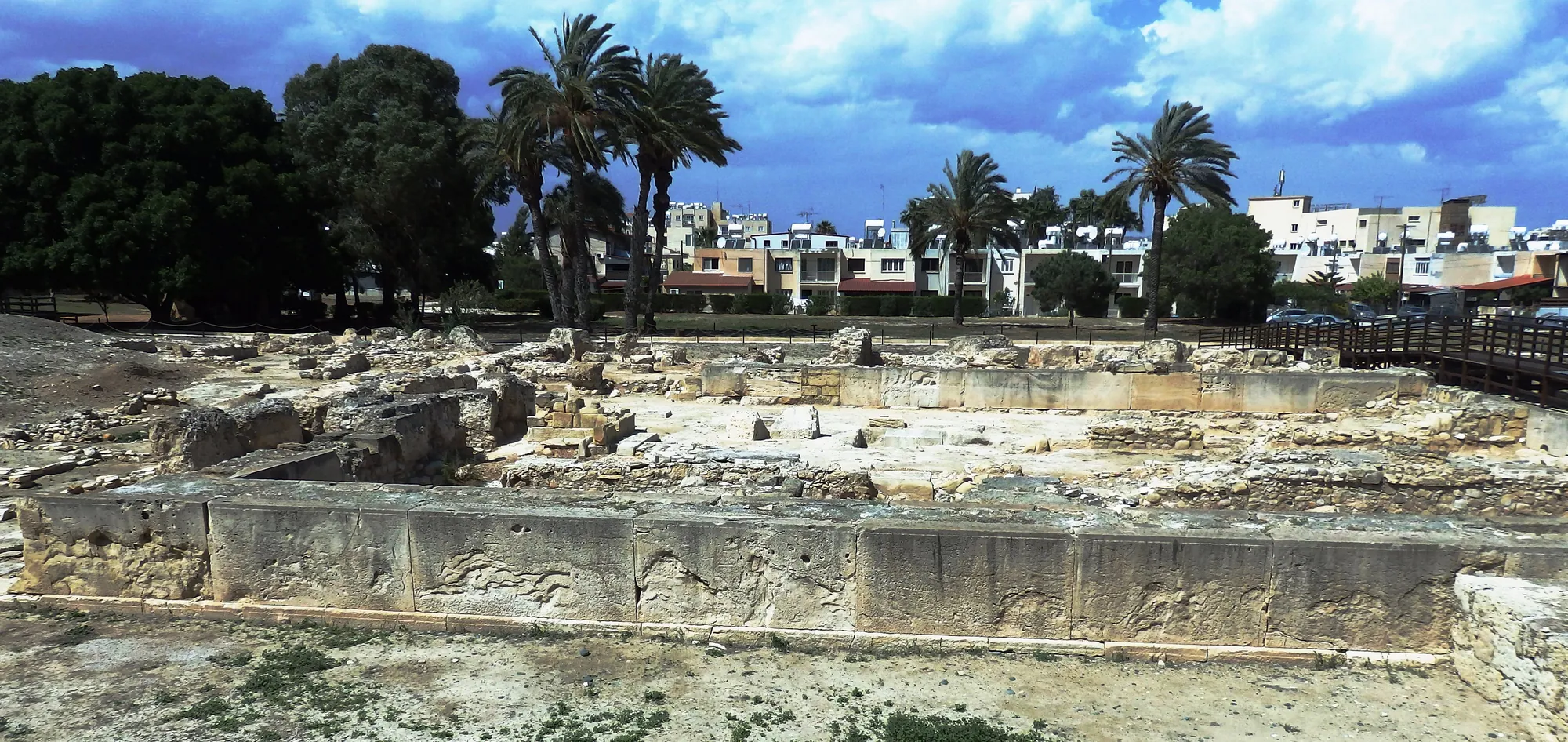
The site
Kition
Kition lies under modern Larnaca on the south-east coast. It was founded as a harbour town in the 13th century BC, with temples and copper workshops in its sacred quarter at Kathari. After a long gap the Phoenicians rebuilt the main temple for Astarte, and from the 5th century BC the city was the seat of a Phoenician dynasty with a war harbour of ship sheds at Bamboula. Its last king was put to death by Ptolemy I in 312 BC, but the city lived on into the Roman period and beyond.
In the compendium
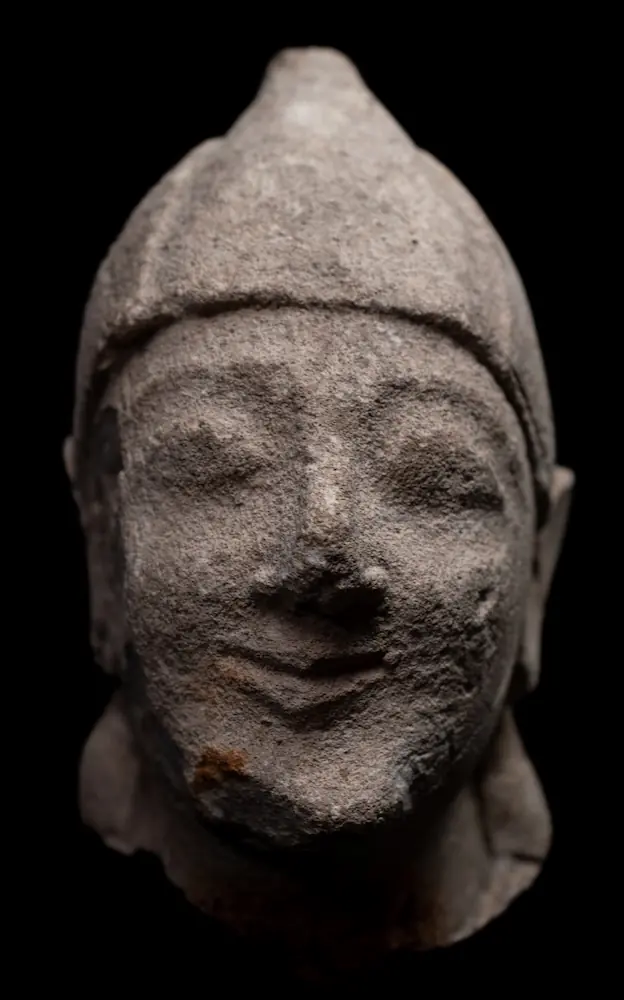
Spindle Whorls and Textile Tools in Ancient Cyprus
The tools of spinning, weaving and dyeing in ancient Cyprus, from Neolithic bone needles to the terracotta whorls and loom weights of the Bronze Age.
In the compendium
Clothing and Dress in Ancient Cyprus
What Cypriots wore from the Neolithic to the Cypro-Classical period, reconstructed from figurines, statues, textile tools and metal fasteners.
The period
Early Bronze Age
The period c. 2500–1950 BCE, from the Philia phase through Early Cypriot I–III, of rectilinear villages, Red Polished pottery and chamber-tomb cemeteries.
Map of Cyprus
Places discussed in the talk
- Has a page on this site
- Other places
- Ground above 200, 500, 1,000 m
Places
- 1Kition
- 2Hala Sultan Tekke