
Lecture·CAARI Cyprus·2021
Beyond Representation: Cypriot Rural Sanctuaries as Assemblages
Beyond Representation: Cypriot Rural Sanctuaries as Vibrant Assemblages
Chapters
About the lecture
Erin Walcek Averett re-evaluates the limestone statues and terracotta figurines from the rural sanctuary at Athienou-Malloura, excavated by the Athienou Archaeological Project under Michael Toumazou. Starting from the history of scholarship on Cypriot sculpture, she notes how twentieth-century studies privileged formal typology, style and chronology, treating votives as passive representations of a donor's piety or of conservative rural custom. Drawing on post-humanist frameworks, new materialism and assemblage theory, she argues instead that votives, worshippers, architecture and the surrounding countryside formed shifting assemblages whose meanings changed long after an object was first dedicated.
Averett sets the sanctuary within the Malloura Valley on the southern edge of the Mesaoria plain, near Golgoi and along inland routes toward Ledra, Salamis, Kition, Idalion and Tamassos. Survey and excavation show little settlement in the valley itself before the Roman period; during the Cypro-Archaic period and the Cypro-Classical period, the valley was used mainly as a ritual and mortuary zone, with chamber tombs on the nearby hill of Maghara Tepesi in view of the open-air temenos.
Founded at the end of the Cypro-Geometric III period, the sanctuary was reorganized at the end of the fourth century BC in the Hellenistic period. Earlier statues and figurines were gathered into construction fill to level the courtyard, built into the courses of the new peribolos wall (some visible, some hidden), or retained on display alongside new dedications. Averett shows excavation contexts where Cypro-Archaic and Cypro-Classical votaries and warrior figurines lay directly on Hellenistic floors next to statuettes of Pan, arguing that keeping older sculptures in view collapsed linear time and gave them new roles.
The final section examines how votives made deities present (including Zeus Ammon, Artemis, Bes, Herakles and Pan) and how repetition worked on visitors and craftspeople. Averett highlights repeated protective figures of Bes on a wall plaque and on the Amathus sarcophagus, the recurring warrior figurines, and a dense concentration of at least eighty Pan statuettes in one part of the sanctuary. In the discussion afterwards, Maria Iacovou, Giorgos Papantoniou, Nancy Serwint, Jennifer Webb and Nicholas Blackwell raise questions on Roman lamps, breakage, settlement visibility in the Mesaoria, the Late Bronze Age sanctuary at Athienou, and burnt animal bone and modern looters' pits.
From our collection
Pieces in the Drakopoulos collection of the kinds and periods this talk covers: Stone sculpture, Terracotta figurine.
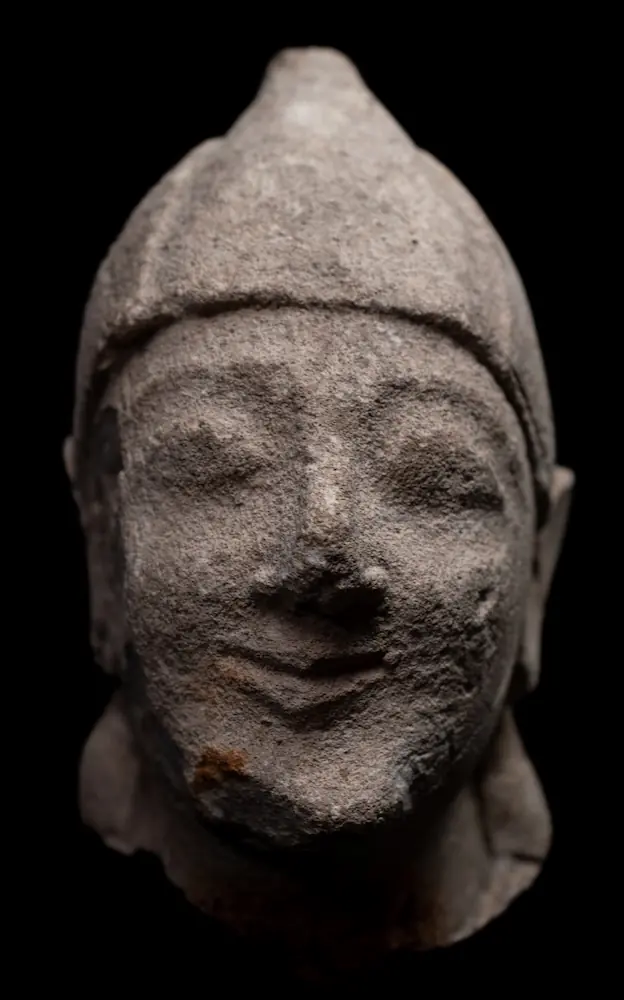
Limestone Head of a Beardless Votary in a Conical Helmet
Stone sculpture
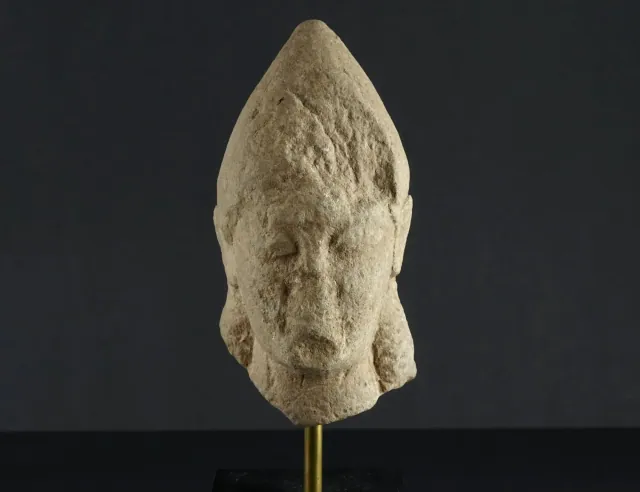
Weathered Limestone Head of a Votary in a Tall Pointed Cap
Stone sculpture
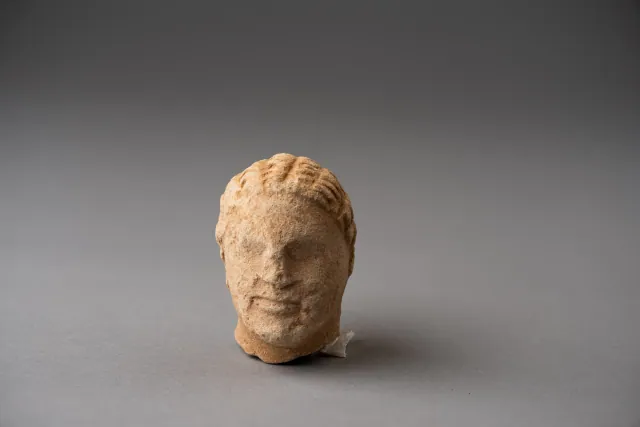
Limestone Head of a Boy, probably from a Temple Boy Statuette
Stone sculpture
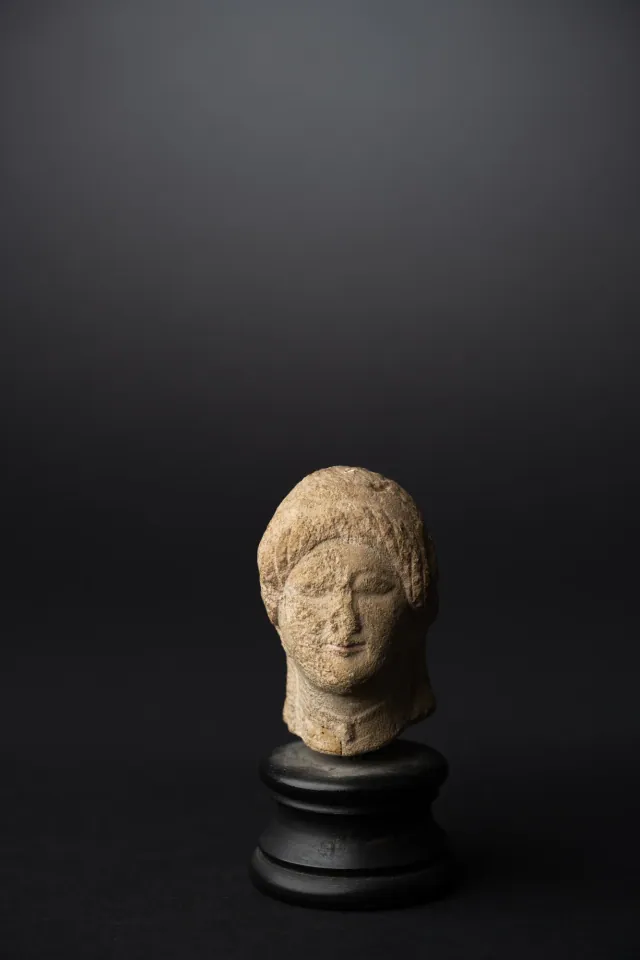
Limestone Head of a Votary with a Wreath
Stone sculpture
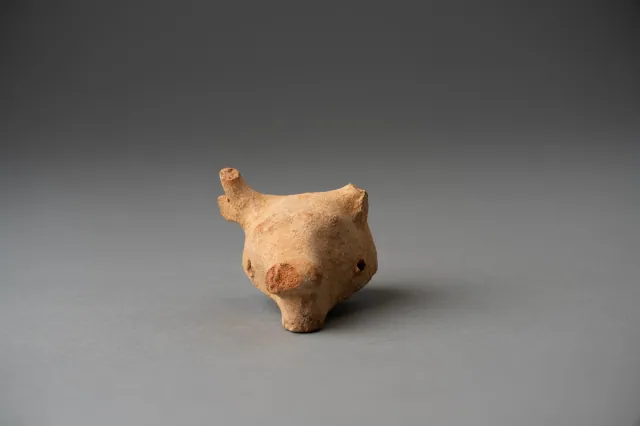
Head of a Terracotta Bull Figurine
Terracotta figurine
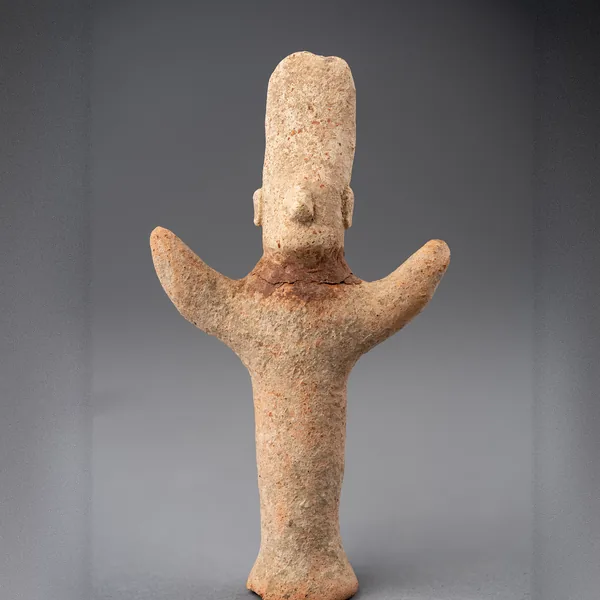
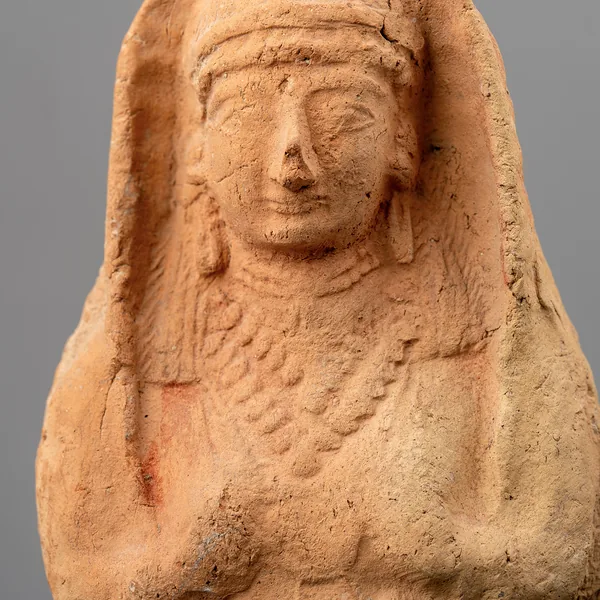
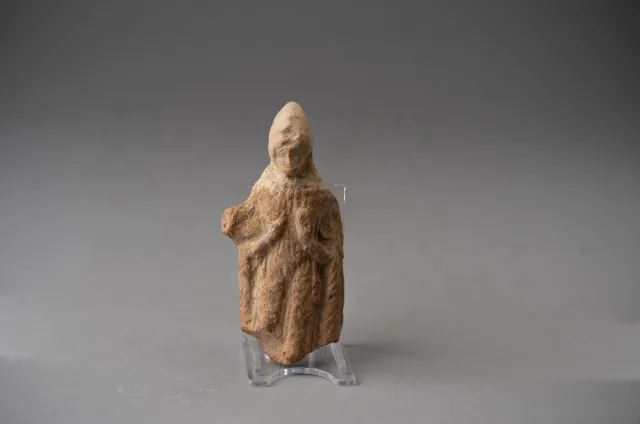
Terracotta Figure with Upraised Arms and Tall Cylindrical Headdress
Terracotta figurine
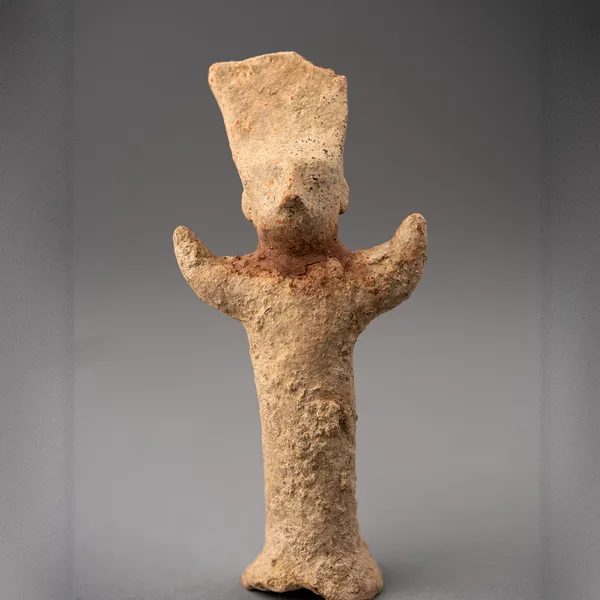
Terracotta Figure with Upraised Arms and Flaring Headdress
Terracotta figurine
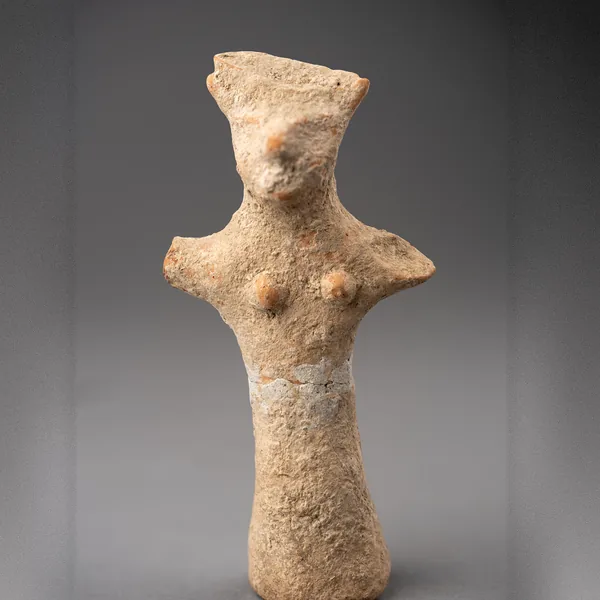
Terracotta Female Figure with Outstretched Arms
Terracotta figurine
Found at the places discussed
Objects in our catalogue, in museum collections, recorded as found at these sites.

Bichrome Bull Lamp
Idalion · British Museum
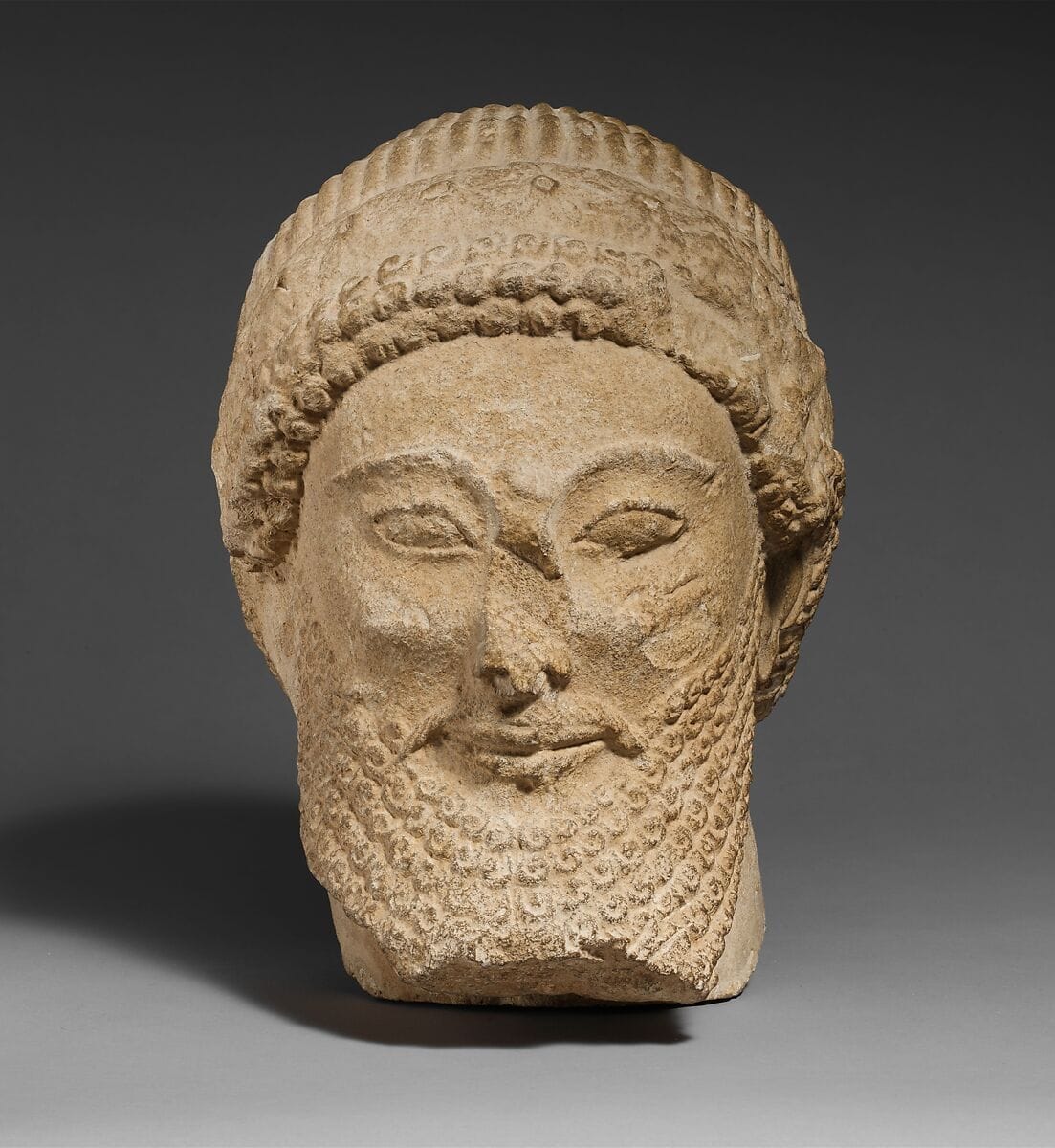
Limestone head of a bearded male with a wreath of flowers
Golgoi · Metropolitan Museum of Art
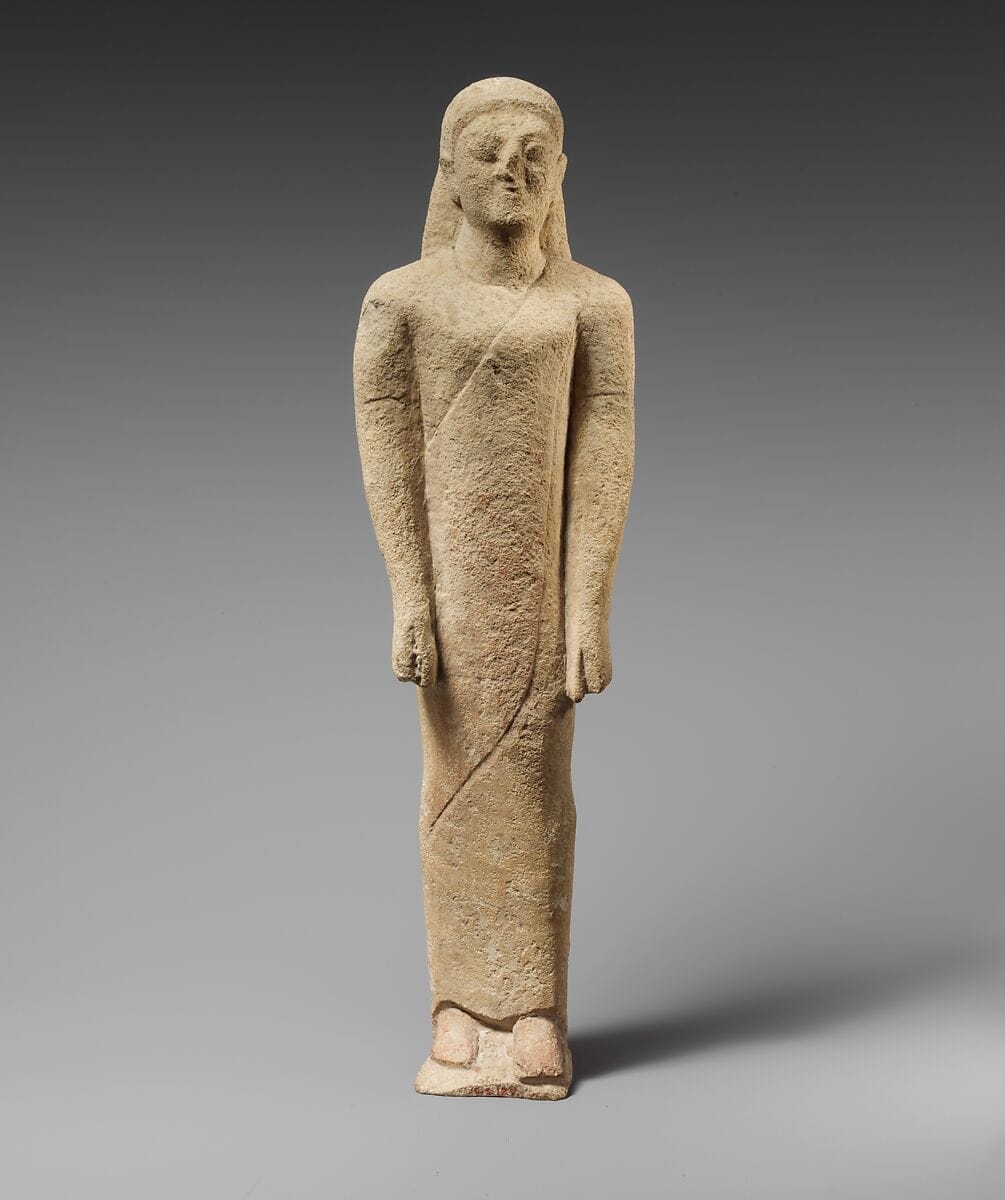
Limestone statuette of a beardless male votary in Greek dress
Idalion · Metropolitan Museum of Art
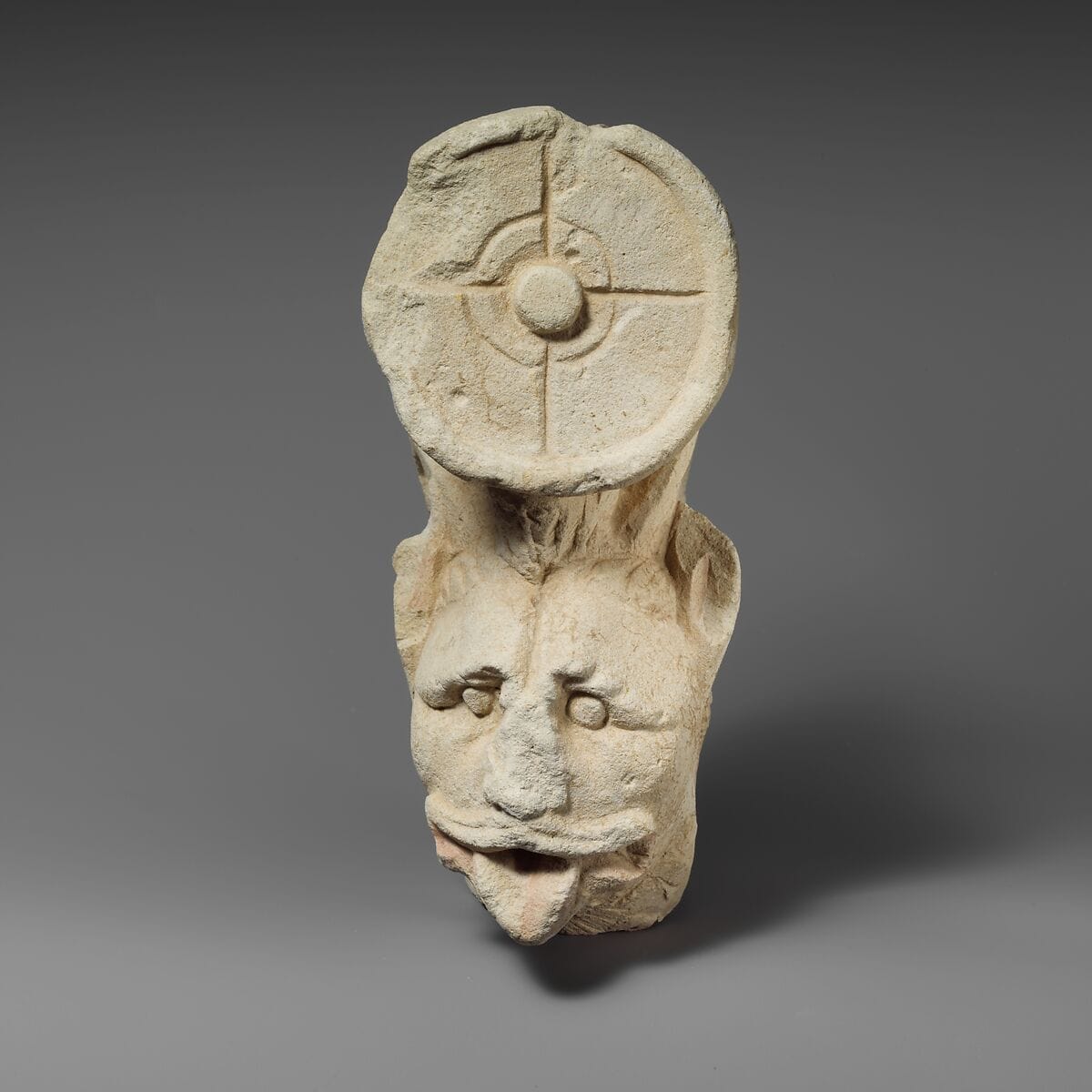
Fragment of a limestone throne (?) with the head of a horned lion
Amathus · Metropolitan Museum of Art
Background
Where to read more on this site before or after watching.
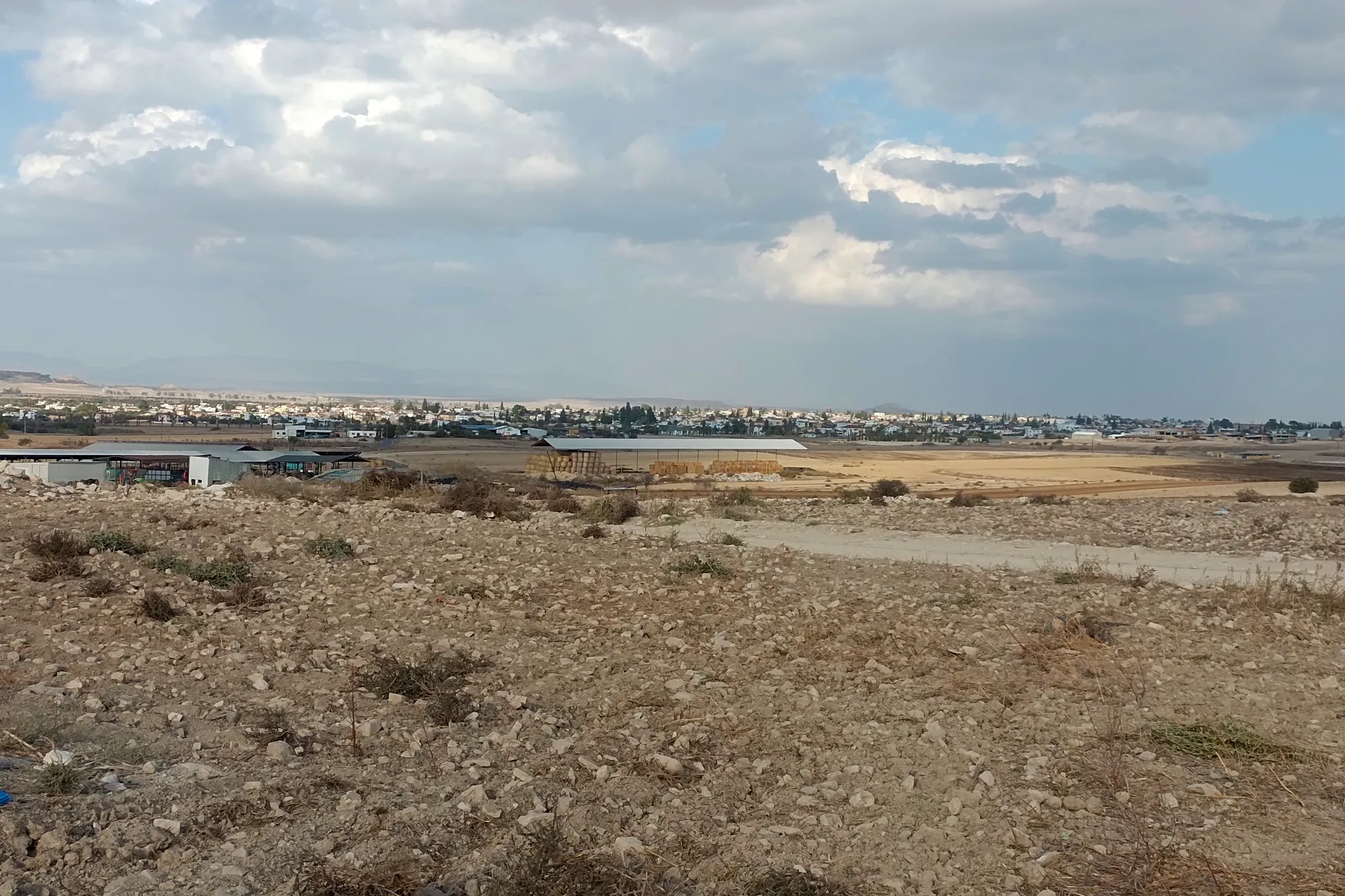
The site
Golgoi
Golgoi was a small town on the low hill of Giorkous just north-east of modern Athienou, with a necropolis to the east and an extra-urban sanctuary of a male god at Ayios Photios, about 3 km to the east-south-east. From the late 7th century BC the sanctuary filled with limestone statues; Luigi Palma di Cesnola dug them out in 1870, and most are now in the Metropolitan Museum of Art. No source names a king of Golgoi; it depended on a neighbouring kingdom, became a city under the Ptolemies and declined in the Roman period.
In the compendium
Iron Age Sanctuaries
The Cypriot Iron Age sanctuary was a walled open-air court with an altar, sacred trees and small roofed rooms; Greek-style temples arrived only under Rome.
In the compendium
Archaic Limestone Statues
The limestone votive statues and statuettes dedicated in Cypriot sanctuaries of the Cypro-Archaic period, many in Egyptianizing dress.
In the compendium
Terracotta Figurines
Small clay figures made in Cyprus by hand, on the wheel or in moulds, from Chalcolithic birthing figures to the Cypro-Archaic sanctuary votives.
Map of Cyprus
Places discussed in the talk
- Has a page on this site
- Other places
- Ground above 200, 500, 1,000 m