
Lecture·CAARI Cyprus·2024
Tracing the evolution of culinary traditions in prehistoric Cyprus: integrating archaeobotanical and archaeological evidence
Chapters
About the lecture
Introduced by CAARI director Lindy Crewe, Leilani Lucas of the College of Southern Nevada presents her fellowship research on prehistoric Cypriot foodways, integrating archaeobotanical macro-remains with archaeological evidence for food processing and cooking.
Lucas begins by setting out a theoretical framework for studying food culture. Drawing on Ian Hodder's concept of human-thing entanglement and a model of post-harvest labour intensification developed by Dorian Fuller and Louis Champion, she distinguishes between mode of subsistence, cuisine, culinary traditions, and broader foodways. To their model of labour processing and cooking equipment, she adds a fifth stage covering vessels and installations used for serving and consumption.
Moving to the island-wide archaeobotanical record of roughly 36 sites, 72 phases, and over 45,000 charred plant remains, Lucas focuses on a cluster of four sites in southwestern Cyprus that account for 37.5 percent of all published data: Kissonerga-Mylouthkia, Kissonerga-Mosphilia, Lemba-Lakkous, and Kissonerga-Skalia (analysed by Sue Colledge, Mary Anne Murray, and Lucas herself). Across the phases from the Neolithic to the Chalcolithic and Philia phase, glume wheats are dominant, barley drops sharply after the Early Pre-Pottery Neolithic B before recovering in the Middle Chalcolithic, and lentils, chickpeas, bitter vetch, flax, fig, and terebinth expand in the Middle Chalcolithic.
A central puzzle of the southwestern assemblage is the high proportion of Lolium (ryegrass or darnel), which ranks among the top four plant taxa on the island and separates Cyprus from the surrounding mainland in correspondence analysis. Lucas reviews the botany and history of Lolium, including its role as a crop-mimic weed and the intoxicating or toxic effects caused when species such as Lolium temulentum are infected with ergot-like fungal endophytes. She suggests that in prehistoric Cyprus Lolium could have been both a weed of cultivation and a plant gathered or cultivated in its own right as a staple food.
Lucas concludes by comparing the mainland Southwest Asian bread-making tradition with the Cypriot trajectory. Because Neolithic Cyprus lacked the ovens and cooking pots needed for risen flatbreads, she suggests early island cuisine relied on low-investment hearths to make rusks or mush from glume wheats and Lolium. In the Middle Chalcolithic, the appearance of cooking trays, tannur-type ovens, increased grinding tools, and large-scale liquid storage at the Pithos House at Kissonerga-Mosphilia signals a major shift in culinary labour. Lucas raises the hypothesis that the Middle Chalcolithic rise in barley and Lolium may relate to early beer production, a tradition later seen in the Bronze Age malting kiln at Kissonerga-Skalia, and finishes with a preliminary microscope image of a charred food fragment from Kissonerga-Skalia containing processed cereal and terebinth.
From our collection
Pieces in the Drakopoulos collection of the kinds and periods this talk covers: Neolithic, Early Cypriot (Early Bronze Age).
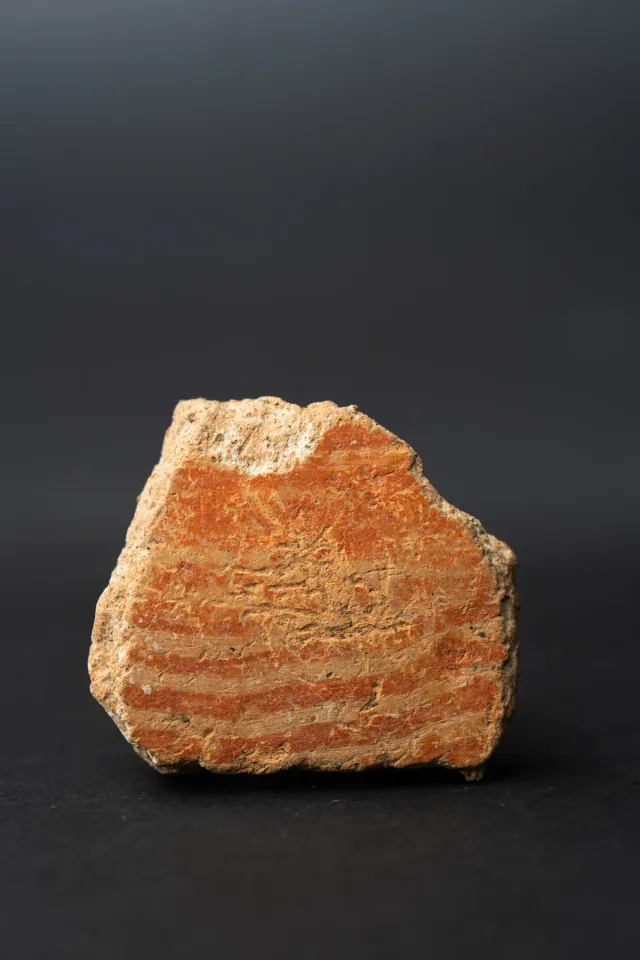
Combed Ware Bowl Fragment with Parallel Bands
Neolithic
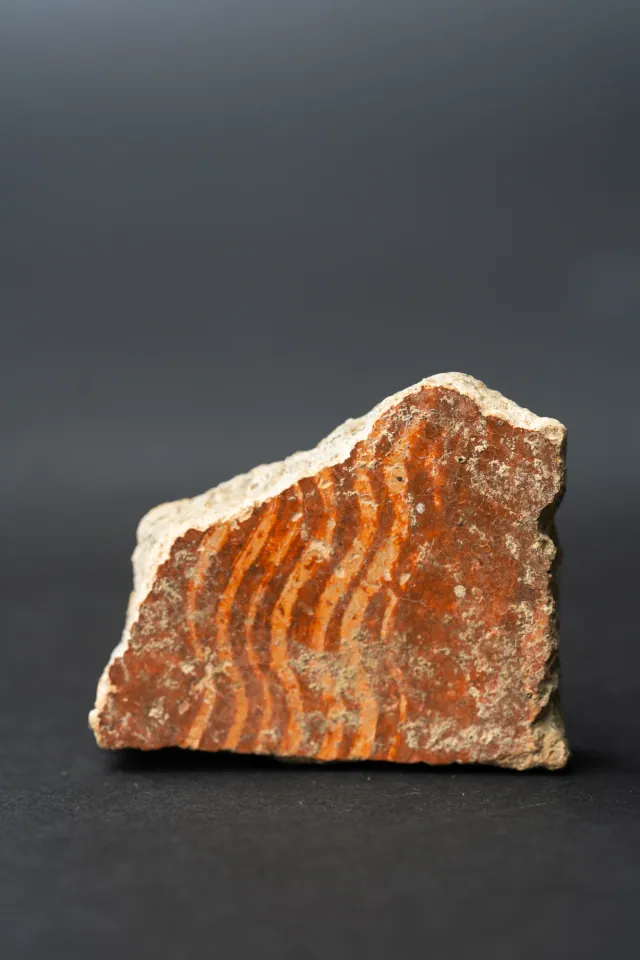
Combed Ware Bowl Fragment with Multiple Wavy Bands
Neolithic
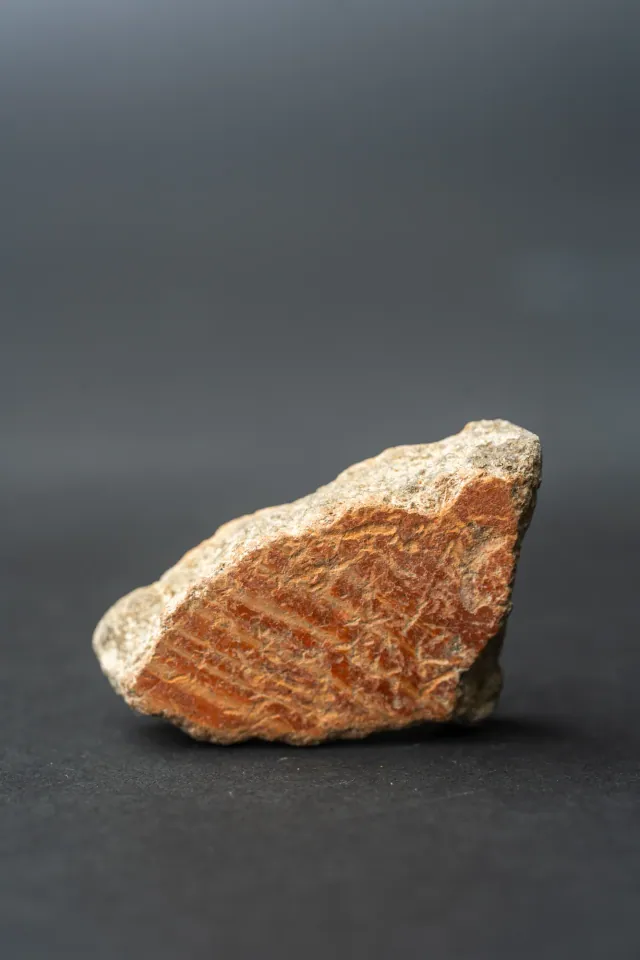
Combed Ware Bowl Fragment with Oblique Bands
Neolithic
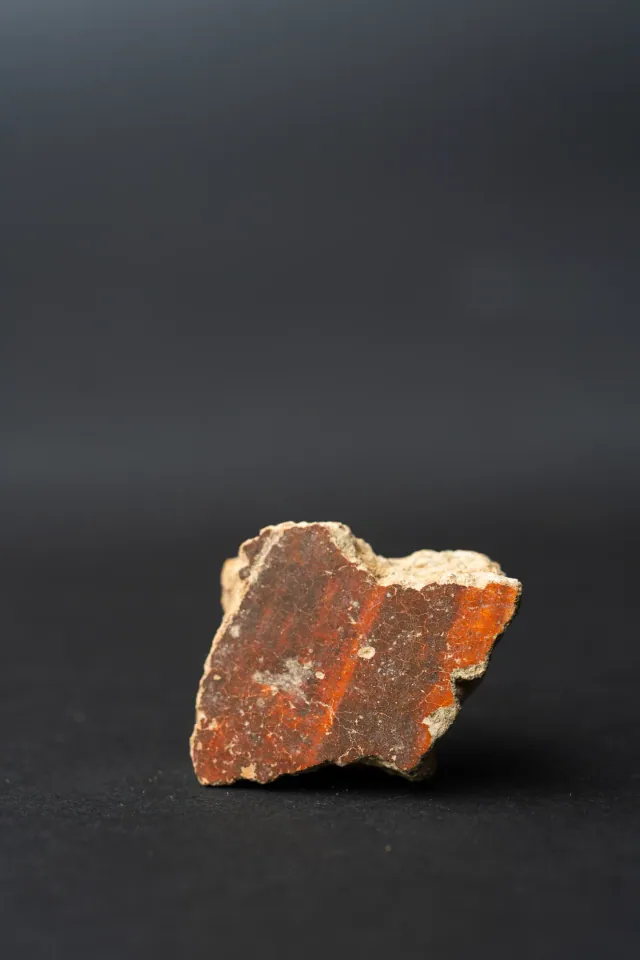
Red Lustrous Ware Body Sherd with Fire-Mottled Slip
Neolithic
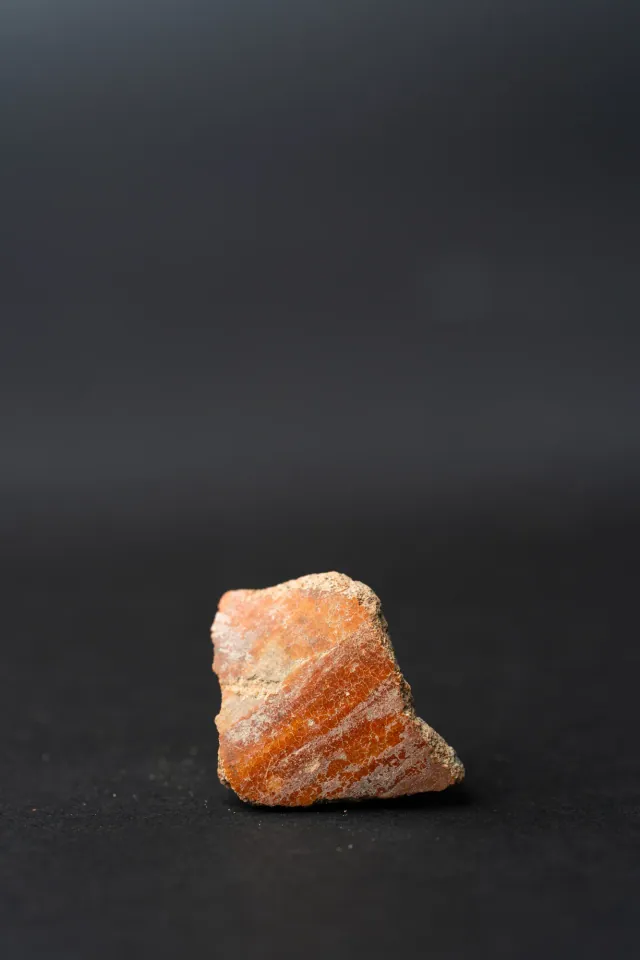
Red Slip Ware Body Sherd with Streaked Slip
Neolithic
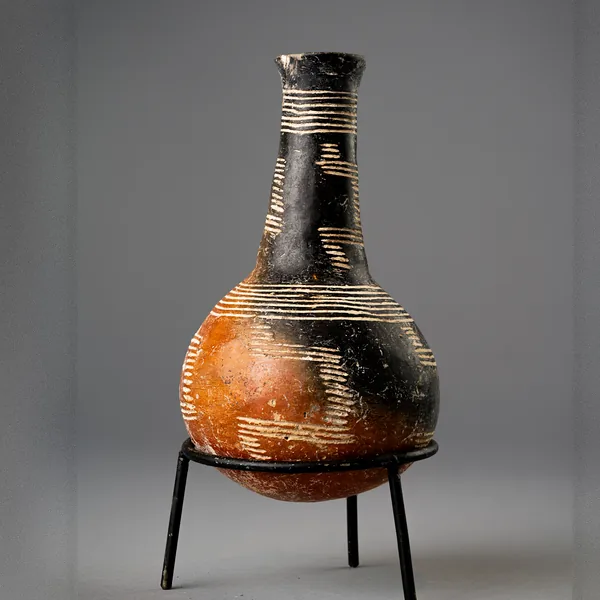
Red Polished Black-Topped Bottle with Stepped Incised Bands
Early Cypriot (Early Bronze Age)
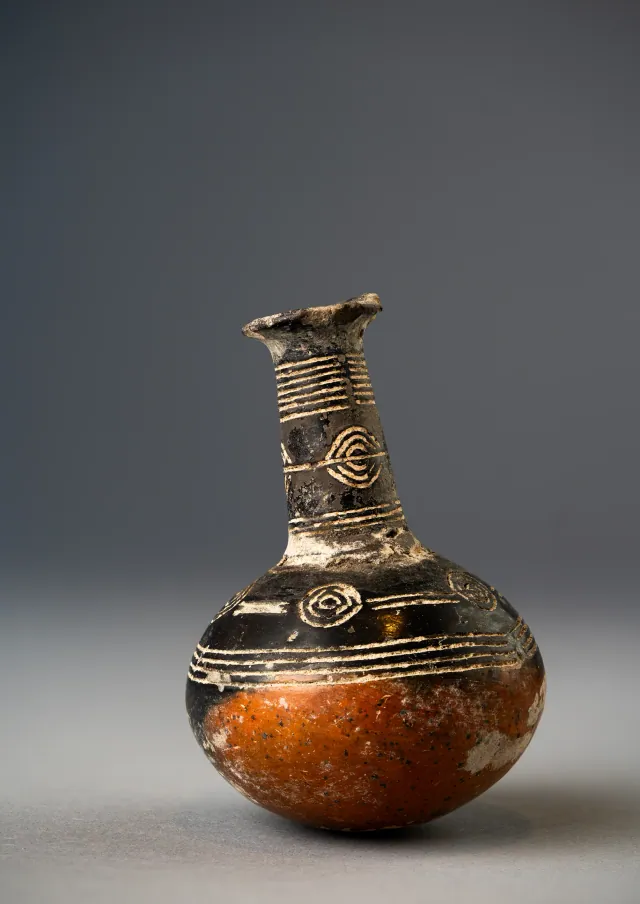
Red Polished Black-Topped Bottle with Incised Concentric Circles
Early Cypriot (Early Bronze Age)
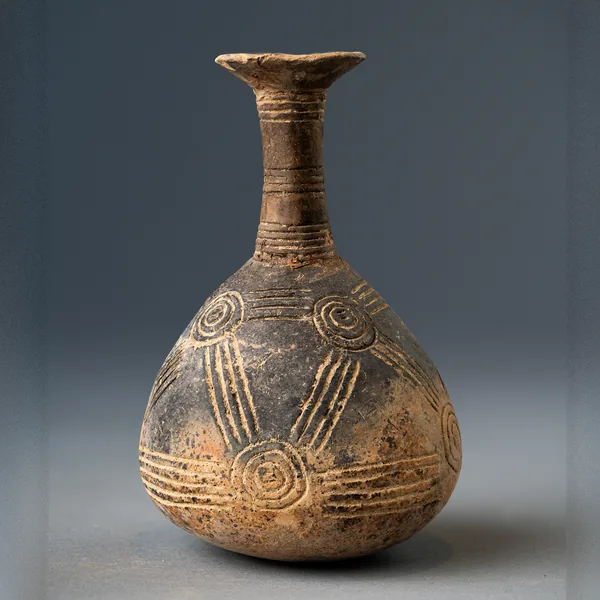
Red Polished Bottle with Linked Concentric Circles
Early Cypriot (Early Bronze Age)
Found at the places discussed
Objects in our catalogue, in museum collections, recorded as found at these sites.
Background
Where to read more on this site before or after watching.
The site
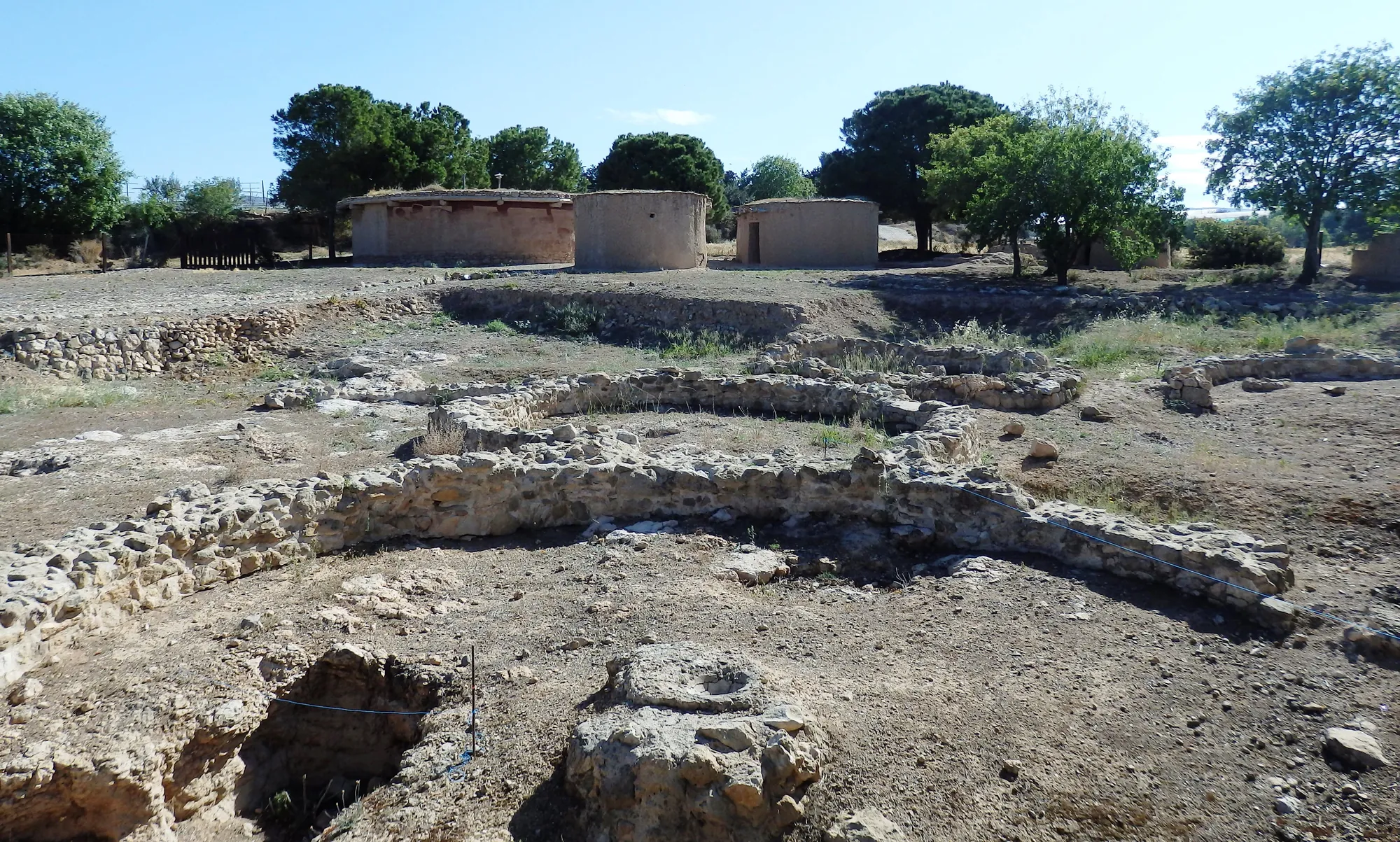
Lemba-Lakkous
A Chalcolithic village on a coastal terrace north of Paphos, lived in at intervals from about 3500 to 2400 BC and excavated by Edgar Peltenburg for the Lemba Archaeological Project from 1976 to 1983. It produced the limestone figure known as the Lemba Lady, a large group of graves and, beside the excavation, the Lemba Experimental Village of rebuilt round houses.
In the compendium
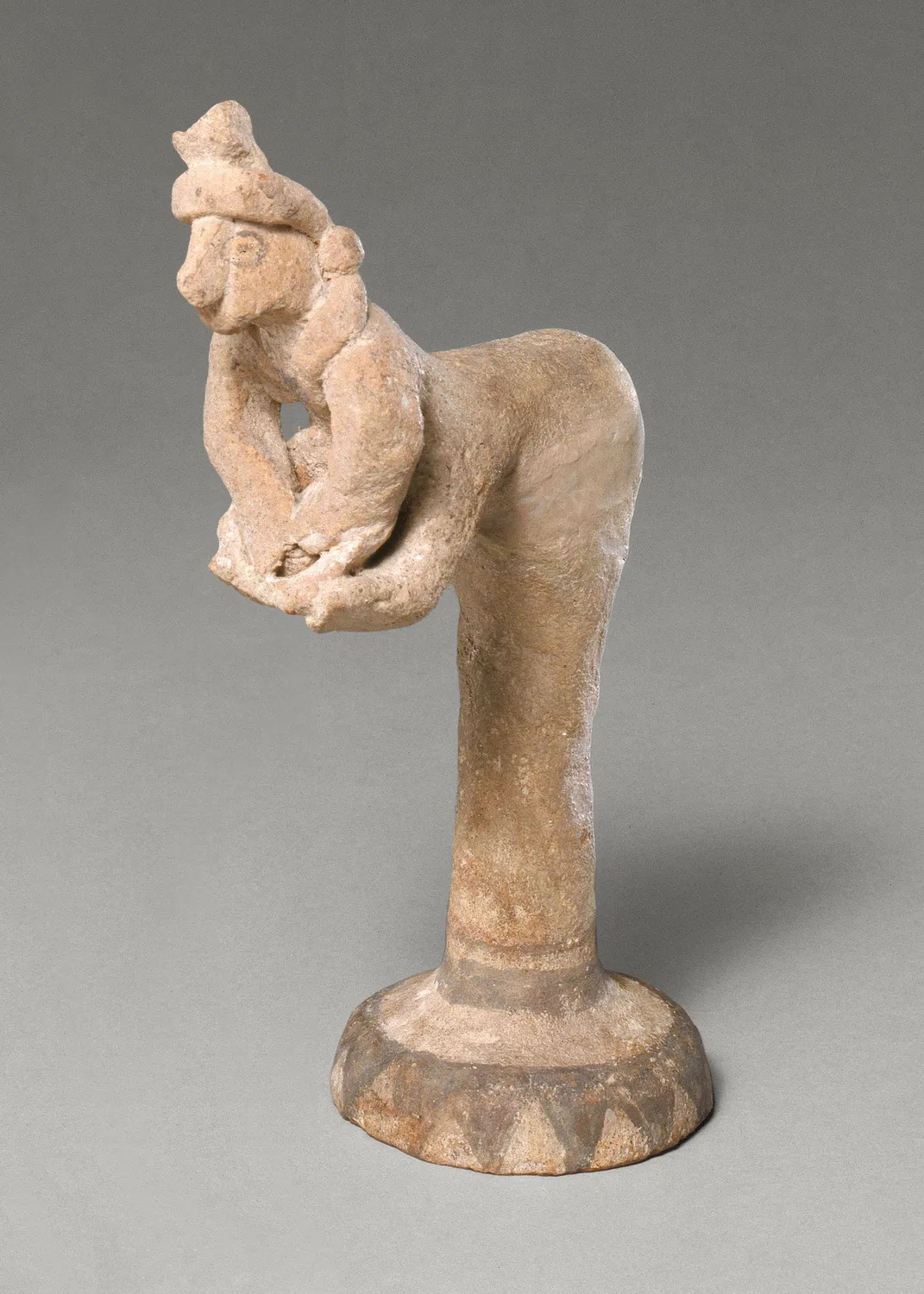
Food and Diet in Ancient Cyprus
What Cypriots grew, herded, hunted, cooked and drank from the first Neolithic villages to the end of the Cypro-Archaic period.
In the compendium
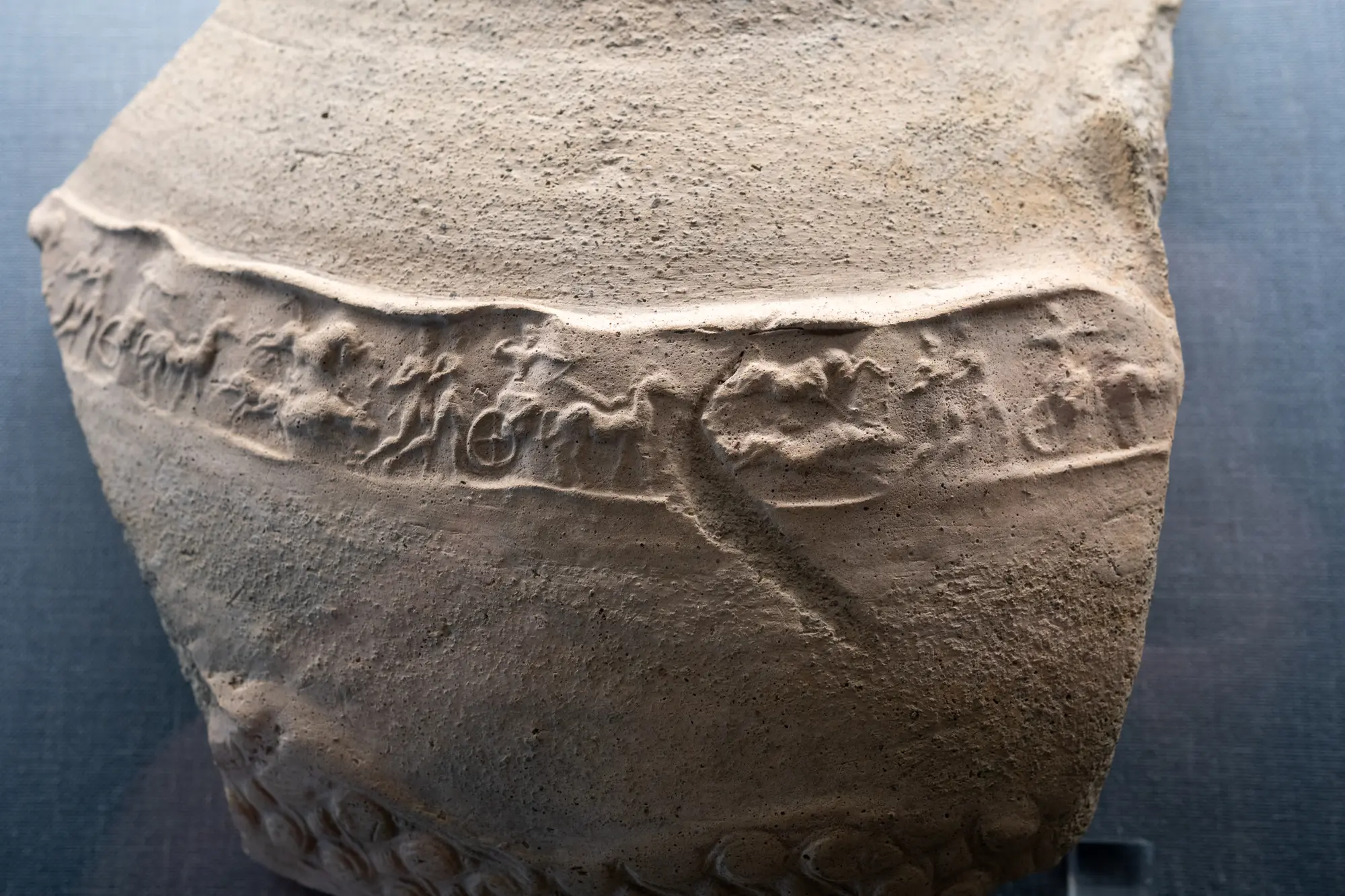
Food Storage in Ancient Cyprus: Pits, Pithoi and Storerooms
How Cypriots stored grain, oil and wine, from Chalcolithic pits and household jars to the great pithos halls of the Late Bronze Age towns.
In the compendium
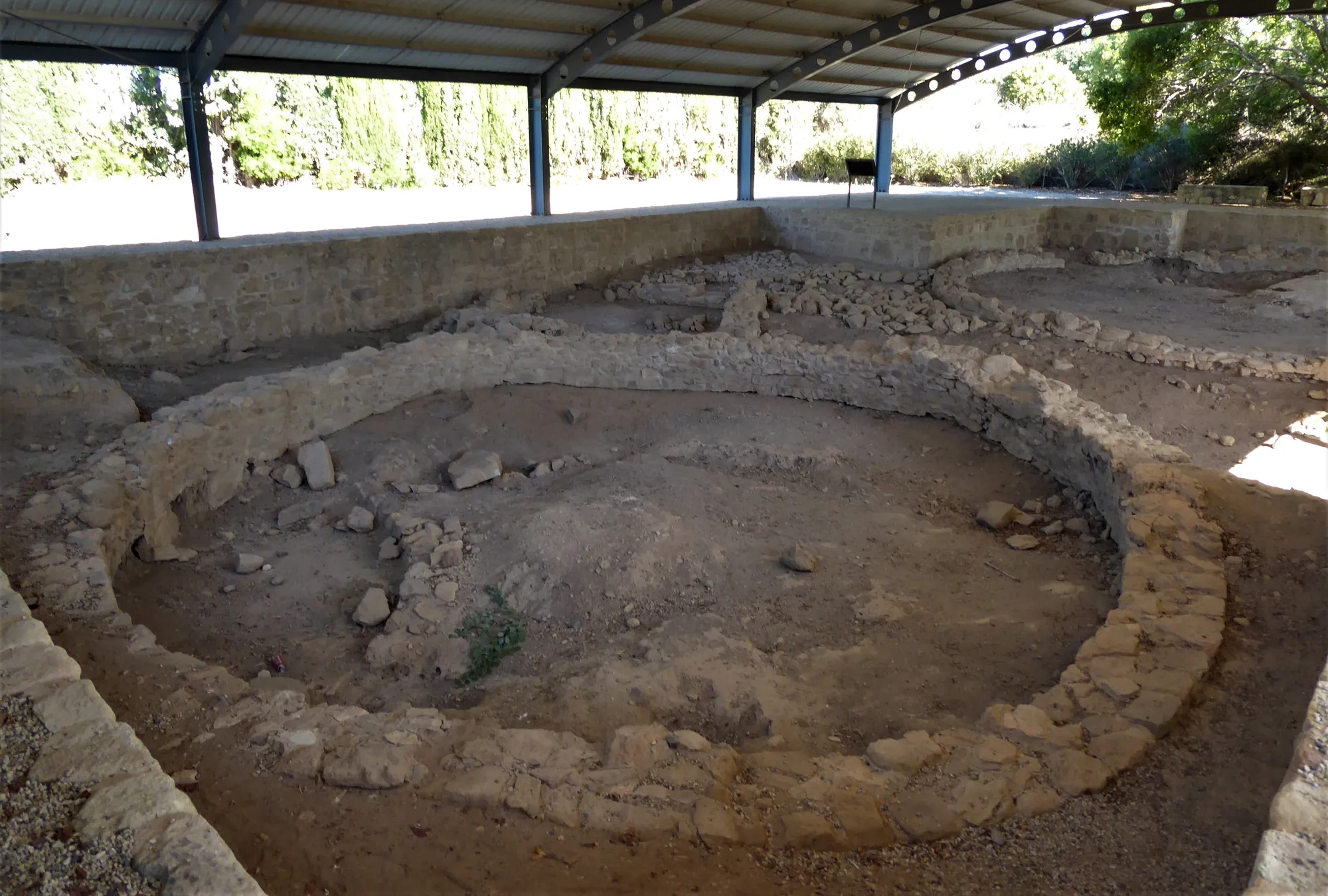
Chalcolithic Round Houses
The free-standing circular house of Chalcolithic Cyprus, from timber post rings to stone-footed great houses, and the Kissonerga building model.
Map of Cyprus
Places discussed in the talk
- Has a page on this site
- Other places
- Ground above 200, 500, 1,000 m
Places
- 1Kissonerga-Skalia (approx.)
- 2Kissonerga-Mylouthkia (approx.)
- 3Kissonerga-Mosphilia
- 4Lemba-Lakkous
- 5Prastio-Mesorotsos (approx.)