
Conference paper·Archaeological Research Unit - University of Cyprus·2019·In Greek
The Hair of Nefertiti
Η κόμη της Νεφερτίτης
Chapters
About the video
In this lecture, given in Greek, George Papasavvas of the University of Cyprus examines a bronze fragment from Enkomi and argues that it belonged to a life-sized statue of the Egyptian queen Nefertiti made at Amarna in the 14th century BC, during the Late Bronze Age.
The fragment preserves the upper left part of a human coiffure with seven rows of finely incised curls. Egyptologists call this style the Nubian wig, which became popular at court during the Amarna period in the second half of the 14th century BC. Although wooden, stone and faience wigs survive in Egypt, such as a stone example in the Petrie Museum, the Enkomi piece has no parallel in bronze. Its preserved lower edge shows that the wig was cast separately and fitted with tenons onto a composite statue whose head and limbs were carved from coloured stones.
Papasavvas places the work in the context of Pharaoh Akhenaten's religious revolution, the cult of the solar disc Aten, and the new capital at Amarna. Although several members of the Amarna court wore the Nubian wig, including Tutankhamun, Ankhesenamun and the secondary wife Kiya, the Enkomi fragment has a small hole on its left side for an attached uraeus, the royal cobra emblem reserved for deities, pharaohs and queens. He compares the piece to the reused sarcophagus and alabaster canopic jars originally made for Kiya in Tomb 55 in the Valley of the Kings, where uraei were later added into drilled holes and subsequently removed. Because the hole on the Enkomi piece is off-centre, a second hole must have stood opposite, indicating a diadem with a double uraeus.
After Akhenaten's death around 1336 BC and the abandonment of Amarna under Tutankhamun, Pharaoh Horemheb systematically destroyed Amarna's monuments. Weighing about 650 grams, the Enkomi piece represents roughly six per cent of a wig that originally weighed near twelve kilograms. Alongside other 14th-century Egyptian finds in Cyprus, such as a gold necklace and a silver ring with Akhenaten's cartouche from Enkomi Tomb 93 and a faience cup with Horemheb's cartouche from Hala Sultan Tekke, Papasavvas concludes that the statue did not arrive intact as a diplomatic gift to the king of Alashiya, but was smashed at Amarna and shipped to Enkomi as scrap metal.
To identify the subject, Papasavvas rules out deities, whose images were banned at Amarna, and pharaohs, who wore a single uraeus. Among queens who wore the double uraeus, Tiye rarely wore the Nubian wig and her monuments were spared by Horemheb, while Nefertari never wore this coiffure. The combination of the Nubian wig, the double uraeus and the violent destruction of the bronze points to Nefertiti.
From our collection
Pieces in the Drakopoulos collection of the kinds and periods this talk covers: Late Cypriot (Late Bronze Age).
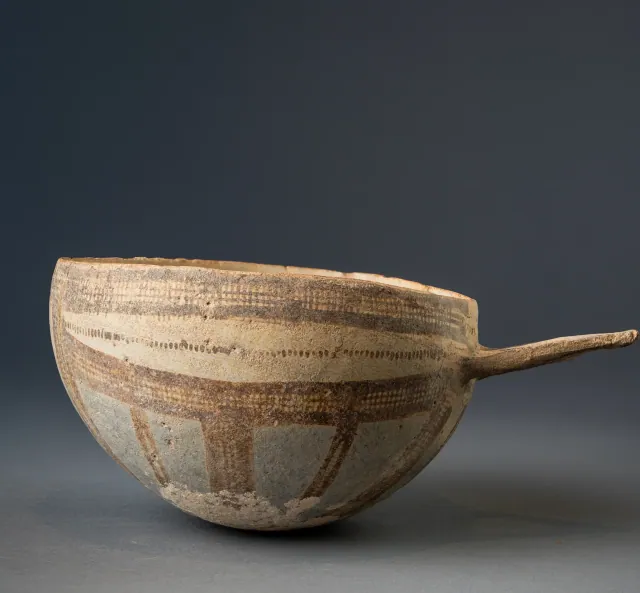
White Slip II Hemispherical Bowl with Wishbone Handle
Late Cypriot (Late Bronze Age)
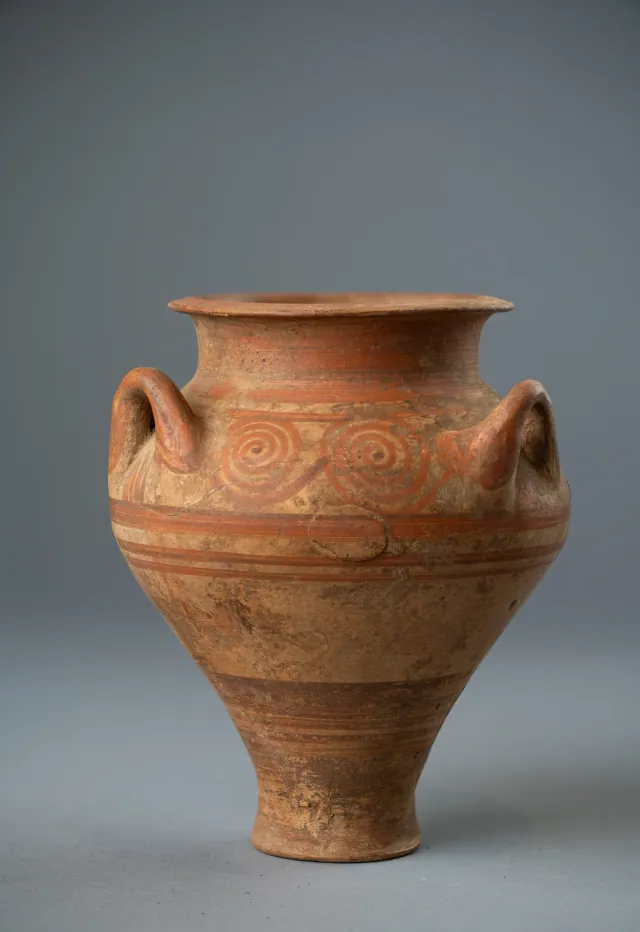
Cypriot Three-Handled Jar in the Mycenaean Style with Running Spirals
Late Cypriot (Late Bronze Age)
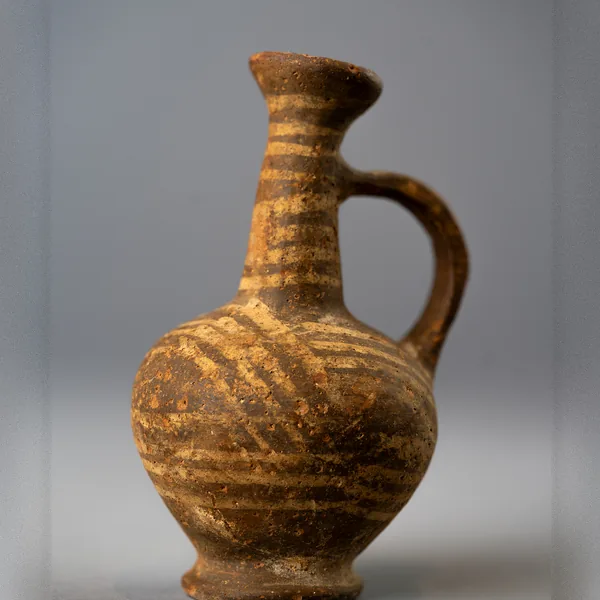
Base Ring II Bilbil Juglet with White-Painted Bands
Late Cypriot (Late Bronze Age)
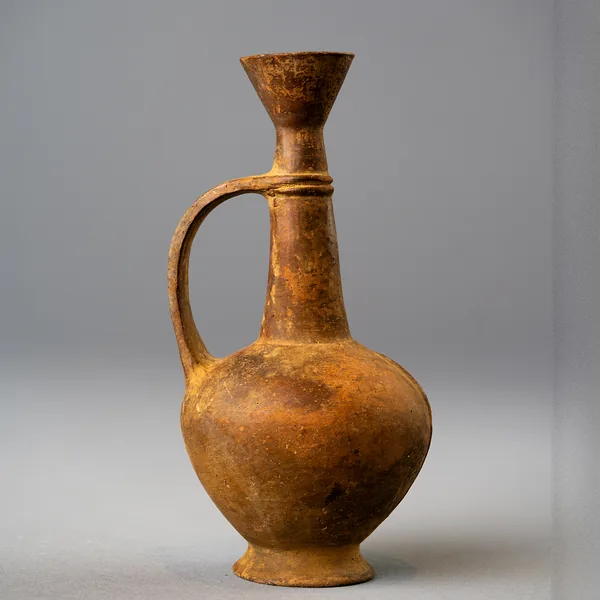
Base Ring Bilbil Juglet with Funnel Mouth and Neck Ridge
Late Cypriot (Late Bronze Age)
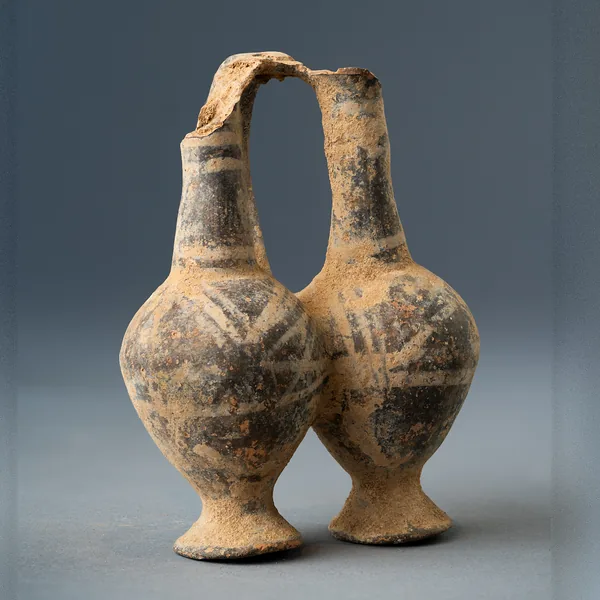
Base Ring II Double Juglet with White-Painted Decoration
Late Cypriot (Late Bronze Age)
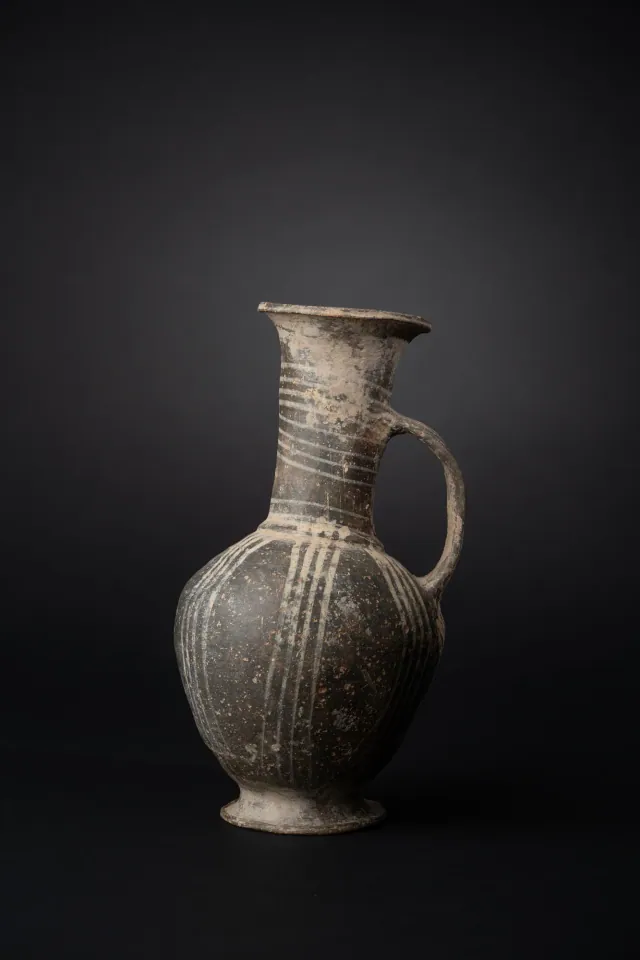
Base Ring II Jug with White-Painted Lattice Bands
Late Cypriot (Late Bronze Age)
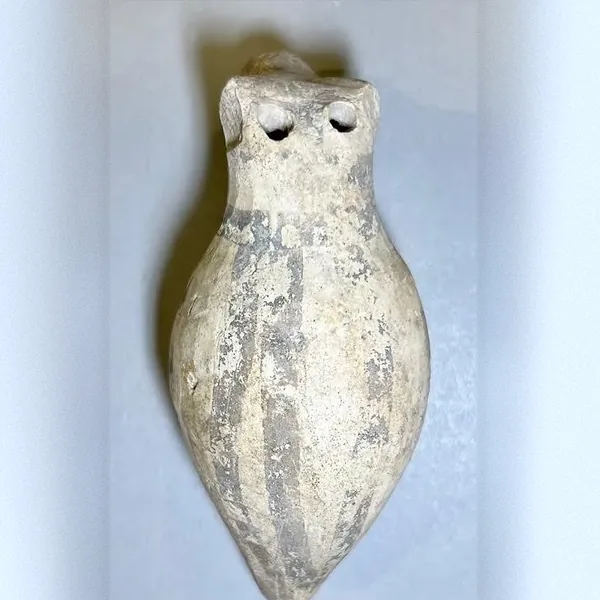
White Painted VI Owl-Headed Rattle
Late Cypriot (Late Bronze Age)
Found at the places discussed
Objects in our catalogue, in museum collections, recorded as found at these sites.
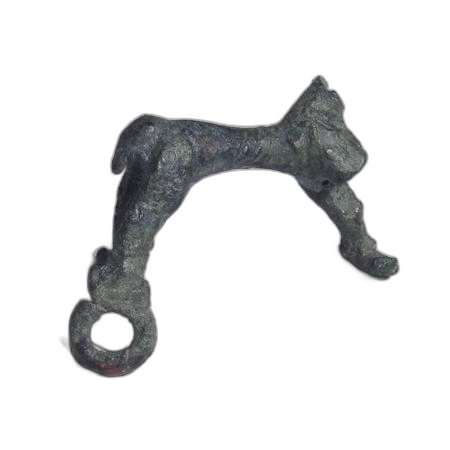

Background
Where to read more on this site before or after watching.
The site
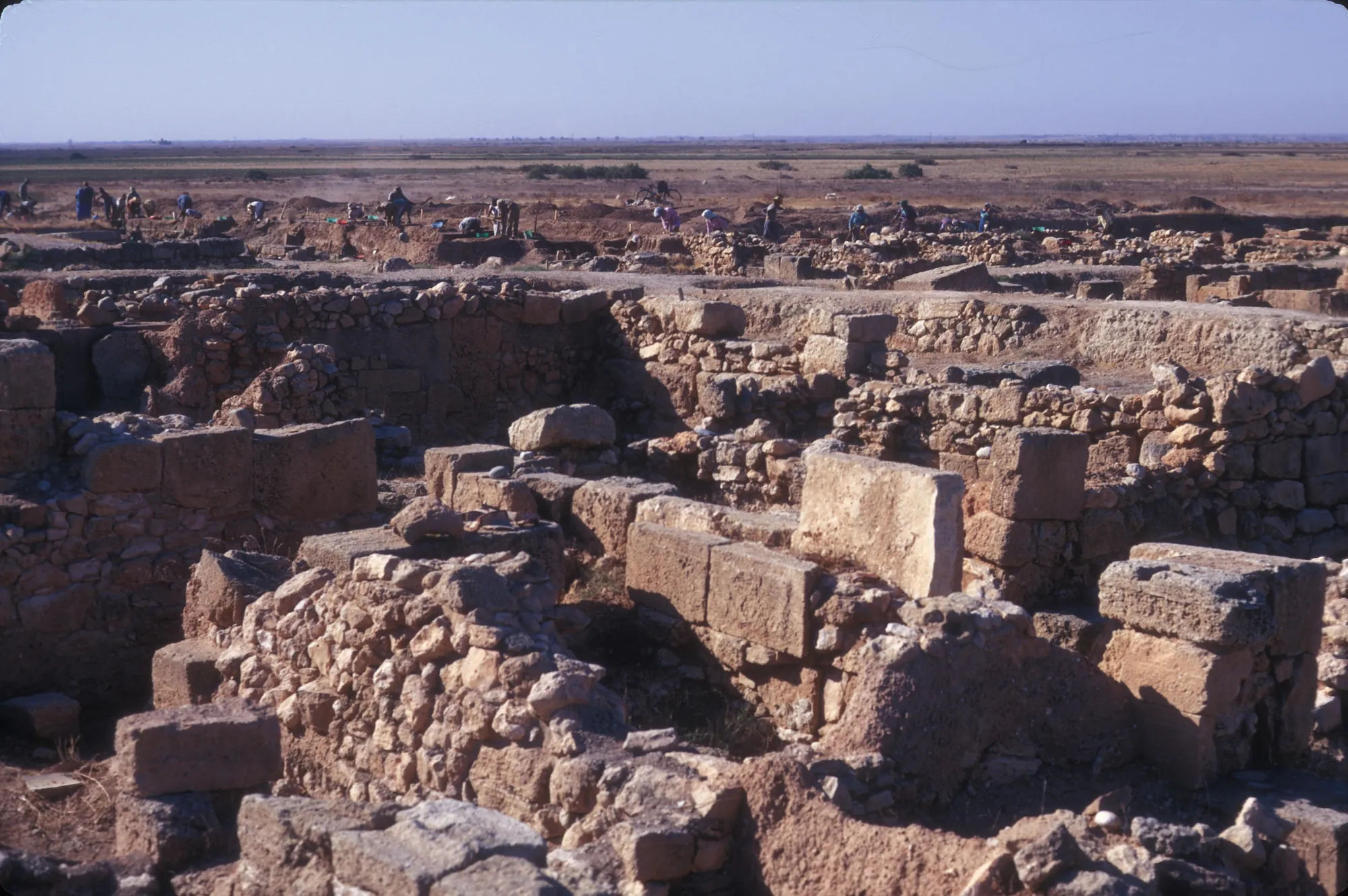
Enkomi
Enkomi is a walled Late Bronze Age town near the mouth of the Pedieos river on the bay of Famagusta, lived in from about 1650 BC until it was gradually abandoned for nearby Salamis. It was a port for Cypriot copper, and its excavations produced metal workshops, sanctuaries with bronze cult statues, rich tombs and the largest group of Cypro-Minoan inscriptions on the island.
In the compendium
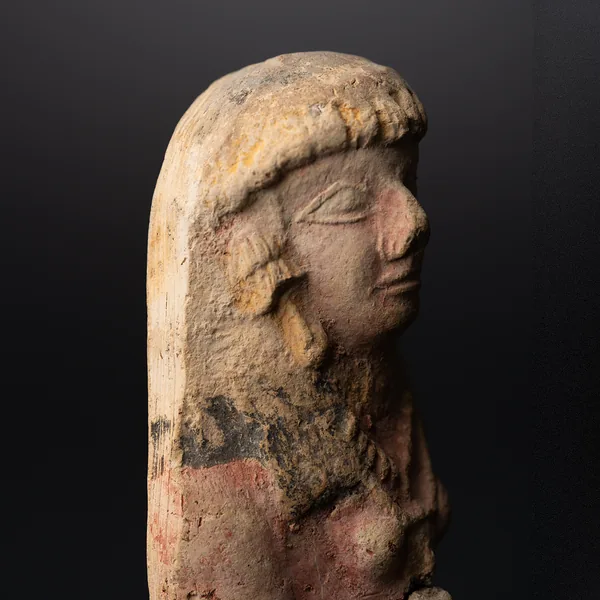
Egypt
Ancient Egypt, Cyprus's partner in copper, pottery and prestige goods from the Middle Kingdom to the Ptolemies, who annexed the island.
In the compendium
Copper Metallurgy in Ancient Cyprus
The mining, smelting and casting of the Troodos sulphide ores, from hammered Chalcolithic native copper to Late Bronze Age oxhide ingots and Archaic slag heaps.

The period
Late Bronze Age
The Late Cypriot period, c. 1650–1050 BCE, when copper exports made Cyprus an urban, literate trading power before the crisis around 1200 BCE.
Map of Cyprus
Places discussed in the talk
- Has a page on this site
- Other places
- Ground above 200, 500, 1,000 m
Places
- 1Enkomi
- 2Hala Sultan Tekke