
Conference paper·Archaeological Research Unit - University of Cyprus·2017
Under the Mediterranean: Shipwrecks at Mazotos, Narbonne, Bajo de la Campana and Ma'agan Mikhael
Stella Demesticha, Marie-Pierre Jézégou, Mark Polzer and Maayan Cohen
Chapters
About the video
Presented at the Honor Frost Foundation Conference on Mediterranean Maritime Archaeology in October 2017, this session brings together four papers on shipwreck excavations across the Mediterranean.
Stella Demesticha of the University of Cyprus opens with a preliminary analysis of the cargo of the Mazotos shipwreck, which lies off the south coast of Cyprus between Amathus and Kition. Excavated since 2010, the wreck dates to the first half of the fourth century BC, falling within the Cypro-Classical period. The ship carried an Aegean cargo dominated by wine amphorae from Chios alongside Mushroom-rimmed (Solokha I) and Mendean jars. A secondary cargo at the stern included at least 55 pitched ring-footed jugs holding one Chian khous each, as well as over 10,000 olive pits packed inside Chian amphorae. Demesticha and Irini Katsouri used volumetric measurements and 3D point clouds to model two sizes of Chian jars stowed in four tiers in a square configuration, separated by 8 cm gaps filled with aromatic shrub twigs (Lamiaceae) used as dunnage. Questions afterwards address the hull framing and whether Mendean-shaped amphorae could be Cypriot imitations.
Marie-Pierre Jézégou then presents the Mandirac 1 wreck from the port channel of Narbonne in France. Dated to the early fifth century AD by Lusitanian, North African and Baetican amphorae, the vessel was reused as a stone-filled caisson to repair a dyke along the Aude river. Jézégou details its shipbuilding features: densely spaced mortise-and-tenon joints, extensive hull repairs, reused framing timbers, and a forward mast step suited to a tow post on a canal lighter.
Mark Polzer examines the late seventh-century BC Phoenician shipwreck at Bajo de la Campana near Cartagena in Spain. Alongside elephant tusks, Baltic amber, copper, and tin ingots from northwestern Spain, the wreck yielded over a ton of galena (lead ore) from Almería. Polzer links this lead to Phoenician control of silver extraction by cupellation in Iberia. He interprets a group of singular luxury items, including carved ivory dagger handles, an ostrich eggshell cup, bronze couch and table legs, and two Cypriot-style bronze incense burners, as a complete feasting set destined for a local Iberian chieftain.
Finally, Maayan Cohen of the University of Haifa gives a preliminary report on the Ma'agan Mikhael B shipwreck off Israel, dated to the seventh to ninth centuries AD. Excavations between 2016 and 2017 exposed walnut frames, char-bent fir planks, internal clamps with Greek letters, and iron nail concretions without mortise-and-tenon joints, contributing to the study of the transition from shell-first to frame-based construction. The hold contained Late Roman amphorae, rigging blocks, ropes, dunnage of branches and pine cones, and food remains including pickled Nabali olives.
From our collection
Pieces in the Drakopoulos collection of the kinds and periods this talk covers: Cypro-Classical.
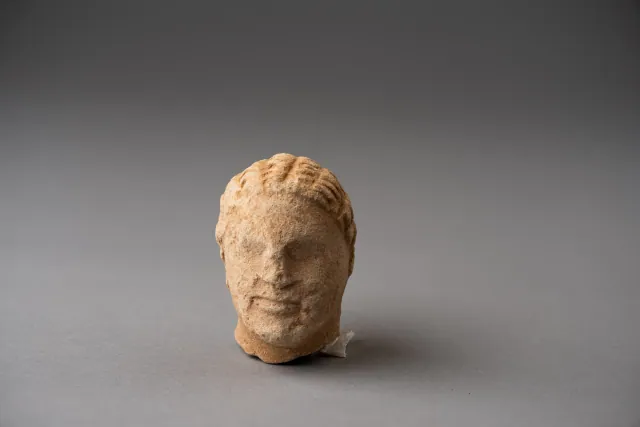
Limestone Head of a Boy, probably from a Temple Boy Statuette
Cypro-Classical
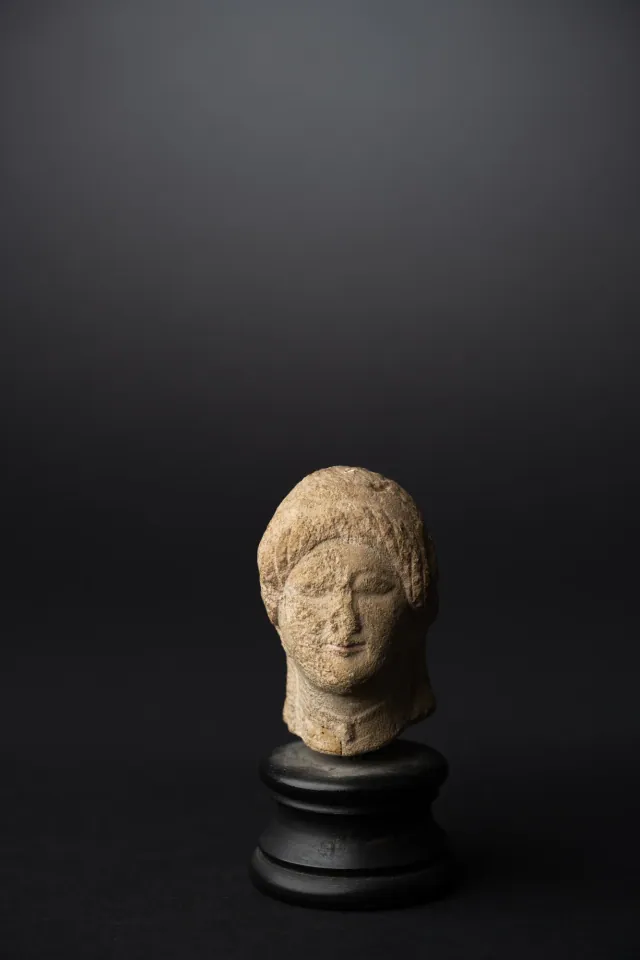
Limestone Head of a Votary with a Wreath
Cypro-Classical
Found at the places discussed
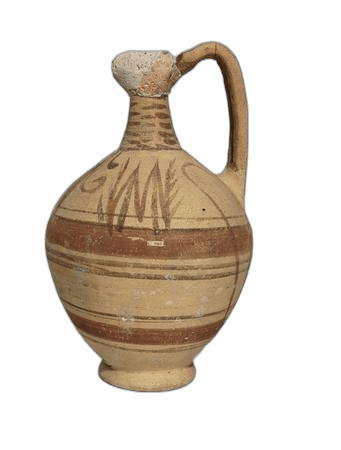
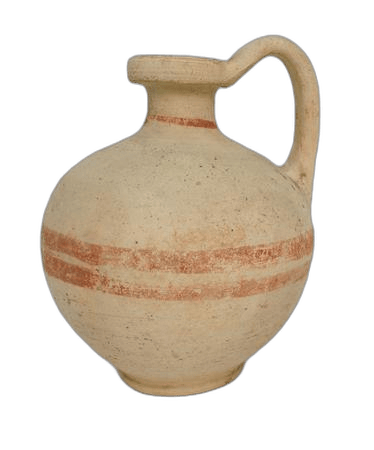
Objects in our catalogue, in museum collections, recorded as found at these sites.


Background
Where to read more on this site before or after watching.
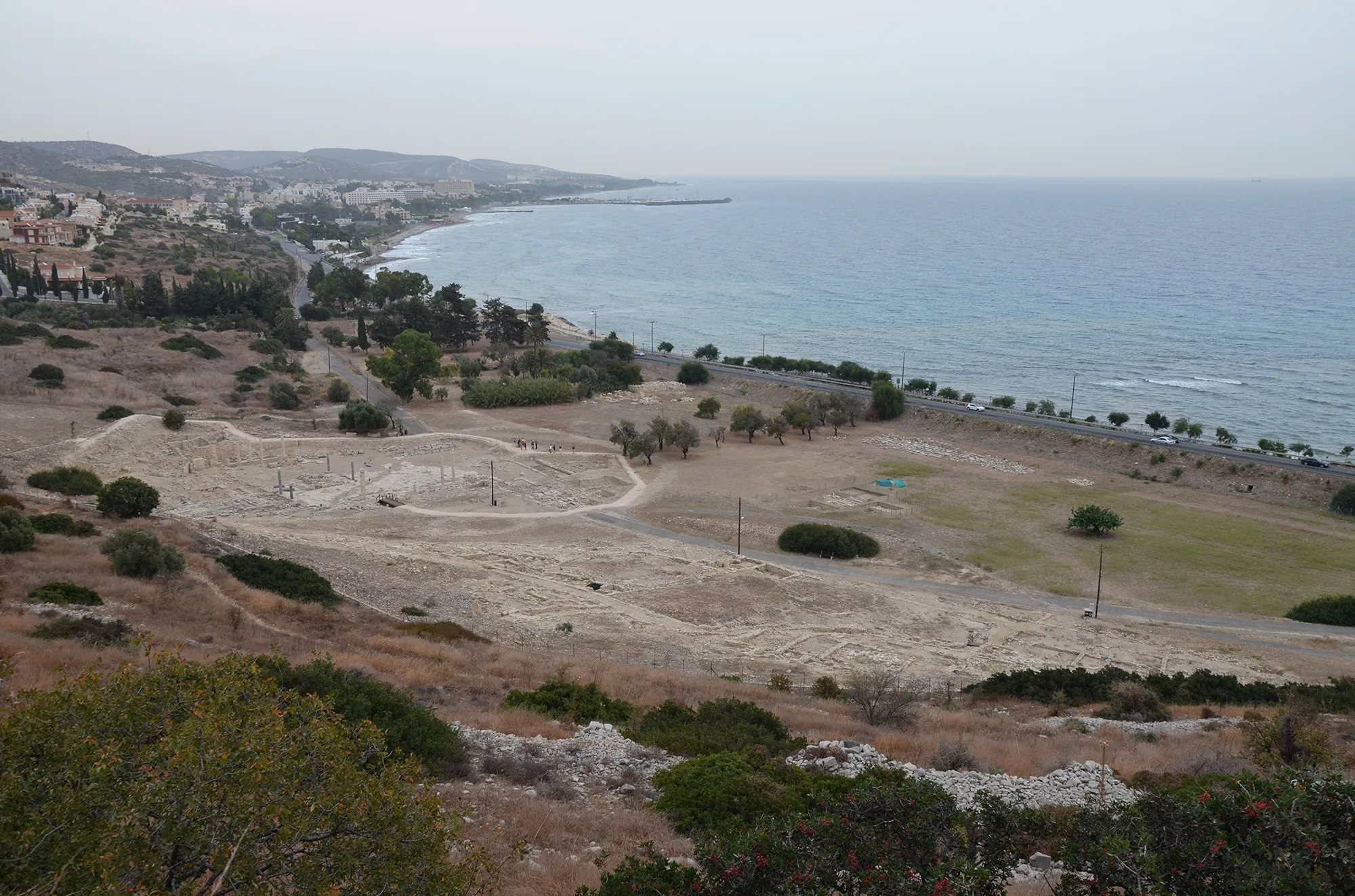
The site
Amathus
Amathus was the capital of one of the Iron Age kingdoms of Cyprus, on a coastal hill about 10 km east of Limassol. It was founded on an empty site in the 11th century BC and lived in until the end of the 7th century AD. Its acropolis carried a sanctuary of Aphrodite and the kings' palace; its people kept the island's old non-Greek language, Eteocypriot, at least until the time of Alexander.
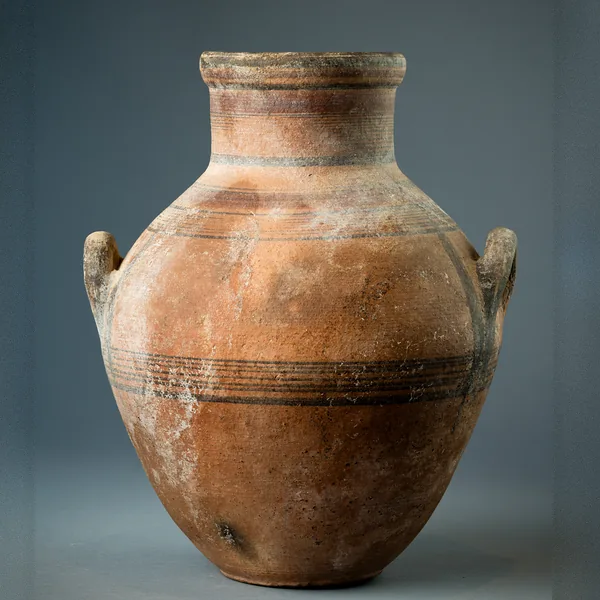
In the compendium
Amphora
A closed jar with two opposed handles, made in Cyprus in belly-handled and vertical-handled painted series and as a basket-handled transport jar.
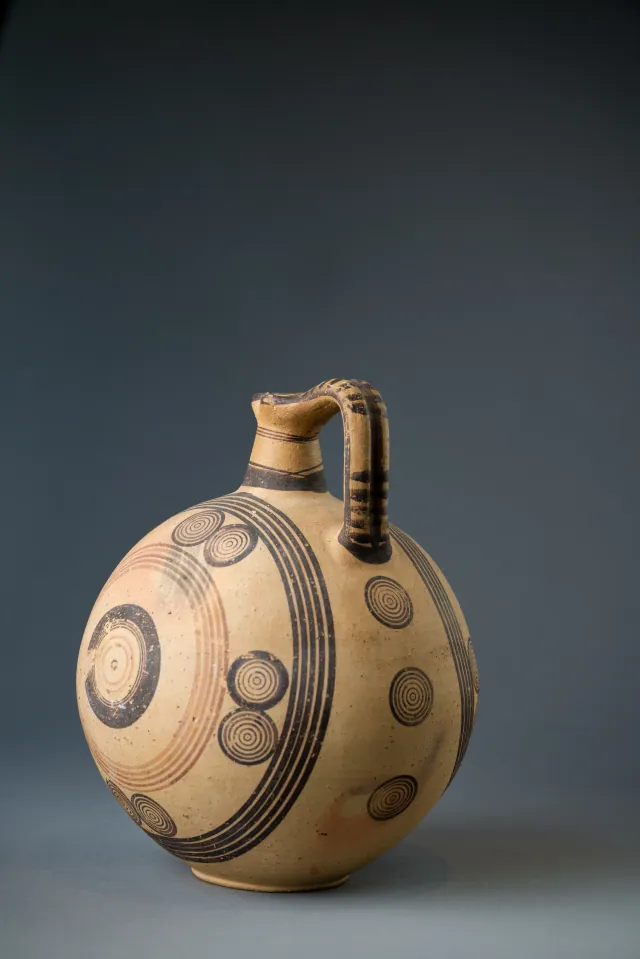
In the compendium
Jugs and Juglets
A one-handled vessel with a neck, the commonest closed shape in Cypriot pottery, made from the start of the Bronze Age to the Cypro-Classical period.
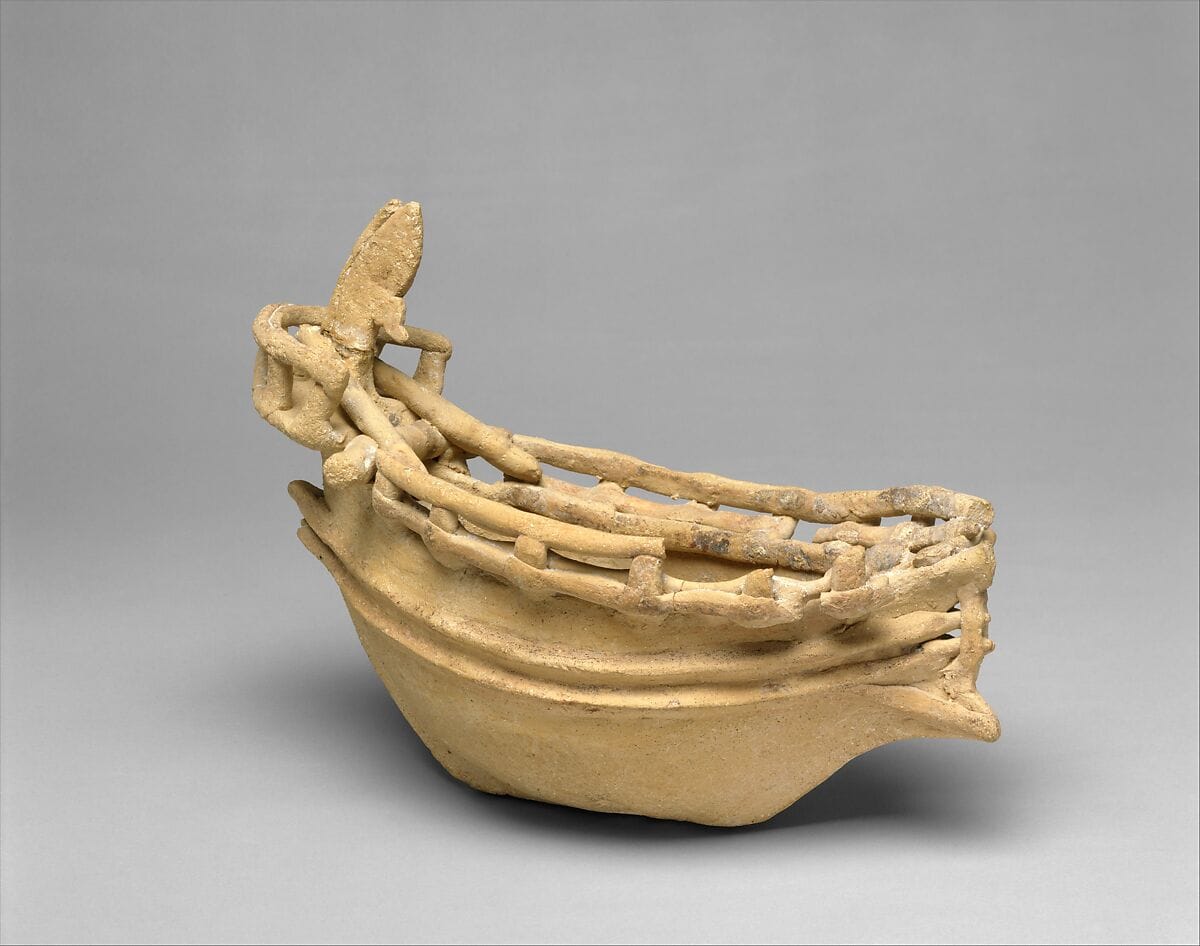
In the compendium
Seafaring and Ships in Ancient Cyprus
The evidence for boats and seafaring around Cyprus from the first crossings to the Classical period, from anchors, models and graffiti to wrecks and shipsheds.
Map of Cyprus
Places discussed in the talk
- Has a page on this site
- Other places
- Ground above 200, 500, 1,000 m